
How does *SNAP Selling* help you simplify a complex product story for a first-time buyer in 2027?
 Curated byKory White · Fractional CRO · Maryland
 PULSEKNOWLEDGE LIBRARY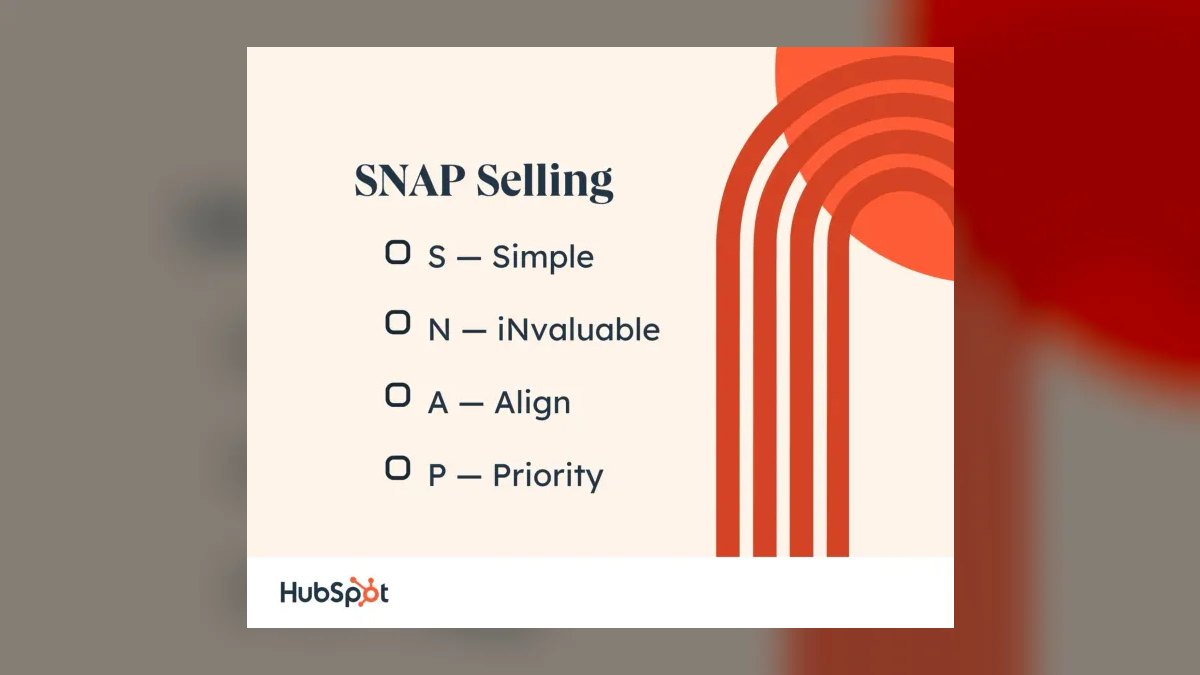
SNAP Selling, Jill Konrath's framework, simplifies a complex product story by forcing four filters on every message: keep it Simple, be iNvaluable, stay Aligned, raise Priority. For a first-time buyer with no category context, that means leading with their problem, naming one measurable outcome, and cutting every feature word that does not earn its place.
What SNAP Selling actually is, and why first-time buyers change the math
*SNAP Selling: Speed Up Sales and Win More Business with Today's Frazzled Customers* was published by Jill Konrath in 2010 (Portfolio/Penguin), with the paperback edition widely circulated since 2012. The core premise is not a new discovery methodology or a new qualification scorecard. It is a communication discipline built around a single observation: buyers are overwhelmed, and overwhelmed people do not make careful decisions — they make defensive ones. They default to no. They default to later. They default to whatever requires the least mental effort.
The acronym is a set of decision filters the buyer runs, mostly unconsciously, on every message you send:
- S — Simple. Can I understand this without work? Complexity is not neutral; it is a cost the buyer pays, and they will decline to pay it.
- N — iNvaluable. Is this person worth my calendar time? Not "is the product good" — is the human worth talking to.
- A — Aligned. Does this fit what I am already trying to do, or does it ask me to reorganize my quarter first?
- P — Priority. Does this matter *now*, or is it a someday item?
The 2010 framing was aimed at time-starved buyers drowning in email. The 2027 version of that problem is structurally the same but louder. Buyers self-educate through search, peer communities, review sites, and AI summarization long before they take a call. Widely cited B2B research — including CEB's work later absorbed into Gartner, and Gartner's own buyer studies — has for over a decade put the share of the buying journey completed before meaningful supplier contact somewhere in the range of 55–70%, and put the share of buying-group time spent with any one supplier rep at roughly 5–6% of the total. Treat those as directional, not gospel. The direction is what matters: by the time you speak, the buyer has already formed a rough mental model, and you get a thin slice of their attention to correct or confirm it.

Now layer on the first-time buyer. This is the variable most sellers underweight. A first-time buyer is not a small version of an experienced buyer. They are a *different* buyer with a different failure mode:
- They have no reference prices. They cannot tell whether $2,000/month is a steal or a scandal, so price feels arbitrary and therefore risky.
- They have no category vocabulary. Words that are load-bearing to you — orchestration, enrichment, attribution, ETL, reverse ETL — are noise to them. Worse, they will nod along rather than admit confusion, which means your discovery signal is corrupted.
- They have no failure library. An experienced buyer knows which implementation risks are real. A first-timer imagines all of them equally, which inflates perceived risk across the board.
- They carry personal career risk. It is their first time signing for this category, so a bad outcome is attributable to them specifically. That asymmetry — small upside, visible downside — is the single strongest force in the deal, and it points toward doing nothing.
This is why "educate the buyer on the category" is such a seductive trap. It feels generous. It is actually a request that the buyer do homework before they are allowed to get value. SNAP inverts it: do not teach the category, solve the problem, and let category understanding accumulate as a side effect of the buyer getting something useful.
There is a useful adjacent frame here. Product-led growth teams have spent a decade optimizing "time to first value" inside software — the number of minutes between signup and the moment the user experiences the thing they came for. SNAP is the sales-conversation version of the same metric. Your product story has a time-to-first-value too, measured in seconds of the buyer's attention. If your first sixty seconds do not deliver a recognizable outcome in the buyer's own vocabulary, you have spent their attention budget on setup and have nothing left for the payoff.
The anchoring strategy matters as much as the content. A complex product story is not simplified by deleting information at random — it is simplified by choosing one entry point the buyer already understands and treating everything else as available-on-request depth. That is the difference between dumbing down and compressing. Dumbing down removes truth. Compression removes *sequence position* — the detail is still there, it just is not first.
Running the SNAP loop on a real product story
Simplification is a process, not a personality trait. Here is the loop that actually produces a SNAP-compliant story, with the work broken into passes so you can tell whether you did it or just thought about it.
Pass 1 — Inventory the buyer's world, not yours. Before you write a word of pitch, write down: the buyer's job title, the two or three numbers their performance review actually contains, what their manager is measured on, and what happened in the last ninety days that made this topic come up at all. If you cannot fill in that last one, you do not have a Priority and you are about to pitch into a vacuum. For a first-timer, add one more line: what are they currently doing instead? Spreadsheets, an intern, a manual process, a stalled internal project. Your story must displace *that specific thing*, not an abstract competitor.
Pass 2 — Write the three-sentence spine. Problem, mechanism, outcome. One sentence each.
> "Your team is spending most of Monday rebuilding the pipeline report by hand. We pull the same data automatically and it lands before the standup. You get Monday back, and the number stops changing between meetings."
Notice what is absent: no architecture, no connector count, no "platform," no "AI-powered." Notice what is present: a specific recognizable pain, a plain-language mechanism (buyers do need to know *roughly* how, or it sounds like magic and magic reads as risk), and an outcome stated in time and trust rather than percentages.
Pass 3 — Run the deletion pass. Read the spine aloud and delete every word that a competitor could also say. "Enterprise-grade," "seamless," "best-in-class," "scalable" — these are not claims, they are throat-clearing. If a sentence survives deletion with the same meaning, the deleted words were never doing work.
Pass 4 — Run the "so what" ladder. Take each remaining claim and ask "so what?" until you hit a number the buyer's boss cares about. "We automate the report" → so what? → "Monday morning comes back" → so what? → "Two reps get a full extra selling day each week." Stop there. The rung above that ("which is worth $X in pipeline") is where you lose credibility with a first-timer, because they know you invented the multiplier.
Pass 5 — Stress-test against the four filters. Read the story once per letter. Simple: could a smart person outside your industry repeat it back? iNvaluable: did you say anything they could not have gotten from your website? Aligned: does acting on this require them to change a process first, or can they start inside their existing workflow? Priority: is there a date in the story?
Pass 6 — Build the next-step ladder. SNAP is unusual among sales frameworks in that it treats the *next step* as part of the message, not as an afterthought at the end of the call. Konrath's framing is that every interaction should reduce, not expand, the buyer's decision. So write the ladder before the call: what is the smallest commitment that still moves this forward? A one-page summary. A twenty-minute working session with the one person who owns the data. A two-week look at their own numbers. Never "let's get you a demo of the full platform," which is a request for an hour in exchange for an unknown.
Two things about this loop are worth calling out. First, the failure branches are not dead ends — they route back to specific earlier passes, because "the story is too complex" and "the story is not urgent" require completely different repairs. Second, the loop terminates in a time box. Sixty seconds is not a stylistic preference; it is the constraint that makes the other passes non-negotiable. Given ten minutes, every seller reverts to the feature tour.
What this costs, how long it takes, and what the ranges look like
Sales-methodology work has a reputation for vague ROI, so it is worth being concrete about the shape of the investment — while being honest that specific figures vary enormously by company, region, and vendor, and that you should price your own situation rather than trust a benchmark.
The book itself is the cheapest possible entry: a paperback or ebook, twenty-odd dollars, a weekend of reading. Konrath also wrote *Selling to Big Companies* and *Agile Selling*, which cover adjacent ground — the first on getting in the door at large accounts, the second on ramping fast in unfamiliar territory. For a team that just needs the vocabulary and the filters, buying twelve copies and running a book club is a legitimate implementation path and costs under a few hundred dollars.
Formal training is a different order of magnitude. Structured sales-methodology programs from established training organizations typically price per seat, with meaningful variation between a half-day virtual workshop and a multi-day in-person engagement with reinforcement coaching. Enterprise rollouts that include train-the-trainer certification, custom content built on your actual product, and a reinforcement cadence run substantially higher and are usually quoted as a project rather than per seat. Get three quotes; the spread will surprise you.
The real cost is calendar time, and it is almost always underestimated. A realistic sequence for a team of fifteen to thirty reps:
- Week 0 — Message construction. Two to four working sessions, two hours each, involving sales, product marketing, and at least one person who has actually implemented the product for a customer. Output: three to five SNAP spines, one per primary use case or persona. This is the step teams skip, and skipping it is why training does not stick — you cannot practice a message that does not exist yet.
- Weeks 1–2 — Training delivery. One to two days of workshop time. Reps practice out loud. If nobody is uncomfortable, the drills are too easy.
- Weeks 3–10 — Reinforcement. This is where the money is either earned or wasted. Fifteen minutes at the top of each weekly pipeline meeting, one rep pitching, peers scoring against the four filters. Widely replicated findings in the training literature — going back to the Ebbinghaus forgetting-curve work and echoed in modern sales-enablement research — hold that unreinforced training decays sharply within weeks. Assume most of a one-shot workshop evaporates by the end of the quarter without a drill cadence.
- Weeks 8–16 — Signal. Early indicators (meeting-to-next-step conversion, discovery-call no-show rate, proposal length) move first. Cycle-time and win-rate effects lag by roughly one full sales cycle, so if your average cycle is four months, do not expect a clean read before month five or six.
Opportunity cost is the line nobody puts in the deck. Twenty reps × eight hours of workshop is 160 selling hours. At a typical mid-market quota, that is real pipeline forgone. The honest framing to an executive sponsor: this is a bet that a shorter, clearer story converts better, and the payback window is one to two sales cycles, not one quarter.
What to measure, with defensible ranges. Rather than promising a lift number you cannot support, instrument these and compare against your own baseline:
- Time-to-clarity. Time a rep needs to state the product story from scratch to a stranger. Baseline is often three to five minutes. Target is under sixty seconds. This one is trivially measurable and moves fastest.
- Proposal and deck length. A first-time buyer receiving a forty-slide deck receives a request for homework. Teams running SNAP typically compress the first-touch artifact to one to three pages. Track median pages sent before the second meeting.
- Next-step attachment rate. Percentage of first conversations that end with a specific, dated, mutually agreed action. Below 50% means your Priority filter is not working.
- Stall-to-revival ratio. Of deals that go quiet, how many come back with a next step attached versus dying silent. This is the cleanest downstream read on whether Priority was ever real.
- Multi-threading depth. Average number of distinct stakeholders engaged per opportunity. SNAP pushes this up because the stakeholder-card discipline makes each additional conversation cheap to prepare.
For a first-time-buyer segment specifically, add one more: time from first contact to the buyer being able to explain your product to a colleague. If they cannot relay it internally, they cannot champion it, and every complex sale to a first-timer is won or lost by a champion doing your pitch in a room you are not in.
Where teams get SNAP wrong
They confuse Simple with short. Cutting a five-minute pitch to ninety seconds by talking faster and dropping nouns produces something worse than the original: a compressed feature dump. Simple is about *decision load*, not word count. A four-minute explanation with one clear thread is simpler than a ninety-second burst that jumps between three value propositions. The test is not length, it is whether the buyer could repeat the point.
They treat iNvaluable as flattery. "I read your CEO's LinkedIn post" is research, not value. Invaluable means you contributed something the buyer did not have: a pattern from three similar companies, a question about their process nobody internally asked, a specific reason the obvious approach fails. For a first-time buyer this is doubly important, because they cannot evaluate your product — so they evaluate *you* as a proxy. The rep is the risk-reduction mechanism.
They manufacture Priority and get caught. The single fastest way to burn trust with a cautious first-timer is a fake deadline. "This pricing expires Friday" reads as pressure, and pressure applied to someone already worried about career risk produces retreat, not action. Real Priority is discovered, not invented: a contract renewal, a compliance date, a hiring freeze that makes the manual process untenable, a board meeting where someone will be asked about a number. The honest version of the urgency question — "what changes if this is still like this in ninety days?" — either finds a real answer or tells you the deal is not real yet. Both outcomes are valuable. A no-answer deal is not a loss; it is a mis-timed deal that belongs in nurture rather than in forecast.

They apply Aligned to the buyer and forget the buying group. A complex product rarely gets bought by one person. Procurement wants terms and comparables. IT wants to know what it touches and who supports it. Security wants the certifications and the data flow. Finance wants to know what it displaces. A single story cannot satisfy all of them, and trying produces a document that satisfies none. The stakeholder-card discipline — one page per function, each independently SNAP-compliant — is the fix, and it is more work than most teams budget for. Build them once, reuse them across every deal in the segment.
They ship SNAP as a training event, not an operating habit. The message decays back to feature-speak within a quarter unless something structural holds it in place: a drill in the weekly meeting, a call-review rubric scored on the four filters, a rule that no first-touch artifact exceeds two pages without a manager's sign-off. Enablement without a forcing function is a nice memory.
They use AI to generate volume instead of compression. This is the distinctly 2027 failure. Generative tools make it effortless to produce a personalized twelve-paragraph email, a custom thirty-slide deck, a bespoke landing page per account. All of that is *anti-SNAP*. The correct use is the opposite: paste your existing pitch in and ask for the three-sentence version, then the one-sentence version, then ask what a skeptical first-time buyer would not understand. Use the model as a compression tool and a confusion detector, not as a content firehose. And never let it invent the customer number — a fabricated proof point discovered by a first-time buyer ends the relationship, because the only asset you had with them was credibility.

They abandon the framework for technical buyers. The instinct is that engineers want depth, so SNAP does not apply. The opposite is true. Technical first-time buyers are the *most* punishing audience for an unfocused story, because they can tell when you are padding. Lead with the outcome, then go as deep as they want. The depth is available on request; it is just not the opening move.
Choosing your entry point: a decision framework
Not every complex sale needs the same simplification strategy. The right wedge depends on two variables: how much category experience the buyer has, and whether a trigger event exists. Those two axes produce four distinct plays.
Experienced buyer + live trigger. This is the easy quadrant. Compete on specificity and speed. They know the category, they have a date — lead with differentiation and a fast path to evaluation. SNAP's contribution here is mostly the Aligned filter: fit their existing evaluation process rather than imposing yours.
Experienced buyer + no trigger. Do not pitch. Provide something invaluable and stay in orbit. The Priority filter is telling you the deal is not real yet; respect it. The failure mode is forecasting this quadrant as pipeline.
First-time buyer + live trigger. The highest-value quadrant and the one SNAP was built for. The buyer has urgency but no map. Your job is to be the map: one narrow use case, one measurable outcome, one small next step, and a stakeholder card for every function they will have to convince. Resist the urge to show breadth — breadth reads as complexity, and complexity reads as risk to someone with no failure library.
First-time buyer + no trigger. The most commonly mis-handled quadrant. Reps either walk away or launch into category education. Neither works. The right move is a low-cost, high-clarity artifact — a one-page "here is what this looks like when it works" — plus a scheduled check-in tied to something in *their* calendar, not yours. You are pre-positioning for the moment the trigger arrives, and when it does, you are the only vendor whose story they already understand.
One more layer of judgment sits on top of the grid: how reversible is the buying decision? A month-to-month subscription that touches one team is a low-stakes bet, and a first-time buyer will make it on a clear story and a small pilot. A multi-year contract that reshapes a core workflow is a high-stakes bet, and no amount of simplification substitutes for reference customers, a proof of concept on real data, and a named executive sponsor. SNAP still governs *how you communicate* in the high-stakes case — the filters do not stop applying — but it does not shorten the evidence requirement. Confusing the two is how teams end up with a beautifully simple pitch and a stalled enterprise deal.
The same grid works in adjacent motions. Renewals and expansions are frequently first-time-buyer situations in disguise: the champion who bought the original product has left, and the new owner has no context. Partner and channel enablement is another — your partner rep is a first-time seller explaining a complex story to a first-time buyer, with two layers of compression loss between your product team and the end customer. In both cases the fix is the same as the front-line fix: one page, one outcome, one next step.
Related questions
Is SNAP Selling a replacement for MEDDIC or Challenger?
No — they operate at different layers. MEDDIC is a qualification checklist, Challenger is a teaching posture, SNAP is a communication filter. Most teams run a qualification framework underneath and use SNAP to govern how the resulting story is delivered. They compose cleanly rather than compete.
How long should a first meeting with a first-time buyer be?
Shorter than you want. Twenty to thirty minutes is usually enough to establish the problem, deliver the three-sentence spine, and agree a next step. A sixty-minute first meeting with a category newcomer almost always drifts into unrequested education, which raises perceived complexity rather than lowering it.
Does SNAP work for inbound leads who already know the category?
Yes, with the emphasis shifted. Simple and Priority carry first meetings with newcomers; with an educated inbound lead, iNvaluable and Aligned do the heavy lifting, since they have already self-served the basics and are judging whether you add anything their research did not.
What is the single highest-leverage SNAP habit to adopt first?
The deletion pass. Take your current pitch, remove every word a competitor could also say, and read what survives. It takes twenty minutes, requires no training budget, and usually exposes that half the story was interchangeable filler.
How do you simplify without seeming to hide complexity?
Say the depth exists and offer it on request. "There is a real integration story here and I will walk you through it whenever you want — first, here is what it does for your team." That sentence signals substance while keeping it out of the opening.
FAQ
Who wrote SNAP Selling and when?
Jill Konrath wrote *SNAP Selling: Speed Up Sales and Win More Business with Today's Frazzled Customers*, published by Portfolio (Penguin) in 2010, with the paperback in wide circulation since 2012. Konrath is also the author of *Selling to Big Companies* and *Agile Selling*, both of which cover adjacent ground on access and fast ramp.
Does SNAP only apply to B2B software?
No. The four filters describe how any distracted person triages an unfamiliar decision, so they transfer to financial services, healthcare equipment, professional services, and complex consumer purchases like solar or a home renovation. The categories differ; the buyer's overload does not. What changes is the evidence required — regulated purchases need documentation that a software pilot does not.
Can you use SNAP for a highly technical product?
Yes, and it matters more there. The greater the technical depth, the greater the translation gap to a business outcome. SNAP does not ask you to hide the depth — it asks you to sequence it. Lead with the outcome, hold the architecture for the moment the buyer asks, and let their questions set the depth rather than your slide count.
What if the buyer explicitly asks for a full feature list?
Send it, and put a one-page summary on top. Feature lists are usually requested by procurement or by a champion building an internal comparison, not by the person who will use the product. Give them what they asked for, but never let the list be the only artifact circulating internally without the story attached.
How do you keep the framework alive after training?
Attach it to something that already happens weekly. Fifteen minutes of pitch drills at the start of pipeline review, a call-review rubric scored on the four filters, and a hard cap on first-touch artifact length. Training that depends on individual motivation decays; training wired into an existing meeting survives.
Does SNAP conflict with a long, consultative discovery process?
Only if discovery is treated as the buyer's cost rather than yours. SNAP's argument is that you must earn each round of questions by being useful in the previous one. Long discovery is fine — it just cannot come before the buyer understands why they should spend the time.
Sources
- https://www.jillkonrath.com/
- https://www.penguinrandomhouse.com/books/305230/snap-selling-by-jill-konrath/
- https://hbr.org/2012/05/to-close-more-sales-stop-selling
- https://www.gartner.com/en/sales/insights/b2b-buying-journey
- https://www.mckinsey.com/capabilities/growth-marketing-and-sales/our-insights/the-multiplier-effect-how-b2b-winners-grow
- https://www.rainsalestraining.com/blog/what-buyers-want-from-sellers
- https://blog.hubspot.com/sales/sales-methodologies
- https://www.salesforce.com/resources/research-reports/state-of-sales/
- https://hbr.org/2015/03/making-the-consensus-sale
Related on PULSE
- [How does *SNAP Selling* simplify complex sales cycles in 2027?](/knowledge/bs0344)
- [How does *SNAP Selling* help you shorten a six-month sales cycle into three months in 2027?](/knowledge/bs0389)
- [How does *SNAP Selling* help you break through the noise in a crowded market?](/knowledge/bs0375)
- [How does *SNAP Selling* help you prioritize leads in a busy inbox?](/knowledge/bs0361)
- [What's the most persuasive story structure from *Pitch Anything* for a product demo in 2027?](/knowledge/bs0396)
- [How can *The Sales Acceleration Formula* help you forecast revenue more accurately for a new product launch in 2027?](/knowledge/bs0415)
@Kory-White- · if Venmo asks, the last 4 of my number are 2012
 bsWhat are the key lessons from *Never Split the Difference* for negotiating a raise in 2027?
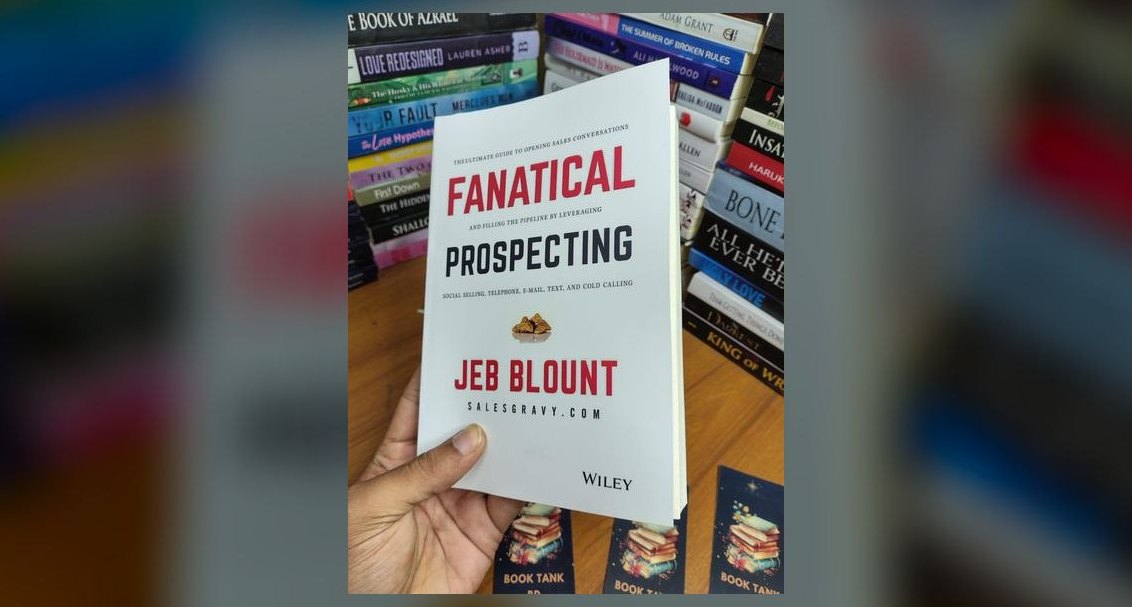 bsHow do you apply *Fanatical Prospecting* to LinkedIn outreach in 2027?
 bsHow does *Gap Selling* help you close more deals in a recession in 2027?
 bsWhat sales script does *New Sales. Simplified.* recommend for cold calls in 2027?
 bsDoes *The Psychology of Selling* still hold up for modern sales techniques in 2027?
 bsWhat’s the most actionable principle from *How to Win Friends and Influence People* for remote work in 2027?
 bsWhat’s the biggest mistake *SPIN Selling* warns against in complex B2B sales?
 bsHow does *Fanatical Prospecting* change your daily routine for outbound sales?
 bsWhat’s the most persuasive technique from *Pitch Anything* for investor pitches?
 bsWhat’s the key insight from *The Challenger Sale* for leading a sales team in 2027?