
What’s the single most effective tactic from *The Challenger Sale* for shortening a long sales cycle in 2027?
 Curated byKory White · Fractional CRO · Maryland
 PULSEKNOWLEDGE LIBRARY
The single most effective tactic from *The Challenger Sale* for shortening a long sales cycle is Commercial Teaching — a structured pitch that teaches the buyer a disruptive insight about a problem they don't fully recognize, then frames your solution as the only logical fix. Rather than waiting for the customer to self-discover urgency through months of internal discussion, this Challenger strategy manufactures urgency in the first meeting, compressing discovery, consensus-building, and vendor selection into a single narrative arc.
The two options compared: Commercial Teaching vs. traditional relationship selling
When a sales cycle stalls for months, reps generally default to one of two strategies. The first, and by far the more common, is relationship-based discovery selling: ask open questions, build rapport, uncover pain slowly over several calls, then propose a solution once trust is established. The second is the Challenger approach — Commercial Teaching — where the rep leads with a provocative, well-researched insight instead of a question.
Relationship selling is comfortable for both sides, which is exactly why it drags. The rep asks "What keeps you up at night?" and waits for the customer to articulate a problem that may take weeks to even form in their head, since most buyers are not sitting on a pre-packaged diagnosis of their own inefficiency. Every subsequent call re-explains the same pain to a new stakeholder, and each explanation resets the clock on urgency. By the time procurement or legal enters the picture, the original champion's enthusiasm has often cooled, and the rep is re-selling the value proposition from scratch.

Commercial Teaching flips the order of operations. The rep arrives with the diagnosis already built — a specific, credible claim about a blind spot in the customer's operations, market position, or competitive posture — and uses it to reframe the conversation before the customer has time to build their own, slower mental model. Because the insight is delivered as a complete package (problem, mechanism, financial consequence, and path to resolution), every stakeholder who hears it receives the same starting point. There is no game of telephone where the champion has to reconstruct the rep's argument secondhand to their CFO three weeks later.
The trade-off is preparation cost. Relationship selling can start with almost no research — a generic discovery call framework works across nearly any account. Commercial Teaching requires the rep, or a supporting revenue enablement function, to build a account- or vertical-specific insight ahead of the first substantive meeting, drawing on public filings, job postings, industry benchmarks, and the company's own stated priorities. That upfront investment is precisely what buys back the months lost later to internal alignment. In other words, the two strategies trade time at different points in the cycle: discovery selling front-loads ease and back-loads delay, while Commercial Teaching front-loads effort and back-loads speed. For a sales cycle already running long, that trade is almost always worth making because the cost of a stalled enterprise deal — in rep hours, forecast risk, and competitive exposure — dwarfs the cost of a few extra hours of account research.

A secondary, less obvious comparison is between a *generic* Challenger-style insight and a *disruptive, account-specific* one. Reps sometimes adopt Challenger language — "reframe," "teach," "commercial insight" — without doing the underlying work, delivering a recycled industry statistic that every competitor also cites. That version of teaching does not shorten anything, because it doesn't create genuine tension; the buyer has heard it before and it doesn't feel personally diagnostic. The version that actually compresses a cycle is narrow, surprising, and tied to the specific company's own numbers or public statements, which is why the preparation step cannot be skipped or templated away entirely.
How to decide between them
Deciding whether a deal calls for full Commercial Teaching or a lighter-touch discovery approach comes down to three questions: how long is the buying group, how commoditized is the category, and how much internal consensus does the purchase require. If the deal involves a single decision-maker buying a well-understood, low-risk tool, traditional discovery is often faster because there's no committee to align — teaching adds preparation overhead without a corresponding payoff. But once you're looking at a multi-stakeholder, six-figure-plus, multi-month evaluation — the exact profile of a "long sales cycle" — Commercial Teaching becomes the higher-leverage strategy because its entire value proposition is collapsing internal alignment time, which is the dominant cost driver in exactly that kind of deal.

The decision also depends on whether your organization can actually produce a credible insight. Commercial Teaching fails, and can even backfire, when the "insight" is thin, recycled, or unsupported — a skeptical buying committee in 2027 will spot a templated claim within minutes. If your sales org lacks the research capacity, a competent sales engineer, or reliable account intelligence to build a genuine diagnostic, defaulting to rigorous, well-run discovery selling is the more effective choice than a poorly executed teaching pitch that damages credibility. The single most important gate before committing to this strategy is honestly assessing whether you can back the insight with real specificity — not whether the Challenger label sounds appealing.
Concrete numbers behind each option
Putting real structure around the comparison makes the decision easier to operationalize. A typical relationship-selling long cycle in a complex B2B deal breaks down roughly like this: two to three discovery calls (2-4 weeks), a solution/demo phase involving multiple stakeholders (3-6 weeks), an internal buyer alignment phase where the champion re-sells the case internally without the rep in the room (4-10 weeks — often the single largest block of elapsed time), procurement and legal review (2-6 weeks), and final signature logistics (1-2 weeks). Stacked together, this routinely produces cycles in the four-to-nine-month range for six- and seven-figure enterprise deals, with the internal alignment phase as the most elastic and least controllable segment.

Commercial Teaching targets that internal alignment phase directly because it is the one the rep normally has zero visibility into. A well-run teaching-led cycle typically compresses to something like: one research-intensive but short diagnostic touch (call plus a one-page insight brief, roughly a week), a single 45-60 minute teaching session that most or all key stakeholders attend together rather than sequentially (collapsing what would have been three or four separate discovery calls into one), a scoped pilot or proof-of-concept commitment (2-4 weeks), and a shortened procurement phase because the economic case was pre-built and pressure-tested during the teaching session itself (1-3 weeks). The net effect reported anecdotally by practitioners applying this Challenger strategy is a cycle in the eight-to-fourteen-week range for comparable deal sizes — roughly half the elapsed time of the discovery-led path, with the biggest single savings coming from stakeholders receiving the same narrative simultaneously instead of serially.
The preparation-time trade-off is also worth quantifying qualitatively rather than with invented precision: building a genuine account-specific insight brief — pulling public filings, competitor positioning, job postings, and any available usage or benchmark data — typically takes a rep or supporting analyst several hours to half a day per account, concentrated at the very start of the relationship rather than spread thin across many meetings later. Compare that to relationship selling, where research effort is lower per meeting but repeats across every new stakeholder introduced into the deal, since each new person requires the pain to be re-established. Across a six-to-ten-person buying committee, that repeated re-explanation cost — measured in rep hours and elapsed calendar weeks waiting for calendars to align — usually exceeds the one-time cost of building a single, sharable teaching narrative.

One more number worth tracking internally: teams that adopt this approach often start scoring meetings on a simple "teaching ratio" — the proportion of a meeting spent delivering insight versus asking discovery questions. Reps whose ratio skews heavily toward questions rather than teaching tend to show longer average cycle times in pipeline data, because the insight is never crystallized into a single, portable artifact the champion can carry to other stakeholders. Tracking this ratio, even informally, gives sales leadership an early proxy for which reps are actually executing the strategy versus performing a surface imitation of it.
Implementation details and sequencing
Rolling out Commercial Teaching effectively requires sequencing the work correctly, because doing the steps out of order undermines the entire mechanism. The sequence that produces the shortest cycles follows four stages.

First, build the insight before the first meeting, not during it. This means assigning research time — to the rep, a sales engineer, or a revenue enablement analyst — to identify one specific, verifiable tension in the account: a gap between a public statement (an earnings call, an annual report, a LinkedIn post from an executive) and observable operational reality (job postings, hiring patterns, product reviews, industry benchmark data). The insight must be falsifiable and specific enough that the buyer could, in principle, disagree with it — a vague industry truism does not qualify and will not create the tension needed to accelerate anything.
Second, sequence the delivery so the insight reaches the full relevant stakeholder group in as close to one sitting as possible, rather than being re-explained meeting by meeting. This is the step most responsible for the compression effect: instead of teaching the CFO in one call, the VP of Ops in another, and IT security in a third, gather them for a single structured session. This is logistically harder to schedule but is the single highest-leverage change a team can make, since it eliminates the "telephone game" decay that stretches relationship-selling cycles.

Third, immediately follow the teaching session with a scoped, time-boxed next step — a pilot, a proof of concept on a defined subset of accounts or data, or a joint business case workshop — rather than a generic proposal document. The purpose of this step is to convert the urgency created during teaching into forward momentum before it fades; teams that let more than a few days pass between the teaching session and a concrete next step routinely see the compressed cycle re-lengthen back toward the discovery-selling baseline.
Fourth, arm the internal champion with a portable artifact — typically a one-page summary of the insight and the proposed framework — so that if a stakeholder who wasn't in the room needs to be looped in later (a common occurrence in any real buying committee), the champion can transmit the same narrative without diluting it. This artifact is what allows the "shared understanding" effect to persist even when perfect single-session attendance isn't achievable.

A common implementation failure is skipping straight to stage two without doing stage one's research, which produces a generic pitch that reads as templated rather than diagnostic. Another is nailing stages one and two but failing stage three — teaching brilliantly, then sending a standard proposal and waiting passively, which lets the urgency dissipate. Sequencing all four stages in order, without skipping the research investment at the front, is what separates teams that see genuine cycle compression from teams that merely adopt Challenger vocabulary without the underlying discipline.
Related questions
Does Commercial Teaching work for small, low-complexity deals?
Generally no — the strategy's value comes from compressing multi-stakeholder alignment, so a single-decision-maker, low-risk purchase rarely benefits enough to justify the account-research overhead. Traditional discovery is usually faster there.
Who should build the insight brief — the rep or a separate team?
Either can work, but larger organizations often centralize insight-building in a sales engineering or enablement function so reps aren't reinventing research per account, keeping the front-loaded effort sustainable at scale.
What happens if the buyer already knows the problem well?
Teaching a known problem doesn't create tension. In that case, shift the challenge to the buyer's *solution* assumptions instead — arguing their current approach is flawed — rather than re-teaching the problem itself.
How is this different from a generic value proposition pitch?
A value proposition explains what your product does; Commercial Teaching first reframes how the buyer sees their own situation, independent of your product, before connecting that reframed problem to your solution.
FAQ
What is Commercial Teaching in one sentence? It's a Challenger sales strategy where the rep leads with a specific, provocative insight about a problem the buyer hasn't fully recognized, rather than opening with discovery questions or a product pitch.
Why is this considered the single most effective tactic for shortening cycles specifically? Because the dominant time cost in a long B2B cycle is internal stakeholder alignment, not the vendor evaluation itself, and Commercial Teaching directly targets that internal phase by giving every stakeholder the same starting narrative at once.
Can this strategy be used over email, or does it require a live meeting? It's strongest live, since tension and dialogue are core to the mechanism, but a condensed version — a sharp, specific insight plus a one-page framework — can open a cold email and earn a meeting, functioning as a preview of the fuller session.
Is there a risk of the insight feeling manipulative to the buyer? Yes, if it's exaggerated, unsupported, or delivered as a monologue. The fix is grounding every claim in something verifiable and treating the session as a dialogue, inviting the buyer to confirm or challenge the insight rather than lecturing them.
Does Commercial Teaching replace the need for a strong champion inside the account? No — it strengthens the champion's position by giving them a ready-made, portable argument, but someone inside the account still has to carry that argument to stakeholders the rep can't reach directly.
How long does it take a sales team to get good at this? Teams typically need several full cycles to get comfortable building specific insights and delivering them with the right mix of confidence and dialogue; the biggest early failure mode is reverting to a monologue instead of a structured, tension-building conversation.
Sources
- Dixon, M., & Adamson, B. (2011). *The Challenger Sale: Taking Control of the Customer Conversation*. Portfolio/Penguin. https://www.penguinrandomhouse.com/books/175256/the-challenger-sale-by-matthew-dixon-and-brent-adamson/
- Gartner. *Challenger Sales Model Research*. https://www.gartner.com/en/sales
- Harvard Business Review. Adamson, B., Dixon, M., & Toman, N. (2012). "The End of Solution Sales." https://hbr.org/2012/07/the-end-of-solution-sales
- Harvard Business Review. Toman, N., Adamson, B., & Gomez, C. (2017). "The New Sales Imperative." https://hbr.org/2017/03/the-new-sales-imperative
- Gartner. "B2B Buying Journey." https://www.gartner.com/en/sales/insights/b2b-buying-journey
- Forrester Research. https://www.forrester.com/research/
- LinkedIn Sales Solutions. "State of Sales Report." https://business.linkedin.com/sales-solutions
Related on PULSE
- What's the most effective opening line from *The Challenger Sale* for a cold email in 2027?
- What's the single most effective questioning technique from *SPIN Selling* for enterprise discovery calls?
- What's the key insight from *The Challenger Sale* for leading a sales team in 2027?
- What's the biggest takeaway from *The Challenger Sale* for B2B sales in 2027?
- What's the key insight from *The Challenger Sale* about teaching customers something they don't know?
- What's the most practical technique from *New Sales. Simplified.* for handling a "send me info" objection?
@Kory-White- · if Venmo asks, the last 4 of my number are 2012
 bsWhat are the key lessons from *Never Split the Difference* for negotiating a raise in 2027?
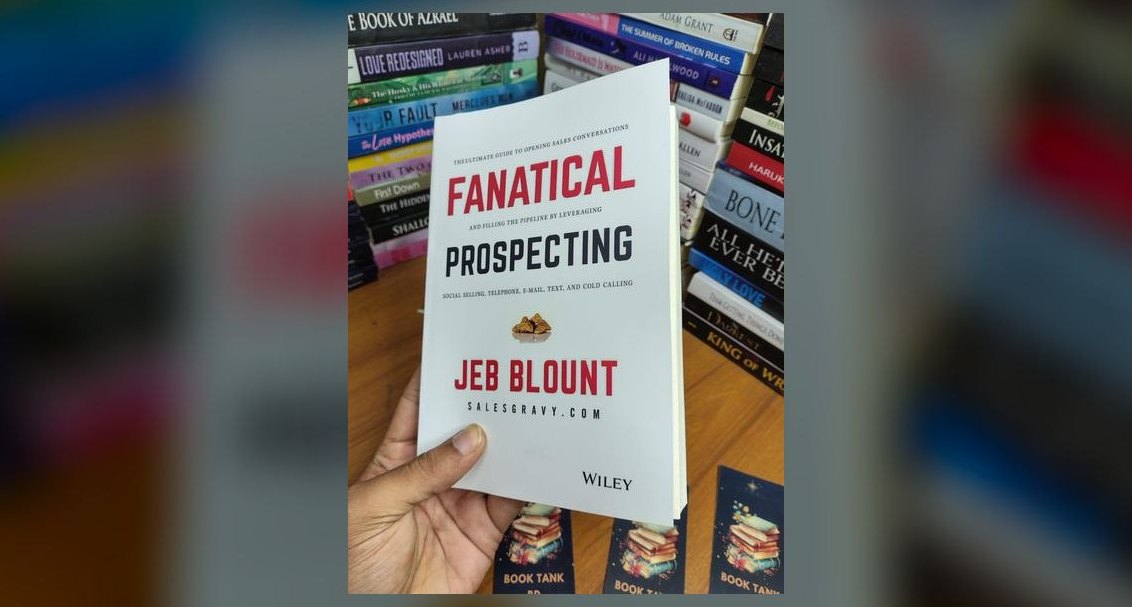 bsHow do you apply *Fanatical Prospecting* to LinkedIn outreach in 2027?
 bsHow does *Gap Selling* help you close more deals in a recession in 2027?
 bsWhat sales script does *New Sales. Simplified.* recommend for cold calls in 2027?
 bsDoes *The Psychology of Selling* still hold up for modern sales techniques in 2027?
 bsWhat’s the most actionable principle from *How to Win Friends and Influence People* for remote work in 2027?
 bsWhat’s the biggest mistake *SPIN Selling* warns against in complex B2B sales?
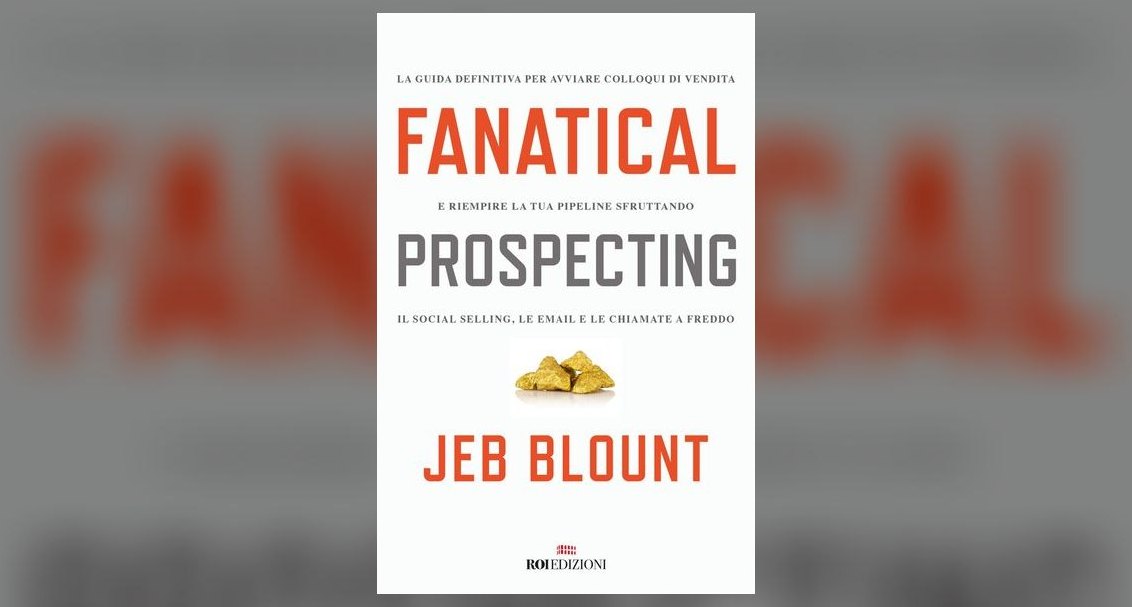 bsHow does *Fanatical Prospecting* change your daily routine for outbound sales?
 bsWhat’s the most persuasive technique from *Pitch Anything* for investor pitches?
 bsWhat’s the key insight from *The Challenger Sale* for leading a sales team in 2027?