
What’s the key difference between a situational and a problem question in *SPIN Selling* for discovery calls in 2027?
 Curated byKory White · Fractional CRO · Maryland
 PULSEKNOWLEDGE LIBRARY
A situational question in SPIN Selling gathers factual context about the buyer's current setup, while a problem question surfaces a specific dissatisfaction or difficulty the buyer feels right now. The difference matters because Neil Rackham's research found problem questions predict discovery-call success roughly three times better, making them the backbone of a 2027 discovery strategy.
Situational vs. problem questions: the two options compared
The two question types sit at opposite ends of the SPIN sequence, and confusing them is the single most common reason discovery calls stall. A situational question is fact-finding: "What CRM are you on?" "How many reps are on your team?" "How long have you used your current tool?" These questions establish a baseline, but Rackham's underlying research — drawn from tens of thousands of recorded sales calls — found that situational questions carry almost no correlation with whether a deal advances. Buyers tolerate a handful of them, but every situational question beyond the minimum needed to frame the conversation reads as laziness, especially when the answer is sitting in a LinkedIn profile, a company website, or a CRM record the rep should have pulled before dialing in.
A problem question, by contrast, is diagnostic: "What's the biggest bottleneck your team hits during peak volume?" "Where does your current process break down when a deal moves fast?" "What's frustrating about the support you're getting today?" These questions ask the buyer to name a difficulty out loud. That act of naming is what makes problem questions valuable — psychologically, a buyer who states their own pain becomes invested in solving it, whereas a buyer who simply confirms a fact stays passive. The core difference, then, isn't topic — it's function. Situational questions collect data the rep needs. Problem questions surface data the buyer needs to hear themselves say.

In a 2027 discovery call, this distinction has sharpened rather than softened. Buyers now assume a rep has already used AI research tools, intent data, and firmographic enrichment to answer basic situational questions before the call starts. A rep who opens with "So, tell me about your company" signals they skipped that homework, and skepticism spikes immediately. Problem questions carry the opposite signal: asking "Is your onboarding time still averaging six to eight weeks, and is that still causing churn in the first quarter?" tells the buyer the rep arrived prepared and is already thinking about their specific difficulty, not a generic script.
There's also a sequencing difference worth naming directly. Situational questions work best clustered at the very start of a call, in small numbers, framed as confirmation rather than discovery — "Just to confirm, you're still running this on Salesforce?" rather than "What platform are you on?" Problem questions work best spread across the middle of the call, each one following up on the previous answer rather than jumping topics. A rep who fires off five unrelated problem questions in a row gets shallow answers; a rep who asks one problem question and then drills into the answer with a follow-up gets the specific, quotable pain that later justifies the price of a solution.

Finally, the risk profile is different. A badly timed situational question wastes time — annoying but recoverable. A badly timed problem question, asked before any rapport or credibility has been established, can shut a buyer down entirely, because pain disclosure requires a baseline of trust. That's why the two question types aren't interchangeable tools for the same job; they solve different problems at different points in the call, and treating them as the same category is the strategy error this whole comparison exists to correct.
How to decide which one to ask next
Deciding whether to ask a situational or a problem question at any given moment in a discovery call comes down to one test: do you already have the fact, or do you still need the buyer to name the pain in their own words? If pre-call research (CRM history, LinkedIn, G2 reviews, intent signals, a prior email thread) already answers the question, asking it live is a wasted turn and a credibility hit. If the fact genuinely isn't available anywhere and is essential to qualify the deal — budget authority, timeline, current vendor contract end date — it earns a brief, confirmatory situational question.

Problem questions get prioritized whenever the buyer has just revealed a fact that implies friction. If a buyer mentions they're scaling from 50 to 150 reps this year, that's an opening for a problem question about whether their current process can handle that growth — not a situational follow-up about headcount, which they already gave you. The decision rule in practice: situational questions close information gaps; problem questions open emotional and business gaps. When in doubt, default to the problem question, because Rackham's data shows the downside of asking one too many situational questions (buyer disengagement) is worse than the downside of asking a problem question a beat early (a polite deflection you can recover from).
This decision flow also explains why top performers structure their entire call plan before dialing: they pre-answer every situational question they can, list two or three problem questions tied to known industry or account-specific friction, and leave room to improvise follow-up problem questions based on what the buyer actually says. Reps who wing the call in real time tend to over-ask situational questions simply because they're easier to generate on the fly — a problem question requires the rep to already have a hypothesis about where the buyer is hurting, which takes preparation.

The numbers behind the ratio
Rackham's original research quantified the difference in a way that's still the benchmark cited in 2027 sales training: across the sample of successful versus unsuccessful calls, top-performing reps allocated roughly 54% of their total question time to problem questions, while average performers spent closer to 34%, burning the difference on situational questions that didn't move the deal forward. Translated into a modern 30-minute discovery call, that ratio maps to approximately 6 to 8 problem questions against only 2 to 3 situational questions — a working ratio of roughly 3:1 in favor of problem questions, with some current sales-enablement teams tightening it further to 2:1 minimum given how much pre-call research tooling has advanced since the 1980s study.
The predictive gap is the number worth remembering: problem questions were found to be roughly three times more strongly correlated with a call advancing to the next stage than situational questions were. That's not a marginal edge — it's the difference between a call that produces a next meeting and one that produces a polite "let me think about it." Reps who track their own call ratios (many now do this automatically through conversation-intelligence platforms that tag question types) typically find that reps closing at the highest rates cap situational questions at under 20% of total questions asked, while reps with weak win rates often sit above 40%, essentially spending half the call rediscovering facts instead of building the case for change.

Timing numbers matter too. In a 30-minute call, the situational questions that remain (after pre-call research eliminates the ones with public answers) should take no more than 3 to 4 minutes combined — roughly the first tenth of the call. Problem questions and their follow-ups should occupy the next 12 to 15 minutes, meaning half the call is spent letting the buyer articulate difficulty in increasing specificity, from a surface complaint down to a root-cause detail. The remaining time goes to implication and need-payoff questions, the two later stages of the SPIN model that build directly on whatever the problem questions surfaced. A call that spends more than a third of its total time on situational fact-gathering has, by Rackham's numbers, already reduced its own odds of advancing.
Building the sequence into a 2027 discovery strategy
Turning this ratio into a repeatable strategy starts before the call, not during it. The first implementation step is a pre-call research pass: pull firmographic and technographic data from tools like LinkedIn, Crunchbase, or G2, check CRM history for any prior touches, and note anything from intent-data platforms that hints at active pain (a recent funding round, a leadership change, a public complaint about a competitor's tool). Every fact recovered here is one situational question removed from the live call.

Second, build a short list of hypothesis-driven problem questions tied to what that research surfaced — not generic ones. If research shows the company is expanding into new markets, the problem question isn't "What challenges are you facing?" (too broad, gets a shallow answer); it's "Is your current process holding up as you expand into these new markets, or is that starting to strain?" Specific problem questions rooted in real research get specific answers; generic ones get generic answers.
Third, sequence the call itself: open with a single sharp problem question rather than a situational one, since a rep who opens with a fact-check signals under-preparation while a rep who opens with an informed problem question signals the opposite. Reserve situational questions for the handful of facts genuinely unavailable anywhere else, and frame them as confirmations rather than open questions to minimize their friction. Follow every problem-question answer with at least one layered follow-up before moving to a new topic, since a single surface-level problem question rarely reaches the root cause a solution can be justified against.

Finally, measure the ratio after the fact. Call-recording and conversation-intelligence tools can tag every question a rep asks as situational or problem type, which turns this from a theoretical framework into a coachable metric. Reps who review their own ratio weekly and consciously trim situational questions toward the 20%-or-under target tend to see their problem-question depth improve within a few calls, simply because removing easy fact-finding questions forces more preparation into the pre-call research stage where it belongs.
Related questions
What's the single most effective questioning technique from SPIN Selling for enterprise discovery calls?
The layered problem question — asking a surface pain, then drilling into specifics, then into business impact — consistently outperforms single broad questions because it builds toward a root cause rather than a vague complaint.
How does SPIN Selling help you uncover customer needs during discovery calls in 2027?
It sequences situational, problem, implication, and need-payoff questions so the buyer moves from stating facts to naming pain to quantifying consequences, arriving at a self-identified need before you propose a solution.
What's the difference between The Challenger Sale and SPIN Selling for closing?
SPIN focuses on structured questioning to surface a buyer's own pain, while Challenger emphasizes proactively teaching the buyer a new perspective on their problem before they've fully articulated it themselves.
What's the biggest mistake reps make during discovery calls that Gap Selling warns against?
Gap Selling flags the same trap SPIN implies: focusing on the buyer's current state facts instead of quantifying the gap between current state and desired future state, which stalls urgency.
FAQ
Why are situational questions considered lower-value in SPIN Selling? Because they only confirm facts the buyer already knows about their own business, which creates no emotional engagement or sense of ownership over a problem — the elements Rackham's research tied to calls that actually advanced.
How many problem questions should a rep ask in a 30-minute discovery call? Roughly 6 to 8, spaced with follow-ups, while keeping situational questions to 2 or 3 reserved for facts that genuinely couldn't be found through pre-call research.
Can situational questions be skipped entirely in a 2027 discovery strategy? Not entirely — some context is still needed to tailor a pitch, but the goal is to resolve 80% or more of that context before the call using CRM data and public research, leaving only essential gaps for the live conversation.
What's the best way to move from a situational answer into a problem question? Use a bridge that references the fact just given: "Given that setup, what's the biggest friction your team runs into with it?" — this links the confirmed fact directly to the pain you want surfaced.
Are problem questions the same as the "pain" identified in MEDDICC? Yes — the pain component of MEDDICC is functionally the same output a well-run sequence of problem questions is designed to produce: an explicit, specific dissatisfaction the buyer states in their own words.
What should a rep do when a buyer gives a vague answer to a problem question? Ask a narrower follow-up problem question tied to a specific recent instance — "Can you give me an example of when that bottleneck showed up last week?" — rather than repeating the same broad question or moving on.
Sources
- https://www.mcgrawhillprofessional.com/product/9780070511132/
- https://www.gong.io/resources/
- https://www.forbes.com/sites/forbesbusinesscouncil/
- https://blog.hubspot.com/sales
- https://www.linkedin.com/business/sales/blog
- https://www.g2.com/categories/sales-intelligence
- https://www.gartner.com/en/sales
- https://www.6sense.com/resources
Related on PULSE
- [What's the single most effective questioning technique from SPIN Selling for enterprise discovery calls?](/knowledge/bs0386)
- [What's the difference between The Challenger Sale and SPIN Selling for closing?](/knowledge/bs0347)
- [How does SPIN Selling help you uncover customer needs during discovery calls in 2027?](/knowledge/bs0353)
- [What's the biggest mistake reps make during discovery calls that Gap Selling explicitly warns against?](/knowledge/bs0394)
- [Secrets of Question-Based Selling by Thomas Freese: Summary, Key Lessons, and RevOps Takeaways](/knowledge/bs301)
- [SPIN Selling by Neil Rackham: Summary, Key Lessons, and RevOps Takeaways](/knowledge/bs296)
@Kory-White- · if Venmo asks, the last 4 of my number are 2012
 bsWhat are the key lessons from *Never Split the Difference* for negotiating a raise in 2027?
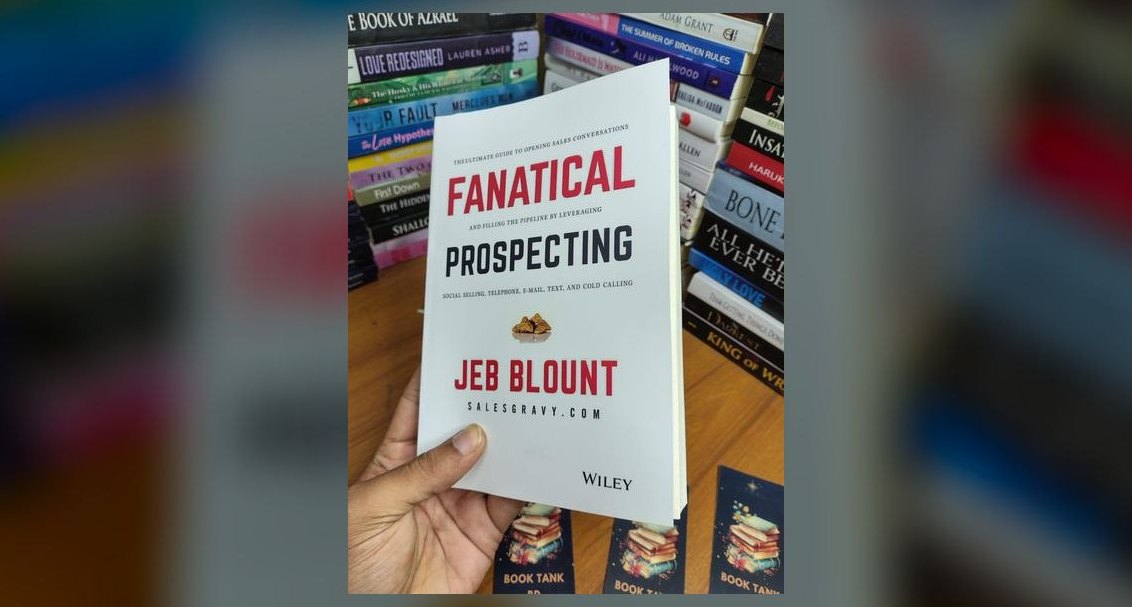 bsHow do you apply *Fanatical Prospecting* to LinkedIn outreach in 2027?
 bsHow does *Gap Selling* help you close more deals in a recession in 2027?
 bsWhat sales script does *New Sales. Simplified.* recommend for cold calls in 2027?
 bsDoes *The Psychology of Selling* still hold up for modern sales techniques in 2027?
 bsWhat’s the most actionable principle from *How to Win Friends and Influence People* for remote work in 2027?
 bsWhat’s the biggest mistake *SPIN Selling* warns against in complex B2B sales?
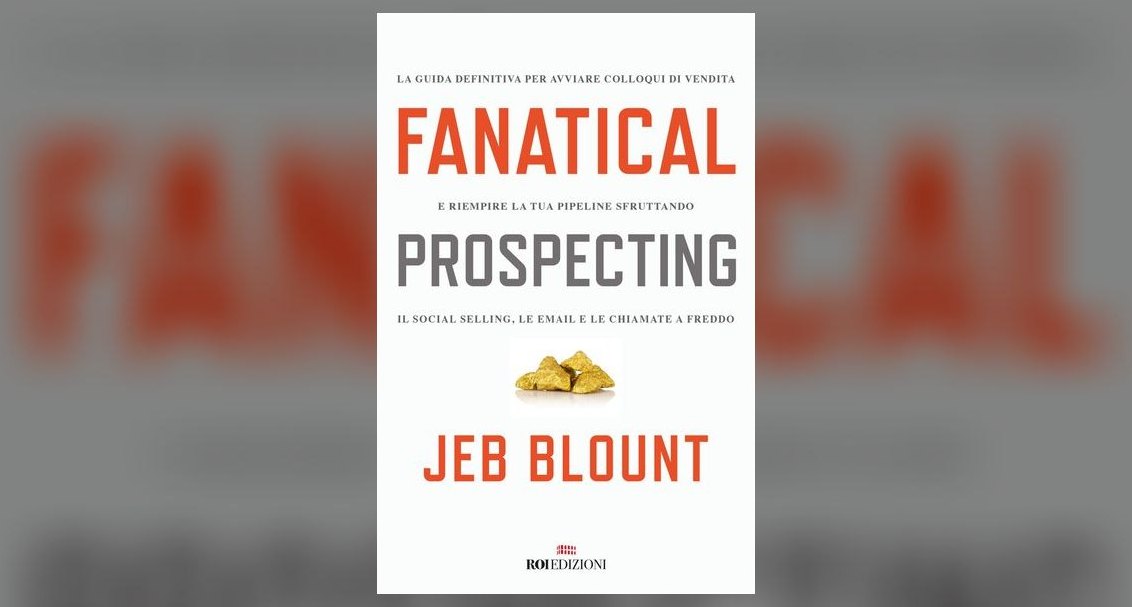 bsHow does *Fanatical Prospecting* change your daily routine for outbound sales?
 bsWhat’s the most persuasive technique from *Pitch Anything* for investor pitches?
 bsWhat’s the key insight from *The Challenger Sale* for leading a sales team in 2027?