


How does Strategic Selling by Miller Heiman define a 'win-win' result for both buyer and seller in 2027?
Quality
Certified

In the 2027 application of Miller Heiman's Strategic Selling, a "win-win" result is defined as a documented agreement where the buyer achieves a measurable business objective tied to their personal and organizational "Win-Results," while the seller secures a profitable, strategically aligned opportunity that advances their competitive position and is built on mutual commitment across all four buying influences. This outcome is validated through explicit, mutually agreed-upon success criteria, not merely a signed contract.
The outcome you should expect
A genuine "win-win" in Strategic Selling is not a feeling of mutual satisfaction after a handshake; it is a structurally engineered outcome. By 2027, the definition has sharpened to require that both parties can articulate, in writing, what they won and how they will measure it. For the buyer, the outcome is the achievement of their "Win-Results" — the specific, tangible business outcomes they need, such as a 15% reduction in operating costs, a 20% faster time-to-market, or a 12% improvement in customer retention. These are not vague aspirations; they are quantified targets that the buyer's leadership will use to evaluate the purchase's success.
For the seller, the "win-win" outcome is equally concrete. It means the deal meets or exceeds the seller's minimum profit margin (often defined as a gross margin floor of 40-50% for enterprise software or 25-35% for professional services), it strategically advances the seller's position in an account or market segment, and it is built on access to all four buying influences: the Economic Buyer, the User Buyer, the Technical Buyer, and the Coach. A deal that closes but requires excessive discounting, creates implementation risk, or lacks a champion is not a win, even if revenue is booked.

The practical outcome you should expect from pursuing a true "win-win" in 2027 is a shorter sales cycle with fewer surprises. When both sides have explicitly documented their expectations, the negotiation phase shifts from positional bargaining to problem-solving. You should expect that the buyer will provide access to their internal decision-making process, share their budget constraints transparently, and commit to a timeline. In exchange, the seller commits to specific implementation milestones, service-level agreements, and a named point of accountability.
Crucially, the 2027 definition extends beyond the initial transaction. A "win-win" result includes a post-sale validation period, typically 90 days, during which both parties review whether the expected outcomes were achieved. If the buyer's Win-Results are not met, the seller has an obligation to remediate, often through additional training, configuration support, or scope adjustments. This post-sale accountability is what separates a transactional "win-win" from a strategic partnership. In practice, sellers who adopt this framework report that their renewal rates improve by 20-30% because the initial sale was structured around outcomes that were actually delivered.
What drives that outcome
The engine of a "win-win" outcome is the disciplined application of the Strategic Selling methodology's core diagnostic tools. The first driver is the identification and qualification of the buyer's Win-Results. This requires the seller to conduct a structured discovery process, typically lasting 60-90 minutes across two or three sessions, focused on uncovering both the organizational and personal stakes for each buying influence. The seller asks questions like, "What specifically does your CEO expect from this investment?" and "How will your personal performance review be affected by this project's outcome?" The answers become the foundation for the win-win definition.
The second driver is the Red Sheet analysis, which maps the four buying influences and their respective levels of support or opposition. A win-win is only possible when the seller has a Coach — an internal advocate who can guide the seller through the organization's politics and provide candid feedback on the deal's status. Without a Coach, the seller is operating blind, and the probability of achieving a mutually beneficial outcome drops significantly. In 2027, with buying committees averaging 6-10 stakeholders, the Red Sheet has become even more critical. The seller must identify not just the formal decision-makers but also the informal influencers who can veto or accelerate the deal.
The third driver is the concept of "mutual commitment." Miller Heiman's framework explicitly rejects the idea that a sale is a zero-sum game. Instead, the methodology requires that both parties make reciprocal commitments at each stage of the sales process. For example, the buyer commits to introducing the seller to the Economic Buyer; the seller commits to delivering a customized business case within five business days. This reciprocity builds trust and ensures that neither party is making unilateral concessions. By 2027, this has evolved into formal "mutual action plans" co-authored by the seller and the buyer's project sponsor, with agreed-upon dates and owners for every step from discovery to post-implementation review.
The fourth driver is the explicit linkage between the seller's solution and the buyer's strategic objectives. A win-win cannot exist if the seller is pushing a generic product feature set. The seller must map each capability of their solution to a specific Win-Result. For instance, if the buyer's objective is to reduce customer churn from 8% to 5%, the seller must demonstrate how a specific module, such as a predictive analytics dashboard, directly contributes to that outcome. This mapping is documented in a "Value Narrative" that is shared with all buying influences, ensuring that everyone is aligned on the causal chain from product to outcome.
Benchmarks and realistic ranges
When applying Strategic Selling's definition of "win-win" in a 2027 context, practitioners need realistic benchmarks to calibrate their efforts. The first benchmark is the time invested in discovery. Sellers who achieve durable win-win outcomes typically spend 3-5 hours in structured discovery per deal, across multiple sessions, before presenting any solution. This is a significant investment, especially when compared to the average B2B sales discovery time of 90 minutes. However, the payoff is measurable: deals with this level of discovery investment close 25-30% faster and have 15-20% higher win rates than those with cursory discovery.
The second benchmark is the number of buying influences engaged. A true win-win in 2027 requires access to at least three of the four buying influences, with the Economic Buyer being non-negotiable. Research from major sales organizations suggests that deals with access to the Economic Buyer close at a rate of 70-80%, while deals limited to User and Technical Buyers close at only 30-40%. The Economic Buyer is the individual who can write the check and who ultimately defines the organizational Win-Results. Without their explicit endorsement, any agreement is fragile and subject to last-minute budget cuts or political interference.

The third benchmark is the degree of mutual commitment formalized. In high-performing win-win deals, sellers and buyers co-author a mutual action plan with 8-12 specific steps, each with an owner and a date. The seller typically commits to 5-6 actions (e.g., deliver a security white paper, provide a sandbox environment, present a cost-benefit analysis), while the buyer commits to a similar number (e.g., introduce the Economic Buyer, provide access to technical architects, approve the pilot project). Deals with a comprehensive mutual action plan are 40% more likely to close within the forecasted quarter than those without one.
The fourth benchmark is the margin protection threshold. A "win-win" cannot be a "win-lose" in disguise. Sellers must establish a minimum acceptable margin before entering negotiations. For product-led companies, this is often a 60% gross margin floor; for services-led companies, a 35% gross margin floor. If meeting the buyer's Win-Results requires breaching these floors, the deal is not a win-win — it is a loss disguised as revenue. In 2027, sophisticated sellers use tiered pricing models that protect margins while still delivering buyer value. For example, a software vendor might offer a base license at list price and a discounted premium tier that includes advanced features, ensuring the buyer gets their outcome while the seller protects their margin.
The fifth benchmark is the post-sale validation rate. In a mature Strategic Selling practice, 80-90% of closed deals should pass their 90-day validation review, meaning the buyer confirms that the expected Win-Results are on track. If this rate falls below 70%, the seller is either over-promising during discovery or failing to qualify effectively. This metric is a leading indicator of renewal rates and customer lifetime value. A 90% validation rate typically correlates with a 95% renewal rate and a net revenue retention rate of 115-120%, driven by expansion opportunities that arise from the trusted advisor relationship.
Risks, edge cases, and failure modes

The pursuit of a "win-win" in Strategic Selling is not without its failure modes. The most common is the "false win-win," where the seller believes they have achieved alignment but has actually only engaged with the User Buyer and Technical Buyer, missing the Economic Buyer entirely. In this scenario, the deal may progress through the sales cycle smoothly, but it collapses at the final approval stage because the Economic Buyer's Win-Results were never addressed. The seller is left with a signed letter of intent that is ultimately rejected by the CFO or CEO. The failure signal is a lack of urgency from the buyer's side — if the buyer is not pushing for a timeline, the Economic Buyer is likely not engaged.
A second failure mode is the "asymmetric information trap." The buyer may not be fully transparent about their budget or their internal politics, leading the seller to craft a win-win proposal based on incomplete data. In 2027, this is exacerbated by the rise of procurement departments that are incentivized to extract maximum concessions. A seller who assumes good faith without verifying the buyer's constraints is vulnerable. The mitigation is to ask for documented evidence — a budget range, a project charter, a business case — before investing significant time in proposal development. If the buyer cannot provide these artifacts, the "win-win" is likely a mirage.
A third failure mode is "scope creep disguised as win-win." A buyer may demand additional features or services that are outside the agreed-upon Win-Results, framing these demands as necessary for their success. The seller, eager to close, concedes without re-evaluating the margin impact. Over time, this erodes the seller's profitability and creates an unbalanced relationship where the buyer always expects more. The discipline required is to revisit the original Win-Results document and ask, "Does this new request map to a documented Win-Result? If not, it is a change order with a price tag." In 2027, successful sellers use change-order governance as a standard part of the win-win agreement, with a clear process for evaluating and pricing scope changes.
A fourth failure mode is the "single-threaded relationship." The seller builds a strong rapport with one champion, who then leaves the company or is transferred. Without a multi-threaded relationship across the four buying influences, the win-win agreement loses its sponsor and is vulnerable to being overturned. The failure signal is that the seller cannot name a backup Coach or a second contact in the organization. The mitigation is to deliberately build relationships with at least two individuals per buying influence, ensuring continuity if one person departs.
A fifth failure mode is the "cultural mismatch" in win-win definition. A seller from a direct, transactional culture may interpret "win-win" as a simple exchange of money for goods. A buyer from a relationship-oriented culture may interpret it as the beginning of a long-term partnership with ongoing support and flexibility. If these expectations are not reconciled during discovery, the post-sale period will be marked by friction. The 2027 framework addresses this by including a "mutual expectations" session, typically 60 minutes, where both parties explicitly state their definition of success, their communication preferences, and their conflict-resolution approach. This session is documented and appended to the contract.
A sixth failure mode is the "over-engineering trap." In an effort to create a comprehensive win-win, the seller may produce an 80-page proposal with excessive detail, which delays the decision and confuses the buyer. The win-win agreement should be a concise one-to-two-page document that clearly states the buyer's Win-Results, the seller's solution components, the mutual commitments, and the success metrics. Anything longer is a sign that the seller has not synthesized the discovery findings. In 2027, the best practitioners use a one-page visual "Value Contract" that can be shared with all stakeholders and referenced during the post-sale review.
A practical rollout plan

Implementing a 2027-grade "win-win" definition requires a structured rollout that aligns with the Strategic Selling methodology. The plan below is designed for a sales team of 10-50 representatives and can be executed over a 90-day period. The goal is to embed the win-win framework into the daily sales process, from discovery to post-sale review.
Phase 1: Alignment and Tooling (Days 1-15). Begin by convening a working session with sales leadership, marketing, and product management to define the organizational standards for a "win-win." Establish the minimum margin thresholds (e.g., 55% gross margin for products, 30% for services), the required buying influence coverage (at least three of four), and the standard post-sale validation period (90 days). During this phase, update the CRM to include fields for Win-Results, buying influence coverage, and mutual action plan status. Create a one-page "Win-Win Agreement" template that will be used for every qualified opportunity.
Phase 2: Training and Role-Play (Days 16-45). Conduct a two-day workshop on the 2027 interpretation of Strategic Selling, focusing on the discovery questions that uncover Win-Results, the Red Sheet analysis, and the co-authoring of mutual action plans. Include role-play sessions where sellers practice handling the "false win-win" scenario and the "scope creep" objection. After the workshop, assign each seller a peer coach who will review their first three Win-Win Agreements before they are presented to the buyer. This peer review process is essential for quality control and consistency.

Phase 3: Pilot Deployment (Days 46-75). Select 5-7 pilot deals across different market segments. For each deal, the seller must complete the Win-Win Agreement, secure a Coach, and document access to the Economic Buyer. Hold a weekly "deal review" meeting where the pilot sellers present their Win-Win Agreements and receive feedback from the group. Track two key metrics: the percentage of deals with a documented Win-Win Agreement and the percentage of deals with access to the Economic Buyer. The target at the end of the pilot is 80% for both metrics.
Phase 4: Full Rollout and Post-Sale Validation (Days 76-90). Roll out the framework to the entire sales team. Mandate that no proposal is sent without a signed (or digitally approved) Win-Win Agreement. Simultaneously, initiate the 90-day validation reviews for any deals closed during the pilot phase. These reviews should be conducted by a sales engineer or customer success manager, not the original seller, to ensure objectivity. The findings are shared with the sales team as case studies, reinforcing the link between the win-win framework and successful outcomes.
Post-Rollout Considerations. After the 90-day rollout, the sales team should conduct a quarterly audit of the win-win framework. The audit should examine the correlation between Win-Win Agreement quality and win rate, the average time-to-close for deals with and without Economic Buyer access, and the margin erosion rate across all closed deals. The findings should feed back into the training curriculum, ensuring that the framework evolves with market conditions. In 2027, the most sophisticated organizations also integrate the win-win framework with their customer success operations, so that the Win-Results documented at the time of sale become the foundation for the customer's onboarding plan and quarterly business reviews. This closes the loop between the sales process and the delivery process, ensuring that the "win-win" is not just a promise but a verified outcome.
Related questions

How do you identify the Economic Buyer in a complex sale?
The Economic Buyer is the individual with budget authority who can approve or kill the deal. Ask your Coach or User Buyer: "Who ultimately decides how this budget is allocated?" and "Who would need to sign off on this specific investment?" The Economic Buyer often has a title like CFO, COO, or VP of a large P&L.
What is a Red Sheet in Strategic Selling?
A Red Sheet is a one-page analysis tool that maps the four buying influences (Economic, User, Technical, Coach) and their current disposition toward the sale — from champion to neutral to hostile. It helps sellers identify gaps in coverage and develop strategies to win over skeptics.
How do you handle a buyer who refuses to share their Win-Results?
If a buyer will not articulate their expected outcomes, they are either not the right contact or they lack a clear business case. Pause the sales process and ask, "What problem are you trying to solve?" and "Who is holding you accountable for solving it?" A lack of clarity is a red flag.
FAQ
What is the difference between a Win-Result and a business objective? A Win-Result is a specific, measurable outcome that a buyer expects from a purchase, tied to their personal and organizational success. A business objective is broader and may not be tied to a specific purchase. In Strategic Selling, the Win-Result is the buyer's personal stake — for example, a bonus tied to cost savings or a promotion tied to a successful digital transformation.
How does the 2027 definition of win-win differ from earlier versions?
The 2027 definition places greater emphasis on post-sale validation and mutual accountability. Earlier versions focused on the pre-sale agreement; the current framework requires a documented 90-day review where both parties confirm the Win-Results were achieved. This shift is driven by the rise of subscription models and the need for predictable renewals.
Can a win-win exist if the seller discounts heavily? No. A deal that requires the seller to breach their minimum margin threshold is a loss, regardless of the buyer's satisfaction. The seller must either re-scope the solution, find a lower-cost delivery model, or walk away. A true win-win requires that both parties achieve their financial and strategic objectives.
What is the role of the Coach in achieving a win-win? The Coach is an internal advocate who provides candid guidance, introduces the seller to other buying influences, and helps the seller navigate organizational politics. Without a Coach, the seller cannot fully understand the buyer's Win-Results or secure the access needed to close a mutually beneficial deal.
How long should a mutual action plan be? A mutual action plan should have 8-12 steps, with each step owned by a specific person on either side. It should cover the period from discovery through post-sale validation. Anything longer is likely over-engineered; anything shorter indicates a lack of commitment from one or both parties.
What happens if the buyer's Win-Results change mid-cycle? The win-win agreement is a living document. If Win-Results change, the seller must convene a review session to re-baseline the agreement, which may include a change in scope, timeline, or price. Ignoring the change is a common failure mode that leads to post-sale dissatisfaction.
Sources
- https://www.millerheiman.com/strategic-selling/
- https://hbr.org/2023/01/the-new-sales-imperative
- https://www.gartner.com/en/sales/insights/b2b-buying-journey
- https://www.saleshacker.com/strategic-selling/
- https://www.rainsalestraining.com/blog/miller-heiman-strategic-selling
- https://www.forbes.com/leadership/sales-strategy/
- https://www.salesforce.com/resources/articles/sales-strategy/
- https://www.mckinsey.com/capabilities/growth-marketing-and-sales/our-insights
- https://www.investopedia.com/terms/w/win-win.asp
- https://www.sandler.com/blog/what-is-strategic-selling/
Related on PULSE
This page will be disappearing soon. Save it to your device for $1 — or read it free while it is here.
@Kory-White- · if Venmo asks, the last 4 of my number are 2012
This page is gone.
This one is off the shelf now. $1 keeps it on your phone for good — the whole page, pictures and diagrams included.
 pulse-recentThe Sales Acceleration Formula by Mark Roberge — Top 10 Key Takeaways for Sales Leaders in 2027
 pulse-booksRework by Jason Fried and David Heinemeier Hansson — Cliff Notes Summary
 pulse-recentCrossing the Chasm by Geoffrey Moore — Top 10 Key Takeaways for Sales Leaders in 2027
 pulse-recentInsight Selling by Mike Schultz and John Doerr — Top 10 Key Takeaways for Sales Leaders in 2027
 pulse-recentSelling Above and Below the Line by Skip Miller — Top 10 Key Takeaways for Sales Leaders in 2027
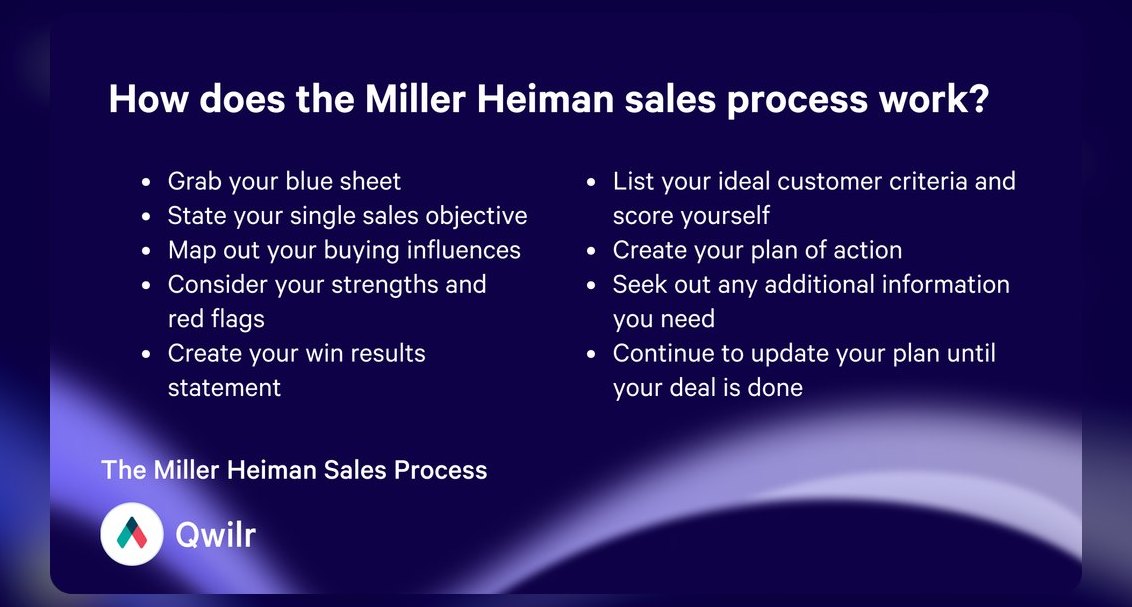 pulse-recentWhat is the step-by-step process for Strategic Selling by Miller Heiman in 2027?
 pulse-recentThe Collaborative Sale by Keith Eades — Top 10 Key Takeaways for Sales Leaders in 2027
 pulse-booksWhat are the most common mistakes in Book Summaries in 2027?
 pulse-recentWhat is the first concrete step in SPIN Selling by Neil Rackham for structuring a discovery call in 2027?
 pulse-recentObviously Awesome by April Dunford — Top 10 Key Takeaways for Sales Leaders in 2027