


Obviously Awesome by April Dunford — Top 10 Key Takeaways for Sales Leaders in 2027
Quality
Certified

April Dunford's *Obviously Awesome* argues positioning is a deliberate strategy, not a tagline: name the true competitive alternatives, isolate the unique attributes only you have, translate those into customer value, target the best-fit buyer, and pick a market category. The core Takeaways for sales leaders: reps close more, faster, once positioning removes guesswork from every pitch.
Accidental positioning vs. deliberate positioning
Every sales team is already positioned — the only question Dunford forces is whether that happened on purpose. Accidental positioning accumulates by default: the founder's original pitch from several funding rounds ago, whatever language the first ten customers happened to respond to, a market category borrowed from a competitor because "that's what everyone calls this," and a pile of shipped features nobody translated into a coherent story. Reps inheriting accidental positioning freelance. Each one builds a private theory of what the product is for, tests it live on prospects, and slowly develops a pitch that works for them personally but can't be transferred, coached, or scaled. New hires ramp slowly because there's no shared narrative to teach — only tribal knowledge held by the top performer that quarter.
Deliberate positioning is a small, cross-functional exercise — typically four to six people spanning sales, product marketing, customer success, and a founder or product lead — that works through Dunford's five components (competitive alternatives, unique attributes, value, target market characteristics, market category) in a structured sequence instead of an ad hoc brainstorm. The output isn't a tagline. It's a set of decisions: who the product is built for, what it replaces, what only the vendor can do, why that matters, and what category the buyer should file the vendor under mentally. Sales leaders translate that document into qualification criteria, discovery questions, and objection responses that every rep can use identically.

The commercial gap between the two paths is not philosophical. Accidental positioning tends to produce "Swiss Army knife" pitches — reps listing every feature because nobody told them which ones matter to *this* buyer — which lengthens discovery calls, invites feature-by-feature competitive shootouts the seller didn't need to enter, and pushes deals toward heavier discounting because the value story never lands cleanly. Deliberate positioning does the opposite: it gives reps explicit permission to leave features out, because the team already agreed which attributes move the buyer and which ones are noise nobody needs to mention.
Onboarding is where the gap shows up fastest. A new rep dropped into an org running on accidental positioning has to reverse-engineer the pitch by shadowing calls and copying whatever the top performer happens to say that week — slow and inconsistent, since that performer's private theory may not transfer to a different territory or vertical. A new rep dropped into deliberate positioning inherits a document: named competitive alternatives to prepare for, attributes to lead with, value language already validated against real customers, and a target profile to qualify against. Ramp still takes real work, but it's work built on a fixed foundation instead of work spent discovering what the foundation even is.

Founder-led sales is the single most common source of accidental positioning, and Dunford calls this out directly. A founder's original pitch was built by trial and error against whatever the first handful of customers responded to, and first sales hires inherit that pitch wholesale — nobody checks whether the market, the competitive set, or the target customer has moved since. A pitch correct for a five-person startup's first ten logos is frequently wrong for a fifty-person company selling into a different buyer with different competitive alternatives, and nobody notices because "it's always been the pitch." This gap compounds: every quarter the inherited pitch goes unexamined, the org accumulates more reps trained on language that no longer matches the market, making a later reset more disruptive than an early one would have been.
How to decide between them
Sales leaders don't need a full positioning workshop for every messaging complaint. Dunford's framework implies a simple diagnostic: read the symptoms in the pipeline before deciding whether the fix is a quick patch or a full five-component rebuild.

Symptoms pointing to a real positioning problem: deals stall at the same stage regardless of rep skill; win/loss interviews turn up a competitive alternative nobody built a battlecard for (often "do nothing" or an internal spreadsheet, not a named competitor); reps give wildly different answers when asked "what do we do" in a hallway test; discounting is the default lever for closing rather than the exception; and marketing-sourced leads convert at a noticeably lower rate than leads sales books directly, suggesting the inbound narrative and the sales narrative have drifted apart from each other over time.
Symptoms pointing to a lighter fix: the core story holds but a specific objection keeps recurring against one named competitor — a battlecard update, not a repositioning; a new feature needs a value statement bolted onto the existing narrative; or a new segment is being tested and needs its own proof points layered onto an otherwise-working position rather than a ground-up rebuild.
The decision point that trips up most sales leaders is treating a positioning problem as a training problem. Telling reps to "tell the story better" when the underlying story is built on the wrong competitive alternative or the wrong target customer just produces more confident delivery of a pitch that still doesn't land with the buyer. Dunford's diagnostic forces the question backward, to the five components, before anyone rewrites a script.
A cheap way to run this diagnostic before committing calendar time to a full workshop is a hallway test: pull five reps aside individually, ask each "what do we do and who is it for," and write down the answers without letting them compare notes. If the answers cluster around the same competitive alternative, the same one or two unique attributes, and a similar description of the ideal customer, the position is probably intact and the real issue is execution or a single objection. If the five answers describe five different products for five different buyers, that inconsistency is itself the evidence a full rebuild is warranted — no win/loss data required to make the call.
Concrete numbers behind each option

Dunford's book is explicit that positioning isn't a single sentence or a one-hour brainstorm — it's a scoped exercise with a defined shape, and sales leaders benefit from knowing that shape so they can budget the right time and people against it as a deliberate strategy rather than a side conversation.
The team size: four to six participants is the workable range she describes — large enough to cover sales, product, marketing, and customer-facing reality, small enough to actually reach agreement in a room. Pulling in ten or fifteen stakeholders turns the exercise into a debate club; pulling in one person turns it into that person's opinion with a positioning label attached.
The components: exactly five — competitive alternatives, unique attributes, value and proof, target market characteristics, and market category — plus an optional sixth layer, market trends, which Dunford explicitly warns against leaning on too heavily, since trends shift and a position built on a trend has a shelf life the rest of the framework doesn't.
The category choice: three practical strategies, not an open menu. A team can position head-to-head inside an existing, well-understood category (fastest for buyer comprehension, hardest to stand out); carve out a subcategory of an existing category (borrows the parent category's buyer familiarity while claiming a specific niche); or create a new category entirely (highest ceiling, but it requires sustained education spend most sales teams underestimate, since buyers can't search for a category name that doesn't exist in their vocabulary yet).
The target market filter: Dunford's "best-fit customer" is not the same as total addressable market. It's the intersection of who values the unique attributes most and who can act on that value fastest — sales leaders use this to prioritize a shorter list of segments for outbound and qualification rather than treating every logo as equally winnable. A rep chasing a technically-in-market account that isn't a best-fit customer typically faces a longer cycle, more stakeholders to convince, and a weaker internal champion, because the account doesn't feel the pain the positioning was built around as acutely.
The competitive alternative check: the book's repeated caution is that the named-competitor list sales teams keep in the CRM is usually incomplete. The real competitive alternative in a lost deal is frequently the status quo — a manual process, a spreadsheet, an existing tool stretched to cover a new use case, or simply doing nothing this quarter. Battlecards built only against named competitors miss the alternative that wins the most deals against a seller.

Proof points are the number-adjacent piece sales leaders most often skip. Dunford's framework pairs every value claim with a proof — a customer outcome, a concrete before/after, a specific result the buyer can independently verify — because an unsupported value claim reads as marketing copy, while the same claim attached to a verifiable proof point reads as credible. A deck or battlecard listing value statements with no proof attached is a half-finished version of the framework, and reps notice the gap the first time a skeptical buyer asks how the seller knows that.
Implementation details and sequencing
Rolling deliberate positioning into a live sales motion is a sequencing problem as much as a content problem. Skipping steps — jumping straight from a workshop to a new deck without validation, for instance — is the most common way positioning work gets undone within a quarter.
Start with input gathering before the workshop, not during it: pull ten to fifteen closed-won and closed-lost deals, read the notes, and identify what customers actually said when asked why they bought or why they walked away. This grounds the exercise in real language instead of internal assumptions about what customers supposedly care about.
Run the workshop as a sequence, not a free-for-all: first agree on the list of true competitive alternatives, including non-competitor alternatives like spreadsheets or inaction; then list unique attributes the team can defend with a straight face against that alternative list; then, and only then, translate each attribute into the value it creates for a customer, since attributes pitched without translated value read as feature-dumping; then match those value themes to the specific target customer characteristics that make the value land hardest; finally choose the market category framing that makes the whole story make sense on first hearing, without over-relying on a passing trend.
Validate before scaling it to the team. Take the draft positioning back to a handful of best-fit customers — ideally recent closed-won accounts who match the target profile — and read it to them close to verbatim. If they nod along without needing it explained, the positioning has passed what Dunford calls the "obviously awesome" test: it should feel self-evident to the right buyer, not clever to the internal team. If customers need it explained or push back on the target description, revise before rolling it out.
Roll it to the sales team in the same order. Train reps on the *why* behind the new narrative before handing them a rewritten deck, since reps who understand which competitive alternative and which target customer the positioning was built around can improvise correctly in a live call, while reps who only memorize new slide copy fall back to old habits the moment a prospect asks an unscripted question. Update the CRM's qualification fields and battlecards to reflect the same five components, so the language a rep uses in discovery, the language in the battlecard, and the language marketing puts in front of the same buyer are one story instead of three. Finally, put a quarterly review on the calendar that checks the positioning against fresh win/loss data — a market shifts, new competitive alternatives emerge, and a position that was obviously awesome eighteen months ago can quietly go stale if nobody is watching for it.

Enablement cadence matters as much as content. A single training session on launch day is rarely enough for a new position to stick against months of muscle memory built on the old pitch; teams that switch successfully pair the initial rollout with live call shadowing in the following weeks, a short recurring session where reps bring real objections back to the group, and a visible update to whatever scorecard or call-review rubric managers already use — so the new positioning is reinforced in the same channels reps are already held accountable through, rather than living only in a deck nobody reopens after week one.
Related questions
Is positioning the same thing as messaging?
No. Positioning is the underlying strategy — decisions about competitive alternatives, unique attributes, value, target customer, and category. Messaging is the wording used to communicate that strategy. Fixing messaging without fixing a broken position just produces better-written copy for the wrong story.
Who should own the positioning exercise, marketing or sales?
Neither alone. Dunford recommends a small cross-functional team spanning sales, product marketing, and product, because sales has the closest read on real objections and competitive alternatives, while product and marketing hold attribute and category context sales alone can't see.
How often should positioning be revisited?

At minimum annually, and immediately after a major competitive entrant, a new product line, or a noticeable shift in win/loss patterns. Positioning tied to a market trend needs more frequent review, since the trend that once created urgency can fade quickly.
What's the fastest sign that positioning, not sales skill, is the problem?
When your strongest rep and your weakest rep both struggle against the same objection the same way, the gap usually isn't coaching — the underlying story doesn't hold up against a real competitive alternative.
FAQ
**What is April Dunford's core argument in *Obviously Awesome*?** That positioning is a deliberate, learnable process — not an innate marketing talent or a lucky tagline — built from five components: competitive alternatives, unique attributes, value, target market characteristics, and market category.
Why does the book matter specifically for sales leaders and not just marketing? Because reps live the consequences of bad positioning daily, in inconsistent pitches, unnecessary discounting, and losses to competitive alternatives nobody prepared them for. Sales leaders are often first to notice the symptoms even though the fix is a shared, cross-functional exercise.

What's the single biggest sales takeaway from the book? That the competitive alternative a deal is actually lost to is often not a named competitor in the CRM — it's the status quo, a spreadsheet, or inaction. Battlecards built only around named competitors miss the alternative that wins most often.
Does choosing a new market category always beat competing in an existing one? No. A new category has the highest ceiling but requires sustained buyer education, since prospects can't search for a category name they don't know yet. Competing inside an existing category is faster for buyer comprehension but harder to differentiate within.
How does positioning affect discounting? When reps can't articulate why a product is uniquely valuable to a specific buyer, price becomes the easiest lever left to close. A clear position gives reps a value story to defend instead, which is why discounting habits often loosen when positioning is muddled and tighten once it's fixed.
What is the "best-fit customer" concept used for in a sales context? It's a prioritization filter, not a total-addressable-market exercise. It helps sales leaders decide which segments to prioritize for outbound and qualification, since accounts that technically fit the market but aren't best-fit customers tend to produce longer cycles and weaker champions.
Sources
- https://aprildunford.com/
- https://www.penguinrandomhouse.com/books/604528/obviously-awesome-by-april-dunford/
- https://hbr.org/2020/03/when-you-created-a-new-category-of-product-how-do-you-price-it
- https://www.goodreads.com/book/show/44768013-obviously-awesome
- https://a16z.com/how-to-position-your-startup-for-success/
- https://firstround.com/review/
- https://www.saastr.com/
- https://www.productmarketingalliance.com/
Related on PULSE
- How to run a product positioning workshop with a cross-functional team
- Building competitive battlecards that reflect your real competitive alternatives
- Why win/loss interviews reveal the competitor your CRM doesn't track
- Setting best-fit customer criteria for sales qualification
- When to choose a new market category versus an existing one
This page will be disappearing soon. Save it to your device for $1 — or read it free while it is here.
@Kory-White- · if Venmo asks, the last 4 of my number are 2012
This page is gone.
This one is off the shelf now. $1 keeps it on your phone for good — the whole page, pictures and diagrams included.
 pulse-recentPredictable Revenue by Aaron Ross — Top 10 Key Takeaways for Sales Leaders in 2027
 pulse-recentNever Split the Difference by Chris Voss — Top 10 Key Takeaways for Sales Leaders in 2027
 pulse-recentDelivering Happiness by Tony Hsieh — Top 10 Key Takeaways for Sales Leaders in 2027
 pulse-recentHow to Apply Strategic Selling — Step-by-Step Playbook in 2027
 pulse-recentThe Sales Acceleration Formula by Mark Roberge — Top 10 Key Takeaways for Sales Leaders in 2027
 pulse-recentPre-Suasion by Robert Cialdini — Top 10 Key Takeaways for Sales Leaders in 2027
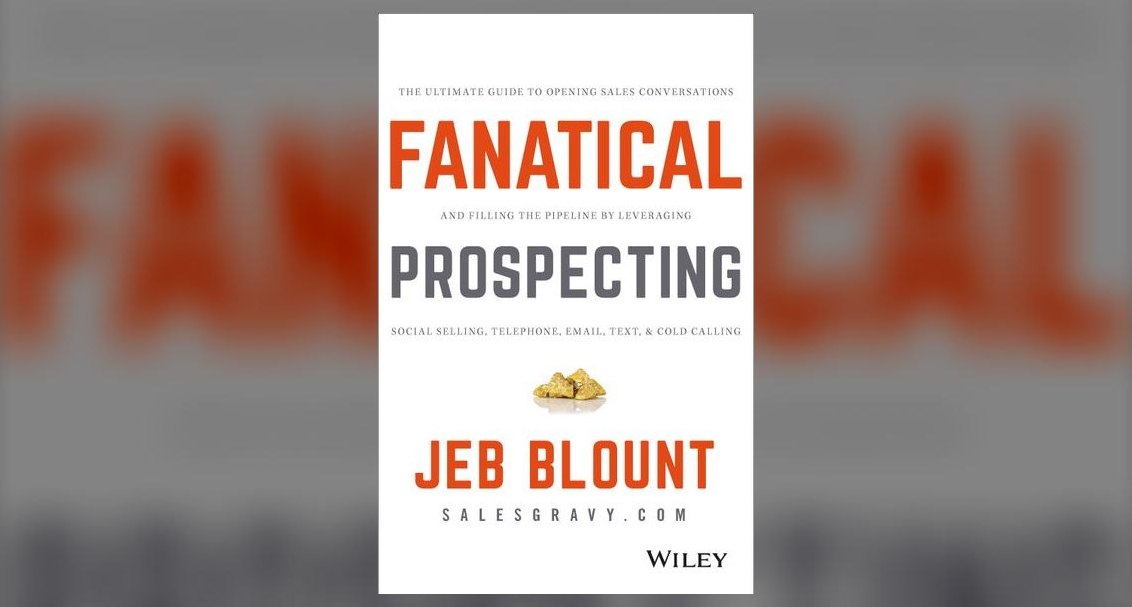 pulse-recentFanatical Prospecting by Jeb Blount — Top 10 Key Takeaways for Sales Leaders in 2027
 pulse-recentWhat are the seven concrete steps to implement the Sandler Submarine technique from The Sandler Rules in 2027?
 pulse-recentSales Engagement by Manny Medina — Top 10 Key Takeaways for Sales Leaders in 2027
 pulse-recentWhat is the Blue Sheet from Strategic Selling by Miller Heiman and how do you fill it out in 2027?