


The Challenger Customer by Brent Adamson — Top 10 Key Takeaways for Sales Leaders in 2027
Quality
Certified
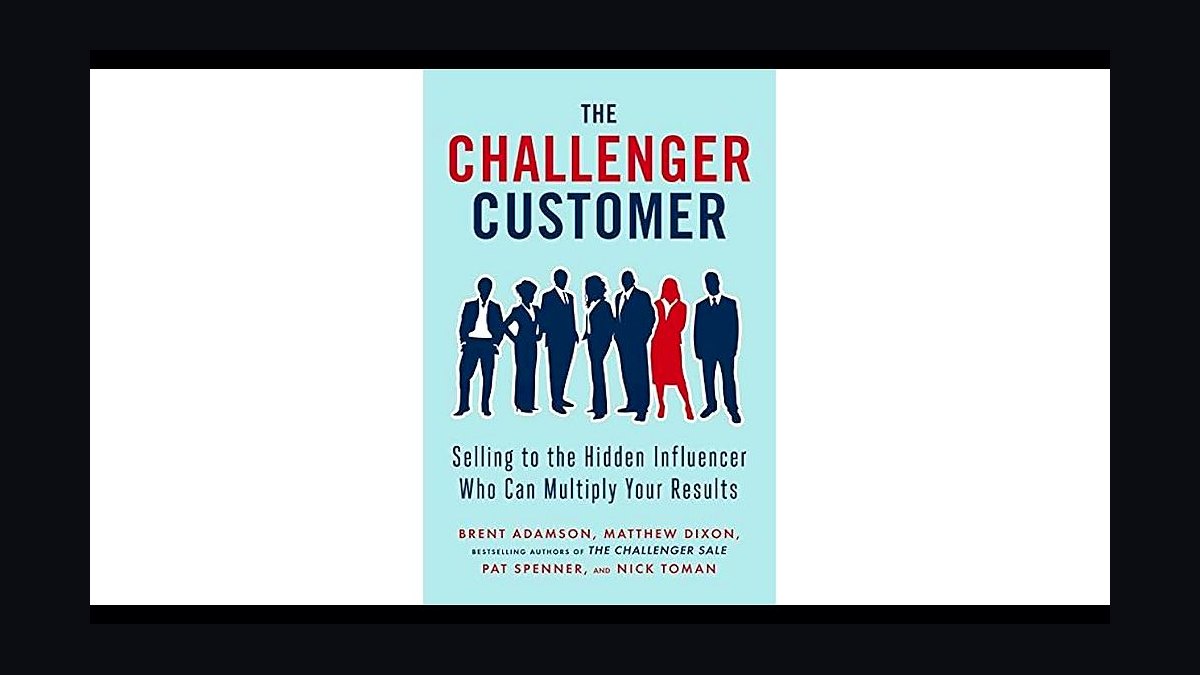
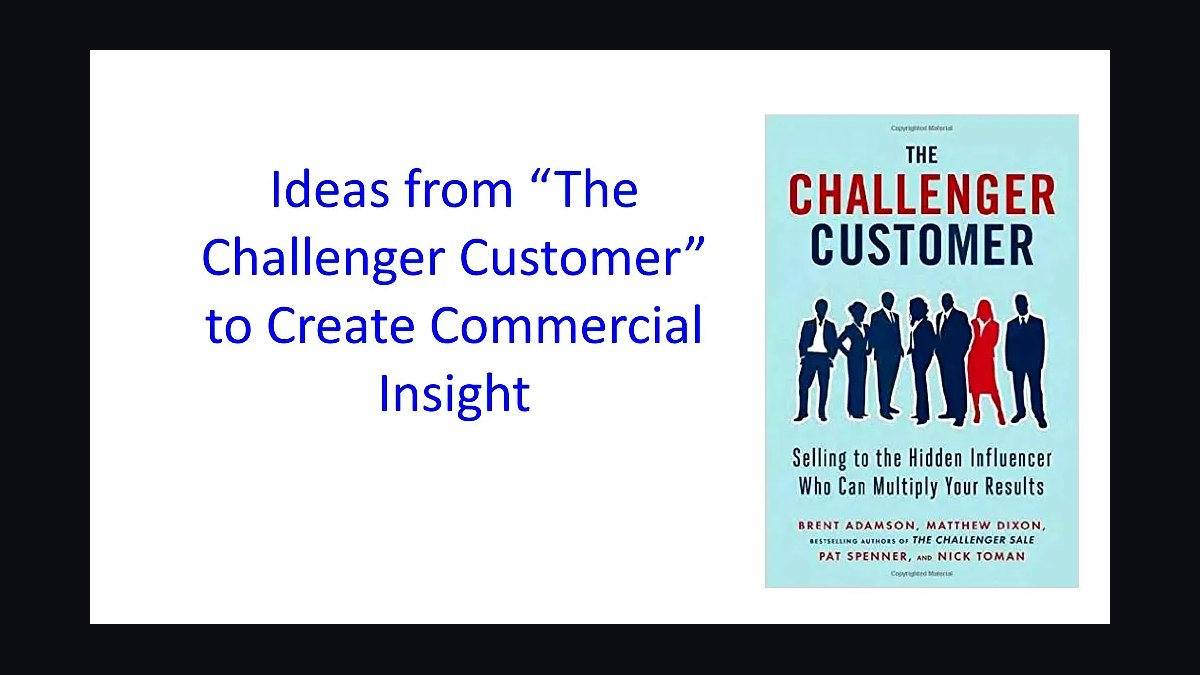
The Challenger Customer by Brent Adamson and co-authors argues that complex B2B deals stall because 5.4 stakeholders must agree, not because sellers pitch poorly. The core takeaways for sales leaders: find the Mobilizer, build consensus before the demo, teach a commercial insight, and design strategy around collective learning.
What the book actually argues and why it still matters
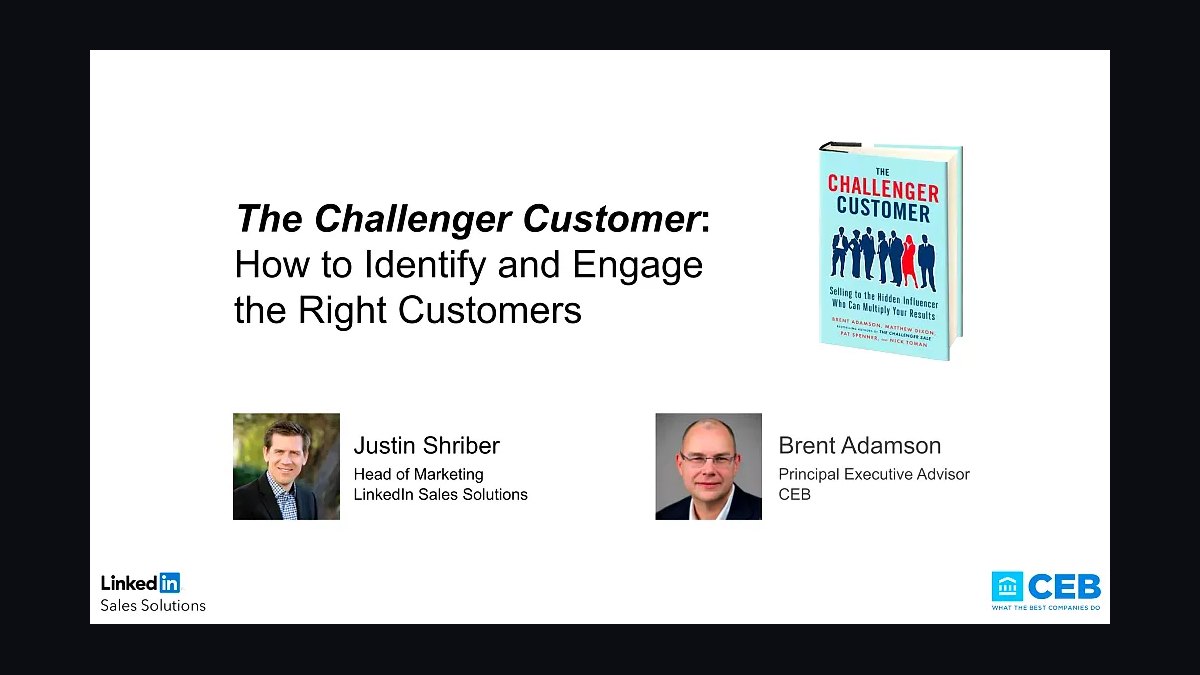
The Challenger Customer was published in 2015 by Brent Adamson, Matthew Dixon, Pat Spenner, and Nick Toman, all associated with CEB's sales research practice (CEB was later acquired by Gartner). It is the sequel to The Challenger Sale, and the sequel matters more than the original for anyone leading a team in 2027, because it moves the unit of analysis from the individual seller to the buying group.
The Challenger Sale said: teach, tailor, take control, and the rep who challenges the customer's thinking outperforms the relationship builder. That was a rep-behavior finding. The Challenger Customer says something structurally different and considerably more uncomfortable: even a perfectly trained Challenger rep will lose if the customer's own organization cannot reach agreement. The book's central statistic — that an average of 5.4 stakeholders are now formally involved in a complex B2B purchase — reframes the problem. Adamson and his co-authors found that the more stakeholders a deal accumulates, the lower the probability of any purchase happening at all. Not a loss to a competitor. A loss to no decision.
That distinction is the whole book. Sales leaders instinctively treat "no decision" as a soft loss, a deal that simply did not mature. The research treats it as the dominant failure mode of enterprise selling and the one that most sales strategy is not designed to address. Pipeline coverage models, MEDDIC-style qualification, multithreading mandates — most of these assume the deal is a contest between vendors. The Challenger Customer assumes the deal is more often a contest between the customer's own internal factions, and the vendor is a bystander to the fight that determines the outcome.
Why does this still matter in 2027, twelve years after publication? Because every trend since has pushed in the same direction. Buying groups got bigger, not smaller. Procurement got more formalized. Security review, legal review, data-privacy review, and now AI-governance review each add a stakeholder with veto power and no upside incentive. Finance scrutiny on software spend tightened materially after 2022, and the practice of consolidating overlapping tools created a new category of internal opponent: the person who owns the incumbent you would displace. A book whose thesis is "consensus is the bottleneck" gets more accurate as organizations get more matrixed, not less.
The adjacent implication, which the book gestures at and which most teams still under-play, is that this reshapes what a marketing function is for. If the binding constraint is internal customer agreement, then content whose job is to generate an inbound lead is optimizing the wrong variable. Content whose job is to be forwarded — to survive being pasted into a Slack thread without the seller present — is optimizing the right one. That is a materially different brief for a content team, and it explains why so much late-stage collateral fails: it was written to persuade a champion who was already persuaded.
Mobilizers, Talkers, and the people who cannot buy
The most operationally useful contribution of the book is its stakeholder typology, which cuts across job title entirely. Adamson and his co-authors identified seven stakeholder profiles and sorted them into three groups by their actual ability to drive organizational change.
The three Mobilizer types are the Go-Getter, the Skeptic, and the Teacher. The Go-Getter is motivated by organizational improvement and is constantly looking for better ways to operate. The Skeptic is cautious about big ideas and pushes hard on implementation risk, but — and this is the counterintuitive part — the Skeptic is a Mobilizer precisely because that scrutiny, once satisfied, converts into serious internal advocacy. The Teacher enjoys sharing insight and is naturally good at spreading a new idea through the organization. What unites all three is that they can build consensus among peers.
The four non-Mobilizer profiles are the Guide, the Friend, the Climber, and the Blocker. The Guide shares information freely, including information they probably should not share. The Friend is pleasant, accessible, and happy to take meetings. The Climber is focused on personal advancement rather than organizational outcome. The Blocker is committed to the status quo.
Here is where sales teams get hurt. The Guide and the Friend feel exactly like a good relationship. They return calls. They accept meetings. They give you the org chart, the budget cycle, and the competitor's pricing. They light up every engagement metric in the CRM. The book calls this group Talkers, and its finding is blunt: Talkers correlate with activity, not with deals closing. A rep with three enthusiastic Talkers and no Mobilizer has a forecast entry that will slip forever and then die as a no-decision.
The Climber deserves separate attention because Climbers are the most dangerous false positive. A Climber will genuinely champion your deal — as long as the deal serves their visibility. They will push hard, use political capital, and then abandon the initiative the moment it stops being the thing that gets them promoted, or the moment they change roles. Climber-driven deals have a specific signature: fast early momentum, an unusually narrow set of internal supporters, and sudden death after a reorg.
The practical implication for a sales leader is a change in what you inspect. Stop asking "who is your champion?" That question invites the rep to name whoever they talk to most, which is by construction the Talker. Ask instead: what has this person changed inside their own organization? Who else in their company have they persuaded, and what did that persuasion cost them? Have they said no to us about something, and did they say it to our face? A stakeholder who has never pushed back has probably never actually engaged.
Two more inspection questions with real diagnostic power. First: has this person introduced us to a peer we did not ask for? Mobilizers proactively recruit. Talkers respond to requests. Second: can this person articulate the business problem in terms that a function other than their own would care about? A Mobilizer has already had to translate the case for a skeptical peer and therefore has language for it. A Talker has only ever described the problem from inside their own department.
The adjacent workflow worth building here is a Mobilizer-identification step inside your discovery process rather than a coaching afterthought. Most teams have qualification criteria for budget, authority, need, and timing. Very few have a criterion for consensus capacity. Adding one field — "named Mobilizer, with evidence" — and refusing to advance a stage without evidence in the free-text is a small process change with outsized effect on forecast quality.
The commercial insight and the collective learning sequence
The second major takeaway is the mechanism the book proposes for creating agreement: commercial insight, delivered in a specific sequence.
Commercial insight is not thought leadership. The book is precise about this and most teams get it wrong. An insight qualifies as commercial only if it meets several conditions simultaneously. It must challenge a belief the customer currently holds and is confident about. It must be supported enough that a stakeholder can defend it to a skeptical colleague. It must reframe the problem in a way that makes the customer's current approach look costly. And critically, it must lead uniquely back to a capability where you are differentiated. Insight that is true, interesting, and equally well served by three competitors is a gift to whoever prices lowest.
The sequence the book describes moves roughly like this: warmer, reframe, rational drowning, emotional impact, a new way, and then your solution. Warmer establishes that you understand their world. Reframe introduces the surprising claim. Rational drowning quantifies the cost of the status quo. Emotional impact makes it personal to the individual in the room. A new way describes what a better approach looks like — still with no vendor name attached. Only then does your solution appear, as the obvious instantiation of the new way.
The failure most teams commit is compressing this into the last two steps. They open with the solution, then reverse-engineer a problem it addresses. The customer experiences that as a pitch and defends accordingly.
The deeper takeaway is what the book calls collective learning. Individual persuasion does not aggregate into group agreement. If you persuade five stakeholders separately, using five tailored messages, you end up with five differently-persuaded people who disagree about what problem they are solving — and that disagreement surfaces at exactly the wrong moment, usually in the final approval meeting.
The book's remedy is to make the buying group learn something together. That means finding the overlap in what different functions care about and building the insight there rather than tailoring downward to each. Adamson and his co-authors are explicit that this inverts standard tailoring advice: instead of a different message per persona, you want one message that all personas can stand behind, expressed in terms of a shared organizational problem.
Practically, that argues for a different kind of meeting. A single session with four or five stakeholders in the room, structured around a problem diagnosis rather than a product walkthrough, does work that four individual meetings cannot. The disagreements happen in front of you, where you can facilitate them, instead of behind closed doors where you cannot. This is uncomfortable for reps trained to control the room. It is also, per the book's logic, the highest-leverage meeting in a complex deal.
An adjacent use case worth noting: the same logic applies to renewals and expansions, which most teams treat as relationship maintenance. An expansion that crosses into a new department is a new consensus problem with a new buying group, and it fails the same way new business fails. Treating a $200K cross-departmental expansion as an account-management task rather than a consensus-building task is a common and expensive mis-staffing.
What it costs to actually operate this way
Sales leaders reading the book often stop at the ideas. The ideas are cheap. The implementation is not, and being honest about the cost is what separates a real adoption from a training event that changes nothing.

Content is the first real cost. A commercial insight is a genuine research artifact — it needs a defensible claim, supporting evidence, and a quantification of status-quo cost that a customer's finance function will not laugh at. Most organizations discover they have hundreds of pieces of content and zero commercial insights, because everything in the library either describes the product or restates industry conventional wisdom. Building even one durable insight typically means dedicated product-marketing time, primary or well-sourced secondary data, and several rounds of field testing to find where the reframe actually lands. Teams that try to generate insight per-rep, ad hoc, produce inconsistent quality and no compounding asset.
Cycle time is the second cost, and it moves in both directions. Multi-stakeholder sessions and consensus work usually lengthen the early stages of a deal, because you are doing work up front that used to be deferred. What it shortens is the late stage — the endless legal, security, and finance loops that happen when a deal reaches approval without prior agreement. Leaders who measure only average sales cycle will see the early lengthening and panic before the late shortening shows up. Instrument the stages separately or you will kill the program during the transition.
Enablement is the third cost, and it is the one most often underfunded. Challenger-style behavior is not a one-day workshop skill. Delivering a reframe to a senior stakeholder and holding constructive tension without becoming adversarial requires repeated practice with real feedback. Organizations that treat this as a training event and not an ongoing coaching cadence reliably see behavior decay within a quarter or two. Front-line manager coaching capability is the actual bottleneck, and if your managers are primarily deal-inspectors rather than skill-coaches, the program will not stick regardless of how good the content is.
Pipeline metrics are the fourth cost, in the sense that some of them get worse on purpose. If reps disqualify Talker-only opportunities, opportunity count drops. If the definition of a qualified stage requires evidence of a Mobilizer, stage-two volume drops. Leaders need to decide in advance which metrics they will let move and communicate that upward before the numbers do. A quota-carrying team watching its pipeline count fall without an explanation will revert to old behavior immediately.

There is also a real opportunity cost in deal selection. The consensus-building approach is expensive per deal, which means it is not appropriate everywhere. A transactional deal with a single decision-maker and a two-week cycle does not need commercial insight; it needs speed and a clear price. Applying heavy Challenger machinery to a small deal is a way to lose money on it. Segmenting by buying-group complexity rather than by deal size alone is the more useful cut, because a $40K purchase that touches security, IT, and a department head is structurally a complex deal even at a small number.
Where sales leaders get this wrong
Several failure patterns recur, and they are predictable enough to plan against.
Treating Challenger as an aggression license is the most common. Reps hear "challenge the customer" and interpret it as contradiction — telling the customer they are doing it wrong, in those words. The book's construct is teaching, not arguing. The reframe should feel like the customer discovering something, not like being corrected by a vendor. When this goes wrong you see it in the meeting notes: stakeholders becoming defensive, meetings ending early, and the rep reporting that the customer "wasn't ready for the insight."
Confusing the two books is the second, and it has strategic consequences. Organizations that read only The Challenger Sale build a rep-training program and stop. The Challenger Customer's argument is that rep training alone is insufficient because the constraint sits inside the customer's organization. If your entire response to this body of work is a sales methodology rollout with no change to content, no change to qualification criteria, and no change to how meetings are structured, you have implemented roughly a third of it.
Over-tailoring is the third, and it is a mistake made by good sellers. Sophisticated reps naturally customize per stakeholder, and everything in traditional sales training rewards that. The collective-learning finding says this creates fragmentation. The correction is not to abandon tailoring but to tailor the framing of a shared message rather than the message itself — same problem definition, different entry point.

Naming a Mobilizer without evidence is the fourth, and it is a CRM hygiene problem disguised as a strategy problem. Once "identify the Mobilizer" becomes a required field, reps will fill it in with whoever they know best. The field then reports a healthy pipeline full of Talkers relabeled as Mobilizers. The only defense is inspection on evidence rather than on the label: what did this person change, who did they persuade, what did they risk.
Ignoring the Blocker until the end is the fifth. Blockers rarely announce themselves; they surface late, through procurement or security or a sudden budget question. The book's implication is that a Mobilizer is the right instrument for handling a Blocker, because peer-to-peer internal argument works where vendor-to-Blocker argument does not. Deals where the rep is personally trying to win over a Blocker are usually deals with no real Mobilizer.
Finally, abandoning the approach after one quarter. The metrics move in an uncomfortable order — activity down, opportunity count down, early-stage cycle time up, and only later win-rate and late-stage velocity improving. Leaders who have not pre-committed to a longer evaluation window will read the first-quarter numbers as failure.
Choosing where to apply this in 2027
Not every deal deserves this treatment, and a strategy that says "apply Challenger everywhere" is not a strategy. The useful decision variable is buying-group complexity, modified by whether the customer already agrees on the problem.
Read that framework in the context of what has changed since 2015. Three shifts matter for how you apply these takeaways now.
Buying groups grew and fragmented further. Security review, data-governance review, and increasingly AI-usage review are now standard gates in mid-market and enterprise software purchases. Each adds a stakeholder whose incentive is asymmetric — they absorb risk if something goes wrong and gain nothing if it goes right. These stakeholders behave structurally like Blockers even when individually cooperative, and the book's guidance holds: a peer Mobilizer moves them; a vendor rarely does.

Buyers self-educate much further before contact. When a buying group has already read extensively before the first call, the space for a genuine reframe is narrower and the bar is higher. Insight that merely restates what a well-read buyer already knows fails immediately. This raises the cost of the content investment and increases the payoff for insight grounded in your own proprietary data — patterns visible in your product telemetry or customer base that no analyst report has published.
Consolidation pressure created a new opponent. When budgets tighten, the internal argument is often not "which vendor" but "can we do this with something we already own?" That framing has no vendor on the other side, which makes it a pure consensus problem — exactly the failure mode the book describes. A commercial insight that only differentiates you from competitors does nothing here. The insight has to differentiate the new approach from the status quo, which is precisely why the sequence puts rational drowning before any mention of your solution.
One caution on scope. The Challenger research is a body of correlational findings about what high performers did across a large sample, not a controlled experiment, and the specific numbers reflect the market as CEB measured it in the early-to-mid 2010s. Treat the structural claims — consensus is the bottleneck, Talkers are not Mobilizers, collective learning beats individual persuasion — as the durable part. Treat any specific figure as period-bound and worth re-measuring against your own funnel rather than quoted as current fact.
The reasonable posture for a sales leader in 2027 is to adopt the diagnostic and be selective about the machinery. The diagnostic — is this deal losing to a competitor or to internal disagreement? — is free and immediately changes how you run pipeline reviews. The machinery — insight development, multi-stakeholder sessions, Mobilizer-focused qualification — costs real money and should go where buying-group complexity justifies it.
Related questions
How is The Challenger Customer different from The Challenger Sale?
The Challenger Sale (2011) studies seller behavior and identifies the Challenger profile as the top performer. The Challenger Customer (2015) studies the buying group and argues that even excellent Challenger reps lose to internal customer disagreement. The first is about rep skill; the second is about consensus.
Who wrote The Challenger Customer?

Brent Adamson, Matthew Dixon, Pat Spenner, and Nick Toman, published in 2015. All were associated with CEB's sales and marketing research practice. CEB was subsequently acquired by Gartner, and Adamson has continued publishing and speaking on B2B buying-group dynamics since.
What is a Mobilizer?
A stakeholder who can build consensus among peers and drive organizational change. The three Mobilizer types are Go-Getter, Skeptic, and Teacher. They are distinguished from Talkers — Guides, Friends, and Climbers — who are accessible and informative but cannot move their own organization.
Is the Challenger approach still relevant with larger buying groups?
Arguably more relevant. Every trend since 2015 — bigger buying committees, formalized security and governance review, tool-consolidation pressure — increases the weight of internal consensus as the binding constraint, which is exactly the problem the book addresses.
Should we apply this to every deal?
No. Transactional deals with one or two decision-makers do not need commercial insight or consensus machinery; they need speed and clarity. Segment by buying-group complexity rather than deal size, since a small purchase touching security and IT is structurally complex.
FAQ
What is the single most important takeaway for a sales leader?
That the primary competitor in complex deals is the customer's own inability to agree, not another vendor. Once you accept that, pipeline inspection changes: you stop asking "why did we lose to them" and start asking "why couldn't this group agree." Most no-decision losses become explainable and, to a degree, preventable.
How do we tell a Mobilizer from a Talker in practice?
Look for evidence of change, not evidence of access. Ask what this person has altered inside their own organization, who they persuaded without your prompting, and whether they have ever pushed back on you directly. Accessibility, information sharing, and enthusiasm are Talker signals and correlate with activity rather than closed deals.
What makes an insight "commercial" rather than just thought leadership?
Four conditions together: it challenges a belief the customer currently holds, it is defensible enough for a stakeholder to argue internally, it quantifies the cost of the status quo, and it leads uniquely to a capability where you are differentiated. Insight that is equally well served by competitors helps whoever prices lowest.
Why does tailoring per stakeholder backfire?
Because individual persuasion does not aggregate into group agreement. Five people persuaded by five different messages disagree about what problem they are solving, and that disagreement surfaces in the final approval meeting. Collective learning — one shared problem definition the whole group can stand behind — is the alternative the book prescribes.
How long before we should expect results?
Longer than a quarter. Activity metrics and opportunity counts typically fall first as Talker-only deals get disqualified, and early-stage cycle time lengthens as consensus work moves forward in the process. Win rate and late-stage velocity improve later. Pre-commit to a multi-quarter evaluation window or you will kill the program during the dip.
Do the book's specific statistics still hold in 2027?
Treat them as period-bound. The research is correlational and reflects CEB's measurements from the early-to-mid 2010s. The structural claims — consensus is the bottleneck, Talkers are not Mobilizers, collective learning beats individual persuasion — have aged well. Re-measure any specific figure against your own funnel rather than quoting it as current.
Sources
- https://www.gartner.com/en/sales
- https://hbr.org/2015/10/making-the-consensus-sale
- https://hbr.org/2017/03/the-new-sales-imperative
- https://www.penguinrandomhouse.com/books/317156/the-challenger-customer-by-brent-adamson-matthew-dixon-pat-spenner-and-nick-toman/
- https://www.linkedin.com/in/brentadamson
- https://www.forrester.com/blogs/category/b2b-marketing/
- https://www.mckinsey.com/capabilities/growth-marketing-and-sales/our-insights
Related on PULSE
- The Challenger Sale — what the original research actually found
- Multithreading enterprise deals without creating five separate conversations
- How to qualify out a no-decision deal before it eats a quarter
- Building a commercial insight your product marketing team can actually defend
- Running a multi-stakeholder discovery session that surfaces disagreement early
- Why win/loss reviews miss the no-decision category entirely
This page will be disappearing soon. Save it to your device for $1 — or read it free while it is here.
@Kory-White- · if Venmo asks, the last 4 of my number are 2012
This page is gone.
This one is off the shelf now. $1 keeps it on your phone for good — the whole page, pictures and diagrams included.
 pulse-recentSelling Above and Below the Line by Skip Miller — Top 10 Key Takeaways for Sales Leaders in 2027
 pulse-recentWhat is the first concrete step in SPIN Selling by Neil Rackham for structuring a discovery call in 2027?
 pulse-recentInsight Selling by Mike Schultz and John Doerr — Top 10 Key Takeaways for Sales Leaders in 2027
 pulse-booksTop 10 practical takeaways from Atomic Habits for building a new routine in 2027.
 pulse-booksRework by Jason Fried and David Heinemeier Hansson — Cliff Notes Summary
 pulse-recentWhat is the first concrete step in Sandler Rule #4 for a sales leader to implement in 2027?
 pulse-recentWhat is the first concrete step in the Sandler Selling System for handling a prospect's initial brush-off in 2027?
 pulse-recentHow do you implement the Sandler Rules in your first 30 days as a new sales rep in 2027?
 pulse-recentConceptual Selling by Robert Miller and Stephen Heiman — Top 10 Key Takeaways for Sales Leaders in 2027
 pulse-recentMonetizing Innovation by Madhavan Ramanujam — Top 10 Key Takeaways for Sales Leaders in 2027