


Monetizing Innovation by Madhavan Ramanujam — Top 10 Key Takeaways for Sales Leaders in 2027
Quality
Certified
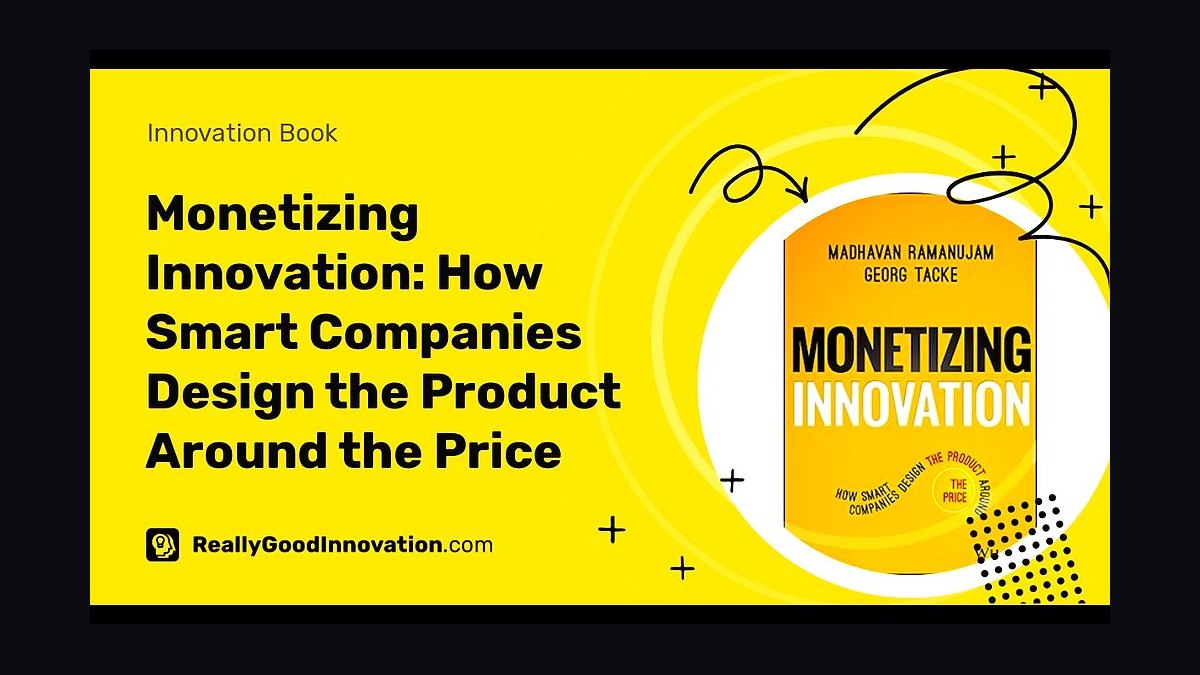
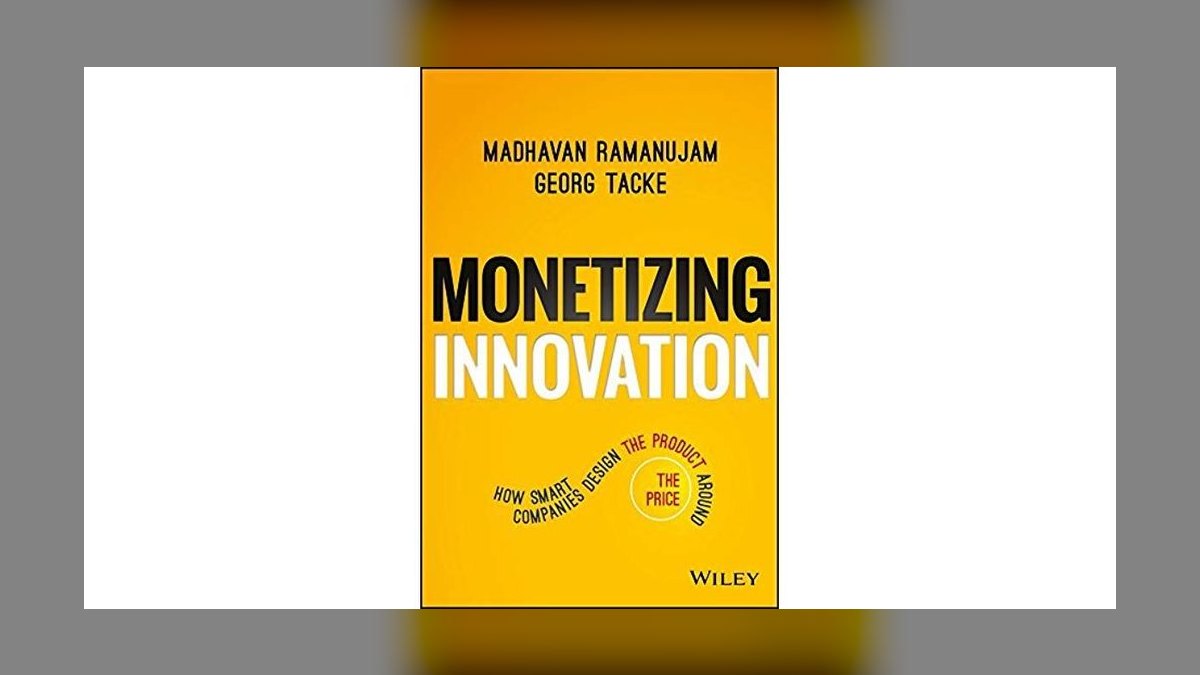
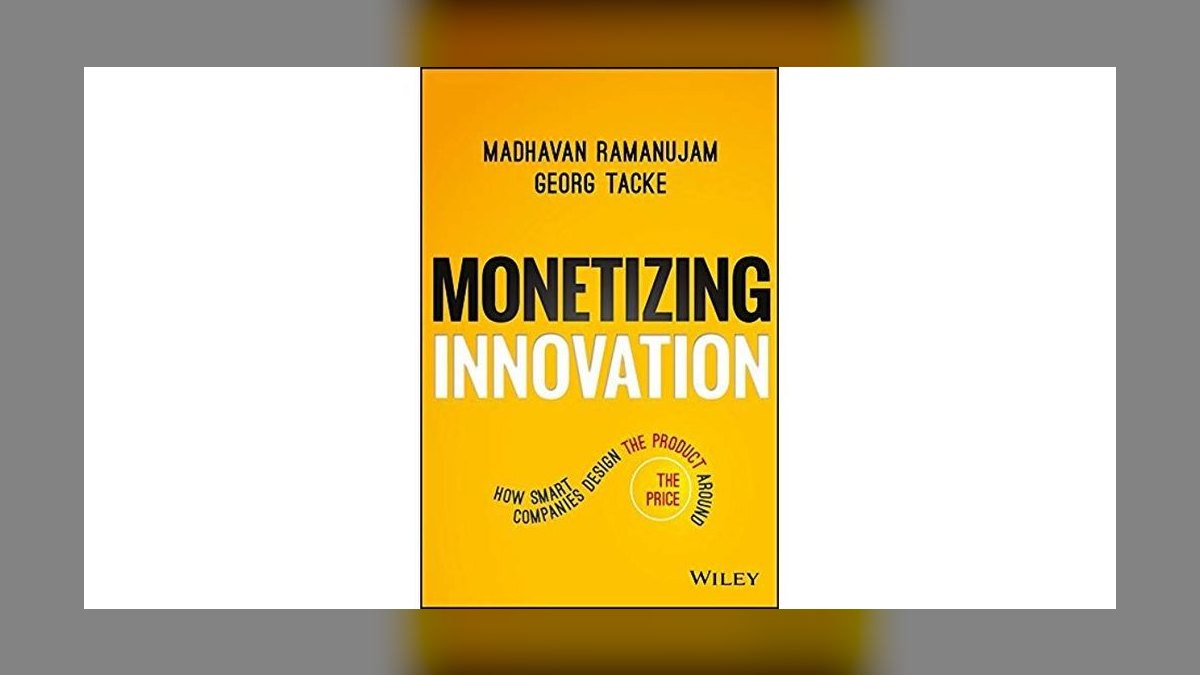
Madhavan Ramanujam's "Monetizing Innovation" argues that companies should design products around price and willingness-to-pay research from day one, not bolt pricing on after building features. For sales leaders in 2027, the core strategy is: validate what customers will pay before building, avoid "feature shock," and package tiers (good-better-best) around proven willingness-to-pay segments rather than engineering instincts.
The two paths compared: feature-first vs. price-first product design
Ramanujam and co-author Georg Tacke, both from pricing consultancy Simon-Kucher & Partners, frame the entire book around a single fork in the road that every product and sales organization faces before a launch: build first and price later, or price first and build to that target. The feature-first path is the default in most companies because it feels safer to engineering and product teams — you build what you believe is technically impressive, ship it, and then a pricing or sales team is handed the finished product and told to "figure out the number." Ramanujam's research at Simon-Kucher, drawn from studying more than 40 product and service launches across industries, found that the majority of new products fail to hit their revenue and profit targets, and the common thread was that price was treated as a downstream decision rather than a design input. The book cites data (echoing widely reported Nielsen research on consumer product launches) showing that a large majority of new products never reach meaningful revenue scale, and Ramanujam's argument is that this failure rate is not primarily a product-quality problem — it is a monetization-design problem.
The price-first path inverts the sequence. Before a single feature is committed to the roadmap, the team runs structured willingness-to-pay (WTP) research — quantitative pricing studies such as conjoint analysis or the van Westendorp Price Sensitivity Meter — with real prospective buyers. That research produces two things a feature-first process never generates: a defensible price point tied to actual customer value perception, and a ranked list of which features customers will actually pay incremental dollars for versus which features are merely "nice to have" that add engineering cost without adding willingness to pay. For sales leaders specifically, this comparison matters because reps inherit whichever path product chose. A feature-first launch leaves sales improvising a price story after the fact, discounting to close deals because the number was never validated against real buyer economics. A price-first launch hands sales a number, a packaging structure, and a value narrative that was tested with buyers before the product existed — which directly shortens the sales cycle and reduces discount pressure in year one.
How to decide between the two approaches
Ramanujam's framework for deciding which monetization archetype a company is dealing with is one of the book's most sales-relevant tools, because it gives revenue leaders a diagnostic instead of a guess. He identifies four recurring monetization failure patterns, and part of the "Top 10 Key Takeaways" reading of the book is learning to recognize which one your organization is living through so you can pick the corrective path rather than defaulting to feature-first behavior out of habit.
The decision tree matters for sales leaders because each archetype calls for a different sales motion, not just a different price. A Feature Shock product — one that is over-engineered, with a bloated feature list and a price that tries to justify all of it — needs sales to stop selling on feature count and start selling a simplified, benefit-led story, usually alongside a formal re-tiering project. A Minimum Viable Product situation, where the team undershot on both features and price to move fast, needs sales to identify which accounts are actually willing to pay for a richer tier, feeding that signal back to product rather than continuing to discount a thin offering. An Undertapped Opportunity — a product that is delivering strong value but is priced far below what the market would bear — is the clearest sales-led win: this is where value-based selling and staged price increases recover margin without losing volume. A Hidden Gem is a capability buried inside an existing bundle that customers would pay for standalone; sales and product need to jointly identify it, often through account conversations that surface which single feature customers mention unprompted as their reason for buying.
The concrete numbers behind each option
Ramanujam is explicit that "willingness to pay" is not a single number but a distribution, and this is one of the most operationally useful takeaways for a 2027 sales organization building or refreshing pricing. In a well-run WTP study, a product typically shows a spread where the bottom price-sensitive segment might be willing to pay 30-40% less than the top value-seeking segment for functionally the same core product — which is precisely why the book pushes so hard for good-better-best (GBB) tiering instead of a single SKU. A single flat price captures only the revenue from buyers clustered near that number; a three-tier structure (good-better-best) is designed to capture the price-sensitive segment at a lower entry tier, the mainstream buyer at the middle "most popular" tier, and the value-maximizing segment at a premium tier — in the book's field examples, moving from one-size-fits-all pricing to a validated three-tier structure is associated with double-digit percentage revenue lift on the same customer base, without adding a single new logo.
The book also quantifies the cost of skipping WTP research on the feature side. In the Feature Shock pattern, Ramanujam's consulting data shows companies routinely build and ship features that fewer than 10% of the target market says it would pay anything incremental for — meaning a meaningful share of engineering budget on a typical release cycle goes toward features with effectively zero monetization value, while the 20-30% of features that customers repeatedly rank as "must-have, would switch vendors for" get under-invested. For a sales leader, this translates directly into deal economics: reps spend demo time walking through capabilities that never move a prospect's willingness to sign, while the two or three features that actually close deals are treated as a footnote in the pitch deck because product never ranked them. Ramanujam's recommendation — validated through conjoint studies that force buyers to trade off features against price rather than rating each feature in isolation on a 1-5 scale — is that any feature not in the top tier of a conjoint-derived value ranking should be deprioritized or moved to a paid add-on rather than bundled for free, since bundling low-value features for free still costs engineering and support budget while contributing nothing to willingness to pay.
Implementation: sequencing pricing research into the roadmap
The single most cited operational takeaway from "Monetizing Innovation" for 2027 sales and product teams is sequencing: WTP research has to run in parallel with, or ahead of, product design — not after a beta is already in market. Ramanujam lays out a repeatable sequence that Simon-Kucher used across its client engagements, and it maps cleanly onto a modern go-to-market calendar.
The first practical step is standing up a small, cross-functional "pricing council" — the book insists this cannot live solely inside finance or solely inside product, because finance alone tends to price off cost-plus logic and product alone tends to price off competitor feature-matching, and both miss actual buyer value. The council should include a sales leader specifically because reps are the only function with live, weekly evidence of where deals stall on price versus where they stall on missing capability — that evidence should feed directly into the WTP refresh cycle. Second, WTP research needs to happen with real prospective buyers, not existing happy customers, because existing customers already self-selected into the current price and will systematically under-report price sensitivity; the book recommends recruiting from the addressable market broadly, including people who evaluated and did not buy. Third, the ranked feature list from the conjoint study should directly gate the engineering roadmap — a feature that scores low on incremental willingness to pay should require an explicit business case beyond "customers asked for it," because stated preference in a sales call and revealed preference in a trade-off study frequently diverge; Ramanujam notes this is the single most common reason sales-driven feature requests fail to move revenue after being built. Fourth, tiers should be named and structured around the segments the research surfaces (for example, a price-sensitive "starter" segment, a mainstream "team" segment, and a value-maximizing "enterprise" segment) rather than around arbitrary feature counts, so that sales has a clean, testable story for why a prospect belongs in a given tier. Finally, the pricing council should treat launch as the start of a monitoring loop, not the end of the project — tracking close rate, average discount depth, and tier mix in the first two full sales cycles post-launch, and feeding anomalies (for example, if 80% of new deals land in the cheapest tier) back into another WTP refresh rather than letting sales quietly re-price through discounting.
Related questions
What is willingness-to-pay research and why does Ramanujam say it must happen before building?
Willingness-to-pay research measures what real buyers will actually pay through trade-off exercises like conjoint analysis, rather than opinion surveys. Doing it before building prevents engineering from investing in features nobody will pay for, and gives sales a validated price story at launch.
What is "Feature Shock" in Monetizing Innovation?
Feature Shock is when a company over-engineers a product with more capabilities than the market values, then struggles to justify a high price for features few buyers actually wanted, forcing discounting and long sales cycles.
How does good-better-best pricing differ from single-price models?
Good-better-best splits one product into tiers matched to distinct willingness-to-pay segments, capturing price-sensitive buyers at a lower entry tier and value-maximizing buyers at a premium tier instead of leaving revenue on the table with one flat price.
Who should sit on a pricing council according to the book?

Ramanujam recommends a cross-functional group spanning product, finance, and sales — sales specifically because reps have live evidence from deals of where price versus capability is the real objection.
Why do most new products fail to hit revenue targets, per Ramanujam's research?
The book attributes most launch failures to treating price as an afterthought bolted onto a finished product rather than a design input tested with real buyers before development, which the Simon-Kucher research behind the book traces across dozens of launches.
FAQ
What is the main strategy behind Monetizing Innovation by Madhavan Ramanujam? The core strategy is to design the product around price, not price around the product — running willingness-to-pay research with real buyers before committing to a feature set, so that the eventual price and packaging are validated rather than guessed.
Who wrote Monetizing Innovation and what is their background? Madhavan Ramanujam co-wrote the book with Georg Tacke; both are senior leaders at Simon-Kucher & Partners, a pricing and growth strategy consultancy, and the book draws on the firm's work across dozens of product launches.
What are the four monetization archetypes described in the book? Feature Shock (over-built and overpriced relative to value), Minimum Viable Product (underbuilt and underpriced), Undertapped Opportunity (strong product priced too low), and Hidden Gem (a valuable capability buried inside a bundle that could sell standalone).
How should sales leaders use these takeaways in 2027? Sales leaders should push for a seat on the pricing council, feed live deal data on price objections back into willingness-to-pay research, and train reps on a tested value story tied to good-better-best tiers rather than a raw feature list.
What research method does Ramanujam recommend for measuring willingness to pay? He recommends trade-off methods like conjoint analysis and the van Westendorp Price Sensitivity Meter, which force buyers to weigh features against price, rather than simple satisfaction surveys that tend to overstate feature demand.
Does Monetizing Innovation apply outside of software and tech products? Yes — the book's case studies span software, industrial, consumer, and healthcare products, because the underlying strategy of validating willingness to pay before building applies to any company launching a priced product or feature.
Sources
- https://www.amazon.com/Monetizing-Innovation-Companies-Design-Around/dp/1119240874
- https://www.simon-kucher.com
- https://hbr.org/2018/05/the-price-is-wrong
- https://www.forbes.com/sites/madhavanramanujam
- https://www.goodreads.com/book/show/28815447-monetizing-innovation
- https://sloanreview.mit.edu
- https://www.mckinsey.com/capabilities/growth-marketing-and-sales/our-insights
- https://www.nielsen.com/insights
Related on PULSE
- How to build a cross-functional pricing council for a SaaS launch
- Good-better-best packaging: how to structure three-tier pricing
- Conjoint analysis vs. van Westendorp: which pricing research method to use
- How to spot Feature Shock before a product launches
- Value-based selling: training reps on a tested price story
- How to price an "Undertapped Opportunity" product without losing customers
This page will be disappearing soon. Save it to your device for $1 — or read it free while it is here.
@Kory-White- · if Venmo asks, the last 4 of my number are 2012
This page is gone.
This one is off the shelf now. $1 keeps it on your phone for good — the whole page, pictures and diagrams included.
 pulse-recentNever Lose a Customer Again by Joey Coleman — Top 10 Key Takeaways for Sales Leaders in 2027
 pulse-recentWhat are the concrete steps to implement the Sandler Rules for Sales Leaders by David Mattson in 2027?
 pulse-recentHow do you implement the Sandler Rules by David Mattson in your first 30 days as a new sales manager in 2027?
 pulse-recentThe Transparency Sale by Todd Caponi — Top 10 Key Takeaways for Sales Leaders in 2027
 pulse-recentPre-Suasion by Robert Cialdini — Top 10 Key Takeaways for Sales Leaders in 2027
 pulse-recentThe Sales Manager’s Guide to Greatness by Kevin Davis — Top 10 Key Takeaways for Sales Leaders in 2027
 pulse-recentThe Sandler Rules by David Sandler — Top 10 Key Takeaways for Sales Leaders in 2027
 pulse-recentSales EQ by Jeb Blount — Top 10 Key Takeaways for Sales Leaders in 2027
 pulse-recentSandler Rule #1: What is the first concrete step to build a prospect's trust in a sales conversation in 2027?
 pulse-recentThe Closer’s Survival Guide by Grant Cardone — Top 10 Key Takeaways for Sales Leaders in 2027