


Sell or Be Sold by Grant Cardone — Top 10 Key Takeaways for Sales Leaders in 2027
Quality
Certified

Grant Cardone's *Sell or Be Sold* argues that selling is a transferable skill practiced by everyone, everywhere, all day — and that the top 10 takeaways for sales leaders center on unshakeable belief, disciplined follow-up, mastering fundamentals over shortcuts, treating price objections as trust gaps, and building an "unreasonable" persistence into daily habits, prospecting cadence, and team training so certainty — not luck — drives close rates.
The outcome you should expect
When a sales leader actually installs Cardone's framework instead of just recommending the book, the visible change shows up first in call volume and follow-up discipline, then later in close rates and average deal cycle. Reps stop treating a single "no" or "let me think about it" as a closed file and start treating it as an unresolved objection with a knowable root cause — money, spousal or committee approval, trust in the vendor, or lack of urgency. That single behavior change, applied consistently, is the mechanism behind most of the measurable lift teams report after adopting the book's methods.
The ten takeaways that leaders most commonly pull out of *Sell or Be Sold* and operationalize with their teams are:
- Selling is a transfer of belief. The buyer's confidence in a decision rarely exceeds the seller's own certainty; a wavering rep produces a wavering buyer.
- Everyone sells, constantly. Negotiating a raise, pitching a spouse on a vacation, or convincing a child to do homework is selling — Cardone's point is that the discomfort with "selling" as an identity is itself a performance drag.
- Unreasonable persistence beats reasonable restraint. Cardone frames the "reasonable" rep — the one who follows up once or twice and moves on — as the one who loses the deal to whoever calls a fifth or sixth time.
- Fundamentals are drilled, not improvised. Greeting, qualifying, presenting, trial-closing, handling objections, closing, and following up are treated like a sequence of reps in a gym, not a checklist read from a script.
- "I need to think about it" is never the real objection. Leaders train reps to isolate the actual blocker before leaving the conversation.
- Price objections are usually trust or value objections in disguise. Discounting early signals the seller doesn't believe in the price, which undermines the very confidence the buyer needs to borrow.
- Attitude multiplies every other skill. A rep with strong technique and a flat, defeated attitude underperforms a rep with average technique and genuine enthusiasm.
- Follow-up is where deals are actually won. Most reps quit contacting a prospect after one or two touches, long before the prospect is ready to decide.
- The first hour of the day sets the trajectory. Cardone pushes leaders to protect the earliest working hours for prospecting and outreach before administrative tasks crowd them out.
- Expertise is the foundation of certainty. A rep who knows the product, the competition, and the market cold has something authentic to transfer — belief without knowledge collapses under real objections.
Leaders who roll these ten out as training modules — rather than a one-time book summary in a Slack channel — report the change less as a single dramatic spike and more as a compounding shift over one to two full sales cycles, since follow-up discipline and objection-handling only pay off once enough of the pipeline has passed through the new behavior.

What drives that outcome
The underlying mechanism in *Sell or Be Sold* is straightforward and worth separating from the motivational packaging: certainty is contagious, and certainty is a function of preparation plus repetition. A leader who wants the outcome above needs to understand which lever produces which effect, because teams that copy Cardone's language without the underlying discipline (more calls, tighter objection scripts, tracked follow-up) get the enthusiasm without the results.

Three inputs feed the single output of "the buyer takes on the seller's certainty": how well-prepared the rep is, how many legitimate follow-up touches the deal receives before it dies in the pipeline, and whether the team has a repeatable process for separating a stated objection from the real one. Cardone's own emphasis in the book leans hardest on the second lever — follow-up — because it's the cheapest to fix organizationally. A leader doesn't need to retrain a rep's personality to get them calling a stalled prospect a fifth time; they need a CRM cadence, a manager who checks it, and a script that doesn't feel like harassment on the fourth call. The first lever, expertise, is slower to build but more durable — it's the difference between a rep who can recite a script and one who can improvise under a hard question. The third lever, objection isolation, is a trainable interviewing skill: instead of accepting "I need to think about it" and closing the file, the rep asks a direct follow-up ("What specifically do you want to think through — the price, the timeline, or getting sign-off from your team?") that turns a vague stall into an addressable, concrete blocker.
The feedback loop matters as much as the individual levers. Leaders who track follow-up counts and objection categories in the CRM can see which lever is underperforming on a given rep or segment, and reinforce training there specifically, rather than re-running the whole book club every quarter.
Benchmarks and realistic ranges

Cardone doesn't present *Sell or Be Sold* as a controlled study with published statistics, so any numbers a leader applies from the book should be treated as directional coaching targets, not proven industry constants. That said, there are widely cited practitioner benchmarks in B2B and B2C sales that align closely with the book's follow-up thesis and are useful as a sanity check when a leader sets team targets.
A common rule of thumb across sales training programs — not unique to Cardone but consistent with his argument — is that a meaningful share of eventual sales require somewhere in the range of five to twelve contact attempts before the prospect converts, while a large share of reps stop reaching out after one or two attempts. Whatever the exact figures a given industry survey reports, the direction is the same: there is a persistent, wide gap between how many touches most deals actually need and how many touches most reps are willing to make. That gap is the entire commercial argument behind the "unreasonable persistence" takeaway, and it's the single most actionable benchmark a sales leader can pull from the book — audit your own team's average touches-per-closed-deal versus touches-per-lost-deal, and you will usually find lost deals died from under-contact, not from a real "no."

On attitude and activity volume, realistic targets vary heavily by industry, deal size, and channel, so a leader should build norms from their own historical CRM data rather than importing a fixed number from the book. A useful range to start from: enterprise or complex B2B cycles with multiple stakeholders typically tolerate and even expect more touches (multi-week cadences across email, phone, and in-person) before a decision, while transactional or consumer-facing sales compress the same persistence into a much shorter window — sometimes the same call or the same day. Applying an enterprise follow-up cadence to a transactional sale reads as spam; applying a transactional cadence to an enterprise deal reads as under-engagement. The book's principle (persist past the first no) is universal; the pacing of that persistence is not, and a leader who rolls out one fixed cadence company-wide across dissimilar sales motions will get inconsistent results and should expect to tune it per segment.
On the "first hour of the day" habit, the realistic implementation for most teams is not a literal single hour but a protected block — often the first sixty to ninety minutes of the working day — reserved for outbound activity before inbox triage and internal meetings absorb the calendar. Leaders who try to protect this block company-wide should expect resistance in the first two to three weeks as reps and other departments adjust meeting-scheduling habits around it; teams that stick with it past that adjustment period generally report it holding as a durable norm rather than reverting.
Risks, edge cases, and failure modes
The most common failure mode when a leader rolls out *Sell or Be Sold* wholesale is mistaking persistence for aggression. Cardone's language is intentionally forceful — "unreasonable," "never take no," "be obsessed" — and reps who absorb the tone without the underlying objection-isolation skill can slide into pushiness that damages trust rather than building it. A prospect who has clearly said no for a legitimate reason (budget frozen for the fiscal year, project cancelled, wrong point of contact) does not respond well to a sixth call that ignores that context; the book's real argument is to keep pursuing deals that are still alive, not to harass dead ones. Leaders should coach the distinction explicitly, because it is easy to lose in translation from book to team meeting.

A second risk is applying a one-size cadence across a sales org with genuinely different buyer types. A team selling to procurement-heavy enterprise accounts and a team selling direct-to-consumer will misfire if given the same follow-up schedule, the same objection scripts, and the same "first hour" outbound targets. The failure shows up as reps either burning out chasing dead consumer leads with enterprise-style patience, or under-serving enterprise deals with consumer-style urgency.
A third edge case is cultural mismatch with a more modern, buyer-enablement or consultative sales motion. Organizations that have invested heavily in a low-pressure, buyer-education-first approach (common in complex technical or regulated sales) can see friction when leadership introduces Cardone-style urgency language on top of an existing consultative brand; reps report feeling pulled between two philosophies, and prospects can sense the inconsistency if messaging shifts mid-cycle. Leaders in that situation typically get better results translating the underlying mechanisms (more touches, better objection isolation, genuine product certainty) into their existing consultative voice rather than importing the book's tone wholesale.

A fourth failure mode is burnout. Persistence framed purely as volume — more calls, more follow-ups, earlier mornings — without attention to quality or rep well-being produces short-term activity spikes followed by attrition. Leaders who see activity metrics rise but close rates stay flat or dip should treat that as a signal the team is executing the letter of the takeaways (more touches) without the substance (genuine preparation and certainty), which is exactly the gap the book warns against but that a rushed rollout tends to reproduce.
Finally, overconfidence is a real risk on the "belief transfer" principle. A rep who mistakes bravado for genuine product and market expertise can project false certainty that unravels the first time a sophisticated buyer asks a hard technical or competitive question. The book's certainty principle only holds up when it's backed by the expertise takeaway; leaders who skip the harder, slower work of product and market training in favor of the more exciting confidence-and-persistence takeaways are building on a foundation that cracks under real scrutiny.
A practical rollout plan
Sales leaders who get durable results from *Sell or Be Sold* generally don't run it as a single training day. They sequence it as a phased rollout that separates the mindset content from the operational changes (cadence, CRM fields, coaching rubrics) that actually make the mindset stick.
Phase one is a baseline audit: pull the last two to four quarters of CRM data and measure touches-per-closed-deal versus touches-per-lost-deal, tag lost deals by stated objection category, and run a short anonymous attitude survey across the team. This gives the leader a concrete before-picture instead of relying on gut feel about which of the ten takeaways the team actually needs most.

Phase two is the training itself, but framed around the team's own audited objections and lost-deal patterns rather than as an abstract book summary — reps engage far more with "here's the objection that killed twelve of our deals last quarter, and here's how the isolation technique would have handled it" than with a generic recap of chapter themes.
Phase three converts the training into operational scaffolding: a written objection-isolation script tailored to the team's most common stalls, and a segmented follow-up cadence built into CRM automation so touches don't rely purely on individual rep discipline.
Phase four is roleplay — live, recorded practice on trial closes and on the specific "I need to think about it" rebuttal, reviewed by managers, because the skill degrades fast without repetition.
Phase five protects the first-hour outbound block at a calendar level (blocking it in shared calendars, discouraging internal meetings in that window) and tracks compliance for the first month, since this is the habit most likely to erode under competing priorities.
Phase six is a genuine review at 30, 60, and 90 days against the phase-one baseline, with the explicit expectation that at least one lever (expertise, follow-up, or objection isolation) will be underperforming and need a second training pass — treating the rollout as a loop rather than a one-time event is what separates teams that sustain the gains from teams that see a short-lived bump and drift back to old habits within a quarter.
Related questions
Is Sell or Be Sold still relevant for modern buyer-led sales?

Largely yes for the mindset and follow-up discipline, but leaders should adapt the tone for buyers who expect a consultative, low-pressure experience rather than importing the book's aggressive language verbatim.
How is Sell or Be Sold different from Cardone's 10X Rule?
*Sell or Be Sold* focuses specifically on sales technique, objection handling, and belief transfer, while *The 10X Rule* is a broader goal-setting and effort-scaling framework applied across business generally.
What's the fastest single takeaway a leader can implement this week?
Auditing and enforcing a minimum follow-up count (commonly five or more touches) before a deal is marked lost typically produces the quickest, most measurable pipeline change.
Does the book work for team leaders, not just individual reps?
Yes — Cardone frames much of the content around training, coaching, and holding a team accountable to fundamentals, making it as much a leadership manual as an individual sales guide.
FAQ
What is the core argument of Sell or Be Sold by Grant Cardone? That selling is a universal, transferable skill practiced constantly in daily life, and that success in sales comes from genuine belief, mastered fundamentals, and relentless, well-targeted follow-up rather than luck or natural talent.

Who should read Sell or Be Sold? Individual sales reps looking to sharpen fundamentals, and sales leaders looking for a shared vocabulary and training framework to raise an entire team's floor on objection handling and persistence.
What are the biggest criticisms of the book's strategy? Critics point to its aggressive, high-pressure tone, which can read as pushy or outdated in consultative or buyer-enablement-driven sales environments if applied without adapting the delivery to the audience.
How long does it take to see results after training a team on these takeaways? Most leaders report the visible mindset and activity shift within weeks, but the measurable close-rate impact typically takes one to two full sales cycles to show up, since follow-up discipline compounds over the life of the pipeline.
Does Sell or Be Sold apply outside of traditional sales roles? Cardone explicitly argues yes — negotiating, persuading, and influencing in everyday interactions (at work, at home, in negotiations) use the same belief-transfer mechanism the book teaches for formal sales conversations.
What's the single most common mistake leaders make when rolling this out to their team? Teaching the persistence and confidence takeaways without also training objection isolation and product expertise, which produces reps who sound assertive but crumble under real scrutiny or come across as pushy rather than credible.
Sources
- https://grantcardone.com/
- https://en.wikipedia.org/wiki/Grant_Cardone
- https://www.entrepreneur.com/author/grant-cardone
- https://www.inc.com/author/grant-cardone
- https://hbr.org/topic/sales
- https://blog.hubspot.com/sales
- https://www.gong.io/blog/
Related on PULSE
- How do you build a follow-up cadence that doesn't feel like spam?
- What separates a consultative sales motion from a high-pressure one?
- How should sales leaders structure a 30/60/90-day team training rollout?
- What's the real cost of losing deals to under-contact instead of price?
- How do you protect a prospecting-first calendar block against internal meeting creep?
This page will be disappearing soon. Save it to your device for $1 — or read it free while it is here.
@Kory-White- · if Venmo asks, the last 4 of my number are 2012
This page is gone.
This one is off the shelf now. $1 keeps it on your phone for good — the whole page, pictures and diagrams included.
 pulse-recentStrategic Selling by Robert Miller and Stephen Heiman — Top 10 Key Takeaways for Sales Leaders in 2027
 pulse-recentWhat are the concrete steps in Strategic Selling for building a sales plan in 2027?
 pulse-booksTop 10 practical takeaways from Atomic Habits for building a new routine in 2027.
 pulse-recentHow I Raised Myself from Failure to Success in Selling by Frank Bettger — Top 10 Key Takeaways for Sales Leaders in 2027
 pulse-recentBlueprints for a SaaS Sales Organization by Jacco van der Kooij — Top 10 Key Takeaways for Sales Leaders in 2027
 pulse-recentObviously Awesome by April Dunford — Top 10 Key Takeaways for Sales Leaders in 2027
 pulse-recentFanatical Prospecting by Jeb Blount — Top 10 Key Takeaways for Sales Leaders in 2027
 pulse-recentThe Customer Success Professional’s Handbook by Ashvin Vaidyanathan — Top 10 Key Takeaways for Sales Leaders in 2027
 pulse-booksWhat are the most common mistakes in Book Summaries in 2027?
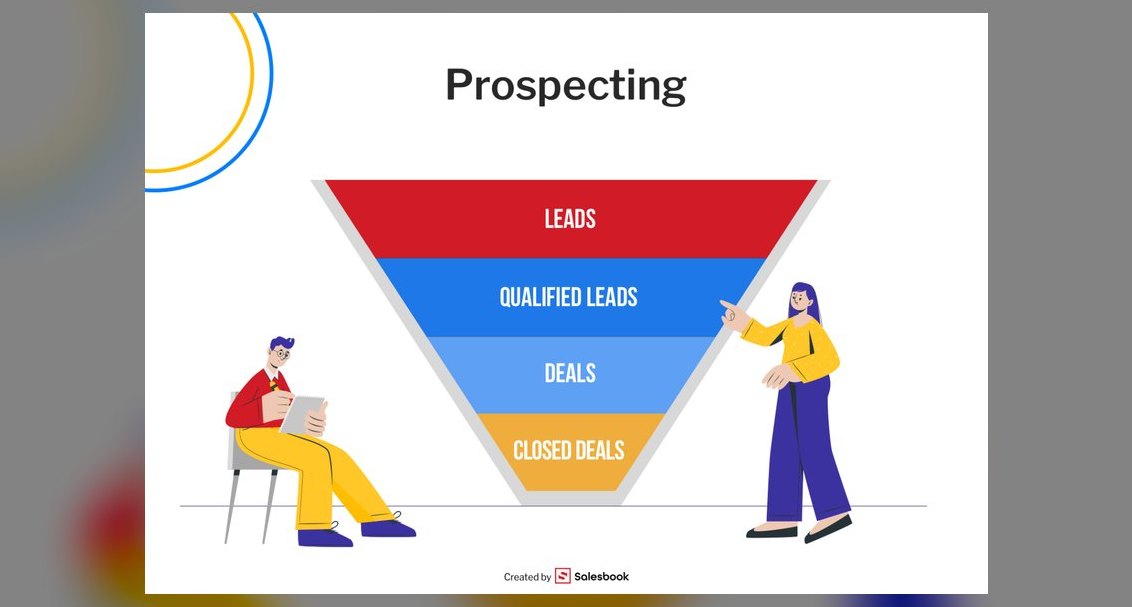 pulse-recentHigh-Profit Prospecting by Mark Hunter — Top 10 Key Takeaways for Sales Leaders in 2027