


Sales Management That Works by Frank Cespedes — Top 10 Key Takeaways for Sales Leaders in 2027
Quality
Certified

Frank Cespedes' *Sales Management That Works* argues that revenue shortfalls are almost always management-system failures, not talent failures. For sales Leaders in 2027, the core Takeaways are: translate strategy into concrete field behaviors, hire for the modern buyer, coach front-line managers relentlessly, sequence deployment before compensation, and track leading process metrics — not just quota — as one connected system.
What it is and why it matters
*Sales Management That Works: How to Sell in a World that Never Stops Changing* was written by Frank Cespedes, a senior lecturer at Harvard Business School who has spent decades studying how companies actually organize, staff, and manage selling functions — as distinct from how they describe selling in mission statements and investor decks. The book's central claim is blunt: most companies over-invest in sales training and motivational programs while under-investing in sales Management as a discipline. Cespedes treats a sales force the way an operations executive treats a factory — as a system with levers that can be diagnosed, redesigned, and measured — rather than a collection of naturally gifted or ungifted individuals.
That framing matters enormously for sales Leaders in 2027 because the buying environment has shifted underneath most sales organizations. Buyers now complete a large share of their research independently before ever speaking to a seller. Procurement-led buying committees, online product information, peer review sites, and AI-assisted research tools mean the seller's job has moved from pitching a product toward orchestrating a complex, multi-stakeholder buying process. Cespedes' argument is that this shift does not reward more charismatic reps or bigger training budgets — it rewards companies whose management systems (hiring criteria, territory design, coaching cadence, metrics, and incentives) are aligned to how customers actually buy today.
The book is deliberately not a list of tactics. It is a management book that happens to be about sales. Cespedes draws on research and case examples across B2B technology, industrial, and services selling to show that the same failure pattern recurs: leadership identifies a revenue problem, reaches for the most visible lever (usually a comp plan rewrite or a training week), and then wonders why performance does not move. The reason, he argues, is that the levers interact. Changing compensation without fixing deployment, hiring, or coaching just relocates the same underlying problem — often into turnover, discounting, or a pipeline full of deals that never should have been qualified.
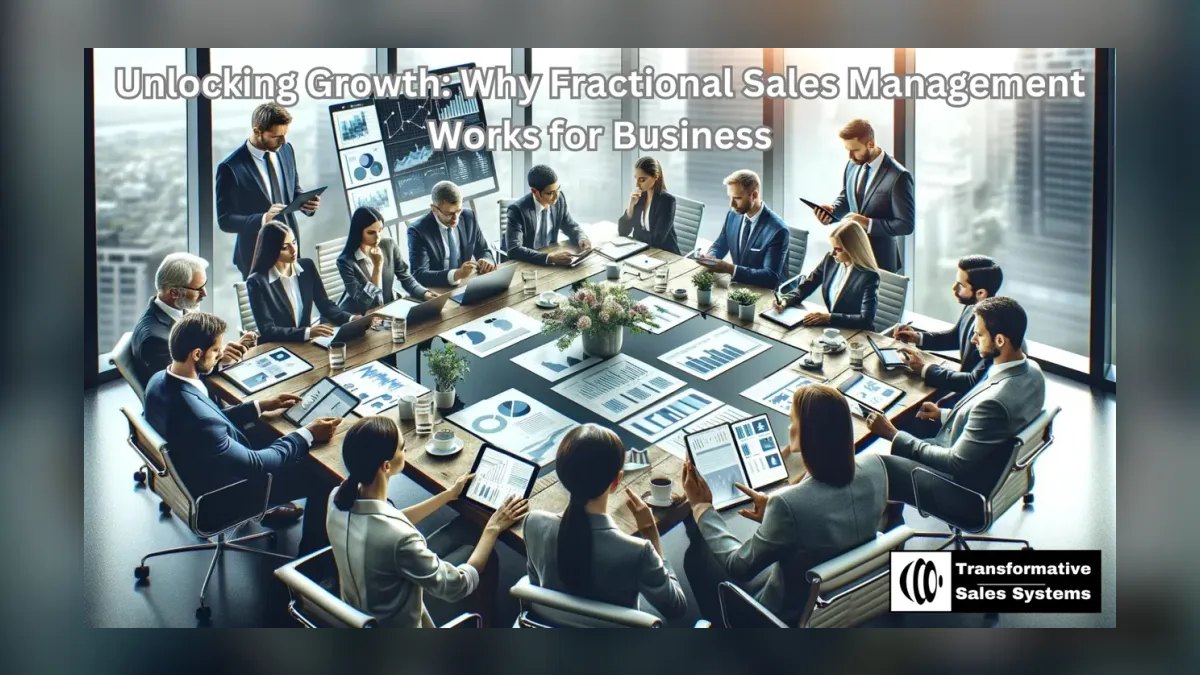
For a sales leader extracting practical Takeaways, the book's durable ideas hold up across industries and years, not just for 2027:
- Strategy has to translate into specific sales behaviors. A company can have a clear market strategy on a slide deck and still fail in the field if nobody has translated that strategy into account targeting rules, call cadences, and deal qualification criteria that a rep actually follows on a Tuesday afternoon.
- Hiring criteria are usually outdated. Many companies still hire for the "hunter" stereotype — aggressive, extroverted, relationship-driven — when buyer research shows most B2B purchases now start with self-directed research, meaning technical credibility and consultative listening matter more than charisma.
- Front-line sales managers are the most under-coached role in most companies. Companies spend heavily to train reps but almost nothing to train the managers who are supposed to coach those reps day to day, even though manager quality is one of the strongest predictors of team performance.
- Compensation design shapes behavior more than any speech from leadership. If a comp plan rewards booking any deal, reps will book any deal — including ones that churn, underprice, or misallocate delivery resources.
- Sales training ROI is often illusory. Classroom training without reinforcement, coaching, and changed incentives fades within weeks; Cespedes is skeptical of large one-time training spends that aren't paired with ongoing manager reinforcement.
- Deployment and territory design are strategic decisions, not administrative ones. How you segment accounts, size territories, and assign specialists versus generalists determines whether the field can even execute the go-to-market strategy leadership has chosen.
- Metrics should track leading activities, not just lagging outcomes. Revenue and quota attainment tell you the score after the game is over; pipeline quality, call-to-meeting conversion, and average sales cycle length tell you whether the underlying process is healthy.
- Buyer behavior has permanently shifted the sales role. Self-service research, procurement-led buying committees, and available product information online mean the seller's job has moved toward orchestrating a complex buying process rather than simply pitching a product.
- Sales and marketing misalignment is a management failure, not a personality clash. When the two functions define "qualified lead" or "ideal customer" differently, no amount of collaboration training fixes the structural cause.
- Change has to be led as a system, not a single fix. Swapping a CRM, running a training week, or adjusting a comp plan in isolation rarely moves the needle if the other levers stay untouched.
Why it matters specifically in 2027: the cost of getting this wrong is compounding. Sales cycles in complex B2B have lengthened, buying committees have grown, and the tolerance for a rep who cannot speak credibly to a technical evaluator has shrunk. A management system built for a 2015 buyer — one who took a first meeting early and relied on the rep for information — will underperform not because the reps are worse but because the system is mismatched to the market. Cespedes' contribution is giving leaders a diagnostic vocabulary to see that mismatch before it shows up as a missed quarter.
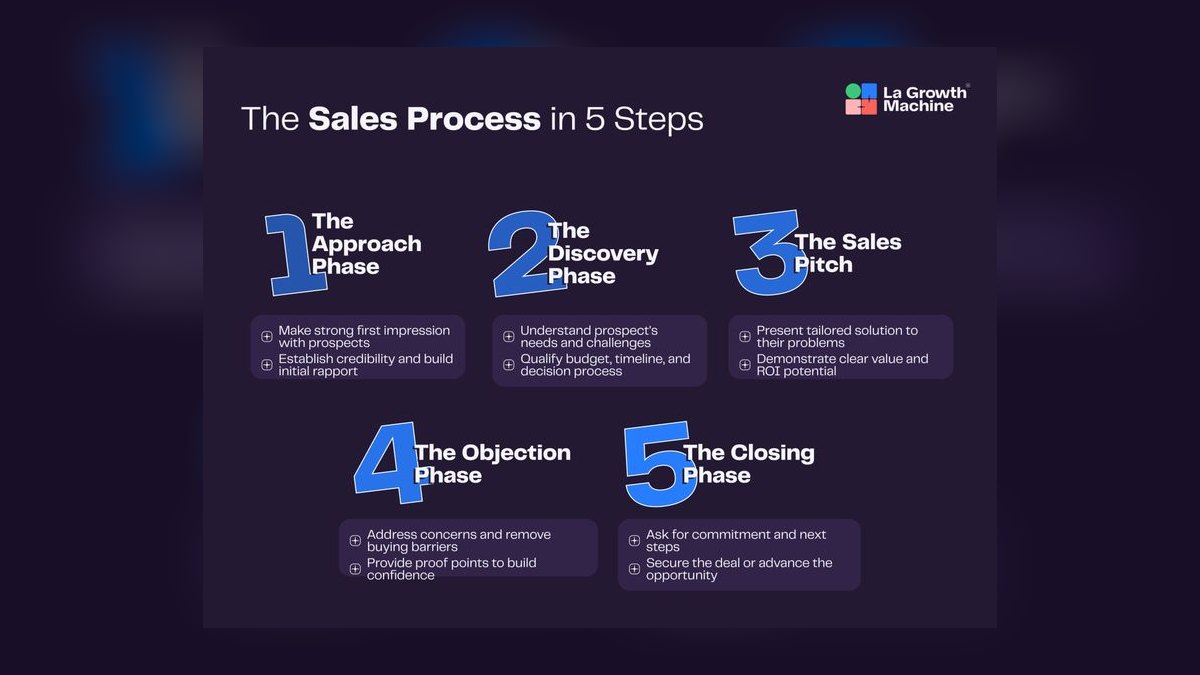
The step-by-step process
Cespedes frames improving a sales organization as a diagnostic sequence rather than a single intervention, because the levers interact — changing one without checking the others tends to just move the same underlying problem somewhere else. A sales leader applying the book's logic in 2027 typically works through the sequence below before touching comp plans or headcount.

The sequence matters because Cespedes repeatedly documents cases where a company jumped straight to step six — rewriting the comp plan — without first confirming that reps were even deployed against the right accounts or coached by managers capable of reinforcing the new behavior. The result was reps who understood the new incentive perfectly well but had no realistic path to hit it, which produced turnover instead of performance.
Here is how each step looks in practice:
Step 1 — Confirm the strategy is specific enough to execute. Ask whether a rep could read the strategy document and derive their target account list, their qualification criteria, and their call cadence from it. If the answer is no, the strategy is a slogan, not an operating plan. Cespedes' point is that strategy translation is a management deliverable, not something to delegate to enablement.
Step 2 — Audit hiring criteria against how buyers actually buy. Pull the last 20 closed-won deals and the last 20 closed-lost deals. Identify what behaviors actually correlated with winning: was it early discovery depth, multi-threading across the buying committee, technical credibility, or speed of response? Then compare those behaviors to the interview scorecard you currently use. In most companies there is a gap.
Step 3 — Review deployment. Map territories against opportunity, not against historical fairness. Check whether specialists and generalists are assigned in a way that matches deal complexity. A common finding is that the highest-potential accounts are covered by the least experienced reps because territories were assigned by tenure rather than by opportunity.
Step 4 — Assess front-line manager coaching capacity. Count how many reps each manager oversees and how many hours per week that manager actually spends in deal-level coaching versus internal meetings and reporting. If a manager has eight or more direct reports and no protected coaching time, the coaching layer is nominal.

Step 5 — Define leading metrics and stage exit criteria. Pick three to five leading indicators — for example, discovery-to-proposal conversion, multi-threading rate, and average days in each pipeline stage — and define objective exit criteria for every stage. This is what makes the forecast meaningful rather than aspirational.
Step 6 — Redesign compensation last. Only after steps one through five are aligned does compensation design make sense, because the plan should reward the behaviors the system now makes possible. A plan that rewards multi-threading when reps have no training or manager reinforcement for it just creates frustration.
Step 7 — Reinforce and inspect quarterly. Change in a sales organization decays without reinforcement. Weekly deal reviews should reference the same qualification criteria and leading metrics; quarterly business reviews should inspect whether the process actually changed, not just whether the number was hit.
The diagnostic order — strategy, people, structure, coaching, metrics, and only then money — is one of the book's most repeatable, exportable ideas, because it works whether the underlying issue is a shrinking market, a new competitor, or a shift in how customers research and buy. Leaders who internalize the order stop treating every revenue problem as a motivation problem.
Costs, timelines, and typical ranges
Cespedes grounds the book's arguments in operating realities that sales Leaders can benchmark against their own numbers. Rep ramp time — the period between a new hire's start date and full quota productivity — commonly runs 6 to 9 months in complex B2B selling, and longer in enterprise technology or capital equipment sales where deal cycles themselves stretch past six months. That ramp period is also when turnover is most expensive: replacing a mid-level rep typically costs somewhere between 1.5x and 2x their fully loaded annual compensation once recruiting, onboarding, lost pipeline, and management time are counted. That math is why Cespedes treats retention of a trained rep as a management-level financial decision, not just an HR metric.

Training spend is another area where the book pushes leaders toward realism about timelines. Formal sales training programs frequently run a few percentage points of sales payroll annually, but retention of that training content drops sharply within weeks absent reinforcement. Cespedes' argument is that without a front-line manager actively coaching to the same material in weekly deal reviews, the training investment decays before it changes a single closed deal. In practical terms, a company that spends six figures on a training initiative and zero on manager coaching capacity has bought a temporary morale bump, not a capability.
Deployment and territory redesigns, by contrast, tend to take a full planning cycle — commonly a fiscal quarter to plan and a full fiscal year to fully observe the results — because reassigning accounts disrupts existing relationships and pipeline in the short term even when the new structure is better aligned to the market. Leaders should expect a measurable dip in the first one to two quarters after a significant territory change and should communicate that expectation upward before it happens, or the redesign gets blamed for a problem it is actually solving.
Forecast accuracy is a related benchmark. Cespedes notes that most sales organizations' forecasts miss by wide enough margins that leadership should treat quarterly forecasts as directional rather than precise, and should invest in process discipline — defined stages, exit criteria, consistent CRM hygiene — before trusting the number that process produces. A useful internal benchmark: if your forecast has missed by more than roughly 10 to 15 percent in three of the last four quarters, the problem is almost certainly process definition, not rep optimism.
Coaching capacity has its own arithmetic. If a front-line manager is expected to coach, they need protected time — commonly several hours per rep per month of deal-level review, plus pipeline inspection. A manager with eight reps and a full meeting calendar cannot deliver that, which means the coaching layer has to be resourced deliberately, either by reducing span of control or by removing non-coaching work from the manager's plate. Cespedes treats this as a cost decision with a clear return: manager quality is one of the strongest predictors of team performance, so underfunding the coaching layer is one of the most expensive false economies in sales.
Finally, the cost of misaligned sales and marketing definitions is hard to see on a P&L but shows up as wasted pipeline. If marketing counts a downloaded whitepaper as a qualified lead and sales counts only a booked meeting, the two functions will argue about lead quality forever. The fix is a shared operational definition, enforced by both functions' leadership, with a feedback loop where sales reports back on what happened to each lead. That is a process cost, not a technology cost.
Where teams get it wrong
The most common and costly mistake Cespedes identifies is promoting the top-performing individual rep into a sales management role with no separate training for the management job itself, on the assumption that someone who can sell can automatically teach others to sell. Selling and coaching are different skills. A new manager who keeps carrying a personal quota, or who coaches by simply retelling their own deal stories, tends to develop a team that performs unevenly and loses talent that doesn't share the manager's specific style. The fix is not complicated but it is deliberate: a distinct manager onboarding path covering coaching mechanics, pipeline inspection, hiring, and performance conversations — before the promotion takes effect, not months after.
A second recurring error is buying a CRM or sales-engagement platform as a substitute for management discipline rather than as a tool that supports it. Technology can capture and surface data, but it cannot decide territory boundaries, define what a qualified opportunity looks like, or coach a rep through a stalled deal. Those remain Management judgment calls. Companies that expect software alone to fix a broken sales process are consistently disappointed, and worse, they often conclude that the software was the problem rather than the missing discipline.
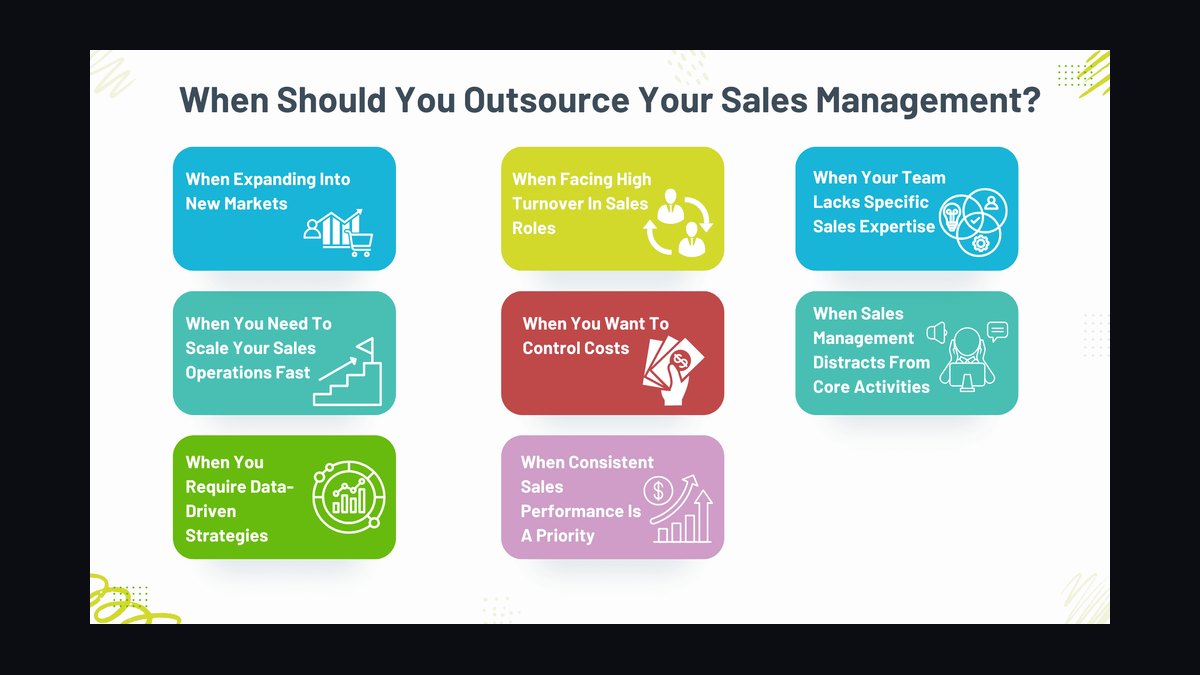
A third mistake is chasing quota attainment as the only health metric, which masks problems until they are large. A team can be 100 percent to quota while burning through unsustainable discounting, misaligned accounts, or an unrepeatable one-time deal. A leader who only watches the bottom-line number won't see the erosion underneath it until the pipeline is empty. The corrective is to pair the lagging number with a small set of leading indicators that reveal process health — pipeline quality, multi-threading rate, stage conversion, and cycle time — and to review them on the same cadence as the number.
A fourth error is treating sales and marketing misalignment as a personality clash rather than a structural defect. When the two functions define "qualified lead," "ideal customer profile," or "funnel stage" differently, no amount of collaboration training or joint offsite fixes the cause. The actual fix is a shared operational definition, owned jointly, with a closed feedback loop where sales reports outcomes back to marketing on every lead. Cespedes flags this as a chronic, low-visibility drag on performance precisely because it never shows up as a single dramatic failure — it just quietly wastes pipeline every quarter.
A fifth mistake, and one that is especially relevant in 2027, is assuming that a change in buyer behavior can be absorbed without changing the management system. If buyers now arrive at the first call having already completed much of their evaluation, then the old playbook — open with a broad pitch, discover needs over several meetings, then propose — is mis-sequenced. Reps need to be hired, trained, and measured for a different motion: faster credibility establishment, deeper technical discovery, and earlier multi-threading across the buying committee. Leaders who do not change hiring criteria, onboarding, and metrics to match will find that their reps are working hard inside a system that no longer fits the market.
Decision framework: when to choose what

Because the book's levers interact, Cespedes' practical value for 2027 sales Leaders is less "read these ten Takeaways" and more "use this triage logic" to decide which lever to pull first for a given symptom. The framework below reflects how the book sequences diagnosis before prescribing a fix.
Applied this way, the framework prevents the most common shortcut: reaching for a comp plan rewrite as the default fix for almost any sales problem. Cespedes' point is that compensation is the last lever to pull, not the first, because it only works when hiring, deployment, and coaching are already aligned with the strategy leadership actually wants executed. A leader diagnosing a shortfall in 2027 — with buyers doing more independent research and AI tools changing how reps prepare for calls — still runs through this same sequence. What changes year to year is the specific symptom, not the underlying management logic the book lays out.
A few worked examples of the triage in practice:
- Symptom: reps miss quota but pipeline looks full. Run the framework. If stage exit criteria are undefined, the pipeline is inflated and the fix is process definition, not more pipeline. If exit criteria are solid and deals still stall, the constraint is likely qualification or multi-threading skill, which points to coaching and hiring.
- Symptom: high early turnover among new hires. Check deployment and onboarding first. New reps who are given poor territories or no structured ramp plan churn regardless of how good the comp plan is.
- Symptom: marketing and sales blame each other for missed targets. This is almost always a shared-definition problem. Fix the operational definitions and the feedback loop before touching either team's targets.
- Symptom: top reps hit quota, everyone else lags badly. This pattern usually indicates a coaching gap or a hiring profile mismatch. The top rep may be succeeding on personal skill the system does not replicate.
- Symptom: discounting is rising while win rates hold. Check the comp plan and the deal approval process together. If reps are rewarded on bookings and discounting is easy to approve, the behavior is rational given the system.
The framework's value is that it forces a leader to locate the constraint before spending money. Cespedes' broader argument is that most sales organizations have more management leverage available than they realize — they simply keep pulling the same lever (compensation) because it is visible and fast, while the slower, less glamorous levers (hiring criteria, deployment, coaching, metrics) are where the durable gains actually live.
Related questions

What is Frank Cespedes' main argument in Sales Management That Works?
That most revenue shortfalls are caused by misaligned sales Management systems — hiring, deployment, coaching, and metrics — not by a lack of individual sales talent, and that leaders should diagnose the system before changing compensation.
Why does the book say sales training often fails?
Because classroom training decays quickly without reinforcement; without front-line managers coaching to the same material in ongoing deal reviews, the content rarely changes actual field behavior.
How is a sales manager's job different from a top rep's job?
A manager's core job is coaching and system design — hiring, deploying, and developing others — while a rep's job is executing individual deals; conflating the two is why promoted reps often struggle as managers.
What should sales leaders measure besides quota attainment?
Leading indicators such as pipeline quality, call-to-meeting conversion, average sales cycle length, and forecast accuracy, since these reveal process health before it shows up in a lagging revenue number.
How does buyer behavior change affect sales management in 2027?
Buyers research independently before engaging a seller, shifting the seller's role toward orchestrating a complex buying process and requiring hiring, training, and metrics that reward consultative skill over outreach volume.
FAQ
Who is Frank Cespedes? Frank Cespedes is a senior lecturer at Harvard Business School who researches and teaches sales Management, go-to-market strategy, and how companies organize commercial functions; he has written extensively for outlets like Harvard Business Review on these topics.
Is Sales Management That Works aimed at reps or at leaders? It is aimed primarily at sales Leaders, sales operations executives, and general managers who oversee a commercial function, since its focus is organizational design and management discipline rather than individual selling technique.
Does the book recommend a specific compensation plan structure? No single universal plan; Cespedes argues compensation design has to follow strategy, deployment, and metrics decisions, and should be redesigned as one piece of an aligned system rather than in isolation.
Why does front-line manager coaching matter more than most companies think? Because manager quality is one of the strongest predictors of team performance, yet most companies spend heavily on rep-facing training while giving new managers little or no separate training for the coaching and system-design parts of their job.
How does buyer behavior change affect sales management in 2027? Buyers increasingly research independently before engaging a seller, which shifts the seller's role toward orchestrating a complex buying process and requires hiring, training, and metrics that reward consultative skill over pure volume of outreach.
What is the single biggest mistake sales organizations make, according to the book? Promoting a top individual performer into a management role without separate training for coaching and system design, on the mistaken assumption that selling skill automatically transfers into management skill.
Sources
- https://hbr.org
- https://www.hbs.edu
- https://store.hbr.org
- https://www.forbes.com
- https://www.gartner.com
- https://www.mckinsey.com
- https://www.salesforce.com
- https://www.hubspot.com
Related on PULSE
- How do you design a sales compensation plan that doesn't reward the wrong behavior?
- What separates a great front-line sales manager from an average one?
- How has B2B buyer behavior changed sales team structure since the pandemic?
- What are the leading indicators every sales leader should track besides quota attainment?
- How long should you expect a new sales rep to take to reach full productivity?
This page will be disappearing soon. Save it to your device for $1 — or read it free while it is here.
@Kory-White- · if Venmo asks, the last 4 of my number are 2012
This page is gone.
This one is off the shelf now. $1 keeps it on your phone for good — the whole page, pictures and diagrams included.
 book-summarySPIN Selling by Neil Rackham — Cliff Notes Summary
 pulse-recentWhat are the first three concrete steps in Sandler Rule #1 for a new sales rep in 2027?
 pulse-recentGetting to Yes by Roger Fisher and William Ury — Top 10 Key Takeaways for Sales Leaders in 2027
 pulse-recentTo Sell Is Human by Daniel Pink — Top 10 Key Takeaways for Sales Leaders in 2027
 pulse-recentThe Sales Manager’s Guide to Greatness by Kevin Davis — Top 10 Key Takeaways for Sales Leaders in 2027
 pulse-recentThe Transparency Sale by Todd Caponi — Top 10 Key Takeaways for Sales Leaders in 2027
 pulse-recentWhat is the first concrete step in the Sandler Selling System for handling a prospect's initial brush-off in 2027?
 pulse-recentWhat is the second concrete step in Strategic Selling by Miller Heiman for identifying a sales coach in 2027?
 pulse-recentTraction by Gabriel Weinberg and Justin Mares — Top 10 Key Takeaways for Sales Leaders in 2027
 pulse-recentConceptual Selling by Robert Miller and Stephen Heiman — Top 10 Key Takeaways for Sales Leaders in 2027