


Building a StoryBrand by Donald Miller — Top 10 Key Takeaways for Sales Leaders in 2027
Quality
Certified
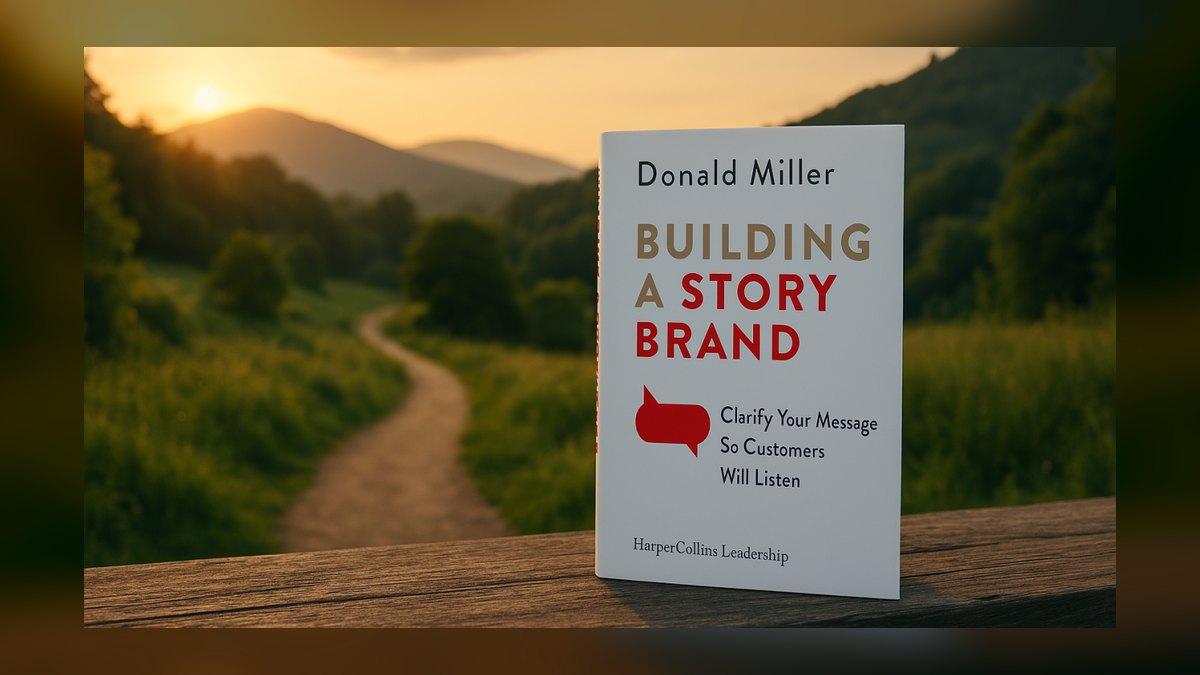
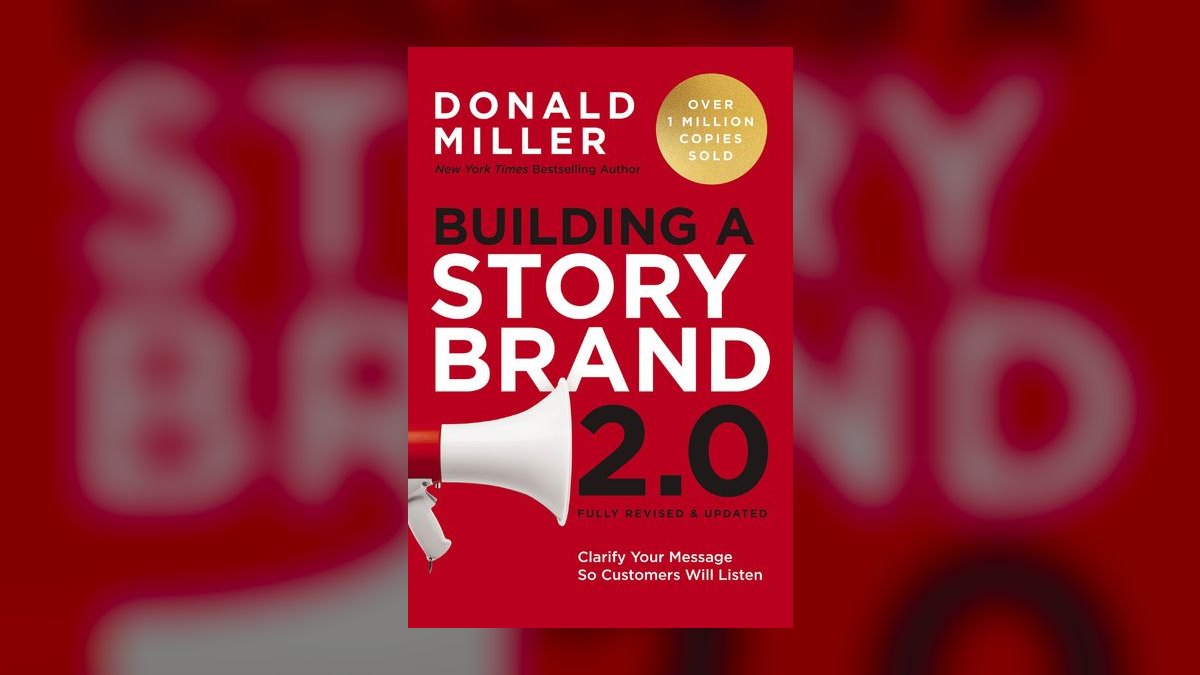
Building a StoryBrand by Donald Miller gives sales Leaders a practical framework: cast the customer as the hero, your product as the guide, and define a clear problem, plan, and call to action. The core Takeaways for 2027 are that clarity beats cleverness, and a repeatable story-driven sales strategy shortens cycles and improves win rates.
A concrete scenario that frames the problem
Picture a mid-market B2B software company heading into its 2027 planning cycle. The sales team has twelve reps, a decent product, and a pipeline that looks healthy on paper — but win rates have slipped from 28% to 21% over three quarters, and average sales cycle length has stretched from 62 days to 84. Deals stall at the proposal stage. Reps blame pricing; leadership blames competition. When you sit in on discovery calls, the real problem surfaces: every rep tells a different story about what the product does and why it matters. One rep leads with integrations, another with compliance, a third with ROI projections. Prospects leave each call with a different mental model of the value, and none of them is crisp enough to repeat to a colleague or a budget approver.
This is exactly the failure mode Donald Miller wrote *Building a StoryBrand* to fix. The book's central argument is that customers do not buy the best product — they buy the one they can understand fastest. When your messaging forces a buyer to do the cognitive work of figuring out what you do, where you fit, and what happens next, you lose deals to competitors who simply made it easier to say yes. For sales Leaders, the practical consequence is that messaging clarity is not a marketing problem you delegate and forget. It is a revenue lever you own, and in 2027, with buying committees larger and evaluation cycles more fragmented than ever, it compounds faster than almost any other improvement you can make.
The scenario above is not unusual. It is the default state of most sales organizations that grew by adding headcount rather than by tightening narrative. The rest of this page walks through how the StoryBrand framework actually works, what the numbers look like when you apply it, where it breaks down, and how to avoid the traps that make teams abandon it after one offsite.
How the mechanism actually works
Miller's framework is built on a simple observation from storytelling: every story that holds attention follows the same skeleton. A character wants something. They encounter a problem. They meet a guide who gives them a plan. The guide calls them to action. That action either helps them avoid failure or achieve success. When you map your sales motion onto that skeleton, you stop talking about yourself and start talking about the customer's journey.
The seven-part StoryBrand framework, translated for a sales organization, looks like this:

- A character — your buyer, with a specific want, not a generic "need for efficiency." The want must be concrete enough that the buyer would say it out loud.
- Has a problem — external (the tangible obstacle), internal (how it makes them feel), and philosophical (why it's just wrong that they have to deal with it).
- And meets a guide — you. A guide demonstrates empathy and competence, not heroism. You are Yoda, not Luke.
- Who gives them a plan — a three-to-four step process that removes the fear of the unknown.
- And calls them to action — a direct, unambiguous next step, plus a transitional call for those not ready.
- That helps them avoid failure — the stakes. What happens if they do nothing?
- And achieve success — the resolution. What does life look like after?
For sales Leaders, the mechanism matters because it converts a soft skill (storytelling) into an operational asset (a repeatable script, a qualification lens, a coaching rubric). You can audit a discovery call against the seven elements. You can score a proposal on whether it names the internal problem. You can train a new rep in weeks instead of quarters because the narrative gives them a spine to hang details on.
The diagram captures the flow, but the real leverage is in the internal problem. Most sales teams are competent at naming external problems — "your data is siloed," "your onboarding takes too long." Far fewer name the internal problem — "you're worried this makes your team look incompetent," "you dread the board meeting where you have to explain another missed quarter." Miller's insight is that people buy emotionally and justify rationally, and the internal problem is where the emotion lives. When a rep names the internal problem accurately, the buyer feels understood, and trust accelerates. That trust is what compresses cycle time.

There is also a structural point about the guide's role that sales Leaders consistently underuse. A guide does not compete with the hero. A guide does not claim credit for the hero's success. A guide's job is to make the hero feel capable. In sales terms, this means your messaging should make the buyer the protagonist of the transformation, not your product. The moment your deck starts with "About Us" or "Our Platform," you have made yourself the hero, and the buyer has checked out. Miller's rule is blunt: if you make the customer the hero, they will make you the guide; if you make yourself the hero, the customer becomes the villain or the victim, and neither buys.
Finally, the plan element deserves special attention for 2027. Buying committees are larger, and the average enterprise deal now involves multiple stakeholders who each need to understand the path forward. A three-step plan — for example, "Assess, Pilot, Scale" — gives every stakeholder a shared mental model of what happens next. It reduces the perceived risk of saying yes and gives your champion the language they need to sell internally when you are not in the room. That internal selling is where most deals are actually won or lost.
Real numbers, ranges, and benchmarks
StoryBrand does not publish a single canonical benchmark, so any number you see attached to it should be treated as directional rather than guaranteed. That said, there are consistent patterns across organizations that adopt the framework seriously, and it helps to know the ranges so you can set realistic expectations.

Messaging clarity improvements. Teams that run a structured messaging audit against the seven StoryBrand elements typically find that 60-80% of their existing sales collateral fails at least one element — most commonly the internal problem or the direct call to action. Rewriting to fix those gaps is cheap and fast; most teams can complete a full messaging overhaul in four to six weeks with existing staff.
Cycle time. Organizations that tighten narrative and enforce a consistent discovery script commonly report cycle-time reductions in the 10-25% range. In the scenario above, that would pull an 84-day cycle back toward 63-76 days. The mechanism is not magic: reps qualify faster because the story surfaces fit earlier, and buyers decide faster because the path forward is clear.
Win rate. Win-rate improvements from messaging work are typically smaller than cycle-time gains but more durable. Expect 3-8 percentage points over two to three quarters. A 21% win rate improving to 25-29% is a realistic outcome, not a fantasy.
Ramp time for new reps. This is often the most underrated benefit. When your sales story is codified, new hires can learn the narrative in days rather than months. Teams that previously took 5-6 months to full productivity often see that compress to 3-4 months, which directly reduces the cost per ramped rep.
Pipeline velocity. Pipeline velocity is roughly (number of qualified opportunities × average deal value × win rate) ÷ sales cycle length. Because StoryBrand work touches win rate and cycle length simultaneously, the compounding effect on velocity can be substantial — a 15% cycle reduction and a 5-point win-rate gain together can lift velocity by 25% or more.

Adoption rates. The honest number: roughly half of teams that buy the book and run one workshop never operationalize it. Of those that do operationalize — meaning they build it into onboarding, call scoring, and pipeline reviews — a large majority report it was worth the effort. The differentiator is not the book; it is whether Leaders treat the framework as a system or as a one-time event.
These ranges are not guarantees. They depend heavily on your market, your price point, and whether your product genuinely solves the problem you claim. A clear story about a weak product will accelerate your losses, not your wins. Clarity is a multiplier on truth, not a substitute for it.
Trade-offs and alternatives
StoryBrand is not the only framework, and it is not right for every sales organization. Understanding the trade-offs keeps you from over-investing in a tool that does not fit your motion.
StoryBrand versus Challenger Sale. Challenger emphasizes teaching the customer something new and pushing them out of complacency. StoryBrand emphasizes clarity and empathy. They are complementary but pull in different directions: Challenger can feel confrontational, while StoryBrand can feel too soft for complex, technical sales where the buyer is already sophisticated. Many enterprise teams use StoryBrand for the opening narrative and Challenger for the mid-funnel reframe.

StoryBrand versus MEDDIC/MEDDPICC. MEDDIC is a qualification framework, not a messaging framework. It tells you whether a deal is real; StoryBrand tells you whether your message lands. They operate at different layers and should not be treated as substitutes. A team with strong MEDDIC discipline and weak messaging will qualify accurately and still lose to a competitor with a clearer story.
StoryBrand versus category design. Category design (Play Bigger) argues that the biggest wins come from creating a new category rather than competing in an existing one. StoryBrand assumes the category exists and helps you win within it. If your ambition is to redefine the market, StoryBrand is necessary but not sufficient.
The cost of simplicity. StoryBrand's insistence on simplicity is its greatest strength and its greatest limitation. Complex, multi-stakeholder enterprise sales sometimes require nuance that a seven-part framework flattens. The risk is that reps oversimplify to the point of sounding generic. The mitigation is to keep the narrative simple at the top and let the detail live in the proof, not the pitch.
The practical recommendation for most sales Leaders in 2027 is to treat StoryBrand as the default narrative layer, then layer in qualification discipline (MEDDIC) and selective reframing (Challenger) where the deal warrants it. Do not try to run three frameworks at full intensity — that is how teams end up with confused reps and bloated enablement decks.
Common pitfalls and how to avoid them

Pitfall one: treating it as a marketing project. The most common failure is that sales Leaders delegate StoryBrand to marketing, marketing produces a new website and a one-pager, and nothing changes in the field. The fix is to make the narrative a sales-owned asset. Run the messaging workshop with reps in the room, record the output as a living sales playbook, and score calls against it.
Pitfall two: confusing the guide with the hero. Reps who have spent years pitching features default to talking about the product. The correction is a simple coaching rule: every discovery call must contain at least one sentence that names the buyer's internal problem before any product detail is introduced. Drill it until it is automatic.
Pitfall three: skipping the stakes. Failure and success are the engine of the story. Many teams name the success but never articulate what happens if the buyer does nothing. Without stakes, there is no urgency, and deals drift. Build a "cost of inaction" line into every proposal and every business case.
Pitfall four: a plan that is too long. The plan should be three or four steps, not seven. If your implementation plan has eleven phases, collapse it into a story-friendly version for the buyer and keep the detailed project plan for after the signature.

Pitfall five: one-and-done adoption. Teams run a workshop, feel inspired, and revert within a quarter because nothing reinforced the change. The fix is structural: put the seven elements into your CRM as required fields, into your call scoring rubric, and into your pipeline review agenda. What gets reviewed gets repeated.
Pitfall six: ignoring the champion's need to sell internally. Your story has to work when you are not in the room. Test it by asking your champion to explain your value to a colleague in one sentence. If they cannot, your story is not clear enough yet.
Pitfall seven: letting the story calcify. Markets shift, competitors move, and buyer priorities change. A narrative that worked in 2024 may be stale by 2027. Review your story every two quarters against real call recordings and win-loss data. The framework is stable; the content inside it is not.
Related questions
How long does it take to implement StoryBrand across a sales team?
Most teams complete a first-pass narrative overhaul in four to six weeks, then spend one to two quarters embedding it into onboarding, call scoring, and pipeline reviews. Full adoption — where reps use it instinctively — typically takes two to three quarters of consistent reinforcement.
Does StoryBrand work for technical or complex enterprise sales?
Yes, with adjustment. Keep the top-level narrative simple and move technical depth into proof and validation. The framework governs how you frame the problem and the plan, not how much detail you ultimately share with a technical evaluator.
What is the single most important element for sales Leaders to get right?
The internal problem. Naming how the buyer feels — not just what blocks them — is what creates trust and compresses cycle time. Most teams skip it, and it is the cheapest, highest-leverage fix available.
Can StoryBrand replace a qualification methodology?
No. StoryBrand is a messaging framework; MEDDIC and similar tools are qualification frameworks. They solve different problems and work best together. Use StoryBrand to be understood and MEDDIC to know whether a deal is real.
FAQ
What is the core idea of Building a StoryBrand?
The core idea is that customers buy clarity, not cleverness. If you position the customer as the hero and your company as the guide, and you define a clear problem, plan, and call to action, you make it easier for buyers to understand you and choose you. Confusion is the enemy of revenue.
How do the StoryBrand Takeaways apply specifically to sales Leaders?
Sales Leaders own the narrative in the field. The Takeaways translate into a repeatable discovery script, a coaching rubric, a proposal structure, and an onboarding curriculum. When Leaders operationalize the story, it stops being a marketing asset and becomes a revenue system that shortens cycles and lifts win rates.

Is StoryBrand still relevant in 2027?
Yes. The framework is built on how humans process information, which does not change quickly. What changes is the content inside the framework — buyer priorities, competitive landscape, and channel mix. Teams that refresh their story every couple of quarters keep the framework relevant.
How do I measure whether StoryBrand is working?
Track cycle time, win rate, ramp time for new reps, and pipeline velocity before and after adoption. Also run win-loss interviews and ask buyers to repeat your value proposition back to you. If they can repeat it accurately, your story is landing.
What is the biggest mistake sales Leaders make with StoryBrand?
Treating it as a one-time workshop rather than an operating system. The framework only pays off when it is embedded into onboarding, call reviews, CRM fields, and pipeline conversations. Inspiration without reinforcement fades within a quarter.
Can a small sales team use StoryBrand effectively?
Yes, and often faster than large teams. A small team can align on the narrative in a single session and enforce it through direct coaching. The absence of layers makes adoption quicker, provided the Leader personally models the story in every deal review.
Sources
- https://www.goodreads.com/book/show/35285430-building-a-storybrand
- https://storybrand.com/
- https://www.amazon.com/Building-StoryBrand-Clarify-Message-Customers/dp/0718033329
- https://hbr.org/2016/03/the-new-sales-imperative
- https://www.gartner.com/en/sales/insights/b2b-buying-journey
- https://blog.hubspot.com/sales/sales-methodology
- https://www.salesforce.com/resources/articles/sales-pipeline-velocity/
- https://www.mckinsey.com/capabilities/growth-marketing-and-sales/our-insights
Related on PULSE
- Sales messaging frameworks compared for B2B teams
- How to build a discovery call scoring rubric
- Reducing sales cycle length without discounting
- Onboarding new reps faster with a narrative playbook
- MEDDIC vs MEDDPICC: which qualification framework fits
- Win-loss analysis: turning lost deals into strategy
This page will be disappearing soon. Save it to your device for $1 — or read it free while it is here.
@Kory-White- · if Venmo asks, the last 4 of my number are 2012
This page is gone.
This one is off the shelf now. $1 keeps it on your phone for good — the whole page, pictures and diagrams included.
 pulse-recentDelivering Happiness by Tony Hsieh — Top 10 Key Takeaways for Sales Leaders in 2027
 pulse-recentHow do you implement the Sandler Rules in your first 30 days as a new sales rep in 2027?
 pulse-recentThe Sales Acceleration Formula by Mark Roberge — Top 10 Key Takeaways for Sales Leaders in 2027
 pulse-recentBlue Ocean Strategy by W. Chan Kim and Renee Mauborgne — Top 10 Key Takeaways for Sales Leaders in 2027
 pulse-recentWhat are the first three concrete steps in Sandler Rule #1 for a new sales rep in 2027?
 pulse-recentWhat is the second concrete step in Strategic Selling by Miller Heiman for identifying a sales coach in 2027?
 pulse-recentConceptual Selling by Robert Miller and Stephen Heiman — Top 10 Key Takeaways for Sales Leaders in 2027
 pulse-recentProActive Selling by Skip Miller — Top 10 Key Takeaways for Sales Leaders in 2027
 pulse-recentSandler Rule #1: What is the first concrete step to build a prospect's trust in a sales conversation in 2027?
 pulse-recentSell or Be Sold by Grant Cardone — Top 10 Key Takeaways for Sales Leaders in 2027