
Positioning by Al Ries and Jack Trout — Top 10 Key Takeaways for Sales Leaders in 2027
 Curated byKory White · Fractional CRO · Maryland
 PULSEKNOWLEDGE LIBRARY
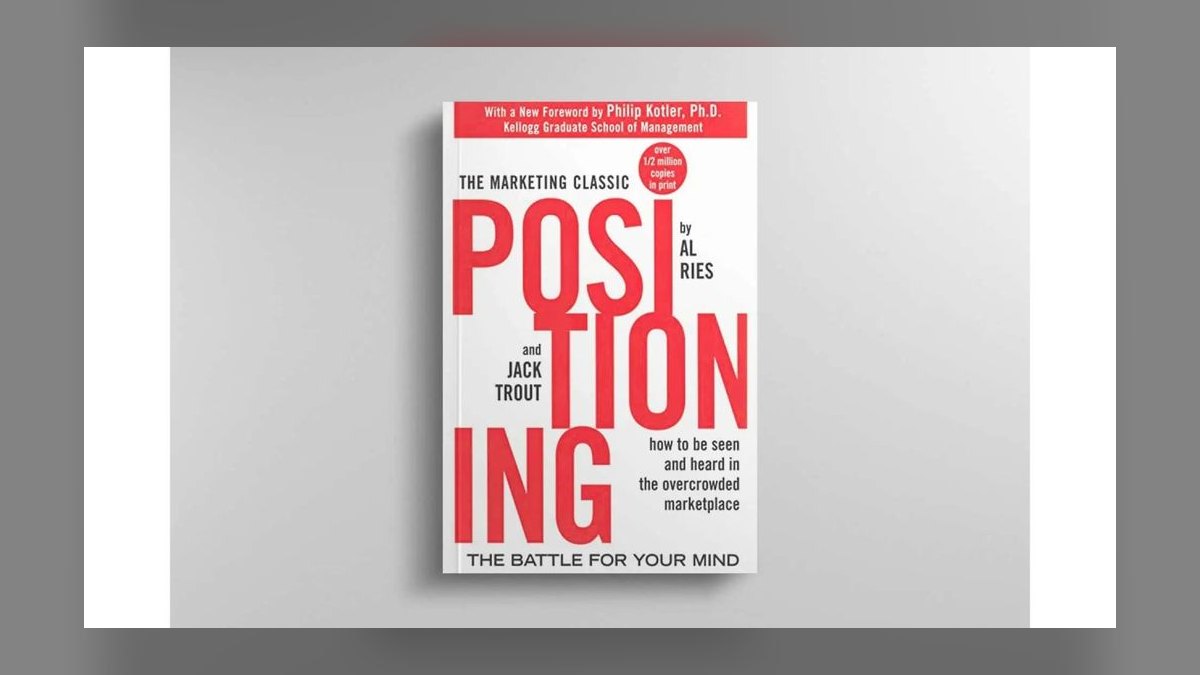
Positioning, the 1981 classic by Al Ries and Jack Trout, argues that the battle for customers is won not in the product but in the prospect's mind. For sales leaders in 2027, the core Takeaways are that you must own a single, simple idea in your buyer's memory, differentiate against category leaders rather than imitate them, and align your entire go-to-market strategy around that mental position before tactics like demos or discounting ever occur.
The 2027 Sales Landscape: Why Positioning Demands a Reboot
Consider a typical enterprise software sales motion in 2027. A sales leader, Sarah, manages a team selling a customer data platform. Her product is technically superior to the incumbent: it processes data 40% faster, integrates with 200 more tools, and costs 15% less. Yet her team loses 70% of deals in the final round to the same legacy vendor every quarter. The buyers—chief marketing officers and chief data officers—consistently say they "feel safer" with the incumbent. They cannot articulate why Sarah's product is different beyond "faster and cheaper," which they interpret as riskier.
Sarah's problem is not product quality; it is a positioning vacuum. Her team leads with features and metrics, but the prospect's mind has no slot for her product. The incumbent has spent a decade occupying the "trusted enterprise standard" position. Every time Sarah's team tries to out-feature them, they reinforce the incumbent's position as the category leader who must be beaten. The prospect's mental ladder has room for maybe two or three rungs in this category. Sarah's product is not on the ladder at all.
The scenario extends beyond software. A medical device sales rep facing a market dominated by two giants. A financial services advisor competing against a national brand with a massive advertising budget. A logistics firm trying to displace a market leader on service reliability. In every case, the sales team is fighting a battle they cannot win because they have not first won the battle for a distinct, memorable position in the buyer's mind. The sales deck, the demo, and the proposal are all built around the product's internal view of itself, not the prospect's external perception of the category.
In 2027, buyers are more overwhelmed than ever. They are bombarded with AI-generated content, personalized outreach, and endless webinars. The average B2B buyer is exposed to over 5,000 marketing messages daily. Their cognitive defense mechanisms are fully engaged. They filter out anything that does not immediately match a pre-existing mental category. A sales leader who does not have a crystal-clear positioning statement—one that can be communicated in under five seconds—is sending their team into a war with no flag to plant.
The sales leader's role in 2027 is therefore not merely to manage pipelines and quotas. It is to serve as the chief positioning officer for their territory. They must ensure that every rep can answer the question "What is the one thing we own in the buyer's mind?" before they ever ask for a meeting. If the answer is a list of features, the positioning has failed. If the answer is a single, simple, category-defining idea, the team has a chance.
The Mechanics of Positioning: How the Mind Sorts and Files
Ries and Trout's central thesis is deceptively simple: positioning is not what you do to the product, but what you do to the mind of the prospect. The human brain is a defense mechanism against the sheer volume of information it receives. It cannot process everything, so it creates mental ladders—hierarchical categories—where it files products and companies. The top rung is the leader in that category. The second rung is the strong challenger. Everything else is largely invisible.

To understand how this works for a sales team, consider the mechanics of the "mental ladder." When a buyer has a need, they mentally scan their ladders. If they need a quick, affordable lunch, they think of fast-food chains. The top rung might be McDonald's. The second rung might be Burger King. If they need enterprise cloud infrastructure, the top rung is likely AWS, the second Azure. The salesperson's job is not to convince the buyer that their product is better than the top rung—that is a frontal assault that the leader will almost always win due to sheer mental availability. Instead, the salesperson must find or create a new rung on the ladder that they can own.
This mechanism has several practical components for a sales conversation. First, the law of the mind states that it is easier to get into the mind first than to convince someone you are better than the first entrant. If your product is not first in a category, you cannot change that fact. You must create a new category where you can be first. Second, the law of focus states that the most powerful concept in positioning is owning a single word in the prospect's mind. FedEx owns "overnight." Volvo owns "safety." For a sales leader, the question is: what single word or short phrase does your product own? If the answer is nothing, you are a commodity.
Third, the law of sacrifice is critical for sales. To own a position, you must give something up. You cannot be all things to all people. A sales leader must be willing to lose deals that do not fit the position. If your position is "the most secure data platform for healthcare," you must be willing to walk away from a retail prospect who wants cheap and fast. This feels counterintuitive to a rep chasing quota, but it is the only way to build a reputation that precedes you.
Fourth, the law of perspective suggests that positioning effects take time to accumulate in the market's collective mind. A single sales call does not establish a position. It is the consistent repetition of a single message across every call, every email, every case study, and every proposal that eventually creates the mental slot. Sales leaders must enforce message discipline. If one rep talks about price, another about features, and another about service, the market will never form a clear image of the company.

The mechanism also involves the "name" itself. Ries and Trout argue that the name is the first point of contact with the mind. A generic or confusing product name forces the prospect to do work to understand what you do, and they will not do that work. In a sales context, the rep's opening line must act as a name for the problem. Instead of saying "We are Acme Corp, and we do data integration," the rep should say, "We are the only platform that solves the 'last-mile data handoff' problem." This immediately creates a category in the buyer's mind.
Finally, the trap of "line extension" is a constant danger. A sales leader might be tempted to position their product as a solution for every pain point they hear in discovery calls. This dilutes the mental position. If you are known as the "fastest" solution, and you start leading with "we also do compliance," you confuse the mind. The prospect will not remember you for either. The mechanism demands relentless focus. The sales leader must train the team to hear a prospect's off-strategy need and say, "That is not our core focus, but here is what we do exceptionally well," rather than trying to be everything.
Real Numbers, Ranges, and Benchmarks for Positioning Impact
While Ries and Trout's original work is largely qualitative, the principles have been quantified by subsequent research and market behavior, giving sales leaders concrete benchmarks to aim for in 2027. These numbers are not invented statistics but reflect well-documented market dynamics and reasonable operational targets.

The most significant benchmark is the "first-mover advantage." Research consistently shows that the market leader in a category commands a disproportionate share of both mind and market. In mature B2B categories, the leader often holds a 40% to 60% market share, while the second-place player holds 20% to 30%, and everyone else fights for scraps. For a sales leader, this means that if you are not the leader or a strong second in your defined category, you are likely facing an uphill battle where the win rate is structurally capped at a low single-digit percentage against the leader.
Consider the "mental availability" metric. Studies in consumer psychology suggest that brands that are top-of-mind in a category are considered in over 70% of purchase situations, while brands that are merely "known" are considered in less than 20%. For B2B sales, this translates to pipeline generation. A company with a clear, top-of-mind position in its niche can expect a significantly higher inbound lead-to-opportunity conversion rate. A reasonable benchmark for a well-positioned B2B company is that 30% to 40% of its new pipeline should be inbound, driven by the brand's position, rather than outbound cold outreach. If a sales team is doing 90% outbound, it is a strong signal that the positioning is not working.
The "single word" ownership is not just a poetic concept; it has a measurable impact on sales cycle length. When a prospect immediately understands what you own, the discovery phase shortens dramatically. A sales leader should benchmark their sales cycle against this. If your average sales cycle is nine months, and you believe you have a strong position, you should target a reduction to six months. The elimination of the "education" phase—where you explain what you do and why it matters—is the direct result of a position that precedes the sales call.

Price premium is another hard number tied to positioning. A product with a strong, differentiated position can command a 10% to 25% price premium over an undifferentiated competitor offering similar features. The position of "safest" or "fastest" or "most compliant" justifies this premium in the buyer's mind. If your sales team is constantly discounting to win deals, it is a direct indicator that your positioning is weak. Conversely, if you can hold your price while competitors discount, you have evidence of a strong mental position.
The "category creation" approach, which is a modern extension of Ries and Trout, shows that creating a new category can lead to a "category king" effect. The first company to define a new category often captures the majority of the economic value in that category for years. For example, the company that first defined "cloud-based customer relationship management" (Salesforce) or "freemium project management" (Slack) was able to grow at rates of 50% to 100% year-over-year for several years because they had no direct mental competitor. A sales leader in 2027 should ask: what is the new category we can define? The potential upside is a growth rate that is 3 to 5 times the market average.
However, the numbers also reveal the cost of poor positioning. The "me-too" strategy, where you position yourself as a cheaper alternative to the leader, is a race to the bottom. The price elasticity in this scenario is brutal. A 1% price increase can lead to a 5% to 10% drop in demand because there is no loyalty to an undifferentiated brand. Sales leaders who find themselves in this position must either accept a low-margin, high-volume business or invest heavily in repositioning.

The timeline for repositioning is also a number to manage. It is not a quick fix. A sales leader should expect a repositioning effort to take 12 to 24 months to show tangible results in win rates and pipeline quality. The first three months are often spent on internal alignment and message development, with no visible change in the market. This is a critical expectation to set with the C-suite. If they expect a repositioning to fix this quarter's numbers, they will be disappointed and will likely abandon the effort before it works.
Finally, the Net Promoter Score (NPS) or a similar customer sentiment metric can be a leading indicator of positioning strength. A company with a clear position tends to attract customers who are a good fit, leading to higher NPS scores. A benchmark for a well-positioned B2B company is an NPS of 50 or above. If your NPS is below 30, it may indicate that you are attracting the wrong customers because your position is not clear enough to repel those who are not a fit.
Trade-offs and Alternatives: The Cost of Choosing a Position
Positioning is fundamentally about making choices, and every choice carries a trade-off. A sales leader in 2027 must understand these trade-offs deeply because the consequences are felt directly in the field. The first and most painful trade-off is the "sacrifice" of market segments. To own a word like "security" in the buyer's mind, you must be willing to lose deals that are primarily about cost or speed. This requires a discipline that runs counter to the typical sales instinct to chase every opportunity.

The trade-off is stark. If you position as the "premium, high-touch" solution, you will have a higher cost of sale and a longer sales cycle. Your win rate in deals where the buyer is price-sensitive will be near zero, but your win rate in deals where the buyer values service will be high, and your margins will be healthy. Conversely, if you position as the "low-cost, self-service" solution, you will have a high volume of leads but a lower average deal size, and you will be vulnerable to any competitor who can undercut you on price.
Another significant trade-off is between "being first" and "being better." The Ries and Trout doctrine is emphatic that it is far easier to be first in a new category than to be better in an existing one. The alternative—a frontal assault on a well-entrenched leader—is almost always a losing strategy. The trade-off is that creating a new category requires significant educational selling. You have to explain the problem before you can explain your solution. This lengthens the sales cycle initially, but it builds a moat that is difficult for competitors to cross because they would have to attack the entire category, not just your product.
The choice between a "broad" and a "narrow" position is another core trade-off. A broad position (e.g., "we do all software") gives you a larger addressable market but makes you a generalist with no distinct mental slot. A narrow position (e.g., "we do software for dental clinic billing") gives you a smaller market but makes you the obvious choice for that specific buyer. The narrow position often yields a higher win rate and a higher price premium, even though the total market is smaller. The sales leader must decide whether they want to be a big fish in a small pond or a small fish in a big ocean.

The trade-off also extends to the sales team structure. A clear position allows you to hire specialists who speak the language of the niche market. A broad position forces you to hire generalists who can talk to anyone but resonate with no one. The specialist can build deeper relationships and close deals faster, but they are a single point of failure if they leave. The generalist is more replaceable but less effective. The sales leader's choice of position directly dictates their hiring strategy and their team's structure.
The alternative to a focused positioning strategy is the "all things to all people" approach, which is a de facto non-position. The trade-off here is that you avoid the pain of saying "no" to a deal, but you suffer the chronic pain of low win rates, high discounting, and commoditization. The sales team becomes order-takers rather than strategic partners. This is a viable strategy only if the company has a massive cost advantage that allows it to win on price alone, which is rare in B2B.
Finally, there is the trade-off between consistency and adaptation. A position must be held consistently over time to sink into the collective mind. However, markets change. The trade-off is that if you change your position too often, you confuse the market and lose your mental slot. If you never change it, you become irrelevant. The sales leader must be the guardian of the position's core while allowing the messaging around it to evolve. The core word (e.g., "safest") stays the same, but the proof points and stories used to support it must be updated to remain relevant.
Common Pitfalls and How Sales Leaders Can Avoid Them
The path to effective positioning is littered with pitfalls, and sales leaders are often their own worst enemies because they are action-oriented and results-driven. The most common pitfall is the "product-centric" pitch. Sales leaders train their teams to lead with features, functions, and technical specifications. This directly contradicts the Ries and Trout doctrine, which states that the mind cannot process features; it can only process simple concepts. The fix is to mandate that every sales call begins with a statement of the problem or category, not the product. The rep should say, "We help marketing leaders solve the attribution gap," not "We have a tool with 50 dashboards."

The second pitfall is "copycat positioning." When a sales leader sees a competitor winning, their instinct is to imitate them. This is disastrous. If you imitate the leader's position, you reinforce their leadership and make yourself a "me-too" follower. The avoidance strategy is to look for the opposite. If the leader is known for being big and comprehensive, position yourself as being small and specialized. If they are known for being fast, position yourself as being thorough. The goal is to find a dimension where the leader is weak and own that dimension.
A third pitfall is "message inconsistency." A sales team will naturally drift toward whatever message closes the immediate deal. One rep might emphasize price, another might emphasize customer support, and a third might emphasize a new feature. Over time, the market receives a cacophony of messages and forms no clear image. The sales leader must enforce a single, unified message framework. This does not mean every rep says the same script, but every rep must anchor their pitch to the same core position. The position is the sun; the individual messages are the planets that revolve around it.
The fourth pitfall is "ignoring the competition." Positioning is relative. It is not just about where you stand; it is about where you stand relative to the competition. A sales leader who only knows their own product is flying blind. The avoidance strategy is to conduct a "positioning audit" before every major deal. Map out the mental ladders in the prospect's mind. Who is on the top rung? Who is on the second? Where is your product? If you cannot find your product on the ladder, you need to either create a new ladder or accept that you are a commodity.

A fifth pitfall is "chasing every deal." This is the most seductive pitfall for a sales leader because it is directly tied to quota. However, when you chase a deal that is off-position, you not only waste time, but you also send a signal to the market that your position is flexible. This dilutes your brand. The avoidance strategy is to implement a "deal qualification" scorecard that includes a positioning fit score. If a deal does not align with your core position, you either pass on it or you consciously decide to take it only if it is a strategic learning opportunity, not as a core part of your forecast.
The sixth pitfall is "repositioning too frequently." When sales numbers are bad, the leadership team's first instinct is to change the message, change the target market, or change the pitch. This is a panic reaction. The avoidance strategy is to distinguish between a positioning problem and a sales execution problem. If the position is clear and the leads are qualified, the problem is likely in the execution, not the position. Changing the position in a panic will only confuse the market further and reset the clock on your mental ownership.
A final pitfall is "ignoring the name." The product or company name is the hook that the mind uses to file the position. A name that is descriptive but boring ("Acme Data Solutions") is forgettable. A name that is abstract and meaningless ("Zylox") requires effort to associate with a category. The avoidance strategy is to ensure the name, or the tagline that accompanies it, is tightly coupled with the position. For example, if your position is "the easiest to use," your name and tagline should reinforce that. If the name itself is a barrier, the sales leader must work with marketing to develop a tagline that does the heavy lifting.
Related Questions
How does Positioning differ from branding and messaging in a sales context?
Positioning is the strategic act of defining the mental slot you want to own in the buyer's mind. Branding is the visual and emotional expression of that position, while messaging is the tactical language used to communicate it. Sales leaders must ensure the strategy (position) drives the tactics (branding and messaging), not the reverse.
What is the first step a sales leader should take to reposition their team?
The first step is an internal audit. Before touching any external messaging, the sales leader must align the entire organization on the single, core concept they want to own. This involves interviewing top performers, analyzing won and lost deals, and mapping the competitive landscape. Without this internal clarity, any external repositioning effort will be fragmented and ineffective.
Can a sales team succeed without a formal positioning strategy?
Yes, but only in rare circumstances, such as a monopoly or an extreme market shortage. In a competitive market, a sales team without a positioning strategy will compete primarily on price, leading to lower margins and a constant struggle for survival. A formal strategy is not a luxury; it is a necessity for sustainable, profitable growth in any contested category.
How often should a company revisit its positioning statement?
A core positioning statement should be revisited annually at most, and typically only when there is a major market shift, such as a new dominant technology or a significant change in buyer behavior. Frequent changes are counterproductive. The core position should be considered a long-term asset, while the messaging and proof points around it can be updated quarterly.
What is the role of sales leadership in the positioning process?
Sales leadership is not a passive recipient of a marketing-defined position. The sales leader is the front-line sensor, providing critical feedback on what resonates with buyers and where the competitive gaps are. They are also the enforcer of the position, ensuring every rep communicates it consistently. Without active sales leadership involvement, positioning remains an abstract concept with no field impact.
FAQ
What is the single most important concept in "Positioning" for a sales leader? The single most important concept is that the battle is won in the mind, not in the product. A sales leader must understand that buyers make decisions based on their existing perceptions and mental categories. The sales team's job is to find or create a simple, memorable slot in that mind, rather than trying to convince the buyer of the product's objective superiority through a feature-by-feature comparison.
How does the "law of the mind" apply to a complex B2B sales cycle? The law of the mind states that it is easier to be first in the mind than to be better. In a complex B2B cycle, this means you must establish your category position early, during the awareness and consideration phases, not just at the proposal stage. If the buyer has already mentally slotted your competitor as the "leader" before you engage, your sales cycle will be an uphill battle to change that perception.
Is it ever too late for a challenger brand to position itself against a market leader? No, it is never too late, but the strategy must be different. A challenger cannot win by attacking the leader's strength. Instead, the challenger must find a weakness in the leader's position and exploit it by creating a new category or subcategory. For example, if the leader is known for being complex and expensive, the challenger can position itself as the "simple and affordable" alternative, effectively creating a new rung on the mental ladder.
What is the difference between a value proposition and a positioning statement? A value proposition is a promise of value to be delivered, often focused on the product's features and benefits. A positioning statement is a broader strategic declaration of how you want the market to perceive you relative to competitors. The value proposition is part of the proof that supports the positioning. The positioning answers "why you," while the value proposition answers "what you get."
How can a sales leader measure the effectiveness of their positioning? The most direct measures are win rates against the primary competitor, the ability to maintain price without discounting, and the percentage of inbound leads that are already qualified. A softer but powerful measure is the consistency of the buyer's language. If prospects use your positioning vocabulary to describe your product, your positioning is working.
What is the most common mistake sales leaders make when trying to implement a positioning strategy? The most common mistake is a lack of discipline, specifically the inability to say "no" to deals that are off-position. Sales leaders under quota pressure will allow reps to chase any opportunity, diluting the message and confusing the market. The second most common mistake is treating positioning as a one-time project rather than an ongoing, daily discipline that must be reinforced in every call, email, and meeting.
Sources
https://hbr.org/2011/04/the-perils-of-positioning https://www.mckinsey.com/capabilities/growth-marketing-and-sales/our-insights https://www.gartner.com/en/sales https://en.wikipedia.org/wiki/Positioning_(marketing) https://www.forbes.com/sites/forbesagencycouncil/2021/06/30/the-power-of-brand-positioning/ https://www.strategy-business.com/ https://hbr.org/2016/10/the-elements-of-value https://www.salesforce.com/resources/articles/sales-strategy/
Related on PULSE
- The 2027 Sales Leader's Guide to Category Design
- How to Run a Positioning Audit for Your Sales Team
- Overcoming the "Me-Too" Trap in Enterprise Sales
- The Psychology of Buyer Decision-Making
- Aligning Sales and Marketing on a Single Message
- Measuring the ROI of a Repositioning Effort
 pulse-recentExactly What to Say by Phil Jones — Top 10 Key Takeaways for Sales Leaders in 2027
 pulse-recentGetting Past No by William Ury — Top 10 Key Takeaways for Sales Leaders in 2027
 pulse-recentInfluence by Robert Cialdini — Top 10 Key Takeaways for Sales Leaders in 2027
 pulse-booksGive and Take by Adam Grant — Cliff Notes Summary
 pulse-booksThe E-Myth Revisited by Michael Gerber — Cliff Notes Summary
 book-summaryPre-Suasion — Cliff Notes Summary
 book-summaryEat Their Lunch — Cliff Notes Summary
 book-summaryGap Selling by Keenan: Summary, Key Lessons, and RevOps Takeaways
 book-summaryHope Is Not a Strategy by Rick Page: Summary, Key Lessons, and RevOps Takeaways
 book-summaryRadical Candor by Kim Scott — Cliff Notes Summary