


Wedding Venue Tour — 60-Min Training
Quality
Certified
A 60-minute wedding venue tour training teaches coordinators to run the 90-minute property visit as a structured sales meeting, not a walkthrough. The team drills five stages — STORY, STROLL, SHOWCASE, SHAPE, SECURE — plus three decision players (couple, parent-funder, planner), and closes with a refundable hold deposit before the couple leaves the property.
A Saturday morning that shows the whole gap
Two coordinators, one converted barn in New York's Hudson Valley, 180-guest capacity, a $7,500 site fee, a $135-per-head food and beverage minimum, and a $45-per-head bar package. Same inventory, same inquiry flow, same April-to-October Saturday calendar. A single engaged couple is touring three properties that day and will meet both of these people within about four hours.
The first coordinator, two years into the role, opens with the sentence every venue in America opens with: *"Let me show you our spaces."* She walks all five rooms, spends twenty-eight minutes narrating square footage, beam provenance, and the story of the 2019 renovation. The couple nods. At the end she sits them at a kitchen table in the office, says roughly $28,000 for 140 guests on the second Saturday in October, promises a proposal by Monday, and says *"let me know."* They tour two more venues that afternoon. She never hears from them again. They book a competing barn twelve miles east because it *"felt more personal."*
The second coordinator opens differently. Before a single room, she asks three questions: guest count and whether it is holding; whether they are working with a planner; whether the date is locked or flexible on a Friday or an off-peak Saturday. She walks the property asking four more questions — the wedding that hooked them, family traditions, accessibility and dietary needs, the one moment that has to be perfect. By minute twelve she has noticed that the mother is riding in the back of the golf cart asking about parking, hotel blocks, and whether the aunts can get from the ceremony lawn to the barn without walking on grass. That is a financial decision-maker, identified before the couple has seen the reception space.
At minute eighteen she pulls the mother aside in the bridal suite for four minutes on parking, shuttle, the rain plan, and the August tasting. By minute thirty-five she has deep-pitched exactly two spaces — the ceremony lawn at 5:15 PM in October with the sun coming through the oak grove, and the barn laid out with the older aunts near the fireplace and the dance floor placed so tables one through three can still hold a conversation. She quotes $34,200 all-in for 140 and asks for a $5,000 hold deposit, refundable for seven days, before they walk off the property. They sign on the bridal-suite love seat.
Same building. Same Saturday. Roughly a four-times revenue difference on identical inventory and identical leads, and the only variable is tour discipline. That is the entire argument for spending sixty minutes a month teaching this.
How the mechanism actually works
The training meeting runs exactly sixty minutes and teaches a ninety-minute tour. Keep those two numbers separate: sixty is the internal coaching session, ninety is what the coordinator runs with a real couple. The agenda has five blocks — ten minutes of framing, twenty minutes of teaching, eight minutes of discussion, seventeen minutes of role-play, five minutes of debrief — and the handout pass is folded into the final block rather than given its own slot.
The tour itself is five stages, each roughly three minutes of structured time, with the remaining seventy-five minutes being the property walk and side conversations.
STORY. Before any room, three questions: guest count and is it holding, planner status, date locked or flexible. This is not small talk. Guest count determines which spaces get shown at all — walking a 60-guest couple through a 200-capacity ballroom signals that nobody listened. Planner status determines whether a vendor-policy sheet comes out at minute four. Date flexibility determines whether the coordinator can offer a Friday or an off-peak Saturday instead of losing the booking entirely.
STROLL. Walk the property while asking four more questions: the wedding that hooked them, family traditions or rituals, accessibility and dietary needs, and the one moment that has to be perfect. Movement keeps the conversation relaxed and lets the couple place themselves in each space. A features narration — *"this terrace holds 150 and has bistro lights"* — builds no memory anchor. A question — *"is there a moment in your day that has to be perfect?"* — does.
SHOWCASE. Two spaces, deep, with the couple's own wedding day inside them. Not five rooms shallow. A specific time plus specific people makes the day visible: the ceremony lawn at 5:15 PM in October because the sun hits the oak grove from the west; the barn with the aunts near the fireplace and the band positioned so tables one through three can still talk. Feed back the exact words the couple used — boho, classic, intimate, grand — and map each one to a space.
SHAPE. Sketch the day on a printed BEO and bring the parent-funder and planner in by name. Ceremony 5:15, cocktails 6:00, dinner 7:00, dancing 9:00, last dance 11:30. Bar tiers, catering minimum, vendor policy, load-in window. Then ask what is missing or what feels off. This is where budget enters the conversation — never in STORY, never in STROLL.
SECURE. The close, in a quiet space. Date availability stated plainly, one specific all-in number, and a refundable hold deposit. Not *"I'll email you a proposal."*
The overlay across all five stages is the three decision players. The couple cares about vibe and memory — does this feel like us, and will we remember it in thirty years. The parent-funder cares about value and logistics — am I getting what I am paying for, and where do the older guests park. The planner cares about vendor list and execution flex — can my photographer, florist, and band work here, and what is the load-in window. Reading all three by minute six to ten and addressing each by name is what separates a clean tour from a closed Saturday.
Real numbers, ranges, and benchmarks
The US wedding market runs roughly $70 billion across about 2.08 million weddings a year, with an average all-in cost near $33,000 and a venue line around $12,800. Saturdays from April through October carry roughly 80 percent of a venue's annual revenue capacity, which is why peak Saturdays are the whole game and off-peak is where volume gets built.
Tour-to-book conversion splits sharply by discipline. Top-quartile coordinators running a structured five-stage tour close 50 to 65 percent on peak Saturdays and 60 to 70 percent off-peak. The bottom quartile, running unstructured walkthroughs that quote price at the end and email a proposal, close 15 to 25 percent on peak. On eight tours a week at a $32,000 average ticket, the top performer produces roughly $153,000 a week across a thirty-week peak season, about $4.6 million a year. The bottom performer on the same lead flow produces about $38,000 a week, roughly $1.1 million. Same building, same inquiries, roughly a four-times gap.
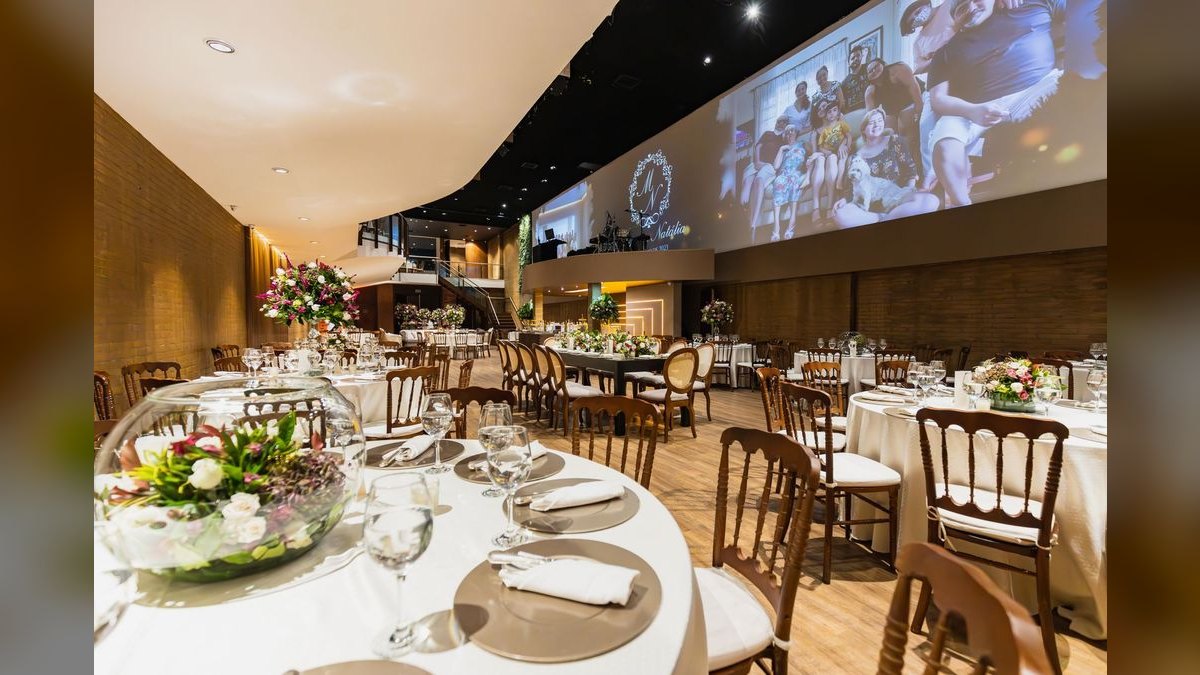
Venue revenue breaks down into a site fee of $2,000 to $25,000, in-house food and beverage at $75 to $225 per head, bar at $35 to $95 per head or a $4,000 to $15,000 minimum, a ceremony fee of $500 to $2,500 if the ceremony space is separate, a 20 to 24 percent service charge on food and beverage, and 6 to 10 percent sales tax. All-in totals land between $15,000 and $80,000 depending on tier, guest count, day of week, and season.
Day-of-week pricing follows a predictable ladder. Peak Saturday is the baseline. A shoulder Saturday in November or March runs about 0.85 times baseline. A peak Friday runs about 0.85 times. A peak Sunday runs about 0.70 times. A winter Saturday runs about 0.70 times. A Monday-through-Thursday weekday runs about 0.50 times and closes at the highest rate of any slot, often 65 to 75 percent, because the couples who want weekdays are not comparison shopping across five venues.
The close approach itself moves the number more than almost any other variable. *"I'll email you a proposal"* converts at 15 to 30 percent. A proposal handed over in person with *"let me know"* converts at 25 to 40 percent. A refundable hold deposit asked for on the tour converts at 50 to 65 percent. A non-refundable deposit asked for on the spot converts at 35 to 45 percent — higher pressure, lower trust. A refundable hold plus a 3D floor plan sent within twenty-four hours converts at 55 to 70 percent, which is the best combination available without discounting anything.
Coordinator tenure tracks closely with conversion. A coordinator in the first six months runs four to six tours a week and closes 20 to 30 percent peak at an $18,000 to $24,000 average ticket. At eighteen to thirty-six months, seven to nine tours a week and 40 to 50 percent peak at $26,000 to $36,000. At three to five years with structured training, eight to ten tours a week, 45 to 55 percent peak, $30,000 to $42,000 average. Add a professional association membership, five-stage discipline, and hold-deposit-at-tour habit and the same coordinator lands at 50 to 65 percent peak, 60 to 70 percent off-peak, and a $32,000 to $48,000 average ticket.
Tour position matters too. A couple touring three to five venues and booking one is heavily influenced by order. The first venue toured closes at 45 to 60 percent. The second at 35 to 50 percent. The third at 25 to 40 percent. The fourth at 15 to 30 percent. The fifth or later at 10 to 20 percent, because by then the couple is shopping rather than deciding. A disciplined five-stage coordinator recovers fifteen to twenty-five points of that position penalty, which is why the training matters more for the venue that is not first on the couple's list.
Trade-offs and alternatives
The five-stage tour is a strong default, not a universal law, and there are real situations where pieces of it should be bent or dropped.
The exhausted four-venue couple. A couple arriving at 4 PM having already walked three properties is not a couple who will absorb a full ninety-minute structured tour. Acknowledge the fatigue out loud, compress to twenty minutes, skip the full STROLL, deep-pitch two spaces, and send them home with a 3D floor plan and a twenty-four-hour text offering a seven-day hold. Running the full script on a depleted couple reads as tone-deaf.
The planner-led tour without the couple. When a planner tours alone, the couple is not there to hear the vision questions, and the STORY stage has to be reconstructed from the planner's brief. Shift weight to SHAPE and the vendor-policy conversation. Planners book eight to fifteen weddings a year at a venue they trust, so a single planner relationship can be worth more than any individual booking.
The second-marriage, low-key, bring-your-own-caterer couple. These couples often have a smaller budget, a shorter timeline, and a specific ask that conflicts with house policy. The instinct is to cave on policy to save the deal. The better move is an honest no with a reason and a counter-offer. A catering waiver that puts an unlicensed kitchen on property creates health-department, insurance, and liability exposure that one foodborne illness turns into months of litigation. The counter-offer — the guest chef co-designs the menu with the in-house chef, gets credited on the BEO, and the service charge on the co-designed entree is waived — preserves the relationship without opening the liability.
The Friday discount. Couples frequently ask what the Friday discount is, framing it as a consolation prize. It is not. Friday weddings let the venue prep into Saturday's setup, which is a structural cost advantage, not a failure to sell Saturday. Framing it as structurally better — same chef, same staff, same property, lower site fee, more load-in flexibility — converts better than framing it as a deal.
The reactive price match. When a couple says the venue down the road is $115 a head and the house minimum is $135, the instinct is to match. Matching destroys margin, destroys the credibility of the original number, and signals that the first quote was inflated. The alternative is a value re-position: at $135 the couple gets ninety-minute passed appetizers where the competitor plates only, a tasting for six in August, a sommelier pairing, a late-night station, and a chef who has been on property eight years personally walking the day. Then, if budget is a genuine live blocker rather than a negotiation tactic, flex on guest count or bar tier before touching the per-head number.
Declining the booking. A vision mismatch, a budget mismatch, or a logistical impossibility — 250 guests against a 180-capacity room with no tent — is ninety minutes at a near-zero close rate plus a likely mediocre review. A graceful decline with a referral earns a five-star review and referral business from a couple who will tell everyone they know that the venue was honest with them.
Common pitfalls and how to avoid them
Opening with venue history. The single most common failure. *"Let me give you a quick history of the property"* or *"let me show you our spaces"* skips STORY entirely and delivers the same features tour every couple gets. Fix: three vision questions before any room, always.
Asking budget in the first ten minutes. Budget belongs in SHAPE, after the couple has seen the property and heard the value. Asking in STORY makes the couple feel managed and causes them to understate or shut down. Fix: hold the budget conversation until the BEO sketch.
Missing the parent-funder. The most expensive silent failure. Mom asks about parking, hotel blocks, and whether the aunts can avoid walking on grass — those are financial decision-maker signals. Ignore them and she vetoes on the drive home. Fix: identify by minute four to six, pull aside around minute eighteen for a four-minute logistics conversation.
Showing every space. Five rooms in thirty minutes blur into one memory. Fix: two spaces, deep, each with a specific time of day and specific named guests inside it.
Treating the planner as an obstacle. Talking over a planner or ignoring her questions gets the venue blacklisted from her book, which costs eight to fifteen weddings a year. Fix: vendor-policy sheet at minute four, ask her opinion on flow, treat her as the execution expert she is.

Sending a proposal instead of asking for the hold. The default behavior and the most costly one, losing the Saturday roughly seventy percent of the time. Fix: the three-step SECURE close — date available, single all-in number, refundable seven-day hold.
Framing the hold as non-refundable. Higher pressure, lower trust, converts at 35 to 45 percent instead of 50 to 65. Fix: always frame as refundable for seven days and applicable to the balance if the couple signs within the window.
No weekly notes audit. Coaching has roughly a thirty-day uncoached half-life, and coordinators revert to old habits by week four. Fix: one tour shadow and one tour-notes audit per coordinator per week, reviewed in the one-on-one. This is the single biggest predictor of a ninety-day cohort lift.
Skipping the force-majeure clause. Post-pandemic, couples expect transparent cancellation and force-majeure language. Its absence turns a routine rescheduling into a dispute that lands on review sites. Fix: standard clause in every contract template.
Related questions
How long should a wedding venue tour actually take?
Ninety minutes is the working standard for a full property tour with a couple. Structured stage time is only about fifteen to eighteen minutes; the rest is the property walk, side conversations with the parent-funder, and the close. Compress to twenty minutes for an exhausted couple on their fourth tour of the day.
What is a refundable hold deposit on a wedding venue?
A deposit, typically $2,000 to $5,000, that reserves the date for a short window — commonly seven days — and is returned in full if the couple does not sign. If they do sign within the window, it applies to the balance. It removes the pressure objection while creating real urgency.
How many venues does the average couple tour before booking?
Three to five, and they book one. Roughly 78 percent book the first or favorite venue rather than the cheapest, which means tour order matters and a disciplined coordinator can recover fifteen to twenty-five points of the position penalty.
Should a venue ever match a competitor's lower price?
Almost never reactively. Matching destroys margin and discredits the original quote. Re-position the price delta as included value first; if budget is a genuine blocker, flex on guest count or bar tier before touching the per-head number.
Who are the decision players on a wedding venue tour?
Three: the couple, who care about vibe and memory; the parent-funder, usually a mother or father of the bride, who cares about value and logistics; and the planner, who cares about vendor list and execution flexibility. Read all three by minute six to ten.
FAQ
How often should a venue run this 60-minute tour training?
Monthly for the first three months to install the habit, then quarterly as a refresher. Run it additionally whenever the venue loses two or more peak Saturdays in a row, or when a senior planner stops referring. Rotate the role-play scenarios each cycle so coordinators do not rehearse the same couple twice.
What is the difference between the 60 minutes and the 90 minutes?
Sixty minutes is the length of the internal coaching meeting — five blocks of ten, twenty, eight, seventeen, and five minutes. Ninety minutes is the length of the venue tour the coordinator runs with a real couple. The meeting teaches the tour; it is not the tour.
What should a coordinator bring on every tour?
An inquiry intake form, a 3D floor plan tool loaded with the property, a sample BEO and day-of timeline template, a vendor-policy sheet, the hold-deposit contract clause with cancellation and force-majeure language, Saturday inventory by month with the pricing grid, and a photo book of five recent weddings on the property.
How do you handle a couple who wants to bring their own caterer?
Say no honestly, explain the reason — liability, insurance, and health-department licensing are tied to the in-house team — and immediately counter with what you can do: the guest chef co-designs the menu with the house chef, gets credited on the BEO, and the service charge on the co-designed entree is waived. Honest refusals with a counter-offer earn more trust than a policy cave.
What are the phrases that lose the Saturday?
Four: *"Let me show you our spaces"* — a features tour instead of a vision tour. *"What's your budget?"* asked in the first ten minutes — too early. *"I'll email you a proposal and you let me know"* — loses roughly seventy percent of the time. *"We can match that price"* — reactive matching destroys margin and signals desperation.
How do you know the training is working?
Ninety-day signals: peak tour-to-book up fifteen to twenty-five points, off-peak up twenty to thirty, average ticket up $5,000 to $10,000, three to five new repeat-planner relationships a year, review average moving from around 3.8 to 4.6 or better, and coordinator turnover dropping from roughly 50 percent annually toward 25 percent.
Sources
- The Knot Worldwide — Real Weddings Study: https://www.theknot.com/real-weddings-study
- The Wedding Report — US wedding market research: https://www.theweddingreport.com
- Wedding Industry Professionals Association (WIPA): https://www.wipa.org
- IBISWorld — Wedding Services in the US industry report: https://www.ibisworld.com
- US Bureau of Labor Statistics — Meeting, Convention, and Event Planners (SOC 13-1121): https://www.bls.gov/ooh/business-and-financial/meeting-convention-and-event-planners.htm
- Zola — wedding planning research and couple journey data: https://www.zola.com
- WeddingWire / WeddingPro education for venues: https://www.weddingpro.com
- Tripleseat — event and venue management platform: https://tripleseat.com
- Honeybook — client management for event professionals: https://www.honeybook.com
- Federal Trade Commission — Cooling-Off Rule (16 CFR Part 429): https://www.ftc.gov/legal-library/browse/rules/cooling-rule
Related on PULSE
- Wedding Venue Inquiry Response — 60-Min Training
- Wedding Venue Site Visit Prep — 60-Min Training
- Wedding Venue Proposal and Follow-Up Cadence — 60-Min Training
- Wedding Venue Peak-Season Pricing Discipline — 60-Min Training
- Wedding Venue Planner Relationship Management — 60-Min Training
- Wedding Venue Coordinator Onboarding — 60-Min Training
This page will be disappearing soon. Save it to your device for $1 — or read it free while it is here.
@Kory-White- · if Venmo asks, the last 4 of my number are 2012
This page is gone.
This one is off the shelf now. $1 keeps it on your phone for good — the whole page, pictures and diagrams included.
 sales-trainingSelling to a CISO Without the FUD — 60-Min Training
 sales-trainingCommercial Real Estate Tenant Rep Pitch — 60-Min Training
 sales-trainingAutomotive F&I — 60-Min Training
 sales-trainingMortgage Originator — 60-Min Training
 sales-trainingMed Spa Consult-to-Package Conversion — 60-Min Training
 sales-trainingMedical Device Sales — 60-Min Training
 sales-trainingRestaurant Supply — 60-Min Training
 sales-trainingFinancial Advisor — 60-Min Training
 sales-trainingGym Tour and Same-Day Close — 60-Min Training
 sales-trainingLife Insurance Needs Analysis — 60-Min Training