


The Competitive Knockout Session — 60-Min Training
Quality
Certified

The Competitive Knockout Session is a runnable 60-minute team training that turns competitive selling into a shared skill. Across six timed blocks, reps map each live competitor honestly, convert weaknesses into neutral buyer questions a champion can carry into the evaluation committee, and leave with three "trap" questions logged in the CRM for the next forecast call.
How the session runs across six timed blocks
The session is built to run inside a single 60-minute meeting with a fixed clock, and the discipline of the clock is part of the point — a competitive review that drifts becomes a status meeting, and a status meeting teaches nothing. The manager facilitates and the reps participate; the manager arrives with three things prepared, because setup that happens in the room burns coaching time. First, a list of every rep's live competitive deals, so each rep shows up with one named bake-off rather than a hypothetical. Second, the working templates — an honest-competitor-map grid, a weakness-to-question conversion table, a champion role-play rubric, and an incumbent-counterattack reframe sheet. Third, the last quarter's competitive win-loss data, so the room builds competitor profiles from evidence rather than the loudest rep's memory.
The six blocks run in sequence. Frame and deal selection (0:00–0:08) sets the single governing rule — build questions, do not bash — and has each rep name one real, active bake-off. Map the competitor honestly (0:08–0:22) forces each rep to record where the rival wins, loses, and is quiet, naming at least three genuine competitor strengths. Convert weaknesses into buyer questions (0:22–0:38) is the core: rewrite each mapped weakness as a neutral question, generating five to seven candidates per deal and cutting to the three sharpest. Plant the traps with the champion (0:38–0:50) is live role-play of the hand-off. Pre-empt the incumbent counterattack (0:50–0:57) drafts one-line reframes for the incumbent's three predictable moves. Commit and document (0:57–1:00) writes the three questions, an owner, and a deadline into the CRM. Protect the role-play block hardest; it is the first thing a running-long meeting tries to cut, and cutting it wastes the hour.

Why competitive deals are lost outside the room
The reason this session runs as a team exercise, and the reason "just tell the buyer we're better" fails, both trace to a single number. Gartner's research on the B2B buying journey finds that buyers spend only about 17% of the total purchase cycle meeting with potential suppliers. In a bake-off, that 17% is split across three or four vendors, so any single rep gets roughly 5–6% of the buyer's decision time. That means roughly 94% of the decision forms when you are not in the room — in internal committee meetings, in hallway conversations, in the buyer's own head. You cannot win 94% of a decision with talking points delivered in your 6%. The only thing that travels into the rooms you will never enter is a question the buyer carries there themselves.
That is why bashing a competitor loses and trap-setting wins. A rep who says "their API is terrible" has made a claim the buyer must now verify against the incumbent's own reassurances, and the buyer almost always sides with the vendor they already trust. A rep who instead leaves the buyer with "how would your team handle a custom integration six months from now, and what would that cost?" has handed the buyer a tool they will use on every vendor — and the incumbent, asked that question in committee, stumbles on its own evaluation while the rep's fingerprints are nowhere on it. The competitive job is not to out-feature the rival; it is to change what gets evaluated. Buyers in a bake-off rarely pick the objectively best product — they pick the one that wins on the criteria they happened to score against. Change the criteria and you change the winner.
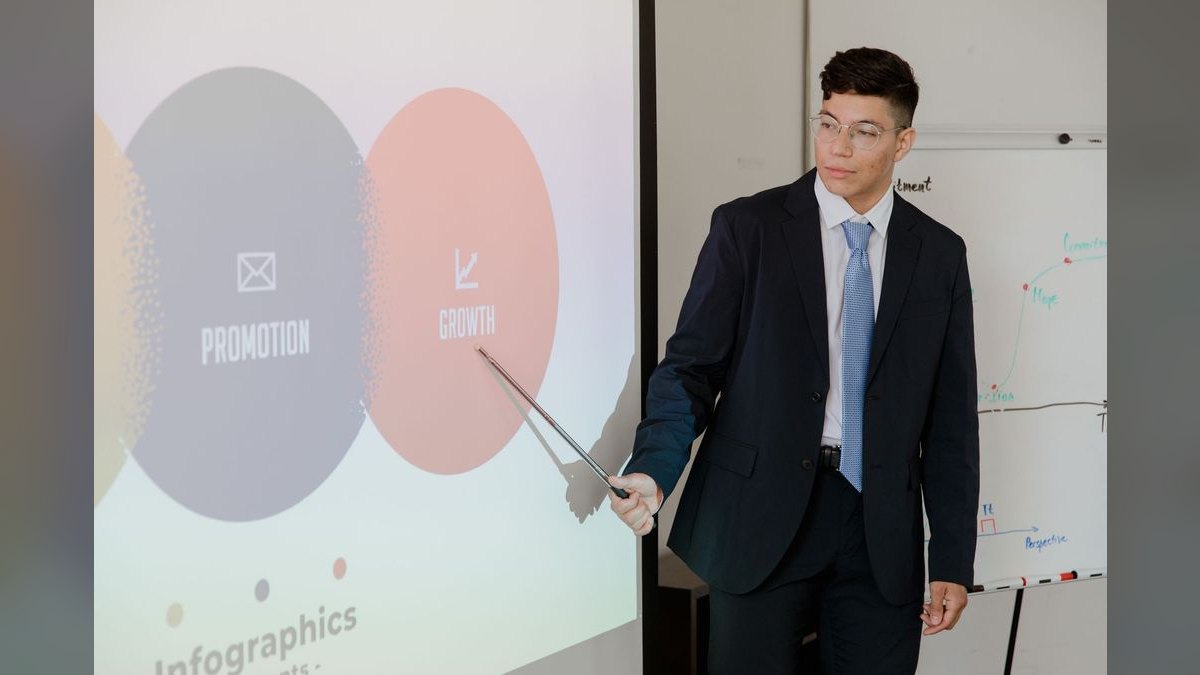
Running it as a team, rather than one-on-one, produces two things private coaching cannot. First, consensus: when eight reps map the same rival and four independently name the same weakness, a rep hears agreement, and agreement moves a habit in a way one manager's opinion does not. Second, a shared vocabulary — after the hour, a manager can say "you let the buyer score that deal on the incumbent's criteria" and every rep knows exactly what that means and what good would have looked like.
Mapping the competitor honestly before building anything
The map comes before the questions, and its credibility rests on honesty about the rival's strengths. Each rep builds a three-column read of the competitor in their live deal: where the competitor genuinely wins, where it genuinely loses, and where it is simply quiet. The hard rule is that every rep must name at least three real competitor strengths before the room accepts the map. A rep who claims the rival has no strengths has not mapped the competitor — they have mapped their own marketing. A buyer who has lived with an incumbent for three years knows exactly what it does well, and a rep who cannot name those things sounds like they skipped their homework, which discounts everything else they say. Crayon's annual State of Competitive Intelligence survey has consistently found that a large majority of practitioners — 80% or more in recent years — report competitor activity rising, and that the battlecards which actually change rep behavior name competitor strengths, not only weaknesses.
Each column does a specific job. The wins column tells the rep where not to set a trap, because a question aimed at a genuine strength boomerangs. The losses column is the raw material every trap question is built from. The silences column — the topics the competitor's reps deflect, the claims its marketing avoids — is often the richest seam, because a conspicuous silence usually marks a weakness the competitor knows about and hopes the buyer never raises. Feed the map from evidence rather than folklore: rep memory drifts, and "they always undercut us" outlives the one deal that started it. Pull the actual win-loss patterns so a written claim like "they always win on integrations" can be checked against what the loss interviews really said. Finally, sequence the map correctly — have each rep write the three columns silently and individually first, before any discussion. If the room maps out loud, the most confident voice anchors everyone before anyone has thought independently. Where two silent maps of the same rival disagree, the disagreement pinpoints exactly where the team's competitive intelligence is thin.
The Trap-Setting Rebuild — weakness into buyer question

The core move is simple and repeatable: every competitor weakness on the map can be rewritten as a neutral question the buyer would naturally ask every vendor. A finished trap question has three non-negotiable properties. It is neutral, not accusatory — it names no vendor and makes no claim, so the buyer can ask it without feeling they are doing a competitor's dirty work, which is the only kind of question a champion will actually carry. It is buyer-relevant, not seller-relevant — anchored in a future cost, an operational risk, or a workflow the buyer owns, so it reads as diligence rather than a setup. And it is answerable better by you than by the competitor — the self-audit that is never optional, because a question you cannot win is a weapon you just handed the incumbent.
This is Challenger-style "commercial teaching" applied to competition. The Challenger Sale, built on a study of more than 6,000 reps, found the Challenger profile accounted for roughly 40% of high performers — and more than 50% in complex sales — by reframing the buyer's evaluation criteria rather than out-featuring rivals. A trap question is that reframe delivered as a question instead of a lecture. Corporate Visions' decision-science work on "Why Change?" framing similarly shows, in controlled messaging tests, that a status-quo-disrupting frame measurably lifts a buyer's willingness to leave what they have. The rebuilt question is usually shorter and calmer than the accusation it replaces — trap-setting is about better-aimed questions, not more pointed ones.

Run the rebuild across every weakness, then cut hard. The target is five to seven candidates per deal, generated fast and loose, then reduced to the three sharpest. Generate-then-cut matters: a champion handed seven pointed questions has been handed none, because they cannot raise seven in a committee without looking like a vendor's mouthpiece. Three is the number a champion can raise naturally across a normal conversation. Cut on three tests — most buyer-relevant, most confidently winnable on the self-audit, and least answerable by the incumbent. Argue the wording out loud, because the disagreement is the calibration: neutral versus pointed, open versus specific (open invites a thoughtful answer, specific forces a number), and present versus future ("how do you handle X today" versus "what happens when you add Y" — the future frame almost always exposes an incumbent's gap more cleanly). Worked examples the team can adapt: a weak custom-integration story becomes "how would your team handle a custom integration six months from now, and what would that cost?"; a tiered support model becomes "when something breaks in production, who picks it up, how fast, and is that in the contract?"; usage-based pricing becomes "how does the price change as our usage grows over the next two years?"
Handing the traps to a mobilizer champion
A trap question landed by your champion, inside a committee room you will never enter, is worth ten landed by you — because it arrives without a vendor's fingerprints, in the voice of an internal colleague the committee already trusts. The champion is the mechanical answer to the 94% problem: the only vehicle that can carry your reframe into the rooms where the decision actually forms. But the hand-off depends entirely on the champion being a real mobilizer, not merely a friendly contact. The Challenger Customer found that the average B2B buying group has grown to roughly 6–10 stakeholders and that deals turn on whether an internal advocate can build consensus across that group, not on the rep's pitch. A friendly contact who likes the rep but cannot move the room is not a champion, and handing pointed questions to a low-power person exposes them, gets them overruled, and burns the relationship.
Run the block as paired role-play. One rep plays the champion — using a real person from the live deal, so the hesitations and political caution are realistic — while the other runs the hand-off: walking through two or three questions, explaining why each matters to the champion's own goals, and rehearsing how the champion will raise them naturally. Swap after about six minutes so both practice. Short, repeated reps with immediate feedback are how a skill is built, not one annual role-play. Give the champion-playing rep a specific job: catch every moment the hand-off turned the champion into an obvious mouthpiece — three pointed questions stacked with no buyer-relevant reason, for instance — and give feedback in a tight structure of one specific catch, the rebuilt framing, and one thing done well. If the role-play reveals the champion is shaky, low-power, or at risk of leaving the account, do not plant traps yet; stabilize the relationship first. A trap handed to a champion who then leaves or gets overruled is worse than no trap at all, which makes the role-play as much a champion qualification as a rehearsal.

Pre-empting the counterattack and knowing when not to set a trap
An entrenched incumbent that senses a real threat reaches for the same three moves every time, and a rep with a one-line reframe ready for each is rarely caught flat. On switching cost, do not deny it — it is real — but set the one-time, known number against the recurring, compounding cost of staying stuck; if the buyer's problem burns an estimated 5–10 hours a week, annualize it so both numbers sit on the table. On risk of change, invert the frame: make another 12 months of the same problem feel like the riskier choice, which is exactly the "Why Change?" move that denies the incumbent its safest argument. On relationship, respect it and separate it from the decision — the question is not "do you like them" but "does what they sell solve the problem you have now." Read where the counterattack comes from before choosing a play: a buyer-routed defense gets a reframe, but a procurement-routed one (a sudden renewal discount, a multi-year lock-in, a late contractual hurdle) gets a price-and-terms playbook — a trap question is the wrong tool against procurement.
Keep the honesty baseline in view. Overall B2B SaaS win rates commonly run near 20–30% of qualified pipeline, and win rates against an entrenched incumbent in a renewal-style bake-off run materially lower because the incumbent owns switching cost, data gravity, and the relationship. The session's job is not to win every deal; it is to move a deal a few points up that curve by changing what gets evaluated — and to know when to qualify out. Trap-setting has five failure modes worth naming aloud so the room trusts the method and its limits. The trap can reveal your hand — a savvy incumbent that spots the plant escalates, and the cut-to-three plus rehearsal is the mitigation. It can corner a buyer already leaning your way, so run it only on genuinely contested deals. It can boomerang when built on a gap you also have, which is what the self-audit exists to prevent. A weak champion makes it worse, which the role-play qualification catches. And it is the wrong tool against a real product gap or a hard price wall, where the honest move is to qualify hard, multithread, or walk. A sixth, subtler trap for managers: trap-setting can become a substitute for fixing a real competitive weakness — if losses concentrate on one dimension, that is a product or pricing gap, not a question-rebuilding problem.

Related questions
How is this different from a battlecard?
A battlecard is a static reference reps consult mid-call; this session builds the skill of converting weaknesses into buyer-carried questions and rehearsing the champion hand-off. Battlecards reinforce the reflex between sessions, but they cannot practice the live hand-off or force the honest self-audit that keeps a question from boomeranging.
How often should we run it?
Run it whenever two or more reps are in active bake-offs, sooner after any quarter with losses to an entrenched incumbent on a "safer choice" rationale, when onboarding new reps before their habits set to feature-listing, and whenever a new competitor enters or an existing rival shifts positioning and stales the map.
What if a rep has no live competitive deal?
That is a diagnostic signal, not a gap to paper over. It usually means the rep is not in enough competitive deals, is not recognizing a silent-incumbent status quo as competition, or has an honest "we're staying put" objection — which is an objection-handling problem, not trap-setting. Pair that rep with one who has a live bake-off.
How do we measure whether it worked?
Inspect at the next forecast call: did the trap questions get set, and did the committee react to any of them? Over a quarter, track whether competitive win rate ticks up against the target incumbent. The leading indicator is behavioral — reps reframing criteria instead of listing features.
FAQ

Who should facilitate — the manager or a rep? The manager facilitates and reps participate. A manager-led working session carries the authority to enforce the no-bashing rule, cut candidate questions to three, and turn the commitments into a tracked forecast-call item, which peer-led sessions tend to let slide.
Does this mean we badmouth competitors? No — the opposite. The single governing rule is "build questions the buyer should be asking, never bash the competitor." A claim against a rival forces the buyer to verify it against a vendor they already trust; a neutral question is one the buyer raises themselves, which is the only thing that survives into the rooms you never enter.
What if our champion is just a friendly contact, not a mobilizer? Do not plant traps yet. A low-power contact handed pointed questions gets overruled and exposed, burning the relationship. Qualify the champion as a mobilizer during the role-play; if they are shaky or at risk of leaving, stabilize the relationship first and reconsider whether the deal is winnable.
How many trap questions should a champion get? Three. Five to seven are generated, then cut hard, because a champion who raises seven pointed questions looks like a vendor's agent and gets discounted, while three raised naturally read as diligence. The skill is the cut, not the generation.
What if the incumbent responds by dropping price? That is a procurement-routed counterattack, and a trap question is the wrong tool. Switch to a price-and-terms play: quantify the cost of the delay or lock-in and route the response through procurement. Read where the counterattack comes from before choosing how to answer.
When is trap-setting the wrong approach entirely? When the incumbent is genuinely better on the dimension that matters most, when a rival has undercut you enough that the buyer is price-anchored, or when you have already won. Trap-setting reframes criteria at the margin; it does not overcome a fundamental fit or budget mismatch, and forcing it there wastes the deal's remaining time.
Sources
- Gartner — The B2B Buying Journey: https://www.gartner.com/en/sales/insights/b2b-buying-journey
- The Challenger Sale (Matthew Dixon & Brent Adamson, Portfolio/Penguin): https://www.penguinrandomhouse.com/books/206208/the-challenger-sale-by-matthew-dixon-and-brent-adamson/
- The Challenger Customer (Adamson, Dixon, Spenner & Toman, Portfolio/Penguin): https://www.penguinrandomhouse.com/books/247235/the-challenger-customer-by-brent-adamson-matthew-dixon-pat-spenner-and-nick-toman/
- Corporate Visions — "Why Change?" messaging research: https://corporatevisions.com/why-change-messaging/
- Crayon — State of Competitive Intelligence report: https://www.crayon.co/state-of-competitive-intelligence
- Harvard Business Review — "The End of Solution Sales": https://hbr.org/2012/07/the-end-of-solution-sales
- Gong Labs — sales conversation research: https://www.gong.io/labs/
- SPIN Selling (Neil Rackham, McGraw-Hill): https://www.mheducation.com/
- RAIN Group — competitive and value-selling research: https://www.rainsalestraining.com/
Related on PULSE
- Competitive Battle Card Review Meeting Template
- Competitive Battle Card Review: A Gamified Team Quiz Template
- Top 10 Team Meeting Templates for Competitive Intelligence Sharing
- Pipeline Review to Revenue: Template for a Data-Driven Sales Sprint Session
- Objection Handling Bootcamp: Template for a One-Hour Team Sales Session
- Leveraging Social Selling: Hands-On Activity Template for a Remote Team Session
This page will be disappearing soon. Save it to your device for $1 — or read it free while it is here.
@Kory-White- · if Venmo asks, the last 4 of my number are 2012
This page is gone.
This one is off the shelf now. $1 keeps it on your phone for good — the whole page, pictures and diagrams included.
 sales-trainingThe Incumbent Displacement Map — 60-Min Training
 sales-trainingThe Champion Enablement Workshop — 60-Min Training
 sales-trainingThe Territory Plan Build — 60-Min Training
 sales-trainingThe Reference Call Prep Session — 60-Min Training
 revopsWhat replaces call recording if AI agents auto-summarize calls in 2027?
 positioningWhat's the difference between value prop and positioning, and does it matter operationally in 2027?
 deal-deskWhat's the right deal desk org design philosophy for a founder-led B2B SaaS company planning to scale from $5M to $50M ARR — should deal desk be a single generalist role or pre-built for a later bifurcation in 2027?
 pulse-sales-trainingsTop 10 negotiation training drills for B2B sales reps in 2027
 pulse-sales-trainingsTop 10 storytelling role-play scenarios for sales teams in 2027
 pulse-sales-trainingsTop 10 forecast call role-play scenarios for sales teams in 2027