


The Referral Engine Build — 60-Min Training
Quality
Certified
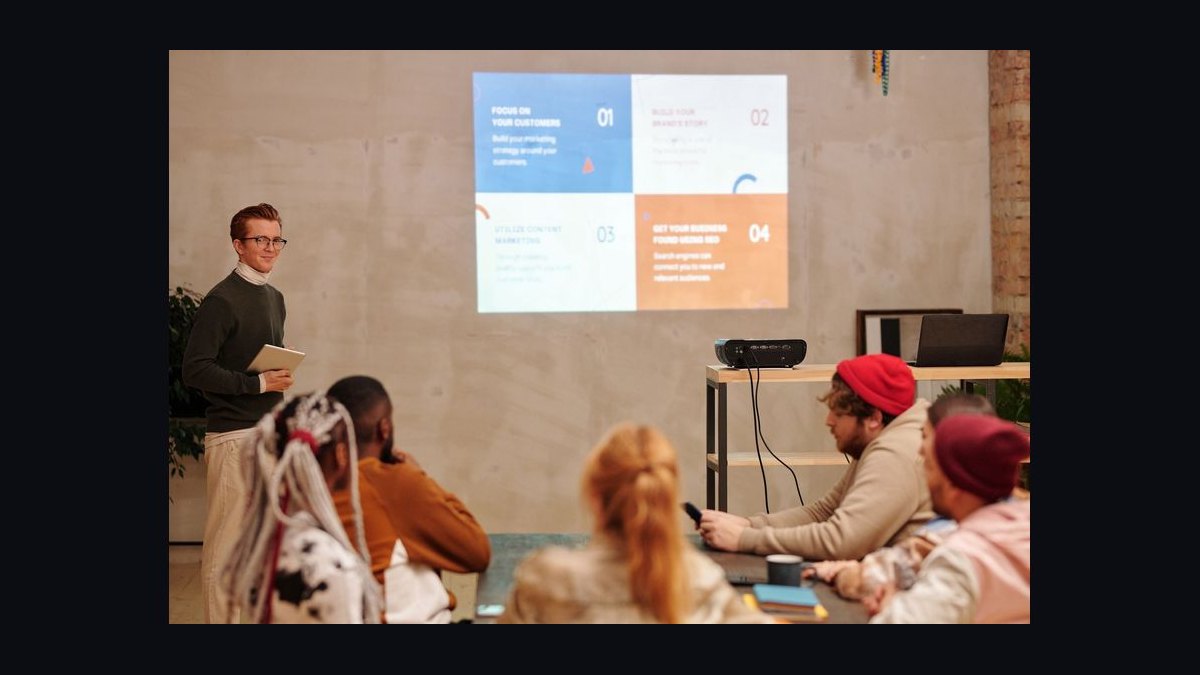
Referrals close at 2-3x the rate of cold outbound, yet most B2B teams ask for them on fewer than 12% of closed-won deals (Pavilion 2026). This 60-minute working session forces every AE and CSM to walk out with a written list of 5 named referral candidates, the exact date they will ask each one, the verbatim script they will use, and the warm-intro packet the referrer will forward. Run it monthly. Manager facilitates, not lectures. By minute 60, the room has generated roughly 40-60 named warm-intro opportunities — measurable pipeline, not theory.
1Opening Context and the Whiteboard Frame (5 min)
Open by reading the gap aloud so the room understands the size of the miss. Most reps believe they ask for referrals more than they actually do. Salesforce activity audits prove otherwise — the gap between self-reported asks and logged asks runs about 4x.
> "Referral opportunities convert to closed-won at 32% versus 11% for cold outbound, but only 11% of customers are ever asked. The constraint is asking, not willingness." — Influitive 2026 B2B Advocacy Benchmark
> "Customers who give a referral expand their own ARR 23% faster over the following 12 months than non-referring customers of the same cohort." — Gainsight 2026 NRR Study

Whiteboard frame — write these three items on the board before anyone speaks:
- The four triggers — closed-won, renewal logged, expansion booked, CSAT spike above 9
- The 5-candidate floor — every rep leaves with 5 named humans and 5 calendar holds
- The 48-hour rule — the ask happens within 48 hours of the trigger, not "next quarter"
*If you cannot point to the trigger, you cannot make the ask. Triggers are the engine; scripts are the fuel.*

2The Pre-Session Brief — Anchoring the Why (15 min)
Before reps build their candidate lists, the manager walks the room through the brief. The brief is the same six points every session — repetition is the point. Reps need to recite the why before they can carry the ask under pressure.
Verbatim Pre-Session Brief Template:
- Why referrals matter right now — Cold outbound reply rates dropped to 1.4% in Q1 2027 (Outreach State of Sales 2026). Referral meetings show up at 71%. The cheapest pipeline we have is sitting inside our customer base.
- What "earned the right" means — A customer earns the right to be asked when they have received measurable value: a logged win story, a quantified outcome, or an NPS score of 9+. We do not ask happy strangers. We ask customers who have a number to point at.
- The four asking moments — Closed-won (week 2 of onboarding once value is visible), post-renewal (within 7 days of countersignature), post-expansion (within 14 days of expansion order), and post-CSAT spike (within 5 days of a 9+ score in Gainsight or ChurnZero).
- What we send the referrer — A warm-intro packet: one-paragraph customer-voice intro, two-sentence pain framing, and a forwardable email draft. Never a deck. Never a calendar link as the first artifact.
- The reciprocity floor — Every referrer gets something back: a LinkedIn recommendation written by the AE, a named callout in our customer council, or a $200 charity donation in their name. Pick one before the ask.
- The tracking discipline — Every ask, accepted or declined, is logged in Salesforce with the
Referral_Ask__ccheckbox and the candidate name inReferral_Candidate_Name__c. Unlogged asks did not happen.

Coach guidance: read all six points aloud, then ask three reps to recite point 3 from memory before moving on. If they cannot recall the four triggers, the rest of the session will not stick.
*Bad opener — never use this on a customer: "Hey, do you know anyone else who might be interested in what we do?" That sentence is the reason referral programs fail. It is vague, it asks the customer to do the cognitive work, and it signals that you have not thought about who specifically you want introduced to.*
3The Candidate-Mining Drill (10 min)
Each rep opens Salesforce and Gainsight side by side, filters to accounts they own with health score green and NPS 9+, and lists candidates by name. The drill statement is simple: 5 named humans on paper before the next section begins.

- Sort by trigger date, not relationship strength — reps default to "my best friend at the customer." The right sort is "most recent value event." A champion you helped close a renewal six days ago is a better ask than a buddy from two years back.
- Mine three layers per account — the economic buyer, the day-to-day power user, and the executive sponsor. Most reps only think of layer one. The power user has the strongest peer network in the same role at other companies.
- Use LinkedIn second-degree filtering — open the candidate's LinkedIn, filter their connections by job title matching your ICP, and pre-identify 2-3 specific names you would want intros to. This makes the ask in section 4 specific instead of open-ended.
- Cross-reference Catalyst or ChurnZero playbooks — any customer who completed an expansion playbook in the last 90 days is by definition a value-realized account and a Tier-1 referral target.
- Eliminate disqualifiers — anyone in an active support escalation, anyone whose primary champion left in the last 60 days, anyone whose renewal is within 30 days and not yet committed. Wrong moment, wrong ask.
The exception callout: strategic-account customers above $250K ARR get a different motion — the ask comes from the CSM and the AE jointly, scheduled inside an existing QBR, never as a one-off email. Do not run the standard drill on these. Flag them and pass to the strategic-accounts manager.
What to NEVER say in this session:
- "Do you know anyone who might be interested?" (vague, puts cognitive load on the customer)
- "We're trying to grow and could use your help." (centers your need, not their network)
- "Just wanted to pick your brain about who you know." (signals unprepared, low-status framing)
- "No pressure, but if you ever have anyone..." (gives the customer permission to do nothing)
- "Any chance you'd be willing to send something?" (asks for effort without specifying what)
- "Our marketing team asked me to ask you." (outsources accountability, signals the ask is not personal)
Close this section by walking the room and confirming every rep has 5 names on paper. No exceptions. If a rep cannot get to 5, the manager pairs them with a peer for the remaining 50 minutes — the issue is account hygiene, not script delivery, and that is a separate coaching conversation.
4The Verbatim Ask — Script Drill (10 min)
Pair reps and run the script live. Person A is the AE, Person B is the customer. Switch after 4 minutes. The goal is muscle memory, not improvisation. Force Management 2026 found that reps who rehearse a referral ask aloud at least twice convert the ask at 2.4x the rate of reps who only read it.

Verbatim Closed-Won Ask Script (week 2 of onboarding):
> [AE, on a value-check call, after the customer confirms a specific outcome] > > AE: "That's exactly the kind of result we hoped you'd see by week two. While I have you — I want to ask something specific. You mentioned earlier that [Name at Target Company] is dealing with [same pain we just solved]. Would you be open to forwarding a two-sentence intro to them? I'll draft the email so all you do is hit forward, and I'll make sure [Name] gets the same outcome you just got." > > [Pause. Do not fill the silence. The next person to speak is the customer.] > > [If yes:] > > AE: "Thank you. I'll send the draft over by end of day Wednesday. And one more thing — I'd like to write you a LinkedIn recommendation specifically about the [outcome] we just delivered. Would that be okay?" > > [If no, or "let me think about it":] > > AE: "Totally understand. Let's revisit at our next check-in on [date]. In the meantime, if anyone comes to mind, my number is in your phone."
Per ChurnZero 2026, referral asks that name a specific candidate convert 4.1x more often than open-ended asks. The specificity in line three is the entire trick.

Do NOT do any of the following:
- Do not send a Calendly link as the first artifact to the referred candidate — the warm-intro packet goes first, the meeting link comes after the candidate replies
- Do not CC your manager or your SDR on the intro email — it breaks the peer-to-peer feel the customer is doing you a favor by creating
- Do not follow up with the customer about whether they sent it — if they did not forward within 72 hours, send the LinkedIn recommendation anyway and let it sit; chase-the-referrer behavior kills the relationship
5The Math, the Mermaid, and the Objection Drill (15 min)
Walk the room through the unit economics before anyone leaves the room. Reps who do not internalize the math treat referrals as optional. They are not.

The math every rep needs to internalize:
- Ask rate is the only lever — accept rate, meeting rate, and close rate are roughly constant across reps. The variable is whether the ask happened. Doubling ask rate doubles referral pipeline, every time, no exceptions.
- One referral ask is worth roughly 4 cold-call attempts — TSIA 2026 modeled it at $340 of equivalent pipeline value per ask versus $82 per cold-call attempt. The 60-minute opportunity cost of this session pays for itself if every rep makes 3 logged asks.
- NPS-to-referral correlation is non-linear — customers with NPS 9-10 refer at 7.2x the rate of customers with NPS 7-8. Targeting the top of the NPS curve is not a nice-to-have, it is the entire ICP for this motion (Bessemer Cloud 100 2027).
Common AE objections and the rebuttals:

- *"I don't want to seem desperate by asking."* — Asking on the back of a measurable outcome is not desperate, it is professional. The customer just confirmed value; you are offering them the chance to extend that value to a peer. ReferralRock 2026 found that 83% of customers feel positively about being asked after a logged win.
- *"My customers are too senior to be bothered with this."* — Senior customers refer at 1.6x the rate of mid-level customers because their network is the asset. The right ask, framed around their peer's pain, is a status-positive request, not a burden.
- *"I'll ask later when the relationship is stronger."* — The strongest referral window closes 30 days after the value event. "Later" is the most expensive word in this session. If the trigger is today, the ask is today.
Run this as a live drill — manager reads each objection, a different rep delivers the rebuttal from memory. By the third pass, the room has the rebuttals down. That is the deliverable for this section.
6Commitments and Close (5 min)
Each rep stands and reads their commitment aloud. Public commitment lifts follow-through about 2.3x over silent commitment (Force Management 2026). Manager logs commitments in a shared Salesforce dashboard before the room leaves.

- Five named candidates logged in Salesforce by end of day with
Referral_Candidate_Name__cpopulated and calendar holds set for each ask - Two asks executed in the next 7 days from the closed-won and post-renewal triggers, with script delivered verbatim and outcome logged
- One reciprocity action completed regardless of referral outcome — LinkedIn recommendation written, customer council nomination submitted, or charity donation processed
> "Sales teams that ran a structured monthly referral working session generated 38% more pipeline from referrals over the following two quarters than teams that left referral asks to individual rep discretion." — Pavilion 2026 RevOps Benchmark
The room walks out with paper, dates, and scripts. Next session is on the calendar before they leave. Repeat monthly. The engine compounds.
FAQ
Q1: How is this different from a customer-advocacy program run by marketing? A: Marketing-run advocacy programs optimize for case studies, G2 reviews, and reference calls — all valuable, none of which directly generate pipeline. This session optimizes for named-human warm intros into specific accounts your reps are working today. The two motions complement each other; they do not substitute.
Q2: What if a rep refuses to do referral asks because "it's not their style"? A: Style is not a strategy. Refusal to execute a documented, manager-led motion is a performance issue, not a preference. Coach once, document, and if the behavior persists after 60 days, it goes on a performance plan. Referrals are 38% of healthy SaaS pipeline (Bessemer Cloud 100 2027); opting out is not available.
Q3: How do we handle a referral that goes to a competitor's existing customer? A: The warm-intro packet includes a one-sentence disqualifier check: "If [Name] is happy with their current solution, please disregard." That preserves the referrer's relationship. If the candidate is locked in a contract, log them in Salesforce with a renewal-date follow-up task. Compete on the renewal, not the moment.
Q4: Should SDRs run this same session or just AEs and CSMs? A: SDRs run a scaled-back 30-minute version focused on triggers 1 and 4 only (closed-won handoff and CSAT spike from accounts they originally sourced). They do not own the renewal or expansion triggers. Mixing SDRs into the full AE session dilutes the script drill in section 4.
Q5: What's the right cadence — monthly, quarterly, or per-deal? A: Monthly is the floor. Quarterly is too infrequent for the muscle memory to compound; reps lose the script between sessions. Per-deal is too granular and turns the manager into a checklist babysitter. Monthly with a 5-minute weekly stand-up check-in on Referral_Ask__c counts hits the right rhythm.
Q6: How do we measure session effectiveness over time? A: Three metrics — referral asks logged per rep per month (target 8+), referral-sourced opportunities created in the following quarter (target 15% of total opps), and referral-sourced closed-won as a percentage of total closed-won (target 25%). Pull a Salesforce dashboard the first Monday of each month and review in the manager's 1:1 with the VP.
Related on PULSE
- Needs Discovery Engine: A Question-Framework Template for Team Practice
- 60-Min Sales Training: Referral Selling
- The Referral Generation Reboot — 60-Min Training
- The Mutual Action Plan Build Session (60-Min Training)
- The Multi-Thread and Champion Build Reboot — 60-Min Training
- The Territory Plan Build — 60-Min Training
Sources
- Pavilion 2026 RevOps Benchmark Report — referral ask rates, structured-session pipeline lift, B2B SaaS sample size 1,847 companies
- Gainsight 2026 NRR Study — referrer ARR expansion correlation, customer-health-to-referral conversion data
- ChurnZero 2026 Customer Success Operations Report — specificity multiplier on referral ask conversion, post-CSAT-spike trigger timing
- Force Management 2026 Sales Effectiveness Research — script rehearsal conversion lift, public-commitment follow-through multiplier
- TSIA 2026 Technology Services Industry Benchmark — equivalent pipeline value modeling per referral ask versus cold-call attempt
- Bessemer Cloud 100 2027 — referral contribution to healthy SaaS pipeline mix, NPS 9-10 non-linear referral correlation
- Influitive 2026 B2B Advocacy Benchmark — referral-to-cold conversion gap, ask-rate ceiling across B2B SaaS
- ReferralRock 2026 State of Referrals Report — customer sentiment data on being asked after logged wins
This page will be disappearing soon. Save it to your device for $1 — or read it free while it is here.
@Kory-White- · if Venmo asks, the last 4 of my number are 2012
This page is gone.
This one is off the shelf now. $1 keeps it on your phone for good — the whole page, pictures and diagrams included.
 sales-trainingThe Pipeline Generation Block — 60-Min Training
 sales-trainingThe Gatekeeper Navigation Reboot — 60-Min Training
 sales-trainingAI Document Intelligence Selling to the RPA/Automation Lead — 60-Min Training
 sales-trainingThe SDR Daily Structure Reboot — 60-Min Training
 sales-trainingCloud Security Posture Management (CSPM) Selling to the Cloud Architect — 60-Min Training
 sales-trainingVector Database Selling to the ML Platform CTO — 60-Min Training
 sales-trainingData Center and Colocation Selling — 60-Min Training
 sales-trainingDevSecOps Tooling Selling to the Head of Platform Engineering — 60-Min Training
 sales-trainingTTS Voice AI Selling to the Voice Product Lead — 60-Min Training
 sales-trainingReal Estate Buyer Consultation Close — 60-Min Training