
Value Proposition Crafting: Interactive Template for a Weekly Sales Training
 Curated byKory White · Fractional CRO · Maryland
 PULSEKNOWLEDGE LIBRARY
Quality
Certified
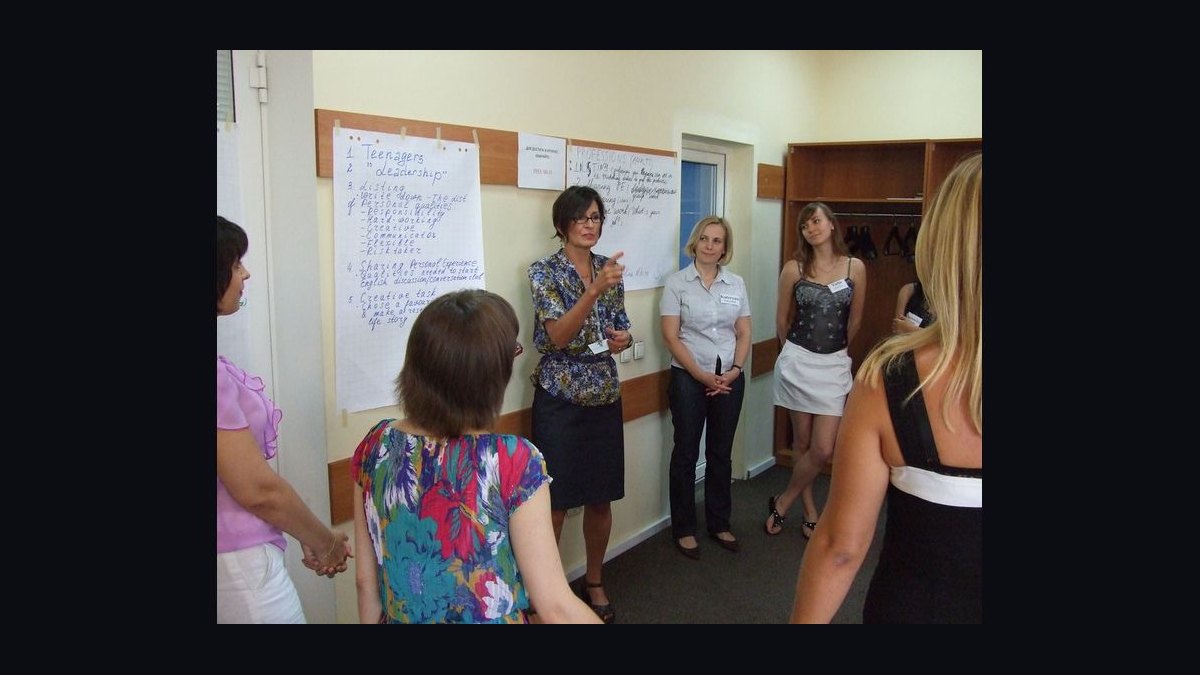
A weekly value proposition training works best as a 60-minute interactive session built around one real, live deal pulled from the CRM. Reps use a repeatable template — Pain, Solution, Proof, Risk — to turn vague feature talk into a quantified claim, then deliver it in a recorded role-play. Rotating the deal each week keeps the Crafting exercise fresh while the structure stays fixed, so skill compounds instead of resetting every session.
A Monday Morning Value Prop Scramble
Picture a ten-person sales team on a Tuesday at 10 a.m. A rep named Dana has a $45,000 deal stuck at the proposal stage with a mid-market logistics company. Her last call notes say the buyer "seemed interested" but didn't commit to a next step. When her manager asks her to repeat the value proposition she used, she says something like "we help you automate your operations and save time." That sentence has no number, no named pain, and no proof — and it's exactly why the deal stalled.
This is the scenario every weekly sales training should open with, because it's not hypothetical — it's the modal failure mode in most pipelines. The team pulls up Dana's deal record in Salesforce or HubSpot and treats it as the week's live case study. The facilitator doesn't lecture about value propositions in the abstract; the room works the actual deal, live, on screen. Dana had mentioned in a discovery call — captured in a Gong recording — that the buyer's accounts payable team was manually matching invoices and estimated their error rate at around 8%. That single detail, buried in a call transcript, is the raw material for a real value proposition: a specific process, a specific team, and a number the buyer volunteered themselves.

The exercise for the week is to convert that one sentence into a structured claim using an interactive shared document that the whole team edits together. Reps take turns filling in a template with four rows: Pain (with the buyer's own number), Solution (with a percentage or time reduction the product can credibly deliver), Proof (a named customer and a result), and Risk (the most likely objection and a rebuttal). By the end of 15 minutes, Dana has a three-sentence proposition she didn't have an hour earlier, and eight other reps have watched the process happen in real time on someone else's deal — which transfers far better than a slide deck of best practices.
The reason this scenario matters as the anchor for the whole session is that it exposes the gap reps don't see on their own: they know their product's features cold, but they can't quote the buyer's pain back with a number attached. Once that gap is visible in front of the group, the rest of the training — the framework, the drills, the role-play — has a concrete target instead of an abstract goal.

How the Weekly Template Actually Works
The mechanism behind this training is a five-step pipeline that turns a vague pitch into a testable, recorded claim, repeated on a new deal every week. It borrows its backbone from the MEDDIC qualification framework, but narrows in on two of its six letters — Identify Pain and Metrics — because those are the two inputs a value proposition actually needs.
Step one is pain identification: the facilitator or rep pulls a quote directly from a discovery call, ideally a Gong or Zoom recording, where the buyer named a problem in their own words. Step two is quantification: that pain gets attached to a number — hours lost, dollars spent, error rate, headcount tied up — pulled from the deal record or asked for directly ("what is this costing you today?"). Step three is the solution statement, where the rep states a specific percentage or time reduction the product delivers against that exact metric, not a generic capability claim. Step four is proof: a named customer, industry, and result that mirrors the buyer's situation closely enough to be credible. Step five is testing the whole claim against the economic buyer's decision criteria — does this proposition speak to what the person who signs the check actually cares about, or only to the day-to-day user?

What makes this a template rather than a one-off writing exercise is that the same five steps run every week against a different deal, so the muscle being trained is the process, not memorization of one script. A rep who has run the loop eight times has internalized how to extract a number from a call, not just how to describe one product. The weekly cadence also solves a practical problem: value propositions decay. A proof point that worked in Q1 goes stale once a competitor updates their pricing or a customer story ages out of relevance, so refreshing the live deal each week keeps the material current without requiring a separate content-maintenance process.
Real Numbers: Benchmarks From the Room
Concrete benchmarks make this training measurable instead of a vague "communication skills" exercise. On a scored 1-to-5 rubric — 1 for a vague, feature-led pitch and 5 for a specific, quantified, proof-backed one — teams running this drill for the first time typically average around 2.5 to 3.0. After six to eight weekly sessions, most teams move that average to 3.8–4.2, with the biggest single-category gain almost always in "proof," since reps start the process with zero rehearsed customer stories and build a small library of three to five over two months.

Time investment is deliberately small: the full session runs 60 minutes, broken into a 10-minute warm-up, 15 minutes on framework, 15 minutes filling the shared template, 10 minutes of recorded role-play, 5 minutes of commitments, and 5 minutes to file the artifacts. That is roughly 50 hours a year for a weekly cadence across a team, a modest cost against the alternative of reps improvising value language on every call.
On outcome metrics, teams that track win rate on deals where a documented value proposition exists in the CRM against deals where it doesn't commonly see a 10–20% improvement in first-call-to-discovery-meeting conversion, and organizations tracking this over 90 days often report measurable movement in overall win rate, though the range varies widely by deal complexity and average sale price — treat any single number as directional, not a guarantee. Time-to-first-meeting is a useful secondary metric because it isolates whether the proposition is actually helping reps qualify faster, independent of downstream sales-cycle variables outside the pitch itself.

Length benchmarks matter too: a value proposition that takes more than two sentences to say out loud consistently scores lower on the rubric's clarity criterion, because buyers stop tracking the thread. The best-performing propositions in these sessions run 25–40 words when delivered verbally — short enough to say in under 20 seconds, long enough to include one named pain, one number, and one proof point.
Trade-Offs: Live Deal vs. Hypothetical, Template vs. Freeform
There's a real trade-off in choosing a live deal versus a hypothetical one for the weekly exercise. A live deal, pulled from the CRM with the rep's consent, produces higher engagement and immediately actionable output — the rep walks out with language for their next call. The downside is exposure: critiquing a colleague's real deal in front of the team can feel personal if the facilitator doesn't frame feedback around the message, not the rep. A hypothetical or anonymized deal avoids that discomfort and works well for onboarding new hires who don't yet have live pipeline, but it produces weaker transfer because the team knows the stakes aren't real.

A second trade-off sits between a rigid, fill-in-the-blank template and a freeform coaching conversation. The four-row template (Pain, Solution, Proof, Risk) is faster to run, easier to score consistently, and works well for reps early in their ramp who need scaffolding. A freeform approach — where a senior rep or manager coaches without a fixed structure — can surface more nuanced, deal-specific language, but takes longer, scales less predictably across a distributed team, and depends heavily on the skill of whoever is facilitating that week.
A third trade-off concerns recording. Requiring every rep to record their 60-second delivery via Gong or a Zoom recording creates a reviewable artifact managers can score on their own time, which scales feedback beyond the live session — but some reps freeze up when they know they're being recorded, which can understate their real in-call performance. Making recording optional solves the anxiety problem but removes the manager review step that drives most of the measurable improvement over time. Most teams land on recording mandatory but reviewed privately by a manager rather than played back in the group, which keeps the feedback loop intact without the peer-pressure cost.

Finally, weigh template rigidity against buyer-persona flexibility. A single fixed proposition is easiest to train and score, but a real deal usually has at least two stakeholders — a technical evaluator and an economic buyer — who care about different things. Teams that build two versions of the same proposition (one on reliability or integration ease, one on ROI or payback period) get better multi-threading results but roughly double the prep time each week, which is a fair trade for complex, multi-stakeholder deal cycles and unnecessary overhead for short, single-buyer sales motions.
Common Pitfalls and How to Avoid Them
The most frequent failure in these sessions is feature dumping — a rep describes what the product does ("we have automation, reporting, and an API") instead of what changes for the buyer. The fix is procedural: no proposition is allowed to reach the role-play round without a number pulled directly from the buyer's own words in a call recording or CRM note. If a rep can't produce that number, the facilitator sends them back to ask the buyer directly rather than letting them guess.

A second pitfall is overcomplicating the message. Propositions that take more than two sentences to deliver consistently score worse in the room, because listeners lose the thread before the proof point lands. Enforce a hard cap — 25 to 40 words spoken aloud — and cut anything beyond it in the template-filling step rather than after the role-play, when reps are more attached to their own phrasing.
A third pitfall is generic outcome language — "increase efficiency," "grow revenue," "streamline operations" — with no quantification attached. This usually signals the rep skipped the pain-identification step entirely and jumped to solution language. Anchoring every claim to a metric the buyer has already shared, rather than one the rep assumes, removes this failure mode almost entirely, and it's why the pain row in the template should always be filled in before the solution row.

A fourth pitfall is treating the weekly session as a one-and-done writing exercise rather than a rehearsal habit. Propositions written in a doc but never delivered out loud under light time pressure don't transfer to live calls, where reps have seconds, not minutes, to find the right words. The recorded 60-second role-play round exists specifically to close that gap — skipping it to save time is the single change most likely to flatten the training's measurable impact over a quarter.
A fifth, quieter pitfall is stale proof points. A customer story that was compelling two quarters ago can undercut credibility if the buyer knows that customer churned or the results no longer hold. Refreshing at least one proof point in the shared library every four to six weeks, sourced from recently closed-won deals, keeps the "Proof" row of the template from becoming the weakest link in an otherwise strong proposition.

Related questions
How long should a value proposition training session run each week?
Sixty minutes is the standard cadence: 10 minutes warm-up, 15 minutes framework review, 15 minutes template-building, 10 minutes recorded role-play, and 10 minutes for commitments and filing artifacts.
Should every rep use the same value proposition or a personalized one?
Use a shared structure (Pain, Solution, Proof, Risk) but personalize the content per deal and per buyer persona — a technical evaluator and an economic buyer usually need different metrics emphasized.
What CRM fields are needed to support this training?
A simple custom text field, such as "Value Prop Summary," on the deal or opportunity object in Salesforce or HubSpot is enough to make the exercise's output reusable on future calls.
Can this template work for cold outreach, not just live deals?
Yes — shorten the Pain statement to a single line with a number, such as a specific cost estimate tied to a common buyer problem, and test it as an email subject line or opener.
How do we know the training is actually improving win rates?
Compare win rate and time-to-first-meeting on deals with a documented value proposition in the CRM against deals without one, tracked over a 90-day rolling window.
FAQ
What if a rep's deal has no clear metric to build a proposition around? Have the rep ask the buyer directly: "What is this problem costing you today, in time or dollars?" If the buyer can't answer, the pain hasn't actually been identified yet, and the rep should treat that as the next call's primary objective rather than guessing at a number.
How often should this training run, and does the format ever change? Weekly is the recommended cadence, with a new live deal rotated in each session so every rep gets a turn as the case study. The four-part template structure stays fixed; only the deal and the metrics change, which is what makes the skill compound over time.
Do we need special software to run the interactive template? No — a shared document editable by the whole team (Google Docs, Notion, or similar) is sufficient for the live template-building step. Recording tools like Gong or a standard Zoom recording cover the role-play step; neither requires new procurement in most sales orgs.
What's the biggest sign that the training isn't working? If reps consistently score below 3 out of 5 on the rubric after six or more sessions, or if the team can't name a single proof point from memory, the live deal selection or the facilitator's debrief likely needs to change before adding more repetitions.
How should remote or distributed teams adapt this format? Run the template-building step in a shared document with everyone editing simultaneously on a video call, and use breakout rooms for the paired role-play round, with each room recording locally and the strongest example replayed to the full group afterward.
Can this same structure be used for objection handling, not just value propositions? Yes — the Risk row already exists for this purpose. Some teams run a dedicated version of the weekly session that expands Risk into its own full drill once the core value proposition skill is established.
Sources
- MEDDIC Framework Overview (Salesforce)
- Challenger Sales Model (Gartner)
- Winning by Design: Value Proposition Resources
- Gong: Discovery Call Best Practices
- Outreach: Cold Email Subject Line Testing
- Clari: Revenue Intelligence and Win Rate Tracking
- Salesloft: Cadence Templates
- HubSpot: Creating and Editing Deal Properties
Related on PULSE
- Value Proposition Crafting Workshop Template
- Prospecting on LinkedIn: Interactive Template for a 20-Minute Sales Session
- Top 10 Sales Training Templates for Value Proposition Crafting
- Top 10 value proposition role-play scenarios for sales teams
- Top 10 value proposition training drills for B2B sales reps
- Top 10 Value Proposition Templates for Team Brainstorming
This page will be disappearing soon. Save it to your device for $1 — or read it free while it is here.
@Kory-White- · if Venmo asks, the last 4 of my number are 2012
This page is gone.
This one is off the shelf now. $1 keeps it on your phone for good — the whole page, pictures and diagrams included.
 pulse-sales-trainingsTop 10 sales role-play templates for objection handling practice in 2027
 pulse-sales-trainingsSocial Selling Audit: Reviewing LinkedIn Profiles and Outreach Templates
 pulse-sales-trainingsTop 10 closing role-play scenarios for sales teams in 2027
 pulse-sales-trainingsProspecting on LinkedIn: Interactive Template for a 20-Minute Sales Session
 pulse-sales-trainingsTop 10 ramping rep workshop agendas for 2027
 pulse-sales-trainingsTop 10 Customer Storytelling Templates for Sales Meetings in 2027
 pulse-sales-trainingsTop 10 SPIN Selling training exercises for sales managers in 2027
 stWhat is the best way to approach Sales Trainings in 2027?
 pulse-sales-trainingsSelling with Stories: Narrative Structure Template for a 45-Minute Sales Workshop
 pulse-sales-trainingsTop 10 ready-to-run sales training templates for closing complex deals in 2027