


The Closing Conversation Reboot — 60-Min Training
Quality
Certified

The Closing Conversation Reboot is a 60-minute sales training that retires the 1985-era assumptive close for five inspectable behaviors: a co-authored Mutual Close Plan, a Pre-Close Test, a spoken verbal contract before pricing, a 30-minute confirmation email, and four scripted responses for deals that stall at commit and negotiate.
The outcome you should expect
The point of this Reboot is not that reps leave feeling inspired — it is that a specific, agreed-upon script lands in a customer's inbox within days. For a manager running a first close-rate intervention across 4–12 account executives, the realistic outcome band is a measurable lift at the *commit* and *negotiate* stages of the pipeline, not at discovery. If your team already knows the product and the ideal customer profile and is losing deals that "went great and then went silent for nine days," this is the meeting that moves the number.
Expect three concrete behavioral changes inside two weeks. First, every late-stage opportunity acquires a written Mutual Close Plan — a one-page reverse timeline running from go-live back to today, with named owners and dates on both the seller's and the buyer's side. A stage-5 deal without that document is a stage-3 deal wearing a costume, and after this Closing training reps stop confusing the two. Second, no proposal leaves a rep's outbox without a verbal contract secured first: a spoken "if the number lands in the range we discussed, are we a go?" that surfaces hidden gates before the price sits in a procurement queue. Third, every late-stage call ends with a confirmation email inside 30 minutes — no exceptions, no "the prospect already knows."
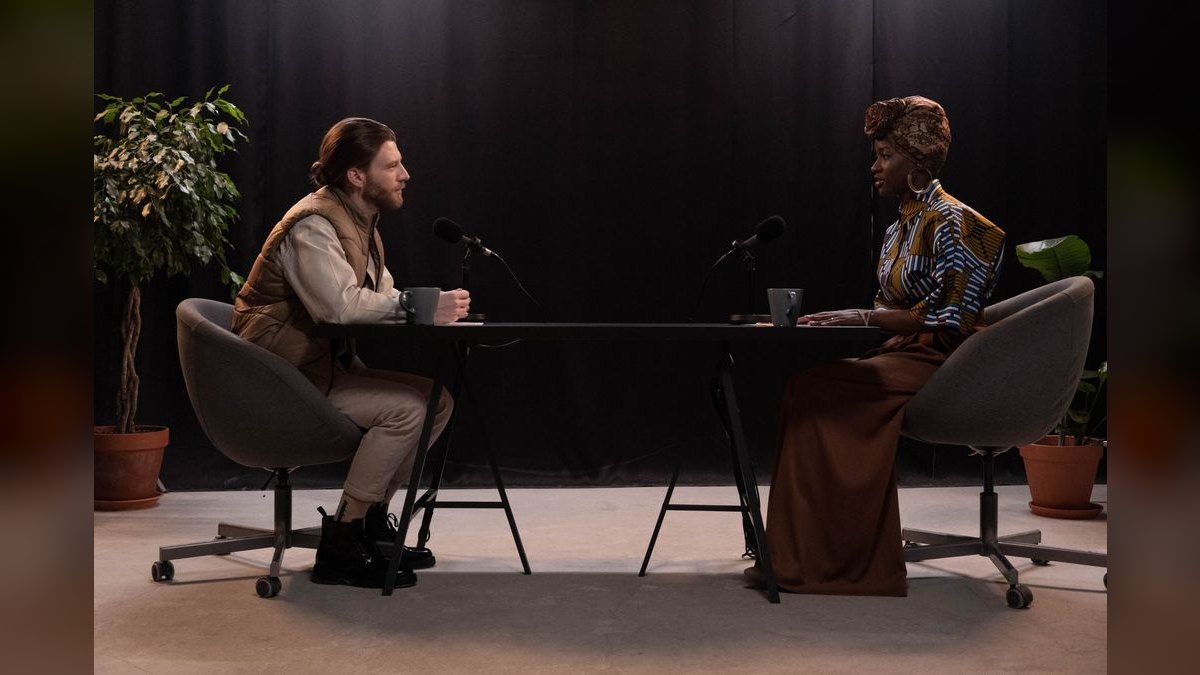
The outcome you should *not* expect is a permanent fix from a single sitting. This Conversation training is deliberately run once cold on a Tuesday morning, then the role-play half is re-run two weeks later. The re-run is where the scripts move from "recognized" to "reflexive." Managers who skip the second session usually watch the language decay back to happy-ears follow-ups within a month. The training's own success metric is embarrassingly simple: in the next one-on-one, can the rep answer "did you send the email?" with a yes and a timestamp? If yes, the behavior took; if the rep hedges, the discipline is already leaking.
What drives that outcome
Four mechanisms drive the lift, and none of them is a clever closing line. The framework is scaffolding; the *verbatim language a rep can use in the next live sales call* is the active ingredient. The Reboot is engineered to send each AE back to their desk carrying four memorized scripts, not four slides.
The Pre-Close Test is the first driver: "If everything we've discussed lines up with what your team needs, is there any reason we couldn't move to paperwork by [date]?" Run in the demo-to-proposal window, it converts a silent, unknown objection into a spoken one roughly two weeks before signature instead of 48 hours after. Every word the champion says after "well, actually…" is gold — a real late-stage objection you can now write directly into the Mutual Close Plan. This maps cleanly onto MEDDPICC's Decision Criteria and Paper Process components, and onto the broader qualification idea of trading a clear question for a clear commitment.
The verbal contract is the second driver: before pricing is ever sent in writing, the rep extracts "if the number lands inside the range we discussed, are we a go for [target date]?" — then stays silent and counts to ten rather than filling the pause. This is the single most-skipped behavior in B2B SaaS selling, and it works because it forces every hidden gate — a second decision-maker, an unbudgeted line item, a competing initiative — into the open before the number enters a procurement workflow where it can quietly die.

The email confirmation ritual is the third: within 30 minutes of every late-stage call, an email that recaps what was agreed in three bullets, states what is owed by whom, anchors the next date, and restates the close date pulled from the Mutual Close Plan. It is the closest thing in late-stage selling to a free win-rate point, which is exactly why the manager must hold the line when reps protest that it is redundant.
The fourth driver is the silence-breaker — a three-door script covered in the rollout below — paired with a disciplined trade-not-give reflex on discounts. Together these four behaviors are what the training installs; the sticky-note board simply makes them impossible to skip unseen.
Benchmarks and realistic ranges
Set expectations by the timebox itself. The 60 minutes runs on a 5/15/10/10/15/5 split: a 5-minute cold open and reframe, 15 minutes on the Mutual Close Plan and Pre-Close Test, 10 minutes on the verbal contract and email ritual, 10 minutes on the four curveballs, 15 minutes of live role-play, and a 5-minute commitment cadence to close. Those splits are not arbitrary — the two 15-minute blocks (teach-the-artifact and role-play-the-artifact) are the load-bearing sections, and the shorter blocks are deliberately transitions between them. If you find yourself borrowing minutes from a 15, borrow from a 10 instead.
Team-size range: this Closing training is calibrated for 4–12 AEs. Below four, you lose the pair-drill dynamic and it collapses into one-on-one coaching. Above twelve, the 15-minute role-play cannot give every rep a turn in the AE seat, so split into two cohorts rather than shortchanging half the room. The ACV sweet spot is the $25K–$500K band, where buyers carry a procurement team, a security team, and a finance partner — the exact environment where "do you want the blue one or the red one?" insults a CFO. The principles scale up and down, but the Mutual Close Plan earns its keep specifically when multiple internal stakeholders must be sequenced across weeks.

Cycle-time benchmarks worth quoting to reps: a direct rep-to-procurement introduction is the single biggest cycle-time lever in this deal band. Reps routinely report a nominal 60-day legal SLA compressing toward roughly 10 days once they are answering security-questionnaire items in real time instead of relaying every question through the champion. The silence-breaker's three-door email pulls a truthful response from a dark buyer well over half the time — because it grants explicit permission to say no. Treat these as directional ranges drawn from field practice, not guarantees; your own numbers depend on segment, legal posture, and how disciplined the follow-through is.
Cadence benchmark: run the full 60 once, then re-run only the 15-minute role-play block two weeks later. The commitment-cadence artifact — a wall of sticky notes, one stuck deal per rep with the exact script and the exact next-email send-time written on it — is photographed and becomes the manager's primary forecasting input for those two weeks. If a rep's sticky isn't actioned by the Friday one-on-one, that deal drops from *commit* to *best case* on the forecast, no debate. That single rule turns a soft training into a hard operating rhythm.
Risks, edge cases, and failure modes
The most common failure is running this Reboot on the wrong team. It assumes reps are losing at commit and negotiate. If your reps lose at *discovery* — vague pain, no identified champion, no compelling event — the Mutual Close Plan has nothing to reverse-engineer from, and the whole session becomes a training about closing air. Diagnose the leak stage first; if deals die at the top of the funnel, run a discovery training instead and come back to this one later.
The second failure is script softening. Reps under peer pressure paraphrase the Pre-Close Test into mush — "so, uh, do you think maybe we could look at timing at some point?" — which quietly destroys the mechanism. The role-play observer rubric exists precisely to catch this: did the AE use the *exact* line, did they *pause* after it, did they *capture* the response in Close Plan language, and did they *commit to a next-step date* before ending the call? Soften any one of those four and the sales conversation reverts to hope dressed as process.
The third failure is the manager blinking on the email ritual. Reps will call it redundant every single time. The redundancy is the point: the 30-minute email is a written verbal contract, and when procurement claims three weeks later "we never agreed to that," the timestamp wins the argument. A manager who lets one rep skip it "just this once" loses the whole team's discipline within a week, because everyone watches whether the rule is real.

Edge cases to pre-brief the team on. On discounts, never give — trade. A last-minute "25% off or we walk" is met with "help me understand what we'd be trading for it — a 2-year term, an earlier start date, a public reference, a case study after 90 days?" Giving margin unconditionally trains buyers to hold every renewal hostage. On signing logistics, a verbally-won deal can still die in DocuSign limbo; the fix is confirming the actual signer path up front ("legal reviews but the CFO signs last — who do I land it with by end of day?"). On the three-door silence email, the risk is deploying it too early; give a champion 5+ business days of genuine silence before sending, or you read as needy rather than direct. Finally, beware treating the Mutual Close Plan as a document you email *to* the buyer — an un-co-authored plan is just a wish list. It only functions when the champion's own dates and owners sit on it.
A practical rollout plan
Roll this out in a fixed sequence so nothing improvised leaks in. Schedule the 60 minutes cold on a Tuesday morning — early enough in the week and the day that reps can act on it the same afternoon. Open with the reframe: kill the assumptive close and the "close is an event" myth inside the first two minutes, then pause five deliberate seconds to invite pushback and build the psychological safety the role-play will need later.
Teach the artifact before you drill it. Whiteboard the Mutual Close Plan's five required elements — the buyer's go-live date anchored to a real business event, a reverse timeline with named human owners on both sides, explicit procurement and legal lanes, a Decision Criteria checklist lifted verbatim from what the buyer actually told you, and a two-or-three-item risk register. Then run the Pre-Close Test as a 7-minute pair drill: Rep A delivers the line, Rep B plays a VP of Operations holding a hidden objection written on a card, and Rep A's only job is to *write that objection into the Close Plan* rather than solve it live on the spot.

Move next to the verbal contract and email ritual, framing both as behaviors you will inspect in one-on-ones for a full month, not one-time tips. Then drill the four curveballs — silence, procurement runaround, discount grenade, and signing fumble. The 15-minute role-play uses three rotating triads (AE, buyer, observer) across three buyer cards: the stalled champion, the discount grenade, and the procurement wall. Three minutes per scenario, one minute of feedback, every rep plays AE at least once. In the debrief, name two reps who nailed a moment and one *moment* that needed sharpening — never single out one rep as the failure. Close with the sticky-note commitment cadence and the photo. Two weeks later, re-run only the role-play block so the scripts finish the trip from recognized to reflexive.
Related questions
How is a Mutual Close Plan different from a normal close?
A normal close pushes for a yes. A Mutual Close Plan is a written, co-authored reverse timeline from signature back to today, listing every step, owner, and date — turning the close into a shared project the buyer helped build rather than an event done to them.
What if the buyer goes silent after the proposal?
Give 5+ business days, then send the three-door email: they've decided to move forward, decided not to, or something changed. Granting explicit permission to say no pulls the truthful answer far more often than another "just checking in" nudge ever does.
Does the team need all five behaviors at once?
No. Start with the Mutual Close Plan and Pre-Close Test, which carry most of the lift, then layer in the verbal contract, email ritual, and curveball scripts as reps get comfortable. The Reboot is modular by design so you can adopt it in stages.
How long does the Pre-Close Test take to run?
Under 30 seconds — it is a single sentence asked in the demo-to-proposal window. Its value is timing, not length: it surfaces objections roughly two weeks before close instead of at the signature table when it is too late to fix them.
Can this work outside the $25K–$500K ACV band?
The principles scale, but the Mutual Close Plan earns most in deals with multiple internal stakeholders and a real procurement lane. For very small, single-signer deals, the verbal contract and email ritual matter more than the full written plan.
FAQ

What is the Mutual Close Plan, and how is it different from a standard close? It's a written, reverse-engineered timeline from the signature date back to today, co-authored with the buyer. Unlike a standard close that pushes for a yes, this plan maps every step, owner, and date, turning the close into a shared project both sides can see and steer together.
Do I need to use all five behaviors from the training at once? No. They're complementary. Start with just the Mutual Close Plan and the Pre-Close Test, then layer in the verbal contract, email ritual, and curveball scripts as your team gets comfortable. The Conversation Reboot is deliberately modular so you can adopt it in stages.
How long does the Pre-Close Test take to run on a call? It's a single line you ask during the demo-to-proposal window, taking under 30 seconds. The response reveals hidden objections early, so you address them well before pricing ever reaches a procurement queue where it can stall unseen.
What if the buyer goes silent after I send the proposal? Wait 5+ business days, then send the three-door email naming the three real possibilities and asking which one is true. It gives the buyer permission to say no, which paradoxically produces an honest answer more than half the time in practice.
Is this Closing training only for $25K–$500K ACV deals? That's the sweet spot, but the principles work above and below it. The co-authored plan and verbal contract scale across most B2B SaaS sales; only the depth of the procurement and legal lanes changes meaningfully with deal size.
How do I handle last-minute discount asks from procurement? Never give — trade. Use the script that ties any concession to a return: a longer term, an earlier start, a public reference, or a case study after 90 days. It protects margin while keeping the deal moving toward signature.
Sources
- https://en.wikipedia.org/wiki/Sales_process_engineering
- https://hbr.org/2011/07/the-end-of-solution-sales
- https://www.salesforce.com/resources/articles/sales-process/
- https://www.gartner.com/en/sales/insights/b2b-buying-journey
- https://www.forcemanagement.com/blog
- https://www.pandadoc.com/blog/mutual-action-plan/
- https://blog.hubspot.com/sales
- https://www.saleshacker.com/
Related on PULSE
This page will be disappearing soon. Save it to your device for $1 — or read it free while it is here.
@Kory-White- · if Venmo asks, the last 4 of my number are 2012
This page is gone.
This one is off the shelf now. $1 keeps it on your phone for good — the whole page, pictures and diagrams included.
 sales-trainingThe Multi-Thread and Champion Build Reboot — 60-Min Training
 sales-trainingThe Pricing Conversation Reboot — 60-Min Training
 sales-trainingThe Negotiation Reboot — 60-Min Training
 sales-trainingThe Power Map Reboot — 60-Min Training
 sales-trainingThe Stalled Deal Recovery Reboot — 60-Min Training
 sales-trainingThe Champion Development Reboot — 60-Min Training
 sales-trainingThe Procurement Navigation Reboot — 60-Min Training
 sales-trainingThe Year-End Closing Sprint Reboot — 60-Min Training
 sales-trainingThe POC and Pilot Management Reboot — 60-Min Training
 sales-trainingThe Deal Strategy Review Reboot — 60-Min Training