


The Sales Kickoff Design Reboot — 60-Min Training
Quality
Certified

The Sales Kickoff Design Reboot is a 60-minute working session that redesigns your SKO as a 90-day behavior-change campaign, not a three-day event. You leave with a one-page blueprint: a four-act arc (year-in-review, year-ahead, training, inspiration), a 12-week drumbeat calendar, and a 30/60/90 reinforcement map that hardens new selling behaviors.
The outcome you should expect
The point of this Training reboot is not a better party — it is a measurable lift in Q1 pipeline and full-year attainment. When you run the hour as designed, the tangible deliverable is a single page every attendee can fill in and hand to the CRO inside 48 hours. That page names the theme in one sentence, allocates stage time across the four acts, lists the top three behavior changes you are driving, and assigns an owner to every follow-through asset. Nothing on the page is aspirational — each line has a name and a date next to it.
Expect three concrete shifts once the blueprint is live. First, stage time rebalances toward skills practice: a well-run Sales Kickoff spends roughly 40-50% of floor hours on live rep practice, not feature broadcasts. Second, follow-through stops being an afterthought — the drumbeat calendar and 30/60/90 checkpoints are booked as calendar invites before reps leave the venue, so reinforcement is scheduled, not hoped for. Third, accountability moves to the frontline manager, who now owns the knowledge, behavior, and outcome checks rather than leaving them to a central enablement team that reps never see again after the event.

The honest expectation to set with leadership: the Design Reboot does not guarantee a great event. It guarantees that if the event lands, the gains survive past February. Most kickoffs are remembered as celebrations and forgotten as strategy by week three. A rebooted SKO is engineered so the on-stage energy converts into repeated reps on real calls. If your last kickoff produced applause but no change in call behavior, this session is the correction — it treats the two or three days on stage as roughly 5% of the total work and designs the other 95% deliberately. That reframing is the whole reason the reboot exists: you stop buying a moment and start building a system.
What drives that outcome
Three mechanics do the heavy lifting: the four-act arc that balances the agenda, the drumbeat that keeps themes alive weekly, and the 30/60/90 that measures whether behavior actually moved. Remove any one and the chain breaks — a balanced agenda with no drumbeat fades, and a drumbeat with no measurement drifts.

The four-act arc governs proportion. Year-in-review stays short, honest, and specific — celebrate named reps for named deals, then own the misses out loud, because reps trust leaders who admit what did not work. Year-ahead is where most kickoffs quietly fail: reps leave unable to answer "what changed?" The fix is to cover exactly four things — the number and why it is that number, the ICP shift, the product motion (what you lead with, what is deprecated), and the compensation change stated plainly on a slide. The test is simple: every rep should be able to say the new strategy in one sentence by lunch. Training is the largest block and the highest-leverage one — small-group skills practice on discovery, multi-threading, negotiation, and objection handling, run with role-plays and scorecards, never a lecture. Inspiration closes short and authentic: one real customer telling the truth about why they bought outperforms an expensive outside keynote.
The drumbeat is the weekly cadence of follow-through assets that lands in reps' inboxes for the twelve weeks after the event. Each asset is capped at roughly ten minutes of rep time — anything longer gets skipped — and each ties back to a specific SKO session so the reinforcement feels continuous rather than random. You design it *before* the kickoff, not after, so week one already has an owner and a delivery date. A typical drumbeat mixes a two-minute video, a one-page play, a manager-led role-play, and a short quiz across the weeks.
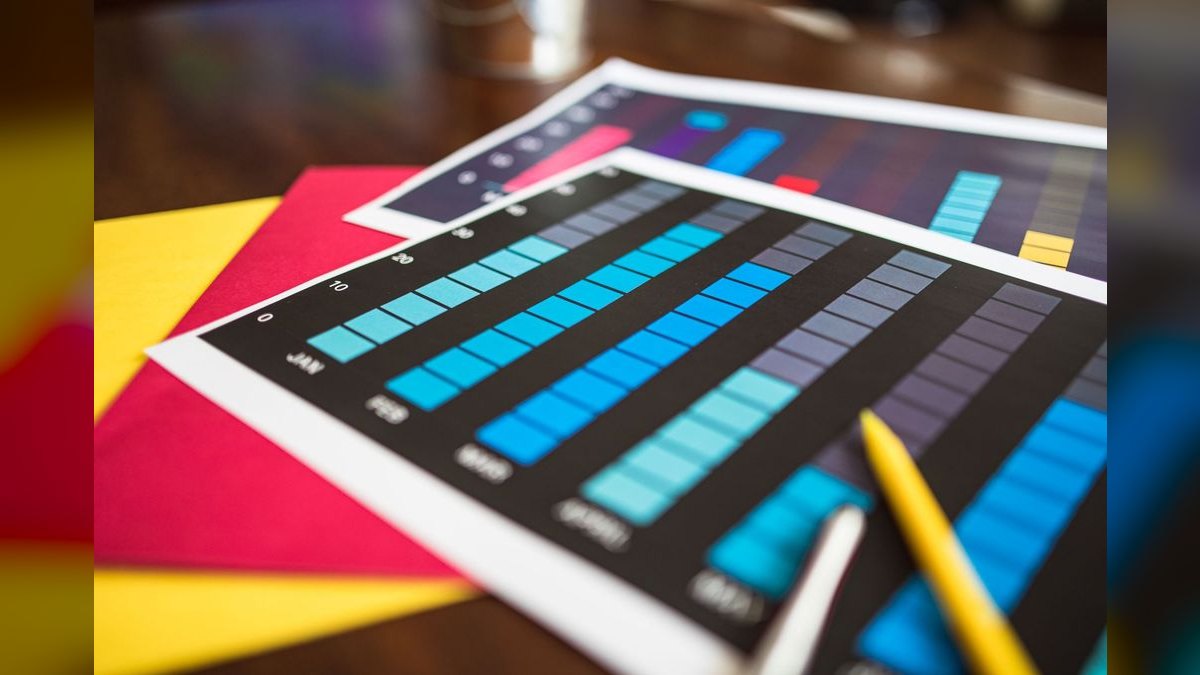
The 30/60/90 turns the push into measurement. Day 30 is a knowledge check, day 60 a behavior check pulled from real recorded calls, and day 90 an outcome check against a leading indicator. Together these three mechanics form the causal chain from event to attainment — and because each checkpoint has a named owner, no one can quietly let it slip.
Benchmarks and realistic ranges
Use these ranges as planning defaults, then adjust to your team size and motion. They are directional planning numbers, not guarantees — treat them as the starting position you argue against with your own data.
Time allocation across the four acts. Year-in-review: 10-15% of stage time. Year-ahead: 25-30%. Training: 40-50% — the single largest block. Inspiration: 10-15%. If training dips below 40%, you have built a conference, not a Kickoff. Run the math before you lock the agenda: a two-day event with roughly twelve usable floor hours means five to six of those hours must be hands-on practice.
Budget split. A workable default is roughly 40% on training, 30% on year-ahead clarity and content, 20% on celebration, and 10% on production. Celebration above 20% is the classic "Vegas problem" — reps remember the dinner and forget the strategy. The party should be a reward for the work, not a substitute for it.

Cost of the room. The largest hidden cost is opportunity cost. Pull 150-200 reps off the phones for three days and the fully-loaded people cost — salary, benefits, lost selling time — commonly runs into the low-to-mid six figures before you spend a dollar on venue or AV. Treat every stage minute as expensive, because it is; a single wasted general-session hour across 200 reps is 200 selling hours gone.
Session timing for the 60-minute reboot itself. A clean split is 5 / 15 / 10 / 10 / 15 / 5 minutes: frame the job-to-be-done, teach the four-act arc, design the drumbeat, design the 30/60/90, walk the common failure modes, then fill in the one-page blueprint. Ending on time with a completed page is the whole game — an hour that runs long and produces a half-filled page has failed its only test.
Reinforcement cadence. Drumbeat runs twelve weeks, one theme per week, each asset ten minutes or less. The 30/60/90 checkpoints are exactly what the labels say — 30, 60, and 90 days after the event. A common pattern for the day-60 behavior check is to pull about five recorded calls per rep and score them against the new framework; the exact number flexes with call volume, but the principle is to look at real calls, not self-reported adoption.
Speaker mix. Roughly 80% internal, 20% external keeps the content relevant and the cost sane. Internal leaders own the year-ahead and training acts because they own the number; external voices belong in the short inspiration slot, not the strategy blocks.
Risks, edge cases, and failure modes

Most SKOs fail in predictable ways. Walk your team through these five patterns and have each person name which one their last kickoff suffered — the diagnosis is usually unanimous and uncomfortable.
Sage-on-stage. Senior leaders broadcasting at reps for hours while everyone claps and nothing changes. This is the default failure of an un-rebooted event. Fix it with a hard rule: no general session longer than about 45 minutes, and break into small-group work at least every 90 minutes. Broadcast is for context; practice is for skill.
No follow-through — the killer. A big event with no drumbeat and no 30/60/90 is the single most common and most expensive failure. On-stage energy has a short half-life; without reinforcement, reps revert to last year's behavior within a couple of weeks. The fix is non-negotiable: the drumbeat calendar is built during design, owners are named, and calendar invites go out before reps leave the venue.
Parties over content. Spending more on celebration than on skills. Cap celebration near 20% of budget and make it explicitly a reward that follows the work, scheduled after the hardest practice block rather than before it.

Product training disguised as sales training. Hours of feature deep-dives eating the floor time that should go to selling skills. Push product training into graded pre-work completed *before* arrival, so the room is reserved for discovery, negotiation, and objection practice. If a session could be an email or a video, it should be one.
Surprise comp changes. Reps discovering at the event that their territory shrank or accelerators changed. This poisons the entire kickoff. Comp letters should land about two weeks before the SKO so the event answers questions instead of dropping bombs.
Edge cases. For a *small budget*, the four-act structure still holds — concentrate spend on training and year-ahead clarity (together 60-70% of resources) and scale down production and celebration; those two acts are what move the number. For a *remote or hybrid team*, keep the same four acts but deliver them as shorter virtual sessions across two to three days; the drumbeat and 30/60/90 become even more critical because you lose the hallway reinforcement of an in-person room. For a *very large org*, run breakouts by segment so the year-ahead ICP and motion content is specific rather than lowest-common-denominator, and let each segment's frontline managers own their own 30/60/90 checks.
A practical rollout plan

Sequence the reboot so the one great hour becomes a real Sales Kickoff. The rollout has a clear critical path, and the 48-hour handoff to the CRO is the hinge — miss it and the design decays into good intentions.
Start in the design session: produce the one-page blueprint with theme, four-act time allocations, top three behavior changes, the 12-week drumbeat with named owners, the 30/60/90 rubric with a named owner per checkpoint, and the budget split. Send that page to the CRO within 48 hours for approval — the deadline is the forcing function that converts intent into commitment. If the page cannot be defended in one sentence per act, it is not done.
Once approved, run the pre-work rung: publish and quiz product training so it is done before anyone travels, and mail comp letters about two weeks out. Then hold the event — two to three days built to the arc, with training as the dominant block. Immediately after, the drumbeat begins in week one and runs twelve weeks while the 30/60/90 checkpoints fire at day 30 (knowledge), day 60 (behavior, scored from real calls), and day 90 (outcome, measured against a leading indicator like new-logo pipeline in the new ICP). Each checkpoint feeds the next planning cycle, so the reboot compounds year over year rather than resetting.
Assign a single owner to the whole rollout — usually the head of enablement partnering with a sales leader — and review the blueprint against actuals after day 90 so next year's Design starts from evidence, not memory. The post-90 review is also where you decide which drumbeat assets to keep, which to cut, and which behavior changes graduated into everyday habit.
Related questions

How is a rebooted SKO different from a normal kickoff?
A normal kickoff optimizes the event. A reboot treats the event as roughly 5% of the work and designs the 90-day reinforcement campaign around it — drumbeat plus 30/60/90 — so behavior actually changes instead of fading by February.
Who should be in the 60-minute design session?
The sales leader who owns the number, the head of enablement, product marketing, and RevOps. Keep it small enough to make decisions in the room; the deliverable is a one-page blueprint everyone can defend to the CRO.
What is the biggest single predictor of SKO success?
Structured follow-through owned by the frontline manager. An event with no drumbeat and no reinforcement is the most common failure. Adoption lives or dies with the manager running the day-30, day-60, and day-90 checks.
How much should we spend on the celebration?
Cap it near 20% of budget. Celebration is a reward for the work, not a substitute for it. When the party crowds out training, reps remember the dinner and forget the strategy — the classic Vegas problem.
Can this framework run virtually?
Yes. Keep the four-act arc but deliver it as shorter sessions across two to three days. Remote teams rely even more heavily on the weekly drumbeat and the 30/60/90 map to sustain momentum without a physical room.
FAQ
How long does it take to design a Sales Kickoff using this framework? Most teams draft the one-page blueprint in a single 60-minute working session. The full build — stakeholder alignment, content creation, and drumbeat production — typically takes two to four weeks depending on team size and how much of the year-ahead strategy is already settled.
What if our SKO budget is very small — can this still work? Yes. The four-act structure works at any budget. Concentrate spend on the training and year-ahead acts, which together should carry roughly 60-70% of resources. Production and celebration scale down without hurting the outcome, because skills practice and strategy clarity are what move attainment.
How do we measure whether the SKO actually changed behavior?

Track three signals: engagement in the weekly drumbeat during the first 30 days, completion of the 30/60/90 milestones, and Q1 pipeline movement versus the same period last year. Real change shows up as consistent follow-through on calls, not event-day energy.
Should we include external speakers or stick with internal leaders? Use a mix, roughly 80% internal and 20% external. Internal leaders own the year-ahead clarity and the training act because they own the number. External voices add fresh perspective in the short inspiration slot without inflating cost or drifting off-strategy.
What happens if our sales team is remote or hybrid? The framework adapts directly. Keep the four acts but deliver training and inspiration as shorter virtual sessions spread across two to three days. The drumbeat and 30/60/90 reinforcement matter even more remotely, since you lose the informal reinforcement of an in-person venue.
How often should we redesign the SKO from year to year? Refresh annually, but keep the four-act structure stable. The real changes land in the training act (new products, updated methodology) and the year-ahead act (market and ICP shifts). Expect a deeper redesign every two to three years as the motion evolves.
Sources
- Harvard Business Review — sales leadership and enablement coverage: https://hbr.org/
- Gartner — Sales practice research on kickoff design and rep enablement: https://www.gartner.com/en/sales
- Forrester — Sales enablement effectiveness and reinforcement research: https://www.forrester.com/
- Sales Enablement PRO — SKO planning and reinforcement guides: https://www.salesenablement.pro/
- Pavilion — operator community benchmarks on kickoff design and comp timing: https://www.joinpavilion.com/
- LinkedIn Sales Blog — sales kickoff planning and manager coaching articles: https://www.linkedin.com/business/sales/blog
- Gong — call-analysis research on coaching and behavior change: https://www.gong.io/resources/
- SiriusDecisions/Forrester briefs on sales kickoff structure and budget allocation: https://www.forrester.com/blogs/
Related on PULSE
- The Customer Kickoff Meeting Reboot — 60-Min Training
- Building a Sales Mentorship Program: Template for a Department-Wide Kickoff
- Top 10 Templates for Monthly Sales Kickoff Meetings
- The Outbound Sequence Design Reboot — 60-Min Training
- 60-Min Sales Training: Slide Deck Design for Sales
- Patio and Hardscape Design Sales — 60-Min Training
This page will be disappearing soon. Save it to your device for $1 — or read it free while it is here.
@Kory-White- · if Venmo asks, the last 4 of my number are 2012
This page is gone.
This one is off the shelf now. $1 keeps it on your phone for good — the whole page, pictures and diagrams included.
 sales-trainingThe Territory Plan Reboot — 60-Min Training
 sales-trainingThe Annual Sales Planning Reboot — 60-Min Training
 sales-trainingThe Quota and Comp Plan Communication Reboot — 60-Min Training
 sales-trainingThe Sales Playbook Reboot — 60-Min Training
 sales-trainingThe Sales Coaching Cadence Reboot — 60-Min Training
 sales-trainingThe Sales Forecasting Reboot — 60-Min Training
 sales-trainingThe Pipeline Review Reboot — 60-Min Training
 sales-trainingThe Win-Loss Analysis Reboot — 60-Min Training
 sales-trainingThe Sales Activity Metrics Reboot — 60-Min Training
 sales-trainingThe Sales Tech Stack Reboot — 60-Min Training