


Medicare Advantage Enrollment Selling — 60-Min Training
Quality
Certified
Medicare Advantage enrollment selling is a compliance-first, needs-based process: sign the Scope of Appointment before any plan talk, verify the beneficiary's doctors, drugs, and budget, present only suitable plans with trade-offs stated plainly, then enroll with required disclosures. A 60-minute training drills this sequence so agents earn persistency, referrals, and clean audits.
The Tuesday morning call that costs an agent their contract
Picture a licensed agent working the Annual Enrollment Period. A referral comes in at 9:40 a.m. — a 71-year-old woman in a suburban county with roughly 40 Medicare Advantage plans available to her. She says she saw a television ad promising dental, vision, and money back on her Part B premium, and she wants "that plan." The agent has eleven appointments booked that day, the carrier portal is already open, and the enrollment takes four minutes if he simply asks for her Medicare number and effective date.
He does it. She enrolls. Six weeks later she calls her cardiologist to schedule a follow-up and learns the practice is out of network on her new plan. Two weeks after that, her pharmacy tells her the brand-name blood thinner she has taken for three years is not on the plan's formulary, and the tier she does qualify for carries a coinsurance she cannot afford. She calls 1-800-MEDICARE. That call becomes a complaint. The complaint becomes a carrier inquiry into the agent's book. A rapid disenrollment inside the first three months triggers a full commission chargeback, and the agent's name lands on a monitoring list at two of the four carriers he represents.
This is the scenario that opens the training, and it should be read aloud rather than summarized, because every agent in the room has either lived it or narrowly avoided it. The failure was not a knowledge gap about Medicare Advantage. The agent knew the product. The failure was a process gap: he sold a plan instead of matching a person. He skipped the Scope of Appointment, skipped the provider check, skipped the formulary check, and skipped the disclosure that he represents a specific set of carriers rather than every plan in the county.

The stakes are unusually high in this line of business because the sales conversation itself is regulated. The Centers for Medicare & Medicaid Services publishes Medicare Communications and Marketing Guidelines that govern how agents may contact beneficiaries, what must be documented before a plan discussion, what disclaimers must be spoken, and how calls must be recorded and retained. Carriers layer their own certification requirements on top, typically annual AHIP certification plus carrier-specific product training before an agent may write a single application. Secret shoppers call agents during AEP. Recorded calls get pulled and reviewed. The regulator, the carrier, and the beneficiary are all watching the same sixty-minute conversation.
The frame for the whole session, written on the whiteboard before anyone sits down: you are not selling a plan; you are matching a person to the coverage that fits their doctors, their drugs, and their budget. In a market this regulated, the compliant conversation and the commercially successful conversation are the same conversation. The agent who does the suitability work retains members, collects renewals for years, and gets referred to the beneficiary's neighbors and church group. The agent who pitches gets chargebacks and a monitoring flag.
Budget five minutes for this segment. It is the emotional anchor; everything after it is mechanics.
How the enrollment sequence actually works, gate by gate
The core of the training is a four-gate sequence, and the discipline is that each gate is a hard stop. An agent may not advance until the prior gate is genuinely satisfied. Spend fifteen minutes here and have every agent complete the setup template for a real appointment already on their calendar — abstract practice does not transfer.

Gate one: Scope of Appointment. The SOA documents which product types the beneficiary agreed to discuss — Medicare Advantage, MA-PD, standalone Part D, or Medicare Supplement. It must be executed before the plan-specific discussion, and it can be captured on paper, electronically, or by recorded verbal attestation depending on the appointment channel. The rule agents most often break is scope creep inside the appointment: the SOA says Part D only, the conversation drifts to a Medicare Advantage plan, and now the agent is outside scope. If the beneficiary genuinely wants to discuss a product type not on the form, the correct move is to capture a new scope for that product type, not to keep talking.
Gate two: needs assessment. Six fields, and the agent runs them in this order every time:
- Scope confirmed — signed, dated, product types matching what is about to be discussed.
- Doctors — every provider the beneficiary wants to keep, by name and practice, including specialists they see once a year.
- Drugs — every prescription with dosage, because tier placement often varies by dosage and by whether the drug is brand or generic.
- Budget and priorities — premium tolerance, maximum out-of-pocket comfort, whether dental, vision, or hearing genuinely matters to them, and whether they travel or live part of the year in another state.
- Current coverage — what they have now and why they are looking. If they already have a good fit, the honest answer may be "stay where you are."
- Disclosures to deliver — recording notice, the "I do not offer every plan available in your area" statement, and how they can contact Medicare or their State Health Insurance Assistance Program directly.
Gate three: verification. The provider directory check and the formulary check are separate lookups and both must be run against each plan under consideration, not once in general. A plan is only "suitable" for this beneficiary if her cardiologist is in network and her blood thinner sits on the formulary at a tier she can afford. Agents resist this because it takes eight to twelve minutes per plan and feels like it slows the appointment. The counter-argument is arithmetic: twelve minutes of lookup versus a chargeback, a complaint file, and a lost referral chain.

Gate four: presentation and enrollment. Present two or three suitable plans — never one, never eight. One looks like steering; eight paralyzes. State each plan's trade-off plainly in the same breath as its benefit: "This one keeps Dr. Alvarez and covers your medication at the lower tier, but it requires prior authorization for imaging and the network is HMO, so you'd need referrals." Then stop talking and let the beneficiary choose.
Run the sequence live as a role-play. One agent plays a cautious 68-year-old who watched a TV ad; one plays the agent; then swap. The script the agent works from is short enough to memorize:
> "Before we look at any plans, I have you down to review [product types] on this Scope of Appointment — does that match what you wanted to discuss? And I want you to know this call is recorded." > > "Let's start with what matters most. Which doctors do you want to keep, and what medications are you taking? I'm going to check both against every plan we look at." > > "Based on your doctors, your prescriptions, and what you told me about your budget, two plans fit. Plan A keeps Dr. Alvarez and covers your medication, but the network is tighter and imaging needs prior authorization. Plan B has a broader network but a higher out-of-pocket maximum. I represent [carriers], not every plan available in your area." > > "There is no rush. Take the materials and your time. If one of them fits, I'll walk you through the enrollment and confirm your effective date."
Numbers, election periods, and the economics agents actually run on

Agents need to leave the room with the calendar and the money model in their heads, because both drive behavior more than any compliance slide will.
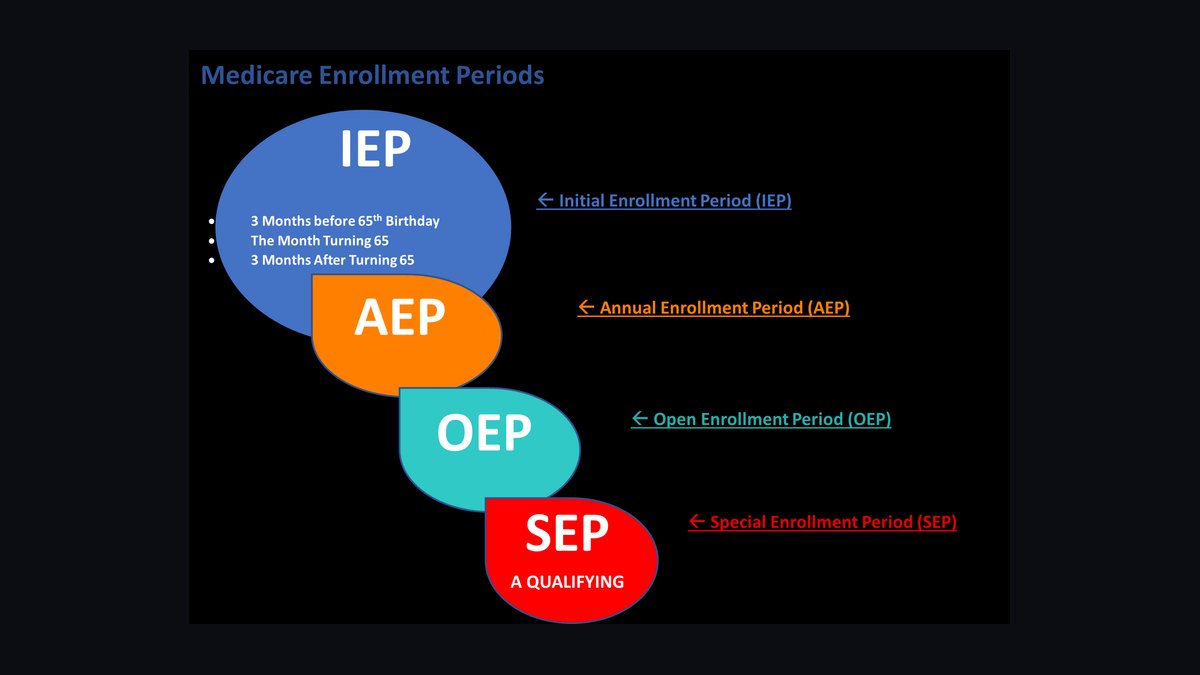
The calendar. Medicare's Annual Enrollment Period runs October 15 through December 7 each year, with changes effective January 1. The Medicare Advantage Open Enrollment Period runs January 1 through March 31 and lets someone already in an MA plan switch once to another MA plan or return to Original Medicare. Initial Enrollment Periods sit around a beneficiary's 65th birthday — a seven-month window spanning three months before the birthday month through three months after. Special Enrollment Periods open for qualifying events: a permanent move out of the plan's service area, loss of employer coverage, a plan exiting the market, entering or leaving an institution, or gaining or losing Medicaid or Extra Help eligibility. Agents must be able to name the applicable election period before taking an application; writing an enrollment without a valid election period is one of the fastest routes to a rejected application and a carrier conversation.
The concentration problem. The AEP compresses an enormous share of annual production into roughly eight weeks. An agent who writes 200 applications a year may write well over half of them between mid-October and early December. That compression is precisely why process discipline matters: the temptation to shortcut the provider and formulary checks is highest exactly when the volume of shortcuts creates the most downstream damage. Build the training around this — the checks must be fast and habitual, not optional under pressure.
The compensation model. CMS sets maximum broker compensation amounts for Medicare Advantage and Part D, published annually, with different caps for an initial enrollment versus a renewal, and regional variation for a handful of states. The structural fact agents must internalize: renewals compound and initials do not. A book of 400 members that persists produces renewal income every year without a single new appointment. A book of 400 members with heavy first-year churn produces a chargeback ledger and starts from zero each October.

The chargeback rule that changes behavior. When a member disenrolls within the first three months of the plan year, the agent typically repays the full first-year commission. Between months four and twelve, the repayment is generally prorated. This is why the formulary check is not a compliance nicety — it is the highest-leverage revenue-protection step in the entire process. The single most common cause of a rapid disenrollment is a beneficiary discovering, at the pharmacy counter, that their medication is not covered the way they expected.
Persistency math worth writing on the board. Take two agents who each enroll 200 members in year one. Agent A retains 90 percent; Agent B retains 70 percent. By year three, before any new production, Agent A is collecting renewals on roughly 162 members while Agent B is collecting on roughly 98 — a gap of 64 paying members that Agent B must re-earn every single year just to stand still. Add referral flow, which correlates with satisfaction, and the gap widens. Agents chronically underestimate this because the initial commission is visible and immediate while the renewal stream is invisible and deferred.
Certification cost of entry. Before writing a single Medicare Advantage application, an agent needs a state health insurance license, annual AHIP or equivalent Medicare training certification, and carrier-specific product certification for each carrier they intend to represent — typically completed every summer ahead of AEP, and typically requiring a passing score with a limited number of retakes. Miss the window and the agent cannot write for that carrier that season. Put the certification deadline dates on the training agenda.
Trade-offs the agent must speak out loud
Every Medicare Advantage plan involves trade-offs, and the training's central compliance-and-craft lesson is that the agent states them before the beneficiary discovers them. This section is where most agents need the most coaching, because stating a trade-off feels like talking yourself out of a sale. It is the opposite: the trade-off spoken aloud in the appointment is the trade-off that does not become a complaint in February.

Medicare Advantage versus Original Medicare with a Supplement. Medicare Advantage typically offers lower or zero monthly premiums, bundled Part D coverage, and extra benefits like dental, vision, hearing, or fitness — in exchange for a provider network, prior authorization requirements, and an annual out-of-pocket maximum the member may actually reach. Original Medicare paired with a Medigap policy and a standalone Part D plan typically offers near-universal provider access and highly predictable costs — in exchange for a meaningful monthly Medigap premium. Critically, Medigap medical underwriting outside a guaranteed-issue window means the decision to leave a Supplement can be functionally irreversible in many states. An agent who moves a healthy 68-year-old off a Supplement to chase a $0 premium may be closing a door the beneficiary cannot reopen at 78. Say this out loud, every time.
HMO versus PPO. HMO plans usually carry lower premiums and often richer supplemental benefits, but restrict members to the network and typically require referrals. PPO plans allow out-of-network care at higher cost-sharing and generally skip the referral requirement, but tend to have higher premiums and a higher out-of-pocket maximum. The right question is not "which is better" but "does this beneficiary travel, split the year between two states, or see a specialist outside the local system?"
$0 premium is not $0 cost. This is the single most misunderstood point in the market, and the training should drill the explanation until every agent can deliver it in fifteen seconds: a zero-dollar premium plan still has copayments, coinsurance, drug tiers, and an annual out-of-pocket maximum. A beneficiary with three chronic conditions may spend thousands under a $0 plan and less under a plan with a modest premium. Show the comparison arithmetically rather than asserting it.
Special Needs Plans. For beneficiaries who qualify — dual eligible for Medicare and Medicaid, institutionalized, or living with a qualifying chronic condition — a Special Needs Plan may deliver dramatically better coordination and cost-sharing. Agents should screen for Medicaid and Extra Help eligibility during the needs assessment rather than treating SNPs as an afterthought.
The alternative the agent must be willing to offer: no sale. Sometimes the honest answer is that the beneficiary's current coverage is the best available fit, or that no plan the agent represents covers her providers and drugs adequately. The correct response is to say so and point her to Medicare's Plan Finder or her State Health Insurance Assistance Program for free unbiased counseling. Agents who do this build the referral engine that carries their book; agents who force the fit build a chargeback ledger.
The pitfalls that end careers, and the language that prevents them

Ten minutes of the training belongs to the phrases and behaviors that create violations. Read the prohibited language aloud, slowly, and have agents repeat the compliant substitute.
Never imply government affiliation. "I'm with Medicare," "Medicare sent me," or any use of the Medicare name, logo, or a look-alike mailer that suggests official government correspondence is a serious misrepresentation. The compliant framing is: "I'm a licensed insurance agent. I'm not with Medicare or the government, and I represent [carriers] — not every plan available in your area."
Never claim everything is covered. "Don't worry, it's all covered" is false for every plan in existence and is exactly the claim that produces a February complaint. Substitute: "Here's what this plan covers well, and here's where it has limits."
Never manufacture urgency. "You have to decide today" is only true when a genuine election-period deadline requires it. Outside that, pressure is a violation. Substitute: "Your window closes December 7 — that's real — but you have until then, and I'd rather you read the materials first."
Never steer toward commission. Presenting the plan that pays best rather than the plan that fits is both a compliance violation and the fastest way to build a churning book. Present suitable options, disclose that your carrier set is limited, and let the beneficiary choose.
Never discourage review of materials. Agents must encourage beneficiaries to read the Summary of Benefits and to involve a family member if they want one. Discouraging review reads as concealment.

Do not cross-sell inside a Medicare appointment without scope. Pivoting from a Medicare Advantage discussion into an unrelated product the beneficiary did not agree to discuss is a scope violation. Capture a new scope or book a separate appointment.
Do not offer prohibited inducements for referrals. Referrals in this business are earned by service, not purchased. The compliant ask, delivered at the day-30 check or the annual review: "If you know someone facing this same confusing decision, I'm happy to help them the way I helped you." No gift cards, no cash, no fees.
Do not skip the welcome call. The post-enrollment cadence is where persistency is won: a welcome call confirming the effective date, a day-30 check confirming the card arrived and the first pharmacy visit and first appointment went smoothly, and an annual review before AEP to catch formulary and network changes for the coming plan year. A problem caught at day 30 is a fixed problem; the same problem discovered at day 90 is a disenrollment, a chargeback, and a complaint.
Rehearse the three objections agents raise about all of this. *"The compliance steps slow me down"* — they protect the license and the renewal stream; one complaint costs more than every minute saved across a season. *"The client just wants the cheapest plan"* — cheapest that drops her cardiologist is not cheapest, it is a disenrollment with a delay. *"Asking for referrals feels awkward"* — seniors talk to peers facing the identical confusing choice, and a helpful agent is exactly who they name.
Close the sixty minutes with three written commitments, posted at each agent's desk: complete the Scope of Appointment before discussing any plan, verify doctors and drugs before presenting and state every trade-off plainly, and run the welcome call, the day-30 check, and the annual review. Then read the principle one last time: the plan that fits the person stays enrolled, passes the audit, and sends the next three referrals.
Related questions
Can an agent discuss plans without a signed Scope of Appointment?
No. The SOA must document the agreed product types before a plan-specific discussion begins. If the conversation needs to move to a product type not on the form, capture a new scope for that product type rather than continuing outside the documented scope.
How long should the post-enrollment cadence run?
Indefinitely. A welcome call confirming the effective date, a day-30 check on card receipt and first plan use, and an annual review each fall before the Annual Enrollment Period. The annual review catches formulary and network changes that would otherwise surface as complaints.
What happens if a member disenrolls in the first three months?
The agent typically repays the full first-year commission, and repeated rapid disenrollments draw carrier scrutiny. This is why the provider directory and formulary checks are revenue protection, not paperwork — most rapid disenrollments trace to a drug or doctor surprise.
Should an agent ever recommend no change at all?
Yes. If the beneficiary's current coverage is the best available fit, or no represented plan covers her providers and drugs adequately, say so and point her to Medicare's Plan Finder or her State Health Insurance Assistance Program. That honesty is the referral engine.
How do you train this in sixty minutes without it feeling like a lecture?
Five minutes on the failure scenario, fifteen on the gate sequence with live template completion, ten on numbers and election periods, ten on trade-off language, fifteen on role-play with swapped roles, five on written commitments. Practice consumes more than half the hour.
FAQ
When exactly must the Scope of Appointment be executed?
Before any plan-specific discussion, and it must document the product types the beneficiary agreed to review. Capture it on paper, electronically, or by recorded verbal attestation depending on the channel. No scope on file means no plan conversation — treat it as a hard stop rather than a formality to backfill later.

A beneficiary insists on the $0-premium plan she saw advertised. What do I do?
Run the provider directory and formulary checks against that specific plan first. If it keeps her doctors and covers her drugs at a tier she can afford, enroll her. If it does not, show her the arithmetic — copays, coinsurance, drug tiers, and the out-of-pocket maximum — so she understands that zero premium is not zero cost, and present the alternatives that actually fit.
What is the biggest compliance risk in a Medicare Advantage sales call?
Misrepresentation and steering. Implying government affiliation, claiming everything is covered, manufacturing urgency outside a valid election period, or presenting the highest-commission plan rather than the suitable one. Every one of these is both a violation and a reliable path to a first-year disenrollment.
How do I ask for referrals without violating the rules?
Ask at the day-30 check or the annual review, after you have delivered value: "If someone you know is facing this same decision, I'm glad to help them the way I helped you." Never offer cash, gift cards, or any inducement. The referral is compensation for service, not a purchased lead.
Why does moving someone off a Medicare Supplement require extra caution?
Outside a guaranteed-issue window, returning to a Medigap policy generally requires medical underwriting, and a beneficiary who develops a serious condition may be unable to get back. Moving a healthy 68-year-old off a Supplement to chase a lower premium can close a door permanently. State that trade-off explicitly and document that you did.
Which certifications must be current before I write an application?
An active state health insurance license, current annual AHIP or equivalent Medicare training certification, and carrier-specific product certification for every carrier you intend to represent. These are typically completed in the summer ahead of the Annual Enrollment Period, and missing a carrier's deadline means you cannot write that carrier's plans that season.
Sources
- Centers for Medicare & Medicaid Services — Medicare Communications and Marketing Guidelines: https://www.cms.gov/medicare/health-drug-plans/managed-care-marketing
- Medicare.gov — Joining a health or drug plan (enrollment periods): https://www.medicare.gov/basics/get-started-with-medicare/get-more-coverage/joining-a-plan
- Medicare.gov — Medicare Plan Finder: https://www.medicare.gov/plan-compare/
- Medicare.gov — Medicare Advantage plan types and rules: https://www.medicare.gov/health-drug-plans/health-plans/your-coverage-options/medicare-advantage
- CMS — Medicare Managed Care Manual, Chapter 2 (Enrollment and Disenrollment): https://www.cms.gov/regulations-and-guidance/guidance/manuals/downloads/mc86c02.pdf
- State Health Insurance Assistance Program National Technical Assistance Center: https://www.shiphelp.org/
- AHIP — Medicare training and certification: https://www.ahip.org/
- NABIP (National Association of Benefits and Insurance Professionals): https://nabip.org/
- KFF — Medicare Advantage research and enrollment data: https://www.kff.org/medicare/
- National Council on Aging — Medicare decision resources: https://www.ncoa.org/older-adults/health/medicare/
Related on PULSE
- Tutoring and Test-Prep Enrollment Selling — 60-Min Training
- Childcare and Daycare Enrollment Selling — 60-Min Training
- Higher-Ed Enrollment Advising — 60-Min Training
- The Sandler Selling System: Ready-to-Run Mini-Training for New Hires
- Selling with Stories: Narrative Structure Template for a 45-Minute Sales Workshop
- Leveraging Social Selling: Hands-On Activity Template for a Remote Team Session
This page will be disappearing soon. Save it to your device for $1 — or read it free while it is here.
@Kory-White- · if Venmo asks, the last 4 of my number are 2012
This page is gone.
This one is off the shelf now. $1 keeps it on your phone for good — the whole page, pictures and diagrams included.
 sales-trainingGroup Health Benefits Broker Selling — 60-Min Training
 sales-trainingChildcare and Daycare Enrollment Selling — 60-Min Training
 sales-trainingHigher-Ed Enrollment Advising — 60-Min Training
 sales-trainingTrade School Admissions Advising — 60-Min Training
 sales-trainingFinal Expense Insurance Selling — 60-Min Training
 sales-trainingWorkers' Comp Insurance Selling — 60-Min Training
 sales-trainingPrivate School Admissions Selling — 60-Min Training
 sales-trainingFuneral Pre-Need Selling — 60-Min Training
 sales-trainingTutoring and Test-Prep Enrollment Selling — 60-Min Training
 sales-trainingHow do you train a sales team in Telecom in 2027?