


Private School Admissions Selling — 60-Min Training
Quality
Certified

The 60-Minute Private School Admissions Selling training teaches Admissions officers to run a discovery-before-the-tour call, build every visit around one named child, surface financial aid early, and run a deliberate yield sequence from acceptance to enrollment. It replaces brochure-style recruiting with fit-first family conversations — the opposite of pressure sales tactics — grounded in NAIS, EMA, and AISAP standards, so Admissions Training produces enrolled families who stay, refer, and give for years.
The two paths compared
Every Private school runs one of two admissions models, whether or not the office ever names them out loud. The first is the tour-first, brochure model: a family inquires, receives a generic packet, walks the building on a fixed loop, hears the same lines every other visitor hears that week, and is sent off with "let us know if you have questions." Nobody asked what the family actually wants for their child before the walkthrough started, so the tour answers questions nobody posed. This is the default in most schools not because anyone chose it, but because nobody trained against it — admissions borrowed the vocabulary of sales without borrowing the discipline of discovery that a competent sales process runs before ever presenting a product.
The second is the fit-first family conversation model, the one this Training builds end to end. A 15-minute discovery call happens before any tour gets scheduled. The officer asks what lights the child up academically and socially, what's hard at their current school, and what's actually driving the family's search this particular year — a new sibling, a move, a mismatch with a prior school's pace, a coach who left. The tour that follows is assembled around that specific answer: the family meets the teacher in the subject the child loves, sees the classroom or lab or studio that matches the stated need, and never sits through the same scripted stop every visitor gets. Financial aid comes up on the discovery call itself, not three weeks later after the family has already fallen for the campus and then hits the tuition page cold. After acceptance, a named officer — not a form letter — runs a structured yield sequence instead of leaving the family to decide in silence against a competing school's more attentive process.

The trade-off is time against loss, and it's worth stating plainly rather than glossing over. The tour-first model is cheaper per family in the moment — no discovery call to schedule, no extra fifteen minutes carved out of a packed fall calendar — but it converts worse at every single stage of the funnel: weaker inquiry-to-application rates because families can't picture their specific child there, and weaker accepted-to-enrolled rates because nobody followed up as a person, only as an office. The fit-first model costs roughly 15 extra minutes per family up front plus a real follow-up cadence after acceptance, and the return is a materially larger enrolled class pulled from the exact same inquiry pool — no added marketing spend required. NAIS's enrollment-management framing draws this distinction sharply: tour-first recruiting optimizes for raw applicant volume, while fit-first Selling optimizes for the families whose values already align with the school's mission, which is the actual job of an admissions office rather than a volume-chasing sales function bolted onto it.
Officers new to this training sometimes bristle at calling any of it "Selling," worried the word contradicts a mission-driven institution. It doesn't, and the training addresses this directly in its opening minutes. Selling for fit is guidance — helping a family reach a clear, informed yes or an equally clear, informed no — and the discomfort almost always traces back to confusing fit-first selling with pressure-closing, a tactic this training explicitly forbids and drills against by name.
How to decide between them

Most offices don't actually need to choose between the two models in the abstract — the real decision is diagnosing which failure mode the office is currently living inside, and that diagnostic runs fast once the funnel numbers are on the table. If inquiries are plentiful but applications stay thin, the leak sits at the top: families are touring without a discovery call ever happening, so the visit never connects to whatever brought them looking in the first place. If applications are healthy but the enrolled class falls short of the accepted pool, the problem is downstream — the yield sequence is missing or informal, and families are drifting quietly toward a competitor in the gap between the acceptance letter and the deposit deadline. If financial aid conversations happen late, during the tour or worse, after acceptance, rather than on the discovery call, great-fit families are self-selecting out on sticker price before anyone ever shows them actual net cost.
The decision tree below is the one to run live in the training room against the office's own current-season numbers before assigning any officer a commitment, because a commitment without a diagnosed problem is just an exercise.

Run this diagnostic per officer, not just per school. A single admissions team commonly has one officer already running fit-first conversations instinctively — often the most tenured person on staff, who learned it without ever naming it — while two others default to tour-first recruiting out of habit or training gaps. The training's job is to standardize the office on the model that measurably wins, not to assume every officer is starting from the same baseline. This is also where the training earns its keep beyond a single school: the same diagnostic applies to any relationship-heavy enrollment process where a prospective family, student, or member is choosing among several credible options and the deciding factor is whether anyone actually listened first — trade school advising, camp enrollment, even competitive youth-sports tryout funnels run on the identical logic of discovery before presentation.
Concrete numbers behind each option
Put a real funnel on the whiteboard so the choice stops being philosophical and starts being arithmetic. For a school working 300 inquiries in a season at $28,000 tuition, the tour-first model typically converts inquiries to applications at around 30% — 90 applications — because families who never had a discovery call can't picture their child there and quietly stop responding to follow-up emails. The fit-first model, where the tour is built around a named child's actual stated interests, moves that same pool to roughly 50% — 150 applications, sixty additional families in the funnel with zero change to marketing spend or inquiry volume.

The gap widens further at yield, and this is where most schools are actually losing the most ground without realizing it. A school running an informal or nonexistent yield sequence typically enrolls around 50% of accepted families — on 150 applications, roughly 75 enrolled. A school running the named, deliberate yield sequence this training teaches — specific follow-up touches on a calendar, a real single point of contact, financial aid resolved as net cost well before the deposit deadline — moves that to roughly 70%, or 105 enrolled families from the identical accepted pool. That's 30 additional enrolled students. At $28,000 tuition, 30 students is $840,000 in additional annual tuition revenue, and roughly $3.4 million across a typical four-year enrollment tenure, before counting the downstream effect on annual giving, sibling enrollment, or capital campaign participation — all of which correlate strongly with how well-matched a family felt at the moment they enrolled.
The numbers also show precisely where not to spend effort, which is often the more valuable lesson for a budget-constrained office. Doubling inquiry volume without first fixing the yield gap just doubles the number of families quietly lost after acceptance — EMA's research is consistent that most enrollment loss is silent drift between accepted and enrolled, not a hard "no" delivered at the inquiry stage. A school that adds marketing spend to generate more inquiries while leaving the accepted-to-enrolled sequence informal is optimizing the wrong side of the funnel entirely; the same training hour spent building the yield sequence returns more enrolled students than an equivalent hour spent generating more top-of-funnel volume. This mirrors a pattern familiar to anyone who has run a B2B sales funnel: pouring more leads into a broken bottom-of-funnel process only produces more leads dying in the same place, faster.
Implementation details and sequencing

The 60 minutes runs as five sequenced blocks, each handing off directly into the next so the session produces working scripts an officer can use that same week, not just a discussion that fades by Friday.
Minutes 0–5: Name the discomfort around "Selling" a school directly rather than letting it sit unspoken in the room, and reframe it using the NAIS standard — enrollment management is matching mission to family, not recruiting bodies to hit a budget number. Put the two funnel targets for the season on the screen where everyone can see them for the full hour: 50%+ inquiry-to-application, 70%+ accepted-to-enrolled.
Minutes 5–20: Walk the verbatim discovery-call template line by line. Each officer picks a real, upcoming inquiry from their own queue and fills the six-question script live in the room: opening on the child by name, surfacing why the family is searching this particular year, naming who else is part of the decision at home, probing what's different from their current school, raising financial aid warmly and routinely rather than defensively, and framing the tour as built specifically around their child before it even happens.
Minutes 20–30: Drill family-centered conduct against a "never say" list — false urgency about a child's spot filling up, dismissing a family's financial concern, disparaging the family's current school by name, unprovable superiority claims against peer schools, and any comparison to other applicants in the pool. Each of these violates AISAP's professional standards and reliably costs the enrollment even in cases where it technically wins the tour.

Minutes 30–40: Run the verbatim tour-close script — naming one specific moment the child visibly lit up during the visit, asking the family's honest read on fit directly rather than hoping they volunteer it, then moving straight into starting the application together rather than ending on "let us know if you have questions." This bridge step is the one most offices skip entirely, and it is the single highest-leverage five minutes in the whole session.
Minutes 40–55: Build the yield sequence for accepted-but-not-yet-enrolled families — named follow-up touches on a real calendar, one specific point of contact per family, and financial aid resolved as net cost before the deposit deadline, using the school's SSS or Clarity process as the mechanical backbone. Each officer rehearses comebacks to the four most common objections: cost comparisons to public school, active comparison shopping against a named competitor, requests for more time to decide, and social-fit concerns about making friends — pairing each with an honest, specific response rather than a scripted deflection that sounds rehearsed.
Minutes 55–60: Close with three written commitments per officer — run discovery before every tour, surface financial aid early with net cost, and run the named yield sequence with no silent drift — posted at each desk as the operating standard going forward, not filed away as training notes.

Sequencing matters here specifically because each block depends on the one before it: an officer can't run a credible tour-close script in minute 35 if they skipped the discovery call in minute 15, and the yield sequence built in minute 45 only works if financial aid was already raised honestly during discovery rather than held back as a surprise. Schools that try to adopt only the yield-sequence piece without the discovery-call foundation typically see accepted-to-enrolled improve modestly while inquiry-to-application stays flat, because the two failure modes are addressed by different halves of the same 60 minutes — and a partial adoption leaves half the funnel gap exactly where it started.
Related questions
How is admissions selling different from a typical sales training?
The decision is emotional, shared across an entire household, and centered on a child, so the Training replaces hard-close tactics with discovery, honest fit assessment, and yield management — governed by NAIS's Principles of Good Practice rather than generic sales methodology built for a transactional buyer.
What if the discovery call reveals the school isn't the right fit?
Say so honestly. NAIS and AISAP both treat honest fit assessment as protecting the family and the school alike — a misenrolled child typically leaves within a year and damages referral trust far more than a kind, honest "no" delivered at the discovery stage ever would.
Should financial aid be mentioned before a family asks?

Yes — routinely and warmly, on the discovery call itself. Waiting until the tour or after acceptance lets great-fit families quietly self-select out on sticker price before they've ever seen actual net cost after aid.
How often should officers track their two yield numbers?
Weekly, by individual officer, not just school-wide — funnel diagnostics only work when they expose which specific officer's inquiry-to-application or accepted-to-enrolled rate is lagging the shared target, so coaching can be targeted rather than generic.
Does this approach work for schools recruiting outside their local area?
Yes, with one adjustment: the discovery call carries more weight since an out-of-area family may only visit once, so the officer needs to extract enough detail on that single call to build a tour — virtual or in-person — that still feels built around the specific child rather than a generic remote itinerary.
FAQ
Does calling this "Selling" undermine the school's mission? No — NAIS frames enrollment management explicitly as matching mission to family. Fit-first Selling is guidance toward a clear yes or a clear no, not pressure, and it protects the family from a misenrolled year just as much as it protects the school's community from a bad fit.
What's the single highest-leverage fix in this training?

The accepted-to-enrolled yield sequence. EMA's research consistently shows most enrollment loss happens as silent drift after acceptance, not as an explicit decline, so a named follow-up cadence recovers more enrolled families than any change made at the top of the funnel.
How long should the discovery call actually run? About 15 minutes, before any tour gets scheduled. It needs to surface the child's specific interests, the family's driver for searching this year, and their financial-aid posture — enough to build a tour around that child, nothing more elaborate than that.
Is starting an application during the tour too pushy? No — it's a low-pressure next step for a family that has already said the fit feels right. The line to avoid is false urgency and disparaging alternatives, not helping a ready family take an obvious next step while they're already in the room.
What replaces "let us know if you have questions" at the end of a tour? A specific next step, said out loud: asking the family's honest read on fit, then sitting down together to start the application and walk through net cost, with a named officer established as the family's single point of contact through enrollment.
Can this training work for a school with a very small admissions team? Yes — the sequencing is per-officer, not per-department. A one-person Admissions office runs the same 60 minutes solo, tracking the same two funnel numbers weekly against the same 50%/70% targets as a larger team would.
Sources
- National Association of Independent Schools (NAIS), *Principles of Good Practice for Admission*, nais.org.
- Enrollment Management Association (EMA), *Ready for Enrollment Research* and admissions yield studies, enrollment.org.
- Association of Independent School Admission Professionals (AISAP), *Admission Professional Standards and Practices*, aisap.org.
- School and Student Services by Community Brands (SSS), *Financial Aid Assessment Methodology*, solutionsbysss.com.
- Independent School Management (ISM), *Enrollment Management and Student-Centered Admissions*, isminc.com.
- National Association for College Admission Counseling (NACAC), *Statement of Principles of Good Practice*, nacacnet.org.
- National Association of Independent Schools, *NAIS Trendbook*, nais.org.
Related on PULSE
- Trade School Admissions Advising — 60-Min Training
- Private Aviation Charter Selling — 60-Min Training
- Hospice and Home Health Admissions — 60-Min Training
- The Sandler Selling System: Ready-to-Run Mini-Training for New Hires
- Selling with Stories: Narrative Structure Template for a 45-Minute Sales Workshop
This page will be disappearing soon. Save it to your device for $1 — or read it free while it is here.
@Kory-White- · if Venmo asks, the last 4 of my number are 2012
This page is gone.
This one is off the shelf now. $1 keeps it on your phone for good — the whole page, pictures and diagrams included.
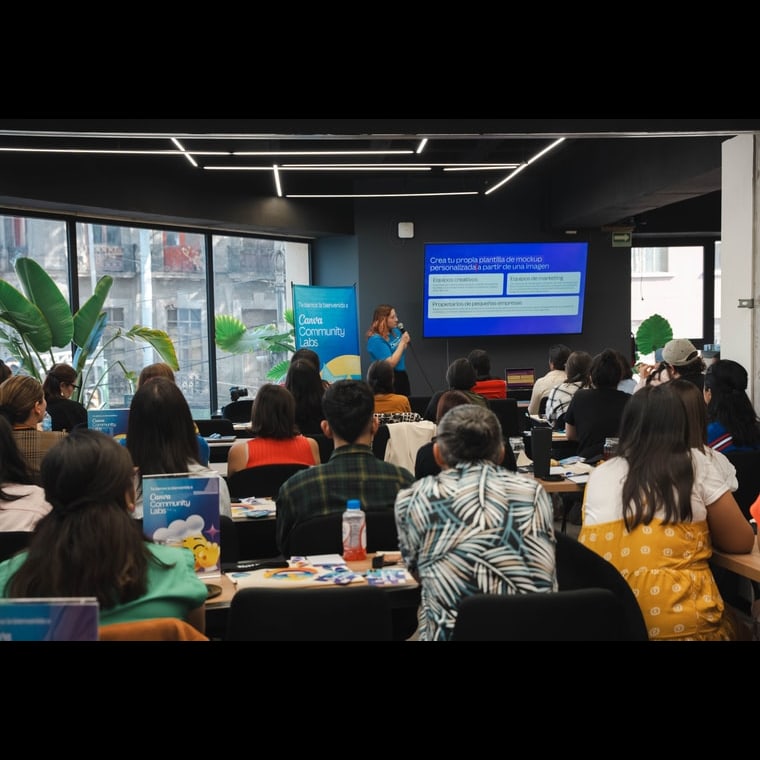 sales-trainingTrade School Admissions Advising — 60-Min Training
 sales-trainingHigher-Ed Enrollment Advising — 60-Min Training
 sales-trainingChildcare and Daycare Enrollment Selling — 60-Min Training
 sales-trainingTutoring and Test-Prep Enrollment Selling — 60-Min Training
 sales-trainingMedicare Advantage Enrollment Selling — 60-Min Training
 sales-trainingHospice and Home Health Admissions — 60-Min Training
 sales-trainingHow many closed deals do you need to interview before a win-loss program produces statistically reliable patterns in 2027?
 sales-trainingTop 10 ways to budget for sales training programs in 2027
 sales-trainingHow do you choose which sales methodology to train your team on in 2027?
 sales-trainingHow do you train a sales team in Cleaning & Facilities in 2027?