


Fence Installation Sales — 60-Min Training
Quality
Certified

Fence installation sales training compresses the estimator's on-site visit into a repeatable 60-minute ritual: walk the property line with the homeowner, measure together, present a written good/better/best material ladder, clear HOA and 811 utility-locate blockers, and ask for a signature before leaving the driveway. Same-day written pricing beats emailed quotes decisively.
What the measure-and-quote close actually is and why it decides the job
A fence estimate is one of the few home-improvement sales where the entire buying decision can be made in a single visit, because the product is visible, the scope is measurable in linear feet, and the homeowner is already standing in the place where the work will happen. That combination is why the discipline in this training matters more here than in almost any other trade. The estimator who measures, says "I'll email you a quote by Friday," and drives off has converted a warm, physically-present buyer into a line item in an inbox — competing against two or three other PDFs on price alone, with none of the context that made the visit persuasive.
The measure-and-quote close is a structured 60-minute training session that installs one behavior in a residential fence estimator: one written price, on-site, every appointment. Not a range, not a verbal ballpark, not a promise. A written sheet with three numbers on it, handed across a tailgate or kitchen table while the homeowner can still see the back corner where the dog keeps getting out.
The reason this works is memory decay plus comparison framing. When the estimator walks the line with the homeowner, they build a shared mental picture: the sloped section by the shed, the gate wide enough for the riding mower, the neighbor's overhanging maple. That picture is worth real money — but only for the next twenty minutes. By Friday, when the emailed PDF arrives, the picture is gone and what remains is a number next to two other numbers. Price is the only surviving variable, and the cheapest bid wins by default.
The second mechanism is the good/better/best ladder. A single price invites a yes/no decision, and homeowners under uncertainty default to "no" or "let me think." Three prices convert the question from *whether* to *which* — and the middle option becomes the reference point. In residential fence work the natural ladder is pressure-treated pine as the good, vinyl as the better, and ornamental aluminum as the best. Each rung has a genuine, defensible story: pine is the budget-conscious choice that needs staining every two to three years, vinyl trades a higher upfront number for effectively zero maintenance over its life, and aluminum is the multi-decade option that won't rot or fade and reads as a permanent property improvement.
The third mechanism is professional standing. The National Association of the Remodeling Industry's code of ethics obligates members to represent scope and price in writing before work begins. An estimator who prices on-site is meeting a professional standard in front of the customer. An estimator who promises an email is behaving like a vendor waiting to be compared. Reps hear this framing differently than they hear "close harder" — it reframes the on-site price as an ethical obligation rather than a pressure tactic, which is exactly why it survives in the field after the training ends.
What this training is *not*: it is not a script-memorization exercise, and it is not a discounting workshop. Nothing in the 60 minutes teaches a rep to cut price. The entire structure is designed so the rep never reaches the point where discounting feels necessary, because the ladder gives the homeowner a cheaper option that the *homeowner* chooses rather than one the estimator concedes.
The 60-minute run of show, block by block
Run the session in six blocks with a visible clock. Estimators are field people; an unstructured hour becomes a complaint session about lead quality. Put the timer on the wall.
Block one — the curb problem (5 minutes). Open with the arithmetic, not the pep talk. Draw two columns on the whiteboard: *the old visit* and *the new visit*. Old visit: estimator measures alone, discusses post depth, promises an emailed PDF, leaves. New visit: estimator measures *with* the homeowner, ladders good/better/best at the back corner, clears HOA and property-line questions on-site, presents one written number before pulling out of the driveway. State the cadence target out loud — one on-site price, every appointment — and add the corollary that lands with veterans: *if you can't price it on-site, you booked the wrong appointment.* That single line reframes a lot of "the customer wasn't ready" excuses as scheduling failures, which are fixable.
Block two — the on-site measure and ladder (15 minutes). This is the longest block because it's the one behavior change. Hand out the measure sheet and have every estimator fill it out for a real appointment on their calendar this week — not a hypothetical.
The verbatim on-site measure sheet, filled out while the homeowner watches:

- Total linear feet — measured with the homeowner, walking the line together
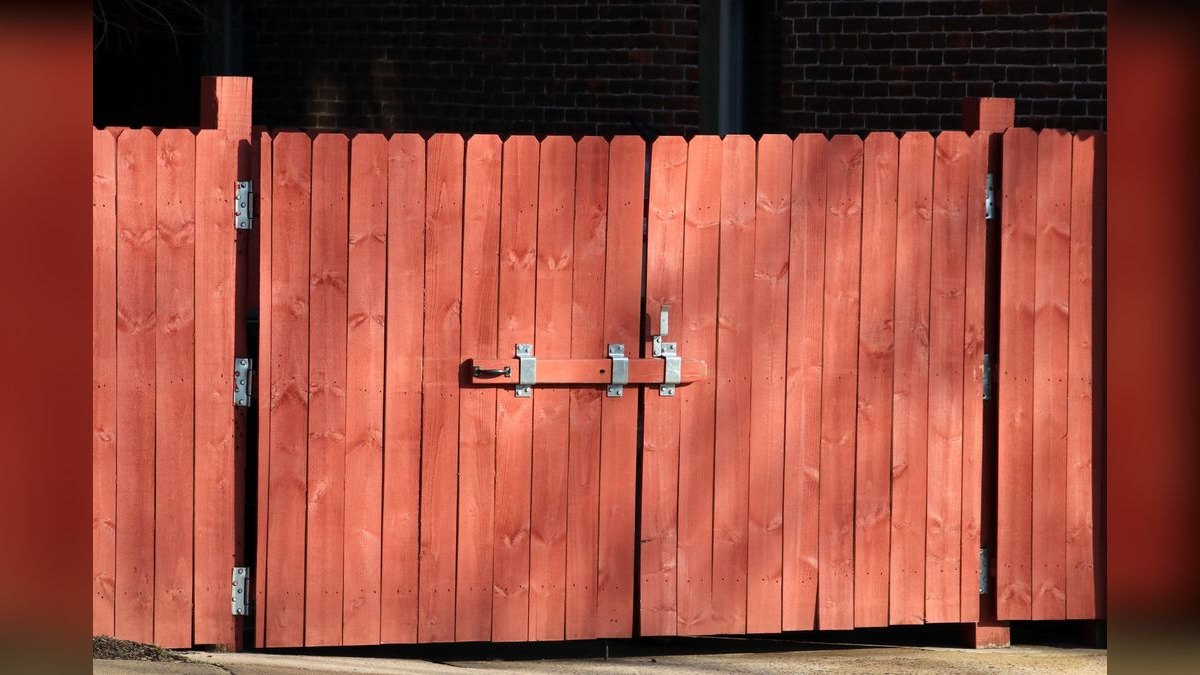
- Gates — count and width; a single walk gate runs roughly 3 feet, a double drive gate roughly 10 feet, each adding meaningfully to the total
- Grade and soil — flat, sloped, or rocky; slope and rock both drive labor up
- Tear-out of existing fence — yes or no, priced per linear foot
- The GOOD option — pressure-treated pine, per foot: "Solid, budget-smart, needs staining every two to three years."
- The BETTER option — vinyl, per foot: "Zero maintenance, cheapest over twenty years, no staining ever."
- The BEST option — ornamental aluminum, per foot: "Decades of life, won't rot, won't fade, adds to the house."
Coach the walk-the-line rule explicitly: never measure from the truck. The physical walk is where the sale is actually made. When the estimator reaches the back corner and says *"This is where your dog keeps getting out, right?"*, the conversation stops being about fence and starts being about the problem the homeowner is paying to solve. Every estimator in the room has had a customer follow them around the yard; the training's job is to make that deliberate rather than accidental.
Show the anti-pattern out loud so it's recognizable: *"I'll just measure real quick and email you some options."* That sentence is a drive-by. The homeowner never witnesses the value, only receives the eventual number.
Block three — the landmines (10 minutes). Covered in its own section below.
Block four — presenting the price (10 minutes). Covered in the close-script section below.
Block five — the money math and objections (15 minutes). Whiteboard work; covered in the ranges section.
Block six — commitments (5 minutes). Every estimator leaves with three written commitments, taped to the truck dashboard: *I will walk the line with every homeowner. I will present one written good/better/best price on-site, with financing, before I leave the driveway. I will clear the HOA and confirm the 811 locate before I promise any start date.* Close by reading the professional standard aloud — scope and price in writing, on time, every time — and make sure the measure sheet and close script are saved on every estimator's phone before anyone walks out. A training artifact that lives in a binder in the office is a training artifact that never gets used.
Costs, timelines, and the ranges an estimator has to know cold
An estimator who fumbles the per-foot ranges loses credibility in the first two minutes. These are the numbers to have memorized, with the honest caveat that regional labor rates, material markets, and site conditions move them substantially — quote ranges, price specifics only after measuring.
Per-linear-foot installed ranges. Residential fence work commonly falls in the low tens of dollars per linear foot at the budget end and climbs from there by material. Pressure-treated pine sits at the bottom of the ladder. Cedar and vinyl occupy the middle. Ornamental aluminum and wrought-iron-style products sit at the top. Height drives the number too — a six-foot privacy fence uses meaningfully more material and more substantial posts than a four-foot picket run, and the price should reflect that rather than being averaged away.
Gates. Every gate is a separate line item, and estimators consistently under-price them. A gate needs heavier posts, hardware, and hanging labor, and a wide drive gate may need drop rods, a center stop, or a cane bolt. Count gates explicitly on the measure sheet and price each one individually rather than folding them into the per-foot number.
Site condition adders. Slope adds labor because the crew either steps the panels or racks them, and both take longer than a flat run. Rocky or hardpan soil slows post-hole work dramatically and may require different equipment. Tear-out and haul-away of an existing fence is its own per-foot charge and should never be assumed to be free — the crew has to pull posts that were set in concrete, load debris, and pay disposal.
Frost line and post depth. In cold climates, post holes must reach below the local frost line or the fence heaves. This is both a cost driver and a competitive differentiator: a cheap bid that sets posts eighteen inches deep in a region with a forty-inch frost line will fail, and the estimator who explains why is selling on substance rather than price.

Timeline realities. The sequence between signature and crew-on-site is where estimators over-promise. An 811 utility locate must be requested and cleared before any digging — it is free, legally required in the United States, and takes a defined number of business days depending on state. If the property is in an HOA with architectural review, add the review cycle, which is measured in weeks and controlled by a volunteer committee's meeting schedule, not by the contractor. Material lead times for non-stock colors or custom aluminum can add more. The honest install window quoted on-site should be a range that accounts for locate clearance and approval, never a specific Monday.
The close-rate math. This is the whiteboard exercise that converts skeptics. Take one estimator running ten on-site appointments a week. Under the emailed-quote pattern, a meaningful share of those appointments never convert at all — the homeowner collects competing PDFs and picks on price. Under the on-site-written-price pattern with financing offered, both the close rate and the average ticket move, because the ladder pulls buyers toward the middle and top rungs rather than defaulting to the cheapest line. Work the multiplication live on the board with the shop's own numbers rather than invented ones: appointments × close rate × average ticket, computed twice. The gap between the two products is the entire business case for the training, and estimators believe it far more when the inputs are their own historical close rates than when they're handed a statistic.
Financing. On mid-size and larger jobs, presenting a monthly payment alongside the total changes the conversation from an affordability objection to a budgeting decision. The reframe is arithmetic, not manipulation: a homeowner who balks at a four-figure total often has no difficulty with the equivalent monthly figure. Present financing on every quote above a threshold the shop sets — many remodeling operations use five thousand dollars — and present it as a standard part of the sheet rather than a rescue move deployed after an objection.
Clearing the HOA, property line, and 811 landmines before they kill the job

This is where fence deals die *after* the contract is signed, which is worse than losing them at the curb, because now there's a crew scheduled and material ordered. Drill this block hard.
HOA approval. Many neighborhoods require architectural review before any fence goes up, with rules governing height, material, color, and which side of the pickets faces out. Ask directly and early: *"Is your home in an HOA?"* If yes, the estimator's job is to write the contract contingent on approval and offer to prepare the review packet — a service that differentiates the professional from the two guys with a post-hole digger.
Property lines. A fence built on the wrong side of the line comes out at the contractor's expense, and occasionally at the contractor's legal expense. Confirm survey pins or recommend a survey. The forbidden sentence is *"that looks like your property line"* — "looks like" is how a crew ends up relocating eighty feet of finished fence.
Shared cost splits. Where the neighbor benefits, homeowners often raise splitting the cost. Many states have "good neighbor fence" statutes governing when and how a cost split can be compelled. Know the local rule, and never promise another household's money on the strength of a friendly conversation over the hedge.
Setback and sight-line rules. Municipal code frequently restricts fence height in front yards, requires setback from sidewalks, and imposes corner sight-triangle rules so drivers can see cross traffic. These are checkable before the appointment for known municipalities and should be part of the estimator's local knowledge.
Utility locates. No post hole goes in the ground without an 811 ticket. In the United States, calling 811 before digging is free and legally required; the utility owners come out and mark their lines. Hitting an unmarked gas line is a life-safety event and hitting a marked one is a liability event.
Sentences to never say at a fence appointment. Read these aloud in the room, slowly, and let the veterans wince:

- *"Don't worry about the HOA, we'll deal with it later"* — the estimator has just volunteered to remove a finished fence at company expense.
- *"That looks like your property line"* — see above; either the pins are confirmed or they aren't.
- *"We can start Monday"* — before the locate clears, this is a promise the company cannot legally keep.
- *"The cheapest fence we've got is probably fine for you"* — insults the buyer and collapses the ladder to a single rung.
- *"Your neighbor will probably chip in"* — never spend a third party's money in a sales conversation.
- Any total price given before measuring — "about two grand" becomes an argument at signing, and the estimator loses either the margin or the job.
The single governing rule for this block: never promise a start date before the HOA packet and the 811 locate are confirmed. A clean fence job starts with a clean approval path. Clear it on-site or the estimator doesn't have a sale, they have a callback.
The on-site close script and where estimators get it wrong
Present the price before leaving the driveway, while the homeowner can still see the line just walked. Here is the verbatim script to rehearse in the room:
> Estimator: "Based on the hundred and forty feet we just walked, here are your three options in writing. Good — pressure-treated pine. Better — vinyl, no maintenance ever. Best — ornamental aluminum, the one that lasts decades." > > *[Slide the written sheet across. Stay silent. Let them read all three. Count to five.]* > > Estimator: "Most of my customers with a yard like yours go with the vinyl — no staining, cheapest over twenty years. Which of these fits what you pictured?" > > *[Homeowner leans toward an option. Do not re-pitch the others.]* > > Estimator: "Great choice. We can put you on the schedule today. With our financing that's a monthly payment, or we can do a deposit now and the balance on completion — which works better for you?" > > Estimator: "Perfect. I need a signature here and the deposit to hold your spot. Once the 811 locate clears we'll have a crew on it."
The structural point is the final question: two ways to pay, never a yes/no. Tom Hopkins' in-home method calls this the assumptive close, and the reason it belongs in fence sales specifically is that the homeowner has already made the real decision — they invited an estimator to their property and walked the line with them. The close is administrative, and phrasing it as an open yes/no re-opens a decision that was effectively made.

The five failures that show up in ride-alongs:
*Leaving without a written number.* The single largest leak. "I'll email it" hands the job to whichever competitor prices on-site.
*Discounting before an objection exists.* Estimators anticipate price resistance and pre-emptively cut. Hold the price; let the good rung be the discount.
*Skipping the deposit.* A signed contract with no deposit is a maybe. The deposit is what makes the slot real, for both parties.
*Re-pitching after the homeowner picks.* Once they lean toward vinyl, every additional word about aluminum reopens the decision. Stop talking and produce the paperwork.
*Measuring alone.* The estimator who measures from the truck while the homeowner watches from the window has skipped the only part of the visit that isn't commodity work.
Rehearsed objection responses — run these as live pairs before anyone leaves the room:
*"That's more than I expected."* → "Which option? The pine option is lower. And financing puts the vinyl at a monthly number that's less than one dinner out a week."
*"I want to get a couple more bids."* → "Smart. When you compare, check three things: are posts set in concrete below the frost line, what grade of material is it, and is the 811 locate included? Mine are. Most cheap bids aren't."
*"I need to talk to my spouse."* → "Of course. Is there a time tonight when I can hold your install slot with a refundable deposit while you two talk it through?"

*"Can you match the cheapest quote?"* → "I won't sell you a fence that fails in five years. Let me show you exactly what my price buys that theirs doesn't."
No estimator exits the training without presenting the on-site price out loud once — written number, financing line, signature ask — to a peer playing the homeowner.
Decision framework: which rung to steer toward and when to walk
Not every appointment should be closed the same way, and part of the training is teaching estimators to read the situation rather than run the script blindly.
Steer toward vinyl when the homeowner mentions maintenance, has been burned by a rotted or warped wood fence, plans to stay in the house long-term, or asks about staining. Vinyl's story is total cost over twenty years, and that story lands with people who have owned a wood fence before.
Steer toward aluminum when there's a pool (code requirements around pool enclosures often shape the material choice), when the buyer cares about sight lines and curb appeal rather than privacy, or when the property is higher-end and the fence is a visible part of the frontage.
Steer toward pine when the buyer is genuinely budget-constrained, when the fence is a functional pet or child enclosure in a back yard nobody sees, or when the homeowner intends to sell within a few years. Selling a budget-constrained buyer the top rung produces cancellations and chargebacks, and an estimator who reads that correctly protects the shop.
Slow the close deliberately when the property line is genuinely unclear, when the HOA rules are unknown and the homeowner is uncertain, or when there's an unresolved neighbor dispute. In those cases the right move is still to write the contract — contingent, with a refundable deposit — rather than to walk away empty. A contingent signed contract with a held slot beats an emailed quote every time.
The framework's purpose is to make the ladder a diagnostic rather than a pitch. An estimator who asks two questions and lands on the right rung sounds like a consultant. One who recites all three at identical enthusiasm sounds like a menu.
Related questions

How long should a fence estimate appointment actually take?
Budget forty-five to sixty minutes on site. The walk and measure consumes roughly half; the ladder presentation and paperwork consume the rest. Appointments booked in twenty-minute slots force the emailed-quote failure mode, because there is no time to price on-site.
Can this training work for commercial fence sales?
Partially. The walk-the-line and written-price discipline transfers, but commercial work involves bid documents, procurement cycles, and multiple approvers, so the same-day signature target does not apply. Use the measure discipline; replace the close with a bid-submission process.
What should an estimator do when the homeowner asks for a phone quote?
Give a per-foot range by material, never a total. "Wood runs in a certain range per foot installed, aluminum more. The only honest number comes after I measure — can I come out Thursday?" A phone total you later revise upward destroys trust.
How often should this 60-minute session be repeated?
Run it at onboarding, then quarterly as a refresher with live ride-along recordings as the coaching artifact. The behavior that decays fastest is walking the line; the behavior that decays second-fastest is asking for the deposit.
Does the good/better/best ladder work with only two materials?
It works, but weaker. Two options still beat one, because the choice becomes *which* rather than *whether*. Three is better because the middle rung gets an anchor on both sides. If the shop only installs two materials, add a height or grade tier to create a third rung.
FAQ
What if the homeowner refuses to walk the line with me?
Reset the appointment around it rather than conceding. "Grab your shoes — I want to show you exactly where the gate and the trouble spots are." The walk is where an estimator stops being a price and starts being a problem-solver. If they truly won't come out, at minimum bring them to the back corner for the ladder presentation so the numbers attach to something physical.

Should I always present all three options, or just the one I think they want?
Always three, in writing, on one sheet. A single number invites a yes/no decision and homeowners default to "let me think about it." Three numbers convert the question to *which*, and the middle rung becomes the natural landing spot. Presenting one option also removes the estimator's only non-discount answer to a price objection.
What if there's an HOA and they need architectural approval first?
Still close. Write the contract contingent on HOA approval, take a refundable deposit to hold the install slot, and offer to prepare the architectural-review packet. Walking away empty means the homeowner has an approved fence and no contractor by the time the committee meets, and they will collect fresh bids in the interim.
Do I really need to offer financing on a fence?
On anything above the shop's threshold — five thousand dollars is a common line — yes, and present it as standard rather than as a rescue after an objection. A monthly payment reframes a total that felt out of reach into a budgeting decision, and it disproportionately moves buyers from the good rung to the better rung.
What if the property line is genuinely unclear?
Stop and recommend locating the existing survey pins or ordering a survey. Never install on "looks like." A fence on the neighbor's land is a tear-out at the contractor's cost and a plausible lawsuit. Write the contract contingent on the survey and keep the slot held — the deal survives, the liability doesn't attach.
How do I keep the training from decaying after week two?
Tape the three commitments to the dashboard, save the measure sheet and close script on every estimator's phone, and audit one recorded or ride-along appointment per rep per month against exactly two questions: did they walk the line, and did they leave a written number. Coaching to two behaviors beats scoring a twelve-point rubric nobody uses.
Sources
- National Association of the Remodeling Industry — Code of Ethics and professional standards: https://www.nari.org/
- American Fence Association — industry education and installation standards: https://www.americanfenceassociation.com/
- Common Ground Alliance — 811 "Call Before You Dig" damage prevention: https://call811.com/
- International Code Council — International Residential Code, fence height and setback provisions: https://www.iccsafe.org/
- U.S. Occupational Safety and Health Administration — excavation and trenching safety standards: https://www.osha.gov/trenching-excavation
- Angi True Cost Guide — fence installation cost data: https://www.angi.com/
- HomeAdvisor cost guides — residential fencing: https://www.homeadvisor.com/cost/fences/
- Tom Hopkins — *How to Master the Art of Selling*: https://www.tomhopkins.com/
- U.S. Small Business Administration — contractor licensing and business guidance: https://www.sba.gov/
Related on PULSE
- Smart Home Installation Sales — 60-Min Training
- Pool and Spa Installation Sales — 60-Min Training
- Garage Door Installation Sales — 60-Min Training
- Sales Forecasting Accuracy: Template for a Team Meeting Focused on Data Hygiene
- Selling with Stories: Narrative Structure Template for a 45-Minute Sales Workshop
- Building a Sales Mentorship Program: Template for a Department-Wide Kickoff
This page will be disappearing soon. Save it to your device for $1 — or read it free while it is here.
@Kory-White- · if Venmo asks, the last 4 of my number are 2012
This page is gone.
This one is off the shelf now. $1 keeps it on your phone for good — the whole page, pictures and diagrams included.
 sales-trainingWater Treatment and Softener In-Home Sales — 60-Min Training
 sales-trainingKitchen and Bath Remodel In-Home Sales — 60-Min Training
 sales-trainingGutter and Gutter-Guard In-Home Sales — 60-Min Training
 sales-trainingGarage Door Installation Sales — 60-Min Training
 sales-trainingResidential Painting Estimate-to-Close — 60-Min Training
 sales-trainingPool and Spa Installation Sales — 60-Min Training
 sales-trainingPatio and Hardscape Design Sales — 60-Min Training
 sales-trainingHome Standby Generator Sales — 60-Min Training
 sales-trainingReplacement Window In-Home Sales — 60-Min Training
 sales-trainingConcrete and Foundation Repair Sales — 60-Min Training