


How do you train a sales team in Battery & Energy Storage in 2027?
Quality
Certified
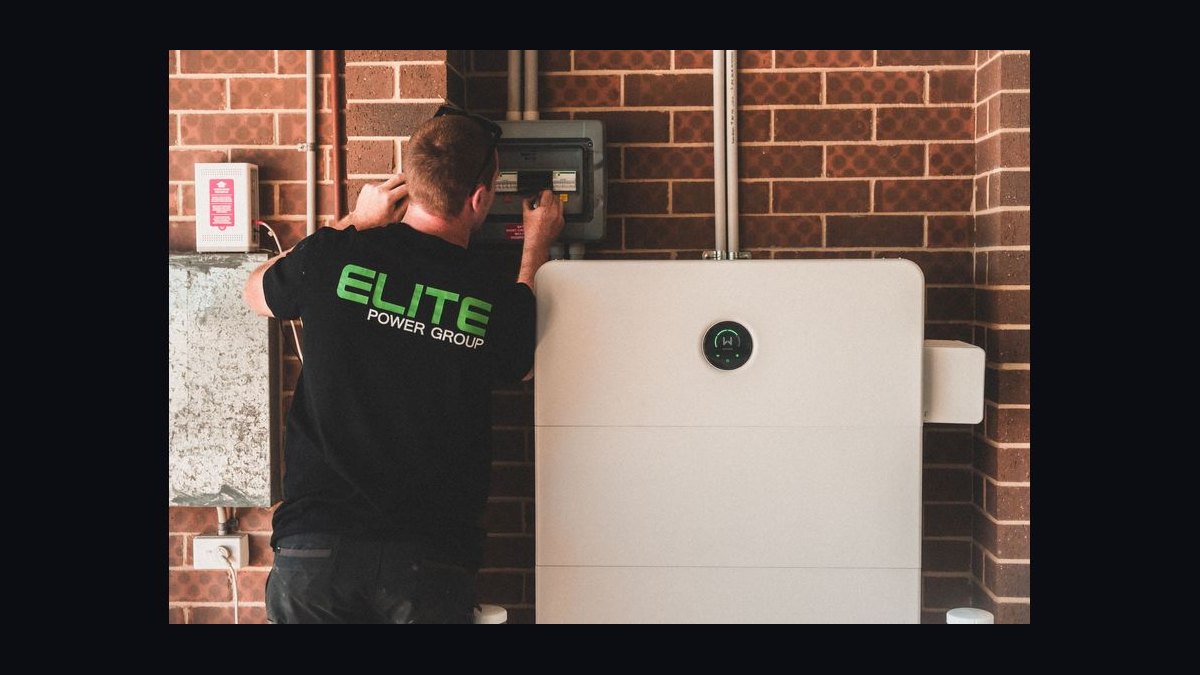
Train a Battery & Energy Storage sales team in 2027 by pairing technical certification on cell chemistry, BESS sizing, and interconnection basics with role-play on financing structures like PPAs and ITC adder stacking, then reinforcing both through live-deal shadowing. Budget 6–10 weeks of initial ramp, 90-minute weekly technical refreshers, and a shared objection playbook covering safety, permitting delays, and levelized cost of storage comparisons against gas peakers.
What it is and why it matters
Training a sales team in Battery & Energy Storage means building fluency across three distinct layers that rarely live in the same person's head: the electrochemistry and safety fundamentals of lithium-ion and flow battery systems, the commercial mechanics of how storage projects get financed and interconnected to the grid, and the actual sales motion of qualifying, pricing, and closing a deal against increasingly sophisticated buyers. In 2027, Energy Storage deals are no longer being sold to hobbyist early adopters — utilities, commercial and industrial (C&I) facilities, and independent power producers are buying Storage as a capital asset with a 10–15 year horizon, and they expect the sales rep across the table to understand degradation curves, round-trip efficiency, and interconnection queue timelines as fluently as a solar rep understands panel wattage.
This matters because the Storage market has bifurcated. On one side sits front-of-meter, utility-scale Storage sold into wholesale markets and capacity auctions, where the buyer is a utility procurement team or an independent power producer evaluating a project on IRR and PPA terms. On the other side sits behind-the-meter commercial Storage sold to facility owners chasing demand-charge reduction, resiliency, or participation in a virtual power plant. A rep trained only on one side will stumble badly in the other — the objections, the financing language, and even the units of measurement (MW/MWh versus kW/kWh) differ. Training has to explicitly branch reps toward the segment they will actually sell into, because a generalist "energy storage 101" course leaves people dangerous-but-confident rather than competent.

The stakes of getting this wrong are high. A rep who cannot answer a basic question about thermal runaway risk or NFPA 855 setback requirements loses credibility with a facilities engineer in the first five minutes. A rep who does not understand how the Investment Tax Credit (ITC) adders for domestic content or energy communities stack with state-level Storage incentives will misquote payback period by years, and that error surfaces during procurement due diligence, killing the deal's trust foundation. Training in this vertical is not a soft-skills exercise layered onto generic sales training — it is domain expertise that gates whether the sales conversation is even allowed to continue.
There is also a retention dimension that RevOps leaders underweight. Reps who feel technically outmatched in front of buyers disengage quietly: they stop taking discovery calls with engineers, they lean on discounts to compensate for weak value articulation, and they churn within 12–18 months. A structured Battery training program is therefore both a productivity investment and a retention mechanism. The organizations that get this right treat the curriculum as a living product with an owner, a release cadence, and version control — not a slide deck that gets dusted off at onboarding and never touched again.
Finally, consider the buyer sophistication curve. In 2027, many buyers have already deployed one Storage asset somewhere in their portfolio, which means the rep is often selling the second or third project rather than the first. That buyer already knows the difference between nameplate and usable capacity, already has an opinion on augmentation strategy, and will test whether the rep understands warranty throughput guarantees. Training that stops at "batteries store Energy" fails this buyer on contact. The bar has moved, and the curriculum has to move with it.
The step-by-step process

A structured onboarding sequence for a Battery & Energy Storage sales team typically runs in five phases, each building on the last so reps are not asked to sell before they can survive a technical cross-examination.
Phase 1 — Technical foundations (weeks 1–2). New hires learn the core Battery chemistries in commercial use (lithium iron phosphate, NMC, and where flow batteries fit for long-duration applications), basic BESS architecture (Battery racks, inverters, thermal management, the balance-of-system), and safety fundamentals including UL 9540A testing and NFPA 855 fire code implications for siting. This phase is often delivered through a mix of vendor-provided technical training (most Battery OEMs run partner certification programs) and internal engineering-led sessions, since a real engineer explaining thermal runaway propagation lands very differently than a slide deck. Cap this phase with a written check — not to grade, but to expose gaps before they compound.

Phase 2 — Financial mechanics (weeks 2–4). Reps learn how Storage projects actually get paid for: power purchase agreements (PPAs), tolling agreements, the ITC and its stackable adders, accelerated depreciation (MACRS), and state-specific Storage incentives such as California's SGIP or New York's Value of Distributed Energy Resources program. This phase also covers how Storage revenue stacks — a single project might earn from demand-charge reduction, frequency regulation, capacity payments, and arbitrage simultaneously — which is a core value proposition reps must be able to model on a whiteboard. The deliverable is not a quiz but a hand-built model: each rep builds a simple payback calculation for a sample project and defends the assumptions.
Phase 3 — Sales motion and objection handling (weeks 4–6). This is where training moves from "know the domain" to "sell in the domain." Reps role-play the most common buyer objections: "how do I know this pencils out over gas peakers on a levelized cost basis," "what happens to the Battery at end of warranty," and "how long is the interconnection queue in my utility territory." Scripts are not memorized verbatim — reps are trained to reason through the framework live, because sophisticated buyers can tell a canned answer from genuine understanding. Run at least six recorded role-plays per rep and review two of them frame by frame.
Phase 4 — Shadowing and live-deal exposure (weeks 6–8). New reps sit in on real discovery calls and site assessments with a senior rep or sales engineer, watching how technical questions get fielded in real time. This phase typically includes at least one site visit to an operating BESS installation, because reps who have physically stood next to a containerized Storage system ask better qualifying questions afterward. Give the shadowing rep a specific job on each call — take notes on objections, then debrief in 15 minutes — so the time is active rather than observational.
Phase 5 — Certification and independent selling (weeks 8–10). A final knowledge check — often a scored assessment plus a mock discovery call graded by a sales engineer — gates whether a rep is cleared to run deals solo. Many organizations require this certification to be renewed annually given how fast the technology, incentive structures, and safety codes shift. Pair the gate with a 30/60/90 plan so the newly certified rep has a defined pipeline-building sequence rather than being dropped into an empty territory.
Costs, timelines, and typical ranges

Budgeting realistically for this training program means accounting for both direct costs and the opportunity cost of ramp time. A full onboarding cycle for a new Storage sales hire typically runs 6–10 weeks before they are cleared to run deals independently, compared to 3–4 weeks for a rep joining a more commoditized solar or software sales team — the added technical and financial depth simply takes longer to internalize. Add 2–4 weeks of pipeline ramp before the first qualified opportunity appears, and the realistic path from hire date to first closed deal is 4–6 months.
Direct training costs vary by how much is built in-house versus outsourced. Vendor-run technical certifications from Battery OEMs (covering system architecture and safety) are often free or low-cost, since manufacturers want their channel partners technically fluent, but they typically run 1–2 days and only cover their own product line. Third-party industry certifications and courses covering broader Storage market fundamentals, financing structures, and interconnection processes generally cost between $1,500 and $4,000 per rep, delivered over multi-week cohort-based formats. Organizations building a fully in-house curriculum instead invest in a sales engineer's time to develop and deliver content — a reasonable planning estimate is 40–60 hours of senior technical staff time to build a complete curriculum from scratch, then 8–12 hours per new hire cohort to deliver it.

Ongoing reinforcement should not be a one-time event. Weekly technical refreshers of 60–90 minutes — covering a recent deal's technical wrinkle, a policy change (ITC guidance updates have shifted meaningfully year over year), or a new competitor's product spec — keep the team current. Quarterly deep-dives on emerging topics (long-duration Storage chemistries, virtual power plant participation models, updated interconnection reform rules) prevent the team's knowledge from calcifying around what was true at hire date. Budget roughly 5–8% of a rep's annual selling hours for structured learning, and protect that time on the calendar the way you would protect a board meeting.
Time-to-first-deal is the metric that matters most for measuring training ROI. Teams with a structured 8–10 week program typically see reps close their first deal within 4–6 months of start date; teams that skip structured technical training and rely on "learn by doing" alone often see first-deal timelines stretch past 8–9 months, with a meaningfully higher rate of early-tenure reps losing deals to technical credibility gaps that a structured program would have closed. The math generally favors front-loading the investment: 6–10 weeks of paid ramp time against 2–4 extra months of unproductive selling is a straightforward trade in almost every organization's favor.
Also budget for the hidden costs: sales engineer time pulled into ride-alongs (roughly 4–6 hours per new rep per month during ramp), a learning management system or shared wiki to host the curriculum, and the cost of a certification gate that occasionally fails a rep and extends ramp. Teams that ignore these line items end up quietly skipping the very phases — shadowing and certification — that produce the biggest quality lift.
Where teams get it wrong

The single most common failure is treating Storage sales training as an extension of solar sales training rather than its own discipline. Solar training emphasizes system sizing against roof space and utility bill offset; Storage sales requires reasoning about dispatch strategy, revenue stacking across multiple use cases, and degradation economics that solar reps have never had to model. Organizations that simply bolt a two-hour "Storage add-on module" onto an existing solar curriculum produce reps who can mention batteries but cannot defend a Storage-specific proposal under questioning.
A second frequent mistake is under-investing in safety and code literacy. Reps who cannot speak accurately to NFPA 855 setback requirements or UL 9540A testing status get exposed the moment a fire marshal or facilities safety officer joins a call — and in commercial and industrial deals, that person is often in the room by the second meeting. Teams sometimes assume this is "the engineer's job," but the sales rep is usually the first person a skeptical safety stakeholder actually talks to, and a fumbled answer there can stall a deal for months while the buyer's team second-guesses the whole proposal.
A third failure mode is stale financial training. ITC adder stacking rules, state incentive program caps, and interconnection queue reform have all shifted meaningfully year to year, and a rep running 2025 assumptions on tax credit stacking into a 2027 conversation will misquote payback period, sometimes badly enough to blow up trust once the buyer's own financial advisor catches the error. Training materials on financing and incentives need an owner responsible for quarterly review, not a one-time build. Version the playbook with dates so reps can see what changed and when.
Fourth, many organizations do not segment training by deal type. A rep trained exclusively on behind-the-meter C&I deals will struggle badly moving into a front-of-meter utility-scale conversation, where the buyer speaks in capacity auction terms and PPA structures the rep has never touched. Conversely, a utility-scale specialist parachuted into a C&I demand-charge conversation will over-engineer the pitch with wholesale market jargon the facility owner does not care about. Segmenting the curriculum by which side of the meter a rep actually sells into avoids this mismatch.

Fifth, teams frequently skip the shadowing phase under time pressure, pushing reps into independent selling straight from classroom training. Classroom knowledge and live-call composure are different skills — a rep who scores well on a written assessment can still freeze or improvise incorrectly when a buyer asks an unscripted technical question live. The shadowing phase is where classroom knowledge gets pressure-tested before it is the rep's own deal on the line.
A sixth, subtler error is measuring training by completion rather than by behavior change. If every rep finished the modules but discovery calls still lack a single quantified question about load profile or demand charges, the training did not land. Instrument the CRM with a short discovery checklist — load data captured, tariff reviewed, resiliency requirement identified, decision committee mapped — and review it weekly. That converts training from a compliance exercise into an observable selling habit, and it gives RevOps a leading indicator long before win rates move.
Decision framework: when to choose what
Not every organization needs the same training depth or delivery model, and choosing the wrong one wastes either money or ramp time. The right approach depends on team size, deal complexity, and how much in-house technical depth already exists.
Small teams (under 5 reps) selling primarily behind-the-meter commercial Storage generally get the best return from vendor-provided certification plus a lightweight internal playbook built by whoever runs sales engineering — the deal volume rarely justifies building a full curriculum from scratch, and vendor training covers the product-specific technical ground adequately. The trade-off is dependency: if you switch OEMs, you rebuild from near zero, so keep your own objection playbook and financial model as the durable asset.

Mid-size teams (5–20 reps) with a mix of C&I and utility-scale deals should build a proper internal curriculum with segmented tracks, because the two deal types diverge enough that a one-size-fits-all program under-serves both. This is also the point where investing in a dedicated sales engineer role — someone who supports live deals and owns curriculum updates — starts to pay for itself. Rule of thumb: one sales engineer per 8–12 quota-carrying reps in this vertical.
Large teams (20+ reps) or those selling into highly regulated utility-scale and capacity-market deals should treat training as an ongoing program with a dedicated curriculum owner, quarterly content refreshes, and formal certification renewal, because the cost of a single credibility-destroying error in a multi-million-dollar utility procurement far outweighs the cost of the training program itself.
Across all three tiers, the decision to build in-house versus outsource technical content should hinge on deal complexity: organizations selling standardized products with clear vendor documentation can lean on vendor training, while those selling custom-engineered systems or multi-technology solutions need in-house expertise that no single vendor's certification will cover. A practical middle path is to outsource the fundamentals (chemistry, safety codes, market structure) and build in-house only the modules that describe your own solution architecture, pricing model, and competitive positioning — those are the parts no external course can teach.
Related questions
How long does it take to train a new Storage sales rep?

Most structured programs run 6–10 weeks from hire to independent selling, combining technical fundamentals, financing mechanics, objection-handling role-play, and live-deal shadowing before a final certification check.
What is the difference between training for C&I Storage versus utility-scale Storage sales?
C&I training emphasizes demand-charge economics and facility-level ROI; utility-scale training emphasizes PPA structures, capacity auctions, and interconnection queue mechanics. Reps trained on one struggle in the other without cross-training.
Do reps need to understand Battery chemistry in depth?
Not at an engineering level, but reps need working fluency in chemistry trade-offs (lithium iron phosphate versus NMC versus flow batteries) to answer safety and degradation questions credibly in front of technical buyers.
How often should Storage sales training be refreshed?
Weekly 60–90 minute technical refreshers plus quarterly deep-dives on policy and technology shifts keep teams current, since incentive structures and interconnection rules change meaningfully year over year.
FAQ
What certifications should a Battery & Energy Storage sales rep pursue? Vendor-specific certifications from the Battery OEMs a company sells (covering system architecture and safety) are the baseline, supplemented by broader third-party courses on Storage market fundamentals and financing. There is no single universal industry certification equivalent to what exists in some other sectors, so most teams blend vendor and third-party sources.
Can a solar sales rep transition into Storage sales without full retraining?

Partially — a solar rep already understands site assessment, utility bill analysis, and incentive-driven selling, which transfers directly. But they still need dedicated training on Battery-specific safety codes, dispatch economics, and revenue stacking, since these have no solar equivalent.
How do you evaluate whether training actually worked? Track time-to-first-deal, win rate on technical objections during discovery calls, and performance on a scored mock discovery call before certifying reps to sell independently. Teams that skip formal evaluation often do not discover training gaps until a rep loses a deal to a technical credibility issue.
Is safety training really necessary for a sales role? Yes — facilities safety officers and fire marshals are frequently part of the buying committee for commercial and utility-scale Storage, and a rep who cannot speak to setback requirements or thermal runaway mitigation loses credibility fast, often stalling the deal.
What is the biggest technical topic reps struggle with? Revenue stacking — understanding how a single Storage asset earns from multiple sources (demand-charge reduction, frequency regulation, capacity payments, arbitrage) simultaneously is conceptually harder than the single-revenue-stream model most reps are used to from solar or other capital equipment sales.
Should training differ for reps selling long-duration Storage versus standard lithium-ion systems? Yes — long-duration technologies like flow batteries have different cost curves, siting requirements, and ideal use cases (grid-scale, multi-hour discharge) than standard lithium-ion, and reps need a distinct value proposition and technical narrative for each.
Sources
- https://www.energy.gov/eere/solar/energy-storage
- https://www.nfpa.org/codes-and-standards/nfpa-855-standard-development/855
- https://www.irs.gov/credits-deductions/investment-tax-credit-for-energy-storage
- https://www.nrel.gov/grid/energy-storage-costs.html
- https://www.eia.gov/energyexplained/electricity/energy-storage/
- https://www.seia.org/initiatives/energy-storage
- https://www.spglobal.com/commodityinsights/en/topics/energy-transition
- https://www.woodmac.com/industry/power-and-renewables/
Related on PULSE
- How do you price a commercial Battery Storage proposal?
- What incentives apply to Energy Storage projects by state?
- How do you sell a virtual power plant program to a facility owner?
- What is the sales cycle length for utility-scale Storage deals?
- How do you train a sales team on interconnection timelines?
This page will be disappearing soon. Save it to your device for $1 — or read it free while it is here.
@Kory-White- · if Venmo asks, the last 4 of my number are 2012
This page is gone.
This one is off the shelf now. $1 keeps it on your phone for good — the whole page, pictures and diagrams included.
 sales-training60-Min Sales Training: How to Write a Winning Executive Summary
 sales-trainingHow do you train a sales team in Restoration & Remediation in 2027?
 sales-trainingHow do you train a sales team in Senior Care & Home Health in 2027?
 sales-trainingThe Lost Deal Autopsy: A 60-Minute Root Cause Analysis Template in 2027
 sales-trainingHow do you calculate the ROI of a sales training program in 2027?
 sales-trainingHow do you train a sales team in IT Services / MSP in 2027?
 sales-training60-Min Sales Training: Mapping the Buying Committee in a Complex Deal
 sales-trainingHow do you train a sales team in Security & Fire Systems in 2027?
 sales-training60-Min Sales Training: How to Ask for and Handle Referrals
 sales-trainingHow do you train a sales team in HVAC / Plumbing / Electrical in 2027?