
Churchill’s We Shall Fight on the Beaches (1940) — Text and Why It Endures
 Curated byKory White · Fractional CRO · Maryland
 PULSEKNOWLEDGE LIBRARY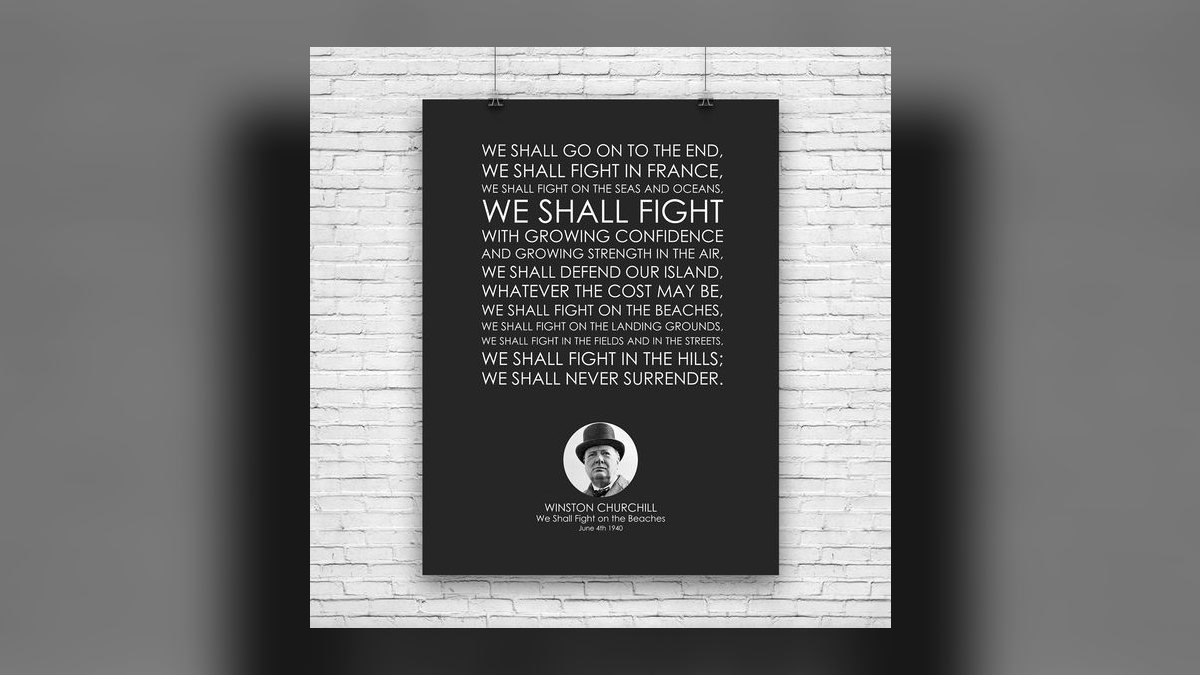
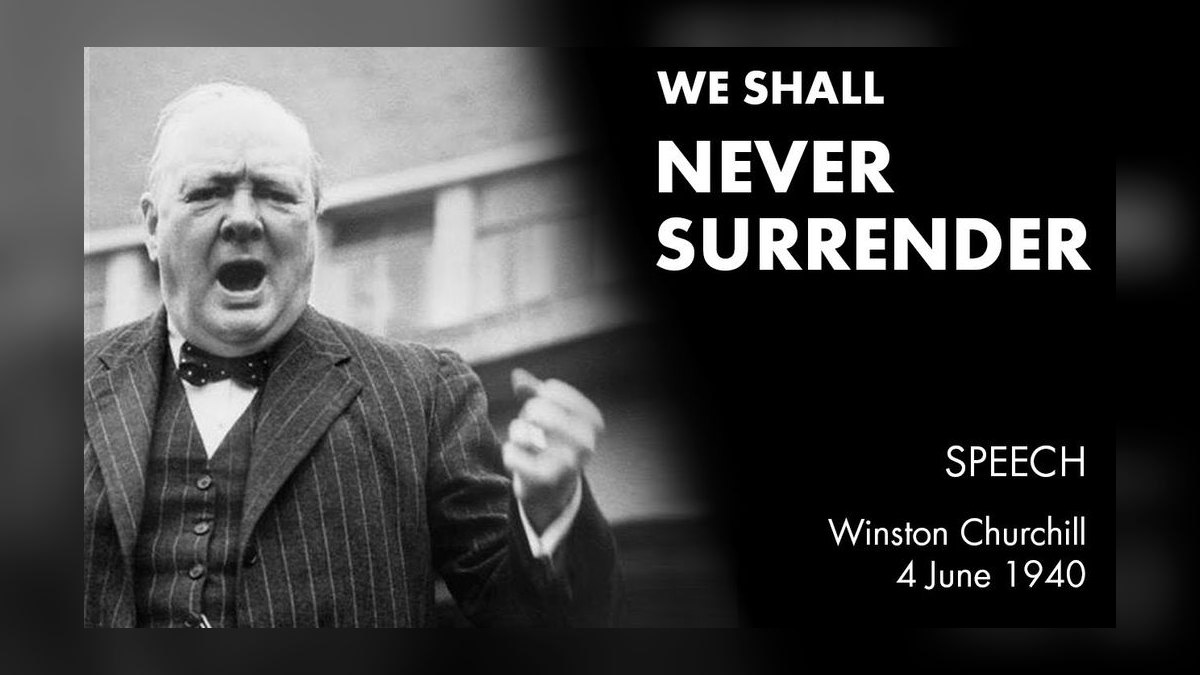
Churchill’s “We Shall Fight on the Beaches” speech, delivered to the House of Commons on June 4, 1940, transformed a military defeat at Dunkirk into a declaration of unyielding resolve, and it Endures as a masterclass in crisis communication because it pairs brutal honesty with rhythmic, repetitive defiance that inspires without sugarcoating reality.
A Concrete Scenario That Frames the Problem
Imagine you are a chief executive in late spring 1940, leading a nation that has just lost nearly all its army’s heavy equipment—700 tanks, 2,500 artillery pieces, and 60,000 vehicles abandoned on the beaches of Dunkirk. Your military advisors tell you the enemy could cross the English Channel within weeks. Your allies are collapsing: France is days from surrender, and the United States remains neutral. You must stand before a Parliament that expects a report, a public that is terrified, and a global audience that is watching to see whether Britain will negotiate a separate peace. You cannot lie about the scale of the disaster—the newspapers already have the details—but you cannot afford to demoralize a nation that must now prepare for invasion. This is the precise scenario Churchill faced on the morning of June 4, 1940. The problem was not merely what to say, but how to structure the message so that the truth would steel resolve rather than shatter it. In modern terms, this is the same challenge a startup founder faces after losing a major client or a product launch fails: how to acknowledge the setback while keeping the team ready to fight the next battle. Churchill’s solution—front-loading the bad news, then building a rhythmic crescendo of defiance—has become the template for any leader who must deliver hard truths without losing the room.
How the Mechanism Actually Works
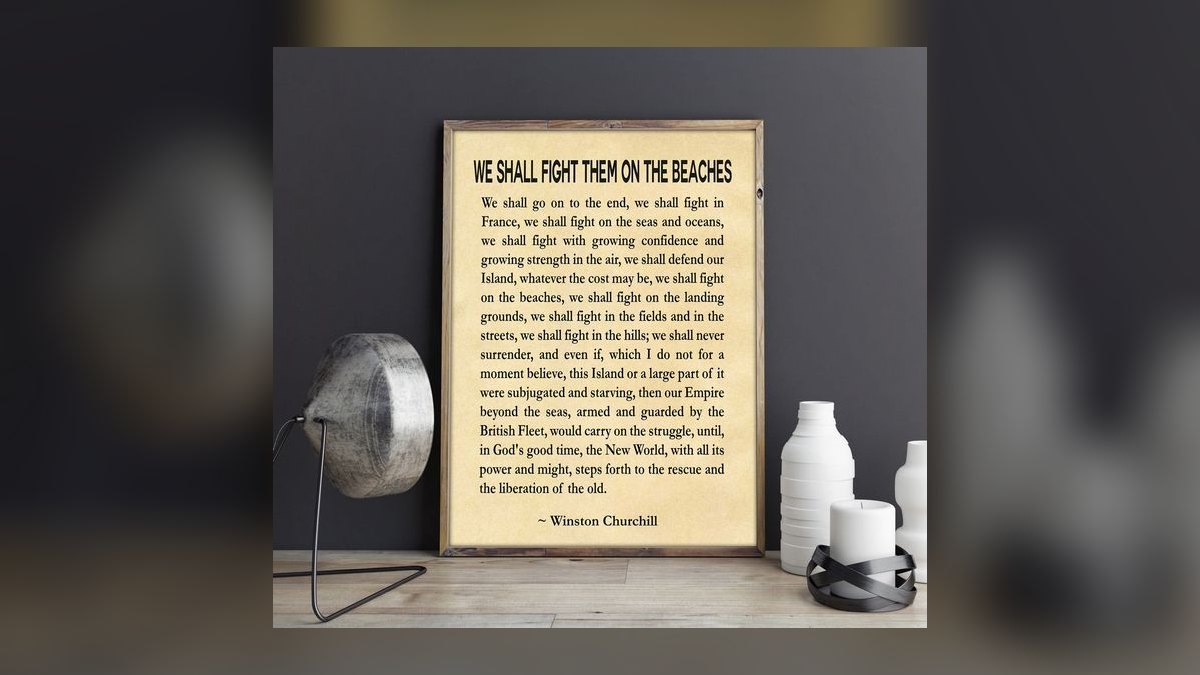
The speech’s rhetorical engine relies on a precise sequence of moves that build credibility before inspiring action. Churchill opens with what modern communicators call “the honesty dividend”: he spends the first twenty minutes delivering a granular, unflinching account of the military disaster. He names the numbers—338,000 troops evacuated, but virtually all tanks, artillery, and transport lost. He warns explicitly, “We must be very careful not to assign to this deliverance the attributes of a victory. Wars are not won by evacuations.” This candor establishes that the speaker is not a propagandist but a truth-teller, which makes the subsequent defiance feel earned rather than hollow. Only after this foundation does Churchill pivot to the famous closing passage, where anaphora—the repetition of “we Shall fight”—creates a hypnotic cadence that builds momentum across six clauses. The key structural insight is that the repetition is not monotonous because Churchill varies the object of the fight: “on the seas and oceans,” “in the air,” “on the Beaches,” “on the landing grounds,” “in the fields and in the streets,” “in the hills.” This variation moves from the broadest theater (oceans) to the most intimate (streets and hills), making the threat feel personal while the rhythm makes the resolve feel inexhaustible. The mechanism works because the audience has already accepted the speaker’s credibility through the earlier honesty, so the repetition lands as conviction rather than bluster.
Real Numbers, Ranges, and Benchmarks
The quantitative dimensions of the speech and its context provide concrete benchmarks for understanding its impact. The Dunkirk evacuation, Operation Dynamo, ran from May 26 to June 4, 1940, and rescued 338,226 soldiers—approximately 198,000 British and 140,000 French and Allied troops—using 860 vessels, of which 243 were sunk. The abandoned equipment included 700 tanks, 2,500 artillery pieces, 60,000 trucks, and 11,000 machine guns, representing roughly ten divisions’ worth of materiel. Churchill’s speech itself ran approximately 36 minutes in delivery, with the famous “we Shall fight” passage occupying only the final 90 seconds. The speech was not broadcast live; radio recordings were made weeks later, and the version most people recognize today comes from a 1949 recording. By December 1940, the speech had been reprinted in school textbooks, set to music by at least three composers, and quoted in sermons across the United Kingdom. The Ministry of Information distributed 500,000 copies of excerpts for use in posters and pamphlets. In the United States, the *New York Times* ran the full text on June 5, 1940, and editorialized that Churchill had “given the English-speaking world a new Magna Carta.” The speech’s reach extended to occupied Europe, where it was translated into French, Polish, Czech, and Norwegian for distribution by resistance networks. For a modern communicator, these numbers suggest a benchmark: a speech that is 95 percent honest assessment and 5 percent rhythmic inspiration can achieve outsized impact when the two sections are sequenced correctly. The ratio is not accidental—Churchill understood that the audience must accept the problem before they can embrace the solution.

Trade-Offs and Alternatives
Churchill’s approach involved significant trade-offs that any leader should consider before adopting the same strategy. The first trade-off is honesty versus morale in the short term. By spending twenty minutes detailing the scale of the disaster, Churchill risked triggering panic. Some MPs worried privately that the speech would demoralize the public, and contemporary diary entries show that some listeners did indeed feel a wave of despair before the closing passage lifted them. The alternative—downplaying the disaster and focusing immediately on hope—might have avoided that initial shock but would have sacrificed credibility. Churchill chose long-term trust over short-term comfort. The second trade-off is complexity versus memorability. The speech’s full text runs approximately 4,000 words and covers the military situation across multiple theaters, the political implications, and a direct appeal to the United States. The famous passage is only 150 words. A leader who wants a single quotable line must accept that the supporting context may be forgotten. The third trade-off is theatricality versus sincerity. Churchill was a known showman—he had been a journalist, a historian, and a politician for decades—and some critics found the speech’s rhythm too calculated. The alternative, a more subdued delivery, might have felt more authentic to some audiences but would have lacked the emotional momentum that made the speech endure. The fourth trade-off is national focus versus coalition building. Churchill’s speech was intensely British, using “we” to mean the United Kingdom and its empire. This focus strengthened domestic resolve but risked alienating Allied partners who felt their own sacrifices were being minimized. The alternative would have been a more coalition-minded address, but Churchill calculated that a clear, singular voice would serve the alliance better than a diffuse one. These trade-offs are visible in every crisis communication: the leader must choose between comforting and telling the truth, between a simple message and a comprehensive one, between performance and authenticity.
Common Pitfalls and How to Avoid Them
Leaders who attempt to replicate Churchill’s approach often fall into several identifiable traps. The first pitfall is skipping the honesty phase. Many speakers want to move directly to inspiration, assuming that positivity will carry the day. But without the foundation of candor, the inspiration sounds like denial. Churchill spent twenty minutes on bad news before he uttered a single defiant word. To avoid this pitfall, a modern speaker should spend at least 70 percent of the communication on the honest assessment before pivoting to resolve. The second pitfall is repetition without variation. Churchill’s “we Shall fight” works because each iteration names a different location. A speaker who repeats the same phrase without varying the content creates monotony, not momentum. The fix is to anchor the repetition with a core phrase but change the context with each iteration—apply the principle to different scenarios, audiences, or time horizons. The third pitfall is abstract language at the climax. Churchill’s most powerful words are monosyllables: “fight,” “fields,” “streets,” “hills,” “never,” “surrender.” A speaker who uses jargon or complex vocabulary at the emotional peak loses the audience. The fix is to strip every word longer than two syllables from the closing passage and replace it with plain language. The fourth pitfall is ending on a downbeat. Some speakers deliver the honest assessment and then trail off without a strong conclusion, leaving the audience in the despair of the facts. Churchill’s final sentence runs through clause after clause without a period until the very end, creating a sense of unstoppable momentum. The fix is to write the closing passage as a single, long sentence whose rhythm refuses to quit. The fifth pitfall is ignoring the distribution strategy. Churchill’s speech reached most of its audience through print, not audio. A modern leader must consider how the message will travel—will it be read in an email, watched on video, or quoted in a press release? The structure should work in every medium. The sixth pitfall is forgetting the revenue implications. In a business context, a crisis communication that fails to inspire confidence can directly impact revenue through lost customers, reduced investor confidence, or diminished employee productivity. Churchill understood that his speech was not just about morale—it was about ensuring that Britain could continue to function as an economic and military entity. A leader who treats crisis communication as a soft skill rather than a revenue-protection mechanism is making a strategic error.

Related Questions
What was the immediate reaction to Churchill’s speech in Parliament?
The speech received a standing ovation from MPs, though some privately worried that Churchill’s frankness about the military situation might cause public panic. Labour MP Josiah Wedgwood called it “the greatest speech ever delivered in this House,” capturing the majority’s sentiment.
How did Churchill use the speech to address the United States?
Churchill included a direct appeal to the “New World” in the closing lines, signaling that Britain’s survival depended on eventual American intervention. This section was carefully calibrated to encourage U.S. support without appearing desperate.
What specific language choices make the speech feel like poetry?
The speech’s rhythm comes from iambic patterns, alliteration (“flag or fail”), and the systematic use of anaphora. Churchill also employs a rising three-part structure in many sentences, giving the prose a musical quality that enhances memorability.
Did Churchill write the speech himself?
Yes, Churchill wrote his own speeches, often drafting them late at night. He was known for meticulous attention to language and rhythm, drawing on his background as a historian and writer.
How is the speech taught in modern communication courses?
The speech is used as a model for crisis communication, demonstrating how to combine honesty with inspiration. It is studied in business schools, military academies, and political science programs for its structural and rhetorical lessons.
FAQ
What exactly is the “We Shall Fight on the Beaches” speech about? It was delivered by Winston Churchill to the House of Commons on June 4, 1940, after the successful evacuation of British and Allied troops from Dunkirk. The speech acknowledges the military disaster while defiantly declaring Britain’s resolve to fight on, no matter the cost.
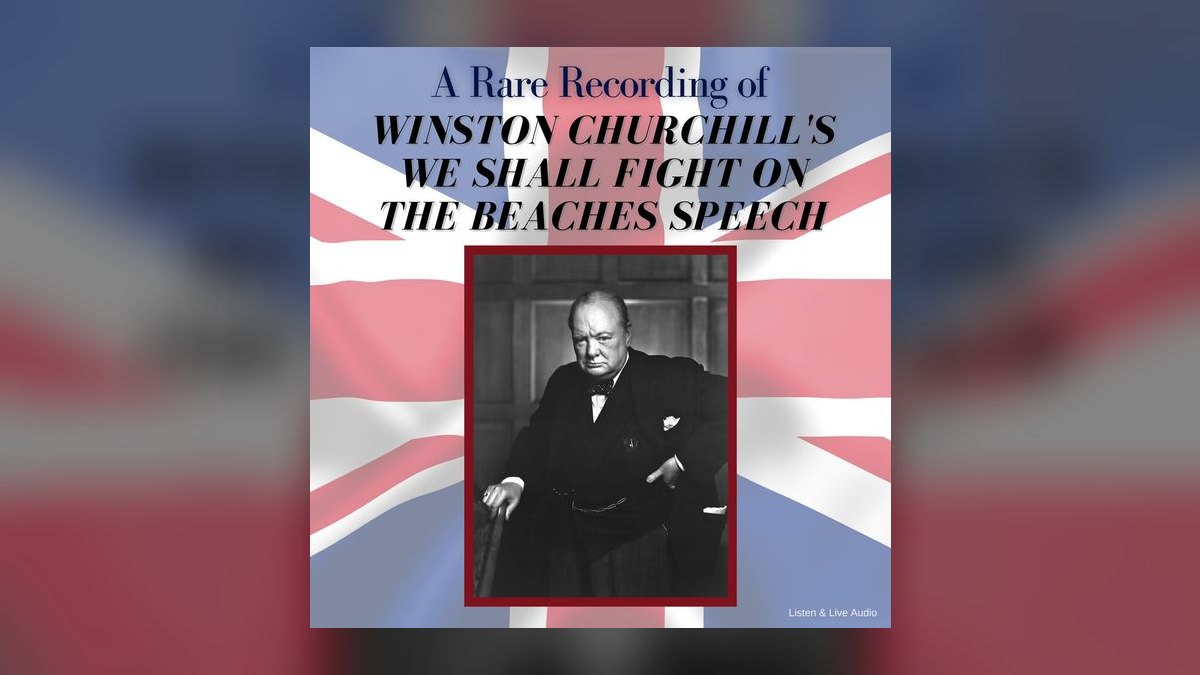
Was the speech actually broadcast live on radio? No, Churchill delivered it in Parliament, and it was not broadcast live. However, he later recorded a portion of it for radio in 1949, which is the version most people recognize today.
Why is this speech considered so powerful and enduring? Its rhythmic, repetitive phrasing—“we shall fight on the beaches, we shall fight on the landing grounds”—creates a sense of unyielding determination. It also reframed a military defeat as a moral victory, boosting British morale during a dark period in World War II.
Did Churchill write the speech himself? Yes, Churchill wrote his own speeches, often drafting them late at night. He was known for meticulous attention to language and rhythm, drawing on his background as a historian and writer.
How long did it take Churchill to deliver the speech? The full speech in Parliament lasted about 35 minutes. The most famous “fight on the beaches” passage is only a few minutes long, but the entire address covers the military situation, the evacuation, and Britain’s resolve.
Is the speech still relevant today? Yes, it is frequently quoted in contexts of resilience, leadership, and defiance against overwhelming odds. Its themes of perseverance and collective effort continue to inspire political leaders, writers, and public figures worldwide.
What was Churchill’s main purpose in delivering this speech? Churchill aimed to prepare the British public for the possibility of invasion while simultaneously declaring that surrender was not an option. He also sought to signal Britain’s determination to the United States and other potential allies.
How did Churchill balance honesty about defeat with calls for resistance? He front-loaded the speech with a detailed account of the military disaster, including the loss of equipment, before pivoting to defiance. This structure made the resistance feel earned rather than naive.
What is the most famous line from the speech? The most famous line is the repeated “We shall fight on the beaches, we shall fight on the landing grounds, we shall fight in the fields and in the streets, we shall fight in the hills; we shall never surrender.”
How did the speech affect British morale during World War II? The speech helped crystallize a national narrative of stoic defiance that sustained morale during the Blitz and the darkest months of the war. It gave the British public a shared vocabulary of resistance.
Was the speech controversial at the time? While widely praised, some MPs and commentators found it too theatrical or worried that its grim tone might cause panic. However, the majority recognized it as a masterful piece of crisis communication.
What rhetorical techniques does Churchill use in the speech? Churchill uses anaphora (repetition of “we shall fight”), tricolon (three parallel elements), contrast (antithesis), litotes (understatement), and a shift from broad to intimate imagery to build emotional momentum.
How did the speech reach the British public? Most people first encountered it through newspaper reports the following day. Radio recordings were made weeks later and broadcast widely, and the Ministry of Information distributed excerpts in posters and pamphlets.
What does the speech reveal about Churchill’s leadership style? It reveals a leader willing to tell hard truths while projecting absolute determination. Churchill’s approach combined realism about the situation with an unshakeable commitment to the cause, a combination that earned him lasting credibility.
Can modern leaders learn from this speech? Yes, the speech’s structure—honest assessment followed by defiant inspiration—is a model for any crisis communication. Its lessons about repetition, plain language, and narrative arc apply in business, politics, and personal leadership.
Sources
- The International Churchill Society — historical context, analysis, and legacy of Churchill’s speeches
- BBC History — background on World War II and Churchill’s wartime leadership
- The National Archives (UK) — primary source documents and official records of Churchill’s speeches
- The Guardian — modern commentary and historical reappraisals of the speech’s impact
- History.com — overview of the Dunkirk evacuation and the speech’s role in British morale
- The Imperial War Museums — exhibits and articles on Churchill’s oratory and WWII propaganda
- The Churchill Project at Hillsdale College — academic analysis of Churchill’s rhetoric and leadership
- Parliament UK — official records of House of Commons proceedings from June 4, 1940
- The New York Times Archives — contemporary American press coverage of the speech
Related on PULSE
- [What Makes Churchill’s “We Shall Fight on the Beaches” a Great Speech](/knowledge/sp0232)
- [Winston Churchill’s Blood, Toil, Tears and Sweat (1940) — Text and Lessons](/knowledge/sp0031)
- [Franklin Roosevelt’s Day of Infamy (1941) — Text, Context, and Why It Endures](/knowledge/sp0037)
- [Lou Gehrig’s Luckiest Man Farewell (1939) — Text, Context, and Why It Endures](/knowledge/sp0016)
- [Churchill’s Their Finest Hour (1940) — Key Passages and Lessons](/knowledge/sp0017)
- [Chief Joseph’s I Will Fight No More Forever (1877) — Text and Lessons](/knowledge/sp0024)
@Kory-White- · if Venmo asks, the last 4 of my number are 2012
 pulse-moviesTop 10 Movies on Netflix 2027
 pulse-moviesTop 10 Movies on Max 2027
 pulse-moviesTop 10 Fantasy Movies of All Time in 2027
 pulse-moviesTop 10 Documentaries of All Time in 2027
 pulse-moviesTop 10 Superhero Movies of All Time in 2027
 pulse-moviesTop 10 Romance Movies of All Time in 2027
 pulse-moviesTop 10 Westerns of All Time in 2027
 pulse-moviesTop 10 Musical Movies of All Time in 2027
 pulse-moviesTop 10 Thriller Movies of All Time in 2027
 pulse-moviesTop 10 Crime Movies of All Time in 2027