
JFK’s We Choose to Go to the Moon (1962) — Key Passages and Lessons
 Curated byKory White · Fractional CRO · Maryland
 PULSEKNOWLEDGE LIBRARY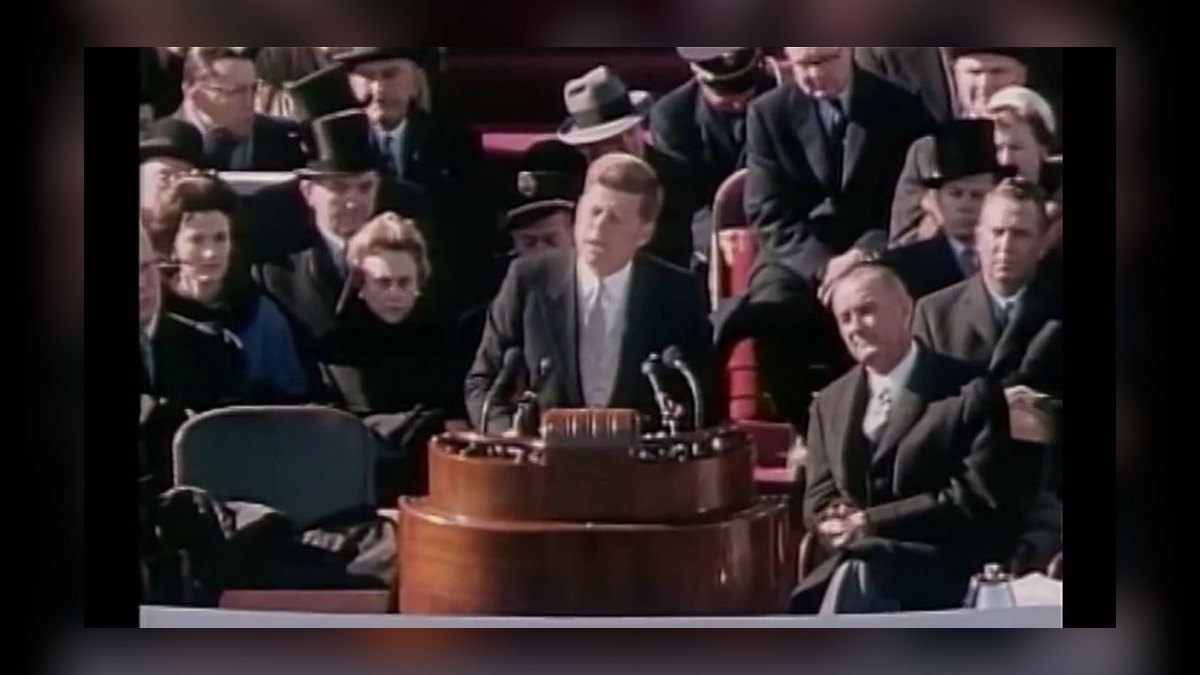
In his 1962 speech at Rice University, President John F. Kennedy declared the nation's goal of landing a man on the Moon and returning him safely to Earth before the decade was out, famously stating, "We choose to go to the Moon in this decade and do the other things, not because they are easy, but because they are hard." Key passages emphasize the challenge as a unifying national purpose, driven by a spirit of exploration and competition with the Soviet Union. The speech offers lessons on setting ambitious, time-bound goals, rallying public support through shared values, and using technological achievement as a catalyst for broader progress. Kennedy's address remains a masterclass in persuasive communication, blending rhetorical power with strategic vision to transform a seemingly impossible technical feat into a collective national imperative.
The "We Choose to Go to the Moon" speech, delivered on September 12, 1962, at Rice University in Houston, Texas, stands as one of the most iconic moments in American oratory and political leadership. It was not merely a policy announcement but a profound act of public persuasion, designed to galvanize a nation behind an audacious goal during a period of intense Cold War rivalry. The speech's power lies in its ability to reframe a massive, expensive, and risky technological undertaking as a moral and spiritual quest, tapping into deep-seated American values of exploration, competition, and the belief that no challenge is insurmountable. For modern RevOps leaders, the speech demonstrates how a clear, compelling narrative can align diverse stakeholders around a shared mission, a principle directly applicable to driving organizational change and securing buy-in for complex initiatives.
What Was the Specific Cold War Context Driving Kennedy's Moon Declaration?
The speech must be understood against the backdrop of a fierce space race with the Soviet Union, which had dealt a series of psychological blows to American prestige. On April 12, 1961, Soviet cosmonaut Yuri Gagarin became the first human in space, orbiting the Earth and returning safely, a feat that stunned the world and deeply embarrassed the United States. Just weeks later, on May 5, 1961, Alan Shepard made a suborbital flight, but America was clearly trailing in the public perception of technological and ideological superiority. Kennedy's May 25, 1961, address to a joint session of Congress had already set the moon landing as a national goal, but the Rice speech was the crucial public-facing argument, delivered to a skeptical and cost-conscious populace.
The geopolitical calculus was explicit: space had become the ultimate arena for demonstrating the superiority of democratic capitalism over communist authoritarianism. Kennedy's speech directly addressed this competition, not by dwelling on the Soviet threat, but by framing the moon mission as a test of American character and resolve. He understood that winning the space race was not just about science but about winning the hearts and minds of unaligned nations watching from the sidelines. By setting a clear, measurable, and time-bound goal—"before this decade is out"—he forced NASA and the nation into a sprint of innovation, creating a deadline that would ultimately drive the development of technologies from integrated circuits to satellite communications, with benefits far beyond lunar exploration. This strategic framing is echoed in modern lessons on goal-setting found in strategic planning insights, where specificity and urgency are critical to execution.
How Did Kennedy Use Rhetoric to Transform Difficulty Into a Virtue?
The speech's most enduring line—"not because they are easy, but because they are hard"—is a rhetorical masterstroke that turns the primary objection to the moon program into its strongest justification. This technique, known as *paradiastole*, redefines a negative quality (difficulty, cost, risk) as a positive one (challenge, opportunity, virtue). Kennedy understood that the American people, at their best, are drawn to difficult endeavors. He was not selling convenience or safety; he was selling the very essence of the frontier spirit that had defined the nation's history.
The speech is built on a series of deliberate rhetorical devices. The anaphora of "We choose to go to the Moon" repeated three times creates a rhythmic, almost incantatory effect, making the decision feel collective and inevitable. The contrasting pairs ("easy" vs. "hard," "postpone" vs. "win," "new knowledge" vs. "new rights") create a sense of moral clarity and forward momentum. Kennedy also masterfully uses *hypotaxis*—complex, layered sentences that build to a climax—alongside *parataxis*—short, punchy declarations that land with force. This rhythmic variation keeps the audience engaged and makes the key messages memorably quotable. For modern leaders, the lesson is clear: frame your most ambitious goals not as burdens to be borne but as challenges to be embraced, and use the very language of difficulty to build resolve and unity.
What Are the Key Passages and Their Strategic Functions?
Beyond the famous "choose to go to the moon" line, several other passages are critical to the speech's architecture and enduring power. The "50,000 years of man's recorded history" passage is a brilliant exercise in *synesthesia*—compressing vast time into a tangible image. By asking the audience to imagine all of human history in a half-century, Kennedy makes the rapid pace of technological change feel both inevitable and breathtaking. It positions the moon landing not as a wild leap but as the natural, accelerating next step in a long story of human progress, making it seem less risky and more logical.
The "Why climb the highest mountain?" passage, culminating in the local joke "Why does Rice play Texas?", serves multiple strategic functions. It directly addresses the skeptic in the room, showing that the speaker has considered and dismissed the obvious objections. It links the grand, abstract goal of space exploration to a concrete, relatable example of striving—the athletic competition that the audience instantly understands. The Rice-Texas joke is a piece of brilliant audience calibration, demonstrating that Kennedy sees and respects his immediate listeners, building rapport and goodwill. Finally, the "new sea" metaphor frames space as a new ocean for exploration, tapping into a deep American maritime and pioneering tradition, lending the untested venture the dignity of a long and noble history. Each passage is carefully chosen to build a different pillar of support: historical inevitability, human nature, local connection, and pioneering spirit. This layered approach to persuasion is a model for any leader crafting a complex message, similar to techniques discussed in inaugural address analysis.
How Did the Apollo Program Ultimately Achieve Kennedy's Goal?
The Apollo program, directly catalyzed by Kennedy's speech and the political will it generated, became the largest peacetime mobilization of scientific and industrial resources in history. At its peak, NASA employed over 400,000 people and contracted with 20,000 companies and universities. The agency's budget ballooned from $1.2 billion in 1962 to nearly $6 billion by 1965 (in then-year dollars), representing over 4% of the total federal budget. This immense investment was not just for a single flight; it required the invention of entirely new technologies, including the Saturn V rocket, the most powerful ever built, and the Apollo Guidance Computer, which pioneered integrated circuits and miniaturized computing.
The path to the moon was marked by setbacks and tragedies, most notably the Apollo 1 fire in 1967 that killed three astronauts. Yet the goal remained fixed, a testament to the power of a clear, publicly stated commitment. On July 20, 1969, Neil Armstrong and Buzz Aldrin landed the Apollo 11 lunar module *Eagle* on the Sea of Tranquility, achieving Kennedy's goal with five months to spare. The moment was a global triumph, watched by an estimated 600 million people, and it stands as a powerful example of what a nation can achieve when it sets a "moon shot" goal and commits the necessary resources, talent, and will to achieve it. The success of Apollo validated Kennedy's argument: that choosing a hard goal, and framing it as a test of character, can unlock extraordinary human potential.
What Practical Lessons Can Modern Leaders and Organizations Learn?
Kennedy's speech offers a timeless blueprint for leading large-scale, ambitious change. The first lesson is the power of a specific, time-bound goal. "Before this decade is out" is not vague or aspirational; it is a concrete deadline that forces prioritization, resource allocation, and accountability. Leaders should replace generalities like "become a market leader" with commitments like "achieve 20% market share by Q4 2026." The second lesson is to frame the challenge as a choice and a test of character. "We choose to go to the moon" makes the audience active participants, not passive observers. It transforms a top-down directive into a collective mission that people can be proud to join.
The third lesson is to connect the goal to a larger, shared purpose. Kennedy didn't just say "let's beat the Russians"; he spoke of "new knowledge," "new rights," and "the progress of all people." This reframing elevated the project from a geopolitical contest to a human endeavor, creating a broader coalition of support. The fourth lesson is to acknowledge the difficulty honestly. Kennedy never pretended the moon shot would be easy or cheap. This candor built trust and made the audience more willing to accept sacrifices. Finally, the speech teaches the power of a compelling narrative. Kennedy wove a story that connected the present challenge to the past (50,000 years of progress) and the future (a new sea of peace), making the goal feel both historically inevitable and personally meaningful. These lessons are directly applicable to any organization launching a major innovation, turnaround, or strategic initiative, and are further explored in resources on enduring leadership communication.

Related questions
How did the Soviet Union respond to Kennedy's moon speech?
The Soviet Union initially maintained a policy of secrecy around its own lunar program, but the speech intensified the space race. The Soviets attempted their own moon landing program, the N1-L3, but suffered four catastrophic launch failures between 1969 and 1972, ultimately abandoning their lunar ambitions after the U.S. success.
What were the total costs of the Apollo program?
The Apollo program cost approximately $25.4 billion from 1960 to 1973, which is roughly $200 billion in 2024 dollars when adjusted for inflation. This made it one of the most expensive peacetime projects in American history, but it also generated immense technological and economic returns.
What specific technologies were invented for the moon landing?
The Apollo program spurred inventions including integrated circuits, satellite communications, freeze-dried food, memory foam, water purification systems, and advanced materials like Kevlar. The guidance computer alone pioneered miniaturized computing that laid the groundwork for the modern electronics industry.
How did the speech affect public opinion about space exploration?
Polls showed that before the speech, only about 30% of Americans supported a moon landing. After the speech and the sustained campaign it launched, support grew to over 50% by the mid-1960s. The speech was critical in shifting the national mood from skepticism to cautious optimism.
Who wrote the "We Choose to Go to the Moon" speech?
The speech was primarily written by Kennedy's chief speechwriter and close adviser, Theodore Sorensen, with input from Kennedy himself. Sorensen was known for his ability to capture Kennedy's voice and rhetorical style, and the speech reflects his signature use of balanced antithesis and rhythmic repetition.
What is the legacy of the speech in modern political rhetoric?
The speech has become a template for ambitious goal-setting, regularly invoked by leaders across sectors. The term "moon shot" has entered the common lexicon as shorthand for any bold, audacious goal. It remains one of the most studied and quoted speeches in American history for its rhetorical and strategic brilliance.
FAQ
What was the main purpose of JFK’s “We Choose to Go to the Moon” speech? The speech, delivered at Rice University in 1962, aimed to rally public and political support for the Apollo program. Kennedy framed the moon mission as a challenge of human ingenuity and national resolve, not just a scientific or military competition with the Soviet Union.
Did JFK actually believe landing on the moon was achievable by the end of the 1960s? Yes, but he also acknowledged the immense difficulty. In the speech, he set a bold deadline—before the decade was out—while admitting the goal required unprecedented resources and effort. Historians note Kennedy's private doubts, but publicly he projected confidence to galvanize action.
How did this speech influence NASA’s funding and the space race? It directly led to a massive increase in NASA’s budget, which grew from roughly $1 billion in 1962 to nearly $6 billion by 1965 (in then-year dollars). The speech shifted public opinion and congressional support, making the moon landing a national priority.
What key rhetorical techniques did Kennedy use in this speech? He employed repetition ("we choose to go to the moon"), contrast (difficulty vs. determination), and vivid imagery (the "ocean of space"). He also framed the mission as a moral and exploratory imperative, not merely a political or military one.
Were there any major criticisms of the speech or the moon program at the time? Yes. Some scientists and politicians argued the money could be better spent on social programs, education, or defense. Others doubted the feasibility of landing on the moon by 1969, given the technical challenges and past Soviet successes in space.
What lessons from this speech are still relevant for leaders today? The speech demonstrates the power of setting ambitious, clear goals that inspire collective effort. It also shows the importance of framing challenges as opportunities for innovation and national pride, rather than just technical problems to solve.
How long was the actual speech and where was it delivered? The speech was approximately 18 minutes long, running about 2,400 words at Kennedy's deliberate delivery pace. It was delivered outdoors at Rice University's football stadium, Rice Stadium, in Houston, Texas, on September 12, 1962, in front of an estimated 40,000 people.
What was the immediate reaction to the speech from the scientific community? The scientific community was divided. Many physicists and engineers were enthusiastic about the technical challenge, but others, including prominent figures like chemist Linus Pauling, argued the resources would be better spent on social and environmental problems. The debate reflected the broader national tension between exploration and domestic needs.
Sources
- NASA History Office - JFK's Space Program
- John F. Kennedy Presidential Library - Moon Speech
- The American Presidency Project - JFK Space Address
- National Archives - Apollo Program Records
- Smithsonian National Air and Space Museum - Apollo 11
- History.com - JFK Moon Speech
- PBS American Experience - The Space Race
- Rice University - JFK Speech Archive
- The New York Times - Historical Archive on Apollo
- Encyclopedia Britannica - Apollo Program
Related on PULSE
- [JFK’s Ich bin ein Berliner (1963) — Key Passages and Lessons](/knowledge/sp0032)
- [Steve Jobs’s Stanford Commencement (2005) — Key Passages and Lessons](/knowledge/sp0021)
- [Barbara Jordan’s 1976 DNC Keynote — Key Passages and Lessons](/knowledge/sp0018)
- [Demosthenes’ The Third Philippic — Key Passages and Lessons](/knowledge/sp0026)
- [Mark Antony’s Funeral Oration (Shakespeare) — Key Passages and Lessons](/knowledge/sp0028)
- [William Faulkner’s Nobel Prize Acceptance (1950) — Key Passages and Lessons](/knowledge/sp0023)
@Kory-White- · if Venmo asks, the last 4 of my number are 2012
 pulse-moviesTop 10 Movies on Netflix 2027
 pulse-moviesTop 10 Movies on Max 2027
 pulse-moviesTop 10 Fantasy Movies of All Time in 2027
 pulse-moviesTop 10 Documentaries of All Time in 2027
 pulse-moviesTop 10 Superhero Movies of All Time in 2027
 pulse-moviesTop 10 Romance Movies of All Time in 2027
 pulse-moviesTop 10 Westerns of All Time in 2027
 pulse-moviesTop 10 Musical Movies of All Time in 2027
 pulse-moviesTop 10 Thriller Movies of All Time in 2027
 pulse-moviesTop 10 Crime Movies of All Time in 2027