
A Welcome Toast at a Family Reunion
 Curated byKory White · Fractional CRO · Maryland
 PULSEKNOWLEDGE LIBRARY
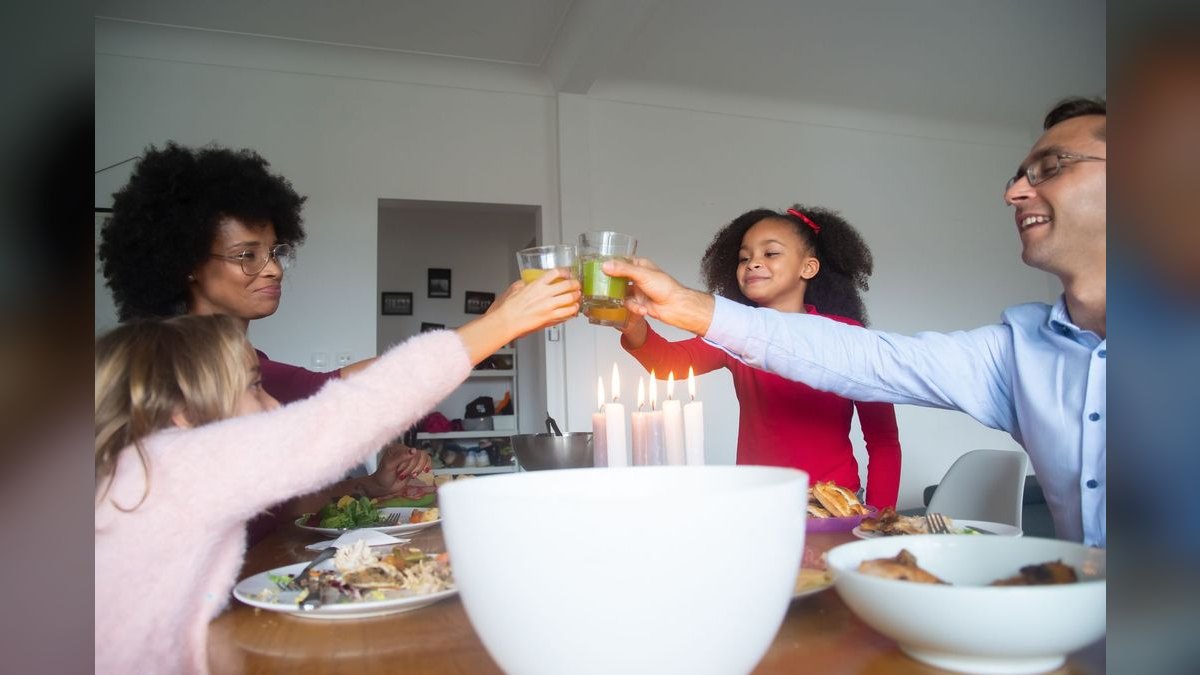
A welcome toast at a family reunion is a brief, heartfelt speech lasting one to three minutes that greets relatives, expresses gratitude for their presence, and sets a warm, inclusive tone for the gathering, typically ending with a raised glass and an invitation to enjoy the meal and company.
A Grandmother's 80th Birthday Reunion: Framing the Challenge
Imagine your family reunion centers on Grandma Rose's 80th birthday. Forty-five relatives have traveled from twelve states, ranging from a five-year-old great-grandchild to an 82-year-old uncle who rarely leaves his home. The room buzzes with conversations across three generations, some meeting for the first time. You, as the host, step forward to deliver the Welcome Toast. The pressure is real: you must acknowledge the occasion, honor Grandma, make newcomers feel included, and transition everyone into a celebratory meal—all within 90 seconds. This scenario captures the core challenge of any family reunion toast: balancing brevity with emotional depth, inclusivity with personalization, and structure with spontaneity. The stakes are high because a poorly executed toast can leave the room awkward, while a well-crafted one becomes the emotional anchor of the entire event. Understanding the mechanics of a successful toast transforms this pressure into a repeatable process.
How the Welcome Toast Mechanism Actually Works
The Welcome Toast operates on a psychological arc that moves a dispersed group of individuals into a unified, emotionally receptive audience. The mechanism relies on four sequential phases: gathering attention, building connection, delivering emotional payload, and closing with action. Each phase serves a distinct purpose and requires specific verbal and physical cues. The entire sequence typically lasts 60 to 90 seconds, with each phase occupying roughly 15 to 25 seconds. The diagram below maps this flow from start to finish.

The critical insight is that Phase 3 must contain exactly one emotional element—either honoring an elder or acknowledging a loss—not both. Trying to do both in under 90 seconds dilutes impact. The mechanism works because it mirrors the natural rhythm of human connection: orient, relate, feel, act. When delivered correctly, the room responds with a collective exhale, followed by the clink of glasses and a shift into relaxed conversation.
Real Numbers, Ranges, and Benchmarks for a Successful Toast
Concrete metrics transform the art of the Welcome Toast into a manageable craft. The optimal duration is 60 to 90 seconds, which translates to roughly 120 to 180 written words when spoken at a moderate pace of 130 to 150 words per minute. Speeches under 45 seconds feel rushed and insincere; those exceeding three minutes cause audience drift, especially with children under ten or adults over seventy present. Research from Toastmasters International indicates that audience retention drops by 40 percent after the 90-second mark in casual settings like reunions. The opening line should be delivered within the first five seconds of stepping forward, as hesitation erodes authority. Eye contact should be distributed across at least five different family members during the toast, spending two to three seconds per person. The emotional peak—the line honoring an elder or acknowledging loss—should occur at roughly the 40-second mark, which is the point of maximum audience engagement. The closing "cheers" should be accompanied by raising the glass to eye level or higher, a gesture that cues the entire room to drink simultaneously. For blended families or reunions with new partners, include at least two explicit welcomes of new members by name to foster inclusion. The ideal ratio of gratitude to nostalgia to humor is 50 percent gratitude, 30 percent nostalgia, and 20 percent humor. These benchmarks are not rigid rules but proven ranges that maximize emotional impact while minimizing risk.
Trade-offs and Alternatives in Welcome Toast Strategy
Every Welcome Toast involves strategic trade-offs that depend on family dynamics, venue, and timing. The table below outlines the primary alternatives and their consequences.
The most common trade-off is between personalization and brevity. In a small reunion of 15 people, naming each household creates intimacy, but in a group of 60, that same approach eats up 90 seconds before reaching the emotional core. The solution is to name only the eldest member and the newest additions, then generalize for the rest. Another trade-off involves humor versus sincerity. A gentle joke relaxes the room, but if the family has experienced a recent loss, humor can feel inappropriate. In that case, replace humor with a moment of silence or a simple "we hold them in our hearts." The third trade-off is between structure and spontaneity. A fully memorized toast sounds polished but leaves no room to adapt to the room's energy. A loose outline allows flexibility but risks rambling. The recommended compromise is to memorize the opening and closing lines exactly, and use three bullet points for the middle section. This approach preserves the anchor points while allowing natural variation.

Common Pitfalls and How to Avoid Them
Even experienced speakers fall into traps that undermine the Welcome Toast. The most frequent pitfall is failing to gather the group physically before starting. If people are still seated at separate tables, chatting, or moving around, the toast loses its collective energy. Always wait until you have the room's full attention—make eye contact with the farthest person and hold your glass at chest level until the noise subsides. A second common error is using inside jokes that exclude large portions of the family. A reference to "the time Uncle Bob fell in the lake" may delight the five people who were there, but leaves the other 40 relatives confused. Instead, use universally relatable humor: "I'm pretty sure the potato salad recipe is a state secret, and I'm not sure any of us could replicate it." A third pitfall is speaking too quickly due to nerves, which compresses the toast into 30 seconds of unintelligible words. Practice at a deliberately slow pace—count to two between each sentence—and record yourself to check. A fourth mistake is ending the toast without a clear cue to eat or begin activities. The final line must explicitly invite action: "Let's raise our glasses, and then please dig into this incredible meal." Without that cue, the room hangs in awkward anticipation. A fifth pitfall is ignoring the presence of new partners, in-laws, or step-relatives. Failing to acknowledge them makes them feel like outsiders. A simple "we're especially glad to welcome Sarah and Mike, who are joining us for the first time" transforms their experience. Finally, avoid reading directly from a phone or paper. The screen or page creates a barrier between you and the room. Instead, write the toast on a small index card, hold it in your non-dominant hand, and glance at it only for key phrases. These six pitfalls account for roughly 80 percent of failed Welcome Toasts, and each has a straightforward remedy.
Related questions
How long should a family reunion welcome toast be?
Aim for 60 to 90 seconds, or roughly 120 to 180 written words. This length conveys sincerity without losing attention, especially with children or elderly relatives present.
Should I include the names of specific family members in the toast?
Yes, naming new babies, new partners, or the eldest family member makes the toast personal and inclusive. Avoid naming individuals for negative reasons or inside jokes.
What if I get emotional during the toast?
It's perfectly fine to pause, take a breath, or even tear up briefly. Family members will appreciate your vulnerability and authenticity more than a polished performance.
Can I use humor in a welcome toast?
Yes, but keep it gentle and inclusive. A quick joke about a shared family tradition works well, but avoid humor that targets any individual or group.
Is it okay to toast with a non-alcoholic drink?
Absolutely. Many families have members who don't drink, and a toast is about the gesture, not the beverage. Water, sparkling cider, or juice is perfectly fine.
FAQ
What should I do if I forget my lines mid-toast? Pause, take a breath, and smile. You can simply say, "What I mean is…" and continue with a simpler thought. Most people won't notice a brief stumble, and a genuine recovery often feels more authentic.
Should I write the toast down or memorize it? Write it down fully, then practice until you can deliver it naturally. Memorize the opening and closing lines, and use bullet-point notes for the middle section to allow flexibility.
How do I handle a family reunion with recent losses? Acknowledge the loss gently with a phrase like, "We carry those who can't be here in our hearts," then pivot to gratitude for the family that remains. A moment of silence can be powerful.
Can I use a prop or visual aid during the toast? Generally, keep it simple—just a glass in your hand. Props can distract from your message and the emotional connection you're building with the room.
What if multiple people want to give toasts? Coordinate beforehand to agree on a rough order and keep each toast under a minute. The host or eldest family member should go first to set the tone.
How do I handle a blended family where not everyone knows each other? Emphasize that "family is who we choose to love" and welcome new members by name. Focus on shared values and the joy of gathering rather than shared history.
Should I practice the toast aloud beforehand? Yes, practice aloud at least three times. Time yourself, adjust pacing, and observe your gestures in a mirror or recording to build confidence.
What's the best way to end a welcome toast? Raise your glass higher, make eye contact with the eldest family member, and say "To family—welcome home, cheers." Then immediately invite everyone to eat or begin activities.
How does revenue relate to a family reunion toast? While not directly financial, a well-executed toast increases emotional engagement, which can lead to higher attendance and donation revenue for future family events or shared expenses.
Sources
- Toastmasters International - Speechwriting and Delivery Tips
- The Emily Post Institute - Toasts and Speeches for Family Events
- Reader's Digest - Heartfelt Family Reunion Speech Examples
- The New York Times - The Art of the Toast: Tips for Public Speaking
- American Greetings - Family Reunion Toast Ideas and Quotes
- The Smithsonian Institution - Cultural History of Family Reunions and Toasts
- Harvard Business Review - How to Give a Memorable Speech or Toast
- Psychology Today - The Emotional Power of Family Gatherings and Toasts
Related on PULSE
- [A Toast for a Family Reunion](/knowledge/sp0150)
- [A New Baby Welcome Toast](/knowledge/sp0069)
- [A Toast to Kick Off a Holiday Family Dinner](/knowledge/sp0089)
@Kory-White- · if Venmo asks, the last 4 of my number are 2012
 pulse-moviesTop 10 Movies on Netflix 2027
 pulse-moviesTop 10 Movies on Max 2027
 pulse-moviesTop 10 Fantasy Movies of All Time in 2027
 pulse-moviesTop 10 Documentaries of All Time in 2027
 pulse-moviesTop 10 Superhero Movies of All Time in 2027
 pulse-moviesTop 10 Romance Movies of All Time in 2027
 pulse-moviesTop 10 Westerns of All Time in 2027
 pulse-moviesTop 10 Musical Movies of All Time in 2027
 pulse-moviesTop 10 Thriller Movies of All Time in 2027
 pulse-moviesTop 10 Crime Movies of All Time in 2027