
A Wedding Speech for a Groomsman
 Curated byKory White · Fractional CRO · Maryland
 PULSEKNOWLEDGE LIBRARY
Quality
Certified
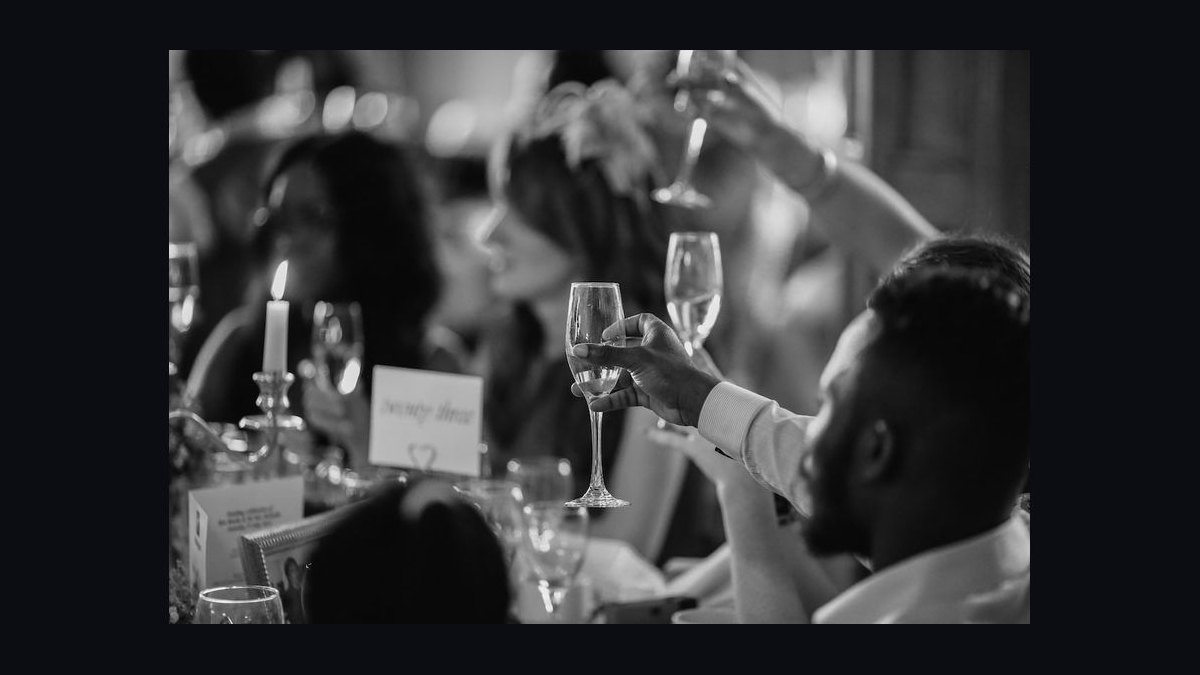
A groomsman wedding speech runs two to four minutes — roughly 250 to 500 spoken words — and follows a fixed arc: introduce yourself, thank the hosts, tell one specific story that reveals the groom's character, welcome his spouse warmly, then raise a clear toast. Keep humor affectionate, never at anyone's expense.
What a groomsman speech actually is and why the role matters
A groomsman speech is a short, spoken tribute delivered by a member of the wedding party who is not the best man. That distinction matters more than most people realize, because it sets the ceiling on your scope. The best man traditionally carries the longest toast, the deepest history, and the formal responsibility of thanking the wedding party on the groom's behalf. A groomsman speech sits underneath that — it is supplementary, not primary. If you write a best-man-length speech and deliver it before the best man does, you flatten his moment and stretch the reception timeline. Your job is a focused, warm contribution that adds one angle nobody else in the room will cover.
The angle is the whole value. You almost certainly know the groom from one specific slice of his life: college, a first job, a sports team, a shared apartment, a deployment, a decade of Sunday morning basketball. The best man may know him from childhood; his brother knows him from the family side; his new spouse knows him from the last several years. You know the version of him that existed inside your particular context, and that version is invisible to two thirds of the room. When a groomsman speech lands, it is almost always because it gave the audience a piece of the groom they had never seen before — the guy who drove four hours at 2 a.m. because a friend's car broke down, the guy who quietly covered a roommate's rent for two months and never mentioned it, the guy who spent a year learning to cook because he wanted one thing he could do well for someone else.
The occasion also carries real stakes that people underestimate. Wedding receptions are among the most expensive single events most families ever host, and the speeches are one of the few unscripted, unrehearsed elements in an otherwise heavily planned day. A photographer, a caterer, and a band are all contractually accountable for their piece. You are not. You are a volunteer with a microphone standing in front of every person the couple cares about, in a moment that will be filmed and rewatched. That is not a reason to panic — it is a reason to prepare with the seriousness you would bring to a work presentation that determined your team's revenue for the quarter. The preparation is the entire difference between a speech people remember fondly and one people politely applaud.
_by_Georg_Muench_for_his_brother_Friedrich_and_wife_Luise_Fritz%2C_February_15%2C_1832.jpg)
There is a second, quieter function. Wedding speeches are a public act of endorsement. When you stand up and say, in front of two hundred people, that this marriage makes sense to you and that you are glad it is happening, you are giving the couple something they will carry. Families who were skeptical hear a close friend's confidence. The spouse who has spent years being introduced to the groom's world hears, publicly, that they belong in it. Guests who barely know one half of the couple get a reason to root for them. That endorsement is the actual deliverable — the jokes are just the packaging that makes people receptive to it.
Finally, understand what a groomsman speech is *not*. It is not a roast. It is not a stand-up set. It is not a monologue about your friendship in which the groom appears as a supporting character. It is not the venue for stories that require an apology afterward. Every failure mode traces back to a speaker who forgot the speech belongs to the couple and treated it as a performance slot that happened to occur at a wedding.
The step-by-step process for building the speech
Start six to eight weeks out if you can, and no fewer than two weeks out. The single biggest predictor of a good speech is not talent — it is lead time, because the good material surfaces slowly and the bad material only reveals itself as bad after you have looked at it a few times.
.jpg)
Step one: dump, don't draft. Open a blank note and list every memory of the groom you can retrieve — twenty to thirty items, unfiltered, one line each. Do not evaluate them yet. Do not write sentences. Just capture: "the night the tent flooded," "when he learned to make his grandmother's sauce," "the interview he almost skipped." Most people can generate this list in fifteen minutes, and the item that ends up in the speech is usually somewhere in the back half, after the obvious ones are exhausted.
Step two: filter against three tests. For each memory, ask: Does it reveal character, or is it just something that happened? Can a seventy-year-old relative who has never met me follow it in thirty seconds with no setup? Would the couple be happy to hear it repeated at their fiftieth anniversary? Anything failing any of the three gets cut. You will typically go from twenty-five items to three or four. That is correct — you only need one, and the survivors are your candidates.
Step three: pick one story and write it long, then cut it. Take your best candidate and write it out at 200 to 250 words with too much detail. Then cut it to 80 to 120 words, which is roughly 30 to 45 seconds spoken. The cutting is where the story gets good. Drop the setup nobody needs, drop the second character, drop the explanation of why it was funny. A story told in three sentences and one image lands harder than the same story told in ten.
Step four: assemble the arc. Slot your cut story into the standard structure, which exists because it works and because deviating from it costs you attention you cannot afford to lose in three minutes.
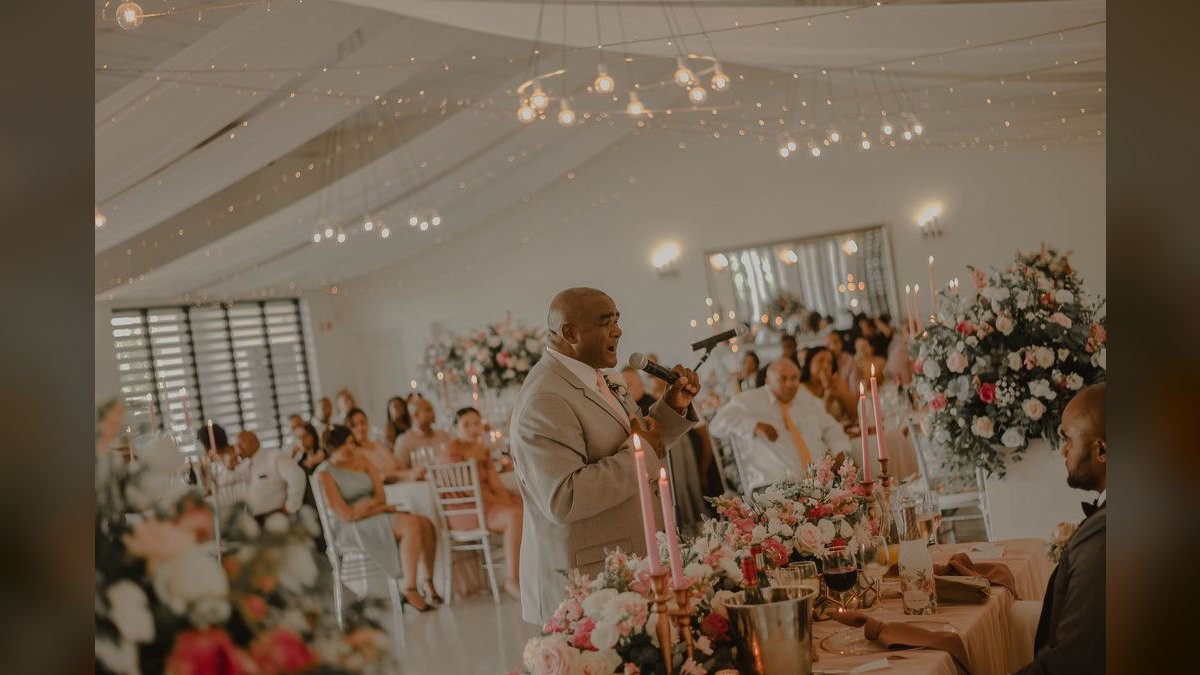
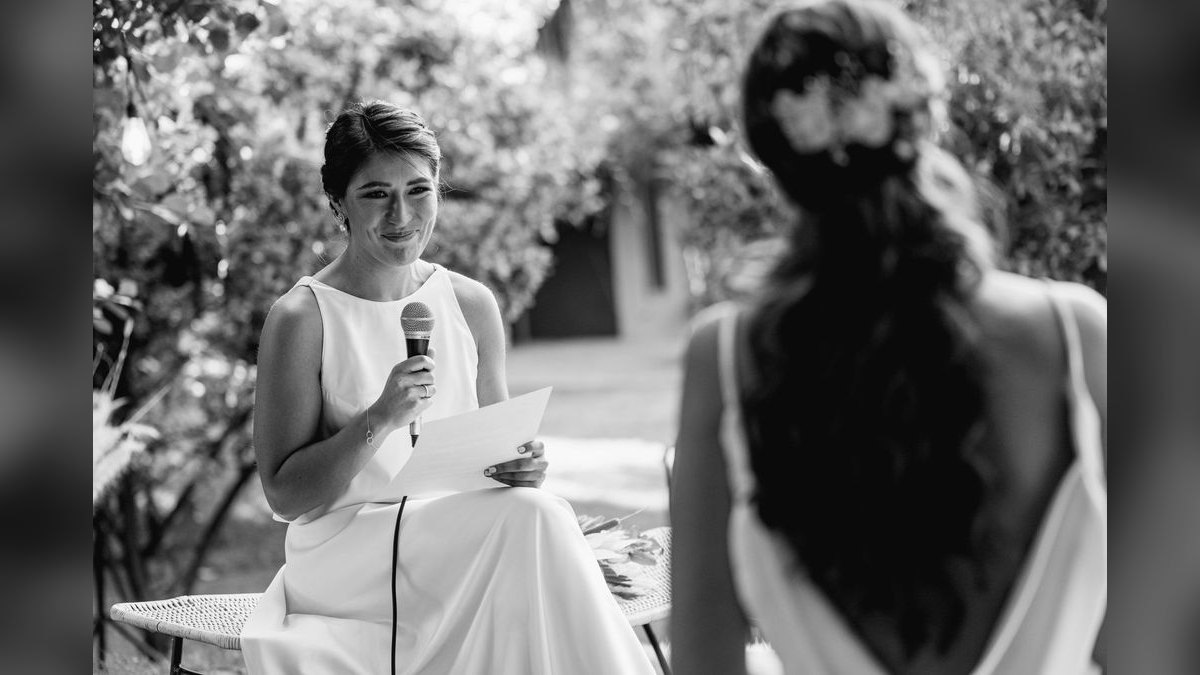
Step five: write the toast line first-class, not as an afterthought. The final sentence is what the room remembers and what the videographer catches. Write it separately, out loud, until it is one clean sentence you can deliver while looking at the couple rather than at paper. "Please raise your glasses to [Name] and [Name]" then a single specific wish — not a stacked list of three abstractions.
Step six: rehearse aloud, standing, at least five times. Silent reading tells you nothing about pace, breath, or which sentence you will trip on. Stand up, hold something as a mock microphone, and deliver the whole thing without stopping to fix anything. Record two of those runs on your phone and listen back — you will hear filler words, rushed transitions, and any line where your own voice sounds like it does not believe what it is saying. Cut that line.
Step seven: build the physical artifact. Print the speech in 14-point type on a single sheet, or write bullet cues on three numbered index cards. Number them. Put the toast line in bold. Fold it into an inside jacket pocket the morning of, not the night before, and check it is there before the ceremony.
Timing, word counts, and the ranges that actually work
Two to four minutes is the working band, and the reason is arithmetic rather than tradition. Conversational speaking pace runs roughly 130 to 150 words per minute; nervous speaking pace runs closer to 160 to 180. A 400-word speech therefore lands between about 2:15 and 3:05 depending on nerves and how long you pause for laughs. That is why 250 to 500 words is the target range: the low end gives you a tight, respectful ninety seconds to two minutes, and the high end approaches four minutes once you account for pauses.
Budget your minutes rather than your paragraphs. A reasonable three-minute allocation looks like: 20 seconds introducing yourself and thanking hosts, 40 seconds on the story, 30 seconds turning the story into a character statement, 30 seconds on the spouse and the couple, 20 seconds on what you wish for them, 15 seconds on the toast. That is roughly 2:35 of content, leaving 25 seconds of slack for laughs, a pause to compose yourself, and the walk-up. Speeches run long almost exclusively because of unbudgeted slack, not because of any one bloated section.
Time it properly. Read aloud with a stopwatch, standing, at delivery volume, pausing for two to three seconds where you expect laughter. Do this three times and take the longest result as your true number — not the average, and never the silent-reading number, which typically understates by 30 to 40 percent. If your longest run exceeds 3:45, cut. The first cut should be your second story if you have one; the second cut should be compound clauses. "I've known him for many years, and in that time we've shared countless memories" becomes "I've known him for eleven years, and one night stands out." You lose nothing and save eight seconds.
Know the surrounding schedule before you finalize. Ask the couple, the best man, or the planner three questions: How many people are speaking? In what order? Is there a hard cutoff for the band, the venue, or the toasts as a block? Receptions commonly allot 15 to 20 minutes total for all speeches. If five people are speaking into a 20-minute block and you take five minutes, someone else gets cut short — usually the parent who prepared for a week. Venue curfews are real contractual constraints; a hall with an 11 p.m. hard stop means every minute you overrun comes out of dancing.
Have shorter versions ready. Build a 90-second cut (introduction, story, toast — nothing else) and a 30-second emergency cut (one sentence about the groom, one about the spouse, the toast). Timelines slip constantly at weddings — dinner service runs late, the ceremony started forty minutes behind, the couple decides mid-reception to move the first dance up. If a planner leans in and says "keep it short," you want a rehearsed short version, not an improvised amputation of your full one.
One practical note on lead time: the total investment for a good groomsman speech is about three to five hours spread over several weeks — an hour of memory dumping and filtering, an hour or two of drafting and cutting, and an hour of rehearsal. That is a small budget for something that will be on video permanently, and it is dramatically more effective than four hours crammed into the night before, when your judgment about what is funny is at its worst.
Where groomsmen get it wrong
Writing it the night before, or on the plane. This is the root cause of most failures. Under time pressure people reach for the loudest available memory rather than the best one, and the loudest memory is almost always the wildest night, which is exactly the story that should not be told. Late drafting also means zero rehearsal, which means reading from a phone in a monotone.
Drinking first. Alcohol before a speech feels like it will help and reliably does not. It slows recall, loosens the filter on exactly the material you spent weeks filtering out, and adds volume without adding clarity. Hold your drink for the toast and nothing before it. If nerves are severe, that is a rehearsal problem, not a beverage problem.
Telling a story that requires an apology. The wild bachelor party, the ex-girlfriend, the arrest that "turned out fine," the story that starts "I probably shouldn't say this." If the sentence "I probably shouldn't say this" appears anywhere near your material, that material is out. The audience includes grandparents, work colleagues, children, and the spouse's family, many of whom are forming their first impression of the groom's friends.
The tired tropes. Jokes about the groom losing his freedom, the spouse taming him, "ball and chain," "his last night out," counting down to the first argument. These read as passive hostility toward the marriage in front of the people who just paid for it. They also age terribly on video. Replace them with the opposite framing: the marriage made him better, not smaller.
Making yourself the protagonist. A speech that spends two minutes on your friendship and thirty seconds on the couple has inverted the assignment. A rough ratio: no more than a quarter of your words about you and your relationship to the groom, at least half about the groom's character and the couple, the rest on structure and the toast.
Ignoring the spouse. A surprising number of groomsman speeches mention the groom's new husband or wife only once, in the toast line. That is a visible omission — the spouse notices, their family notices, and it reads as a friend who has not accepted the marriage. Name them, address them directly for at least one full sentence, and say something specific about them rather than a generic compliment.
Inside jokes. If a line requires context that only six people in a room of two hundred have, it produces six laughs and one hundred and ninety-four seconds of confusion. Either supply the context in one sentence or cut the joke.
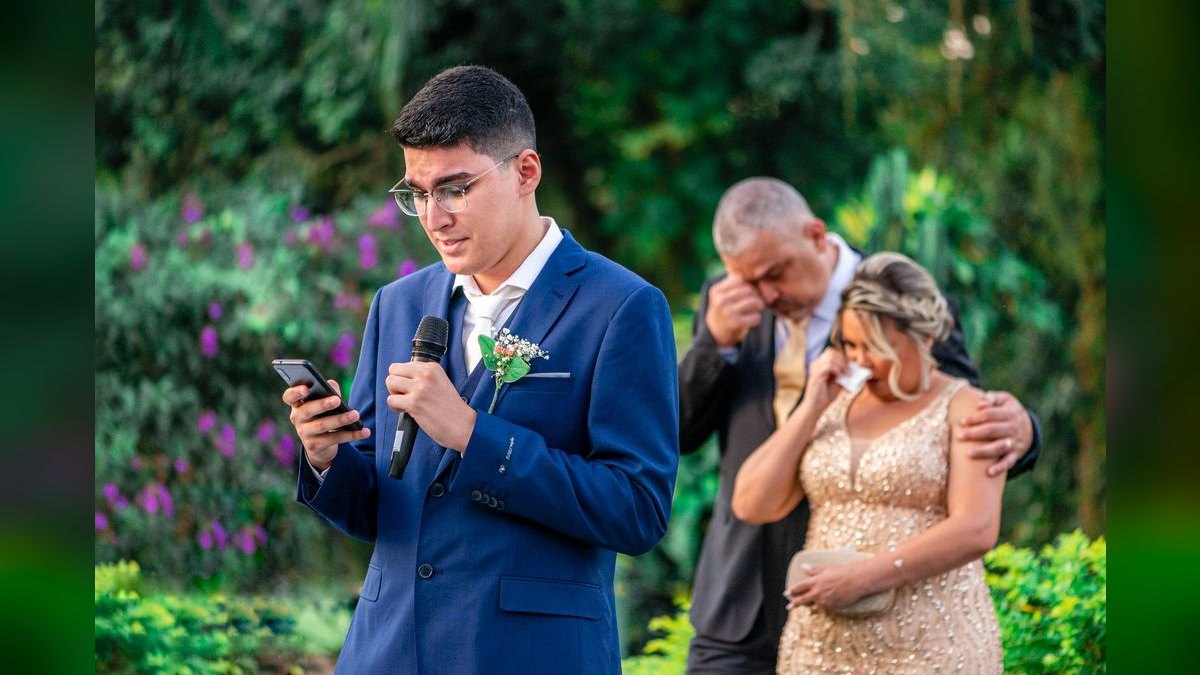
Technical failures. Holding the microphone at chest level so nothing is picked up. Reading from a phone that dims, buzzes, or rings mid-speech. Unnumbered cards that get shuffled. Standing behind the couple so half the room sees your back. All of these are solved in the ninety seconds before you speak: microphone three to four inches from your mouth, phone in airplane mode or better yet replaced with paper, cards numbered, and position yourself so the couple and the bulk of the room are both in your sightline.
Winging the ending. Speeches that trail off into "so, yeah… anyway… to the couple, I guess" undo whatever came before. The last twelve words should be the most rehearsed twelve words in the speech.
Choosing your angle: a decision framework
Not every groomsman is in the same position, and the right speech depends on your actual relationship and the constraints around you. Work through the decision below before you write a word.
If you have known the groom twenty years, your strongest material is contrast — who he was at nineteen versus who he is now, told without embarrassing the nineteen-year-old. If you have known him five years or less, do not fake depth you do not have; instead pick one recent moment you witnessed clearly and render it in high detail. Specificity substitutes for history. If your relationship is professional, lean on how he behaves when things go badly, because that is the material nobody else in the room has — the colleague who stayed to fix a problem that was not his, the manager who took the blame publicly and gave the credit away.
On humor: it is optional. A warm, sincere, entirely unfunny speech delivered with conviction beats a mediocre joke every time. If you are not a naturally funny speaker, do not attempt to become one at a wedding. If you do use humor, follow the standard pattern — one affectionate joke, land it, let the laugh finish, then pivot to sincerity with a clear turn like "But here's the thing about him." The turn is what makes the joke serve the speech instead of just interrupting it.
If you do not know the spouse well, fix that before the wedding rather than writing around it. One short conversation, or one question to the groom — "what's the thing about them you'd want people to know?" — gives you a specific, true detail that reads as genuine attention rather than a placeholder compliment.
Managing nerves on the day
Nerves are a physiological response, and the countermeasures are physical, not motivational. Arrive early and stand where you will actually speak — locate the microphone, the couple's seats, and the sightline to the back of the room. Familiarity removes a category of unknowns that your body is otherwise burning adrenaline on.
Immediately before speaking, take three slow breaths with a longer exhale than inhale; this measurably lowers heart rate. Keep the printed copy in your pocket even if you have it memorized — the safety net removes the fear of blanking, which is itself the main cause of blanking. If your hands shake, hold the paper with both hands or rest one on the table; if your voice wavers, stop and take a sip of water, which the room reads as composure rather than panic.
If you lose your place, do not apologize. Pause, look down, find your line, continue. A two-second silence is invisible; "sorry, sorry, I lost my spot" is not. Pick two or three friendly faces spread across the room and rotate between them rather than scanning, and remember the actual social dynamic: this audience is the most sympathetic one you will ever have. Nobody at a Wedding is hoping the Groomsman fails. The room is already on your side before you open your mouth — your only job is not to talk them out of it.
Related questions
How is a groomsman speech different from the best man's?
The best man's toast is longer, comes with formal duties, and traditionally closes the sequence. A groomsman speech is shorter, supplementary, and covers one angle on the groom the best man will not — usually a specific slice of shared history.
Should I coordinate with the other speakers?
Yes. A five-minute group message confirming who is speaking, in what order, and which story each person is using prevents duplicate anecdotes and duplicate framing. It costs nothing and saves the room from hearing the same road trip twice.
Can I read the whole speech off paper?
Yes, though eye contact improves delivery. Print in 14-point type, mark pauses, and know your opening and closing well enough to deliver both while looking at the couple. Paper is far safer than a phone that dims or buzzes.
What if I get emotional mid-speech?
Stop, breathe, take a sip of water, and continue. Genuine emotion at a wedding is welcome, not embarrassing. Keep the printed copy in hand so you can find your line again without improvising through it.
Do I need to thank anyone specific?
Briefly thank whoever hosted — often the couple or their parents — in one sentence near the start. Skip long lists of names; the best man or a parent usually handles formal acknowledgments in full.
FAQ
How long should a groomsman speech be? Two to four minutes, which is roughly 250 to 500 spoken words. Time it standing, aloud, with a stopwatch and pauses included — silent reading understates the real length by 30 to 40 percent. If your longest timed run exceeds 3:45, cut the second story.
What is the best way to open? Say who you are and how you know the groom in one sentence, thank the hosts in one more, then go straight into your story. Skip the "for those who don't know me" throat-clearing and skip apologizing for being nervous — both spend attention you need later.
Should I include humor? Only if it is affectionate and inclusive. One good joke followed by a sincere turn works well; a string of roast lines does not. A completely sincere speech delivered with conviction is always better than forced comedy, so skip jokes entirely if that is not your register.
What should I absolutely avoid saying? Ex-partners, bachelor party details, anything requiring an apology, jokes about lost freedom or being tamed, and inside jokes only a handful of guests can follow. Apply one test: would the couple happily hear this repeated at their fiftieth anniversary?
Note cards or a phone? Cards or a printed sheet. Number them, use 14-point type, and bold the toast line. Phones dim mid-sentence, display notifications, and photograph badly. If you must use a phone, put it in airplane mode with the screen timeout disabled.
How much should I mention the groom's spouse? At least one full sentence addressed directly to them with a specific observation, not a generic compliment. Mentioning them only in the toast line reads as an omission, and both they and their family will notice it.
Sources
- Toastmasters International — public speaking and speech delivery resources
- The Knot — wedding planning, toasts, and wedding party roles
- Brides — wedding traditions, speech structure, and etiquette
- The Emily Post Institute — etiquette for weddings and social occasions
- WeddingWire — reception timelines and wedding party guidance
- Real Simple — practical writing and speaking advice
- Martha Stewart — wedding planning and speech guidance
- Psychology Today — research and strategies on public speaking anxiety
- Harvard Business Review — presentation delivery and speaking under pressure
Related on PULSE
This page will be disappearing soon. Save it to your device for $1 — or read it free while it is here.
@Kory-White- · if Venmo asks, the last 4 of my number are 2012
This page is gone.
This one is off the shelf now. $1 keeps it on your phone for good — the whole page, pictures and diagrams included.
 pulse-speechesWhat Makes Nelson Mandela's Inauguration Speech a Great Speech in 2027
 pulse-speechesA Speech for a Customer Appreciation Event
 pulse-speechesWhat Makes Reagan's "Tear Down This Wall" a Great Speech in 2027
 pulse-speechesA Retirement Speech for a Military Officer
 pulse-speechesA Retirement Speech for a CEO
 pulse-speechesA Toast for a Gender Reveal
 pulse-speechesA Speech for Accepting an Industry Award
 pulse-speechesHow to Practice a Speech So It Sounds Natural in 2027
 pulse-speechesA Speech for a Church Anniversary
 pulse-speechesA Speech for Welcoming a New Hire