
A Toast for a Baby Shower
 Curated byKory White · Fractional CRO · Maryland
 PULSEKNOWLEDGE LIBRARY
Quality
Certified
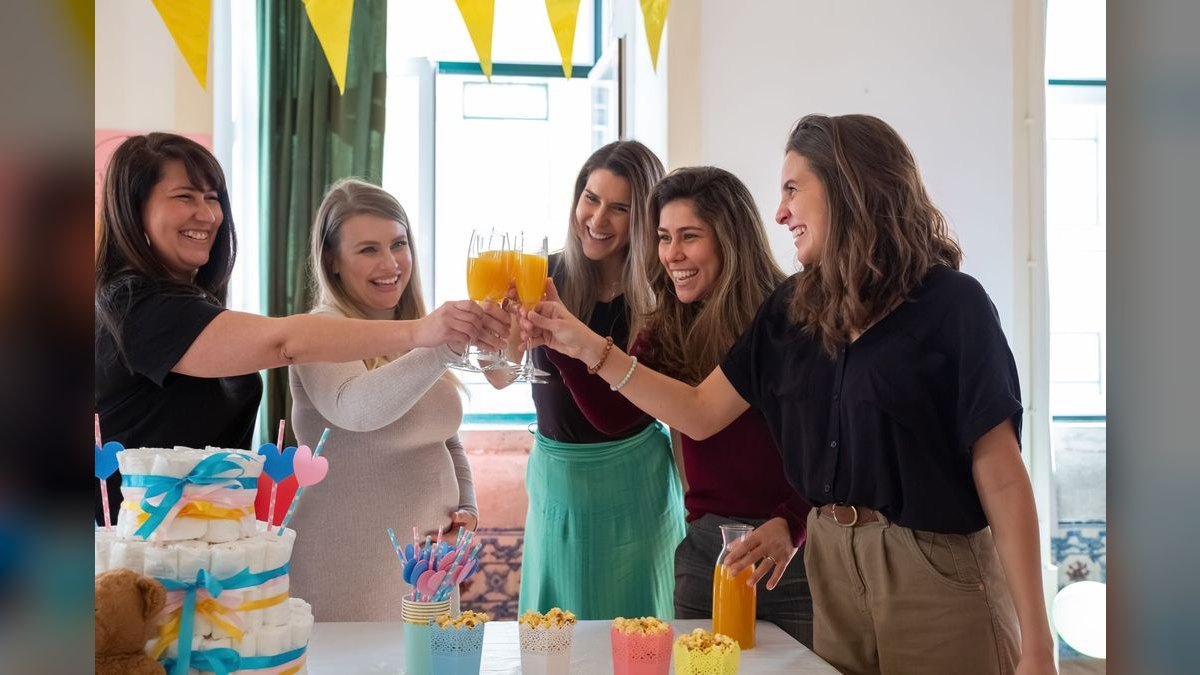
A baby shower toast is a 60-to-90-second spoken tribute to the expectant parent, built around one specific, true memory rather than generic praise. Raise your glass, name what you admire, wish them well, and close with a clear declarative line. Short, sincere, and specific beats long and polished every single time.
The outcome you should expect
A well-built baby shower toast produces a very particular result in a room, and it helps to name that result before you write a word. The outcome is not applause. It is a two-to-three-second silence right after your closing line, followed by the sound of glasses meeting, followed by the guest of honor either laughing or wiping her eyes. That sequence — pause, clink, reaction — is the signature of a toast that landed. If you get straight to chatter with no pause, the toast was pleasant but forgettable. If you get a long silence with no clink, you probably ended on an ambiguous note and nobody knew the toast was over.
Expect the whole thing to occupy roughly two minutes of event time from the moment you stand up to the moment you sit down. That breaks down as about ten seconds of getting attention and letting people find their drinks, sixty to ninety seconds of actual speaking, and another ten to fifteen seconds of the clink-and-sip. Hosts planning a two-and-a-half-hour shower should budget five to eight minutes total if two or three people are speaking, and should schedule that block deliberately rather than letting it happen spontaneously somewhere between the diaper game and the cake.
Expect your own performance to be worse in your head than in the room. Speakers routinely report that a toast felt like a disaster and then hear from three separate guests that it was the best part of the afternoon. This gap exists because you are monitoring your own voice, hands, and word choice in real time while the audience is only receiving the content. Practically, this means you should not adjust your material based on how it felt while delivering it — adjust based on what people actually said afterward.
Expect the specific memory to do most of the work. In a toast of 140 words, roughly 50 to 70 of those words should be a concrete story or observation with real detail in it — a place, a time, a thing that was said. The remaining words are scaffolding: the opener, the transition, the wish, and the closing line. When people say a toast was "so good," they are almost always remembering the specific detail, not the sentiment attached to it. Sentiment is interchangeable; detail is not.
Finally, expect the toast to become a small artifact. Somebody in the room will be filming on a phone, and that video will get watched again on the child's first birthday and possibly beyond. This is worth knowing before you decide whether to include the story about the bachelorette party in Nashville. Write the version you would be comfortable having replayed at a family gathering in fifteen years, and you will almost never regret it.
What drives that outcome
Five inputs determine whether a baby shower toast works, and they are not equally weighted. The single largest driver is specificity of the anchor story. A toast that says "Sarah has always been the most caring person I know" is doing nothing that the next four speakers will not also do. A toast that says "When I broke my ankle in March, Sarah drove forty minutes each way for six weeks to bring me groceries, and she never once mentioned that she was doing it while eleven weeks pregnant" is unrepeatable, unforgettable, and takes about the same number of seconds to say.
The second driver is length discipline. Sixty to ninety seconds of speech is roughly 120 to 180 written words, because natural conversational pace with pauses runs around 120 to 130 words per minute — noticeably slower than the 150-plus words per minute of ordinary conversation, because a toast has built-in pauses for reaction. Write to 140 words and you will land near 70 seconds. Write to 300 and you will run past two and a half minutes, which is where a warm room starts checking phones.
The third driver is the closing line. The final sentence must be unambiguous, declarative, and must name the parent. "To Maya, and to the little one who is already so loved" tells everyone the toast is finished and it is time to drink. Ending on a question, a trailing thought, or a soft "so, yeah" leaves the room unsure whether to clink.
The fourth driver is emotional pacing — the order of humor and sincerity. The reliable structure puts the light moment first and the sincere moment last, because a room that laughs together relaxes together, and a relaxed room receives sincerity better. Reversing it, going sincere first and then cracking a joke, tends to undercut the feeling you just built.
The fifth driver is preparation format. A full written script read word-for-word reads as stiff and eliminates eye contact. Pure improvisation runs long and rambles. The middle path — four to six bullet keywords on a notecard, with the first line and last line memorized verbatim — outperforms both. You memorize the two moments where failure is most costly, and you improvise the middle where a slight stumble reads as authenticity.
Benchmarks and realistic ranges
Use these ranges as guardrails rather than rules. Total spoken time: 60 to 90 seconds is the target band. Thirty to sixty seconds is acceptable and often correct for a coworker or a distant relative who genuinely does not have a deep story. Ninety seconds to two minutes is the upper tolerance and should only be used by someone with an extremely close relationship and genuinely great material. Past two minutes, you are giving a speech, not a toast, and the two are different forms with different social contracts.
Word count: 120 to 180 words written. Count it. Most people badly overestimate how much text fits into ninety seconds, and the correction is not judgment, it is a word counter. If your draft is 260 words, you are looking at roughly two minutes and you need to cut about a third.
Rehearsal count: three to five full run-throughs aloud, spread across at least two days if possible. The first run reveals where the sentences are unspeakable — clauses that read fine but tangle in the mouth. The second and third smooth the rhythm. Past five, you risk sounding recited. Rehearse standing up, at full volume, not muttering at your desk, because volume changes your breathing and your pacing.
Number of speakers: one to three toasts at a typical shower. One is entirely sufficient. Three is the practical ceiling before the format fatigues, and if you have three, they should be coordinated so they do not all tell variations of the same story. The host should ask each speaker for a one-sentence summary in advance specifically to catch that collision.
Timing within the event: place the toast about 45 to 60 minutes into a two-to-three-hour shower — after guests have arrived, greeted, and gotten a drink, but before gift-opening. Gift-opening is a long, low-energy stretch and a toast after it competes with people already reaching for their coats. Before food works well; mid-meal, when half the room has a fork in hand, does not.
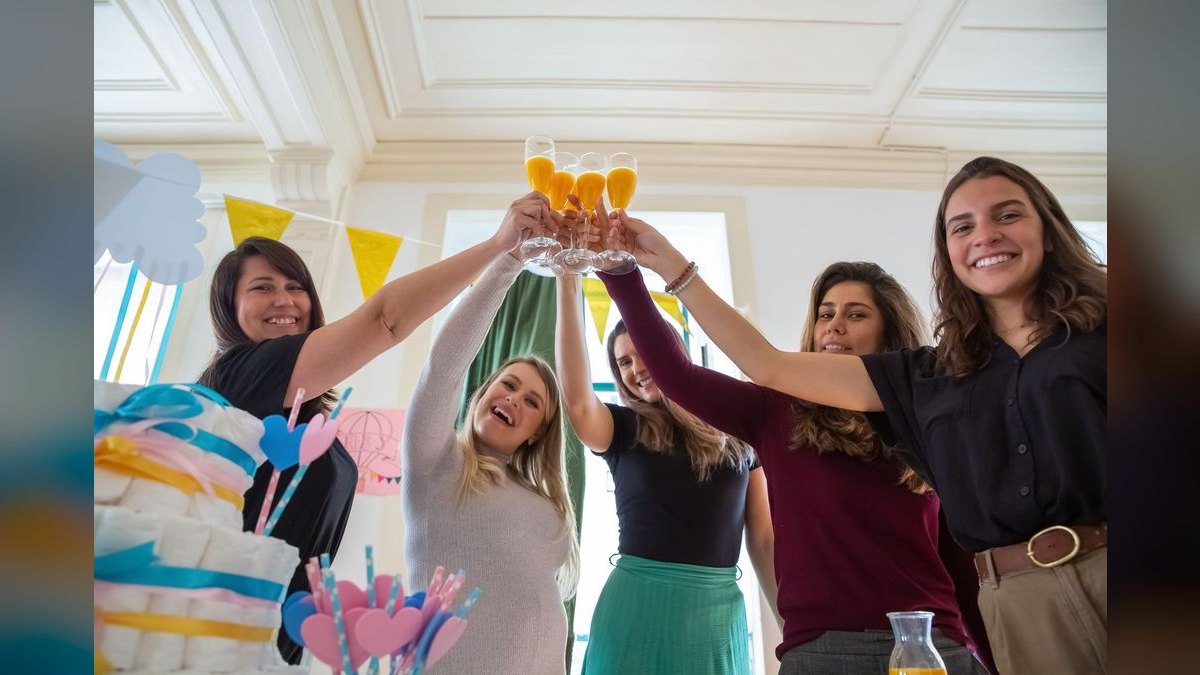
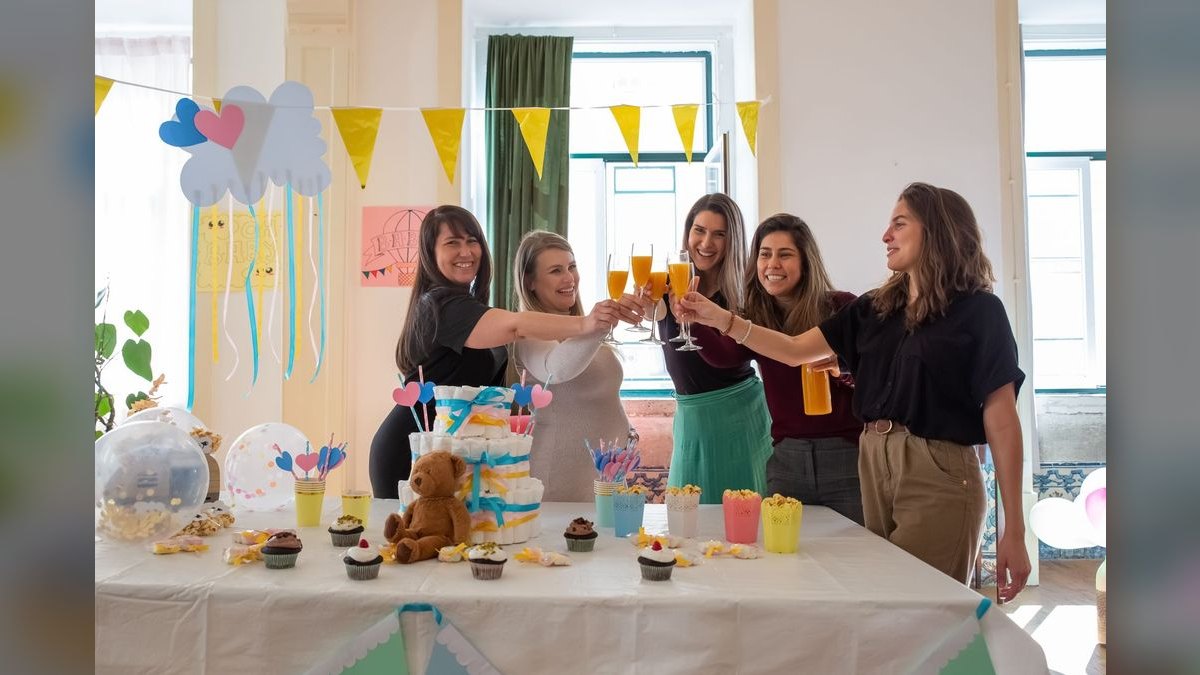
Drink logistics: pre-pour everything two to four minutes before the toast begins. A room where twenty people are individually pouring is a room where the toast starts three separate times. Non-alcoholic and alcoholic options should sit on the same table in the same style of glassware — matching stemware is the single most effective inclusion move at a shower, and it costs nothing beyond a little planning.
Volume of specific detail: one anchor story. Two if you are unusually close and both are short. Three is a monologue. When a toast fails for length, the cause is almost always a second and third story that the speaker could not bear to cut.
Risks, edge cases, and failure modes
The most common failure is the apology opener. "I'm not good at this" or "I didn't really prepare anything" lowers the room's expectations, signals that you did not think the moment was worth effort, and makes every subsequent sentence sound like an excuse. Cut it entirely. Start with the acknowledgment: "If everyone could grab a glass — I want to say something about Maya."
The second failure is content that belongs in private. Graphic pregnancy or delivery detail, jokes about weight or appearance, references to hormones or mood, and speculation about how labor will go all read as unkind in a public room even when the speaker means them warmly. The line is simple: if you would not say it into a microphone in front of the parent's mother-in-law, do not say it.
The third failure is stepping on private history. Previous pregnancy loss, fertility treatment, the circumstances of the relationship, or an unrevealed gender are the parent's information to share, not yours. If you are unsure whether something is public, assume it is not. A toast is an unusually bad venue to discover you were wrong.
Adoption and surrogacy showers deserve their own handling. Celebrate the arrival and the family being formed. Avoid framing that treats adoption as a substitute for birth, avoid referencing the birth parent's circumstances, and avoid "you'll love them like they're your own" — which implies a distinction the family is not making. "We have been waiting for you for a long time" carries the whole sentiment without any of those hazards.
Blended families, second and third children, and showers where a partner is deployed or absent each shift the frame slightly. For a second baby, acknowledge the older sibling by name; leaving them out is noticed. For an absent partner, mention them warmly and briefly rather than treating the absence as a tragedy or ignoring it entirely.
Alcohol content is its own risk. Jokes premised on the guest of honor not being able to drink, or on how much she will drink after delivery, are tired and read as slightly hostile. The mechanical version of this problem — the guest of honor holding water in a plastic cup while everyone else holds a champagne flute — is worse, because it visually excludes her from her own celebration. Matching glassware fixes it.
Nerves are a manageable risk rather than a failure. Three slow breaths at a four-count in, four-count hold, four-count out before standing will steady your voice. If your hands shake, hold the glass with both hands or set it down until the closing line. If your voice cracks, pause and sip; a two-second pause reads as emotion, not as failure. If you lose your place entirely, look directly at the parent and say your memorized closing line — the room will not know anything was skipped.
The last failure mode is the toast nobody scheduled. If the host has not designated a moment, the toast tends to happen over background music with half the room in another conversation. Someone has to quiet the room first. If you are the speaker and the host has not handled this, ask them directly for two minutes and a signal, and do not attempt to start over ambient noise.
A practical rollout plan
Here is a working timeline that consistently produces a good toast without consuming your week.
Seven to ten days out, do the memory hunt. Sit for fifteen minutes and write down every specific thing you can remember about this person — not qualities, incidents. Where you met. Something they said that stuck. A time they showed up. A running joke. Aim for eight to twelve items, most of which you will not use. This is the only genuinely creative step; everything after it is assembly.
Five to seven days out, pick one item and draft. Write it as you would say it, not as you would write it. Open with the attention-getter and a light observation. Move into the anchor memory with real detail. Bridge from that memory to what it suggests about them as a parent — this bridge is the emotional turn and it should be one sentence, not three. Close with the declarative toast line naming the parent and the baby. Count the words; aim for 140.
Three to four days out, cut. Every adjective pair becomes one adjective. Every "I just wanted to say" comes out. Any second story comes out. If it is over 180 words, keep cutting. Then read it aloud once, standing, with a stopwatch. Fix any sentence that tangles.
Two days out, transfer to a notecard. Four to six bullets, no full sentences except the first line and last line written out verbatim. Rehearse twice more, standing, at full volume. Memorize the first and last lines until you can say them while distracted.
Day of, handle the logistics before the moment. Confirm with the host when the toast happens and who quiets the room. Confirm that non-alcoholic options are poured into the same glassware and positioned on the same table as everything else — sparkling cider, a berry-and-mint spritzer batched in a pitcher, or a lightly sweetened hibiscus tea over ice all photograph and pour like the real thing. Announce the options out loud before the toast so nobody has to ask. Pre-pour two to four minutes ahead.
At the moment itself, stand where the guest of honor can see your face without turning fully around. Get the room's attention, wait for actual quiet — three seconds of standing there silently is not awkward, it is authoritative. Deliver. Pause after the closing line. Raise, sip, sit.
Afterward, if someone filmed it, ask them to send it to the parent rather than posting it. That small courtesy keeps the moment theirs.
The whole plan costs maybe forty-five minutes of actual work spread over a week, which is a reasonable investment for something that gets rewatched years later. Speakers who compress it into the car ride over are the ones who default to generic praise, because generic praise is what surfaces when you have not done the memory hunt. The hunt is the step that cannot be skipped; everything else is editing.
One note on scope: a shower toast is a personal-occasion form, and the instinct to import professional presentation habits usually hurts it. Nobody wants a three-act structure, a callback, or a slide's worth of framing. If you spend your working life pitching, presenting quarterly revenue numbers, or running a room, deliberately turn that register down. The best baby shower toasts sound like a friend talking, not a professional performing, and the difference is audible within the first six words.
FAQ
How long should a baby shower toast actually be? Sixty to ninety seconds spoken, which is 120 to 180 written words at a natural pace with pauses. Thirty to sixty seconds is fine for a coworker or distant relative. Past two minutes it stops being a toast and becomes a speech, and the room's attention drops noticeably.
Who is supposed to give the toast at a baby shower? Traditionally the host opens, and then a close friend, sibling, or parent may follow. There is no fixed rule. One to three speakers total is the practical range; beyond three the format fatigues. The host should coordinate so speakers don't tell overlapping stories.
What should I absolutely not say? Graphic pregnancy or delivery detail, jokes about weight, appearance, or hormones, references to fertility struggles or prior loss, an unrevealed gender, and predictions that imply pressure on the child. If you wouldn't say it into a microphone in front of the parent's whole family, leave it out.
What non-alcoholic drink works for the toast? Anything that pours into the same glassware as everything else. Sparkling cider, non-alcoholic sparkling wine, a berry-mint spritzer batched in a pitcher, or lightly sweetened hibiscus tea over ice all work. Matching stemware matters more than the beverage — it's what makes the toast visually inclusive.
Should I write it out word for word or improvise? Neither. Write a full draft to fix the wording, then transfer it to a notecard as four to six bullet keywords, with the opening and closing lines written out verbatim. You memorize the two highest-stakes moments and improvise the middle, which keeps eye contact intact.
Can I use a quote or a poem? Yes, but cap it at two lines and put it near the close, not the opening. A borrowed line should support your own specific memory, never replace it. If the quote is doing all the emotional work, the toast will feel like a greeting card read aloud.
Sources
- The Emily Post Institute — Toasts, Roasts, and Speeches
- Toastmasters International
- Parents — Baby Shower Guidance
- The Spruce — Baby Showers
- Real Simple — Party and Entertaining
- Martha Stewart — Baby Showers
- Brides — Toasts and Speeches
- Harvard Business Review — How to Calm Your Nerves Before a Big Presentation
Related on PULSE
- A New Baby Welcome Toast
- What is the least obvious yet most reliable behavioral marker indicating a person is covertly experiencing spiritual awakening rather than psychiatric decompensation, and how can a clinician distinguish between the two in a single initial interview without relying on self-report?
- A Speech for a Town Hall on a Local Issue
- A Toast for a Thanksgiving Dinner
This page will be disappearing soon. Save it to your device for $1 — or read it free while it is here.
@Kory-White- · if Venmo asks, the last 4 of my number are 2012
This page is gone.
This one is off the shelf now. $1 keeps it on your phone for good — the whole page, pictures and diagrams included.
 pulse-speechesWhat Makes Steve Jobs’ Stanford Commencement a Great Speech in 2027
 pulse-speechesA Toast for a Gender Reveal
 pulse-speechesA Retirement Speech for a CEO
 pulse-speechesA Retirement Speech for a Teacher
 pulse-speechesHow to Write a Heartfelt Eulogy When You're Grieving in 2027
 pulse-speechesA Speech for a Company All-Hands
 pulse-speechesA Retirement Speech for a Doctor
 pulse-speechesWhat Makes Maya Angelou’s “On the Pulse of Morning” a Great Speech in 2027
 pulse-speechesA Graduation Speech for a Kindergarten Graduation
 pulse-speechesA Speech for a Company 10th Anniversary