


A Wedding Speech vs. a Vow Renewal Speech: Which Fits Your Moment Better in 2027
Quality
Certified
Choose a wedding speech when you are introducing a couple's story to a room that is still learning it, and a vow renewal speech when the room already knows the story and wants proof it held. Weddings promise; renewals testify. The moment decides the tense, evidence, and length.
What it is and why it matters
A wedding speech and a vow renewal speech look similar on paper — a person stands up, holds a glass, talks about love for four minutes, and sits down. They are not the same document. They differ in tense, in what the audience already knows, in what counts as evidence, and in what the couple is actually asking the room to do. Getting this wrong is the single most common reason a technically competent speech lands flat.
The wedding speech is forward-looking and speculative. The couple has, in most cases, not yet lived the thing being celebrated. Whatever you say about their marriage is a prediction. That is why wedding toasts lean on character evidence: here is who she is, here is who he is, here is the moment I knew they would work. The speaker is essentially submitting testimony about disposition, then extrapolating. The room accepts extrapolation because there is nothing else on offer. Nobody at a wedding can say "and it worked," because it has not had time to.
The vow renewal speech is backward-looking and evidentiary. The couple has data now. Ten years, twenty-five years, forty years of it. The room has watched some portion of it. A renewal speech that still runs on prediction — "I just know these two are going to make it" — sounds absurd, because the making-it already happened in front of everyone. The correct move is the reverse: you cite the record. The layoff in 2019. The move across three states. The years of ordinary Tuesdays. Evidence, not forecast.
This distinction cascades into every other choice. It changes which stories are usable. A wedding audience will forgive a story about the couple's chaotic early dating because it is charming and recent; a renewal audience may find the same story oddly small next to two decades of actual marriage. It changes who is in the room — a renewal frequently includes the couple's own children, sometimes adult children, sometimes grandchildren, which rules out a category of material that is standard at weddings. It changes the emotional register: weddings run on anticipation and nerves, renewals on relief and gratitude. And it changes length. Wedding receptions typically stack three to five speeches into a tight program; vow renewals often have one or two, with more room to breathe.
The practical stakes are real. A speaker who writes a wedding speech and delivers it at a renewal produces something that feels naive — congratulating people on a leap they took decades ago. A speaker who writes a renewal speech and delivers it at a wedding produces something that feels presumptuous, claiming knowledge of a marriage that has not happened yet. Both failures are structural, not stylistic, and no amount of polish fixes them. You have to diagnose the moment first and then write into it.
There is also a third case that trips people up: the renewal that functions as a first real celebration. Couples who eloped, married at a courthouse, married during a period when large gatherings were impossible, or married in a country away from most of their family sometimes hold a renewal that is emotionally a wedding — the room genuinely has not heard the story. In that case the calendar says renewal and the moment says wedding, and the moment wins. Diagnose from the room's knowledge, not from the invitation.
The step-by-step process
Both speech types benefit from the same production process; what changes is what you feed into each stage. Run these steps in order and resist the urge to start writing at step one.
Step 1 — Diagnose the moment (10 minutes). Answer four questions in writing before you draft anything. What percentage of this room could tell the couple's origin story unprompted? If it is above roughly sixty percent, you are in renewal territory regardless of what the event is called. Are the couple's children present, and how old are they? Is anyone in the room hearing about this relationship for the first time? Is the couple asking the room to witness a beginning or to confirm a continuation? Your answers determine the tense of every sentence you write afterward.
Step 2 — Harvest raw material (30–60 minutes). Dump everything you have without filtering: specific scenes, dates, phrases the couple actually says, objects, places, the thing their friends always tease them about. Aim for fifteen to twenty items. Most will be unusable and that is the point — you cannot select from a list of three. Call one or two people who know a side of the couple you do not. For a renewal, this harvest should skew heavily toward the years since the wedding, which is exactly the material most speakers under-collect because it feels ordinary.
Step 3 — Pick one thesis. A speech is one claim with support, not a tour of a relationship. At a wedding, the thesis is usually a character claim: "She has always been the person who stays." At a renewal, the thesis is usually a durability claim: "What they promised turned out to be the smallest part of what they did." Write the thesis as a single sentence on its own line. If you cannot, you do not have a speech yet, you have a collection of anecdotes.
Step 4 — Select two stories maximum. One primary, fully told, with sensory detail and a turn. One secondary, told in two or three sentences as reinforcement. Three stories is almost always one too many; it converts a speech into a recitation and pushes you past the room's attention budget. The primary story must actually demonstrate the thesis rather than merely feature the couple.
Step 5 — Draft long, then cut hard. Write freely to roughly 1.4× your target word count, then cut. The cut is where the speech is made. Delete every sentence that explains a joke, every "I've known him since," every apology for public speaking, and every generic adjective — "amazing," "incredible," "beautiful inside and out." Specifics survive; abstractions get cut.
Step 6 — Build the landing. The final two sentences carry disproportionate weight and should be memorized verbatim even if the rest is delivered from notes. At a wedding, the landing typically hands the future to the couple. At a renewal, the landing typically hands the record back to them — naming what they built and inviting the room to raise a glass to its continuation.
Step 7 — Read aloud on a timer, three times. Not silently. Out loud, standing, at delivery pace, which is slower than you think. Time each pass. Most people read 20–30 percent faster in rehearsal than in the room, where emotion and laughter stretch everything. Mark two or three places where you will deliberately pause.
Step 8 — Pressure-test with one honest reader. Send it to someone who will tell you if a joke is risky or a story is too inside. Ask specifically: "Is there anything here that would embarrass anyone in the room?" For a renewal with children present, this check is non-negotiable.
Note on the loop at step L: the arrow back to the cut stage is deliberate. Trimming is iterative, and the second and third cuts are usually better than the first because by then you know which sentences you actually reach for when speaking.
Costs, timelines, and typical ranges
Speeches have real budgets — of time, of preparation, and occasionally of money. Knowing the ranges keeps you from over- or under-investing.
Spoken length. The reliable conversion is roughly 130–150 spoken words per minute for someone delivering with pauses and feeling, not reading fast. Practical targets: a wedding toast from a best man, maid of honor, or close friend runs 3–5 minutes, which is about 400–700 words. A parent's wedding speech typically runs 4–6 minutes, 550–850 words. A couple's own thank-you at a wedding is shorter, 2–3 minutes, 260–450 words, because it is largely gratitude and gratitude does not sustain length. A vow renewal speech given by the couple to each other runs 2–4 minutes each, 260–580 words, and often reads more like a personal letter than a toast. A friend or adult child speaking at a renewal has more latitude, 4–7 minutes, because there are usually fewer speakers on the program and more years to account for.

The hard ceiling. Almost no speech at either event should exceed eight minutes. Past that, attention drops off sharply, especially at a reception where people have drinks, food arriving, and children present. If you have more than eight minutes of material, you have not finished editing.
Program length. A wedding reception typically schedules 15–25 minutes of total speeches across three to five speakers. Vow renewals frequently run lighter — one to three speakers, 10–20 minutes total — partly because the guest list is often smaller and partly because the event is less formally scripted.
Preparation time. Budget 4–8 hours of real work spread over two to three weeks for a significant speech. That is roughly one hour of harvesting, one to two hours of drafting, two hours of cutting and restructuring across separate sittings, and one to two hours of rehearsal. Cramming it into one evening is the most common cause of a speech that is technically fine and emotionally inert. The spacing matters more than the total: a draft that sits for four days and then gets cut is markedly better than the same total hours spent consecutively.
Lead time. Start six to eight weeks out if you can, or at minimum finalize the draft ten days before. The last week before either event is chaotic for everyone involved and you will not get quality thinking done in it.
Money. Most speeches cost nothing but time. Where costs appear: professional speech-writing or coaching services exist and vary widely by market and by whether you are buying an edit or a ghostwritten draft — get a quote rather than assuming a figure. Some people pay for a one-off session with a speaking coach for delivery help. A printed card or small booklet of the speech as a keepsake is a modest print cost. Vow renewals sometimes add a videographer specifically to capture the speeches, which is where the meaningful spend usually sits.

Timeline differences between the two events. Wedding speech slots are typically locked into a rigid reception timeline dictated by the venue and catering — you will be told exactly when you are speaking and how long you have. Vow renewals are far more likely to be loosely scheduled at someone's home or a restaurant, which means you should ask the couple directly for a time limit rather than assuming one exists. Ambiguity there is how a four-minute plan becomes an eleven-minute reality.
Number of speakers. Weddings commonly run three to five. Renewals commonly run one to three, and often the couple themselves are the primary speakers rather than the guests, which is close to an inversion of the wedding norm. If you are organizing a renewal, decide early whether guests speak at all — an open-mic format at a renewal can run long and uneven in a way a structured wedding program prevents.
Where teams get it wrong
The failures repeat, and almost all of them are diagnosable in advance.
Writing the wrong tense. The dominant error. A wedding speech delivered in the past-perfect confidence of a renewal claims knowledge nobody has. A renewal speech that talks about the couple's future the way a wedding toast would ignores twenty years of evidence sitting in the room. Fix: after drafting, highlight every verb. If most are future or conditional and you are at a renewal, rewrite.
Treating a renewal as a smaller wedding. Renewals are not weddings with a discount. They carry a different emotional payload — often relief, sometimes survival, frequently gratitude for specific hard years. Speeches that recycle wedding-toast conventions (jokes about the groom's bachelor days, teasing about the proposal) can feel weirdly regressive when the couple has children in the audience who are older than the anecdote.
Ignoring who is in the room. At a renewal, the couple's kids are usually present, and they may be teenagers or adults. Material about the couple's early relationship, drinking, exes, or anything sexual reads very differently to a nineteen-year-old hearing it about their parents. The same joke that lands at a wedding among peers can produce a genuinely bad silence at a renewal.

Too many stories. Three or four anecdotes stitched together is a list, not a speech, and lists do not build. One story fully told beats four gestured at. If you find yourself writing "another time," you are adding a story you should be cutting.
Generic superlatives. "Amazing," "beautiful inside and out," "my best friend in the whole world." These are placeholders where a specific should be. Replace each with something only you could say: what she actually does when someone is upset, the specific thing he says every single time.
The unrehearsed emotional passage. People routinely underestimate how hard it is to deliver the tender part. Emotion arrives faster in the room than in your kitchen. Rehearse the emotional passage more than any other section, and build a pause into it so you have a designed place to stop if your voice goes.
No landing. Speeches that trail off — "so, yeah, anyway, to the couple" — waste all the work. The last two sentences should be written first-class and memorized.
Making it about yourself. A speech is testimony about the couple, not a monologue about your friendship. A useful ratio: if more than about a quarter of the speech is about your experience, redirect. At a renewal this matters more, because the room is there to honor a long marriage, not to hear a friendship résumé.
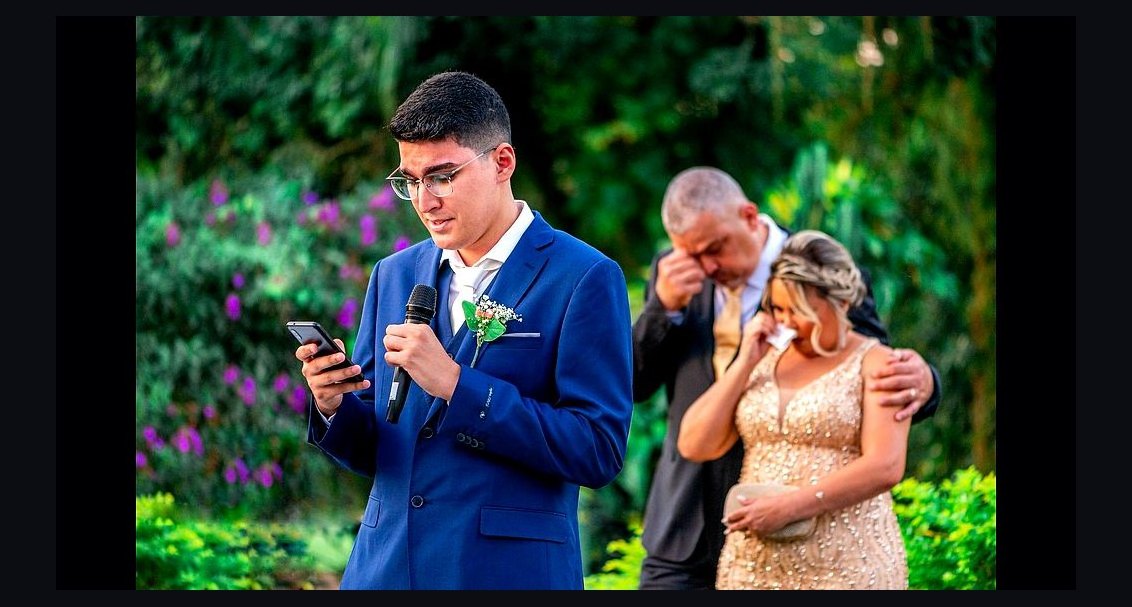
Reading from a phone. Screen glare, notifications, and the posture of looking down all cost you the room. Index cards or a folded sheet with large text and paragraph breaks work better. Number the cards.
Improvising because "I'm better off the cuff." Some people genuinely are. Most are not, and the ones who are still prepared a structure. Off-the-cuff speeches run long, wander, and produce the jokes you regret.
Not confirming the logistics. Whether there is a microphone, whether it is handheld or on a stand, where you will stand, whether you can be heard on the patio. A great speech delivered inaudibly is not a great speech. Ask the coordinator or the couple the day before.
Over-inflating a renewal's stakes. A renewal that is a low-key backyard dinner does not want a fifteen-minute retrospective with a slideshow. Match the register of the event. Read the invitation, the venue, and the dress code as signals of how formal your speech should be.
Decision framework: when to choose what
Use this framework to pick the mode, then the length, then the content.
First filter — what does the room know? If most guests could not describe how the couple met, you are writing a wedding speech even at a renewal: you must introduce, establish, and characterize. If most guests could tell that story themselves, skip the introduction entirely and go straight to the evidence. The single biggest wasted resource in renewal speeches is thirty seconds spent explaining something everyone already knows.
Second filter — what is the couple asking for? Some couples want a celebration; some want a re-commitment with weight; some want a party where the speeches are brief and the dancing is long. Ask. One direct question — "how long do you want me to go, and do you want funny or heartfelt?" — resolves most ambiguity. Couples almost always have an opinion and are rarely asked.
Third filter — what is your relationship to the couple? A sibling can go warmer and riskier than a colleague. A parent at a wedding carries a formal role and should stay closer to blessing than to comedy. An adult child speaking at their parents' renewal has the most powerful position in the room and should use restraint, because the material is inherently moving and does not need help.
Fourth filter — how many years of marriage are on the table? Under five years, a renewal speech can still borrow wedding energy. Ten to twenty-five years, the speech should be substantially about the interval — what they weathered. Beyond twenty-five, the speech is essentially a history, and its job is to name the specific decades and what each cost.
Fifth filter — time budget. Take the slot you are given and subtract 20 percent. Write to that. You will run over anyway, and running over into your own margin is invisible while running over the actual limit is not.
Applying the framework to the hard cases. If you are speaking at a renewal for a couple whose original Wedding you also spoke at, do not repeat the earlier Speech. Reference it in one sentence — acknowledge what you predicted — then spend the rest showing what actually happened. That contrast is the strongest structure available for a renewal and it is unavailable to anyone speaking at a first wedding.
If you are asked to speak at both events within the same year, which happens when a couple marries legally and then holds a renewal-style celebration later, split your material deliberately. Save your strongest story for the larger, more emotionally significant event, and use the other occasion for a shorter, warmer piece. Reusing the same anecdote twice in front of overlapping audiences is noticeable and deflating.
If you genuinely cannot tell which mode fits, default to specificity over category. A speech built on one concrete, well-told, true story about these two people works at either event. The category rules are optimizations; the specific story is the foundation. Get the story right and a misjudged tense is survivable. Get the story wrong and no amount of correct framing saves it.
A final check before you sit down to write. Say your thesis sentence out loud to yourself. If it could apply to any couple, it is not a thesis, it is a greeting card. Rewrite until it could only be said about these two, and the rest of the speech will largely write itself.
Related questions
How long should a vow renewal speech be compared to a wedding toast?
A wedding toast from a friend or family member runs 3–5 minutes (roughly 400–700 words). A vow renewal speech from a guest can stretch to 4–7 minutes because there are usually fewer speakers. The couple's own renewal vows are shorter — 2–4 minutes each.
Can I reuse my original wedding speech at the vow renewal?
Not wholesale. Reference it in a single sentence — quote what you predicted back then — then spend the rest of the speech on what actually happened. That contrast is the strongest structure a renewal speech has, and it is unavailable at a first wedding.
Should the couple's children speak at a vow renewal?
Often yes, and it is usually the most moving moment of the event. Keep it short — two to three minutes — and coach younger children to say one specific thing rather than attempting a full speech. Adult children should lean on restraint; the material is powerful without embellishment.
What jokes are off-limits at a vow renewal that would be fine at a wedding?
Anything about exes, bachelor or bachelorette behavior, drinking, or the couple's early sexual history. Renewal audiences typically include the couple's children and often grandchildren, which changes what registers as funny versus uncomfortable.
Do I need notes, or should I memorize the whole thing?
Memorize the opening line and the final two sentences; deliver the middle from notes on index cards with large text. Full memorization increases the risk of blanking under emotion, and reading from a phone costs you eye contact and reads poorly in photos.
FAQ
How do I know whether I'm writing a wedding speech or a vow renewal speech?
Ask what the room already knows. If most guests could not tell you how the couple met, you are introducing people and your speech is forward-looking and character-driven, which is wedding mode. If most guests have watched this marriage for years, you are confirming something and your speech should cite the record. The event's name matters less than the audience's knowledge — a renewal for a couple who eloped and never celebrated publicly is functionally a wedding.
What's the single biggest structural difference between the two?
Tense and evidence. A wedding speech predicts; it argues from character to a likely future. A renewal speech testifies; it argues from an actual record. That flips which stories are usable. Wedding material comes from before the marriage; renewal material should come mostly from during it — the years everyone lived through, which are the years most speakers forget to collect.
How many stories should a speech contain?
One fully told, plus one referenced in two or three sentences. Three or more anecdotes turns a speech into a list, and lists do not build toward anything. If your draft has four stories, cut to the one that best demonstrates your thesis and use the freed time to tell it with real detail — the specific room, the specific thing that was said.
How much preparation time is realistic?
Four to eight hours of genuine work spread over two to three weeks. Roughly one hour harvesting material, one to two hours drafting, two hours cutting across separate sittings, and one to two hours rehearsing aloud on a timer. The spacing matters more than the total — a draft that rests four days before you cut it comes out sharper than the same hours spent in a single night.
What should I do if I get emotional mid-speech?
Plan for it. Build a deliberate pause into the tender passage so you have a designed place to stop, breathe, and continue. Rehearse that section more than any other. If your voice goes, stop, take a breath, and keep going — rooms are overwhelmingly forgiving about this, and a genuine pause usually strengthens the speech rather than damaging it.
Is it acceptable to skip guest speeches at a vow renewal entirely?
Completely. Many renewals feature only the couple speaking to each other, which is often the more powerful format. If you are organizing one, decide early rather than leaving it open — an unstructured open mic at a renewal tends to run long and uneven, where a wedding's rigid reception timeline naturally prevents that.
Sources
- https://www.brides.com/
- https://www.theknot.com/
- https://www.marthastewart.com/weddings
- https://www.hitched.co.uk/wedding-planning/
- https://www.bbc.co.uk/bitesize/articles/zjkxgwx
- https://hbr.org/2014/06/how-to-give-a-killer-presentation
- https://www.ted.com/participate/organize-a-local-tedx-event/tedx-organizer-guide/speakers-program/prepare-your-speaker
- https://www.toastmasters.org/resources/public-speaking-tips
- https://www.apa.org/topics/anxiety/public-speaking
Related on PULSE
- How to write a maid of honor speech that doesn't sound like every other one
- Father of the bride speech structure: what to say and what to cut
- Vow renewal ceremony planning: timelines, guest lists, and what's optional
- How long should each speech at a wedding reception actually run
- Public speaking nerves: what actually works when you have four minutes and a microphone
- Writing personal vows versus renewal vows: what changes after ten years
This page will be disappearing soon. Save it to your device for $1 — or read it free while it is here.
@Kory-White- · if Venmo asks, the last 4 of my number are 2012
This page is gone.
This one is off the shelf now. $1 keeps it on your phone for good — the whole page, pictures and diagrams included.
 pulse-speechesA Toast for a Promotion Dinner
 pulse-speechesA Toast to Kick Off a Holiday Family Dinner
 pulse-speechesA Graduation Speech for a Nursing School Pinning
 pulse-speechesA Graduation Speech for a College Commencement
 pulse-speechesA Toast for a 70th Birthday
 pulse-speechesA Wedding Speech for the Father of the Groom
 pulse-speechesA Short Speech to Honor a Retiring Teacher
 pulse-speechesA Speech for a Little League Opening Day
 pulse-speechesA Retirement Speech for a Union Member
 pulse-speechesA Speech to Honor a Long-Serving Board Member