

What to Wear to a Fourth of July Cookout in 2027
 Curated byKory White · Fractional CRO · Maryland
Quality
Certified
Wear breathable natural fibers — linen, cotton, chambray, or Tencel — in a neutral base with one or two red, white, and blue accents. Add grass-friendly rubber-soled shoes, sun protection, and a light layer for the evening drop. Skip head-to-toe flag prints; comfort over costume wins every cookout.
What a cookout outfit actually has to survive
A Fourth of July cookout is not a single event with a single dress code — it is four or five micro-environments stitched together across six to eight hours, and the outfit that fails is almost always the one that solved for only one of them. There is the arrival window, usually late afternoon, when the sun is still high and the UV index in most of the continental U.S. sits between 7 and 10. There is the grill zone, where radiant heat off a hot grate can add 10–15°F to whatever the ambient temperature is and where grease spatter is a statistical near-certainty. There is the lawn, which is uneven, sometimes damp, and hostile to any shoe with a narrow heel or a slick sole. There is the table, where you sit for an hour and discover whether your waistband was chosen for standing or sitting. And there is the post-sunset stretch, when coastal and mountain regions routinely drop 15–20°F and mosquitoes arrive on schedule.
That framing matters more than any color rule, because the most common regret at a July cookout is not "I looked too plain." It is "I was uncomfortable for four hours." Heat, in particular, compounds: once a fabric stops moving moisture, the discomfort curve is steep and it does not reverse until you change clothes. So the practical hierarchy runs fabric first, footwear second, layering third, and palette last. Palette is the part everyone thinks about and the part that carries the least consequence.
There is a useful parallel here to how operations teams think about revenue-critical processes: you design for the failure mode, not the happy path. A field service company doesn't spec uniforms for the drive to the job — it specs them for the crawlspace. Same logic. Dress for the grill, the grass, and the 9 p.m. temperature drop, and the 4 p.m. arrival takes care of itself.
The second thing to internalize is that "casual" is not the same as "unconsidered." A cookout is a low-formality, high-visibility event: you will be photographed, you will meet people you don't know well, and the photos will circulate. The target is an outfit that looks deliberate while being genuinely easy to wear — the same standard a good uniform meets. Fit does more work than any single garment choice. A well-cut $40 chino short reads better than a poorly-fitting $180 linen trouser, every time.
Regionally, the calculation shifts. In the desert Southwest, where July afternoons regularly clear 100°F but humidity stays under 20%, loose long sleeves in light colors genuinely outperform short sleeves — the fabric blocks radiant sun while air moves underneath. In the Southeast, where 90°F pairs with 70% humidity, that inverts: minimum coverage and maximum airflow, with fabrics chosen for drying speed rather than sun blocking. In the Pacific Northwest and the northern Rockies, the daytime high may only reach the mid-70s and the evening layer stops being optional. Check the forecast the morning of, not the week before — July forecasts past 72 hours are close to noise.
Building the outfit, step by step
The sequencing below is deliberate. Each decision constrains the next one, so making them out of order means backtracking.
Step one — pull the actual forecast. Not the seasonal average, the day-of hourly. You want three numbers: the high, the dew point, and the sunset-plus-two-hours temperature. Dew point is the one people skip and it is the one that predicts misery. Below 60°F dew point, most fabrics behave. Between 60 and 70, cotton starts holding sweat. Above 70, only linen, open-weave cotton, and technical moisture-wicking knits stay tolerable.
Step two — pick the base fabric. Linen is the benchmark: its loose weave moves air, and it can absorb a meaningful share of its weight in moisture before feeling wet. It wrinkles, which is a feature at a cookout, not a flaw — the rumple reads as intentional summer dressing. Cotton voile, seersucker, and chambray are the next tier. Tencel lyocell blends have become widely available and are worth knowing: softer hand than linen, better drape than cotton, faster dry time than either. Avoid pure polyester, nylon, and acrylic unless the garment is explicitly engineered for heat with a moisture-wicking finish — a technical performance polo is fine; a cheap polyester camp shirt is a sauna.
Step three — solve footwear against the ground. Walk the mental terrain: grass, gravel driveway, patio, possibly a pool deck. Rubber-soled canvas sneakers, leather sneakers with a lugged outsole, flat leather slides, espadrilles with a jute-and-rubber base, or sport sandals all clear the bar. Stilettos and any narrow heel sink into turf. Slick leather soles slide on wet grass and on painted concrete around a pool. Flip-flops are a trip hazard during lawn games and offer no grip if someone hands you a full tray.
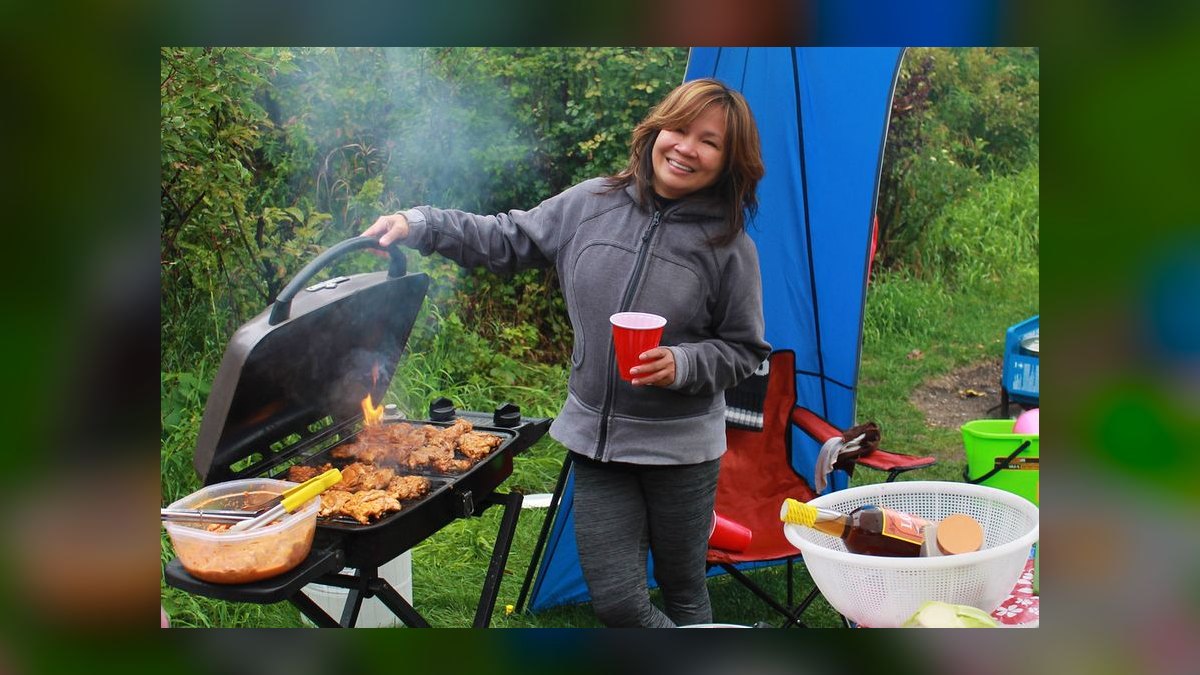
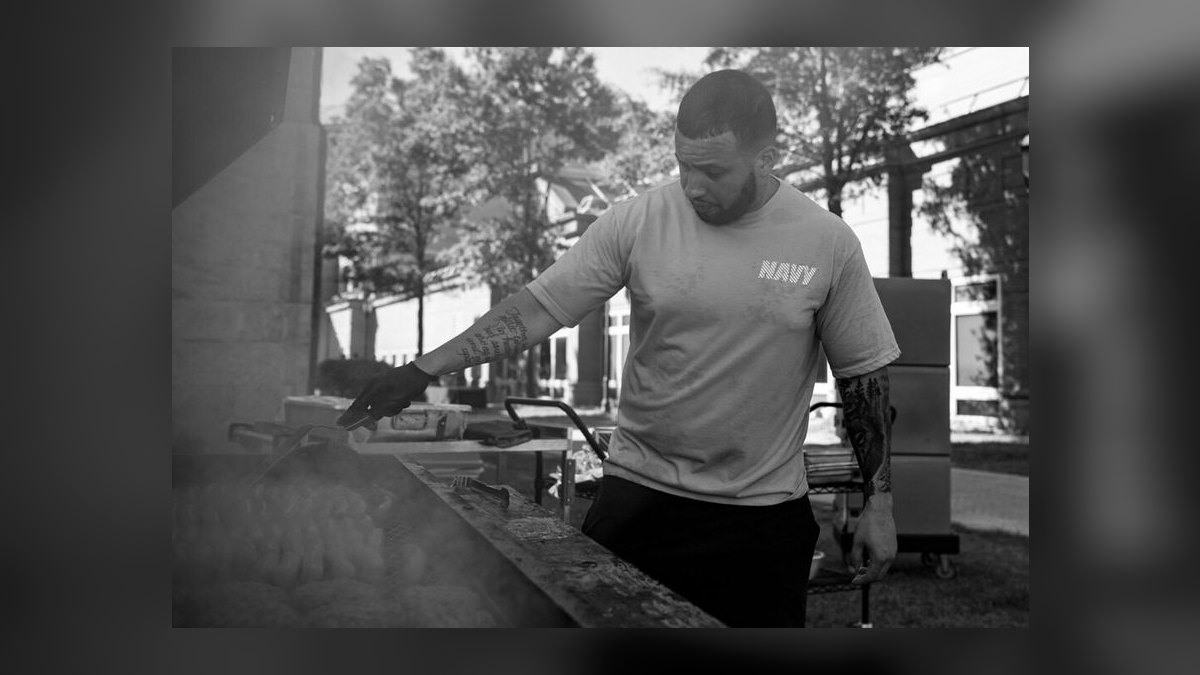
Step four — layer the top half for the grill. If you are cooking, wear a darker top or bring an apron. Grease spatter and smoke residue are both real, and both are far more visible on white. Navy, charcoal, olive, and medium-wash denim all hide the evidence. If you are strictly a guest, this constraint relaxes and white becomes available again.
Step five — set the palette. Now, and only now, decide on color. The workable rule is one or two patriotic accents against a neutral base, not three colors in equal measure. Navy shorts, white shirt, red belt. White dress, tan sandals, red bag. Cream trousers, chambray shirt, navy cap. The moment red, white, and blue appear in equal proportion, the outfit tips from festive into costume.
Step six — plan the evening layer and the sun layer. These are often the same garment. A chambray overshirt, a cotton cardigan, an unlined linen blazer, or a denim jacket all serve as shade at 3 p.m., a windbreak at 9 p.m., and a mosquito barrier the whole time. Tie it at the waist or leave it in the car; either way, bring it.
Step seven — accessorize for function. A wide-brim straw hat or a canvas bucket hat does real work at UV index 9. Sunglasses with actual UV protection, not just tint. A tote you can set on grass without ruining. That is the whole list. Additional theme jewelry is where outfits go wrong.
What it costs and how long it takes to assemble
Budget honestly and the whole thing is cheaper than people expect, because a good cookout outfit is built almost entirely from pieces that earn their keep across the rest of summer.
At the entry tier, roughly $120–$200 total, you are shopping mass-market and thrift. A cotton or cotton-blend camp shirt or a simple sundress lands in the $25–$45 range. Chino shorts or denim shorts, $30–$50. Canvas low-top sneakers, $55–$75 at list and frequently less on sale. A straw or canvas hat, $20–$35. That is a complete, genuinely good-looking outfit, and the sneakers and hat carry over to every other outdoor event you attend between May and September.
At the mid tier, roughly $250–$450, you are buying fabric quality rather than logos. Linen or linen-blend shirting typically runs $70–$120. A linen-blend dress or midi skirt, $90–$180. Leather sneakers, leather slides, or quality espadrilles, $90–$160. A better hat, $50–$90. The upgrade you actually feel is the linen — the difference between a cotton-poly shirt and a real linen shirt at 92°F is not subtle.
At the premium tier, $500 and up, you are paying for cut, finishing, and brand. The comfort gain over the mid tier is marginal. The visual gain is real but modest, and mostly shows up in how the garment drapes. Spend here if you want to, but know that no one at a cookout is auditing your seam finishing.
Timeline matters more than budget. If you are ordering online, work backward from the holiday: three weeks out for anything requiring a size exchange, two weeks out for a straightforward order, one week out only if you can pay for expedited shipping and accept the size you get. Tailoring — hemming trousers, taking in a shirt — needs seven to ten business days at a typical shop and longer in the week before a holiday, when everyone else has the same idea. If you are inside a week, shop in person. If you are inside 48 hours, shop your own closet first: the odds are good you already own a white shirt, a pair of neutral shorts, and something navy.
Cost per wear is the number that actually matters. A $140 pair of leather sneakers worn 60 times over two summers costs about $2.30 a wear. A $45 novelty flag tee worn once costs $45 a wear. Every dollar shifted from theme-specific novelty into neutral, high-rotation basics improves that ratio. This is the same logic that drives any sane procurement decision: durable, reusable inventory beats single-use inventory even at a higher sticker price, and the payback period on a good pair of summer shoes is roughly one season.
One more budget note: laundering. Linen and cotton in light colors will meet barbecue sauce, grass, and possibly a dropped s'more. Choose machine-washable over dry-clean-only for anything you plan to wear near food. A dry-clean-only white linen dress at a cookout is a $25 gamble on every plate that passes you.
Where people get it wrong
Head-to-toe flag print. The single most common error. A flag-print shirt with flag-print shorts and star-spangled sneakers is a costume, and it photographs as one. One patriotic element per outfit is the ceiling.
Choosing fabric by look instead of by weave. A heavy cotton twill shirt and a lightweight cotton voile shirt can look nearly identical on a rack and behave completely differently at 95°F. Feel the fabric. Hold it to the light — if you can see the weave open up, air will move through it.
The wrong shoe for the ground. Heels sink into turf. Slick soles slide on wet grass. Brand-new white sneakers acquire a permanent grass stain within an hour. Wear shoes you have already broken in and would not mourn.
White near the grill. If you are the one cooking, assume grease. A white linen shirt in front of a hot grate is a coin flip you will eventually lose.
Forgetting the evening. The 15–20°F post-sunset drop catches people every year, especially near water. The person shivering in a tank top at 9:30 p.m. checked the daytime high and stopped there.
Over-accessorizing. Hat, watch, tote, sunglasses — that is a complete kit. Adding flag earrings, a themed bracelet, a star-print belt, and a bandana turns a good outfit into a theme party.
Underestimating sitting time. You will sit on a folding chair, a picnic bench, and possibly a cooler. Rigid waistbands, non-stretch denim, and very short hemlines all become uncomfortable in a way they never are in a fitting room. Sit down in the outfit before you commit to it.
Ignoring bugs. Mosquitoes arrive at dusk in most of the country. Bare arms and ankles from 8 p.m. onward are a choice. A light long-sleeve layer solves it more comfortably than repeated reapplication of spray.
Buying same-day and hoping. The week of July 4th is the worst possible time to browse for summer basics — inventory is picked over, sizes are gapped, and returns won't process in time. Decide early or shop your closet.
Choosing your lane: how to decide what to actually wear
Different cookouts warrant different answers, and the fastest way to a decision is to classify the event before you classify the outfit.
The backyard family cookout. Lowest formality, highest activity. Shorts, a camp shirt or a simple cotton dress, and canvas sneakers. Nobody is dressed up; showing up over-dressed creates its own friction. Prioritize movement and washability. Budget tier is entirely fine here.
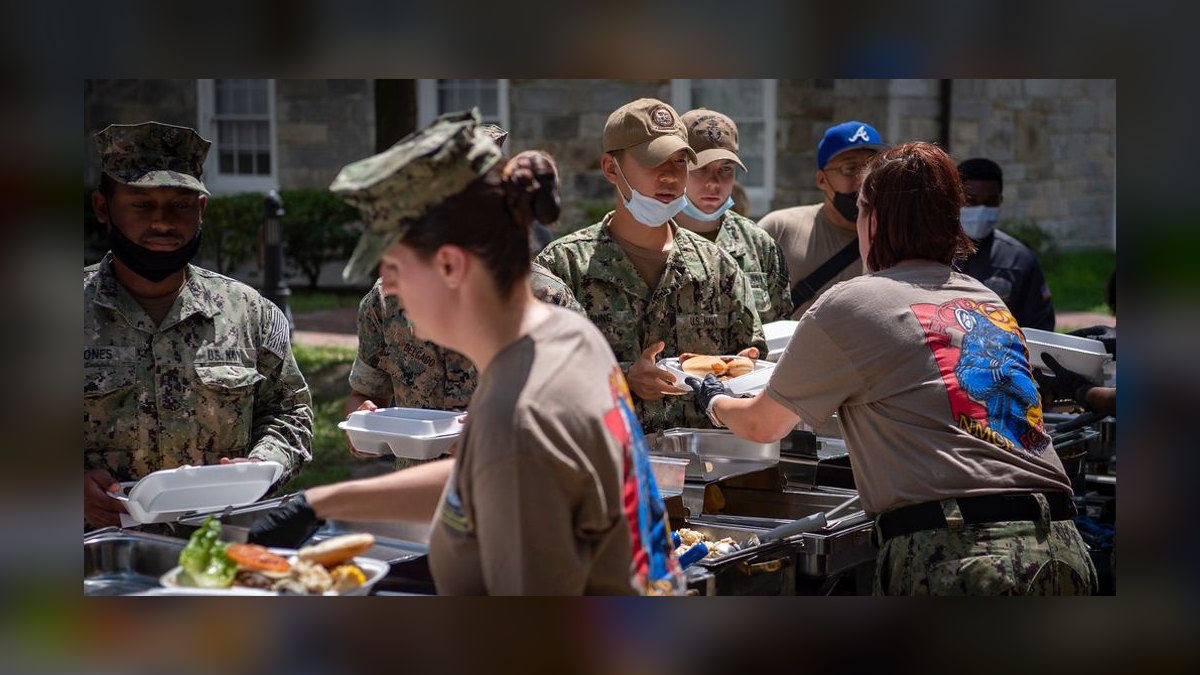
The neighborhood block party or community event. Slightly elevated, more strangers, more photos. Move to a linen shirt or a linen-blend dress, keep the shorts if they are tailored, and upgrade the footwear to leather sneakers, slides, or espadrilles. This is the sweet spot for the mid tier.
The lakehouse, boat, or poolside cookout. Water changes everything. Swim-capable bottoms, quick-dry fabrics, and sandals with real grip. Avoid anything that becomes translucent when wet or takes hours to dry. Bring a genuine cover-up rather than relying on a shirt you also plan to wear dry later.
The hosted or catered gathering. The most formal end of the July 4th spectrum — think a hosted event with servers, a bar, and seating charts. Trousers rather than shorts for men, a midi dress or skirt for women, leather footwear throughout. Still summer-weight fabric; still no tie.
The daytime-to-evening double. Cookout at four, fireworks at nine, possibly a different location. This is where a single well-chosen layer does all the work. Build the daytime outfit to be complete on its own, then let the overshirt or blazer convert it after dark rather than planning a full change.
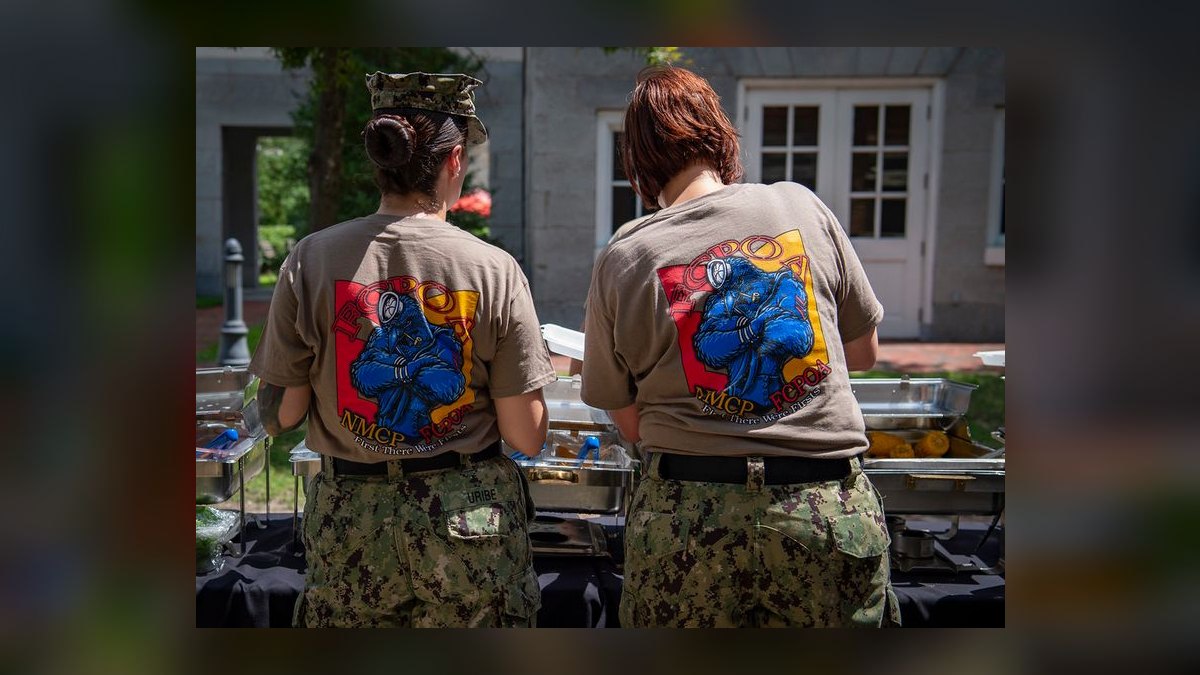
Two cross-cutting filters apply to all five. First, the terrain filter: whatever the event type, the ground decides the shoe. Second, the role filter: if you are cooking, you are effectively in a work uniform for part of the day — dark, washable, sleeves you can push up. Guests get more latitude than hosts, always.
If you are dressing a group — a family, a team, a crew running the food — resist matching outfits and coordinate on palette instead. Everyone in the navy-and-white family, with individual choices inside it, photographs far better than five people in identical flag tees, and each person keeps ownership of their own comfort.
Adjacent scenarios worth planning for
The cookout rarely stands alone. Understanding the surrounding events keeps you from building an outfit that works for two hours and fails for six.
The parade beforehand. Morning parades mean two to three hours standing on pavement in direct sun, often starting before 10 a.m. Sun protection matters more here than anywhere else in the day, and you will be walking on hard surfaces rather than grass — which argues for cushioned sneakers over flat espadrilles or slides.
Fireworks afterward. Almost always the coldest part of the day, frequently on damp grass or sand, and often involving a long walk back to a car in the dark. Closed-toe shoes and the evening layer both earn their place here. A blanket in the car is worth more than any garment.
The office or client version. Some workplaces run a company cookout — a team event, a customer appreciation grill-out, a summer offsite. The palette rules stay the same but the formality floor rises: closed-toe shoes, no cutoffs, no slogan tees, and nothing you would not want in a photo posted to a company account. Treat it as business-casual with better ventilation. If customers are present, the calculus is closer to a client meeting than a backyard party.
The all-day travel version. Driving three hours, arriving, cooking, staying late. Choose fabrics that recover from sitting — linen wrinkles honestly, which is fine, but a stiff cotton twill creases in ways that look slept-in. Pack a second shirt.
Hot-weather dressing generally. Everything above transfers to any outdoor summer event: Memorial Day, Labor Day, a July wedding reception on a lawn, a county fair, a backyard birthday. The palette is what changes between them; the fabric, footwear, and layering logic are constant. Build the summer-outdoor kit once and the holiday-specific decision collapses to a single accent choice — which is exactly the point. Wear the same infrastructure, swap the accent.
Related questions
Can I wear jeans to a Fourth of July cookout?
Yes, if the day is mild and the denim is lightweight. In 90°F-plus heat, full-length heavy denim traps heat badly. Denim shorts, a chambray shirt, or a light denim jacket for the evening are better ways to get the same look without the thermal penalty.
Is all-white okay for a cookout?
Yes — all-white is a classic summer look and reads as intentional. Just choose machine-washable cotton or linen rather than dry-clean-only, avoid standing at the grill, and accept that grass and barbecue sauce are live risks all afternoon.
What if it rains?
Swap to quick-dry fabrics and closed rubber-soled shoes, and bring a packable shell rather than an umbrella you will have to hold all day. Avoid suede, canvas espadrilles, and anything that becomes translucent when wet.
How dressed-up should I be if I'm the host?
Slightly less than your guests, and considerably more washable. Hosts cook, carry, and clean — dark, comfortable, sleeves that push up. Save the linen for events where someone else is running the grill.
Do I need to wear red, white, and blue at all?
No. A neutral summer outfit is entirely appropriate. If you want a nod to the holiday, a single accent — a belt, a bag, a cap, a scarf — does the job without any commitment to the full palette.
FAQ
What's the best fabric for a July cookout?
Linen leads for hot, humid conditions because its open weave moves air and it handles moisture well before feeling damp. Cotton voile, seersucker, and chambray are strong alternatives. Tencel lyocell blends are softer than linen and dry faster. Skip untreated polyester, nylon, and acrylic, which trap heat and hold sweat.
Are shorts appropriate, or too casual?
Shorts are appropriate at nearly every backyard cookout. Choose a tailored cut in a neutral or navy tone rather than athletic or cargo styles, and pair with a crisp shirt to keep the look deliberate. At a hosted or client-facing event, switch to lightweight trousers.
How do I nod to the holiday without looking like a flag?
Use one or two accents against a neutral base — a red belt with navy shorts and a white shirt, or a white dress with a red bag. Keeping the colors in unequal proportion is what separates festive from costume. Skip star-spangled prints entirely.
Are sneakers acceptable?
Yes, and they are often the smartest choice. Clean canvas or leather low-tops in white or navy handle grass, gravel, and lawn games far better than dress shoes or heels. Break them in beforehand and accept that a grass stain is likely.
What should I bring for the evening?
One convertible layer: a chambray overshirt, a cotton cardigan, an unlined linen blazer, or a light denim jacket. Temperatures can fall 15–20°F after sunset near water or at elevation, and the same layer doubles as a mosquito barrier.
How far ahead should I buy anything new?
Two to three weeks if you are ordering online and might need a size exchange, plus another seven to ten business days if anything needs tailoring. Inside a week, shop in person. Inside 48 hours, shop your own closet — most people already own the neutral base pieces.
Sources
- https://www.weather.gov/ — National Weather Service, forecast and historical temperature data by region
- https://www.epa.gov/sunsafety/uv-index-scale-0 — EPA UV Index scale and sun-protection guidance
- https://www.cancer.org/cancer/risk-prevention/sun-and-uv/uv-protection.html — American Cancer Society, sun-protective clothing guidance
- https://www.cdc.gov/mosquitoes/prevention/index.html — CDC, mosquito-bite prevention including clothing recommendations
- https://www.cottoninc.com/ — Cotton Incorporated, fiber performance and apparel comfort research
- https://www.consumerreports.org/ — Consumer Reports, apparel and footwear testing and buying guidance
- https://www.nfpa.org/education-and-research/home-fire-safety/grilling — NFPA, grilling safety guidance
- https://www.aad.org/public/everyday-care/sun-protection/shade-clothing-sunscreen/clothing — American Academy of Dermatology, clothing and sun protection
Related on PULSE
This page will be disappearing soon. Save it to your device for $1 — or read it free while it is here.
@Kory-White- · if Venmo asks, the last 4 of my number are 2012
This page is gone.
This one is off the shelf now. $1 keeps it on your phone for good — the whole page, pictures and diagrams included.
 pulse-styleWhat to Wear to a Work Awards Gala in 2027
 pulse-styleWhat to Wear on a Muggy Summer Night in 2027
 pulse-styleWhat to Wear to a Parent-Teacher Conference in 2027
 pulse-styleHow to Style a Maxi Dress for a Comedy Show in 2027
 pulse-styleHow to Style a Midi Skirt for a Job Interview in 2027
 pulse-styleWhat to Wear to a Factory Tour in 2027
 pulse-styleHow to Style White Sneakers for a Theater Show in 2027
 pulse-styleHow to Style a Pleated Skirt for a Gala in 2027
 pulse-styleHow to Wear Sage Green in Winter in 2027
 pulse-styleHow to Style a Maxi Dress for a First Date in 2027