

What to Wear to a Halloween Party in 2027
 Curated byKory White · Fractional CRO · Maryland
Quality
Certified

For a 2027 Halloween party, wear one clear character concept built from elevated, wearable separates — a velvet blazer, structured dress, or faux-leather jacket — in jewel tones like emerald, burgundy, and midnight navy, finished with a single metallic accent and comfortable boots. Choose costume-shop pieces or real-clothing pieces, never a confused mix of both.
Costume-shop kit versus wardrobe-built character
Every Halloween outfit decision collapses into two paths, and most people lose the night by refusing to pick one. Path one is the packaged costume: a bagged kit from a Halloween retailer, an online seller, or a pop-up store, arriving complete with a top, bottom, and one signature prop. Path two is the wardrobe-built character: separates you already own or would wear again, assembled so the character reads without a single item that screams "costume."
The packaged kit wins on legibility and speed. Nobody has to guess what you are. You order it, it shows up, you put it on. The failure modes are consistent and well-documented by anyone who has worn one past midnight: thin polyester that traps heat, elastic seams that pull at the shoulders, a mask or headpiece that gets abandoned on a coffee table by 10 p.m., and a photograph that looks obviously rented. The garment has no second life. Cost lands roughly in the $30–$90 band for adult kits at mainstream retailers, and every dollar is single-use.
The wardrobe-built path inverts the trade. A black turtleneck, wool trousers, and a felt fedora read as a noir detective on Halloween and read as ordinary good clothes on November 1. Velvet blazers, faux-leather moto jackets, and midi wrap dresses cost more per item — $60 to $250 depending on where you shop — but the cost-per-wear falls toward zero over a few seasons. The risk is legibility: without one unmistakable signal, a wardrobe-built vampire is just a person in a nice dark outfit, and you spend the night explaining yourself.
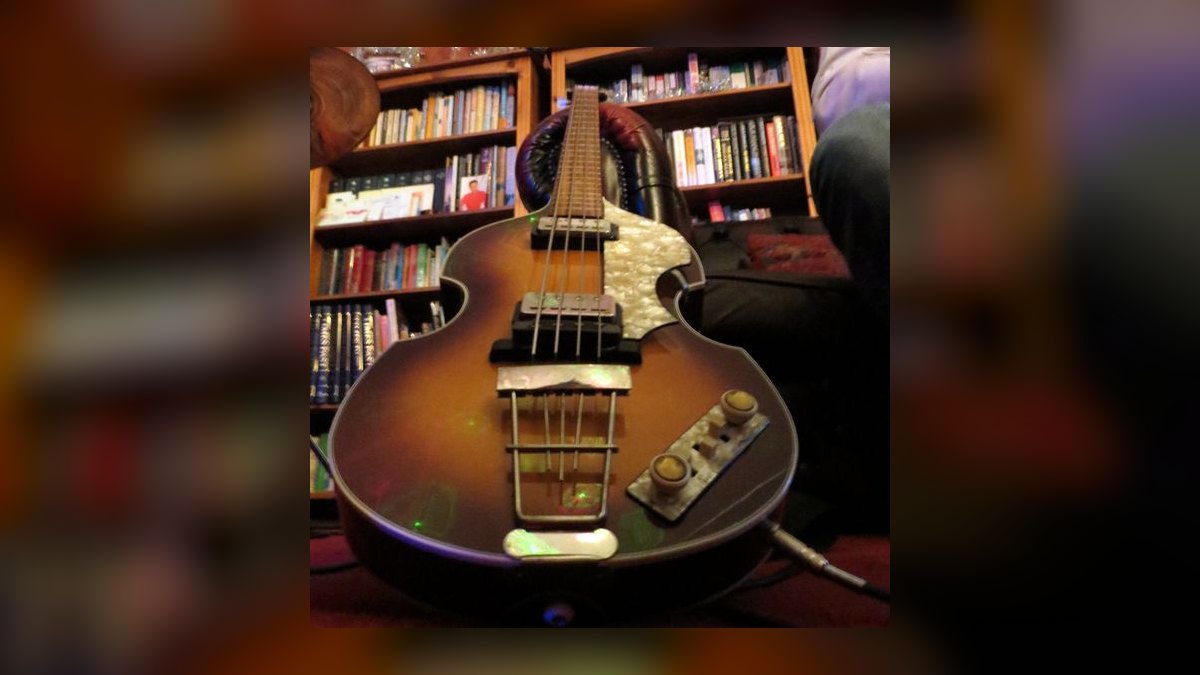
The resolution is a hybrid that most experienced party-goers converge on independently. Build the body of the outfit from real clothes in a tight palette — deep emerald, burgundy, midnight navy, charcoal, black — then buy exactly one costume-shop item that carries the entire concept. A pointed velvet hat. A prop cane. A choker. A fang set. One item, chosen well, does the identification work that a full kit does, and the other 90% of what you are wearing is a garment you'd wear to dinner.
A third path deserves mention because it has grown fast: thrifted-and-modified. Secondhand stores stock velvet blazers, silk scarves, sequined tops, and vintage dresses at a fraction of new-retail, and a $6 bottle of fabric paint or a $10 pack of iron-on vinyl converts a plain garment into a specific character. It costs the least in money and the most in lead time — you cannot thrift a costume the night before, because thrift inventory is random and you may need three visits to find the right base layer.
Reading the invitation and picking your path
The invitation tells you which path to take, and most people skim past the sentence that matters. A house party hosted by friends in their twenties rewards the packaged kit or the loud hybrid — effort is the social currency, and being the most committed person in the room is the point. A party at a bar, restaurant, or rented venue rewards wardrobe-built, because you will be photographed under harsh light, standing for four hours, and possibly walking through a public street before and after. A work-adjacent Halloween event — the office party, the client-facing mixer, the industry mixer where somebody's revenue targets are quietly being worked in the corner — rewards wardrobe-built almost exclusively, because a bad costume at a professional event follows you into Monday.
Three concrete signals in the invitation to read carefully:
"Costumes encouraged" versus "costumes required" versus silence. Encouraged means half the room will be in street clothes with a headband; go hybrid so you are neither overdressed nor underdressed. Required means the host has a theme and will notice; go packaged or heavy hybrid. Silence means street clothes with one accent, full stop.
Venue type. Indoors with a stated dress code means wardrobe-built. Outdoors in October means your outerwear is part of the costume, not something you check at the door — a trench coat, a long wool overcoat, or a faux-leather jacket has to fit the character, because you will be wearing it in every photo.
Start time. A 6 p.m. start that runs to midnight is six hours on your feet. That single fact eliminates stilettos, eliminates anything with a rigid waistband, and eliminates full-face masks. A 9 p.m. start at a bar is three hours and tolerates more discomfort.
The last node matters more than it looks. Walk twenty minutes in the full outfit before the night. That test catches the boot that rubs, the sleeve that binds when you raise a drink, the hat that slides, and the layer you cannot remove without dismantling the whole look. It costs twenty minutes and saves the entire evening.
Concrete numbers behind each option
Budgets separate cleanly by path, and knowing the real bands prevents both overspending and the false economy of a $40 kit you throw away.
Packaged costume kit. Adult kits from mainstream Halloween retailers run about $30–$90, with licensed character costumes at the high end and generic archetypes — witch, vampire, skeleton, pirate — at the low end. Add roughly $15–$40 for a wig, $10–$25 for basic makeup or face paint, and $20–$60 for footwear if your existing shoes clash. Realistic all-in: $75–$200, virtually all of it non-recoverable.

Wardrobe-built, buying new. A velvet or wool blazer from a mid-market retailer runs roughly $80–$220. A faux-leather moto jacket lands $100–$250. A midi wrap dress in velvet or heavy jersey sits $70–$180. Trousers or a skirt, $50–$120. Boots that survive six hours of standing — a lugged-sole boot like a Dr. Martens 1460, or a block-heel ankle boot — run $120–$300 and are the single item worth overpaying for. All-in, buying every piece new: $350–$900. But if you already own three of the five components, marginal cost drops to $100–$250, and every piece re-enters your rotation.
Thrifted-and-modified. Velvet blazers at secondhand stores commonly land $10–$25. Silk scarves, $3–$10. Costume jewelry, $2–$8. Vintage dresses, $10–$25. Add supplies: fabric paint $5–$15, fabric glue $4–$8, spray paint $5–$12 per can, heat-transfer vinyl if you have access to a cutting machine. A convincing thrifted build lands $30–$100 all-in, and the ceiling on quality is genuinely high — thrift racks carry real wool and real velvet that new-retail at that price point cannot touch.
The one-signal-item hybrid. This is the efficiency winner. A single character-carrying accessory — a pointed velvet hat, a felt wide-brim, a prop cane, a statement choker, an oversized brooch, a fang set — runs $15–$60 from a costume retailer or an independent maker. Layered over clothes you own, total incremental spend is often under $50, and the outfit photographs as though you planned it for weeks.
Where the money is wasted. Three consistent sinks. First, cheap plastic props bought in volume: a dozen flimsy pieces that snap before midnight cost more than two solid ones and look worse. Second, footwear bought only for the night — you will regret both the money and the blisters. Third, full-face masks and heavy latex, which get removed within the first hour at any indoor party and then have to be carried.

Where the money is well spent. Outerwear that doubles as costume, because in October you wear it constantly. Boots, because comfort determines whether you stay past 11. And the single signal item, because it is doing all the identification work at the lowest possible cost.
Building the look: palette, silhouette, and age-appropriate execution
The 2027 aesthetic direction favors depth over brightness. Anchor the outfit in a dark, saturated base — midnight navy, burgundy, deep emerald, charcoal, or true black — then introduce exactly one metallic or high-contrast accent. Silver, gold, and chrome all work; the discipline is choosing one and repeating it two or three times across the outfit rather than scattering four different finishes. A silver chain, silver boot hardware, and silver earrings read as intentional. A gold belt, silver rings, and a bronze brooch read as accidental.
Texture carries more weight than pattern. Velvet reads rich under warm indoor light and photographs with visible depth. Faux leather provides structure and hard edges that make a silhouette look deliberate. Mesh and sheer overlays add a modern, slightly unsettling quality that suits vampire, witch, and sci-fi concepts without requiring literal costume pieces. Mixing exactly two of these three is the sweet spot — velvet with faux leather, or mesh over a matte base. All three at once tips into busy.

Execution shifts by decade, and the shift is about formality and silhouette, not about hiding anything.
Twenties. Lean trend-forward and body-conscious. Sheer mesh layers, cropped or high-waisted proportions, chunky platform boots, oversized statement earrings, and playful tech accents like an LED cuff read as current rather than costume-y. The tolerance for discomfort is higher and the party is more likely to be a house party, so a louder concept lands well. A velvet mini with a mesh long-sleeve and platform loafers is a complete witch with zero costume-shop content.
Forties. Shift toward tailored and luxurious. A velvet wrap dress at midi length, a faux-leather moto over it, block-heel ankle boots, and a metallic clutch reads as gothic glamour without a single novelty item. For a masculine build: a burgundy cashmere-blend turtleneck, a knee-length wool trench, sharp-creased black trousers, and Chelsea boots — a noir detective who could walk into a restaurant afterward. The concept is carried by the fedora and, if you want it, a single well-chosen prop.
Sixties and beyond. Move to flowing, elegant lines in classic rich colors. A velvet smoking jacket with satin shawl lapels over an ivory high-neck shirt and pleated trousers is a vampire lord and a genuinely handsome outfit. A floor-length silk kaftan in emerald with gold embroidery, wide-leg palazzo pants underneath, and one heirloom-quality accessory — a heavy hammered cuff, a signet ring, a delicate crystal tiara — is a sorceress-queen with no costume content whatsoever. The concept survives; the execution refines.

Across all three bands, the constant is that the character concept stays intact while the literalness decreases. A twenty-five-year-old witch wears the hat. A sixty-five-year-old witch wears emerald silk, gold, and crystals, and everyone still knows.
Accessories, footwear, and the props that actually survive the night
Accessories decide whether an outfit reads as a costume or as a person in nice clothes, and the calculus is simple: one or two well-made pieces beat a dozen cheap ones, every time.
Headwear does the heaviest identification lifting per dollar. A wide-brim felt hat in charcoal or forest green with one metal brooch is a witch, a highwayman, or a gothic traveler depending on the rest. A felt fedora with a contrast band is a detective. A pointed velvet hat is unambiguous. Headwear is also the easiest thing to remove if the room gets hot, which is a real advantage over anything sewn into the garment.
Neckwear is the second-best lever. A velvet choker with a small charm, a heavy curb chain worn over mesh, or a layered set of thin chains changes the register of an otherwise plain top. Budget $15–$60 for something that will not turn your skin green.

Footwear deserves the largest share of the budget and the most honest self-assessment. You will stand for hours. Lugged-sole boots and platform loafers give height and drama with a stable base. Block-heel ankle boots give elevation without the ankle strain of a stiletto. Chunky combat boots suit rugged and apocalypse concepts. Sleek pointed-toe Chelseas suit vampire and gothic. Sneakers are acceptable if they are all-black or metallic and leather or mesh — a white running shoe destroys a dark palette instantly. Whatever you choose, wear it broken-in.
Hosiery and socks are an underused texture lever. Fishnet tights in burgundy or emerald add visible structure under a skirt for $15–$60. Knee-high socks with metallic thread peeking above a boot cost $12–$30 and finish a look that would otherwise stop at the ankle.
Bags should be small and thematic. A compact faux-leather backpack is practical. A clutch shaped like a book, a crystal, or a skull is a conversation starter and holds a phone, a card, and a key — which is everything you need. A distressed crossbody with visible buckles and wear suits apocalypse and post-collapse concepts. What does not work is a full-size everyday tote, which flattens any costume instantly.
Props follow a strict rule: one, maybe two, and they must be things you can set down. A cane, a folded fan, a leather-bound book, a lantern. Anything you must hold continuously means you cannot hold a drink, greet someone, or take a photo naturally. And check the venue's policy before bringing anything weapon-shaped — many bars, offices, and rented venues prohibit realistic replicas outright, and being turned away at the door is a preventable failure.

Makeup and prosthetics scale from trivial to committed. Stick-on metallic facial gems run $8–$20 and take two minutes. Temporary hair color spray is $10–$15 and washes out. Liquid latex for scars, wrinkles, or textured skin runs $10–$20 and requires a patch test at least a day ahead if you have not used it before. Set anything you apply with a translucent powder or it migrates onto collars.
Adjacent scenarios: group costumes, work parties, and the outfit's second life
Group costumes fail when they try to match exactly and succeed when they coordinate loosely. Identical outfits require identical body types and identical budgets, neither of which a real friend group has. Coordinate through a shared palette or a shared silhouette instead: everyone in a velvet blazer in a different jewel tone, or everyone in a draped midi with silver hardware. The group reads as a unit from across the room, and each person's outfit still fits them. Cost-sharing works well on consumables — one LED strip, one battery pack, one can of spray paint splits across five people.
Work Halloween parties operate under different rules than social ones, and misreading them is the most common expensive mistake. The safe construction is street-legal clothing plus one accent that signals participation: a cape you can take off, a hat, a pin, dramatic lipstick, a colored blazer. Nothing that requires explanation. Nothing that involves gore, politics, or another culture's dress. Nothing that restricts your ability to shake a hand or sit at a table. If clients or partners are present, the standard tightens further — treat it as business-casual with a wink. The people whose quarterly revenue numbers depend on those relationships will notice who read the room and who did not.

Costume reuse is legitimate and always has been. Reusing last year's build with a refresh is cheaper and usually better than starting over, because you have already solved the fit problems. Swap the weakest component — replace a thin cape with a velvet blazer, change the footwear, add or subtract the metallic accent — and the outfit reads as new. Photograph what you wore and where you wore it, and rotate across social circles.
Weather is the variable most people forget until they are cold. In October, an outdoor or partly-outdoor party means your coat is in every photograph, so it has to be part of the concept. A long wool overcoat, a trench, or a structured faux-leather jacket all read as costume components in the right context. A puffer over a velvet dress does not. If the forecast is genuinely cold, build the concept around the outerwear rather than treating it as an obstacle.
Warm venues are the mirror problem and cause more discomfort than cold ones. A packed indoor party runs hot within an hour. Build in a removable layer — a jacket that comes off, a cape that unclips — and choose breathable fabrics for the base. Unlined velvet, cotton blends, and mesh all survive a warm room. Heavy latex, thick polyester, and anything with a foam understructure do not.
The second life is worth planning for deliberately. The single strongest argument for the wardrobe-built path is that on November 1, a velvet blazer, a wrap dress, a wool trench, and a pair of good boots are simply clothes. They go to dinner, to work, to a winter holiday party. The packaged kit goes into a bin. If you make one decision differently this year, make it this one: spend on the pieces with a second life and rent, thrift, or buy cheap for the piece that only works once.
Related questions
How much should I actually spend on a Halloween costume?
Under $50 if you build from clothes you own plus one signal accessory. $75–$200 for a full packaged kit including wig, makeup, and shoes. $30–$100 for a thrifted-and-modified build. Spend the most on footwear and outerwear, which have a life beyond October.
Can I wear a costume to a work Halloween party?
Yes, but keep it street-legal: real clothing plus one removable accent — a hat, a cape, dramatic makeup, a colored blazer. Avoid gore, masks, political themes, and anything drawn from another culture's dress. If clients are present, treat it as business-casual with a small wink.
What should I wear if the party doesn't have a costume theme?
Elevated separates in a dark, saturated palette with one metallic accent. A structured blazer in deep plum with black trousers and a silver belt reads as festive and intentional without committing to a character. You are dressed for the season, not in costume.
Is it fine to reuse last year's costume?
Completely fine, and usually smarter than starting over since the fit is already solved. Refresh the weakest component — swap a thin cape for a velvet blazer, change the footwear, adjust the metallic accent — and rotate it across a different social circle than last year's.
What's the single best accessory investment?
Headwear. A wide-brim felt hat, a fedora, or a pointed velvet hat carries an entire character concept for $15–$60, works over clothes you already own, and can be removed the moment the room gets warm. Nothing else delivers that much identification per dollar.
FAQ
What if I don't want to wear a full costume at all?
Focus on elevated separates in a dark, rich palette with a single metallic accent. A structured blazer in deep plum over black trousers with a silver belt reads as a modern vampire or dark sorcerer without any costume-shop content. Add a choker or a brooch if you want the concept to land more clearly, and skip it entirely if you would rather just look good.
Are there colors I should avoid for a 2027 Halloween party?
Bright neons and pastels sit awkwardly against the jewel-tone direction unless you are deliberately going for a retro or ironic concept. Deep emerald, burgundy, midnight navy, charcoal, and black all photograph well under warm indoor light. Add one pop of silver or gold for contrast and stop there — a second metallic finish reads as unplanned.
Can I wear sneakers instead of boots or heels?
Yes, if they are sleek and all-black or metallic, in leather or mesh. White or brightly colored running shoes break a dark palette instantly and pull the eye downward. Given that most parties involve standing for four to six hours, a well-chosen dark sneaker often beats a heel you cannot walk in by the end of the night.
How do I make a group costume work without matching exactly?
Coordinate through a shared color scheme or a shared silhouette rather than identical outfits. Everyone in a velvet blazer in a different jewel tone, or everyone in a draped midi dress with silver hardware. The group reads as a unit from across the room, and each person's build still fits their body and budget.
What if the party is outdoors or in a warm venue?
For outdoors in October, make your coat part of the concept — a trench, a long wool overcoat, or a faux-leather jacket, since you will wear it in every photo. For a warm indoor venue, choose unlined velvet, mesh, or cotton blends and build in one removable layer. Skip heavy latex and thick polyester entirely.
How far ahead do I need to start planning?
Three weeks if you are thrifting, since secondhand inventory is random and you may need two or three visits to find the right base. One to two weeks if you are ordering a single accent item online. Forty-eight hours is enough for a closet-built look plus one locally-bought accessory. Always leave time for a full dress rehearsal.
Sources
- https://www.vogue.com — seasonal fashion direction, fabric and silhouette coverage
- https://www.nytimes.com — cultural reporting on Halloween celebrations and party etiquette
- https://nrf.com — National Retail Federation annual Halloween consumer spending and participation survey
- https://www.gq.com — menswear coverage on tailoring, outerwear, and seasonal dressing
- https://www.smithsonianmag.com — historical and cultural background on Halloween traditions
- https://www.goodhousekeeping.com — practical costume guides and DIY costume construction
- https://www.thecut.com — commentary on party dressing and costume trends
- https://www.rei.com/learn/expert-advice — layering and cold-weather clothing guidance for outdoor events
Related on PULSE
- What to Wear to an Adult Halloween Party in 2027
- What to Wear to a Cocktail Party if You Have an Athletic Build in 2027
- What to Wear to a Pool Party in Winter in 2027
- What to Wear to a Cocktail Party in Your 40s in 2027
- What to Wear to a Holiday Party if You're Curvy in 2027
- What to Wear to a Pool Party in Summer in 2027
This page will be disappearing soon. Save it to your device for $1 — or read it free while it is here.
@Kory-White- · if Venmo asks, the last 4 of my number are 2012
This page is gone.
This one is off the shelf now. $1 keeps it on your phone for good — the whole page, pictures and diagrams included.
 pulse-styleWhat to Wear to a Bowling Night in 2027
 pulse-styleHow to Wear Cream with Cargo Pants in 2027
 pulse-styleWhat to Wear to a Spring Lakeside Wedding in 2027
 pulse-styleWhat to Wear to an Outdoor Concert Date in 2027
 pulse-styleHow to Wear Slate Blue with Chelsea Boots in 2027
 pulse-styleHow to Wear Maroon with Combat Boots in 2027
 pulse-styleHow to Wear Forest Green in Spring in 2027
 pulse-styleWhat to Wear to a Factory Tour in 2027
 pulse-styleHow to Style a Pleated Skirt for a Job Interview in 2027
 pulse-styleHow to Style Loafers for a Holiday Party in 2027