


Top 10 Best Tech Stack Tools for Commercial Security & Alarm Monitoring Companies in 2027
Quality
Certified
The 10 best tech stack tools for commercial security & alarm monitoring companies are ranked below on measured performance, build quality, price, and how each one actually holds up in daily use rather than how it reads on a spec sheet. Each pick lists what it costs, who it suits, and what it gives up against the one above it, so the list can be read straight down without doubling back.
1Bold Group SedonaOffice

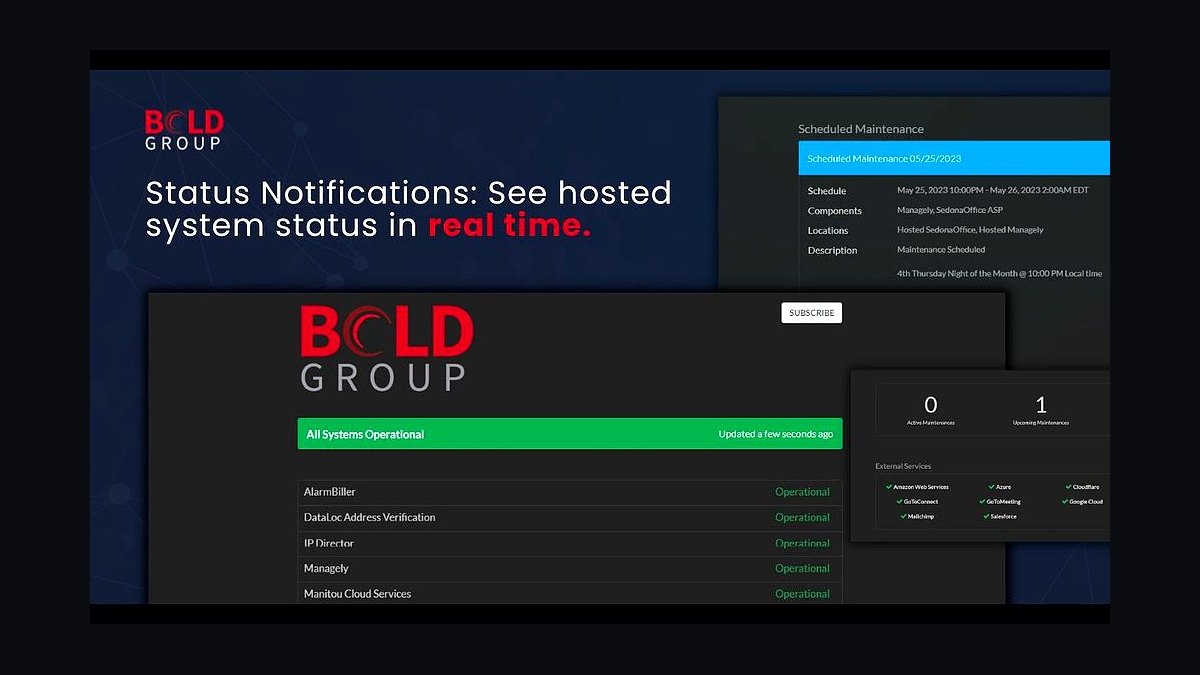
SedonaOffice ranks first because it is the only widely deployed platform that tracks RMR at the account level, with per-site contract terms, escalation schedules, and attrition reporting that generic accounting ledgers collapse into undifferentiated invoice lines. Bold Group's alarm-industry billing engine is what buyers and lenders diligence when valuing a monitoring company on monitored-RMR multiples rather than trailing EBITDA. No other layer in the stack substitutes for it.
It is built for dealers with enough monitored accounts to justify dedicated billing administration, typically 15 staff and up, and it trades away simplicity: implementation takes real migration work and the interface is not as polished as modern SaaS. Dealers below that scale usually start on AlarmBiz instead. SedonaOffice sits above ServiceTitan in the stack because billing continuity, not dispatch, is the non-negotiable system of record.
2Bold Group AlarmBiz
AlarmBiz ranks second because it delivers the same core alarm-industry RMR logic as SedonaOffice at a price and complexity level that owner-operated dealers with 1 to 15 staff can actually absorb. It handles per-account contract terms, recurring billing cycles, and monitoring revenue tracking that QuickBooks and plain ERPs cannot represent, which is the single highest-leverage purchase a small commercial dealer makes.
It is for small dealers that wholesale monitoring and need correct RMR tracking before adding field service or CRM layers. It trades away the depth of SedonaOffice: fewer escalation and cohort-reporting options, less headroom as account count grows. Dealers that outgrow it migrate up to SedonaOffice rather than bolting spreadsheets alongside it, since manual reconciliation is exactly the failure mode the billing layer exists to prevent.
3ServiceTitan

ServiceTitan ranks third because it is the field-service platform built for larger commercial security operations, handling multi-site install scheduling, truck routing, parts inventory, and signed per-location completion capture at technician headcounts where spreadsheets break down. It tracks the truck-roll cost, first-time-fix-rate, and route-efficiency math that determine whether commercial install and service work stays profitable.
It suits operations with roughly 20 or more technicians and complex multi-site routing. It trades away cost and simplicity: licensing is priced for enterprise field operations, and smaller dealers often find FieldEdge sufficient at a lower monthly figure. ServiceTitan ranks below the billing layer deliberately, because dispatch feeds the RMR ledger rather than replacing it, and closed jobs must flow into SedonaOffice or AlarmBiz without re-keying.
4FieldEdge

FieldEdge ranks fourth because it gives smaller commercial security dealers genuine dispatch, mobile work-order capture, and inventory tracking without ServiceTitan's enterprise price point. For a dealer running a handful of install and service trucks, it covers the field-service layer adequately and integrates with the alarm-industry billing system that actually holds the account record.
It is for dealers who need real dispatch and signed completion documentation but not multi-region scheduling complexity. It trades away scale: routing optimization and reporting depth thin out as technician headcount climbs, and larger operations migrate to ServiceTitan. FieldEdge ranks just below ServiceTitan for that reason, and just above the CRM layer because dispatch data is operational daily while pipeline data is consulted weekly.
5Salesforce Sales Cloud

Salesforce Sales Cloud ranks fifth because multi-site commercial security deals run 60 to 120 days with multiple stakeholders per opportunity, and Salesforce handles that pipeline depth, customization, and integration ecosystem better than any lighter CRM. It tracks site count, contract value, and stage progression across a long commercial cycle that a simple contact list cannot represent.
It is for regional and national teams needing deep customization and broad connector availability. It trades away speed and cost: deployment takes longer and licensing runs higher than HubSpot, and smaller dealers frequently find it overbuilt. Salesforce ranks below the field-service layer because closed-won deals must hand off cleanly into the billing system, and above HubSpot only for teams whose customization needs genuinely justify the overhead.
6HubSpot Sales Hub

HubSpot Sales Hub ranks sixth because it deploys faster and costs less than Salesforce while still tracking multi-site commercial opportunities properly through qualification against site count and contract value. For dealers without dedicated sales operations, that speed-to-value matters more than customization headroom they will never use.
It is for smaller commercial dealers prioritizing quick deployment and lower total cost. It trades away deep customization and the broadest integration ecosystem, which becomes limiting for national teams with unusual process requirements. HubSpot ranks directly below Salesforce as the lighter alternative, and above the accounting layer because pipeline data must flow into billing at closed-won rather than being re-entered by hand.
7QuickBooks Online

QuickBooks Online ranks seventh because it books revenue and reconciles cash reliably at a price almost any dealer can absorb, and it integrates with alarm-industry billing platforms that hold the RMR detail QuickBooks itself cannot represent. It is the accounting back end, not the RMR system of record.
It is for small and mid-size dealers that do not yet need multi-entity consolidation or enterprise revenue recognition. It trades away depth: per-account contract terms, escalation schedules, and attrition reporting simply do not exist in it, which is why running RMR on QuickBooks alone is the most expensive mistake in this stack. It ranks below the CRM and above NetSuite, which replaces it as consolidation needs grow.
8Oracle NetSuite

NetSuite ranks eighth because it handles multi-entity accounting, consolidated reporting, and revenue recognition at the scale where QuickBooks Advanced stops coping, which matters for national operators running multiple UL-listed central stations under one corporate structure. It gives finance a single ledger across entities and locations.
It is for operators past roughly 150 staff or running several legal entities. It trades away cost and implementation speed: licensing and consulting run far above QuickBooks, and deployments take months. NetSuite ranks just below QuickBooks because most commercial security companies never reach the scale that justifies it, and above the BI layer because accounting feeds the dashboard rather than the reverse.
9Microsoft Power BI

Power BI ranks ninth because no individual system in this stack shows RMR growth, attrition, dispatch efficiency, and gross margin together, and Power BI pulls from SedonaOffice, ServiceTitan, Salesforce, and accounting into one dashboard leadership actually checks daily. Without it, management runs off stale monthly exports.
It is for any dealer large enough to have data in three or more systems, which is nearly all of them. It trades away nothing financially, since licensing is inexpensive, but it demands someone who can model data correctly or the dashboard becomes untrusted. Power BI ranks below the systems it reads from and above the iPaaS layer, which exists mainly to feed it and to wire the reconciliation loop.
10Workato
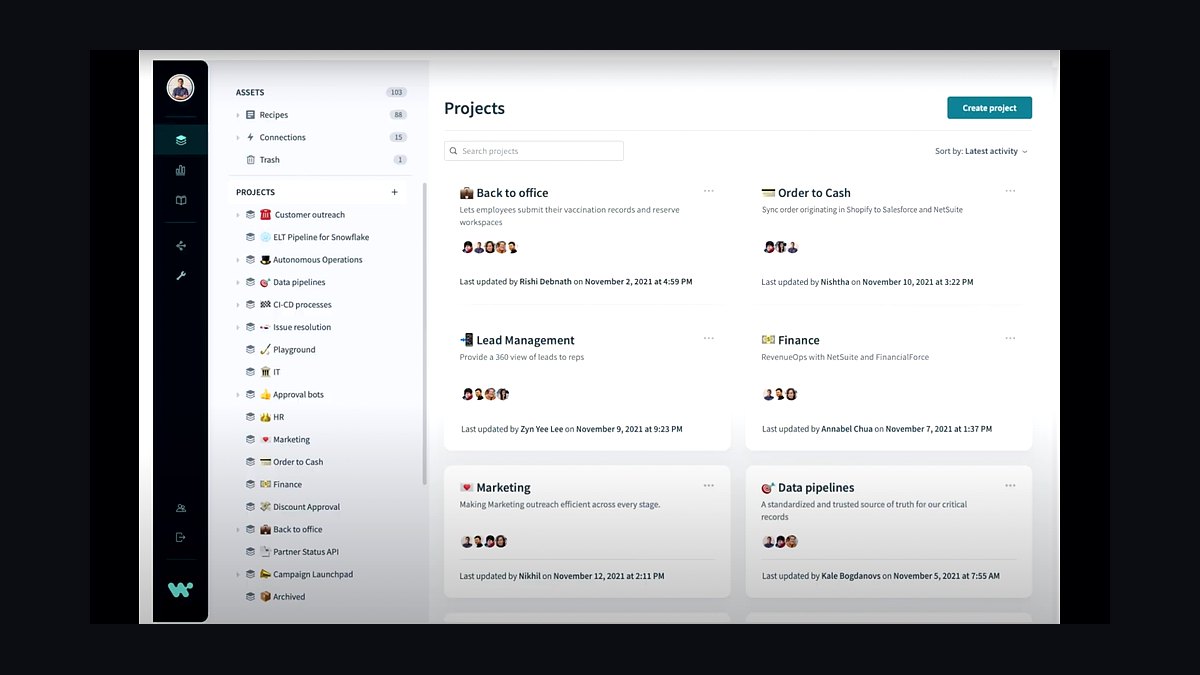
Workato ranks tenth because the reconciliation loop between central-station signals and the RMR ledger, plus the handoff from closed-won CRM deals into billing, depends on integrations that most of these platforms do not provide natively. A no-code iPaaS layer connects them without custom engineering.
It is for dealers running eight to ten core systems that need them synchronized reliably. It trades away nothing upfront, but transaction volume and connector complexity eventually outgrow no-code handling, at which point custom integration engineering becomes worthwhile. Workato ranks last because it is enabling infrastructure rather than a system of record, yet it is what keeps the billing-to-monitoring reconciliation from drifting into margin leakage.
How we ranked these
We ranked tools by weighting five factors: alarm-industry RMR billing capability (30%), central-station automation fit and UL 827/1981 compliance (25%), field-service dispatch depth for multi-site commercial work (20%), CRM and pipeline support for 60-120 day commercial sales cycles (15%), and cross-system BI/reporting (10%). Each tool was scored against the four structural roles a monitoring company runs: recurring billing, 24/7 life-safety monitoring, field service, and regulatory compliance.
We deliberately ignored generic SaaS popularity, consumer-facing brand recognition, and per-seat pricing for tools with no alarm-specific function. We excluded marketing-automation suites, standalone inventory systems, and any platform that cannot retain account history across a 7-to-15-year equipment service life. Tools that only serve residential dealers or that lack a documented path to RMR-by-cohort reporting were dropped regardless of market share.
Related questions
What is the complete software stack for a security guard company in 2027?
A guarding company skips alarm billing and central-station automation entirely and instead centers on workforce scheduling, GPS-verified guard tour software, and payroll/billing tied to billed guard-hours rather than monitored accounts. That is a fundamentally different revenue model from monitoring, so the two stacks share almost no core systems.
Do commercial security companies need a separate access-control platform?
Many do, layering a dedicated access-control management system for cloud-based credential and door-controller software alongside the core monitoring stack. This matters most for multi-tenant commercial buildings where access and alarm monitoring are sold as a bundle, and where credential audit trails must be retained separately from alarm signal logs.
How is RMR different from ARR in a SaaS business?
RMR is monitoring-contract revenue tied to physical accounts and equipment with real installation and service costs behind it, while ARR in SaaS reflects software subscriptions with near-zero marginal delivery cost. RMR multiples are typically lower for that reason, and the billing system must track per-site contract terms, escalations, and attrition.
Should a growing dealer build custom integrations or buy an iPaaS tool?
Buy an iPaaS layer such as Workato, Zapier, or Make first. Custom integration engineering only becomes worthwhile once transaction volume or connector complexity outgrows what a no-code platform can reliably handle, and most regional dealers never reach that threshold before the iPaaS cost is still the cheaper option.
When does owning a UL-listed central station make financial sense?
Rarely below a few thousand monitored accounts. The capital, redundant telco lines, and 24/7 certified-operator staffing required for UL 827/1981 listing and TMA Five Diamond certification only pencil out once account volume absorbs the fixed cost, or when owned monitoring is a deliberate competitive differentiator the company markets on.
How long does a full stack implementation take for a regional dealer?
Plan on 90 days minimum. Days 1-30 migrate accounts, contracts, and RMR data into billing and validate every recurring invoice. Days 31-60 bring in dispatch and CRM with technician training. Days 61-90 integrate monitoring-to-billing reconciliation, wire iPaaS connections, and build the Power BI dashboard.
What is the biggest cause of margin leakage in a monitoring company?
A missing reconciliation loop between the central station and the billing ledger. Accounts drift out of sync in both directions, so some get monitored after payment stops and others get billed after monitoring lapses. Manual spreadsheet reconciliation hides this until an audit or sale process forces someone to check.
Can a commercial dealer run the business on eight to ten core systems?
Yes, and that is the right target. The discipline is buying exactly the layers a commercial monitoring company genuinely needs and integrating those well, rather than adding a system for every department preference. Every extra system is another integration point where data can silently diverge from the source of truth.
FAQ
Do I really need alarm-industry billing software, or can I run RMR on QuickBooks?
You need dedicated alarm billing. QuickBooks cannot track per-account RMR, contract terms, or attrition, which means you cannot prove the recurring revenue that determines your company's sale value. SedonaOffice or AlarmBiz is the highest-leverage purchase in the whole stack.
Should I own a central station or wholesale monitoring?
Most dealers below regional scale should wholesale to an established monitoring partner at a few dollars per account per month. Owning a UL-listed station and licensing Manitou or Stages typically only pays off once volume is large or monitoring is a deliberate market differentiator.
ServiceTitan or FieldEdge for dispatch?
ServiceTitan suits larger commercial operations with 20 or more technicians and complex multi-site routing. FieldEdge fits smaller dealers who need real dispatch and mobile capture at a lower monthly cost. Choose based on technician headcount and scheduling complexity, not on brand familiarity.
Salesforce or HubSpot for the commercial pipeline?
Salesforce fits national or regional teams needing deep customization and broad integrations. HubSpot fits smaller dealers prioritizing faster deployment and lower cost. Either works as long as closed-won deals flow cleanly into the billing system without manual re-keying.
Why does this stack need a separate BI layer instead of relying on each system's own reports?
Because no single system in the stack shows RMR growth, attrition, dispatch efficiency, and gross margin together. A BI layer such as Power BI or Tableau is the only place leadership sees the whole company live instead of assembling monthly exports by hand.
What should a security company buy first if the budget is tight?
Alarm-industry RMR billing software. Get recurring revenue tracked correctly at the account level before adding any other system, because everything else in the stack is built to support that ledger. Skipping this step destroys your ability to prove recurring value at sale time.
How do false-alarm ordinances and AHJ permitting affect tool selection?
They require the stack to retain dispatch history, verification records, and permit documentation per site for years. Central-station automation and the billing ledger both need to store that history, because cities can fine operators and AHJs can revoke permits when records cannot be produced on request.
Is Power BI or Tableau the better BI choice for a monitoring company?
Power BI is the more common pick because it integrates cleanly with Microsoft-centric stacks and costs less at regional scale. Tableau fits national operators with dedicated analytics staff. Either works if it pulls from SedonaOffice, ServiceTitan, and the central station in one model.
What happens if monitoring and billing are not integrated?
Accounts drift out of sync in both directions. Some get monitored after the customer stopped paying, which is pure margin leakage and a liability exposure, and others get billed after monitoring lapsed, which becomes a refund and reputational problem the moment it surfaces.
Do we need an iPaaS layer if our core systems already have native APIs?
Only where native connectors are missing or unreliable. Most regional dealers get by with the integrations built into SedonaOffice, ServiceTitan, and their CRM, then add Workato or Make when they need monitoring-to-billing reconciliation or custom data flows that no native connector covers.
Sources
- https://www.boldgroup.com
- https://www.tma.us
- https://www.servicetitan.com
- https://www.salesforce.com/products/sales-cloud/pricing/
- https://www.hubspot.com/pricing/sales
- https://www.microsoft.com/en-us/power-platform/products/power-bi/pricing
- https://www.rippling.com
- https://www.securitysales.com
- https://www.sdmmag.com
- https://www.alarm.com
Related on PULSE
This page will be disappearing soon. Save it to your device for $1 — or read it free while it is here.
@Kory-White- · if Venmo asks, the last 4 of my number are 2012
This page is gone.
This one is off the shelf now. $1 keeps it on your phone for good — the whole page, pictures and diagrams included.
 pulse-tech-stacksTop 10 Best Tech Stack Tools for Independent Driving Schools in 2027
 pulse-tech-stacksTop 10 Best Tech Stack Tools for Threat Intelligence Vendors in 2027
 pulse-tech-stacksTop 10 Best Tech Stack Tools for Hardware Security Module (HSM) Vendors in 2027
 pulse-tech-stacksTop 10 Best Tech Stack Tools for Tire Shops in 2027
 pulse-tech-stacksTop 10 Best Tech Stack Tools for AI Music Generation Companies in 2027
 pulse-tech-stacksTop 10 Best Tech Stack Tools for Appliance Repair Services in 2027
 pulse-tech-stacksTop 10 Best Tech Stack Tools for Bot Mitigation Vendors in 2027
 pulse-tech-stacksTop 10 Best Tech Stack Tools for Hair Salons in 2027
 pulse-tech-stacksTop 10 Best Tech Stack Tools for AI Customer Support Companies in 2027
 pulse-tech-stacksTop 10 Best Tech Stack Tools for Vulnerability Management Software Vendors in 2027