


Top 10 Best Tech Stack Tools for Specialty Pharmacies in 2027
Quality
Certified

The 10 best tech stack tools for specialty pharmacies are ranked below on measured performance, build quality, price, and how each one actually holds up in daily use rather than how it reads on a spec sheet. Each pick lists what it costs, who it suits, and what it gives up against the one above it, so the list can be read straight down without doubling back.
1ScriptMed Cloud

ScriptMed Cloud ranks first because it is purpose-built for specialty pharmacy rather than adapted from retail. It handles split billing across medical and pharmacy benefits, multi-payer claims, and limited-distribution data feeds that retail systems cannot manage. Enterprise pricing commonly runs $3,000–$15,000+ per month depending on volume and modules, often quoted per claim or per script.
It fits multi-payer specialty operations with several limited-distribution contracts and the staff to configure complex workflows. It trades away simplicity and low cost, requiring real implementation effort and ongoing module management. Compared with CPR+ directly below, ScriptMed Cloud offers a more modern cloud architecture and deeper specialty billing depth, while CPR+ remains the long-standing workhorse for infusion-heavy operations.
2CPR+
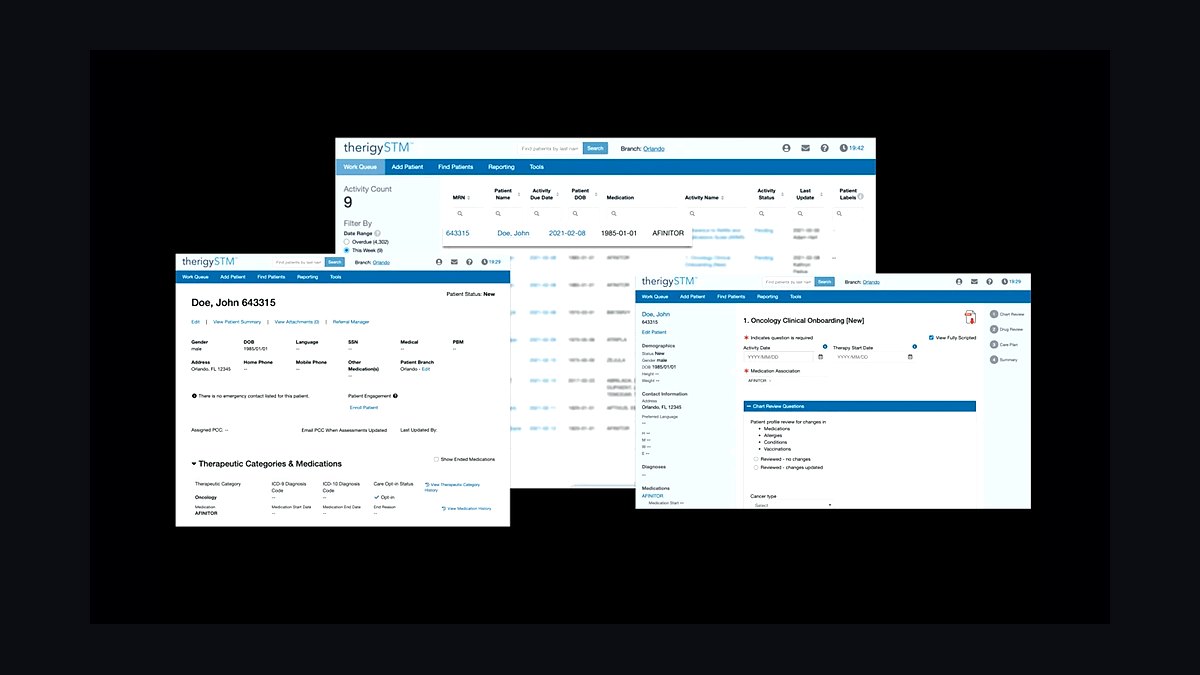
CPR+ ranks second as the long-standing specialty and infusion pharmacy management workhorse, trusted by independent and mid-size operations for decades. It handles dispensing, billing, and inventory with configurable workflows for specialty and home infusion lines. Pricing is typically enterprise-tier and quoted per claim or per script, comparable to ScriptMed Cloud at $3,000–$15,000+ monthly depending on volume.
It fits pharmacies that value a proven, widely supported platform and need strong infusion billing alongside specialty dispensing. It trades away some cloud-native flexibility and modern UI polish compared with ScriptMed Cloud above. Against Therigy STM below, CPR+ is the dispensing spine while Therigy is the clinical layer, so most operators run both rather than choosing one.
3Therigy STM
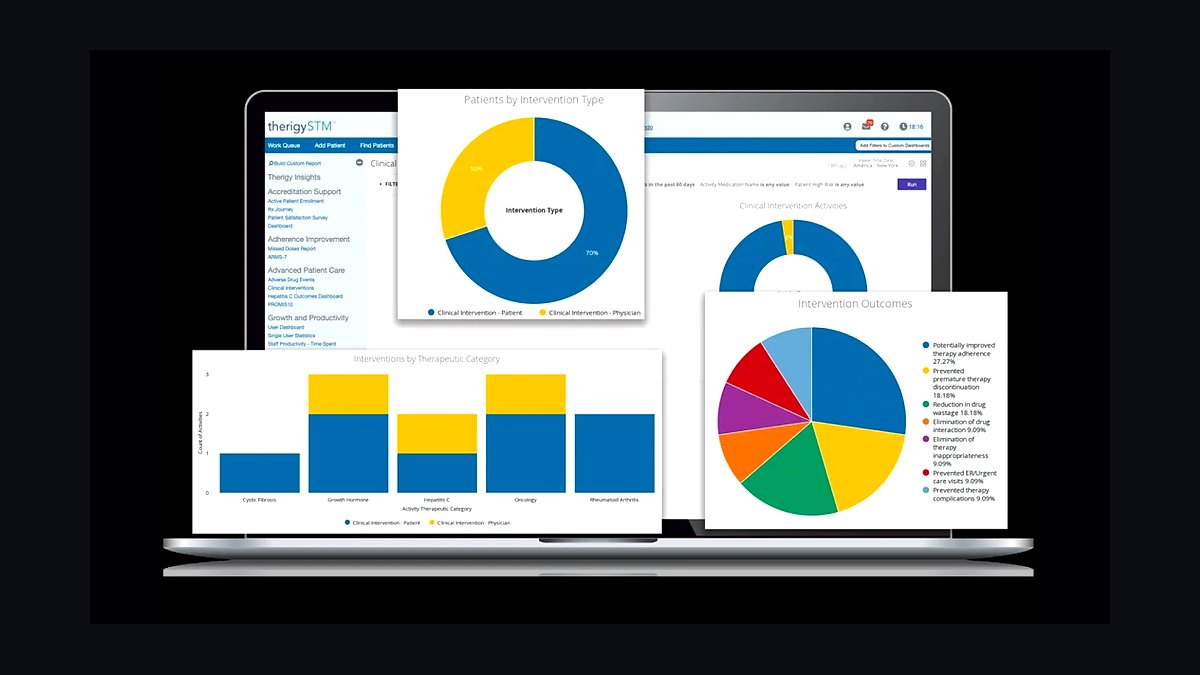
Therigy STM ranks third because it is the de facto clinical patient-management and adherence layer that manufacturers and accreditors expect to see documented. It provides therapy-specific assessment protocols, intervention tracking, and adherence reporting tied to Proportion of Days Covered metrics. Pricing typically runs per-patient or subscription, often $1,000–$5,000 per month for a mid-size specialty pharmacy.
It fits pharmacies holding limited-distribution contracts that require documented clinical follow-up and adherence evidence. It trades away dispensing and billing capability, so it must integrate tightly with ScriptMed Cloud or CPR+ above. Compared with the Asembia 1 Platform below, Therigy is the more specialized clinical tool, while Asembia consolidates patient management with hub and GPO services.
4Asembia 1 Platform

The Asembia 1 Platform ranks fourth as the major alternate patient-management layer, especially common where a pharmacy already uses Asembia's hub and GPO services. It consolidates patient management, hub services, and data reporting into one vendor relationship, reducing integration overhead. Pricing is subscription-based and typically comparable to Therigy STM at $1,000–$5,000 monthly for mid-size operations.
It fits pharmacies that want fewer vendors and already lean on Asembia for hub or group purchasing services. It trades away some of Therigy's therapy-specific clinical depth in exchange for broader service consolidation. Compared with CoverMyMeds below, Asembia covers patient management and hub services while CoverMyMeds focuses narrowly on electronic prior authorization.
5CoverMyMeds

CoverMyMeds ranks fifth because electronic prior authorization is the single highest-ROI automation in specialty pharmacy, directly determining time-to-first-fill. It is the dominant ePA network and integrates with most dispensing systems, with basic ePA frequently bundled or low-cost and premium modules priced higher. It automates submission and status tracking across payers that would otherwise require phone and fax work.
It fits every specialty pharmacy that processes prior authorizations, from independent startups to health-system operations. It trades away financial-assistance navigation, which is why TailorMed below is typically deployed alongside it. Compared with TailorMed, CoverMyMeds handles the payer approval workflow while TailorMed handles copay cards, foundation grants, and free-drug program enrollment.
6TailorMed
TailorMed ranks sixth because financial-assistance navigation is what prevents patients from abandoning five- and six-figure therapies at the copay. It scans for copay cards, foundation grants, and free-drug programs and tracks enrollment through completion. Pricing typically runs $1,000–$4,000 per month for a mid-size specialty pharmacy, and it usually pays for itself in retained fills.
It fits pharmacies dispensing high-cost drugs where patient out-of-pocket burden blocks therapy initiation. It trades away prior-authorization submission, which CoverMyMeds above handles. Compared with Surescripts below, TailorMed addresses affordability while Surescripts addresses connectivity, and both are needed in a complete specialty stack.
7Surescripts

Surescripts ranks seventh because it is the national e-prescribing and clinical-interoperability network with no meaningful alternate at scale. Specialty referrals increasingly arrive electronically through Specialty Patient Enrollment, and real-time benefit and medication-history data depend on this connection. It is effectively table stakes, typically bundled into dispensing-system fees or charged as a modest per-transaction cost.
It fits every specialty pharmacy that receives electronic prescriptions or referrals, which in 2027 means essentially all of them. It trades away nothing optional, since there is no national-scale substitute. Compared with Verity Solutions below, Surescripts is universal connectivity while Verity is 340B-specific compliance software only covered entities and contract pharmacies need.
8Verity Solutions
Verity Solutions ranks eighth for 340B participants, where split-billing and audit compliance software is mandatory rather than optional. It captures eligible claims, manages contract pharmacy arrangements, and produces the documentation needed to survive a 340B audit. Pricing is usually a percentage of captured savings or a per-claim fee, aligning vendor cost with program value.
It fits covered entities and contract pharmacies participating in 340B, including health-system specialty operations. It trades away relevance for everyone else, since most independent specialty pharmacies are not 340B participants and should skip this layer. Compared with Macro Helix below, Verity and Macro Helix are the two leading 340B platforms and selection often comes down to existing health-system relationships.
9Macro Helix

Macro Helix ranks ninth as the other leading 340B split-billing and compliance platform, widely used by health systems and contract pharmacy networks. It captures eligible claims, manages accumulator and replenishment logic, and supports audit defense documentation. Pricing follows a similar model to Verity Solutions, typically a percentage of captured savings or a per-claim fee.
It fits health-system specialty pharmacies and contract pharmacy arrangements already integrated with Macro Helix's broader 340B services. It trades away relevance for non-340B pharmacies, which should skip it entirely. Compared with QuickBooks Online below, Macro Helix addresses 340B compliance while QuickBooks handles general accounting, and they operate in completely separate parts of the stack.
10QuickBooks Online
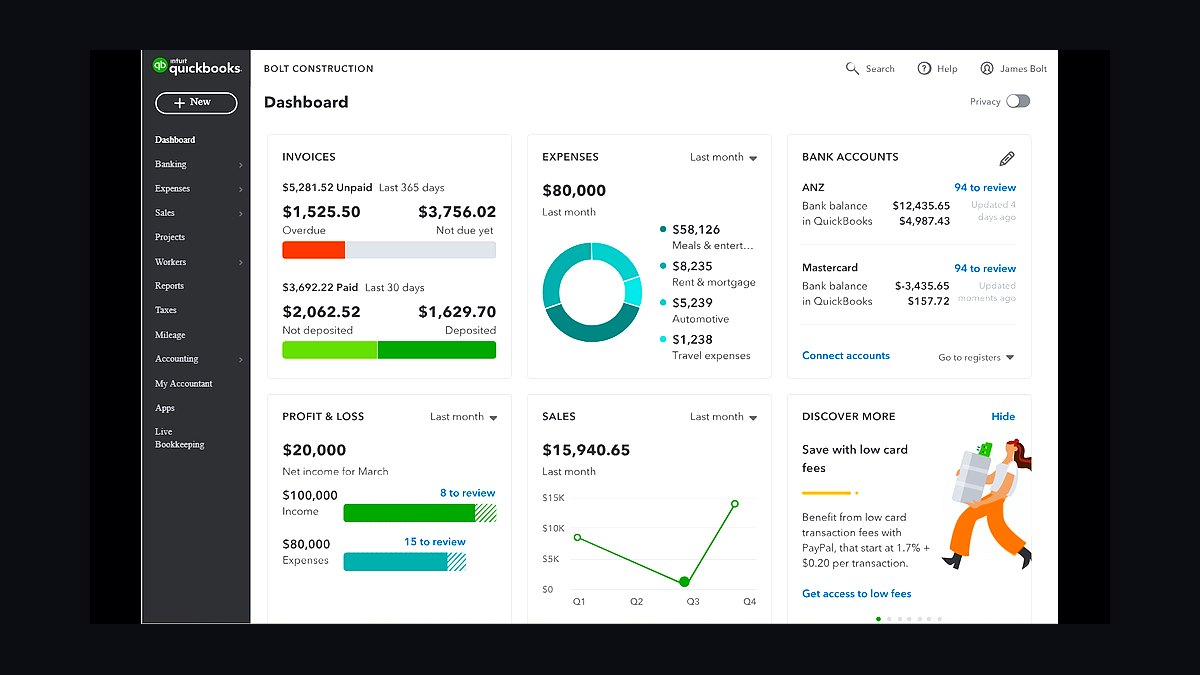
QuickBooks Online ranks tenth as the practical accounting backbone for independent and mid-size specialty pharmacies at $90–$200 per month. It covers general ledger, accounts payable and receivable, and payroll integration without the cost or complexity of a full ERP. For lean operations, it is sufficient well past the startup stage.
It fits independent and mid-size pharmacies that do not need multi-entity consolidation or complex inventory valuation. It trades away advanced inventory accounting and multi-entity reporting, which health-system operations require. Compared with NetSuite, which fast-scaling or health-system pharmacies adopt, QuickBooks is the right call until inventory valuation and consolidation needs genuinely outgrow it.
How we ranked these
We scored each tool on five weighted criteria: specialty-specific dispensing depth (30%), benefits-investigation and prior-authorization automation (25%), clinical adherence and patient-management capability (20%), manufacturer and accreditation data reporting (15%), and integration with Surescripts and dispensing systems (10%). Scores came from vendor documentation, accreditation requirement mapping, and operator-reported time-to-first-fill benchmarks.
We deliberately ignored retail script-volume throughput, point-of-sale features, and consumer loyalty tooling, because specialty pharmacies are judged on time-to-first-fill, prior-auth turnaround, PDC adherence, and on-time manufacturer feeds. We also excluded pricing-only comparisons and generic EHR rankings, since a retail-optimized system can score well on those yet fail a limited-distribution contract audit.
What to look for
What matters most is whether the dispensing spine and the patient-management layer share a validated, monitored integration. Ask vendors to demonstrate a live referral moving intake to first-fill, including split medical/pharmacy billing and a prior-auth status update. Confirm the system can export manufacturer-specified data files and produce URAC or ACHC evidence without manual reconstruction.
The mistake most buyers make is choosing a retail pharmacy system because it is cheaper, then bolting on specialty workflows manually. That works for a tiny add-on line but collapses under real limited-distribution contracts. A second common error is buying patient management and dispensing from vendors with no proven integration, which silently corrupts adherence metrics and accreditation documentation.
Related questions
What is a specialty pharmacy tech stack?
It is the connected software spine plus clinical and reimbursement layers a specialty pharmacy runs on. The core is a specialty-built dispensing and management system such as ScriptMed Cloud or CPR+, wrapped with patient management like Therigy STM, prior-auth and financial-assistance tools, Surescripts connectivity, and accreditation reporting.
Why can't a retail pharmacy system handle specialty?
Retail systems like PioneerRx and BestRx optimize register throughput, not split medical and pharmacy billing, limited-distribution data feeds, or therapy-specific clinical documentation. Forcing them into specialty work creates manual workarounds, slow prior authorization, and reporting that cannot satisfy manufacturer contracts or accreditation surveys.
What is Therigy STM used for?
Therigy STM is the clinical patient-management layer for specialty pharmacies. It runs therapy-specific assessment protocols, schedules interventions and refill outreach, tracks adherence metrics like PDC, and documents the clinical work manufacturers and accreditors require. It integrates with the dispensing system so clinical and dispensing records stay aligned.
How does CoverMyMeds fit a specialty stack?
CoverMyMeds is the dominant electronic prior-authorization network and integrates with most dispensing systems. It automates submission and status tracking for prior auths, cutting the phone-and-fax bottleneck that stretches time-to-first-fill. Basic ePA is often included or low-cost, with premium modules priced higher.
What does TailorMed do for specialty pharmacies?
TailorMed automates financial navigation, scanning for copay cards, foundation grants, and free-drug programs, then tracking enrollment. It typically runs $1,000 to $4,000 per month. For high-cost therapies, it directly protects affordability and prevents patients abandoning treatment at the copay stage.
Do specialty pharmacies need 340B software?
Only if you are a covered entity or contract pharmacy participating in 340B. Then you need split-billing and compliance software such as Verity Solutions or Macro Helix to capture eligible claims and survive audits. Most independent specialty pharmacies are not 340B participants and can skip this layer entirely.
What accreditation do specialty pharmacies need?
URAC and ACHC are the two accreditations payers and manufacturers expect. Fees commonly run $10,000 to $30,000 or more over a multi-year cycle. Beyond fees, you need tooling to maintain policies, log quality metrics, and produce turnaround-time and patient-satisfaction evidence, often inside Therigy plus a document system.
How much does a specialty pharmacy tech stack cost?
Independent shops run roughly $2,500 to $6,000 per month in software. Mid-size pharmacies with several limited-distribution contracts run $8,000 to $20,000 per month. Health-system specialty pharmacies with 340B, EHR integration, and a real ERP commonly exceed $30,000 per month, scaling with volume and contract count.
FAQ
What is the best dispensing system for a specialty pharmacy in 2027?
ScriptMed Cloud by EnlivenHealth is the leading specialty-purpose-built spine, with CPR+ by CarepathRx as the long-standing alternate and CareTend by WellSky winning when home infusion and nursing dominate. Retail-leaning systems only fit a small specialty add-on line, not a core specialty operation.
How long should implementation take?
Plan 90 days for a clean core rollout. Days 0 to 30 stand up dispensing, billing, Surescripts, and cold-chain inventory. Days 31 to 60 add Therigy patient management, CoverMyMeds prior auth, and TailorMed assistance. Days 61 to 90 build reporting and accreditation evidence before contracts demand it.
What metric should I judge the stack on?
Time-to-first-fill, prior-auth turnaround, PDC adherence, and on-time manufacturer data feeds. Script count is a retail metric and misleads in specialty. Referral sources route patients based on how fast you start therapy, and manufacturers keep you on the drug based on clean, timely utilization data.
Can I run specialty on QuickBooks and spreadsheets?
QuickBooks Online at $90 to $200 per month is fine for general ledger, AP/AR, and payroll at independent scale. Spreadsheets are not fine for adherence tracking, prior-auth status, or manufacturer feeds. Those need Therigy, CoverMyMeds, and a reporting layer, or accreditation and contracts are at risk.
What is the biggest integration risk?
The dispensing system to patient-management platform link. If dispensing data and clinical documentation drift apart, adherence metrics are wrong, manufacturer feeds are incomplete, and surveyors find gaps. Validate this integration during implementation and monitor it continuously, because it is load-bearing, not optional polish.
Is Surescripts required?
Effectively yes. Surescripts is the national e-prescribing and clinical-interoperability network, and specialty referrals increasingly arrive electronically through Specialty Patient Enrollment. Real-time benefit and medication-history data depend on it. There is no meaningful alternate at national scale, and it is usually bundled into dispensing fees.
How do manufacturers decide which pharmacies to contract with?
They look for documented clinical management, proven adherence, accreditation, and reliable data reporting. Limited-distribution drugs go only to pharmacies that can show therapy-specific assessments, intervention logs, PDC tracking, and on-time utilization feeds. The tech stack is what produces that evidence.
When should I add a reporting or BI layer?
Add it once you hold several limited-distribution contracts with different manufacturer file formats. Therigy and the dispensing system generate most feeds, but a light ETL or BI layer reconciles dispensing, clinical, and adherence data into clean files. Late reporting jeopardizes contracts faster than almost any other failure.
Do I need a CRM for referral management?
Usually not at first. Most pharmacies track referrals inside ScriptMed, CPR+, or Therigy. Add a light CRM like HubSpot only when a business-development team actively sells into clinics and oncology practices and needs to track prescriber relationships and referral volume separately from dispensing workflow.
What is the most common stack mistake?
Buying a retail system to save money, then handling specialty workflows manually. It survives a small add-on line but collapses under real limited-distribution contracts. The second mistake is pairing dispensing and patient management from vendors with no proven integration, which quietly corrupts adherence and accreditation data.
Sources
- https://www.urac.org/
- https://www.achc.org/
- https://www.surescripts.com/
- https://www.covermymeds.com/
- https://www.tailormed.com/
- https://www.enlivenhealth.com/
- https://www.carepathrx.com/
- https://www.wellsky.com/
- https://www.asembia.com/
- https://www.therigy.com/
Related on PULSE
This page will be disappearing soon. Save it to your device for $1 — or read it free while it is here.
@Kory-White- · if Venmo asks, the last 4 of my number are 2012
This page is gone.
This one is off the shelf now. $1 keeps it on your phone for good — the whole page, pictures and diagrams included.
 pulse-tech-stacksTop 10 Best Tech Stack Tools for Pilates Studios in 2027
 pulse-tech-stacksTop 10 Best Tech Stack Tools for AI Customer Support Companies in 2027
 pulse-tech-stacksTop 10 Best Tech Stack Tools for Appliance Repair Services in 2027
 pulse-tech-stacksTop 10 Best Tech Stack Tools for Home Inspection Companies in 2027
 pulse-tech-stacksTop 10 Best Tech Stack Tools for AI Observability Platform Companies in 2027
 tkTop 10 Best Tech Stack Tools for Concrete and Paving Contractors in 2027
 pulse-tech-stacksTop 10 Best Tech Stack Tools for CrossFit Boxes in 2027
 pulse-tech-stacksTop 10 Best Tech Stack Tools for API Security Vendors in 2027
 pulse-tech-stacksTop 10 Best Tech Stack Tools for Independent Food Trucks in 2027
 pulse-tech-stacksTop 10 Best Tech Stack Tools for MSP and IT Services Companies in 2027