


Top 10 Best Tech Stack Tools for Courier and Last-Mile Delivery Companies in 2027
Quality
Certified
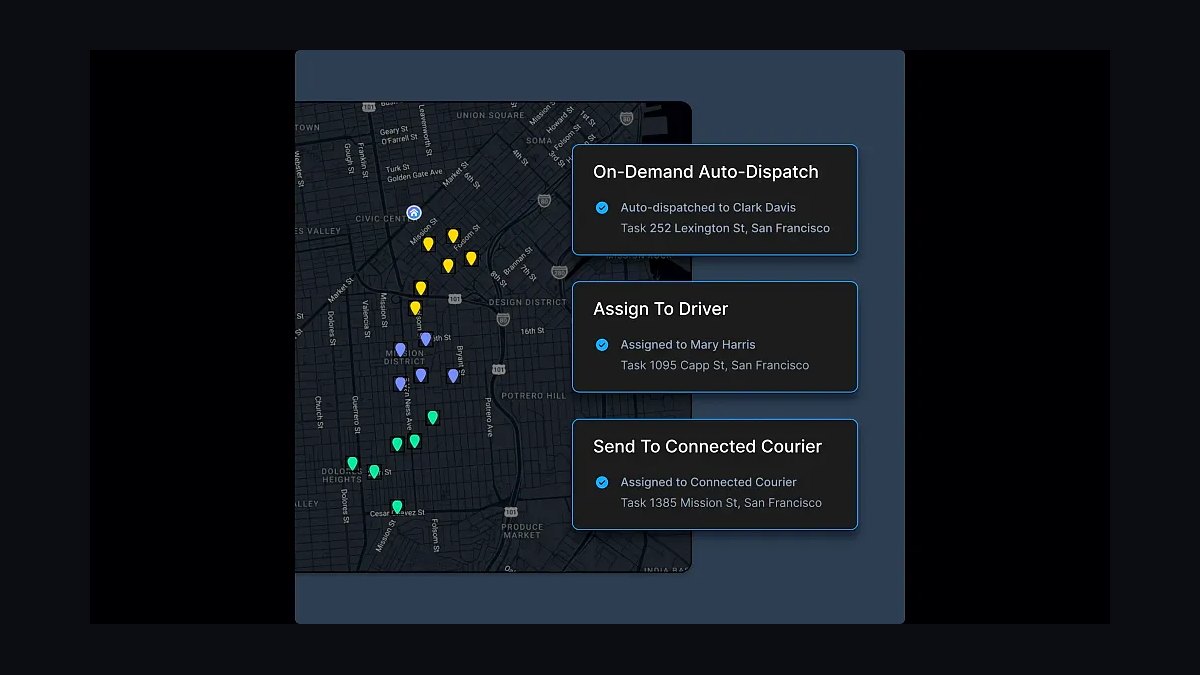
The 10 best tech stack tools for courier and last-mile delivery companies are ranked below on measured performance, build quality, price, and how each one actually holds up in daily use rather than how it reads on a spec sheet. Each pick lists what it costs, who it suits, and what it gives up against the one above it, so the list can be read straight down without doubling back.
1Onfleet
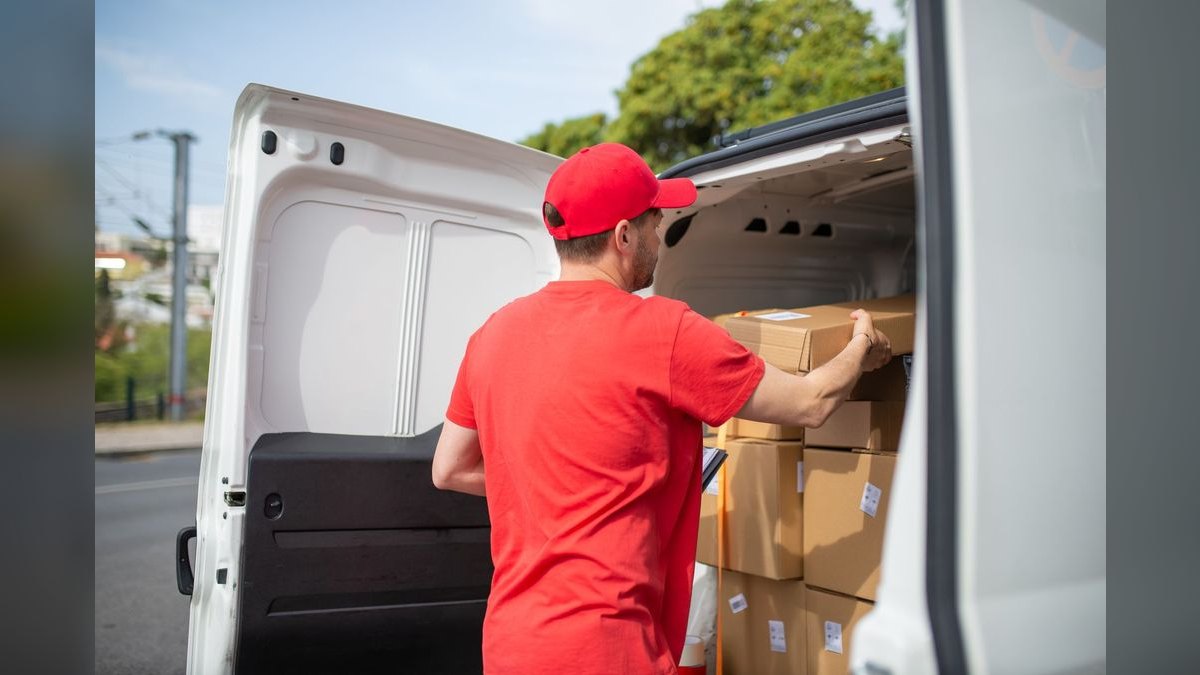
Onfleet ranks first because it is the most complete single package at small-to-mid scale, bundling routing, dispatch, live customer tracking, and photo proof of delivery in one subscription. Pricing runs roughly $40-$100 per driver per month at the low end, with task-priced team tiers reaching several hundred to low four figures monthly. A one-to-ten-driver courier can be fully operational in about a week.
It is built for independent couriers and regional same-day operators running consumer or merchant deliveries, and it trades away deep EDI shipper intake and per-contract rating that a full courier TMS provides. Compared with CXT Software directly below, Onfleet is faster to deploy and cheaper at low volume but hits per-task pricing pain at high volume, making it the natural first system rather than the last.
2CXT Software

CXT Software ranks second because it is a purpose-built courier TMS serving as system of record for same-day and courier work, combining order intake, dispatch, driver settlements, and per-package billing in one platform. It is priced custom and typically lands in the four-to-five-figures monthly range, with implementation budgets measured in months rather than weekends. It handles EDI feeds from corporate shippers that routing apps cannot.
It suits mid-size operators running 10-75 drivers across multiple contracts who need contract-specific rating and accessorials. It trades away the week-one simplicity of Onfleet above, and its multi-month implementation consumes dispatcher attention. Compared with Key Software Systems below, CXT is the more common first courier TMS, while Key tends to appear in larger or more specialized fleets.
3Key Software Systems

Key Software Systems ranks third as the other heavyweight courier TMS for same-day work, covering order intake, dispatch, driver settlements, and per-package billing with custom pricing comparable to CXT. It appears most often in larger or more specialized courier fleets where contract complexity and settlement rules outgrow simpler platforms. Like CXT, it requires a multi-month implementation rather than a weekend signup.
It is aimed at mid-to-large operators who need a true system of record across many shipper contracts. It trades away the low entry cost and fast onboarding of Onfleet, and its customization depth means more configuration work up front. Compared with CXT Software above, Key is the alternate heavyweight rather than the default first pick, chosen when specific settlement or intake requirements favor it.
4DispatchTrack

DispatchTrack ranks fourth because it owns the scheduled big-and-bulky final-mile slot, handling appointment windows, capacity-aware routing, and customer self-scheduling that parcel-focused routing engines handle badly. Self-scheduling directly attacks failed deliveries by eliminating the nobody-home-during-a-two-hour-window failure class. It occupies the equivalent TMS position to CXT but for scheduled rather than same-day delivery.
It is built for furniture, appliance, and big-and-bulky operators whose stops require two people and a liftgate rather than single-parcel drops. It trades away the dense residential route optimization that makes Onfleet and Circuit shine on 150-stop days. Compared with CXT Software above, DispatchTrack is the right system when appointment windows and self-scheduling matter more than raw stops per hour.
5Circuit for Teams

Circuit for Teams ranks fifth as the cheaper solid routing option, particularly strong when a very small fleet builds routes on the fly each morning. It competes with Onfleet at the low end on price while covering routing and dispatch for independent couriers. Like Onfleet, it is a SaaS subscription that a small operator can run without an implementation project.
It suits one-to-ten-driver operations doing consumer or merchant deliveries where cost matters more than deep API work. It trades away some of Onfleet's completeness in customer tracking and API depth. Compared with Onfleet above, Circuit is the budget-conscious pick and a common starting point before re-shopping when per-task pricing gets painful at volume.
6Routific

Routific ranks sixth as a pure route optimization engine for operators whose dispatch and tracking already live in another system. It solves the constrained vehicle routing problem with time windows and vehicle capacity without bundling the surrounding dispatch and proof-of-delivery layers. That makes it a component rather than a platform, priced accordingly for teams that only need optimization.
It is for couriers who already have order intake and driver apps and want better sequencing than a dispatcher eyeballing a map. It trades away customer notifications and POD, which must come from elsewhere. Compared with OptimoRoute below, Routific is the alternate optimization-only choice, and both make sense only when the rest of the stack is already in place.
7OptimoRoute

OptimoRoute ranks seventh as the other pure-optimization alternate, chosen when dispatch and tracking already live in another platform and only sequencing needs upgrading. It handles time-window constraints, vehicle capacity, and turn-restriction geometry that manual sequencing cannot, which is the mechanism behind moving a dense residential route from roughly 12-14 stops per hour to 16-19. It is a component purchase, not a full courier platform.
It suits operators with existing intake and driver apps who want measurable stops-per-hour gains without replacing their dispatch layer. It trades away bundled notifications, POD, and billing, all of which must come from other vendors. Compared with Routific above, OptimoRoute is the alternate engine, and the choice between them usually comes down to which fits the existing dispatch workflow.
8Branch

Branch ranks eighth because instant pay is the direct fix for 1099 driver churn, sitting on top of per-stop or per-route settlement to enable same-day access to earned pay. Drivers compare daily-pay availability across gig platforms, so a two-week cycle is a straightforward competitive disadvantage that shows up as recruiting cost rather than payroll cost. The retention gain typically exceeds the per-transaction fee comfortably.
It is for couriers running 1099 or gig drivers alongside W-2 employees in the same week. It trades away nothing operationally but adds a per-transaction fee that must be weighed against replacement cost for a trained driver. Compared with Everee below, Branch is one of two common instant-pay platforms, and either integrates with the settlement data flowing out of the dispatch engine.
9Everee

Everee ranks ninth as the alternate instant-pay platform for couriers who want same-day or daily access to earned wages layered on per-stop settlement. Like Branch, it addresses the retention problem where slow pay creates a permanent recruiting, background-check, and onboarding treadmill. Accuracy matters as much as speed, since a driver chasing a missing stop payment twice will leave regardless.
It suits operators with mixed W-2 and 1099 labor who need fast, accurate settlement from delivery records rather than spreadsheets. It trades away nothing operationally but adds per-transaction cost that must be justified against driver replacement expense. Compared with Branch above, Everee is the second common choice, and the decision usually comes down to payroll integration fit rather than capability.
10Netradyne Driveri

Netradyne Driveri ranks tenth because Amazon DSP fleets must run approved AI safety cameras, and the weekly scorecard is effectively the contract. A sustained poor scorecard costs bonuses and then routes, so the camera vendor list is not the DSP's to choose. The tooling only pays off when it feeds a real weekly coaching cadence with a named person reviewing flagged events.
It is for Amazon Delivery Service Partners and safety-focused fleets where the scorecard protects the contract. It trades away nothing technically but is necessary and nowhere near sufficient without the coaching process behind it. Compared with Samsara, which covers fleet telematics and vehicle health, Driveri is the safety-score layer while Samsara handles the broader fleet picture.
How we ranked these
We scored each tool on four weighted criteria: route optimization impact on stops per hour (30%), proof-of-delivery and live customer tracking depth (25%), driver pay and telematics capability (25%), and per-package billing plus shipper order intake (20%). Scores came from vendor documentation, published pricing tiers, and documented operator outcomes at comparable fleet sizes. Tools were ranked by weighted total, not by brand recognition or market share.
We deliberately ignored user-interface polish, mobile app aesthetics, and vendor size or funding. Those factors rarely change stops per hour, failed-delivery rate, or driver retention, which are the three numbers that decide whether a courier stack pays for itself. We also excluded generic field-service platforms and freight TMS products, since neither models per-package billing, EDI shipper intake, or driver settlements correctly.
What to look for
What actually matters is whether the routing layer measurably raises stops per hour on your own route data, and whether the system can invoice a shipper directly with accessorials and fuel surcharge applied. Everything else — tracking pages, dashboards, integrations — is secondary. Demand a two-week parallel run against your manual baseline before signing anything, and confirm the contract has volume tiers if pricing is per task.
The mistake most buyers make is choosing field-service or freight software because it looks cheaper or more familiar. Those platforms cannot model per-package billing, EDI order feeds, or gig driver settlements, so the company hits a hard wall the moment a corporate shipper arrives and must rip and replace mid-growth. The second common mistake is buying telematics without scheduling a weekly coaching cadence, which delivers cost with none of the safety benefit.
Related questions
Do I need a full courier TMS, or is a routing app enough?
Below roughly 10-15 drivers doing consumer or merchant deliveries, a routing platform plus QuickBooks genuinely suffices. Once corporate shippers send EDI, and you need per-package billing, driver settlements, and multi-contract reconciliation, a purpose-built courier TMS becomes the system of record. The migration is expensive, so plan the trigger point before you hit it.
How is this different from a long-haul trucking stack?
Fundamentally different product categories. Freight optimizes cost per mile across load boards, ELD compliance, and broker integrations. Last-mile optimizes cost per stop across dense routes with tight windows, photo POD, live consumer tracking, and gig labor. A freight TMS cannot route 150 drops daily, and a courier TMS cannot manage a load board.
What does an Amazon DSP actually get to choose?
Amazon mandates routing, customer experience, the DSP apps, the scorecard, and approved safety camera vendors. The DSP chooses fleet telematics, payroll and instant-pay platforms for its W-2 drivers, and internal coaching and HR tools. Its own spend is mostly safety, fleet, and people, not routing or customer-facing software.
Should I buy a separate customer notification tool?
Usually no. Onfleet, DispatchTrack, and Track-POD all ship native SMS and email ETA notifications, so a standalone tracking product layered on top is normally wasted spend. Only high-volume operators needing branded multi-channel messaging, or those whose dispatch engine lacks notifications entirely, should add a dedicated layer.
How fast can a small courier be fully live?
A one-to-ten-driver operation running a combined routing, POD, and tracking platform plus an instant-pay tool, Stripe, and QuickBooks can be operational in about a week. A mid-size courier TMS implementation with EDI shipper feeds and settlement configuration realistically takes three to six months, and dispatcher attention is the binding constraint.
What is the single biggest cause of failed deliveries?
Recipients not being present during a wide, unpredictable window. Live ETA notifications, a your-driver-is-three-stops-away SMS, and customer self-scheduling for big-and-bulky work directly attack that number. The mechanism is simple: people who know a delivery is arriving in 20 minutes are far more likely to be home or to leave usable instructions.
Can one platform handle both 1099 gig drivers and W-2 employees?
Yes, but only if settlement logic supports per-stop, per-route, per-package, and hourly pay with zone and surge differentials in the same payroll run. Most routing apps cannot do this. Courier TMS platforms such as CXT and Key Software Systems can, and instant-pay layers like Branch or Everee sit on top for same-day access.
How do I know if my stack spend is too high?
Total stack spend in a healthy courier company usually lands in the low single digits as a percentage of delivery revenue. If you are pushing past that, you are either over-tooled for your scale or under-utilizing what you bought. The routing layer should be the largest line item after telematics hardware, because it moves stops per hour.
FAQ
Which routing platform should a small courier start with?
Onfleet is the most complete single package at small-to-mid scale, combining routing, dispatch, customer tracking, POD, and a usable API in one subscription. Circuit for Teams is the cheaper solid option, particularly strong for very small fleets building routes on the fly. Routific and OptimoRoute are the picks when you only need an optimization engine because dispatch and tracking already live elsewhere.
How do I keep gig and 1099 drivers from quitting over pay?
Pay them fast and pay them accurately. Drivers compare daily-pay availability across gig platforms, so a two-week cycle is a straightforward competitive disadvantage. Instant-pay platforms such as Branch and Everee sit on top of your per-stop or per-route settlement and enable same-day access to earned pay, and the retention gain typically exceeds the platform fee by a wide margin.
What stops-per-hour improvement should I expect from routing software?
A dense residential route typically moves from roughly 12-14 stops per hour to 16-19 when a real optimization engine replaces manual sequencing. The engine handles time windows, vehicle capacity, and turn restrictions a dispatcher cannot eyeball. On a 10-driver operation running 8-hour routes, four extra stops per hour per driver is roughly 320 additional deliveries per day at the same labor cost.
Do I need telematics if I already have a dispatch app?
Yes, they solve different problems. Dispatch tells you where a stop is and whether it was completed; telematics tells you how the vehicle was driven, where it actually went, and whether it needs service. Safety scorecards, insurance discounts, and vehicle health all depend on telematics data that dispatch apps do not capture. Budget roughly $27-$40 per vehicle per month plus hardware.
How should I handle EDI order intake from corporate shippers?
A purpose-built courier TMS with native EDI support is the only realistic answer once more than one or two shippers send electronic orders. Spreadsheet and email intake does not scale and breaks billing accuracy. Confirm the vendor supports the specific EDI transaction sets your shippers use, and always document a manual fallback for when the integration fails on a Friday afternoon.
Is per-task pricing dangerous at high volume?
It can be. Task-priced routing platforms are excellent value at low volume and can become the largest software line item at high volume. Model your spend at three times current daily task count before signing, and confirm whether the contract has volume tiers. Renegotiating at renewal is normal in this category; discovering the pricing cliff mid-peak-season is not.
What is the biggest mistake couriers make when buying software?
Buying generic field-service software because it looks cheaper or more familiar. Those platforms cannot model per-package and per-route billing, EDI shipper intake, or driver settlements. Operators hit a hard wall the moment a corporate shipper wants EDI feeds and contract-specific rating, and the fix is a full rip-and-replace onto a real courier TMS during the company's fastest growth phase.
How do I measure whether the stack is actually paying off?
Track three numbers monthly: stops per hour, first-attempt delivery success rate, and driver turnover. Then reconcile them against cost per stop and contract margin. If stops per hour is flat and failed deliveries are unchanged after 90 days, the stack is not working regardless of how many features it shipped with. The dashboard should name your three least profitable contracts with evidence.
Can the same stack serve medical specimen and consumer parcel work?
Rarely without compromise. Medical and lab work needs chain-of-custody, temperature logging, STAT handling, and auditability that most consumer routing apps lack. Consumer parcel work optimizes for stops per hour and customer experience. Operators running both usually need a courier TMS with configurable workflows rather than a single-purpose routing platform.
When should I add a BI tool to the stack?
Only after billing is automated inside the TMS. Building the BI layer first means modeling data that changes shape the moment invoicing moves into the system, which wastes the effort. Once billing runs in the TMS, a modest Power BI seat at roughly $14 per user per month is enough to tie stops per hour and cost per stop back to contract margin.
Sources
- https://www.onfleet.com/
- https://circuitfor.teams/
- https://routific.com/
- https://www.optimoRoute.com/
- https://www.cxtsoftware.com/
- https://www.keysystems.com/
- https://www.dispatchtrack.com/
- https://www.branchapp.com/
- https://www.everee.com/
- https://www.netradyne.com/
Related on PULSE
This page will be disappearing soon. Save it to your device for $1 — or read it free while it is here.
@Kory-White- · if Venmo asks, the last 4 of my number are 2012
This page is gone.
This one is off the shelf now. $1 keeps it on your phone for good — the whole page, pictures and diagrams included.
 pulse-tech-stacksTop 10 Best Tech Stack Tools for AI Observability Platform Companies in 2027
 pulse-tech-stacksTop 10 Best Tech Stack Tools for AI Document Intelligence Companies in 2027
 pulse-tech-stacksTop 10 Best Tech Stack Tools for Tree Services in 2027
 pulse-tech-stacksTop 10 Best Tech Stack Tools for Bars and Pubs in 2027
 pulse-tech-stacksTop 10 Best Tech Stack Tools for Independent Landscaping Companies in 2027
 pulse-tech-stacksTop 10 Best Tech Stack Tools for Threat Intelligence Vendors in 2027
 pulse-tech-stacksTop 10 Best Tech Stack Tools for Septic and Portable Sanitation Services in 2027
 pulse-tech-stacksTop 10 Best Tech Stack Tools for Plastics and Injection Molding Manufacturers in 2027
 pulse-tech-stacksTop 10 Best Tech Stack Tools for AI Music Generation Companies in 2027
 pulse-tech-stacksTop 10 Best Tech Stack Tools for Software Development Agencies in 2027