


Top 10 Best Tech Stack Tools for Flooring Contractors in 2027
Quality
Certified
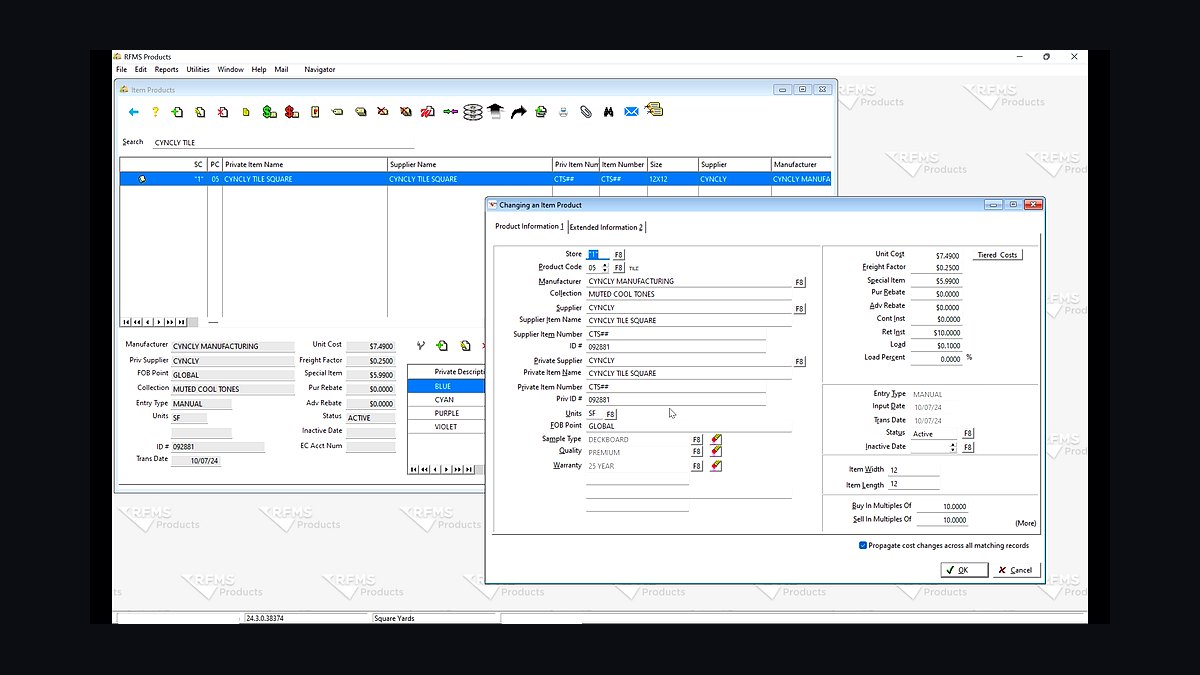
The 10 best tech stack tools for flooring contractors are ranked below on measured performance, build quality, price, and how each one actually holds up in daily use rather than how it reads on a spec sheet. Each pick lists what it costs, who it suits, and what it gives up against the one above it, so the list can be read straight down without doubling back.
1RFMS Flooring ERP

RFMS ranks first because it is the deepest flooring-specific system of record, covering catalog, order entry, showroom, Measure, and RFMSPay in one platform. It ships with manufacturer catalog feeds from Shaw and Mohawk, special-order PO workflows, and roll/cut inventory tracking. Implementation fees run into five figures, with per-user pricing roughly $300–$700/month.
It suits established showroom dealers and commercial contractors who carry product and plan to grow into multi-location or builder accounts. It trades away speed and simplicity — rollouts take months, not weeks. QFloors below is lighter and cheaper, but RFMS wins on integration depth with MeasureSquare and Broadlume out of the box.
2MeasureSquare Estimating Software

MeasureSquare ranks second because measure-to-quote accuracy is the whole margin in flooring, and it is the industry-standard takeoff engine. It converts room sketches into material quantities with waste factors and seam diagrams a spreadsheet cannot produce, then feeds those quantities into the ERP. Mobile and residential tiers run about $50–$150/user/month.
It is for any contractor who estimates flooring, whether install-only or full showroom. It trades away nothing on accuracy but requires training to use waste factors correctly by product. It sits directly below RFMS because the ERP is the spine, while MeasureSquare is the engine that makes the spine accurate.
3QFloors Flooring Software

QFloors ranks third as the lighter, lower-cost all-in-one ERP for single-showroom retailers, typically $150–$300/user/month. It covers catalog, order entry, inventory, scheduling, and CRM in one system that is easier to learn and faster to implement than RFMS. It integrates card processing and syncs to QuickBooks for the books.
It is for a one-location dealer who wants lean and simple without a heavy rollout. It trades away commercial depth, multi-entity accounting, and some manufacturer catalog breadth. Compared to RFMS above, it costs roughly half and deploys in weeks, but it will strain if you chase builder volume or multi-branch expansion.
4Roomvo Room Visualizer

Roomvo ranks fourth because flooring shoppers cannot picture a product in their home, and the visualizer lets them drop any SKU into a photo of their own room. Dealers report measurable close-rate lift in the showroom and online, which is why most treat it as core rather than optional. It is licensed separately or bundled through a Broadlume site.
It is for showroom dealers and retailers selling visual, brand-confused products to homeowners. It trades away nothing operationally but adds a monthly line item that install-only crews do not need. It sits below QFloors because it wins leads, while the ERP converts and fulfills them.
5Broadlume FloorForce Websites

Broadlume, formerly FloorForce, ranks fifth because it builds flooring-specific websites that host manufacturer catalogs, embed Roomvo, and drive managed leads. Generic web builders give dealers a brochure site with no product content, so shoppers bounce. Site plus lead packages run roughly $300–$1,500/month depending on scope.
It is for dealers who want their web presence and lead generation handled by a flooring-native vendor. It trades away design flexibility and adds ongoing cost versus a DIY site. Compared to Roomvo above, it is the container that makes the visualizer useful, and it pairs directly with the ERP for lead-to-order flow.
6FloorRight Estimating Software

FloorRight by Pacific Solutions ranks sixth as the long-standing estimating package that predates much of the current market. It handles residential takeoffs with waste and seam logic and integrates with job-cost and scheduling modules. Pricing is quoted per seat and generally sits in the same $50–$150/month band as MeasureSquare.
It is for dealers and estimators who prefer a proven, stable package or already run Pacific Solutions tools. It trades away some mobile-first workflow polish and ecosystem breadth versus MeasureSquare. It sits below Broadlume because estimating only matters once leads exist, and above Planswift because residential volume is the larger market.
7Planswift Takeoff Software

Planswift ranks seventh because commercial flooring bids arrive as PDFs and CAD files, not site visits, and it does on-screen plan takeoff across trades. It extracts quantities from architectural plans so estimators can bid without driving to every job. Pricing is roughly $1,600 one-time per seat or subscription tiers.
It is for commercial contractors bidding from plans, not residential-only dealers who can skip this layer entirely. It trades away flooring-native seam and waste logic unless paired with MeasureSquare Commercial. It sits below FloorRight because residential volume dominates, and above Jobber because commercial bidding is a higher-value niche.
8Jobber Field Service Software

Jobber ranks eighth because install-only flooring crews do not need a flooring ERP, and it handles scheduling, dispatch, and invoicing for roughly $50–$200/month. It sequences jobs and takes payment without the catalog, PO, and roll-inventory machinery a product-carrying dealer requires. Setup takes days, not months.
It is for two-truck install crews that install but never touch product. It trades away flooring-specific estimating, roll/cut inventory, and manufacturer catalog feeds. Compared to Planswift above, it serves a completely different contractor — one who schedules labor rather than bids plans — and it pairs with MeasureSquare mobile for takeoffs.
9QuickBooks Online

QuickBooks Online ranks ninth because every flooring stack still needs a general ledger, and it runs about $30–$200/month depending on tier. It handles job costing when material, sub labor, and freight are posted per job, and it syncs with QFloors or RFMS. Without that reconciliation, margin reporting is fiction.
It is for small installers and single-showroom dealers who do not need multi-entity accounting. It trades away multi-entity consolidation, deep job-cost depth, and native flooring workflows. It sits below Jobber because scheduling drives revenue while accounting records it, and above Power BI because books come before dashboards.
10Microsoft Power BI

Power BI ranks tenth because it turns ERP and accounting exports into margin-by-product, sales-rep, and installer-profitability dashboards for roughly $10–$20/user/month. It connects to RFMS, QFloors, and QuickBooks data, exposing which product categories and crews actually make money. Dealers without it keep selling low-margin lines blind.
It is for multi-location dealers and commercial contractors with enough data volume to justify analysis. It trades away simplicity — someone must build and maintain the models. It sits below QuickBooks because the GL must be clean first, and RFMS and Comp-U-Floor ship built-in reporting that covers most single-location needs.
How we ranked these
We ranked each tool on flooring-specific capability, not generic field-service feature lists. Weighting: measure-to-quote accuracy and waste/seam handling (30%), ERP depth for catalog, special-order POs, and roll/cut inventory (25%), integration with the rest of the stack (20%), total cost including implementation (15%), and analyst-validated market presence (10%). Vendors were scored against real dealer workflows, not demo environments.
We deliberately ignored generic CRM feature breadth, mobile app polish, and vendor marketing claims about AI. Those do not move flooring margin. We also excluded tools with no manufacturer catalog feeds, no waste-factor logic, or no path to job costing, because a flooring stack that cannot price a room correctly is decoration. Analyst share data was used only as a tiebreaker, never as a substitute for workflow fit.
What to look for
What actually matters is whether the tool turns a measured room into a priced order with the right waste factor, seam plan, and material SKU, then carries that order through PO, scheduling, and job costing without re-entry. Integration depth beats feature count every time. Buy the ERP first if you carry product; buy the estimator first if you only install. Match the stack to your sell-vs-install split, not to a competitor's logo wall.
The mistake most buyers make is shopping on monthly price and demo polish, then discovering the estimating tool does not feed the ERP and reps keep quoting in spreadsheets. That single gap destroys more margin than any subscription difference. The second mistake is buying a full flooring ERP for an install-only crew that will never carry product. Size the stack to your actual business model, then implement in layers.
Related questions
What is the best tech stack for a flooring contractor in 2027?
It centers on a flooring ERP as the system of record: RFMS for established showroom and commercial dealers, QFloors for lighter single-location retailers. Wrap it with MeasureSquare for takeoff and estimating, Roomvo plus Broadlume for visualization and lead generation, installer scheduling tied to the order, and payments plus accounting to close the loop. Install-only crews skip the ERP and run QuickBooks, MeasureSquare, and Jobber instead.
Why does flooring need different software than general field service?
Flooring is sold by the square foot but installed in real rooms with seams, transitions, pattern matches, and waste. A carpet roll is 12 feet wide, so a 13-foot room wastes the remainder. The estimating tool must produce material quantity, a defensible waste factor, and a seam diagram. A 5% estimating error can eat the entire job margin, which generic field-service tools cannot catch.
Do I need a flooring-specific ERP or can QuickBooks plus a CRM work?
If you carry product and special-order from mills, you need a flooring ERP. QuickBooks has no product catalog, no special-order PO workflow, no roll or cut inventory, and no waste-aware estimating. If you are install-only and never touch product, QuickBooks plus MeasureSquare plus Jobber is the correct and cheaper answer. The deciding question is whether you carry inventory.
RFMS versus QFloors: which should a showroom dealer pick?
RFMS is deeper and the industry standard, with the broadest integrations including MeasureSquare, Broadlume, and RFMSPay, plus a commercial path. It costs more and takes longer to implement. QFloors is lighter, cheaper, and faster to learn, which suits a single-location retailer wanting an all-in-one without a heavy rollout. Pick RFMS to grow into commercial or multi-location; QFloors for lean simplicity.
Why is Roomvo worth paying for separately?
Flooring shoppers struggle to picture a product in their home, and Roomvo lets them drop any product into a photo of their own room. It measurably lifts in-showroom and online close rates, so most dealers treat it as core rather than optional. It is typically embedded through a Broadlume or FloorForce website, or licensed directly and added to an existing site.
How should installation labor be priced in the tech stack?
Track sub labor as a job cost, not an overhead bucket. The ERP should hold each installer's rate, whether per yard or per square foot by product, attach the assigned crew to the order, and post labor cost against the job so the general ledger reflects true per-job margin. Reconcile material delivered against material installed on every job to catch shrinkage and over-ordering.
What does the commercial bidding layer add for flooring contractors?
If you bid from architectural plans, you need on-screen plan takeoff such as Planswift or MeasureSquare Commercial to extract quantities from PDFs and CAD instead of site visits. That layer handles large bid volumes and multi-trade takeoffs. Residential-only dealers can skip it entirely and save both the license cost and the training time.
What is the single highest-ROI move for a flooring contractor's stack?
Connecting estimating directly to the ERP order is the highest-ROI move. When MeasureSquare or FloorRight pushes quantities into the order, the quote, purchase order, and actual material usage reconcile automatically. Reps stop quoting from spreadsheets with flat waste factors, and margin loss becomes visible per job instead of surfacing at year-end. Most dealers see the difference within one month.
FAQ
Do I really need a flooring-specific ERP, or can I run QuickBooks plus a CRM?
If you carry product and special-order from mills, yes, you need a flooring ERP. QuickBooks has no product catalog, no special-order PO workflow, no roll or cut inventory, and no waste-aware estimating. If you are install-only and never touch product, QuickBooks plus MeasureSquare plus Jobber is the correct, cheaper answer. The deciding question is whether you carry inventory.
RFMS versus QFloors: which should a showroom dealer pick?
RFMS is deeper and the industry standard, with the broadest integrations including MeasureSquare, Broadlume, and RFMSPay, plus a commercial path, but it costs more and takes longer to implement. QFloors is lighter, cheaper, and faster to learn, which suits a single-location retailer wanting an all-in-one without a heavy rollout. Pick RFMS to grow into commercial or multi-location; QFloors for lean simplicity.
Why is Roomvo worth paying for separately?
Flooring shoppers struggle to picture a product in their home, and Roomvo lets them drop any product into a photo of their own room. It measurably lifts in-showroom and online close rates, so most dealers treat it as core rather than optional. It is typically embedded through a Broadlume or FloorForce website, or licensed directly.
How do I price installation labor in the tech stack?
Track sub labor as a job cost, not an overhead bucket. The ERP should hold each installer's rate, whether per yard or per square foot by product, attach the assigned crew to the order, and post labor cost against the job so the general ledger reflects true per-job margin. Reconcile material delivered against material installed on every job.
What does the commercial bidding layer add?
If you bid from architectural plans, you need on-screen plan takeoff such as Planswift or MeasureSquare Commercial to extract quantities from PDFs and CAD instead of site visits. That layer handles large bid volumes and multi-trade takeoffs. Residential-only dealers can skip it entirely and save both the license cost and the training time.
What is the single highest-ROI move for a flooring contractor's stack?
Connecting estimating directly to the ERP order is the highest-ROI move. When MeasureSquare or FloorRight pushes quantities into the order, the quote, purchase order, and actual material usage reconcile automatically. Reps stop quoting from spreadsheets with flat waste factors, and margin loss becomes visible per job instead of surfacing at year-end.
How much should a single-showroom flooring dealer budget monthly?
Roughly $1,200 to $3,500 per month all-in. That covers QFloors or entry RFMS at $150 to $400 per user across a few seats, a Broadlume website with Roomvo at $300 to $1,500 monthly, ERP-native scheduling and CRM, QuickBooks sync, and first-year implementation. This is the heart of the market and the most common configuration.
Can an install-only flooring crew skip the ERP entirely?
Yes. A two-truck install-only crew runs MeasureSquare mobile for takeoffs, Jobber for scheduling and invoicing, QuickBooks for books, and a card reader for payment. Total stack stays under $400 per month. A full flooring ERP would be overkill because there is no product catalog, no special-order PO, and no roll or cut inventory to manage.
What are the most common failure modes in a flooring tech stack?
Estimating outside the ERP in spreadsheets is the top margin killer. A website without mill catalogs or a visualizer is second, because shoppers bounce. No roll or cut and dye-lot tracking is third, causing scrubbed remnants and callbacks. Treating builder accounts like retail is fourth, wrecking cash flow. Each has a specific fix inside the ERP or website layer.
How long does implementation take for a flooring ERP?
Plan on a 30/60/90 day rollout. Days 0 to 30 stand up the ERP and load the product catalog and manufacturer feeds. Days 31 to 60 deploy MeasureSquare or FloorRight and launch the Broadlume website with Roomvo. Days 61 to 90 turn on roll or cut inventory, payments, financing, installer scheduling, and margin dashboards. Reconcile the first full month end to end.
Sources
- https://www.rfms.com/
- https://www.qfloors.com/
- https://www.measuresquare.com/
- https://www.roomvo.com/
- https://www.broadlume.com/
- https://www.jobber.com/
- https://quickbooks.intuit.com/
- https://www.planswift.com/
- https://www.pacificsolutions.com/
- https://www.rollmaster.com/
Related on PULSE
This page will be disappearing soon. Save it to your device for $1 — or read it free while it is here.
@Kory-White- · if Venmo asks, the last 4 of my number are 2012
This page is gone.
This one is off the shelf now. $1 keeps it on your phone for good — the whole page, pictures and diagrams included.
 pulse-tech-stacksTop 10 Best Tech Stack Tools for Commercial HVAC Contractors in 2027
 pulse-tech-stacksTop 10 Best Tech Stack Tools for B2B SaaS Companies in 2027
 pulse-tech-stacksTop 10 Best Tech Stack Tools for AI Legal Tech Companies in 2027
 pulse-tech-stacksTop 10 Best Tech Stack Tools for Painting Contractors in 2027
 pulse-tech-stacksTop 10 Best Tech Stack Tools for Insulation Contractors in 2027
 pulse-tech-stacksTop 10 Best Tech Stack Tools for Independent Landscaping Companies in 2027
 pulse-tech-stacksTop 10 Best Tech Stack Tools for Hair Salons in 2027
 tkTop 10 Best Tech Stack Tools for Concrete and Paving Contractors in 2027
 pulse-tech-stacksTop 10 Best Tech Stack Tools for RV Dealerships in 2027
 pulse-tech-stacksTop 10 Best Tech Stack Tools for AI Observability Platform Companies in 2027