


Top 10 Best Tech Stack Tools for Mining and Aggregates Operations in 2027
Quality
Certified
The 10 best tech stack tools for mining and aggregates operations are ranked below on measured performance, build quality, price, and how each one actually holds up in daily use rather than how it reads on a spec sheet. Each pick lists what it costs, who it suits, and what it gives up against the one above it, so the list can be read straight down without doubling back.
1Command Alkon COMMANDseries

Command Alkon's COMMANDseries ranks first because the scale house is the revenue system of record in aggregates, and this is the North American standard for weighbridge ticketing and dispatch. It runs concrete plant dispatch, asphalt loadout, and the aggregate scale on one core, so a vertically integrated producer gets ticket-to-invoice without re-keying. Aggregates configurations quote roughly $1,500–$6,000 per month per site and module.
It suits multi-site producers with brokered hauling, haul-rate tables, royalty engines, and contract pricing complexity. The trade-off is suite lock-in: you inherit their roadmap and release cadence, and replacing one component later means unpicking the whole stack. A single pit can run Libra Systems plus QuickBooks for a fraction of the cost, but it gives up the integrated dispatch core that makes COMMANDseries worth the premium.
2Libra Systems Scale Ticketing
Libra Systems ranks second as the credible value alternate at independent quarries, delivering legally-for-trade weighbridge ticketing without the enterprise suite price. Single-scale setups commonly land in the $300–$900 per month range plus hardware, against $1,500–$6,000 for a Command Alkon aggregates configuration. It handles customer, product code, job number, tare, and outbound weight on one printed ticket.
It fits single-site and small multi-site producers who need accurate ticketing and billing but not concrete dispatch or asphalt loadout. What it trades away is the vertically integrated core — if you also run ready-mix or asphalt, you will bolt on separate systems and own the integration seams yourself. Above it sits COMMANDseries for suite depth; below it, indicator-and-automation vendors cover only the weighbridge hardware side.
3Cat VisionLink
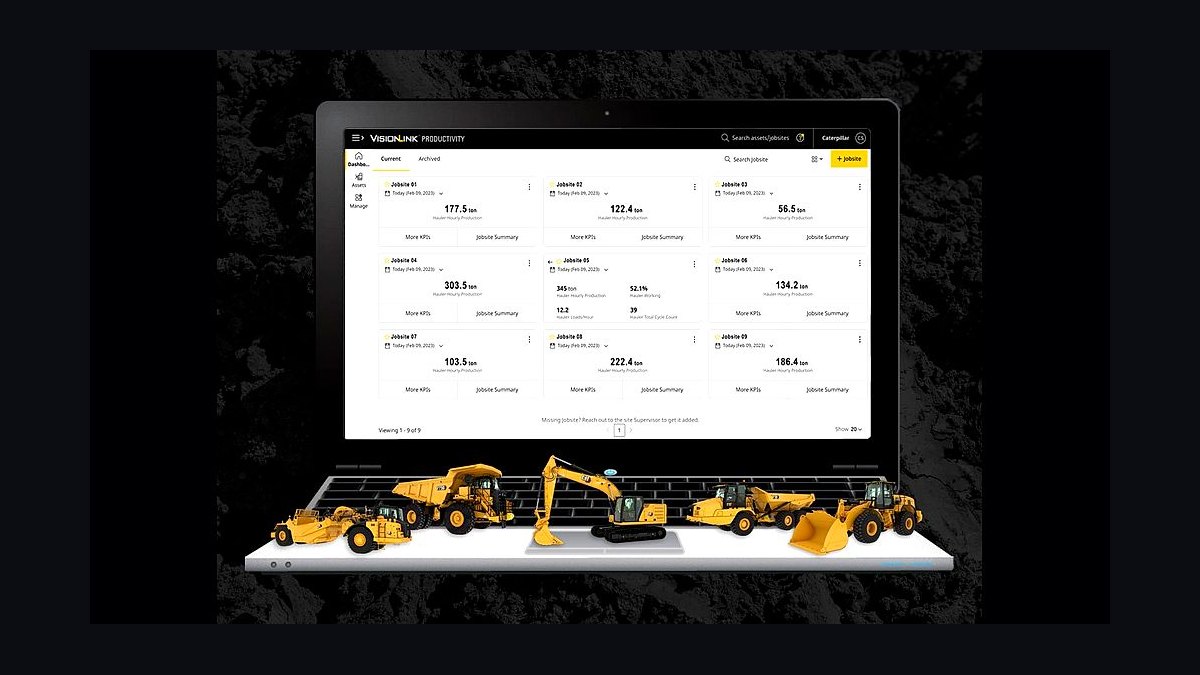
Cat VisionLink ranks third because telematics only pays back when it triggers a work order, and this is the most widely deployed off-highway feed in North America. Product Link hardware ships on most new Cat machines, and subscriptions typically run $25–$60 per asset per month depending on tier. It pushes engine hours, fuel burn, idle percentage, location, and fault codes off loaders, dozers, excavators, and haul trucks.
It suits mixed-fleet quarries that want meter-based PM scheduling without a six-figure capital project. The trade-off is OEM lock-in: a pure Cat fleet is clean and deep, but Komatsu, Volvo, and Deere iron needs the AEMP/ISO 15143-3 standard or an aggregator to normalize into one view. Above it sits COMMANDseries as the transactional hub; below it, Samsara covers the on-road trucks VisionLink does not touch.
4Fleetio Fleet Maintenance

Fleetio ranks fourth because unplanned downtime destroys margin faster than any other line in a quarry, and this CMMS fits mixed mobile fleets cleanly at roughly $5–$8 per asset per month. It converts VisionLink meter readings and fault codes into scheduled PM work orders, tracks parts and warranty, and gives an equipment manager a daily exception queue to own and measure.
It suits producers running under 15 machines who need maintenance discipline without a heavy-fleet incumbent's implementation overhead. The trade-off is depth: Dossier handles parts and warranty on large fleets better, and fixed plant — crushers, screens, conveyors, electrical gear — typically needs eMaint or Fiix at $50–$120 per user per month. Above it sits VisionLink as the data source; below it, SafetyCulture digitizes the shift checklists crews actually complete.
5Samsara Fleet Management

Samsara ranks fifth because on-road delivery trucks face a different regulator and different failure modes than pit equipment, and this platform covers ELD hours-of-service, GPS, dash cams, and fuel tracking at roughly $30–$45 per vehicle per month plus hardware. It is genuinely separate from off-highway telematics: different machines, different compliance regime, different reporting.
It suits producers who both quarry and deliver, where two drivers approaching an hours-of-service limit need tracking that VisionLink was never built to provide. The trade-off is a second subscription and a second portal, and Motive or Geotab are direct alternates at similar pricing. Above it sits Fleetio for maintenance on the same vehicles; below it, SafetyCulture handles the MSHA-side records that Samsara does not.
6SafetyCulture Compliance Platform
SafetyCulture ranks sixth because MSHA requires documented daily workplace examinations and inspections at surface aggregate operations are routine and unannounced. At roughly $24–$34 per user per month, it digitizes the checklists crews complete each shift on a phone or tablet, so producing 90 days of records becomes a query rather than a fire drill through a binder in a trailer.
It suits producers with standard MSHA exposure who need field-level capture without enterprise EHS overhead. The trade-off is analytics and permit workflow depth: Predictive Solutions adds leading-indicator analysis, and Cority or VelocityEHS at $20,000–$80,000 per year become the retrievable system of record for multi-state permits. Above it sits Samsara for on-road compliance; below it, Stockpile Reports closes the physical inventory loop.
7Stockpile Reports
Stockpile Reports ranks seventh because ticketing tracks book tons while production estimates, moisture, compaction, degradation, and mis-classification cause the pile to drift, and a volumetric survey catches that drift while it is still explainable. It runs roughly $200–$1,000 per site per month depending on survey cadence and acreage — trivial against the size of the year-end inventory adjustment it prevents.
It suits producers who need defensible pile geometry for financial reporting, lender confidence, and shrinkage detection, with monthly cadence at sites that matter and quarterly elsewhere. The trade-off is that density factors per product still need ground-truthing, and auditors accept survey-based measurement only when methodology and assumptions are documented consistently. Above it sits SafetyCulture for compliance capture; below it, Sage 300 CRE carries the corrected inventory into the books.
8Sage 300 CRE

Sage 300 CRE ranks eighth because once a producer needs job-costing by site and product, inventory carried by stockpile, equipment depreciation schedules, and royalty or fuel-tax accounting across locations, QuickBooks stops working. Mid-market producers land around $400–$1,500 per user per month all-in with implementation, and the hard integration from ticketing into receivables and inventory is what prevents hand re-keying drift.
It suits regional operators running 5 to 12 sites who have outgrown single-pit accounting but do not need SAP. The trade-off is that it is not a cloud-native platform, and Trimble Viewpoint fits vertically integrated ready-mix-and-aggregates firms better while NetSuite is the cloud option. Above it sits Stockpile Reports validating physical inventory; below it, Power BI reconciles the two worlds.
9Power BI Pro

Power BI Pro ranks ninth because the BI layer exists to reconcile two worlds that constantly disagree: physical tons on the ground and machine hours burned versus revenue recognized and cost per ton. At roughly $14 per user per month, it is the pragmatic default given how thoroughly Microsoft has penetrated this sector, and tons-by-product and cost-per-ton dashboards are the payoff of the whole stack.
It suits producers who already run Microsoft 365 and want cost-per-ton visibility without a separate analytics platform. The trade-off is modeling effort: someone must own the semantic layer joining ticketing, ERP, CMMS, and EHS data, and Tableau is the alternate where heavier visualization is wanted. Above it sits Sage 300 CRE as the financial source; below it, Cority covers the enterprise compliance reporting Power BI does not generate.
10Cority EHS Software
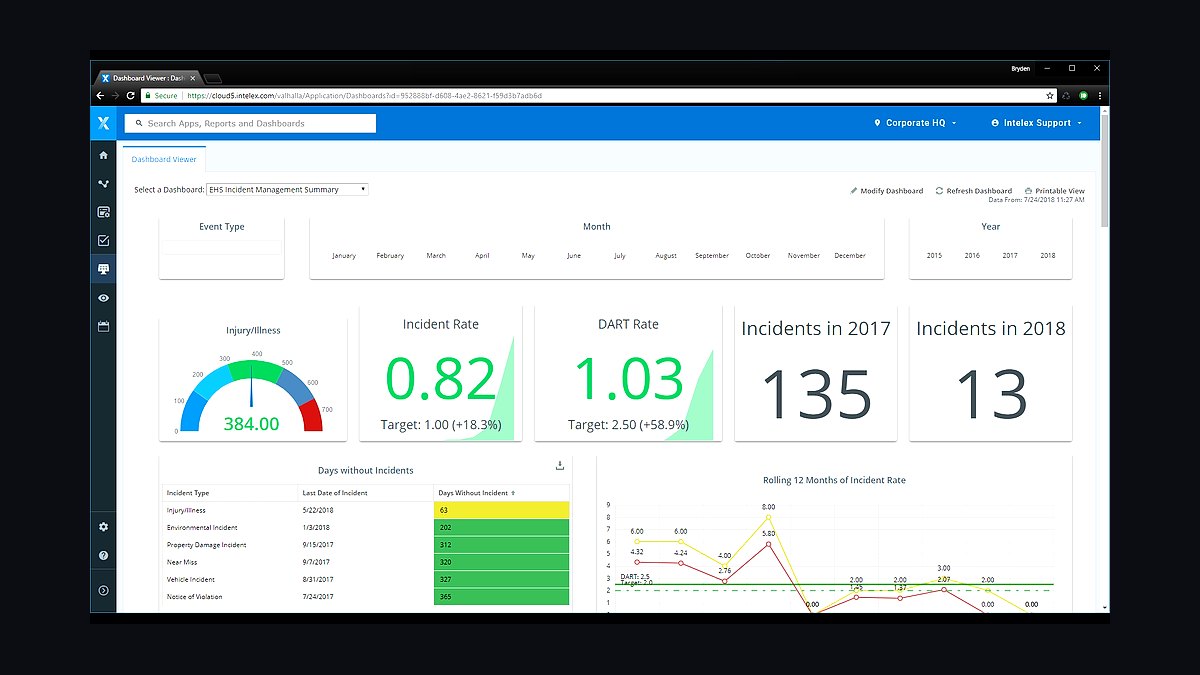
Cority ranks tenth because at multi-state scale, permit conditions, environmental sampling, and training records outgrow a checklist tool, and this platform becomes the retrievable system of record quoted per module and per site at commonly $20,000–$80,000 per year. It centralizes exams, training, dust and stormwater sampling, and blast vibration monitoring behind one query.
It suits large multi-site enterprises with multi-state permits where an inspection finding becomes a citation for a recordkeeping gap rather than a real condition. The trade-off is cost and implementation weight: SafetyCulture at $24–$34 per user per month covers standard MSHA exposure for a fraction, and Encamp is a lighter permit-workflow alternate. Above it sits Power BI consuming its data; below it, this is the last layer most producers actually need.
How we ranked these
We ranked tools by weighting scale-house ticketing accuracy and ERP reconciliation at 30%, equipment uptime and telematics-to-work-order flow at 25%, MSHA and environmental compliance retrievability at 20%, stockpile measurement and inventory reconciliation at 15%, and total cost of ownership against revenue at 10%. Each vendor was scored on integration depth, offline fallback at the scale house, AEMP/ISO 15143-3 support for mixed fleets, and whether the tool produces a defensible audit trail.
We deliberately ignored CRM pipeline features, marketing automation, and generic sales-analytics layers, because revenue in aggregates is measured in tons across a weighbridge, not deals in a funnel. We also excluded vendor demo polish, brand recognition among non-operators, and any capability that only matters at open-pit mining scale, since a four-loader quarry captures almost none of that value.
What to look for
What matters most is whether the ticketing system can print and queue transactions when rural connectivity drops, because trucks will not wait for a cloud sync. Next is the ticketing-to-ERP seam: if tickets are re-keyed into accounting, book tons drift from billed tons within a quarter and nobody can explain the variance. Then confirm the telematics layer actually triggers work orders in the CMMS, not just dashboards.
The mistake most buyers make is over-buying production fleet management built for open-pit mines moving hundreds of thousands of tons daily. A single-site crushed-stone producer does not need MineStar-grade machine guidance; VisionLink plus a competent CMMS captures nearly all available value, and the capital saved buys a screen deck. Match the production layer to fleet size and pit complexity, not to what the largest producer in your state runs.
Related questions
Do I need a CRM at all in an aggregates business?
A light one, yes. Contractor relationships, bid follow-up, and quote history matter, especially for large jobs. But it is a supporting tool — HubSpot or a Dynamics 365 module — not the system of record. Quote-to-ticket linkage is more valuable than pipeline analytics here, because the money is made at the scale.
How does this stack differ for underground or hard-rock mining?
Underground adds proximity detection, personnel tracking, ventilation-on-demand, and mine-planning software like Deswik or Hexagon MinePlan. The ticketing hub matters less because product often moves by conveyor or rail rather than truck sales, and the fleet-management layer becomes far more sophisticated. Compliance scope also widens considerably beyond surface MSHA requirements.
What about asphalt or ready-mix alongside the pit?
Vertically integrated producers get real leverage here, because the same Command Alkon platform runs concrete plant dispatch, asphalt loadout, and the aggregate scale on one ticketing core. That shared core is the strongest single argument for the suite approach over best-of-breed, since it eliminates the most failure-prone integration in the stack.
Can drone stockpile surveys replace a physical inventory count?
They substantially reduce it. A volumetric survey gives you defensible pile geometry, but you still need an accurate density factor per product and periodic ground-truthing. Auditors generally accept survey-based measurement when the methodology and density assumptions are documented consistently across quarters, and when the survey cadence matches production velocity.
How long does a typical ticketing and ERP rollout take?
Days 0–30 should get ticketing live with products, prices, customers, and haul rates loaded and wired into ERP for billing and inventory. Days 31–60 connect telematics and stand up the CMMS. Days 61–90 roll out digital workplace exams, environmental sampling, dashboards, and the first stockpile reconciliation to validate the loop.
Is Samsara the same thing as Cat VisionLink?
No, and conflating them is a common error. Samsara covers on-road trucks with ELD hours-of-service, GPS, dash cams, and fuel tracking under FMCSA rules. VisionLink covers off-highway iron — loaders, dozers, excavators — pushing engine hours, idle percentage, and fault codes. Different machines, different regulator, different failure modes, separate budgets.
What does telematics actually pay back on?
It pays back when it triggers a work order. An engine-hour threshold crossing creates a PM in the CMMS; a fault code creates an inspection task; an idle-time outlier creates a coaching conversation. If telematics data lands in a dashboard nobody opens, you bought an expensive GPS. Name an equipment manager and measure them on unplanned-downtime hours.
Do I need a full EHS platform like Cority at one quarry?
Usually not. SafetyCulture at roughly $24–$34 per user per month digitizes the checklists crews actually complete each shift, which is the practical requirement. Cority and VelocityEHS are quoted per module and per site, commonly $20,000–$80,000 per year, and make sense when you carry multi-state permits and enterprise reporting obligations.
FAQ
Do I really need Command Alkon, or can a small quarry run basic scale ticketing?
A single-site producer can absolutely run on Libra Systems or a lighter ticketing package plus QuickBooks, and that is correct sizing rather than a compromise. Command Alkon's pull is strongest when you are vertically integrated, because the same platform runs concrete plant dispatch and the aggregate scale on one ticketing core.
What is the single most failure-prone integration in this stack?
The ticketing-to-ERP seam. When weighbridge software and accounting are not integrated, crews re-key tickets by hand, and within a quarter book tons have drifted from billed tons and from physical inventory. Nobody can say which number is right. A hard integration plus monthly drone reconciliation catches drift while it is still explainable.
How should I think about total software spend as a percentage of revenue?
Total software spend should be a small single-digit percentage of revenue. More important than the percentage: the telematics-plus-CMMS layer should pay for itself in avoided unplanned downtime within the first year. One prevented final-drive failure on a large loader covers a lot of subscription across an entire fleet.
Can a cloud ticketing system work at a pit with bad connectivity?
Only with a local-mode fallback that queues transactions and syncs when the link returns. Pits are frequently in rural areas with marginal connectivity, and a cloud-only system that cannot print a ticket during an outage will stop the business cold because trucks will not wait. Ask to see the failover in the demo.
What is the AEMP or ISO 15143-3 telematics standard and why does it matter?
It is a normalization standard for telematics data across OEMs. A pure Cat fleet on VisionLink is clean and deep, but a mixed fleet of Cat, Komatsu, Volvo, and Deere means either multiple OEM portals nobody checks or an aggregator that normalizes them into one view. Insist on it in equipment purchase conversations.
How often should we reconcile stockpiles against book inventory?
Quarterly at minimum, monthly at the sites that matter most. Ticketing tracks what crossed the scale, but production estimates, moisture content, compaction, degradation, and product mis-classification all cause book inventory to drift from the pile. A survey at roughly $200–$1,000 per site per month is trivial against the inventory adjustment it prevents.
Should we build our own middleware between ticketing and ERP?
Some producers do, and it works cheaply up front. The problem is that it becomes a single-person dependency the moment that developer leaves. A vendor-supported connector or an integration platform costs more and survives staff turnover, which matters enormously in a business with a two-person IT department.
What compliance records does MSHA actually expect to see on short notice?
Documented daily workplace examinations are the core requirement, and inspections at surface aggregate operations are routine and unannounced. When records live in a binder in a trailer, a recordkeeping gap becomes a citation for a condition that was actually fine. Centralize exams, training, and environmental sampling so 90 days of records is a query.
Where should a producer stay best-of-breed rather than consolidating?
Consolidate where data is transactional and high-volume, meaning ticketing into ERP. Stay best-of-breed where data is episodic: compliance, stockpile survey, and BI. Those layers change less often, integrate loosely, and benefit from picking the strongest tool rather than inheriting whatever the suite vendor ships.
What is the biggest hidden cost in a mining tech stack?
Integration ownership. Best-of-breed gives you the strongest tool at each layer and lets you replace one piece without touching the others, but you now own the seams. In a business with a two-person IT department, that ownership is real recurring labor, not a one-time implementation line item.
Sources
- https://www.commandalkon.com/
- https://www.librasystems.com/
- https://www.cat.com/en_US/products/new/technology/visionlink.html
- https://www.samsara.com/
- https://www.fleetio.com/
- https://www.safetyculture.com/
- https://stockpilereports.com/
- https://www.propeller.com/
- https://www.msha.gov/
- https://www.osha.gov/
Related on PULSE
This page will be disappearing soon. Save it to your device for $1 — or read it free while it is here.
@Kory-White- · if Venmo asks, the last 4 of my number are 2012
This page is gone.
This one is off the shelf now. $1 keeps it on your phone for good — the whole page, pictures and diagrams included.
 pulse-tech-stacksTop 10 Best Tech Stack Tools for Podiatry Practices in 2027
 pulse-tech-stacksTop 10 Best Tech Stack Tools for Land Surveying Firms in 2027
 pulse-tech-stacksTop 10 Best Tech Stack Tools for Bot Mitigation Vendors in 2027
 pulse-tech-stacksTop 10 Best Tech Stack Tools for Hair Salons in 2027
 pulse-tech-stacksTop 10 Best Tech Stack Tools for Movie Theaters in 2027
 pulse-tech-stacksTop 10 Best Tech Stack Tools for Independent Dance Studios in 2027
 pulse-tech-stacksTop 10 Best Tech Stack Tools for Vulnerability Management Software Vendors in 2027
 pulse-tech-stacksTop 10 Best Tech Stack Tools for Independent Landscaping Companies in 2027
 pulse-tech-stacksTop 10 Best Tech Stack Tools for Self-Storage Operators in 2027
 pulse-tech-stacksTop 10 Best Tech Stack Tools for AI Customer Support Companies in 2027