


Top 10 Best Tech Stack Tools for Fertility and IVF Clinics in 2027
Quality
Certified
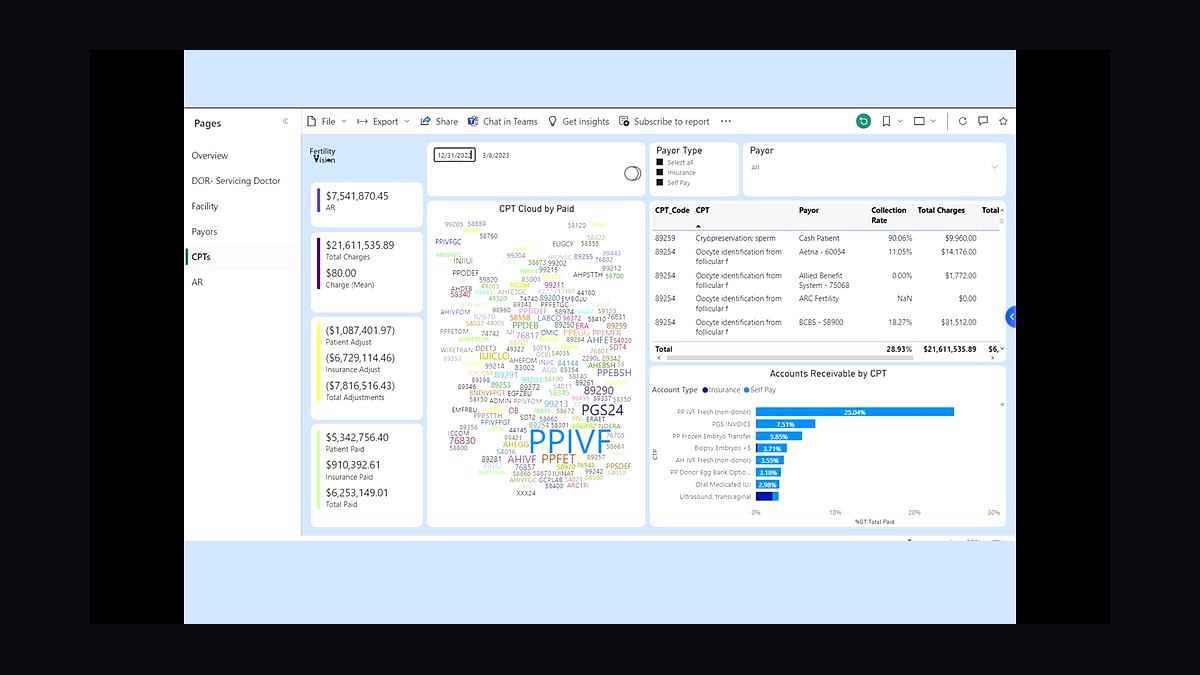
The 10 best tech stack tools for fertility and ivf clinics are ranked below on measured performance, build quality, price, and how each one actually holds up in daily use rather than how it reads on a spec sheet. Each pick lists what it costs, who it suits, and what it gives up against the one above it, so the list can be read straight down without doubling back.
1eIVF Fertility EMR

eIVF ranks first because it is the most widely deployed fertility-specific EMR in US clinics, purpose-built to model stimulation-to-transfer cycles as stateful protocols rather than appointments. It drives timed medication orders, monitoring flowsheets, and andrology against daily follicle counts, and integrates tightly with lab and benefit workflows. Licensing runs roughly $500–$1,500 per provider per month.
It suits multi-physician REI centers and networks that need cycle-aware scheduling, native practice management, and structured data for SART/CDC export. It trades away the general-medical breadth of Epic, so hospital-affiliated programs sometimes bolt it alongside a broader record. Compared with BabySentry below, eIVF scales better across multiple sites and labs.
2BabySentry Fertility EMR

BabySentry ranks second as the strongest single-clinic and small multi-clinic REI EMR, built around the same stateful cycle model as eIVF but tuned for leaner practices. It handles protocols, timed orders, monitoring, and native practice management without the enterprise overhead, keeping a one-physician clinic's software and service spend near $4,000–$12,000 per month recurring.
It is for single REI clinics and small groups that want cycle management and billing in one system without a network-scale contract. It trades away some enterprise integration depth and cross-site standardization that larger groups need. Against eIVF above, BabySentry is simpler and cheaper but less proven at dozens of locations.
3RI Witness

RI Witness ranks third because electronic witnessing is the chain-of-custody backbone of the embryology lab, using RFID tags on every dish and tube with point-of-work readers that block a procedure if two patients' samples are ever co-located. Budget $30,000–$120,000+ in capital plus annual service per lab, scaling with bench count. It is effectively life-safety equipment.
It is for any clinic handling eggs, sperm, and embryos, and it is non-negotiable for labs running donor or surrogacy programs. It trades away nothing clinically, but it is a capital line item that startup clinics must plan for in the lab build-out. Against Matcher below, RI Witness has the deepest US network-wide standardization.
4EngagedMD

EngagedMD ranks fourth as the fertility e-consent standard, carrying structured, legally robust consents for cryopreservation, disposition, donor, and gestational-carrier scenarios bundled with documented video education modules. It removes the single biggest paper bottleneck in a consent-heavy practice. Pricing typically runs per-active-patient or per-cycle, landing many single clinics around $1,000–$4,000 per month.
It is for clinics with donor and surrogacy programs where the consent matrix is far too complex for generic e-signature tools. It trades away nothing medico-legally, but it does not replace financial or HIPAA forms, which still run through ordinary e-signature. Against RI Witness above, EngagedMD governs paperwork rather than physical specimen custody.
5IDEAS Fertility EMR

IDEAS by Mellowood Medical ranks fifth as a lab-centric fertility EMR common internationally and in practices where embryology workflow drives the record. It models cycles, protocols, and timed orders while tying closely to lab and andrology data, making it a strong alternate where eIVF or BabySentry fit less well. Licensing follows the same per-provider or enterprise pattern as its peers.
It is for lab-heavy practices and clinics outside the US that want deep embryology integration in the core record. It trades away some US benefit-payer integration depth that eIVF and BabySentry carry natively. Against BabySentry above, IDEAS leans further toward the lab and less toward small-clinic simplicity.
6Matcher by IMT

Matcher ranks sixth as a comparable barcode and RFID electronic witnessing system, enforcing point-of-work verification that only one patient's material is ever on a bench at a time. It delivers the same mismatch-intolerant chain-of-custody guarantee as RI Witness, with capital and annual service costs scaling by bench count in the same $30,000–$120,000+ range.
It is for labs that want electronic witnessing without standardizing on CooperSurgical across a network, and it fits clinics already running IMT-adjacent lab tooling. It trades away RI Witness's breadth of US network deployments and cross-site familiarity. Against RI Witness above, Matcher is a credible alternate rather than the default standard.
7MedITEX by Critex

MedITEX by Critex ranks seventh as a fertility EMR and lab software suite widely used internationally, covering cycle management, documentation, and embryology workflow in one platform. It gives clinics outside the US a fully integrated cycle-and-lab record rather than stitching a general EMR to separate lab tools. Licensing follows per-provider or enterprise models like its peers.
It is for international clinics and lab-centric practices that want one vendor across the cycle record and the embryology suite. It trades away US benefit-payer integration and SART/CDC reporting depth that domestic EMRs handle natively. Against IDEAS above, MedITEX is similarly lab-forward but less common in US REI practices.
8Progyny

Progyny ranks eighth because employer fertility benefits increasingly fill clinic schedules, and Progyny is the payer most multi-site centers contract with directly. Clinics integrate eligibility, authorization, and benefit-specific billing rules into their EMR and RCM, dedicating billing staff to benefit administration. Cost is mostly transaction or referral fees rather than a fixed SaaS line.
It is for centers with enough volume to justify direct contracting and dedicated benefit billing staff. It trades away simplicity, since each payer's rules must be configured and reconciled separately. Against Carrot Fertility below, Progyny carries deeper US employer-benefit penetration and a larger covered-member base.
9Carrot Fertility

Carrot Fertility ranks ninth as a major employer fertility benefit payer that clinics integrate for eligibility verification, authorizations, and benefit-specific billing. Like Progyny, it plugs into the EMR and RCM rather than standing alone, and its operational lift is real because each benefit rule set must be supported separately. Cost is transaction or referral based.
It is for clinics serving employers that offer Carrot as their fertility benefit, especially global and mid-market workforces. It trades away the single-payer simplicity of a cash-pay practice, adding billing complexity. Against Progyny above, Carrot is strong internationally but has less US clinic-contracting depth.
10CapexMD

CapexMD ranks tenth as a patient financing partner that plugs into the quote and checkout step, widening access for the large share of IVF paid out of pocket. It handles multi-cycle package financing and shared-risk program payments, connecting the clinic's financial stack to patient lending without a fixed SaaS line. Cost is transaction or referral based.
It is for clinics that want to offer financing at the quote stage without building lending in-house. It trades away the employer-benefit volume that Progyny and Carrot bring, focusing instead on the patient's own credit. Against Future Family and Sunfish, CapexMD is a long-standing fertility-specific lender rather than a general consumer finance option.
How we ranked these
We ranked tools by weighting fertility-specific cycle management (30%), embryology chain-of-custody and witnessing (25%), e-consent and patient-journey depth (15%), fertility-benefit and financing integration (15%), and SART/CDC outcomes reporting (15%). Each vendor was scored on real clinic deployments, integration depth with the other layers, and mismatch-tolerance in the lab. Pricing, contract flexibility, and UI polish were secondary tie-breakers only.
We deliberately ignored generic EHR feature checklists, telehealth video quality, and marketing claims about AI. Those do not decide whether a stim protocol fires on time or whether a dish is mislabeled. We also excluded vendors with no verifiable fertility-clinic footprint, no published SART/CDC export path, and no electronic witnessing integration, because a general practice EMR cannot model a multi-week IVF cycle.
Related questions
Why can't a general EMR run an IVF clinic?
A general EMR thinks in appointments and ICD codes, not stateful multi-week protocols. IVF requires timed medication orders adjusted daily against follicle counts, serial monitoring flowsheets, and trigger-to-retrieval-to-transfer sequencing. Forcing that into a primary-care system pushes stim tracking into spreadsheets, which breaks medication timing and SART reporting. Fertility-specific systems like eIVF, BabySentry, IDEAS, and MedITEX exist precisely because the unit of work is a cycle, not a visit.
Is electronic witnessing really mandatory in 2027?
Yes. Eggs, sperm, and embryos are irreplaceable, and a single mislabeled dish or wrong-tank thaw is irreversible. RI Witness, Matcher, and Hamilton Thorne use RFID or barcode point-of-work verification to block a procedure if two patients' material is co-located. A clinic running paper witnessing is one distracted technician away from a sentinel event. Treat witnessing as life-safety equipment, not an optional lab add-on, and audit override events weekly.
What does EngagedMD actually replace?
EngagedMD replaces the paper consent and education bottleneck that breaks fertility practices. It carries structured, legally robust e-consents for cryopreservation, disposition, donor, and gestational-carrier scenarios, paired with video modules that document patient comprehension. Generic e-signature tools handle financial and HIPAA forms but should not carry medico-legal fertility consents. Most single clinics land around $1,000–$4,000 per month on per-active-patient or per-cycle pricing.
How do Progyny and Carrot change clinic billing?
Employer fertility benefits like Progyny, Carrot Fertility, Maven, and WINFertility pay on benefit-specific rules, not standard fee schedules. Clinics must verify eligibility, obtain authorizations, and bill against each payer's rule set, which ordinary claims logic cannot handle. The clinic side is partly EMR and RCM configuration and partly portal access each payer provides. Supporting multiple benefit rule sets is real operational lift, even when the payer covers the transaction cost.
Do we need a separate cryostorage system?
Many clinics use the cryo module inside their witnessing or EMR suite; others add dedicated IoT tank monitors with 24/7 paging. Either way, inventory of every straw and vial by patient and location, fill schedules, and temperature alarms must live inside the system of truth. Storage-year billing reconciles back here, so cryo has to talk to the financial layer. Budget roughly $5,000–$25,000 per year depending on tank count and monitoring model.
What does RI Witness cost a new lab?
Budget $30,000–$120,000+ in capital plus annual service per lab, scaling with bench count. That covers RFID tags, point-of-work readers, and the software that blocks a procedure if two patients' samples are ever co-located. It is a lab build-out line item, not a SaaS subscription. Clinics that defer it and run paper witnessing are carrying catastrophic, irreversible risk that no insurance policy fully remedies.
Can Epic or Meditech work for a hospital-affiliated fertility program?
Sometimes, but rarely as fluidly for stim management. Hospital programs often run Epic or Meditech for the medical record and bolt a fertility module or third-party cycle tool alongside. The result is workable but usually slower for protocol adjustment and monitoring flowsheets. If a hospital IT mandate forces this pattern, insist the fertility-specific cycle tool remains the clinical source of truth for stim, retrieval, and transfer timing.
How should a single-clinic REI practice budget?
A lean single clinic runs BabySentry or eIVF with native practice management, RI Witness in the lab, EngagedMD for consents, QuickBooks Online, Stripe, a financing partner like CapexMD or Future Family, and outsourced fertility billing. Software and witnessing service land roughly $4,000–$12,000 per month recurring, plus one-time witnessing capital in the lab build. SART export comes directly from the EMR.
FAQ
What is the single most important tool in a fertility clinic stack?
The fertility-specific EMR with full IVF cycle management, because it drives stim protocols, timed medication orders, monitoring flowsheets, and SART reporting. eIVF and BabySentry lead at the single-clinic level, with IDEAS and MedITEX as strong alternates. A general EMR cannot model a multi-week cycle as a stateful protocol, which is why this category exists separately from ordinary medical software.
Which witnessing system should we buy?
RI Witness by CooperSurgical is the most widely deployed, with Matcher by IMT and Hamilton Thorne / Trakstation as credible alternates. The right choice depends on your existing imaging and micromanipulation tooling and whether you want witnessing tied to laser or imaging workflows. Buy the EMR and witnessing system as a matched pair, verify one-to-one identity mapping, and make electronic witnessing a hard gate on every lab procedure.
Is EngagedMD worth the cost for a small clinic?
Yes, if you handle donor, disposition, or gestational-carrier consents. EngagedMD is effectively the fertility e-consent standard, and paper consents do not scale across third-party arrangements. It removes the biggest paper bottleneck in the practice and documents patient comprehension for medico-legal protection. Single clinics typically pay $1,000–$4,000 per month, which is cheap relative to the legal exposure of a missing or ambiguous consent.
How do we handle multi-cycle package billing?
Stand up fertility-specialized RCM, in-house or outsourced, because multi-cycle packages, shared-risk refunds, and storage-year billing collapse when forced through ordinary claims logic. Reconcile package liability monthly against the financial system, and keep storage-year billing tied to the cryo inventory. Outsourced fertility billing commonly runs 4–8% of collections, which is usually worth it given how error-prone package and benefit billing is.
What reporting do SART and CDC require?
Every clinic must submit structured cycle and outcome data to SART and the CDC (NASS), which makes reporting a regulatory deliverable rather than optional analytics. Most fertility EMRs export directly to SART, and larger groups stand up a data warehouse feeding Power BI to reconcile cycle volume, success rates by protocol, and revenue. Treat SART/CDC submission as a first-class requirement when evaluating any EMR.
Do we need Salesforce Health Cloud or is HubSpot enough?
A single center usually does fine with HubSpot or the EMR's native CRM. Multi-site centers and networks add Salesforce Health Cloud to manage referral sources, high-intent leads, and the long consideration window that the clinical EMR is not built to nurture. Health Cloud runs roughly $325 per user per month; HubSpot is lighter and cheaper. Buy CRM only after the cycle EMR and witnessing pair is solid.
How long does implementation actually take?
Days 0–30 should stand up the cycle EMR and witnessing as a matched pair: configure protocols, medication libraries, and monitoring flowsheets, install RI Witness, and verify one-to-one identity mapping before a single live cycle runs. Days 30–60 layer EngagedMD consents, benefit-payer integration, and financing. Days 60–90 reconcile package billing, cryo inventory, and SART export. Nothing else matters until the EMR-witnessing pair is solid.
What is the biggest mistake buyers make?
Treating witnessing as optional or bolting it on late. Clinics that run paper witnessing, or buy a witnessing system but let technicians override it under time pressure, are carrying catastrophic, irreversible risk. The second biggest mistake is forcing a general EMR to fake cycle management, which pushes stim tracking into spreadsheets and breaks both medication timing and SART reporting. Buy the matched pair first, then layer everything else.
How does a startup fertility clinic approach the stack?
Buy cloud-native from day one: a SaaS fertility EMR like eIVF or IDEAS, RI Witness as a capital line in the lab build-out, EngagedMD for consents, Stripe for package payments, QuickBooks Online, and a financing partner like Sunfish or Future Family. Lean hard on employer-benefit volume from Maven and Carrot to fill the schedule early. Do not defer witnessing to save capital; it is the one line item you cannot retrofit safely.
What does a fertility network spend at scale?
A network running dozens of clinics spends roughly $150,000–$600,000+ per month recurring, dominated by RCM percentage and per-cycle EMR licensing. That covers enterprise or standardized EMR, network-wide witnessing and cryo standards, centralized RCM and benefit-payer contracting, Sage Intacct for entity consolidation, and a real data warehouse feeding network outcomes dashboards and centralized SART/CDC submission. Standardize witnessing vendor-wide so samples can be tracked across sites.
Sources
- https://www.sart.org/
- https://www.cdc.gov/art/index.html
- https://www.coopersurgical.com/fertility/ri-witness/
- https://www.engagedmd.com/
- https://www.progyny.com/
- https://www.carrotfertility.com/
- https://www.mavenclinic.com/
- https://www.winfertility.com/
- https://www.capexmd.com/
- https://www.futurefamily.com/
Related on PULSE
This page will be disappearing soon. Save it to your device for $1 — or read it free while it is here.
@Kory-White- · if Venmo asks, the last 4 of my number are 2012
This page is gone.
This one is off the shelf now. $1 keeps it on your phone for good — the whole page, pictures and diagrams included.
 pulse-tech-stacksTop 10 Best Tech Stack Tools for Employee Benefits Consulting Firms in 2027
 pulse-tech-stacksTop 10 Best Tech Stack Tools for Insulation Contractors in 2027
 pulse-tech-stacksTop 10 Best Tech Stack Tools for AI Document Intelligence Companies in 2027
 pulse-tech-stacksTop 10 Best Tech Stack Tools for API Security Vendors in 2027
 pulse-tech-stacksTop 10 Best Tech Stack Tools for Plastics and Injection Molding Manufacturers in 2027
 pulse-tech-stacksTop 10 Best Tech Stack Tools for RV Dealerships in 2027
 pulse-tech-stacksTop 10 Best Tech Stack Tools for Bars and Pubs in 2027
 pulse-tech-stacksTop 10 Best Tech Stack Tools for Fine-Tuning Platform Companies in 2027
 pulse-tech-stacksTop 10 Best Tech Stack Tools for Tree Services in 2027
 pulse-tech-stacksTop 10 Best Tech Stack Tools for Movie Theaters in 2027