


Top 10 Best Tech Stack Tools for Durable Medical Equipment Suppliers in 2027
Quality
Certified

The 10 best tech stack tools for durable medical equipment suppliers are ranked below on measured performance, build quality, price, and how each one actually holds up in daily use rather than how it reads on a spec sheet. Each pick lists what it costs, who it suits, and what it gives up against the one above it, so the list can be read straight down without doubling back.
1Brightree DMEPOS Platform

Brightree ranks first because it is the dominant DMEPOS billing and management system of record for regional and national DME operators, running roughly $500–$2,500+ per month plus per-claim fees. It natively enforces audit-proof intake, capped-rental month tracking, serial/asset assignment, and delivery proof-of-delivery capture in one database. Its built-in ReSupply and AirView connections make recurring CPAP resupply and PAP adherence data flow without third-party middleware.
Brightree is built for suppliers billing Medicare DMEPOS at meaningful volume — typically 200+ patients per month across multiple payer mixes. It trades away affordability and simplicity: small shops often find the license, configuration, and training overhead heavy versus Bonafide or TIMS. Compared to the pick directly below, Brightree wins on breadth and ecosystem depth but costs two to five times more per seat.
2Bonafide DME Software
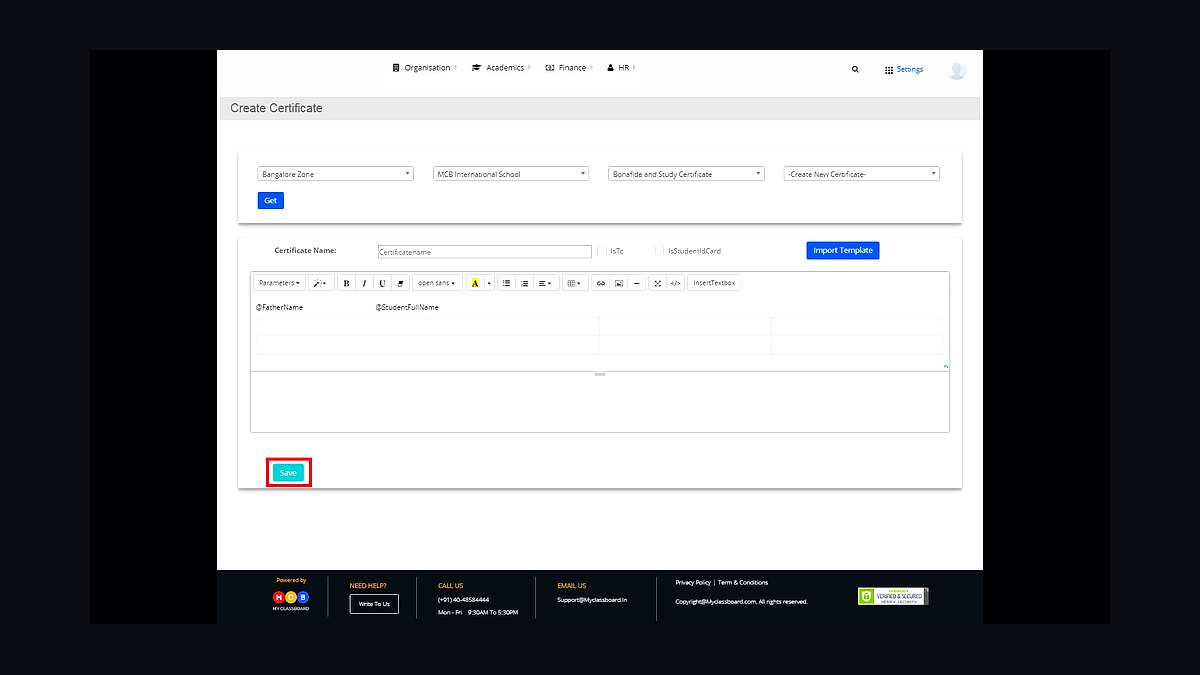
Bonafide ranks second as the lean all-in-one DMEPOS platform for small and midsize suppliers, typically landing at $300–$1,200 per month depending on volume. It bundles billing, inventory, serial tracking, and capped-rental logic without the enterprise configuration burden Brightree carries. For shops under 150 patients per month, Bonafide delivers most of the audit-defense functionality at a fraction of the cost.
Bonafide fits independent DME and complex-rehab providers that want one tight system rather than a sprawling toolset. It trades away the native ReSupply and AirView integrations that make Brightree's respiratory annuity seamless, so resupply automation and PAP data must be wired in separately. Against TIMS below, Bonafide skews slightly more modern in interface while TIMS carries deeper legacy billing depth.
3TIMS by Computers Unlimited

TIMS by Computers Unlimited ranks third as a long-standing DMEPOS billing and inventory platform favored by small-to-midsize HME operators, with pricing commonly in the $300–$1,200 per month range. It handles rental versus purchase logic, capped-rental month counts, serial-to-patient assignment, and DMEPOS claim generation natively. Its billing engine is battle-tested across decades of Medicare documentation requirements.
TIMS suits suppliers prioritizing tight billing and inventory control over modern cloud UX. It trades away the polished interfaces and native resupply engines that Brightree and Bonafide ship with, so operators often bolt on Snap Worx or ResMed ReSupply. Compared to Bonafide above, TIMS leans more legacy in feel but matches it on core DMEPOS billing depth.
4Parachute Health e-Prescribing
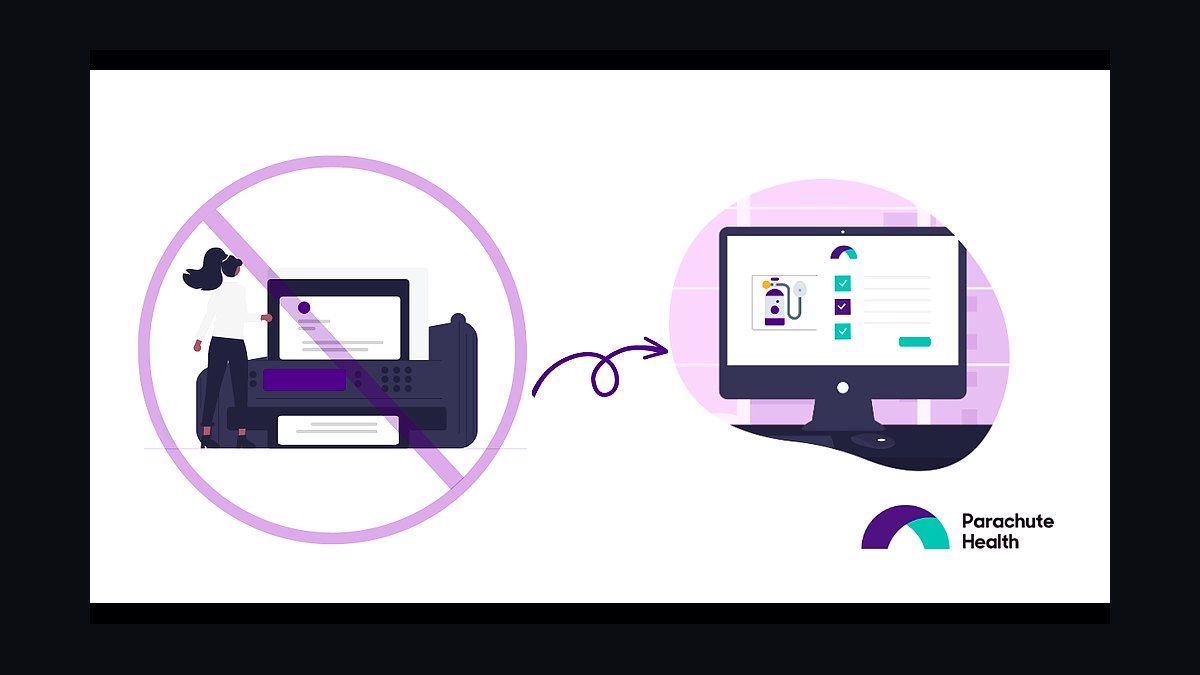
Parachute Health ranks fourth because it is the dominant electronic DME ordering rail, replacing faxed referrals with structured, validated e-prescriptions that flow directly into the billing platform. It is typically free or low-cost to the supplier since the referral side carries the model, making it one of the highest-ROI tools in the stack. It validates documentation completeness before an order ever reaches intake.
Parachute Health fits any DME supplier receiving referrals from physician offices, hospital discharge planners, or sleep labs — essentially every operator. It trades away nothing on cost but requires referral-source adoption, which can lag in rural or low-volume markets. Against Brightree ReSupply above, Parachute solves intake while ReSupply solves recurring revenue; they complement rather than compete.
5Brightree ReSupply Automation

Brightree ReSupply ranks fifth as the resupply automation engine that drives the CPAP and respiratory annuity, typically costing roughly $1–$4 per active resupply patient per month or a low-thousands platform fee at scale. It identifies patients eligible for replacement masks, cushions, tubing, and filters, runs multi-channel text, IVR, and email outreach, confirms continued use, and auto-creates the order. Conversion rates above 60% are achievable when tied to adherence data.
Brightree ReSupply fits suppliers already on Brightree who want resupply without middleware, especially those with several hundred or more respiratory patients. It trades away independence — non-Brightree shops cannot use it, pushing them to Snap Worx or ResMed ReSupply. Compared to Parachute Health above, ReSupply targets existing patients while Parachute targets new referrals.
6Snap Worx Resupply

Snap Worx ranks sixth as a popular independent resupply automation engine known for high contact-and-conversion rates on CPAP and respiratory supplies. It works alongside non-Brightree platforms like Bonafide and TIMS, filling the resupply gap those systems leave. Pricing typically runs per active resupply patient monthly, comparable to Brightree ReSupply.
Snap Worx fits suppliers on Bonafide, TIMS, or NikoHealth who need resupply automation without switching billing platforms. It trades away the native integration Brightree ReSupply enjoys, so order data must sync back to the billing system. Compared to Brightree ReSupply above, Snap Worx wins on platform independence but loses on out-of-the-box Brightree wiring.
7ResMed AirView Adherence
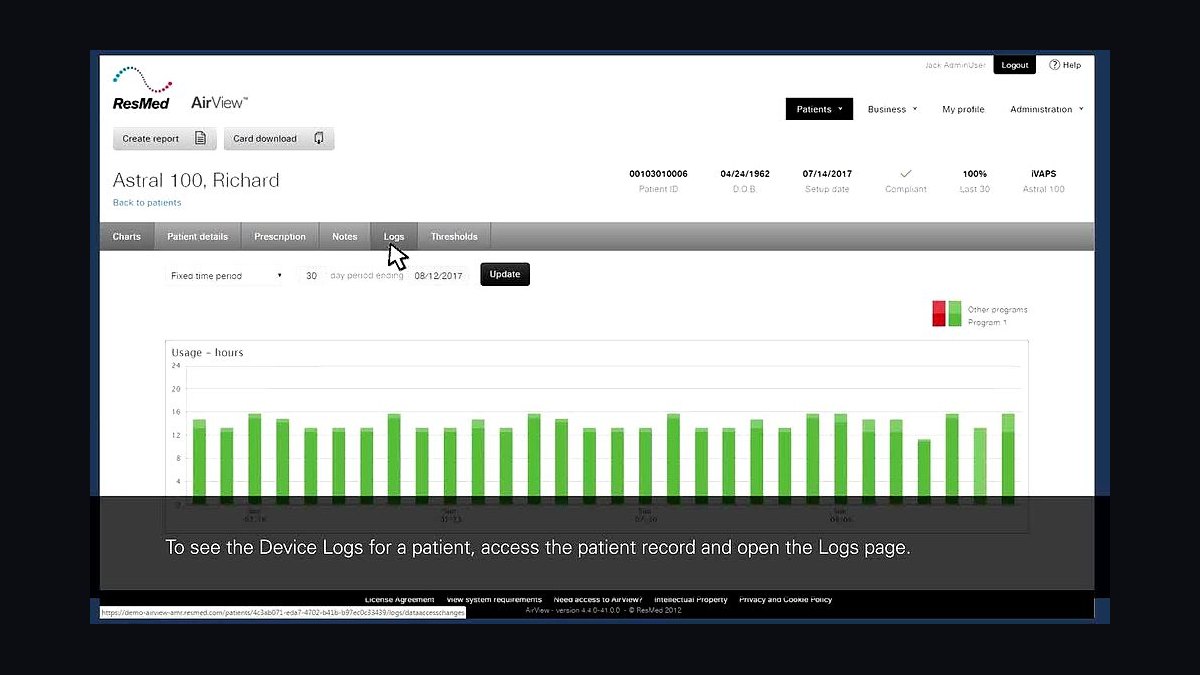
ResMed AirView ranks seventh as the cloud platform streaming usage and efficacy data from ResMed AirSense and AirCurve devices, documenting the 90-day Medicare compliance window. It is typically bundled with device purchases or charged a modest per-device data fee. Without it, suppliers cannot prove continued use for resupply or rental conversion on ResMed fleets.
AirView fits any supplier with a ResMed-heavy sleep and respiratory patient base — which is most of them. It trades away coverage of Philips Respironics devices, forcing mixed-fleet operators to also run Care Orchestrator. Compared to Snap Worx above, AirView supplies the adherence evidence that makes resupply defensible rather than driving the outreach itself.
8Philips Care Orchestrator

Philips Care Orchestrator ranks eighth as the device-data platform for Philips Respironics CPAP and bilevel fleets, formerly branded EncoreAnywhere. It streams adherence and efficacy data so suppliers can document Medicare compliance and justify resupply and rental conversion on Philips devices. Pricing is typically bundled with device purchases or a modest per-device fee.
Care Orchestrator fits suppliers with a mixed ResMed and Philips fleet — the common case — who need adherence data from whatever devices patients actually use. It trades away ResMed coverage, so AirView must run alongside it. Compared to AirView above, Care Orchestrator is the necessary complement rather than a substitute, and most suppliers run both.
9Waystar Clearinghouse

Waystar ranks ninth as a leading healthcare clearinghouse handling claims scrubbing, submission, posting, real-time eligibility, prior authorization, and denial analytics for DMEPOS suppliers. Fees typically run a few hundred to a couple thousand dollars monthly plus per-claim charges. Its denial analytics surface the AR follow-up work that turns delivered equipment into collected cash.
Waystar fits suppliers billing across Medicare, Medicaid, and commercial payers who need eligibility verification before delivery and denial management after. It trades away the native end-to-end integration Brightree's built-in billing offers Brightree shops. Compared to Care Orchestrator above, Waystar handles money flow while Care Orchestrator handles clinical adherence data.
10Sage Intacct Accounting
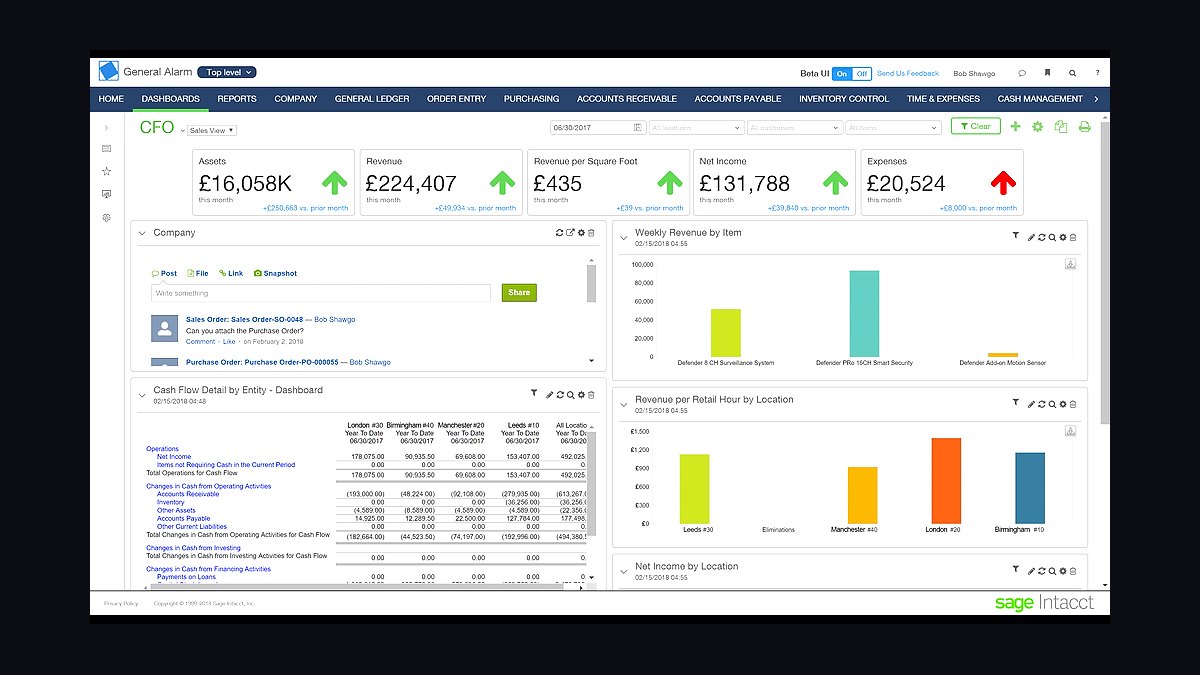
Sage Intacct ranks tenth as the accounting and general ledger layer for multi-location, multi-entity DME suppliers needing dimensional reporting, typically $400–$1,000+ per month. It handles consolidated financials across acquired locations, cost-center reporting, and audit-ready books that QuickBooks cannot match at scale. For roll-up operators, it is the finance backbone beneath the DMEPOS platform.
Sage Intacct fits regional and national DMEs with several entities or locations; small shops under 150 patients per month run QuickBooks instead at $30–$200 monthly. It trades away simplicity and low cost for reporting depth. Compared to Waystar above, Intacct closes the books while Waystar collects the revenue those books record.
How we ranked these
We ranked each tool on five weighted criteria: DMEPOS-specific billing and documentation depth (30%), resupply automation and recurring-revenue capability (20%), PAP adherence and device-data integration (15%), referral intake and e-prescribing connectivity (15%), and total cost of ownership at realistic patient volumes (20%). Scores came from vendor documentation, published pricing, peer-community reports, and operator interviews across small, regional, and national DMEs.
We deliberately ignored generic CRM features, marketing automation, website builders, and horizontal ERP breadth. Those capabilities do not touch a CMN, a capped-rental clock, or a proof of delivery, so they distort the ranking toward tools that demo well but fail at claims. We also excluded vendor-sponsored awards, analyst pay-to-play placements, and any tool without verifiable DMEPOS claim output.
What to look for
What matters most is whether the platform enforces audit-proof documentation before a claim drops, and whether resupply automation is native or bolted on. Check capped-rental month tracking, serial-to-patient assignment, and clearinghouse integration depth. Then price it at your actual claim volume, not a demo seat count, because per-claim and per-patient fees dominate real cost.
The mistake most buyers make is choosing the cheapest per-seat platform or a generic medical billing system, then discovering it cannot generate a clean DMEPOS claim or track a 13-month rental. A second common error is buying Brightree-scale enterprise software at 100 patients per month. Match platform tier to volume, and treat resupply automation as mandatory, not optional.
Related questions
What is a DMEPOS billing platform?
It is software purpose-built for durable medical equipment suppliers that handles patient intake, payer and benefit verification, documentation, order entry, inventory and serial tracking, capped-rental logic, claim generation, and accounts receivable in one system. Brightree, Bonafide, TIMS, and NikoHealth are leading examples. Generic medical billing systems lack CMN, proof-of-delivery, and capped-rental concepts, so they leak revenue to denials.
How much does a DME tech stack cost per month?
A small local supplier runs roughly $700 to $2,000 monthly all in. A regional HME with several locations typically spends $3,000 to $9,000 monthly plus per-claim fees. National enterprises often exceed $15,000 to $60,000 monthly. Platform license, resupply fees, clearinghouse charges, and per-claim transaction costs drive the total far more than seat counts.
Why is resupply automation important for DME suppliers?
Recurring CPAP masks, cushions, tubing, and filters are high-margin and predictable, but only if every eligible patient is contacted on schedule and continued use is confirmed. Manual outreach caps out at a few hundred patients and drives churn. An automation engine tied to PAP adherence data converts resupply into a scalable annuity and is usually the highest-ROI tool in the stack.
What does Parachute Health do for DME suppliers?
Parachute Health is an electronic prescribing and intake rail that lets physicians and hospital discharge planners create structured, validated DME orders that flow directly into the supplier's platform. It replaces faxed, illegible orders that bounce for missing diagnosis codes. Because the model is usually free or low-cost to the supplier, it is one of the easiest wins in a DME tech stack.
Do I need both ResMed AirView and Philips Care Orchestrator?
Only if your patient fleet is mixed. AirView covers ResMed AirSense and AirCurve devices; Care Orchestrator covers Philips Respironics devices. Both stream usage and efficacy data needed to document the 90-day Medicare compliance window and support continued resupply and rental conversion. Suppliers running a single manufacturer fleet can standardize on one feed.
What is capped-rental tracking and why does it matter?
Medicare rents much DME, such as oxygen concentrators and CPAPs, over a 13-month capped-rental period before the patient owns the unit. The platform must count rental months, bill correctly each month, and convert to patient-owned at month 13. Mismanaging the clock causes overbilling, which is a Medicare liability, or underbilling, which is lost revenue.
Can I run a DME business on QuickBooks and a generic CRM?
No. QuickBooks handles accounting fine, but a generic CRM has no concept of a Certificate of Medical Necessity, capped rental, or proof of delivery, and cannot generate a clean DMEPOS claim. The result is duplicate data entry, broken documentation chains, and a denial rate that poisons cash flow. Use a purpose-built DMEPOS platform and integrate QuickBooks around it.
How long does it take to implement a DME tech stack?
A realistic rollout runs 90 days. Days 0 to 30 cover platform selection, data migration, and audit-proof intake configuration. Days 31 to 60 connect e-prescribing intake, launch resupply automation, and wire the clearinghouse. Days 61 to 90 integrate PAP adherence feeds and stand up denial, DSO, and resupply conversion dashboards. Rush jobs skip documentation gates and create audit exposure.
FAQ
What is the best tech stack for a durable medical equipment supplier in 2027?
It centers on a DMEPOS billing and management platform, typically Brightree for regional and national operators or Bonafide and TIMS for leaner shops. Around it sit a resupply automation engine, a PAP adherence data feed such as AirView or Care Orchestrator, Parachute Health for electronic intake, and Waystar for claims and eligibility. The stack lives or dies on audit-proof documentation and recurring resupply revenue.
Is Brightree always the right platform choice?
No. Brightree is the dominant, most fully featured platform and the safe default for regional and national operators, especially those using ReSupply and AirView. But a small local DME often gets better value from Bonafide or TIMS, which deliver tight billing and inventory at lower cost without enterprise overhead. Match the platform to patient volume and payer mix, not market share.
How do I reduce DME claim denials?
Configure the platform to block claim submission until the detailed written order, medical-necessity documentation, and signed proof of delivery are attached. Run real-time eligibility and prior authorization before delivery through Waystar or Availity. Then track denial rate as a core operating metric and work the AR queue weekly. Documentation gates at intake prevent most denials before they happen.
What is a Certificate of Medical Necessity and who handles it?
A CMN is a Medicare-required form documenting that a piece of DME is medically necessary for a specific patient, often signed by the treating physician. The DME platform should capture and store it as part of the documentation chain and refuse to release a claim without it. Intake staff and referral sources coordinate signatures, but the software must enforce completeness.
How does PAP adherence data affect DME billing?
Medicare requires documented CPAP usage, generally four or more hours per night on 70 percent of nights during a 30-day window, to continue coverage past the initial trial. AirView and Care Orchestrator stream that usage data so suppliers can prove compliance, justify continued resupply, and convert rentals correctly. Without the data feed, compliance documentation becomes manual and error-prone.
Should I choose a cloud or on-premise DME platform?
Cloud is the default in 2027. Brightree, NikoHealth, and most modern platforms are cloud-hosted, which simplifies multi-location access, updates, and disaster recovery. On-premise made sense when connectivity was unreliable, but it now adds IT overhead and slows integration with e-prescribing and device-data feeds. Only choose on-premise if a specific payer or compliance requirement forces it.
What integrations matter most in a DME tech stack?
Four matter most: the clearinghouse for claims and eligibility, the e-prescribing rail for referral intake, the device-data feed for PAP adherence, and the accounting system for the general ledger. Resupply automation should connect natively to the billing platform. Every additional manual handoff between systems adds duplicate entry and breaks the documentation chain that audits examine.
How do I evaluate DME software vendors before buying?
Ask for a live demo using your own referral and claim scenarios, not a canned dataset. Require references from suppliers at your patient volume and payer mix. Confirm capped-rental logic, serial tracking, and proof-of-delivery capture in the product, not on a roadmap. Price it at your real claim volume, and check the exit terms for data migration before signing.
What metrics should a DME supplier track?
Track denial rate, days sales outstanding, resupply conversion rate, PAP compliance percentage, revenue per referral, and referral-to-setup time. Capped-rental month accuracy and inventory turns matter too. Power BI or the platform's built-in dashboards should surface these monthly. Operators who watch denial rate and resupply conversion closely consistently outperform those who only review financial statements.
Can a small DME compete with national suppliers on technology?
Yes, because the core tools are accessible at low volume. Bonafide or TIMS plus Parachute Health, Waystar, AirView, and QuickBooks delivers most of the capability a national operator has, at roughly $700 to $2,000 monthly. The national advantage is scale in resupply and data analytics, not exclusive software. Small suppliers win on service speed and referral relationships.
Sources
- https://www.cms.gov/medicare/coverage/durable-medical-equipment-dmepos
- https://www.resmed.com/en-us/health-professionals/products/software/airview/
- https://www.brightree.com/
- https://www.parachutehealth.com/
- https://www.waystar.com/
- https://www.availity.com/
- https://www.philips.com/healthcare/clinical-solutions/care-orchestrator
- https://www.sageintacct.com/
- https://powerbi.microsoft.com/
- https://www.klassresearch.com/
Related on PULSE
This page will be disappearing soon. Save it to your device for $1 — or read it free while it is here.
@Kory-White- · if Venmo asks, the last 4 of my number are 2012
This page is gone.
This one is off the shelf now. $1 keeps it on your phone for good — the whole page, pictures and diagrams included.
 pulse-tech-stacksTop 10 Best Tech Stack Tools for Email Security Vendors in 2027
 pulse-tech-stacksTop 10 Best Tech Stack Tools for Podiatry Practices in 2027
 pulse-tech-stacksTop 10 Best Tech Stack Tools for RV Dealerships in 2027
 pulse-tech-stacksTop 10 Best Tech Stack Tools for Self-Storage Operators in 2027
 pulse-tech-stacksTop 10 Best Tech Stack Tools for Small Pest Control Companies in 2027
 pulse-tech-stacksTop 10 Best Tech Stack Tools for Software Development Agencies in 2027
 pulse-tech-stacksTop 10 Best Tech Stack Tools for Plumbing Contractors in 2027
 pulse-tech-stacksTop 10 Best Tech Stack Tools for Pressure Washing Companies in 2027
 pulse-tech-stacksTop 10 Best Tech Stack Tools for Window Cleaning Services in 2027
 pulse-tech-stacksTop 10 Best Tech Stack Tools for Independent Driving Schools in 2027