


Top 10 Best Tech Stack Tools for Cryptocurrency Exchanges in 2027
Quality
Certified
The 10 best tech stack tools for cryptocurrency exchanges are ranked below on measured performance, build quality, price, and how each one actually holds up in daily use rather than how it reads on a spec sheet. Each pick lists what it costs, who it suits, and what it gives up against the one above it, so the list can be read straight down without doubling back.
1Fireblocks MPC Custody

Fireblocks ranks first because custody is the one layer where failure is terminal rather than merely expensive. Pricing starts near $5,000 per month and climbs into six figures annually as asset count and transaction volume grow, and the platform enforces MPC quorum rules, withdrawal allowlists, and per-asset velocity limits before any key signs. A slow matching engine loses market share gradually; a custody breach can render an exchange insolvent in a single event with no chargeback available.
This is built for exchanges that have already accepted custody as a board-level control rather than an engineering convenience. It trades away simplicity: MPC quorum policy, geographic sharding, and hot/cold ratios add operational overhead that a single-key hot wallet does not. Compared with BitGo directly below, Fireblocks is the more common default for venues prioritizing policy enforcement over regulated-trust banking integration.
2BitGo Qualified Custody

BitGo ranks second because it pairs multi-signature wallet infrastructure with regulated trust status and insurance coverage that banking partners and institutional clients ask for by name. Qualified custody arrangements run on scales similar to or higher than Fireblocks once insurance and trust overhead are factored in, and the multi-sig model gives exchanges a second architectural option alongside MPC. It is frequently deployed as the second custodian in a multi-custody setup rather than a replacement.
This suits exchanges serving institutions that require a regulated custodian on the counterparty list. It trades away some of the policy-automation flexibility Fireblocks offers for treasury workflows, and onboarding is heavier. Against Chainalysis below, BitGo covers where keys live while Chainalysis covers what flows through them, so most venues run both rather than choosing.
3Chainalysis Blockchain Analytics

Chainalysis ranks third because on-chain screening is the layer that keeps banking relationships alive, and banks can exit crypto relationships with as little as thirty days' notice. Pricing typically runs $50,000 to $250,000 or more per year depending on transaction volume and which modules are licensed, covering sanctions screening, investigation tooling, and Travel Rule integration. Every deposit and withdrawal is screened before it is credited or released.
This is aimed at exchanges that have moved past launch and need defensible AML coverage across every chain they list. It trades away cost efficiency: the annual license is a fixed expense that does not scale down with low volume. Against Elliptic directly below, Chainalysis is the more common first vendor, with Elliptic added later for coverage redundancy rather than as a replacement.
4Elliptic On-Chain Compliance
Elliptic ranks fourth because no single analytics provider has perfect address-clustering coverage across every chain, and scaling exchanges add a second screening vendor specifically to close that gap. Pricing sits in a band comparable to Chainalysis, and the platform is licensed for sanctions screening and investigation workflows across major chains. A transaction one vendor misses is still a transaction a banking partner can penalize the exchange for.
This is for venues that have outgrown single-vendor compliance and want redundancy across address clustering. It trades away simplicity: two dashboards, two alert queues, and two sets of tuning parameters mean more compliance headcount. Against Chainalysis above, Elliptic is usually the second vendor rather than the first, and against TRM Labs below it competes on chain coverage and clustering depth rather than price.
5Sumsub KYC Verification
Sumsub ranks fifth because identity verification is priced per check at roughly $1 to $3, which means onboarding cost scales directly with user acquisition instead of sitting as a flat monthly fee. That structure makes it cheap at low volume and predictable at high volume, and it covers document verification, liveness checks, and sanctions screening at onboarding. It confirms who the customer is, which is a different question from what their funds have touched.
This is for exchanges that want onboarding cost tied to growth rather than committed upfront. It trades away margin at scale: a venue onboarding millions of users pays per verification, which compounds. Against Chainalysis above, Sumsub answers identity while Chainalysis answers transaction origin, and the two are complements rather than substitutes in any stack.
6Notabene Travel Rule
Notabene ranks sixth because the Travel Rule requires exchanging originator and beneficiary identity data with the counterparty exchange on transfers above a threshold, and no on-chain field carries that data. Pricing is usually a subscription plus a per-message fee landing in the low-to-mid five figures annually for a mid-size venue. Without it, transfers above the threshold have no compliant path to the counterparty.
This is for exchanges operating in jurisdictions that enforce Travel Rule obligations on virtual asset transfers. It trades away independence: the network effect depends on counterparty exchanges also being reachable through the same or interoperable messaging. Against Sumsub above, Notabene handles transfer-time identity exchange while Sumsub handles onboarding-time verification, and both are required rather than optional.
7AlphaPoint White-Label Exchange
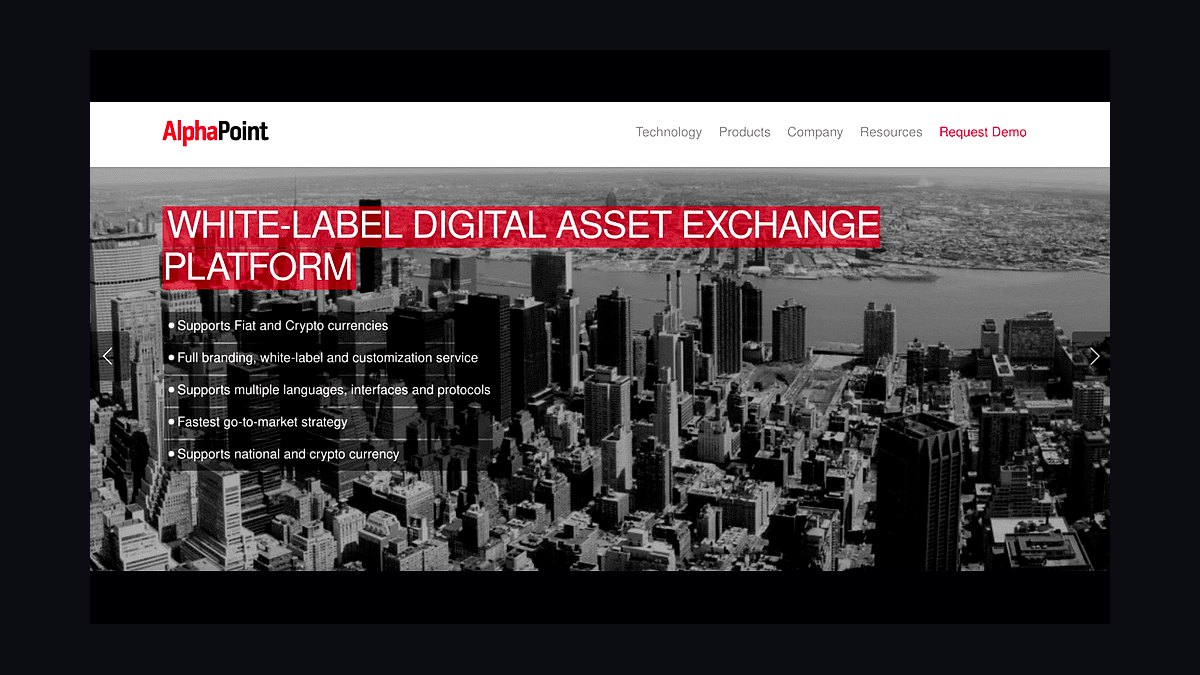
AlphaPoint ranks seventh because it gets a venue trading real volume in eight to twelve weeks instead of the eighteen months and several million dollars a custom order book demands. Platform fees run roughly $5,000 to $30,000 per month plus one-time setup and often a revenue-share component on trading fees. Nearly every new venue licenses first because the trading core is replaceable later but a blown launch window is not.
This is for ten-person teams with a banking relationship, a seed round, and a license application in progress. It trades away control: latency, fee logic, and listing speed are capped by the platform, which becomes a competitive problem once professional market makers compare venues. Against Cake by B2Broker below, AlphaPoint is the more common choice for venues prioritizing institutional-grade infrastructure from day one.
8Cake by B2Broker
Cake by B2Broker ranks eighth because it offers a white-label matching engine and trading infrastructure at a comparable price band to AlphaPoint, roughly $5,000 to $30,000 per month plus setup, with liquidity and CRM modules bundled into the platform. It is one of the two most common white-label choices for new venues, and it shortens the path from license approval to live order book to weeks rather than years.
This is for launch teams that want a bundled stack rather than assembling trading core, liquidity, and back office separately. It trades away depth in any single module: bundled components are convenient but less configurable than best-of-breed alternatives. Against AlphaPoint above, Cake competes on bundling and speed rather than on institutional feature depth, and either can be migrated off later once volume justifies a custom engine.
9Eventus Trade Surveillance
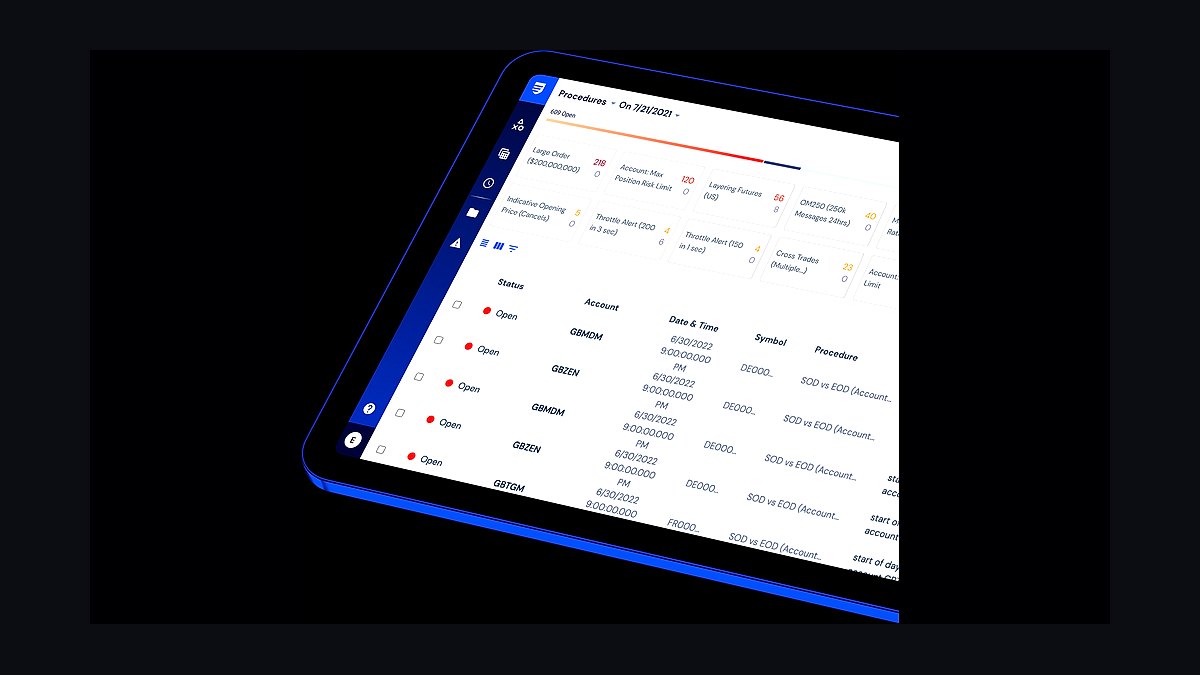
Eventus ranks ninth because regulators increasingly expect wash trading, spoofing, layering, and pump-and-dump monitoring to exist from the day a public order book goes live, not after a request arrives. Pricing runs $40,000 to $150,000 or more per year depending on venue size and the number of markets monitored. Reconstructing months of order-book history retroactively under a deadline costs far more than running surveillance from day one.
This is for exchanges with a public order book and any regulatory or banking attestation exposure. It trades away budget flexibility: the annual license is fixed regardless of whether alerts fire. Against Solidus Labs below, Eventus is the more established name for cross-market surveillance, while Solidus competes on crypto-native detection models and often wins on venue-specific tuning.
10Solidus Labs Trade Surveillance
Solidus Labs ranks tenth because it applies crypto-native detection models to order-book manipulation that generic surveillance tools miss, covering wash trading, spoofing, and layering across spot and derivatives markets. Pricing sits in a band comparable to Eventus at $40,000 to $150,000 or more per year depending on venue size and markets monitored. It is frequently evaluated alongside Eventus rather than instead of it.
This is for venues that want detection tuned to crypto market structure rather than adapted from equities surveillance. It trades away the longer track record and broader cross-asset coverage Eventus offers, which matters when a regulator asks for established tooling. Against Eventus directly above, Solidus competes on detection depth in crypto-native patterns, and some exchanges run both across different market segments.
How we ranked these
We ranked each layer by operational criticality, regulatory exposure, and switching cost, weighting custody and on-chain compliance highest because failures there are existential rather than merely expensive. Trading core, KYC, Travel Rule, surveillance, node access, and accounting were scored on integration depth, vendor maturity, and how quickly a venue can go live. Pricing bands were normalized across published vendor tiers and typical volume-based contracts.
We deliberately ignored marketing claims, awards, and analyst-brand recognition, since none predict whether a stack survives a banking review or a custody incident. Raw feature counts were discounted too: a vendor with fifty modules but shallow coverage on major chains loses to a narrower tool with verified clustering. We also excluded token listings, exchange-native tokens, and speculative DeFi integrations because they distort risk without improving core infrastructure.
What to look for
What matters most is whether each layer can survive a banking partner's review, not whether it demos well. Custody policy, screening coverage, and Travel Rule readiness determine whether fiat rails stay open; the matching engine determines only how fast orders fill. Buy for the compliance and custody bar you will need at ten times current volume, not today's.
The mistake most buyers make is optimizing the trading core first and treating custody, analytics, and surveillance as later add-ons. That ordering inverts the actual risk: an engine can be swapped in year two, but a custody breach or a lost banking relationship ends the venue in year one. Sequence custody and compliance before deposits open.
Related questions
Should a new exchange build its own matching engine or license one?
License first. White-label platforms like AlphaPoint or Cake by B2Broker get a venue trading in weeks, letting the team validate demand before an eight-figure custom build. Plan the future migration path early, because moving a live order book with customer funds in motion is one of the hardest engineering projects in the industry.
Why does custody get more budget than the trading engine itself?
Because a custody breach is uninsurable at full loss and ends the business, while a slow matching engine only loses market share. Fireblocks, BitGo, and Copper pricing reflects that this layer carries existential risk, not feature risk, and boards should treat hot-wallet ratios and MPC quorums as policy decisions.
Is one blockchain analytics vendor enough?
For an early-stage exchange, Chainalysis alone is typically sufficient. Scaling exchanges add Elliptic or TRM Labs as a second vendor, since no single provider has perfect address-clustering coverage across every chain a venue lists, and a transaction one vendor misses is still one a bank can penalize.
How does Travel Rule compliance differ from standard AML?
AML screens addresses against sanctions and illicit-activity clusters; the Travel Rule separately requires exchanging originator and beneficiary identity data with the counterparty exchange on transfers above a threshold. Notabene and similar networks exist because no on-chain field carries that identity data natively.
What does trade surveillance actually catch?
Wash trading, spoofing, layering, and pump-and-dump patterns across the order book. Eventus and Solidus Labs are built specifically for crypto market structure, and regulators increasingly expect this monitoring to exist from the day a public order book goes live, not after a request arrives.
How much should a startup exchange budget monthly for its core stack?
Roughly $25,000 to $70,000 per month covers a white-label matching engine, single custodian, Chainalysis, Sumsub, Notabene, and basic node access. That figure excludes legal, licensing, and headcount, which typically exceed the tooling spend even at this early stage.
Does the best tech stack for a cryptocurrency exchange change much as it scales?
The vendor categories stay the same, but coverage deepens: a second custodian, a second analytics vendor, and dedicated surveillance get added. The trading core itself often migrates from licensed to custom as volume and fee economics justify owning it outright, which is why migration planning matters early.
Can a small exchange skip blockchain analytics to save money?
No. Banking partners and regulators expect Chainalysis-grade screening on every deposit and withdrawal. Skipping it to save $50,000-plus a year risks losing the banking relationship entirely, which is a far larger cost than the tooling and can freeze fiat rails within thirty days.
FAQ
What is the single most important layer in a 2027 cryptocurrency exchange tech stack?
Custody. A slow matching engine loses customers gradually; a custody failure through Fireblocks, BitGo, or an equivalent provider can make the exchange insolvent in a single event, with no chargeback or clawback available on stolen on-chain assets.
Can a small exchange skip blockchain analytics to save money?
No. Banking partners and regulators expect Chainalysis-grade screening on every deposit and withdrawal. Skipping it to save $50,000-plus a year risks losing the banking relationship entirely, which is a far larger cost than the tooling and can freeze fiat rails within thirty days.
Why do exchanges need both KYC and blockchain analytics?
They verify different things. Sumsub-style KYC confirms who the customer is at onboarding; Chainalysis-style analytics screen the on-chain origin and destination of every transaction. A verified customer can still send funds from a tainted address, so both layers are required.
What does trade surveillance actually catch?
Wash trading, spoofing, layering, and pump-and-dump patterns across the order book. Eventus and Solidus Labs are built specifically for crypto market structure, and regulators increasingly expect this monitoring to exist from the day a public order book goes live, not after a request.
How much should a startup exchange budget monthly for its core stack?
Roughly $25,000 to $70,000 per month covers a white-label matching engine, single custodian, Chainalysis, Sumsub, Notabene, and basic node access. That figure excludes legal, licensing, and headcount, which typically exceed the tooling spend even at this stage.
Does the best tech stack for a cryptocurrency exchange change much as it scales?
The vendor categories stay the same, but coverage deepens: a second custodian, a second analytics vendor, and dedicated surveillance get added. The trading core itself often migrates from licensed to custom as volume and fee economics justify owning it outright.
Should a new exchange build its own matching engine or license one?
License first. White-label platforms like AlphaPoint or Cake by B2Broker get a venue trading in weeks, letting the team validate demand before an eight-figure custom build. Plan the migration path early, because moving a live order book is one of the hardest projects in the industry.
Why does custody get more budget than the trading engine itself?
Because a custody breach is uninsurable at full loss and ends the business, while a slow matching engine only loses market share. Fireblocks, BitGo, and Copper pricing reflects that this layer carries existential risk, not feature risk, and boards should treat hot-wallet ratios as policy.
How does Travel Rule compliance differ from standard AML?
AML screens addresses against sanctions and illicit-activity clusters; the Travel Rule separately requires exchanging originator and beneficiary identity data with the counterparty exchange on transfers above a threshold. Notabene and similar networks exist because no on-chain field carries that identity data natively.
Is one blockchain analytics vendor enough for a scaling exchange?
Usually not. Early-stage venues can run Chainalysis alone, but scaling exchanges add Elliptic or TRM Labs as a second screening vendor, because no single provider has perfect address-clustering coverage across every chain, and a missed transaction is still one a banking partner can penalize.
Sources
- https://www.fireblocks.com
- https://www.chainalysis.com
- https://www.alphapoint.com
- https://b2broker.com
- https://notabene.id
- https://sumsub.com
- https://eventus.com
- https://www.kaiko.com
- https://www.bitgo.com
- https://www.elliptic.co
Related on PULSE
This page will be disappearing soon. Save it to your device for $1 — or read it free while it is here.
@Kory-White- · if Venmo asks, the last 4 of my number are 2012
This page is gone.
This one is off the shelf now. $1 keeps it on your phone for good — the whole page, pictures and diagrams included.
 pulse-tech-stacksTop 10 Best Tech Stack Tools for AI Translation API Companies in 2027
 pulse-tech-stacksTop 10 Best Tech Stack Tools for HOA and Community Association Management Companies in 2027
 pulse-tech-stacksTop 10 Best Tech Stack Tools for Window Cleaning Services in 2027
 pulse-tech-stacksTop 10 Best Tech Stack Tools for AI Legal Tech Companies in 2027
 pulse-tech-stacksTop 10 Best Tech Stack Tools for Pressure Washing Companies in 2027
 pulse-tech-stacksTop 10 Best Tech Stack Tools for Email Security Vendors in 2027
 tkTop 10 Best Tech Stack Tools for Fencing and Deck Contractors in 2027
 pulse-tech-stacksTop 10 Best Tech Stack Tools for Software Development Agencies in 2027
 pulse-tech-stacksTop 10 Best Tech Stack Tools for Independent Landscaping Companies in 2027
 pulse-tech-stacksTop 10 Best Tech Stack Tools for Septic and Portable Sanitation Services in 2027