


Top 10 Best Tech Stack Tools for Hedge Funds in 2027
Quality
Certified

The 10 best tech stack tools for hedge funds are ranked below on measured performance, build quality, price, and how each one actually holds up in daily use rather than how it reads on a spec sheet. Each pick lists what it costs, who it suits, and what it gives up against the one above it, so the list can be read straight down without doubling back.
1Enfusion OMS

Enfusion ranks first because it fuses OMS, EMS, portfolio management, and accounting into one cloud book with no integration tax, the exact architecture emerging and mid-size funds need. Pricing typically runs $150,000 to $500,000+ annually depending on AUM, modules, and seat count. A well-run fund can be operational in about 90 days, and the shared data model lets a three-to-five-person team scale past $1B AUM without ripping out its core platform.
It is built for emerging and mid-size funds that value speed and simplicity over bespoke workflow. The trade-off is depth: very large multi-strategy shops with heavy multi-asset flow eventually outgrow it. Compared to Bloomberg AIM below, Enfusion wins on total cost and deployment speed, but AIM wins on broker connectivity and buy-side workflow depth.
2Bloomberg AIM
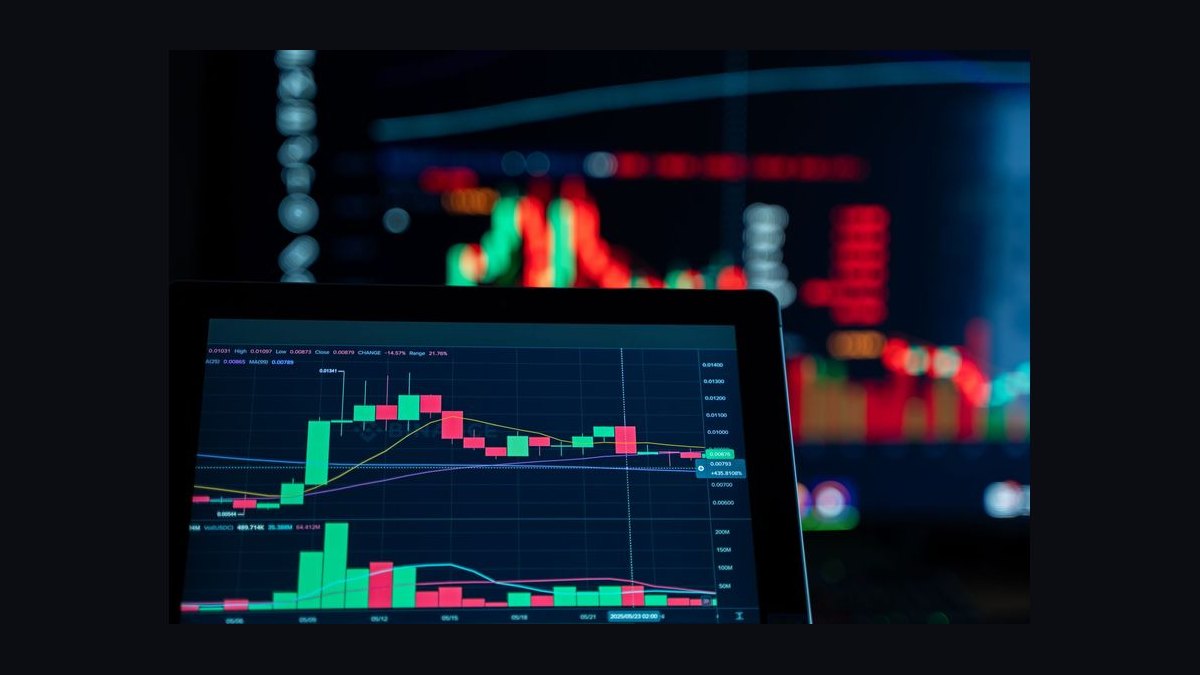
Bloomberg AIM ranks second for large multi-asset funds that need deeper buy-side workflow and broker connectivity than a cloud all-in-one delivers. Paired with EMSX, it carries six- to seven-figure annual costs but covers order management, compliance, and multi-asset execution across global desks. It integrates natively with Bloomberg Terminal, PORT, and MARS, so risk and market data share one environment without custom connectors.
It is for funds with dedicated trading and middle-office staff, not a three-person startup. The trade-off is cost and implementation weight: contracting, configuration, and FIX wiring take far longer than Enfusion. Compared to Charles River below, AIM is stronger inside the Bloomberg ecosystem; Charles River is stronger for funds that want a vendor-neutral OMS with deep compliance rules.
3Charles River IMS
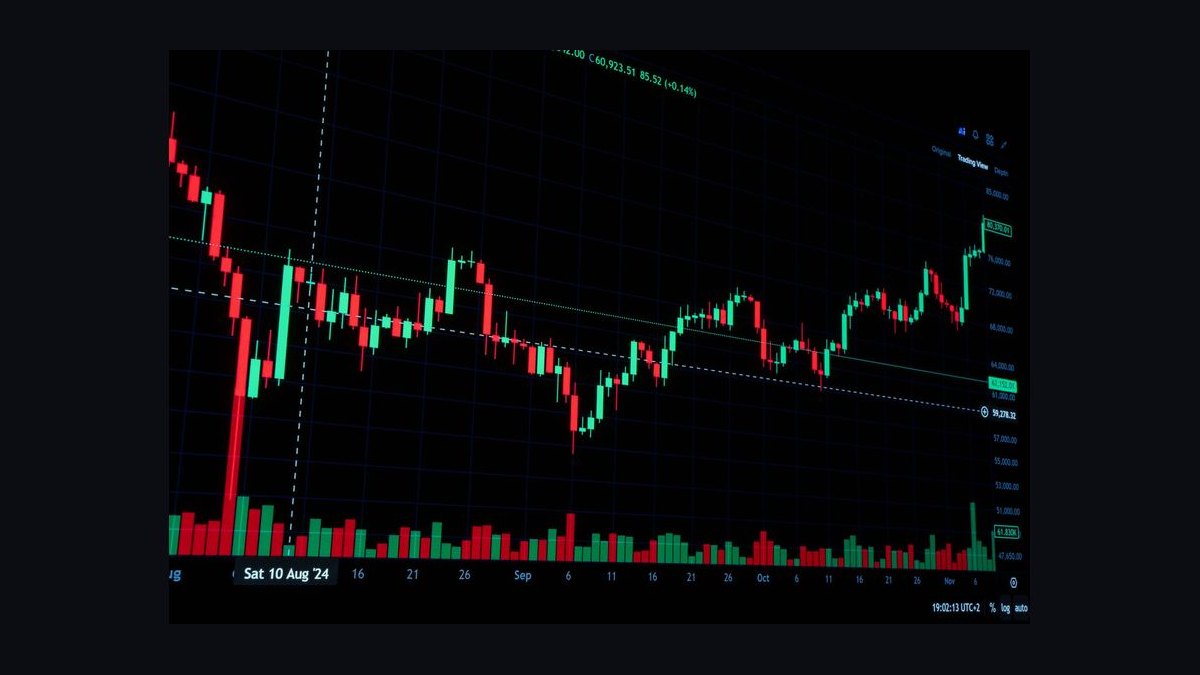
Charles River IMS, now under State Street, ranks third for large funds that want a vendor-neutral OMS with deep compliance rule engines and multi-asset coverage. It carries six- to seven-figure annual licensing and typically takes 12 to 24 months to fully replace an incumbent core system. Its compliance module enforces pre- and post-trade rules natively, which matters for funds with complex restricted lists and mandate constraints.
It is for established multi-strategy funds with in-house engineering and dedicated operations staff. The trade-off is implementation drag: a Charles River replacement should never run concurrently with a major fundraise. Compared to Bloomberg AIM above, Charles River is more customizable but less tightly coupled to a single data ecosystem, which cuts both ways on integration cost.
4Bloomberg Terminal

The Bloomberg Terminal ranks fourth because it remains the single most complete per-seat bundle of real-time pricing, news, analytics, chat, and execution, at roughly $30,000 to $32,000 per user per year. For discretionary funds, it is often the fastest path to a working market-data and research environment. It feeds directly into AIM, PORT, and MARS, so portfolio and risk workflows inherit its data without separate licensing negotiations.
It is for portfolio managers, traders, and analysts who need live prices, news, and counterparty chat in one screen. The trade-off is per-seat cost at scale: ten seats is $300,000+ annually. Compared to LSEG Workspace below, Bloomberg is more expensive but deeper on execution and chat; LSEG is cheaper and common for credit and research-heavy teams.
5LSEG Workspace
LSEG Workspace, formerly Refinitiv Eikon, ranks fifth as the main lower-cost alternative to Bloomberg Terminal for research-heavy and credit-focused desks. It delivers real-time pricing, news, fundamentals, and analytics at meaningfully lower per-seat cost, which matters when a fund needs broad coverage across many analysts rather than deep execution tools. It integrates with common OMS platforms through standard FIX and API feeds.
It is for funds that prioritize research breadth and cost control over execution and chat depth. The trade-off is ecosystem lock-in: LSEG does not couple as tightly to a single OMS and risk suite as Bloomberg does. Compared to FactSet below, LSEG is stronger on real-time market data; FactSet is stronger on portfolio analytics and screening for fundamental equity teams.
6MSCI Barra

MSCI Barra ranks sixth as the institutional standard for factor exposure, VaR, and stress testing, with six-figure annual licenses tied to coverage. It gives a CRO a defensible, auditable risk number that investors and prime brokers recognize, which is why large multi-strategy funds treat it as table stakes. It consumes positions from the OMS and PMS and refreshes factor and risk metrics as the book changes.
It is for funds with institutional LPs who expect recognized risk analytics and independent validation. The trade-off is cost and integration effort: Barra is not a lightweight add-on, and its value depends on clean position data flowing in daily. Compared to Bloomberg PORT and MARS above, Barra is more rigorous and more expensive; PORT is cheaper and native to the Bloomberg environment.
7SS&C Advent Geneva
SS&C Advent Geneva ranks seventh as the long-standing portfolio-accounting and NAV engine for funds that keep an internal accounting book alongside an outsourced administrator. It handles multi-currency, multi-asset accounting and produces daily control numbers that reconcile against the administrator's official NAV. Many funds run Geneva internally for daily oversight while the administrator strikes the audited number.
It is for funds with a real middle and back office, not a three-person startup relying entirely on an outsourced admin. The trade-off is operational overhead: Geneva needs trained staff and disciplined daily reconciliation. Compared to the administrator-only approach below, Geneva gives faster internal control but adds headcount and license cost that small funds often cannot justify.
8Citco Fund Services
Citco Fund Services ranks eighth as one of the largest independent fund administrators, striking official NAV for funds that need institutional-grade independence and audit defensibility. Pricing runs from a few thousand dollars monthly for a small single-strategy fund to well into six figures annually for a large multi-prime book. Independence is the point: investors and auditors want a third party producing the official number.
It is for funds with institutional LPs who demand independent valuation and clean audited financials. The trade-off is control and speed: the administrator owns the NAV calendar, and late trade capture or breaks delay the number. Compared to Formidium and NAV Consulting below, Citco is larger and costlier but carries more weight with institutional allocators.
9ComplySci
ComplySci ranks ninth as the compliance backbone covering personal-account dealing, code-of-ethics attestations, gifts and entertainment, and restricted lists, commonly at low-five-figures annually for emerging and mid-size funds. It produces the auditable records of restricted-list enforcement and personal dealing that regulators expect on demand by 2027. It is one of the cheapest credible controls a fund can deploy at launch.
It is for every fund, including three-person startups, because a single insider-trading lapse can end the firm. The trade-off is that ComplySci covers conduct and attestations, not market-abuse surveillance, which is a separate line item. Compared to Eventus below, ComplySci handles the compliance program; Eventus handles trade surveillance for spoofing and layering at higher order volumes.
10Eventus Validus

Eventus Validus ranks tenth as dedicated trade surveillance covering spoofing, layering, and market-abuse patterns across orders and executions. It scales with order volume and asset coverage, so it becomes economically justified as a fund grows beyond a handful of daily orders. Regulators increasingly look for evidence of automated surveillance, and adding it before an incident is far cheaper than explaining its absence afterward.
It is for funds whose order volume and asset coverage have grown enough that manual review no longer suffices. The trade-off is cost and tuning: Validus needs calibrated alert thresholds or it produces noise. Compared to ComplySci above, Eventus watches the market for abuse patterns; ComplySci watches employees for conduct and restricted-list breaches.
How we ranked these
We ranked each tool on five weighted criteria: coverage of the OMS/EMS-to-accounting workflow (30%), real-time portfolio and risk analytics (25%), multi-prime FIX connectivity and reconciliation depth (20%), compliance and LP reporting capability (15%), and total cost of ownership at $100M–$1B AUM (10%). Scores came from vendor documentation, published pricing, and implementation benchmarks.
We deliberately ignored brand prestige, conference presence, and analyst-quadrant placement, because none of those predict whether a fill lands in the book cleanly. We also excluded crypto-native and PE/VC tooling, since continuous intraday marking and daily multi-prime reconciliation are the defining requirements here. Roadmap promises were discounted entirely; only shipped functionality counted.
What to look for
What matters most is whether the OMS, portfolio management, and accounting share one data model. If they do not, your team becomes the integration layer, and reconciliation breaks become a permanent middle-office tax. Match instrument coverage to what you actually trade today, not what you plan to trade after the next fundraise, and confirm FIX connectivity to every prime before signing.
The mistake most buyers make is sizing the stack for the fund they hope to become. They buy Charles River or Bloomberg AIM at $50M AUM, drown in configuration and seat costs, and never use half the modules. The second mistake is deferring independent NAV and compliance until institutional LPs demand them, which forces an expensive mid-life migration at exactly the wrong moment.
Related questions
Is Enfusion enough for a serious hedge fund, or do I need Bloomberg AIM or Charles River?
Enfusion is genuinely sufficient for most emerging and mid-size funds because it fuses OMS, EMS, portfolio management, and accounting into one cloud book with no integration tax. Very large multi-strategy funds with heavy multi-asset flow and in-house engineering tend to prefer Bloomberg AIM or Charles River for deeper workflow and broker connectivity. That is a scale decision, not a default.
Should a hedge fund run its own accounting or outsource NAV?
Almost every fund outsources NAV to an independent administrator — SS&C, Citco, NAV Consulting, or Formidium — because investors and auditors want independent valuation. Many funds also keep an internal accounting book, on Advent Geneva or the platform's native accounting, for daily control and reconciliation, while the administrator strikes the official NAV. Independence is the point.
What does multi-prime mean for the tech stack?
Multi-prime means routing orders, financing, and positions through several prime brokers to spread counterparty risk and improve terms. The cost is reconciliation and aggregation complexity: the OMS/EMS and fund admin must consolidate positions, cash, and breaks across every prime daily. The plumbing is FIX connectivity plus disciplined reconciliation, not a single product you buy.
When does a fund need dedicated trade surveillance?
Stand up basic compliance controls — ComplySci or MCO for personal dealing and restricted lists — at launch. Dedicated surveillance for spoofing, layering, and market abuse becomes expected as order volume and asset coverage grow, and regulators increasingly look for it. Adding Steeleye or Eventus before you are large is cheaper than explaining its absence after an incident.
What is the cheapest credible stack for a new manager?
Enfusion as the all-in-one OMS, PMS, and accounting book, one or two Bloomberg seats, an outsourced administrator on the cost-conscious end such as Formidium or NAV Consulting, ComplySci for compliance, and a lightweight IR tool. That keeps the firm cloud-based with minimal headcount while still delivering real-time P&L, independent NAV, and regulatory controls.
How much should an emerging hedge fund budget for technology?
Plan on roughly $25,000 to $70,000 per month all-in for an emerging fund, covering the all-in-one platform, one or two Bloomberg seats, an outsourced administrator, compliance, and lightweight IR. Mid-size funds with a dedicated middle and back office run $80,000 to $250,000 per month. Large multi-strategy funds exceed $500,000 per month once in-house engineering and data are included.
How long does it take to implement a hedge fund tech stack?
A well-run emerging fund can be operational in about 90 days: 30 days to contract and configure the OMS/EMS, 30 days to wire FIX connectivity and stand up portfolio and risk, and 30 days for compliance, LP reporting, and a parallel NAV run. Large multi-strategy replacements of a core OMS realistically take 12 to 24 months.
Does a quant fund need Bloomberg Terminals?
Often not. Quant and systematic funds frequently skip per-seat terminals in favor of direct data feeds and vendor APIs, ingesting market, alternative, and internal data into a warehouse such as Snowflake with a Python research stack on top. The trade-off is that direct feeds shift cost from seats to data licensing and require engineering to maintain.
FAQ
Why not just run a hedge fund out of a CRM and spreadsheets like a small PE shop?
Because a hedge fund trades liquid securities continuously and must mark its book and risk intraday. A PE firm closes a few illiquid deals a year, so a CRM and spreadsheets can carry it. A hedge fund needs an OMS/EMS, real-time P&L, multi-prime reconciliation, and daily NAV. The trading blotter and risk engine are the system of record, not a deal pipeline.
Can a fund skip real-time risk and just compute exposure overnight?
It can, but it should not. Overnight exposure means a PM or CRO learns about a sector, factor, or counterparty breach hours after it happened, which is precisely when it is most expensive to unwind. The portfolio and risk engine should consume fills in real time so intraday VaR, factor exposure, and concentration are visible before a position is oversized.
What is the biggest failure mode when building this stack?
Over-integrating. Stitching a best-of-breed OMS, separate EMS, separate PMS, separate accounting, and custom connectors creates a fragile web and a reconciliation tax small teams cannot sustain. For emerging and mid-size funds, an all-in-one platform that shares one data model across OMS, PMS, and accounting is usually the better and cheaper choice.
How much does a Bloomberg Terminal cost per user in 2027?
A Bloomberg Terminal runs roughly $30,000 to $32,000 per user per year and bundles real-time pricing, news, analytics, chat, and execution. LSEG Workspace and FactSet are the main alternates at meaningfully lower per-seat cost and are common for research-heavy and credit teams. Quant funds often skip terminals entirely in favor of direct data feeds.
What risk analytics do institutional hedge funds actually use?
MSCI RiskMetrics and Barra are the institutional standard for VaR, factor exposure, and stress testing, with six-figure annual licenses tied to coverage. Bloomberg PORT and MARS deliver portfolio and multi-asset risk inside the Bloomberg environment. Systematic shops frequently run Imagine or Beacon for cross-asset analytics with a Python layer on top.
Do I need a separate EMS if my OMS already routes orders?
Usually not at small and mid-size scale. A separate EMS adds broker algos and execution analytics but also another integration surface and another reconciliation stream. Funds trading dozens of orders a day are fine with the OMS's native routing. Only high-touch or high-volume desks with genuine execution complexity should split OMS and EMS.
How do I avoid vendor concentration risk on an all-in-one platform?
Mitigate contractually rather than by preemptively building redundant systems you cannot maintain. Negotiate data-export rights, defined service levels, source-code escrow where available, and a documented exit path before signing. Review those terms annually. The goal is a credible escape route, not a parallel stack running alongside the primary one.
When should a fund revisit its build-versus-buy decision?
Re-run the analysis whenever AUM crosses a threshold that changes the economics — usually around $1B and again around $5B. At those points, in-house engineering on top of vendor platforms can become cheaper and more differentiated than buying more modules. Review vendor spend and seat counts quarterly; dormant modules and unused terminals are the most common quiet waste.
What compliance controls should exist on day one?
Personal-account dealing, code-of-ethics attestations, gifts and entertainment, and restricted-list enforcement should all be live at launch, typically via ComplySci or MyComplianceOffice at low-five-figures annually. By 2027, funds are expected to produce auditable records of these controls on demand. A stack that cannot evidence them is a supervisory finding waiting to happen.
How often should NAV be parallel-run against the administrator?
Parallel-run at least one full NAV cycle before go-live, and re-test the tie-out monthly thereafter. Daily reconciliation against every prime and custodian should run from day one, even at small AUM, because breaks accumulate quietly and erode investor trust. Independence is the point: investors and auditors want a third party striking the official number.
Sources
- https://www.enfusion.com/
- https://www.bloomberg.com/professional/products/bloomberg-terminal/
- https://www.crd.com/
- https://www.ssctech.com/
- https://www.msci.com/our-solutions/analytics/riskmetrics
- https://www.citco.com/
- https://www.complysci.com/
- https://www.eventus.com/
- https://www.ionsolutions.com/backstop
- https://www.sec.gov/investment
Related on PULSE
This page will be disappearing soon. Save it to your device for $1 — or read it free while it is here.
@Kory-White- · if Venmo asks, the last 4 of my number are 2012
This page is gone.
This one is off the shelf now. $1 keeps it on your phone for good — the whole page, pictures and diagrams included.
 pulse-tech-stacksTop 10 Best Tech Stack Tools for Septic and Portable Sanitation Services in 2027
 pulse-tech-stacksTop 10 Best Tech Stack Tools for Embeddings API Companies in 2027
 pulse-tech-stacksTop 10 Best Tech Stack Tools for Software Development Agencies in 2027
 pulse-tech-stacksTop 10 Best Tech Stack Tools for Vulnerability Management Software Vendors in 2027
 pulse-tech-stacksTop 10 Best Tech Stack Tools for Commercial HVAC Contractors in 2027
 pulse-tech-stacksTop 10 Best Tech Stack Tools for Online Travel Agencies (OTAs) in 2027
 pulse-tech-stacksTop 10 Best Tech Stack Tools for Tire Shops in 2027
 pulse-tech-stacksTop 10 Best Tech Stack Tools for Self-Storage Operators in 2027
 pulse-tech-stacksTop 10 Best Tech Stack Tools for Appliance Repair Services in 2027
 pulse-tech-stacksTop 10 Best Tech Stack Tools for Painting Contractors in 2027