


Top 10 Best Tech Stack Tools for Invoice Factoring Companies in 2027
Quality
Certified

The 10 best tech stack tools for invoice factoring companies are ranked below on measured performance, build quality, price, and how each one actually holds up in daily use rather than how it reads on a spec sheet. Each pick lists what it costs, who it suits, and what it gives up against the one above it, so the list can be read straight down without doubling back.
1FactorSoft by Jack Henry

FactorSoft ranks first because it is the dominant mid-market and enterprise factoring platform, with a full schedule-of-accounts ledger, advance and reserve engine, daily fee accrual, client availability tracking, and verification queues. Realistic pricing runs roughly $2,000 to $8,000+ per month depending on portfolio size and modules, plus implementation. It is battle-tested at scale and is the system of record everything else feeds.
FactorSoft is for mid-size and large factors, especially those above $5M outstanding who need deep configurability and audit-grade reporting. It trades away speed of setup and low cost, since configuration is heavy and implementation takes months. Below it, WinFactor and FactorFox serve smaller shops at a fraction of the price but with far less depth.
2Cadence FactorCloud

Cadence (FactorCloud) ranks second as the modern cloud-native factoring platform, offering the same core purchase-and-advance ledger mechanics as FactorSoft with a cleaner interface and faster deployment. It models advance rates, reserves, discount fees, and running availability per client funding line. Pricing typically lands below enterprise FactorSoft deployments, making it attractive for tech-forward mid-market factors.
Cadence suits factors who want cloud-native architecture and quicker onboarding without sacrificing core ledger depth. It trades away the deepest enterprise customization and the largest installed base of trained operators that FactorSoft offers. Compared with WinFactor directly below, Cadence costs more but scales further and handles more complex portfolios.
3WinFactor Software
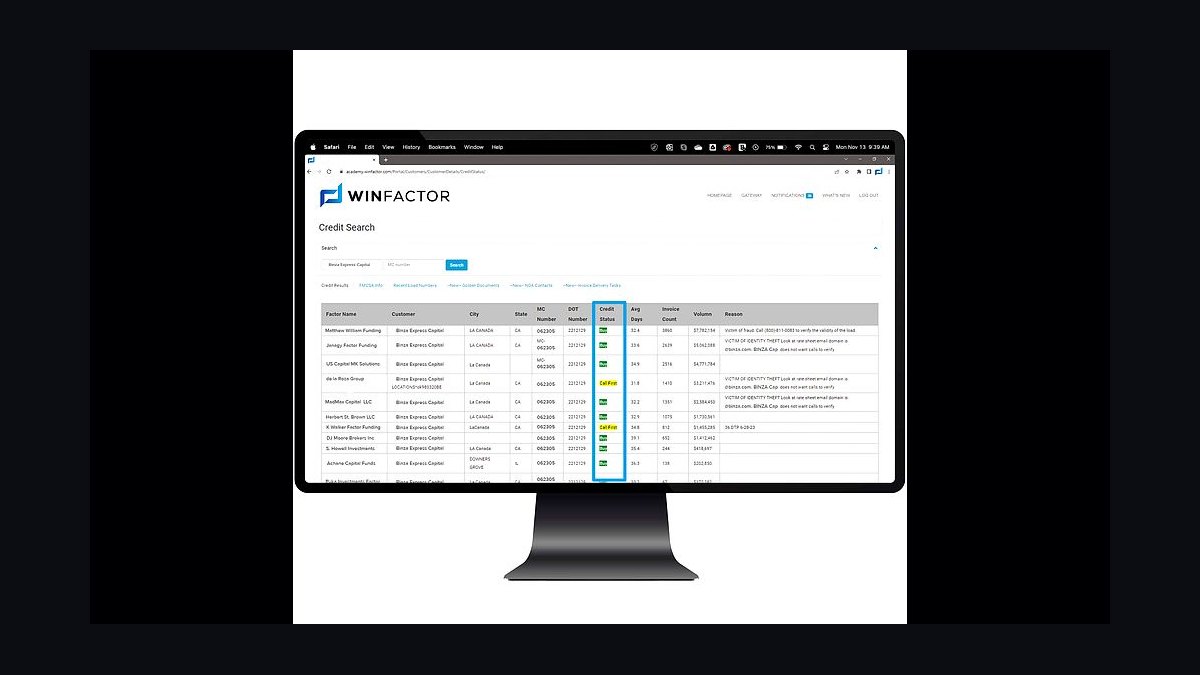
WinFactor ranks third as an all-in-one factoring platform built for small-to-mid factors, bundling the ledger, client portal, and verification workflow in one lower-entry-point package. It handles advance calculations, reserve tracking, and fee accrual without the configuration overhead of enterprise systems. Pricing sits well below FactorSoft, making it a common first real platform for growing factors.
WinFactor is for small and mid-size factors who want one vendor instead of stitching together modules. It trades away the deep customization, API surface, and enterprise reporting that FactorSoft and Cadence provide. Against FactorFox just below, WinFactor costs more but supports larger portfolios and more complex client funding structures.
4FactorFox Software

FactorFox ranks fourth as the entry-level factoring platform for startups and micro-factors, typically priced from roughly $300 to $600 per month. It covers the essentials: schedule of accounts, advance and reserve tracking, fee calculation, and a client portal. For a factor under about $5M outstanding, it delivers the core purchase-and-advance ledger without enterprise overhead.
FactorFox is for brand-new factors and small shops that need to stop running the book in spreadsheets. It trades away depth, integrations, and scalability, so growing factors typically outgrow it within a few years. Compared with WinFactor above, FactorFox is cheaper but less capable on complex funding lines and reporting.
5HubTran by Tai

HubTran, now part of Tai under Triumph, ranks fifth and is the second-most-important purchase for freight factors. It ingests rate confirmations, BOLs, and PODs, runs OCR, auto-matches documents to loads, and pushes verified invoices into the factoring platform. Pricing runs roughly $1,500 to $6,000 per month at volume and typically pays for itself by cutting back-office headcount.
HubTran is for freight factors processing high document volume, not general commercial factors who never touch BOLs. It trades away simplicity, since document automation requires clean intake processes and integration work. Against FactorSoft above, HubTran is a layer rather than a ledger, and it only makes sense once invoice volume justifies the monthly cost.
6Ansonia Credit Data

Ansonia Credit Data ranks sixth as the trade-credit bureau built specifically for factoring and trade finance, with data reflecting how debtors actually pay their suppliers. It supports debtor credit limits, deterioration monitoring, and concentration alerts, priced roughly $300 to $1,500 per month by query volume. In factoring you underwrite the debtor, so this sits at the center of risk.
Ansonia is for every factor that advances against invoices, from startup to enterprise, because debtor payment behavior is the real credit signal. It trades away the broad corporate coverage that Dun & Bradstreet and Experian Commercial provide for non-trade data. Compared with HubTran above, Ansonia is cheaper and applies to all factors, not just freight.
7CSC iLien

CSC iLien ranks seventh because perfecting your security interest in purchased receivables is non-negotiable, and iLien handles UCC-1 filings, searches, continuations, and portfolio monitoring across states. Pricing runs roughly $25 to $50 per filing plus a platform fee, making it cheap insurance against losing priority in a client bankruptcy. A lapsed filing can mean recovering nothing.
CSC iLien is for any factor that buys receivables and needs to stay perfected, which is effectively all of them. It trades away nothing meaningful at this price, though it is a narrow tool rather than a platform. Compared with Ansonia above, iLien protects your legal position while Ansonia protects your credit decision, and both are required.
8HubSpot CRM
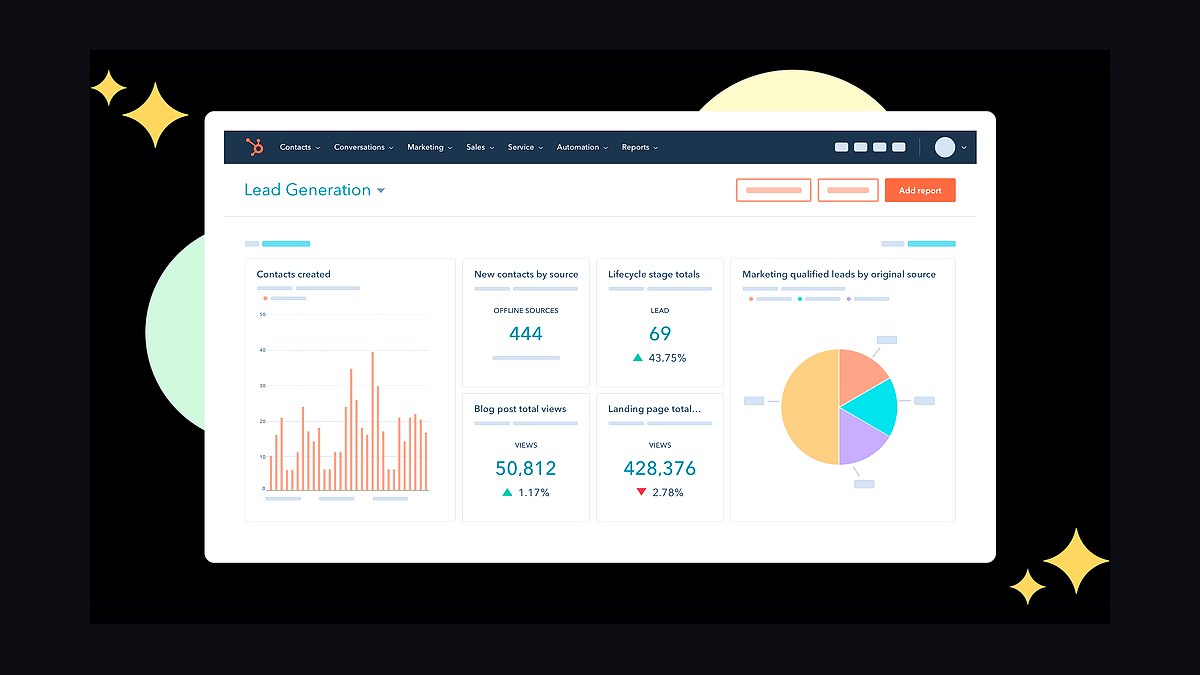
HubSpot ranks eighth as the origination and relationship layer, managing broker and referral-source pipelines, deal stages, and client onboarding workflows for a small sales team. Pricing runs roughly $800 to $3,600 per month depending on seats and tier. For factors without a CRM, it replaces spreadsheet pipelines and disconnected follow-up.
HubSpot is for small and mid-size factors who need origination discipline without enterprise complexity. It trades away the deep customization and financial-services data model that Salesforce Financial Services Cloud offers at larger shops. Compared with CSC iLien above, HubSpot is a growth tool rather than a risk control, and smaller factors can defer it by using platform-native CRM modules.
9Sage Intacct
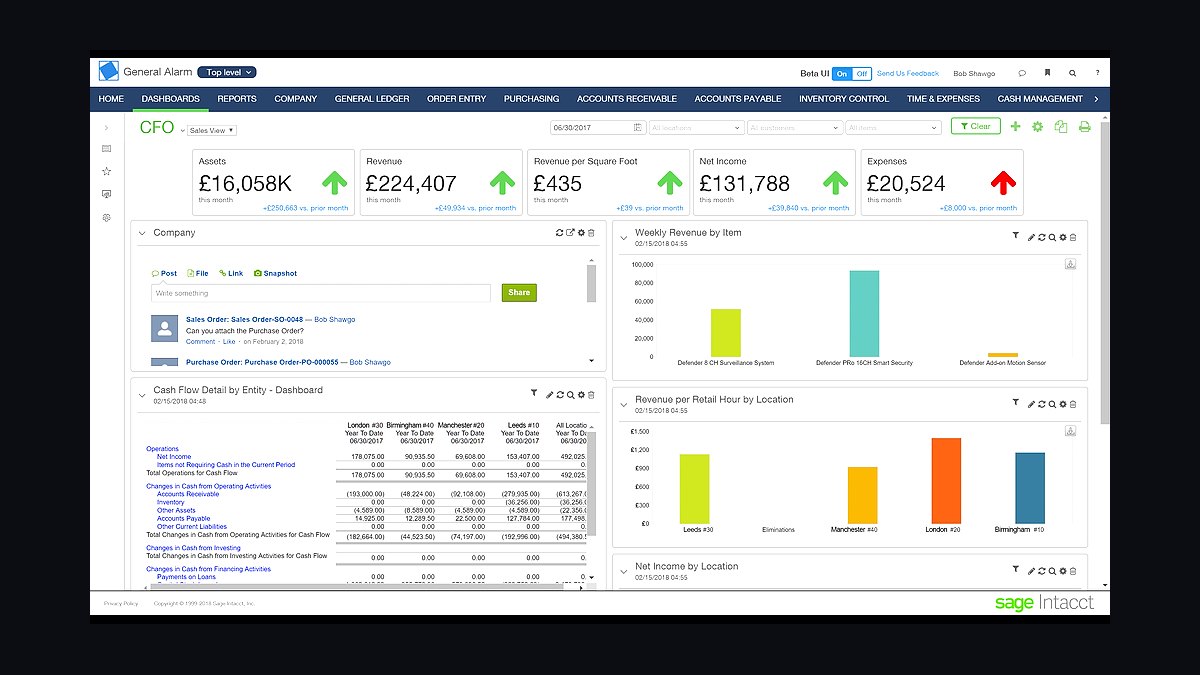
Sage Intacct ranks ninth as the corporate accounting and GL layer for factors whose own books have outgrown QuickBooks, supporting multi-entity consolidation and dimensional reporting. Pricing runs roughly $15,000 to $40,000 per year depending on modules and entity count. The factoring platform remains the portfolio sub-ledger, while Intacct handles the company's own financials.
Sage Intacct is for mid-size and large factors with multiple entities, investor reporting, or complex revenue recognition needs. It trades away the low cost and simplicity of QuickBooks, which remains sufficient for small factors at roughly $90 to $200 per month. Compared with HubSpot above, Intacct is back-office infrastructure rather than front-office growth, and it becomes necessary later in the scaling curve.
10Microsoft Power BI
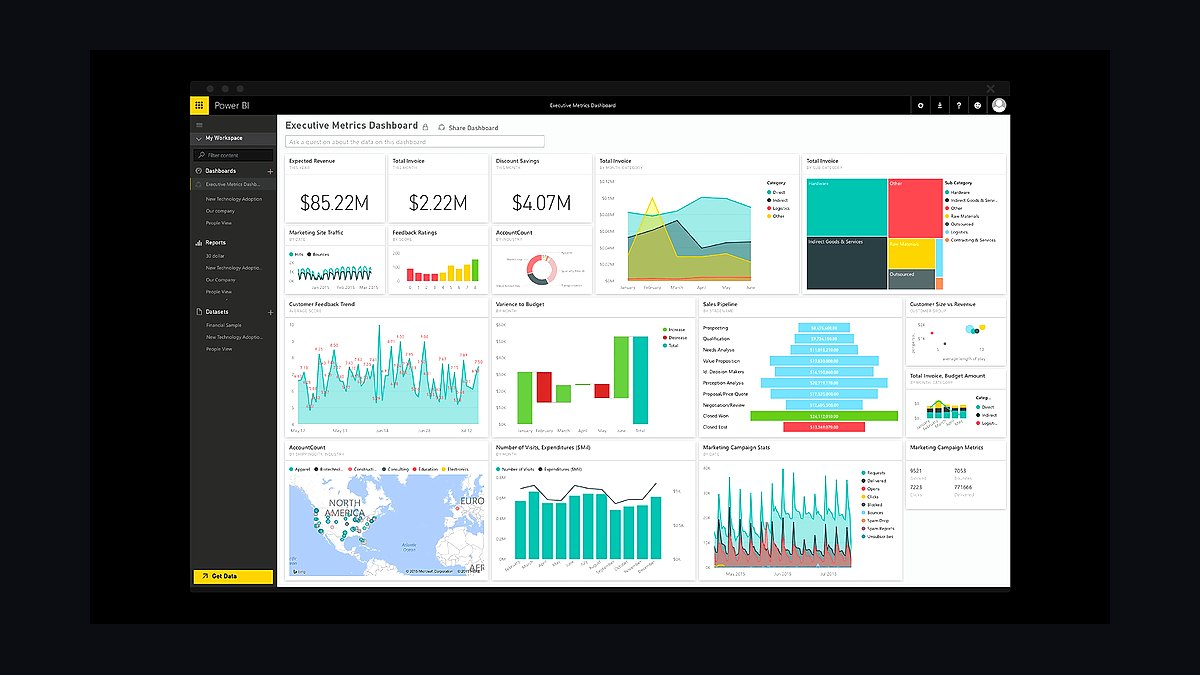
Microsoft Power BI ranks tenth as the reporting layer, delivering portfolio dashboards for advance rates, dilution, days-to-pay by debtor, concentration, fee yield, and aging at roughly $10 to $20 per user per month on Pro. It reads from the factoring platform and GL, turning raw ledger data into the metrics executives actually steer by.
Power BI is for factors who have outgrown platform-native reports and want cross-system visibility without building a warehouse. It trades away the zero-setup convenience of built-in reports, requiring data modeling and refresh management. Compared with Sage Intacct above, Power BI is cheap and analytical rather than transactional, and it is the last layer most factors add.
How we ranked these
We ranked each tool on five weighted criteria: depth of factoring-specific functionality (30%), integration with the purchase-and-advance ledger (25%), real-world adoption among factors of comparable size (20%), total cost of ownership including implementation (15%), and vendor stability and support (10%). Scores came from vendor documentation, published pricing, operator interviews, and analyst coverage of the AR-finance category.
We deliberately ignored generic accounting features, mobile app polish, and marketing claims about AI. Those do not determine whether a factor can advance, verify, and collect correctly. We also excluded tools with no verifiable factoring customer base, and we discounted feature breadth when integration depth was shallow, because reconciliation cost outweighs unused modules in this workflow.
When choosing between these tools, the deciding factor is usually fit with your funding model, not the feature list. A freight factor needs document automation and carrier data; a general commercial factor needs debtor credit depth and UCC monitoring. Match the platform to your average invoice size, volume, and verification burden before comparing prices, because implementation effort scales with how far the tool sits from your actual process.
The mistake most buyers make is shopping the long tail of niche vendors to save on license fees, then discovering the integration work costs more than the savings. A second common error is buying a platform before defining advance rates, reserve rules, and fee schedules, which forces expensive reconfiguration later. Pick from validated vendors, weight integration depth above breadth, and budget for consolidation within two years.
Related questions
What is the best tech stack for an invoice factoring company in 2027?
Anchor on a purpose-built factoring platform such as FactorSoft, WinFactor, or FactorFox, since it owns advances, reserves, and fee accrual. Layer a debtor credit bureau like Ansonia, invoice verification and fraud screening, same-day ACH funding, and UCC filing through CSC iLien. Add CRM, accounting, and BI around it. Freight factors add HubTran/Tai document automation and fuel cards.
Why is the factoring platform considered the system of record?
It models the schedule of accounts, advance rate, reserve held back, and discount fee accruing on each purchased invoice. When a debtor pays, it clears invoices, releases reserve, and books earnings. A generic ledger or lending platform cannot do this cleanly, so reserves and dilution get tracked in spreadsheets and yield quietly leaks.
Why do factors underwrite the debtor instead of the client?
The debtor is the party who actually pays the invoice, so credit risk, concentration limits, and lien position key off them. A financially weak client with reliable customers can be a strong account, while a healthy client whose customers pay slowly is a loss waiting to happen. Ansonia Credit Data scores trade payment behavior specifically for this.
How fast does funding need to be in factoring?
Same-day. Clients choose a factor largely for speed, and a one-day funding delay is a common reason they switch competitors. That means verification, debtor credit checks, and UCC confirmation must all complete before money moves, so the workflow has to be tight rather than sequential and slow.
Do freight factors need a different stack than general commercial factors?
Yes. Freight adds load and BOL verification, carrier onboarding with authority and insurance checks, broker credit data, and fuel cards that advance against the same receivable. HubTran, now Tai, handles OCR document processing and load matching. A general commercial factor runs the platform, a debtor bureau, UCC tooling, and same-day ACH only.
What does UCC filing software actually protect?
It perfects your security interest in the purchased receivables. CSC iLien handles UCC-1 filings, searches, continuations, and portfolio monitoring across states. If a filing lapses or was never made, you are unperfected in a client bankruptcy and may recover nothing behind secured lenders. At roughly $25 to $50 per filing, it is cheap insurance.
How much should a small factoring company budget for software?
A lean startup factor typically spends roughly $800 to $2,500 per month. That covers an all-in-one platform like FactorFox or WinFactor, Ansonia for debtor credit, CSC iLien for filings, QuickBooks for the corporate ledger, and ACH through a bank. Verification is usually done manually by one or two underwriters at this size.
What is the biggest mistake buyers make when selecting factoring software?
Shopping the long tail of niche vendors to save on license fees, then discovering the integration and reconciliation work costs more than the savings. A second error is buying before defining advance rates, reserve rules, and fee schedules, which forces expensive reconfiguration. Weight integration depth above feature breadth and pick from validated vendors.
FAQ
What is the single most important tool in an invoice factoring tech stack?
The factoring or AR-finance platform, such as FactorSoft, WinFactor, or Cadence, because it is the system of record for advances, reserves, and discount fees. Every other tool either feeds it data or reads from it. Get this layer wrong and no amount of downstream automation fixes the ledger.
How is a factoring tech stack different from a debt-collection tech stack?
Collections chases money already owed on bad debt after the fact. Factoring purchases current, performing invoices and advances cash within hours, so the work is pre-funding underwriting, verification, and fast disbursement. The center of gravity is debtor credit and funding speed, not dialers and skip-tracing.
Which debtor credit bureau do factoring companies actually use?
Ansonia Credit Data is the factoring-industry favorite because its trade-credit data reflects how debtors actually pay their suppliers. Dun & Bradstreet and Experian Commercial complement it for broader corporate coverage. For freight, Carrier Details and RMIS add carrier authority, insurance, and broker credit checks.
Can I run a factoring book on QuickBooks or a lending platform?
Not past a tiny portfolio. A generic ledger cannot model advance rates, held reserves, or daily fee accrual across a schedule of accounts, so staff fudge it in spreadsheets. Dilution goes untracked and yield leaks. A purpose-built platform such as FactorSoft, WinFactor, or Cadence is effectively non-negotiable once volume grows.
What fraud controls matter most before funding an invoice?
Debtor confirmation that the work was delivered and the amount acknowledged, duplicate and split-invoice detection, and document matching against rate confirmations or purchase orders. Because you advance cash in hours, a fake or already-paid invoice is a direct, unrecoverable loss. Fraud here is pre-funding, unlike collections where the loss already exists.
How long does implementation typically take?
A reasonable plan is 30 days to configure the platform and connect the corporate ledger, 60 days to wire in debtor credit feeds and UCC monitoring, and 90 days to turn on same-day ACH, portals, and reporting dashboards. Freight document automation can extend that timeline depending on volume and document variety.
Is same-day ACH really necessary, or will next-day work?
Same-day is effectively table stakes because speed of funding is the product clients are buying. A one-day delay is a common reason clients switch factors. Wires handle large draws, and per-transaction ACH costs are typically cents to low dollars, so the constraint is your banking relationship rather than the fee.
What reporting should a factoring platform produce?
Advance rates, dilution, days-to-pay by debtor, concentration exposure, fee yield, and aging. Most platforms ship basic reports, but growing factors add Microsoft Power BI for portfolio dashboards and a data warehouse once executive reporting outgrows native output. Looker Studio works for very small shops.
When should a factor add freight document automation?
When manual keying of rate confirmations, BOLs, and PODs becomes a bottleneck or headcount cost. HubTran, now Tai, ingests and OCRs those documents, matches them to loads, and pushes verified invoices into the factoring platform. At volume it typically pays for itself within a quarter by cutting back-office labor.
How do fuel cards fit into a freight factoring stack?
Fuel cards such as TCS Fuel or RTS Fuel let the factor advance fuel against the same receivable while earning rebates and deepening the client relationship. They are revenue-positive rather than a software cost, which is why large freight factors treat them as a core retention tool rather than an optional add-on.
Sources
- https://www.jackhenry.com
- https://www.ansoniacreditdata.com
- https://www.dnb.com
- https://www.experian.com
- https://www.cscglobal.com
- https://www.hubspot.com
- https://www.salesforce.com
- https://quickbooks.intuit.com
- https://www.sage.com
- https://powerbi.microsoft.com
Related on PULSE
This page will be disappearing soon. Save it to your device for $1 — or read it free while it is here.
@Kory-White- · if Venmo asks, the last 4 of my number are 2012
This page is gone.
This one is off the shelf now. $1 keeps it on your phone for good — the whole page, pictures and diagrams included.
 pulse-tech-stacksTop 10 Best Tech Stack Tools for Threat Intelligence Vendors in 2027
 pulse-tech-stacksTop 10 Best Tech Stack Tools for Online Travel Agencies (OTAs) in 2027
 pulse-tech-stacksTop 10 Best Tech Stack Tools for AI Customer Support Companies in 2027
 pulse-tech-stacksTop 10 Best Tech Stack Tools for AI Translation API Companies in 2027
 pulse-tech-stacksTop 10 Best Tech Stack Tools for Independent Driving Schools in 2027
 pulse-tech-stacksTop 10 Best Tech Stack Tools for Tree Services in 2027
 pulse-tech-stacksTop 10 Best Tech Stack Tools for Small Pest Control Companies in 2027
 pulse-tech-stacksTop 10 Best Tech Stack Tools for Fine-Tuning Platform Companies in 2027
 pulse-tech-stacksTop 10 Best Tech Stack Tools for Plastics and Injection Molding Manufacturers in 2027
 pulse-tech-stacksTop 10 Best Tech Stack Tools for HOA and Community Association Management Companies in 2027