


Top 10 Best Tech Stack Tools for Laundromats and Dry Cleaners in 2027
Quality
Certified
The 10 best tech stack tools for laundromats and dry cleaners are ranked below on measured performance, build quality, price, and how each one actually holds up in daily use rather than how it reads on a spec sheet. Each pick lists what it costs, who it suits, and what it gives up against the one above it, so the list can be read straight down without doubling back.
1Cents Laundromat POS
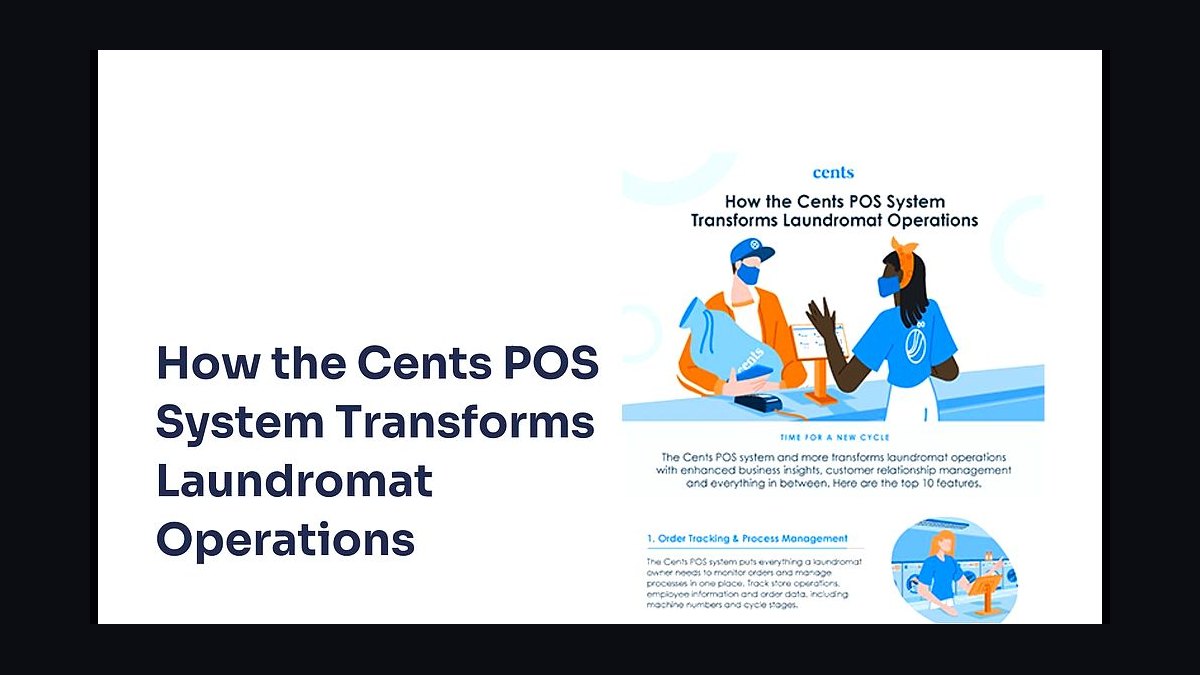
Cents ranks first because it is the only laundromat-native platform that bundles cashless machine payment, store management, wash-dry-fold point-of-sale, and delivery in one account. Pricing runs roughly $199-$499 per month per store plus hardware and per-transaction fees. Single-store owners adding a drop-off counter get one login instead of two systems that never reconcile.
It is built for the operator who runs self-serve machines and a WDF counter under one roof. The trade-off is ecosystem lock-in: it leans on its own hardware and integrations, so deep ties to legacy coin systems can be uneven. CleanCloud below is cheaper and more cloud-flexible, but Cents goes deeper on machine payment and telemetry.
2SPOT Business Systems

SPOT ranks second because it is the entrenched dry-clean POS for serious cleaners, with heat-seal barcode tagging, conveyor and assembly management, per-piece pricing, route delivery, and deep reporting. Pricing runs about $150-$400 per month per location depending on modules. High-volume cleaners with conveyors and thousands of tagged pieces rely on it.
It is for the full-service dry cleaner whose nightmare is a lost or mismatched garment. The trade-off is weight: it is powerful but heavier to learn, and more Windows-counter than mobile-first. CleanCloud below is easier to deploy and better for combo shops, but SPOT wins on depth and scale.
3CleanCloud
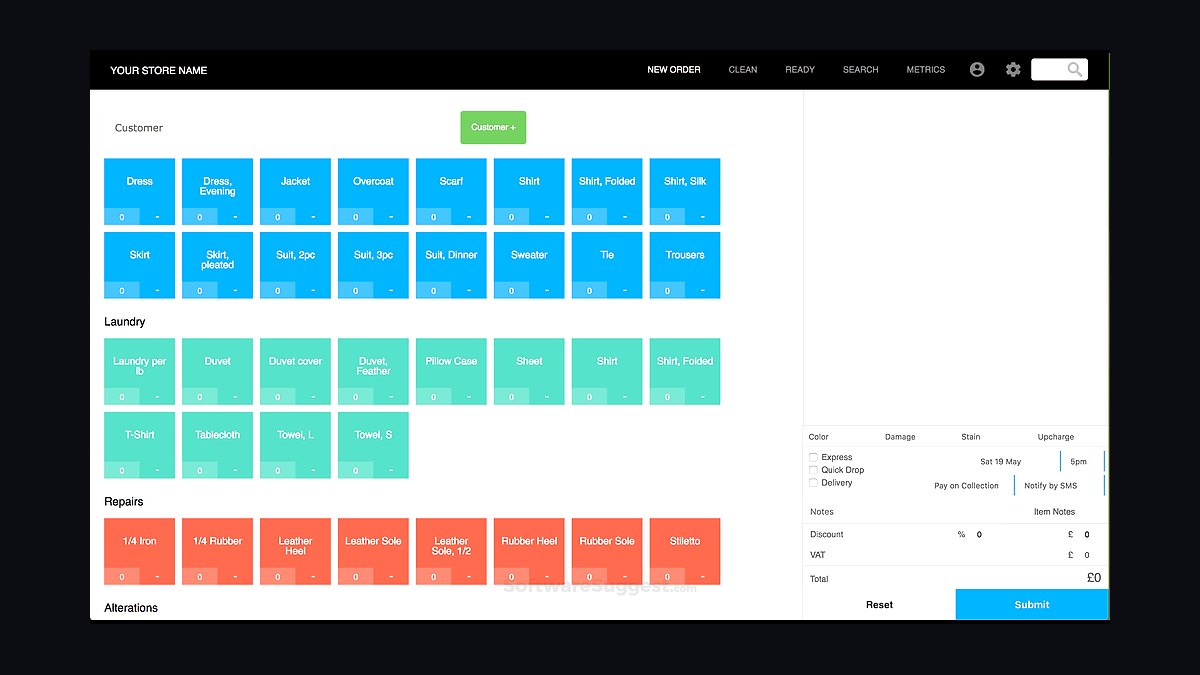
CleanCloud ranks third because it is the best single cloud answer for a combo shop: drop-off dry cleaning, self-serve machines, delivery, and a branded customer app in one login. Pricing runs about $89-$249 per month per store, making it the cheapest path to a unified garment-and-route stack. Garment tracking and per-piece pricing are native.
It is for the operator who wants one system instead of two and values modern cloud access over maximum depth. The trade-off is machine-payment depth: heavy unattended laundromats still pair it with a card system. SPOT above is deeper for pure dry cleaning; Curbside below is stronger for delivery-first operations.
4Curbside Laundries
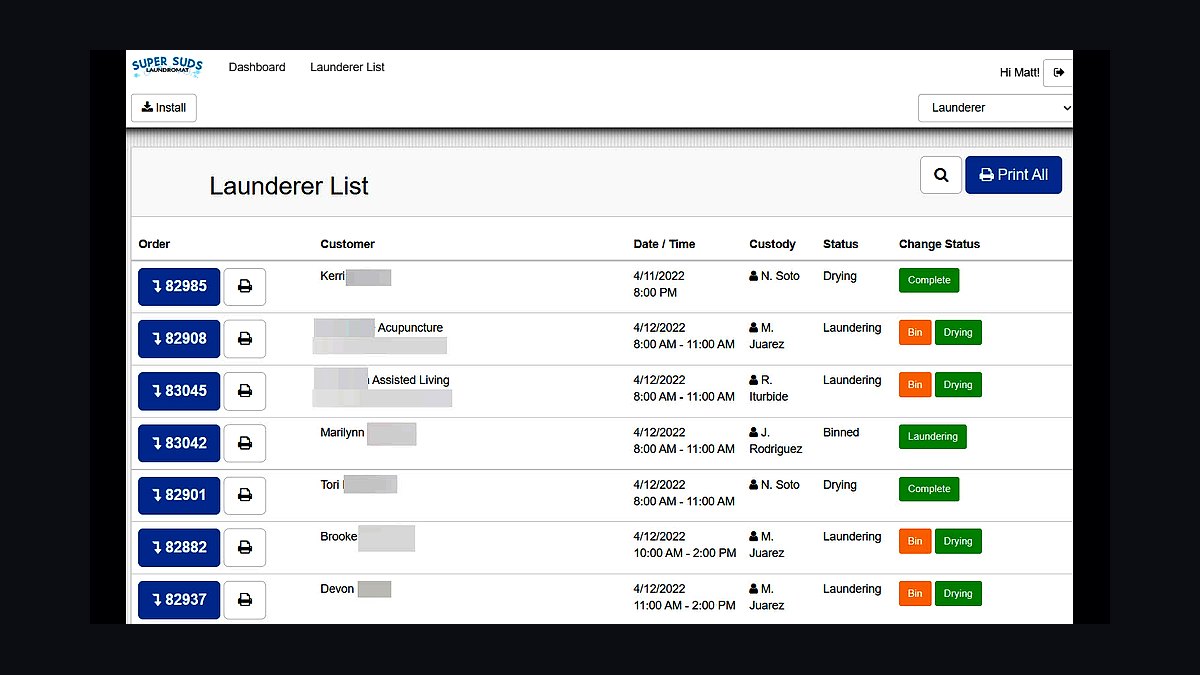
Curbside Laundries ranks fourth because it is purpose-built for wash-dry-fold pickup and delivery: online ordering, the customer app, driver routing, and the WDF intake workflow all in one product. Pricing runs roughly $200-$600 per month. For delivery-heavy operators, the route engine is the whole economic model, and this is the specialist.
It is for the operator whose margin expansion comes from WDF subscriptions and batched delivery stops, not counter traffic. The trade-off is narrowness: a pure self-serve store gets little from it. CleanCloud above covers delivery plus garments and machines; Curbside goes deeper on routes alone.
5CCI LaundryCard
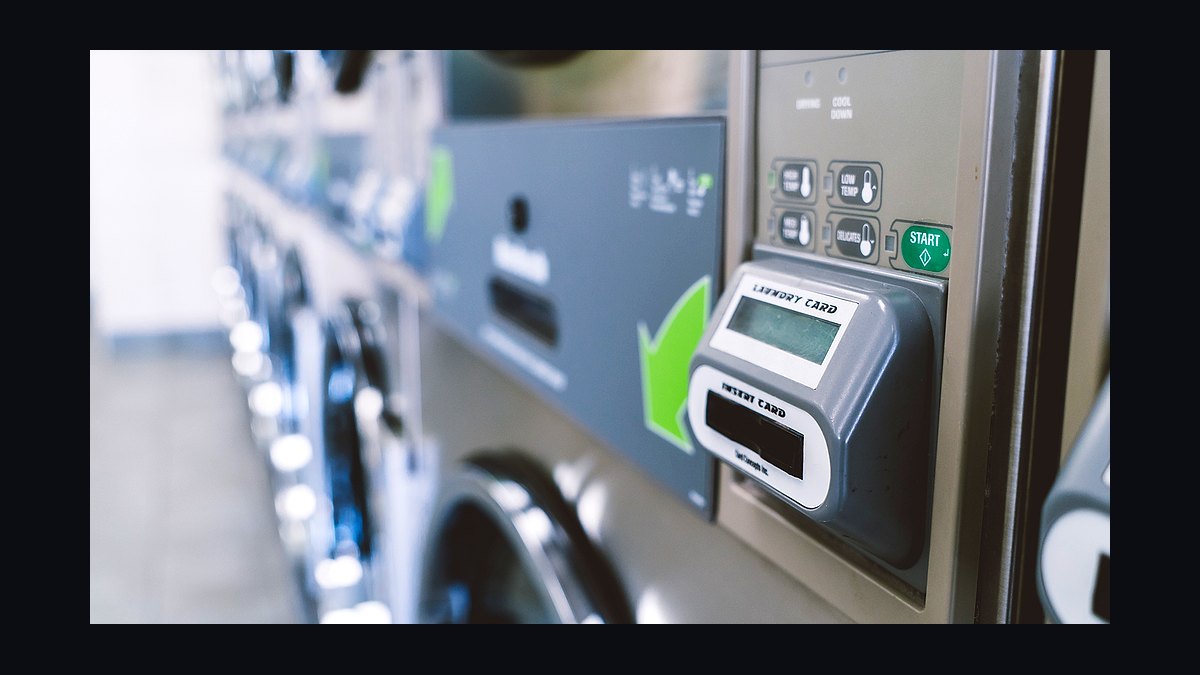
CCI LaundryCard ranks fifth because it is the long-standing card-system standard for pure self-serve laundromats, rock-solid on cashless machine payment and store management. It is more hardware-centric and less app-modern than Cents, but its reliability record across decades of unattended stores is the reason operators standardize on it. Pricing is quote-based per store.
It is for the unattended laundromat owner who wants proven card hardware and does not need WDF or delivery software. The trade-off is a dated interface and weaker mobile experience. Cents above is more modern and bundled; CCI wins when uptime and hardware longevity matter more than app polish.
6PayRange
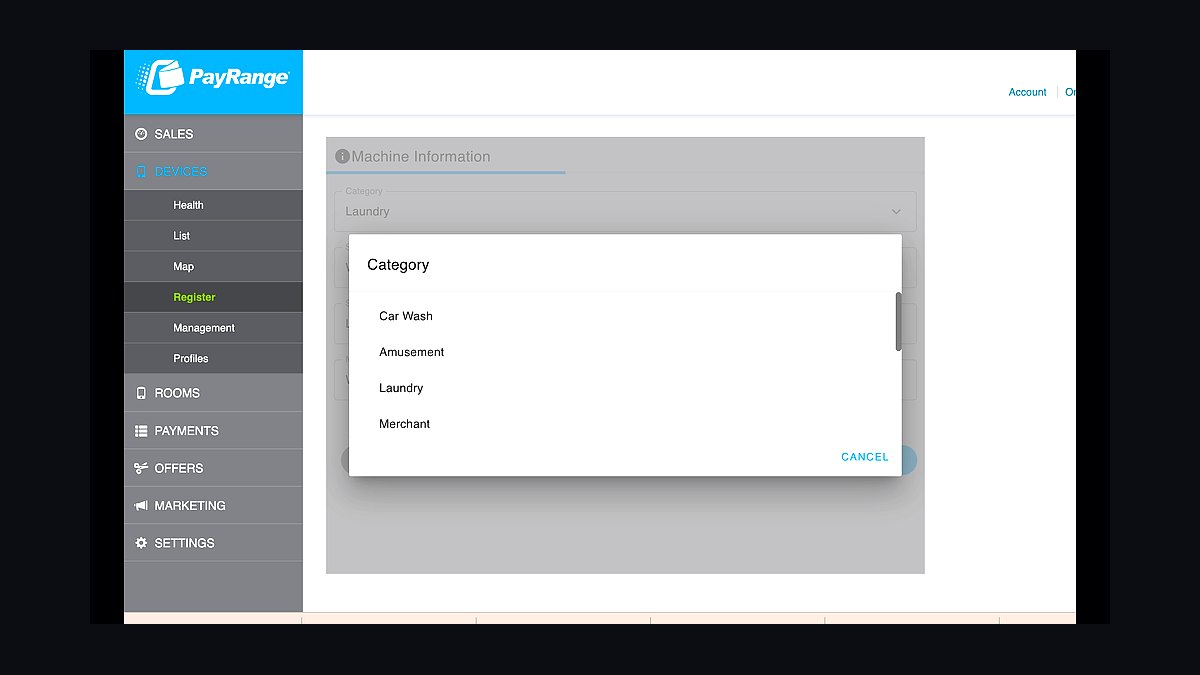
PayRange ranks sixth because it is the cheapest path to cashless machines: it bolts mobile and tap payment onto existing machines without ripping out coin mechs. There is no monthly fee, with roughly 5%-8% per transaction depending on plan. For a small laundromat testing cashless, that zero-fixed-cost structure is decisive.
It is for the operator on a tight budget who wants to eliminate coin theft and change prices without re-jigging slides. The trade-off is the per-transaction percentage, which adds up at volume. CCI above is a full card system with fixed costs; PayRange wins on speed and low commitment.
7Podium
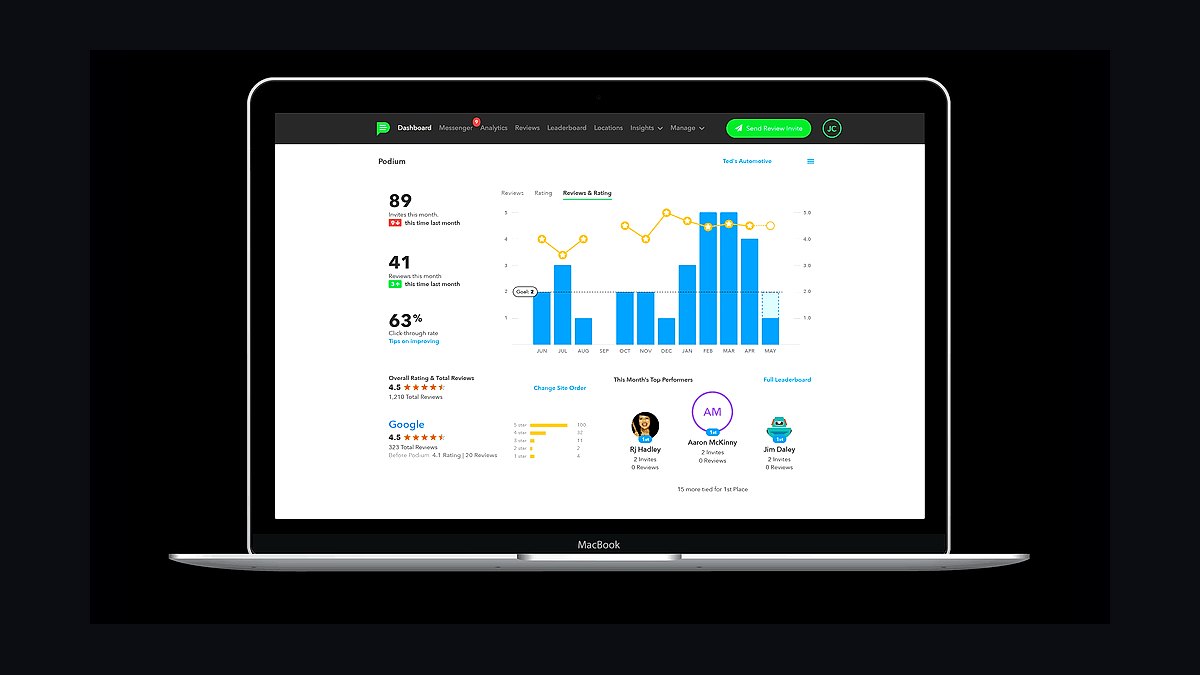
Podium ranks seventh because review generation and webchat-to-text drive the few-block radius laundry economics depend on. Pricing runs about $300-$650 per month, which is steep for a single store but priced for multi-location ambitions. Automatic review requests after each order compound local search visibility month over month.
It is for the operator with more than one store or serious growth plans who needs reputation management at scale. The trade-off is cost versus a free Google Business Profile, which many operators neglect. Birdeye below is the direct alternative with stronger multi-store dashboards; Podium wins on messaging and ease.
8QuickBooks Online
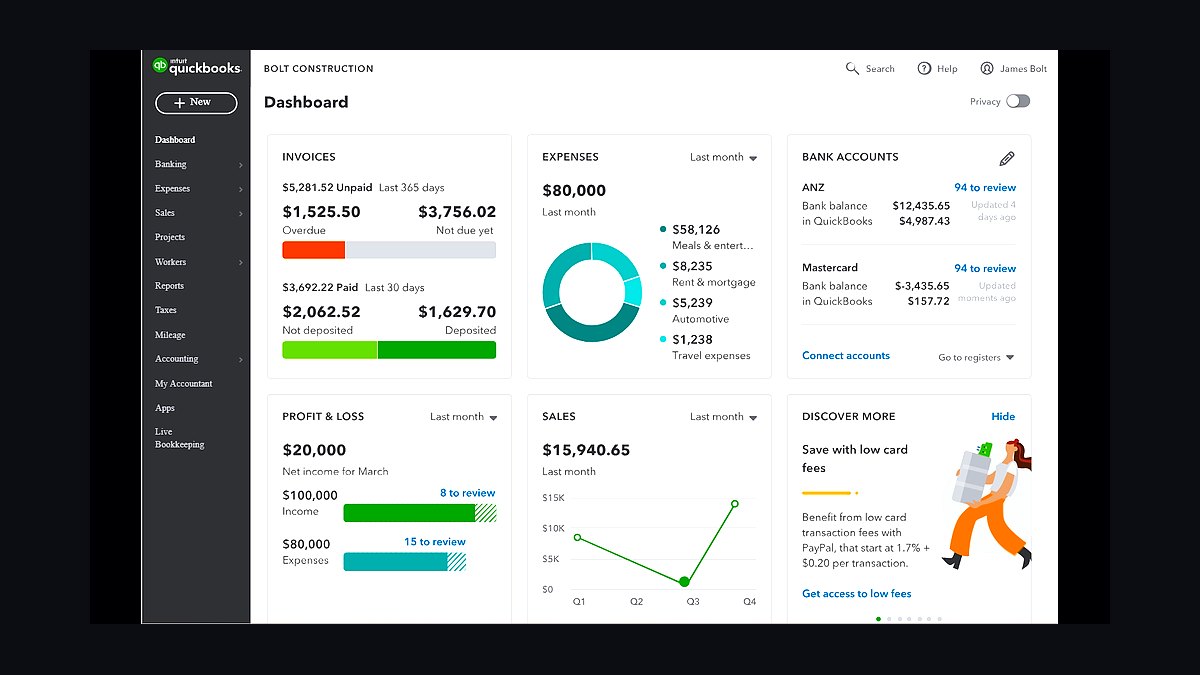
QuickBooks Online ranks eighth because every operator, single store or chain, lands here for books, payroll integration, and tax. Pricing runs about $35-$235 per month depending on tier. POS and machine revenue pull in via platform syncs or connectors, so month-end reconciles without a manual spreadsheet.
It is for every laundry operator regardless of size, which is why it sits mid-list rather than first: it is necessary plumbing, not a differentiator. The trade-off is that sync quality depends on your POS. Xero is the alternate for operators who prefer it, with similar connectors and comparable pricing.
9Birdeye
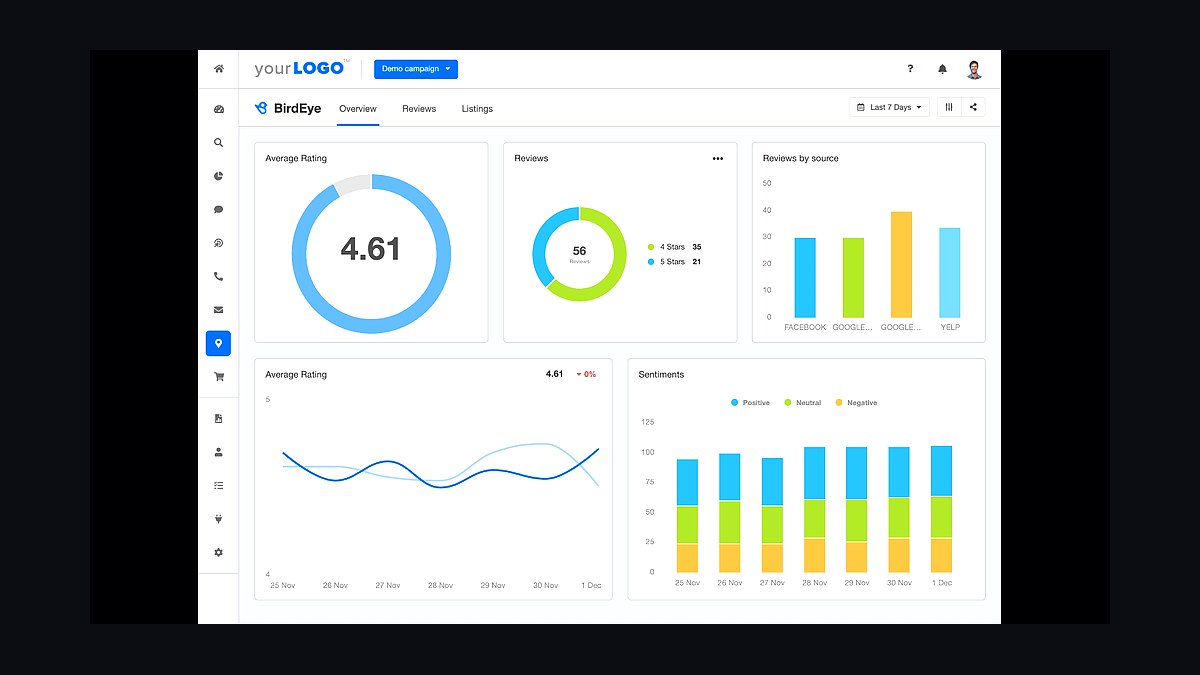
Birdeye ranks ninth because it matches Podium's review generation and reputation management feature set while offering better multi-store dashboards for chains comparing location performance. Pricing is quote-based and typically comparable to Podium. For a multi-store laundromat chain, consolidating reputation data across locations in one view is the deciding factor.
It is for the operator running two or more stores who needs per-location review tracking and response workflows. The trade-off is that single-store owners rarely need its depth. Podium above is stronger on webchat and messaging; Birdeye wins when portfolio-level reporting matters more.
10Power BI
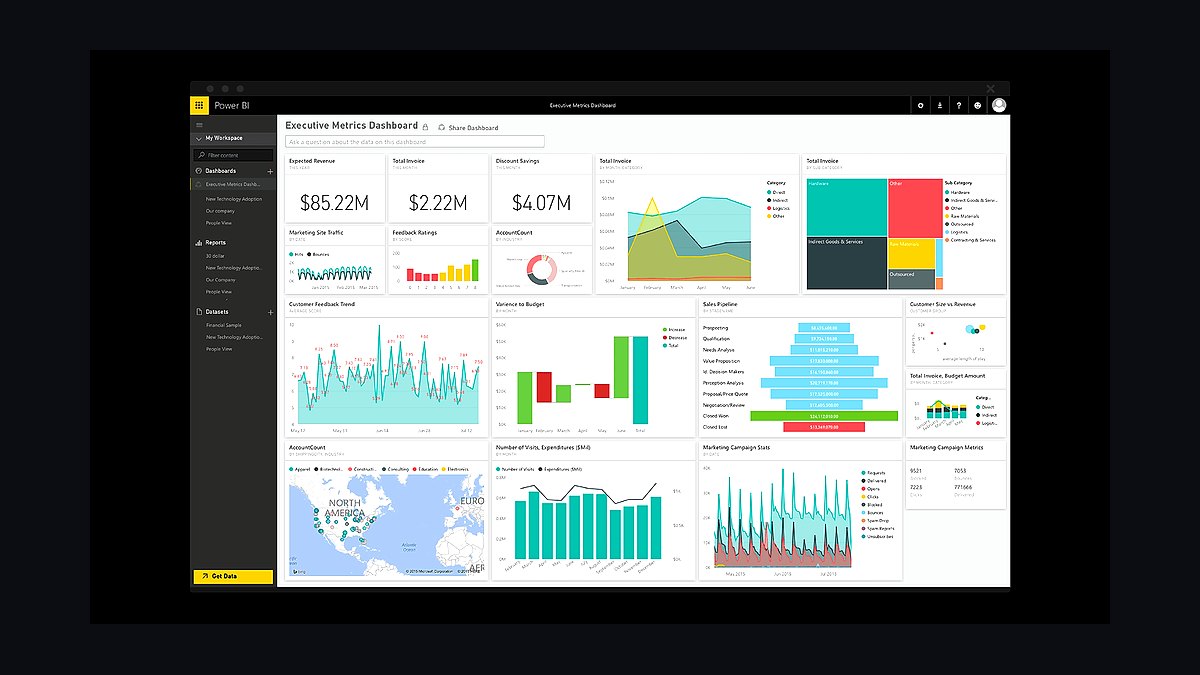
Power BI ranks tenth because it only earns its place once you run more than one store. At $14 per user per month for Pro, it reconciles per-store turns, WDF margin, and route profitability into one dashboard when SPOT, Cents, and QuickBooks each hold part of the truth. Single-store owners do not need it.
It is for the multi-store operator comparing performance across locations and retiring underused machines. The trade-off is setup effort and the discipline to maintain data pipelines. Looker Studio is the free alternate for lighter reporting; Power BI wins on depth and Microsoft ecosystem integration.
How we ranked these
We ranked each tool on four weighted criteria: fit to the two distinct laundry sub-models (self-serve machine payment vs. garment-tracking POS), depth of cashless payment and remote machine telemetry, garment-tracking and route-delivery capability, and integration with QuickBooks plus a customer app. Weighting favored platforms that solve an operator's actual daily bottleneck over feature breadth, and we scored pricing realism and learning curve as tiebreakers.
We deliberately ignored vendor marketing claims, awards, and feature checklists that no single-store operator would ever use. We excluded generic retail POS systems that lack machine-payment or conveyor logic, ignored enterprise BI and reputation tools for single-store buyers, and skipped any product whose core value only appears at ten-plus locations. Long-tail niche vendors were dropped unless they held a defensible niche like alterations or value card systems.
What to look for
What matters most is which sub-model you actually run. A self-serve laundromat should weight cashless machine payment, remote out-of-service alerts, and turns-per-machine reporting above everything. A dry cleaner should weight barcode tagging, conveyor and assembly workflow, per-piece pricing, and text-when-ready notifications. Combo operators need to decide whether one cloud platform like CleanCloud is good enough or whether a dedicated card system plus a garment POS is worth the reconciliation headache.
The mistake most buyers make is shopping feature breadth instead of integration depth. They buy a card system and a separate counter POS that never talk, then discover month-end is a manual spreadsheet. Others skip remote monitoring on an unattended store and learn a bank of dryers is down from a one-star review. Confirm the QuickBooks sync, the telemetry, and the tagging workflow before you sign anything.
Related questions
What is the best tech stack for a laundromat or dry cleaning business in 2027?
It is really two stacks. Self-serve laundromats run on cashless machine payment and remote monitoring, typically CCI/LaundryCard or Cents paired with PayRange. Dry cleaning and wash-dry-fold run on garment-tracking POS like SPOT or CleanCloud, handling per-piece pricing, barcode tagging, conveyor assembly, and ready notifications. Layer QuickBooks on top, add route delivery and reviews as you grow.
Do laundromats and dry cleaners need different software?
Usually yes at meaningful volume. Machine-payment platforms optimize uptime and cashless access to washers and dryers. Garment POS systems optimize tracking, per-piece pricing, and assembly so a $40 order never gets lost. Combo platforms like CleanCloud and Cents narrow the gap, but a heavy unattended machine floor plus serious dry cleaning often still wants a dedicated card system alongside the POS.
Is cashless machine payment worth it for a small laundromat?
Almost always. PayRange or a card system eliminates coin theft, lets you raise prices without re-jigging coin slides, and turns every machine into a sensor reporting turns and outages. The trade-off is per-transaction fees, roughly five to eight percent on PayRange, but the operational visibility and pricing flexibility typically pay for themselves within the first year.
How important is remote machine monitoring for an unattended store?
It is the difference between knowing and driving over. Out-of-service alerts and turns-per-machine reporting tell you a dryer died at 2 a.m. instead of a customer telling you via a one-star review. Three dead dryers on a Saturday can wipe out the day's profit. Insist on telemetry before signing any machine-payment contract, because it is rarely retrofittable cheaply.
SPOT or CleanCloud for a dry cleaner?
SPOT is the entrenched, feature-deep choice for serious cleaners with conveyors and high piece volume, but it is heavier to learn and more Windows-counter than mobile. CleanCloud is cloud-native, easier to learn, and better if you also want laundromat and delivery in one login. Pick SPOT for depth and scale, CleanCloud for modern simplicity and combo operations.
What does a laundromat tech stack cost per month in 2027?
A single self-serve store runs roughly $250 to $900 per month in software plus payment processing, covering a card system or Cents, PayRange, and QuickBooks. A single dry cleaner sits in a similar range with SPOT or CleanCloud plus tagging. Multi-store operators typically spend $1,200 to $5,000 monthly once reputation, consolidated books, and BI are added.
Do I need Power BI for a single laundromat?
No. A single-store owner paying for Power BI is burning cash on capability the platform's built-in reports already cover. Add a BI layer only when you run more than one store and need to reconcile per-store turns, wash-dry-fold margin, and route profitability across systems. Looker Studio is a free lighter alternative if you want dashboards earlier.
How do I stop losing garments in dry cleaning?
Tag every piece to a ticket with barcode or heat-seal labels, and let the conveyor and assembly tools sequence the racks. Skipping tagging to save time guarantees a mismatched or lost order, and one ruined wedding dress costs more than years of POS fees. Text-when-ready notifications also cut counter calls and no-show pickups.
FAQ
What is the best tech stack for a laundromat or dry cleaning business in 2027?
It is really two stacks. Self-serve laundromats run on cashless machine payment and remote monitoring, typically CCI/LaundryCard or Cents paired with PayRange. Dry cleaning and wash-dry-fold run on garment-tracking POS like SPOT or CleanCloud, handling per-piece pricing, barcode tagging, conveyor assembly, and ready notifications. Layer QuickBooks on top, add route delivery and reviews as you grow.
Do laundromats and dry cleaners need different software?
Usually yes at meaningful volume. Machine-payment platforms optimize uptime and cashless access to washers and dryers. Garment POS systems optimize tracking, per-piece pricing, and assembly so a $40 order never gets lost. Combo platforms like CleanCloud and Cents narrow the gap, but a heavy unattended machine floor plus serious dry cleaning often still wants a dedicated card system alongside the POS.
Is cashless machine payment worth it for a small laundromat?
Almost always. PayRange or a card system eliminates coin theft, lets you raise prices without re-jigging coin slides, and turns every machine into a sensor reporting turns and outages. The trade-off is per-transaction fees, roughly five to eight percent on PayRange, but the operational visibility and pricing flexibility typically pay for themselves within the first year.
How important is remote machine monitoring for an unattended store?
It is the difference between knowing and driving over. Out-of-service alerts and turns-per-machine reporting tell you a dryer died at 2 a.m. instead of a customer telling you via a one-star review. Three dead dryers on a Saturday can wipe out the day's profit. Insist on telemetry before signing any machine-payment contract, because it is rarely retrofittable cheaply.
SPOT or CleanCloud for a dry cleaner?
SPOT is the entrenched, feature-deep choice for serious cleaners with conveyors and high piece volume, but it is heavier to learn and more Windows-counter than mobile. CleanCloud is cloud-native, easier to learn, and better if you also want laundromat and delivery in one login. Pick SPOT for depth and scale, CleanCloud for modern simplicity and combo operations.
What does a laundromat tech stack cost per month in 2027?
A single self-serve store runs roughly $250 to $900 per month in software plus payment processing, covering a card system or Cents, PayRange, and QuickBooks. A single dry cleaner sits in a similar range with SPOT or CleanCloud plus tagging. Multi-store operators typically spend $1,200 to $5,000 monthly once reputation, consolidated books, and BI are added.
Do I need Power BI for a single laundromat?
No. A single-store owner paying for Power BI is burning cash on capability the platform's built-in reports already cover. Add a BI layer only when you run more than one store and need to reconcile per-store turns, wash-dry-fold margin, and route profitability across systems. Looker Studio is a free lighter alternative if you want dashboards earlier.
How do I stop losing garments in dry cleaning?
Tag every piece to a ticket with barcode or heat-seal labels, and let the conveyor and assembly tools sequence the racks. Skipping tagging to save time guarantees a mismatched or lost order, and one ruined wedding dress costs more than years of POS fees. Text-when-ready notifications also cut counter calls and no-show pickups.
Is Curbside Laundries worth it for a wash-dry-fold delivery business?
If delivery is a core part of your model, yes. Curbside is purpose-built for pickup-and-delivery laundry, with online ordering, a customer app, driver routing, and wash-dry-fold intake workflow. A pure self-serve store gets far less value from it. If you already run CleanCloud, its delivery module is a reasonable alternative without adding another vendor.
Should I buy Podium or Birdeye for a laundry business?
Only once you have real local competition or multiple stores. Podium is strong for review generation, webchat-to-text, and winning the few-block radius laundry depends on. Birdeye often edges it out for multi-location dashboards. A single-store owner can usually get most of the benefit from a disciplined Google Business Profile and a simple review request at pickup, both free.
Sources
- https://quickbooks.intuit.com/
- https://www.payrange.com/
- https://www.laundrycard.com/
- https://www.cents.com/
- https://spotpos.com/
- https://cleancloudapp.com/
- https://www.curbsidelaundries.com/
- https://podium.com/
- https://birdeye.com/
- https://powerbi.microsoft.com/
Related on PULSE
This page will be disappearing soon. Save it to your device for $1 — or read it free while it is here.
@Kory-White- · if Venmo asks, the last 4 of my number are 2012
This page is gone.
This one is off the shelf now. $1 keeps it on your phone for good — the whole page, pictures and diagrams included.
 pulse-tech-stacksTop 10 Best Tech Stack Tools for Septic and Portable Sanitation Services in 2027
 pulse-tech-stacksTop 10 Best Tech Stack Tools for Independent Landscaping Companies in 2027
 pulse-tech-stacksTop 10 Best Tech Stack Tools for Vulnerability Management Software Vendors in 2027
 pulse-tech-stacksTop 10 Best Tech Stack Tools for Independent Bakeries in 2027
 pulse-tech-stacksTop 10 Best Tech Stack Tools for Home Inspection Companies in 2027
 pulse-tech-stacksTop 10 Best Tech Stack Tools for Mobile Threat Defense (MTD) Vendors in 2027
 pulse-tech-stacksTop 10 Best Tech Stack Tools for Embeddings API Companies in 2027
 pulse-tech-stacksTop 10 Best Tech Stack Tools for Medical Billing and RCM Companies in 2027
 pulse-tech-stacksTop 10 Best Tech Stack Tools for AI Music Generation Companies in 2027
 pulse-tech-stacksTop 10 Best Tech Stack Tools for Podiatry Practices in 2027