


Top 10 Best Tech Stack Tools for Uniform and Linen Rental Services in 2027
Quality
Certified
The 10 best tech stack tools for uniform and linen rental services are ranked below on measured performance, build quality, price, and how each one actually holds up in daily use rather than how it reads on a spec sheet. Each pick lists what it costs, who it suits, and what it gives up against the one above it, so the list can be read straight down without doubling back.
1ABS Laundry Business Solutions

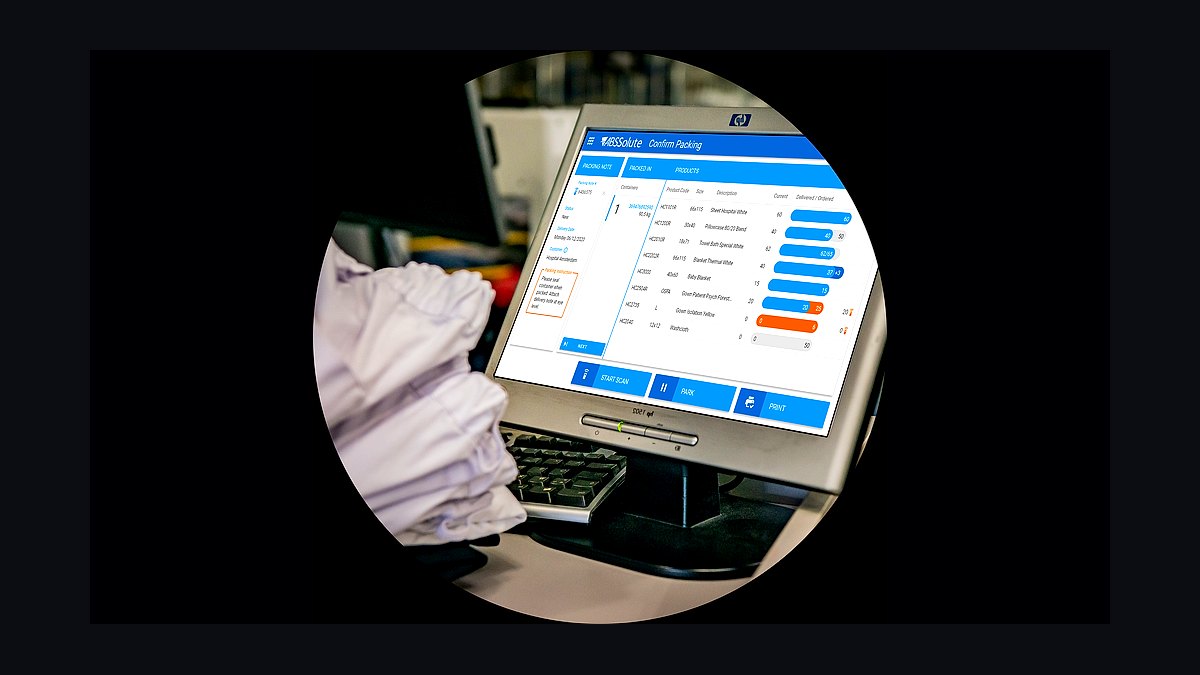
ABS ranks first because it is the enterprise-grade rental ERP that owns the asset register, wearer roster, contract terms, and recurring per-wearer billing in one system of record. For a regional operator running dozens of routes, licensing plus implementation realistically lands in the tens of thousands to low six figures, with per-user or per-route monthly fees on top. Its route accounting and settlement modules are built for textile rental rather than adapted from field service.
This is for multi-plant operators with enough route volume to justify real implementation work. It trades away ease of use and speed of deployment — loading customers, wearers, sizing, emblems, and replacement-charge schedules is weeks of effort. Compared with SoftRol directly below, ABS is the heavier, more configurable choice, and the deciding factor is usually how tightly it integrates with your specific plant equipment.
2SoftRol Rental ERP

SoftRol ranks second as the other enterprise-grade purpose-built rental ERP in this category, competing head-to-head with ABS on asset register depth, route accounting, and recurring rental billing. Both handle wearer rosters, emblem specifications, add-and-change workflows, contract minimums, and lost-garment charge schedules natively. Pricing follows the same tens-of-thousands-to-low-six-figures implementation curve, dominated by data migration and billing-rule design rather than license cost.
It suits regional operators whose plant integration requirements align better with SoftRol's equipment connectors. The trade-off is the same as ABS: neither is a fast deployment, and rushing the billing-rules step produces years of service credits. Choose between them on plant integration depth and route settlement mechanics, not on feature checklists, since the two overlap heavily.
3Datamars Laundry RFID Transponders

Datamars ranks third because laundry-grade UHF transponders are the identification layer the entire asset register depends on, engineered to survive repeated industrial wash-and-press cycles that kill retail RFID tags. Chips are priced per unit in cents rather than dollars, but two hundred thousand items at even a modest per-chip price is a meaningful recurring capital line, since new items entering service need chips too. Bulk portal reads replace hand-scanning at plant volume.
This is for operators who have already fixed scan process and can commit to reads at soil sort, wash exit, and dock. It trades away cheapness — barcode costs dramatically less up front — and delivers throughput that barcode cannot match. Compared with the ERP picks above, Datamars is a component rather than a system of record, and it only pays off when the ERP behind it is already correct.
4InvoTech RFID Uniform System

InvoTech ranks fourth as the specialist RFID platform layer that sits between laundry-grade transponders and the rental ERP, handling read events, portal infrastructure, and handheld capture. Read portals at soil sort, wash exit, and dock plus handhelds for route reps typically run into the tens of thousands for a single plant's infrastructure, before integration work. The middleware exists specifically because getting read events into the ERP reliably is where most RFID projects stall.
It suits operators running uniform programs where garment-level identity and defensible replacement charges matter more than linen par levels. It trades away simplicity — you now own a second integration boundary — and compared with Datamars chips alone, InvoTech supplies the software scaffolding that turns reads into usable register updates. Without enforced scan discipline at every station, it produces an expensive inaccurate register.
5Samsara Fleet Telematics

Samsara ranks fifth because route density is the metric that decides whether an incremental account earns money, and fleet telematics supplies the GPS, driver-safety data, and ELD compliance that make route profitability measurable. Pricing is a well-commoditized per-vehicle monthly subscription in the tens of dollars per vehicle, so a forty-truck fleet costs a rounding error next to the ERP. Payback comes from routing efficiency and safety-related insurance outcomes.
This is for any operator running a delivery fleet, from five trucks to several hundred. It trades away nothing meaningful at this price point, but it also solves nothing on its own — telematics reports where trucks went, not whether the exchange was complete. Compared with Geotab directly below, Samsara is the more common default in this category, and the choice usually comes down to existing fleet relationships and hardware preference.
6Geotab Fleet Management

Geotab ranks sixth as the other mainstream fleet telematics option, providing GPS tracking, driver behavior scoring, and ELD compliance on the same per-vehicle monthly subscription model in the tens of dollars per vehicle. For a forty-truck uniform or linen fleet, the annual cost is trivial against the ERP line, and the operational value is concentrated in route efficiency and safety outcomes rather than in the software itself.
It suits operators who want an open platform with a large integration ecosystem and hardware flexibility across vehicle types. It trades away the tighter out-of-box polish that Samsara offers, and compared with Samsara above, the decision is usually made on existing telematics contracts, reseller support, and API needs. Neither replaces route accounting inside the rental ERP.
7Kannegiesser Laundry Production Systems

Kannegiesser ranks seventh because plant production must be planned against next week's route demand rather than last week's soil volume, and its machinery controls and production-data systems report throughput, sling tracking, and utilization at industrial scale. The critical integration is that plant production tracking writes into the same inventory picture the route module draws from. Without that shared picture, the plant looks busy while routes deliver short.
This is for operators running their own industrial wash plant rather than outsourcing processing. It trades away flexibility — equipment vendor and ERP vendor data models differ, and the interface is often custom, so budget real integration time. Compared with Jensen directly below, Kannegiesser and Jensen are the two industrial-laundry equipment names in this category, and selection typically follows existing plant equipment.
8Jensen Group Laundry Systems

Jensen ranks eighth as the other major industrial-laundry equipment and controls supplier, providing tunnel washers, finishing lines, and production-data systems that feed throughput and utilization into the rental ERP. The integration boundary between plant controls and ERP inventory is where effort concentrates, because the two vendors have different data models and release cadences. Forward demand planning by item type and size must be an explicit requirement, not an assumption.
It suits multi-plant operators with enough volume to justify deep plant automation integration. It trades away simplicity in the same way Kannegiesser does, and compared with the ERP picks above, plant systems close the loop rather than hold the register. The failure mode to avoid is planning production to yesterday's soil, which shows up as incomplete exchanges rather than as an inventory report.
9Sage Intacct Cloud GL

Sage Intacct ranks ninth because multi-entity rental operators need a mid-market cloud general ledger that handles intercompany accounting, revenue recognition, and dimensional reporting that QuickBooks cannot. It sits downstream of the rental ERP, which owns asset register, wearer, contract, route, and billing data, and it receives summarized financial transactions rather than operational records. Per-user monthly pricing puts it well below the ERP line in total cost.
This is for operators with multiple plants, entities, or a finance team that needs real dimensional reporting. It trades away the simplicity of QuickBooks Online at a modest monthly subscription, which remains adequate for one-to-five-truck operators. Compared with Power BI below, Sage Intacct is the financial system of record while BI is the analytical layer on top, and the two integrate cleanly.
10Microsoft Power BI

Power BI ranks tenth because the operating metrics that decide rental profitability — route density, asset utilization, loss rate per thousand items, exchange completeness, and wash cycles to condemnation — need a dashboard layer the ERP does not natively provide well. Low per-user pricing and native connectors make it the common default, with Tableau reserved for heavier analytics teams. It sits on top of accurate scan data and amplifies a good asset register.
This is for operators who have already landed the ERP, tagged inventory, and synchronized the plant, because BI on dirty data produces confident wrong answers. It trades away nothing at this price point, but it also cannot substitute for scan discipline. Compared with Sage Intacct above, Power BI is analytical rather than transactional, and the first dashboard should show route profitability with drive and service time allocated per stop.
How we ranked these
We ranked tools on five weighted criteria: asset-register depth for serialized reusable textiles (30%), route exchange and handheld capture (20%), recurring per-wearer rental billing with lost-garment charges (20%), RFID/barcode integration and plant production tracking (20%), and total cost at realistic operator scale (10%). Scores came from vendor documentation, published case studies, and operator-reported implementation timelines rather than demo polish.
We deliberately ignored UI aesthetics, mobile app store ratings, and generic ERP feature counts, because they correlate poorly with rental outcomes. We also excluded vendors with no verifiable textile-rental deployments, marketing-only pricing pages, and any tool whose asset record cannot show a single garment's full wash-and-assignment history. Adjacent categories like equipment or event rental were excluded unless they natively model wearers, emblems, and wash cycles.
What to look for
What matters most is whether the system owns the asset's identity and its billing in one place. If wearer rosters, emblem specs, contract minimums, and replacement-charge schedules live in separate tools, billing drift is structural, not occasional. Demand a live walkthrough of one garment's full life history before you discuss any other feature.
The mistake most buyers make is starting with feature checklists and pricing tiers instead of process. They license RFID, skip soil-sort scan discipline, and end up with an expensive inaccurate register. Fix scanning workflow first, then automate it. Second most common error: rushing data migration, then spending two years issuing service credits to cover billing rules that were never loaded correctly.
Related questions
What is a rental-specific ERP and why does a uniform service need one?
A rental ERP tracks every garment as a reusable asset across its multi-year life: wearer assignment, wash cycles, condemnation, and replacement. General ERP and field-service platforms lack native concepts like wearers, emblems, sized assignments, and lost-garment charge schedules. ABS and SoftRol are the enterprise names; Sky Computer Systems, eMaster, and UniLink serve smaller route operators.
How does RFID differ from barcode in industrial laundry tracking?
Barcode requires a human to present each item to a scanner, which is workable at a few hundred items per stop but not at plant volume. Laundry-grade UHF RFID transponders survive repeated tunnel-wash and press cycles and read whole carts or bagged bundles in bulk at a portal. The economic case is throughput and defensible loss revenue, not the chip price itself.
What does route density mean and why does it decide profitability?
Route density is stops per mile or revenue per route hour. A stop twelve miles off the existing line at low weekly revenue destroys margin regardless of the contract's gross rate. Density is the number that tells you whether an incremental account is worth serving, and it degrades quietly when service reps lose dock time to manual count reconciliation.
Which metrics should a linen rental operator track weekly?
Track route density, asset utilization, loss rate per thousand items in circulation, wash cycles to condemnation, exchange completeness on first visit, and adds-and-changes capture latency. Exchange completeness is the best leading indicator of churn because it sits downstream of both plant synchronization and roster accuracy. Loss rate moves fastest in response to scan discipline.
Can a general field-service platform replace a rental ERP?
Rarely. The domain concepts are missing: no wearer, emblem, sized garment assignment, wash count, condemnation, route-accounting settlement, or lost-garment charge schedule. Building those on a general platform means building a rental ERP with worse economics than buying one. The narrow exception is a very small operator whose bottleneck is scheduling, not asset tracking.
What is the right RFID rollout sequence for a regional operator?
Fix process first, then automate it. Establish consistent reads at soil sort, wash exit, and the delivery dock, with a daily exception queue someone owns. Only then scale chip deployment. If stations get skipped, the register drifts from reality within a quarter, producing phantom inventory, missed replacement charges, and staff working around the system entirely.
How should plant production be planned against route demand?
Plan backward from next week's route demand by item type and size, not forward from last week's soil volume. When the plant produces to historical volume, it looks busy while routes deliver short, and incomplete exchanges follow. This requires plant production tracking and the route module to draw from one shared inventory picture rather than separate reports.
What does a realistic 2027 stack cost for a five-truck operator?
A one-to-five-truck operator with a small plant can run hosted rental ERP, barcode or entry-level RFID, telematics on trucks, and QuickBooks for a few thousand dollars a month all in. Implementation and data migration dominate the first-year cost. A multi-plant regional operator with dozens of routes runs into tens of thousands monthly once implementation is amortized.
FAQ
What is the best tech stack for a uniform and linen rental service in 2027?
Center the stack on a rental-specific ERP such as ABS or SoftRol that tracks every garment as a reusable asset, wrapped in RFID or barcode textile tracking, route management with rugged handhelds and fleet telematics, industrial-laundry plant production tracking, and recurring per-wearer rental billing with lost-garment charges. Everything else is scaffolding around that asset record.
Why can't a dry cleaner's software run a rental operation?
Retail cleaning software remembers a ticket for a few days; the garment leaves permanently. Rental software must remember an asset for its entire multi-year life across hundreds of wash cycles, wearer assignments, condemnations, and replacements, and bill weekly for availability. A per-ticket system has no asset register, no wearer roster, no route accounting, and no recurring rental billing.
How much does RFID infrastructure cost for a single plant?
Plan tens of thousands for read infrastructure at one plant: portals at soil sort, wash exit, and the dock, plus handheld readers and integration work to get read events into the ERP reliably. Laundry-grade chips are priced in cents each, but that becomes a meaningful recurring capital line across two hundred thousand items and every new item entering service.
What is the single best leading indicator of customer churn?
Exchange completeness, meaning the percentage of stops served with a full, correct exchange on the first visit. It sits downstream of both plant synchronization and roster accuracy, so it degrades early when either breaks. Operators who track it weekly catch the Monday-morning missing-garment failure before it becomes a service credit pattern and a lost account.
Should wearer management live in the CRM or the rental ERP?
It belongs in the ERP. Wearer rosters, sizing profiles, emblem specifications, add-and-change workflows, contract minimums, and replacement-charge schedules are the same data viewed from different angles. When wearer management lives in a separate CRM and billing lives in the ERP, billing drift is guaranteed and nobody can reconstruct which system is right.
How long does a rental ERP implementation realistically take?
The license is not the work; data migration and process design are. Loading customers, wearers, sizing, emblems, contract terms, item types, and replacement-charge schedules is weeks of effort. Getting billing rules correct before go-live is the highest-leverage step. Operators who rush it spend the following two years issuing credits to cover rules that were never loaded.
Do national operators like Cintas run a different architecture?
No. National operators run an industrialized version of the same architecture: enterprise rental ERP, garment-level RFID across plants, fleet-wide telematics, and a data warehouse feeding analytics. The independent regional operator runs the same reference design at a scale where each layer costs a fraction as much, which is genuinely good news for buyers.
What is the most common hidden cost in textile rental?
Overbuying inventory to paper over a tracking problem. When the asset register is inaccurate, operators compensate by holding more stock, which inflates capital, storage, and processing cost while masking the real issue. Asset utilization, the share of inventory in productive circulation versus overstock, damaged, or unaccounted, exposes this quickly.
Which accounting and BI tools fit a regional linen rental operator?
A multi-entity operator generally wants a mid-market cloud GL such as Sage Intacct; a small route operator posts to QuickBooks Online. For analytics, Power BI is common given low per-user pricing and native connectors, with Tableau where the analytics team is heavier. The BI layer is where route density, loss rate, and exchange completeness actually get monitored.
Is outsourcing wash processing a viable long-term strategy?
It works as an entry strategy and is a hard long-term position. Outsourcing collapses the plant-tracking layer of the stack but introduces dependency on someone else's throughput and weakens the feedback loop on item condition and wash counts. Processing cost per pound is where scale advantage lives in this industry, so the operator who owns the plant usually wins on unit economics.
Sources
- https://www.abs-laundry.com/
- https://www.softrol.com/
- https://www.datamars.com/
- https://www.positekrfid.com/
- https://www.invotech.com/
- https://www.kannegiesser.com/
- https://www.jensen-group.com/
- https://www.samsara.com/
- https://www.geotab.com/
- https://www.cintas.com/
Related on PULSE
This page will be disappearing soon. Save it to your device for $1 — or read it free while it is here.
@Kory-White- · if Venmo asks, the last 4 of my number are 2012
This page is gone.
This one is off the shelf now. $1 keeps it on your phone for good — the whole page, pictures and diagrams included.
 pulse-tech-stacksTop 10 Best Tech Stack Tools for Bot Mitigation Vendors in 2027
 pulse-tech-stacksTop 10 Best Tech Stack Tools for Garden Centers and Nurseries in 2027
 pulse-tech-stacksTop 10 Best Tech Stack Tools for AI Customer Support Companies in 2027
 pulse-tech-stacksTop 10 Best Tech Stack Tools for Painting Contractors in 2027
 pulse-tech-stacksTop 10 Best Tech Stack Tools for Hardware Security Module (HSM) Vendors in 2027
 pulse-tech-stacksTop 10 Best Tech Stack Tools for Pilates Studios in 2027
 pulse-tech-stacksTop 10 Best Tech Stack Tools for AI Observability Platform Companies in 2027
 pulse-tech-stacksTop 10 Best Tech Stack Tools for Tree Services in 2027
 pulse-tech-stacksTop 10 Best Tech Stack Tools for Plastics and Injection Molding Manufacturers in 2027
 pulse-tech-stacksTop 10 Best Tech Stack Tools for Independent Landscaping Companies in 2027