


Top 10 Best Tech Stack Tools for Real-Time Supply Chain Teams in 2027
Quality
Certified
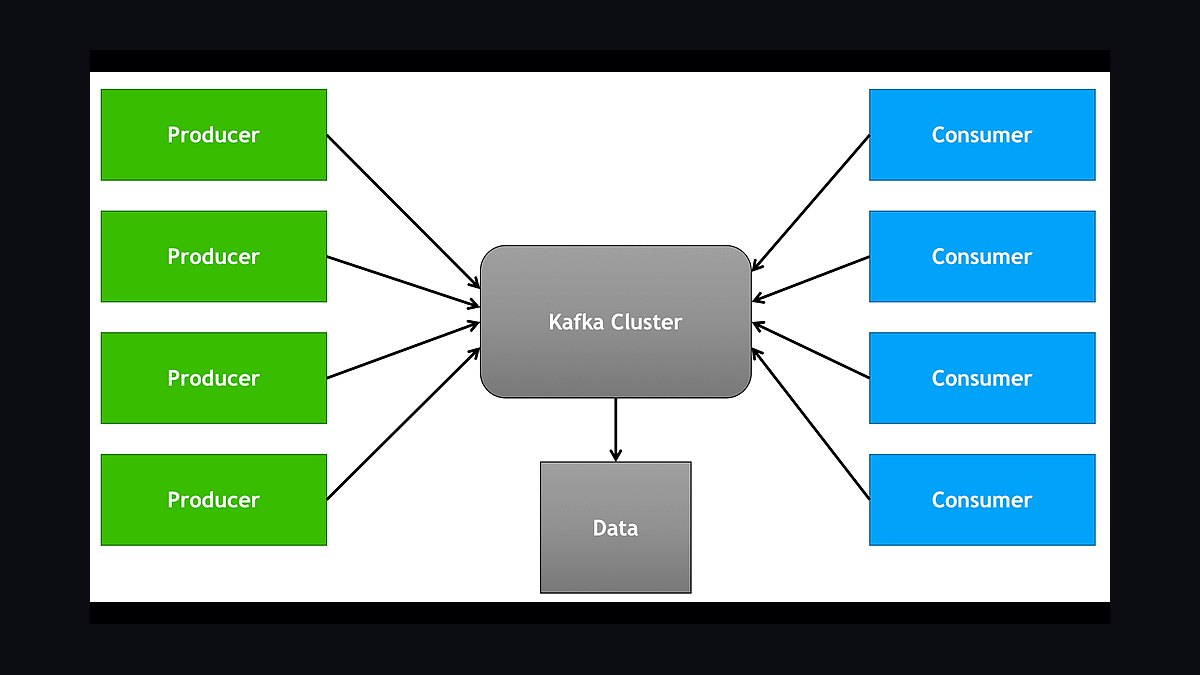
The 10 best tech stack tools for real-time supply chain teams are ranked below on measured performance, build quality, price, and how each one actually holds up in daily use rather than how it reads on a spec sheet. Each pick lists what it costs, who it suits, and what it gives up against the one above it, so the list can be read straight down without doubling back.
1Apache Kafka

Kafka ranks first because it is the durable, replayable ordered log every other real-time supply chain tool reads from, and no alternative matches its independent consumer offsets at scale. A single topic can feed a customer portal, planning engine, alerting service, and warehouse simultaneously without interference. Partition counts are cheap to raise, and seven-day retention gives teams a genuine replay window for state rebuilds.
It is for teams with many high-frequency event sources — GPS pings, warehouse scans, carrier webhooks, ERP change-data-capture — that need one shared ordered truth. It trades away simplicity: brokers, rebalancing, and schema evolution demand a real owner. Compared with Flink directly below, Kafka stores and distributes events but does no stateful computation, so the two are complements, not substitutes.
2Apache Flink

Flink ranks second because it supplies the stateful, exactly-once computation layer Kafka deliberately lacks, maintaining per-shipment, per-SKU, and per-route accumulators that survive job restarts. Checkpointing plus transactional sinks yields effectively-once delivery, so an alert does not fire twice and an order status is not written twice. Event-time watermarks keep late GPS pings in the correct window instead of quietly corrupting on-time percentages.
It is for teams whose logic is genuinely stateful — silence detection, stockout risk, rolling consumption rates — rather than simple filtering and enrichment. It trades away operational simplicity: watermark semantics and checkpoint tuning require experienced ownership. Compared with Kafka above, Flink consumes from topics rather than replacing them, and compared with lightweight stream libraries below, its ceiling on large state and complex event-time windowing is much higher.
3Debezium

Debezium ranks third because change data capture is the correct ingestion pattern for ERP and WMS tables, reading the database transaction log directly rather than polling on a schedule. It captures every change without asking the source team to build anything, and it avoids the load that repeated polling queries place on production systems. A single order line update that cascades into a dozen table writes is captured in full.
It is for teams whose highest-value events live inside relational systems of record rather than on devices or carrier APIs. It trades away simplicity when source schemas are unstable, since log-based capture exposes every structural change. Compared with direct IoT producers above it, Debezium is the right answer for databases specifically, and compared with connector-based API polling below, it removes the polling interval as a floor on freshness.
4Confluent Schema Registry

Schema Registry ranks fourth because schema drift is the failure mode that takes streaming pipelines down at 03:00 for reasons nobody can reconstruct, and enforced compatibility rules prevent it. Producers evolve constantly — a renamed field, a timestamp switched from seconds to milliseconds — and backward compatibility settings catch those changes before they reach consumers. Registering schemas from day one makes schema changes a reviewed action rather than an accident.
It is for any team running more than one producer and one consumer against shared topics, which is essentially every production deployment. It trades away some producer velocity, since incompatible changes are rejected rather than absorbed. Compared with the dead-letter and quality-threshold patterns above it, Schema Registry prevents bad records from entering at all, while those patterns handle records that pass validation but fail business rules.
5Apache Kafka Connect

Kafka Connect ranks fifth because it is the practical bridge for carrier REST APIs that offer no push option, turning polling into a managed connector rather than custom code. It also handles the sink side, landing the same event stream into a warehouse for analysis without writing bespoke consumers. Connector configuration is declarative, so source changes do not require redeploying application code.
It is for teams integrating third-party logistics APIs and analytical stores where the polling interval is an accepted floor on latency. It trades away the sub-second freshness that direct producers achieve, since a carrier polled every fifteen minutes caps that source at fifteen minutes regardless of pipeline speed. Compared with Debezium above, Connect is the fallback for systems that cannot expose a transaction log, and it pairs with the streaming services below rather than replacing them.
6Amazon MSK

Amazon MSK ranks sixth because it removes broker patching, upgrades, and rebalancing from the operational burden while preserving the Kafka API and semantics teams already know. It integrates tightly with the rest of AWS, so streaming data lands naturally alongside existing compute, storage, and analytics services. For teams without a dedicated platform group, that reduction in surface area is often the difference between shipping and stalling.
It is for organizations all-in on one cloud whose processing is mostly filtering, enrichment, and simple aggregation. It trades away portability and, at large scale, carries a premium that can exceed the cost of staffing your own brokers. Compared with self-hosted Kafka above, MSK is the same log with less to operate, and compared with the visibility platforms below, it is infrastructure rather than a finished supply chain product.
7Google Cloud Dataflow

Google Cloud Dataflow ranks seventh because it offers managed stream processing with autoscaling, letting teams run windowed aggregations without sizing and tuning a Flink cluster themselves. It handles the operational mechanics of checkpointing and worker recovery, which are among the hardest parts of running stateful streaming in production. Integration with BigQuery makes the analytical side of the same event stream straightforward.
It is for teams on Google Cloud whose processing logic is moderate in complexity and whose priority is time-to-first-pipeline. It trades away some expressiveness: Flink's state and event-time semantics are more complete for complex pattern matching across event sequences. Compared with Amazon MSK above, Dataflow is the computation layer rather than the log, and compared with the visibility platforms below, it still leaves your proprietary logic for you to build.
8Kafka Streams

Kafka Streams ranks eighth because it runs stream processing as a library inside your own application, removing an entire cluster from the picture for moderate state and simple topologies. Teams commonly start here and migrate to Flink when they hit the ceiling, which is a reasonable path rather than a mistake. Keeping Kafka topics stable means only the processing layer changes during that migration.
It is for teams with straightforward enrichment, filtering, and aggregation needs who want to avoid operating a separate processing cluster. It trades away headroom on large state, complex event-time windowing, and pattern matching across event sequences, where it eventually strains. Compared with Flink above, Kafka Streams is lighter to run and lower-ceiling, and compared with the purchased platforms below, it keeps your logic in your own codebase.
9Project44

Project44 ranks ninth because purchased visibility platforms already carry the carrier integrations that are the genuinely tedious part of any track-and-trace build. For standard shipment status and exception detection, buying is usually faster and cheaper than assembling connectors yourself. Those integrations feed cleanly into the same Kafka topics a custom backbone would use.
It is for teams whose requirement is standard track-and-trace rather than proprietary risk scoring or tight coupling to internal pricing and allocation systems. It trades away control over the event model and the ability to customize detection logic at the source. Compared with the streaming stack above, it solves the common case quickly, and compared with FourKites below, it is the more established option for multimodal carrier coverage.
10FourKites

FourKites ranks tenth because it delivers real-time shipment visibility with predictive ETAs and a broad carrier network, covering the standard track-and-trace case without a build. Its exception alerting surfaces delays and dwell events that would otherwise require custom detection logic against raw telemetry. Like Project44, it feeds the shared event backbone rather than replacing it.
It is for teams that need carrier coverage and ETA prediction quickly and whose differentiation lies elsewhere in the supply chain. It trades away the ability to define custom event semantics or unusual data sources, which is precisely when building on Kafka and Flink becomes the better answer.
How we ranked these
We ranked tools on five weighted criteria: streaming throughput and latency under realistic bursty supply chain loads (25%), stateful processing depth including event-time semantics and exactly-once guarantees (25%), integration surface for ERP, WMS, TMS, carrier APIs, and IoT telematics (20%), operational burden including managed-service maturity and required headcount (20%), and total cost at 100K to 1M daily events (10%). Scores came from vendor documentation, public benchmarks, and practitioner reports.
We deliberately ignored analyst quadrant placement, brand recognition, and demo-day polish, because none of those predict whether a pipeline survives month three. We also excluded pricing at enterprise-negotiated tiers, since discounts vary too widely to compare honestly, and we ignored feature checklists that list capabilities no supply chain team ever deploys. What matters is whether the thing runs unattended at 03:00.
What to look for
What actually matters is whether the tool's state model matches your computation. If you need per-shipment rolling windows, late-arriving GPS pings, and cross-event pattern detection, you need real event-time semantics and durable operator state. If you only need filtering and enrichment, a lightweight library on top of your existing log will save you an entire cluster and a specialist hire.
The mistake most buyers make is sizing for the demo instead of the backfill. A pipeline that handles live traffic beautifully can still collapse when you rebuild state from 90 days of history, and that rebuild is what you will do every time you fix a job bug. Ask vendors specifically about replay cost, checkpoint duration at your state size, and how partition expansion affects key ordering.
Related questions
Do we need Kafka if we already have a data warehouse?
Yes, for different jobs. The warehouse answers analytical questions over history. Kafka moves operational events between systems in seconds. Most architectures use both: the stream feeds live decisions, and the same stream lands in the warehouse for analysis. Replacing one with the other usually means either stale operations or an overloaded warehouse.
Can Flink call a machine learning model for ETA prediction?
Yes. Models can be embedded in the job for lowest latency, or called as an external service for easier deployment at the cost of added latency and a new failure dependency. Start external, move in-process only if latency measurements justify it. Embedding also complicates model retraining, since a new model means redeploying the job.
How do we handle carrier APIs that only support polling?
Poll into Kafka with a connector and accept that source's interval as your floor latency for those events. Document it per source so nobody promises an end-to-end SLA the slowest input cannot support. A carrier polled every 15 minutes caps your freshness at 15 minutes no matter how fast the rest of the pipeline runs.
What is the smallest useful first project?
One event type, one consumer, one visible outcome — for example, delivery exceptions from a single carrier surfacing in an operations channel within minutes. Resist adding sources until that path runs clean for a month. Small scope makes the first backfill, schema evolution, and on-call story tractable before you scale.
How much does this cost to run in production?
Infrastructure is usually the smaller line item. Managed Kafka and Flink clusters for moderate volume often land in the low thousands per month, but the specialist who tunes watermarks, checkpoints, and schema compatibility costs far more. Budget for at least a part-time owner with real streaming experience, and expect the first job to take longer than estimated.
Do we need exactly-once semantics for supply chain events?
Effectively-once is usually enough, and it is what Flink plus transactional sinks delivers. True exactly-once across arbitrary external systems is not achievable, but duplicate suppression matters when outputs trigger customer emails, inventory commitments, or financial postings. Configure checkpointing and idempotent sinks rather than chasing an absolute guarantee.
How do we prevent a pipeline bug from corrupting CRM records?
Never let the stream write directly into business-critical state transitions. Have it emit facts — delay detected, ETA revised, risk score updated — into a dedicated events object, and let the business system's own rules engine decide what to do. This keeps decision logic where the business owns it and makes pipeline bugs reversible.
When should we buy a visibility platform instead of building?
Buy when your requirement is standard track-and-trace, because carrier integrations are the genuinely tedious part and vendors already have them. Build when your logic is proprietary — custom risk scoring, unusual data sources, tight coupling to internal pricing or allocation — or when the same event backbone serves several problems beyond visibility.
FAQ
What does Kafka actually do in a supply chain stack?
Kafka is a distributed, append-only commit log. It accepts high-throughput writes, retains them durably for a configured window, and lets many independent consumers read at their own pace without interfering. That independent-offset property is why one shipment event can reach a portal, a planner, an alerting service, and a warehouse simultaneously.
Why use Flink instead of a simple consumer script?
Flink maintains state across events and survives restarts. Computing whether a shipment has been silent for four hours requires remembering when the last ping arrived. Computing days-to-stockout requires tracking on-hand, in-transit, committed, and rolling consumption. Stateless scripts need an external database on the hot path, which turns 200ms pipelines into multi-second ones.
What is event time versus processing time, and why does it matter?
A GPS ping generated at 14:02 might arrive at 14:09 after a dead zone. If windowed aggregations key off arrival time, that ping lands in the wrong bucket and on-time percentages are quietly wrong. Flink lets you assign timestamps from the payload and use watermarks to declare how late you will wait.
How many partitions should we start with?
Divide target peak throughput by sustained per-partition throughput measured in a load test, then double it. Partition counts are cheap to raise and painful to lower, and raising them mid-flight rebalances key-to-partition assignment, which breaks per-key ordering during the transition. Overshoot moderately at design time.
How long should Kafka retention be?
Retention is your replay window — how far back you can rewind to rebuild a downstream store or reprocess after fixing a job bug. Seven days is a common default but leaves little margin if state rebuild takes three days. Tiered storage makes 30 to 90 day windows affordable and is worth enabling early.
What is the biggest hidden cost in this architecture?
Team cost. A production deployment needs someone who understands consumer group rebalancing, watermark semantics, checkpoint tuning, and schema evolution. Managed services reduce infrastructure toil but not job-logic complexity. Budget at least a part-time owner with real streaming experience, and expect the first production job to overrun.
How do we handle malformed payloads?
Route them to a dead-letter topic rather than crashing in a loop or silently dropping records. A dead-letter path gives you a queryable record of what failed and lets you reprocess after a fix. Add a rate-based alert so a growing malformed fraction pages someone before it becomes a data-quality incident.
Should we run a parallel batch path during rollout?
Yes. Run the streaming path alongside the existing batch path for two to four weeks and diff the outputs. Every discrepancy is either a bug in the new system or a bug in the old one you have been living with. Both are worth finding before you cut over and lose the comparison baseline.
What latency can we realistically promise?
Decompose it honestly. Source-to-Kafka is often dominant and least controllable — a carrier polled every 15 minutes sets a 15-minute floor. Kafka produce-to-consume is milliseconds to low tens. Flink processing adds single-digit to low-hundreds. Sink writes add seconds. Publishing an SLA without this breakdown means defending a number you never controlled.
When is streaming overkill?
If events arrive in the low hundreds per second and the business tolerates five-minute freshness, scheduled micro-batches against your existing warehouse deliver most of the operational value at a fraction of the complexity. Modern warehouses handle frequent small loads far better than batch-era instincts suggest. Adopt streaming when the problem justifies the ongoing attention cost.
Sources
- https://kafka.apache.org/documentation/
- https://nightlies.apache.org/flink/flink-docs-stable/
- https://debezium.io/documentation/
- https://docs.confluent.io/platform/current/streams/
- https://aws.amazon.com/msk/
- https://cloud.google.com/dataflow/docs
- https://learn.microsoft.com/en-us/azure/event-hubs/
- https://docs.aws.amazon.com/kinesis/
- https://iceberg.apache.org/docs/latest/
Related on PULSE
This page will be disappearing soon. Save it to your device for $1 — or read it free while it is here.
@Kory-White- · if Venmo asks, the last 4 of my number are 2012
This page is gone.
This one is off the shelf now. $1 keeps it on your phone for good — the whole page, pictures and diagrams included.
 pulse-tech-stacksTop 10 Best Tech Stack Tools for Smart Manufacturing Teams in 2027
 pulse-tech-stacksTop 10 Best Tech Stack Tools for Quant Trading Firms in 2027
 pulse-tech-stacksTop 10 Best Tech Stack Tools for Usage-Based SaaS Companies in 2027
 pulse-tech-stacksTop 10 Best Tech Stack Tools for Mid-Market HR Departments in 2027
 pulse-tech-stacksTop 10 Best Tech Stack Tools for Social App Startups in 2027
 pulse-tech-stacksTop 10 Best Tech Stack Tools for IoT Sensor Network Engineers in 2027
 pulse-tech-stacksTop 10 Cloud Stacks for Remote Healthcare Telemedicine Apps in 2027
 pulse-tech-stacksTop 10 Best Tech Stack Tools for Solar Fleet Operators in 2027
 pulse-tech-stacksTop 10 Best Tech Stack Tools for Early-Stage Fintech Startups in 2027
 pulse-tech-stacksTop 10 Automated Testing Frameworks for QA Engineers in E-commerce in 2027