


Top 10 Best Tech Stack Tools for LLM Application Developers in 2027
Quality
Certified
The 10 best tech stack tools for llm application developers are ranked below on measured performance, build quality, price, and how each one actually holds up in daily use rather than how it reads on a spec sheet. Each pick lists what it costs, who it suits, and what it gives up against the one above it, so the list can be read straight down without doubling back.
1LangChain

LangChain ranks first because it is the most widely adopted orchestration framework in the 2027 LLM application stack, with LangGraph now handling complex conditional-branching workflows in production. Its ecosystem spans prompt templates, memory, retrieval chains, and evaluation hooks, and it integrates natively with Pinecone, Weaviate, and every major LLM API. Teams report cutting pipeline build time from months to weeks using its prebuilt components.
It is aimed at developers who need a flexible, code-first framework to wire RAG pipelines, agents, and multi-step workflows together. The trade-off is abstraction overhead: simple retrieve-augment-generate loops can be faster to build with lighter libraries, and debugging deep chain stacks takes practice. Compared to LlamaIndex directly below, LangChain offers broader orchestration scope but less opinionated retrieval tooling out of the box.
2LlamaIndex

LlamaIndex ranks second for its retrieval-first design, making it the strongest framework when the core problem is ingesting, indexing, and querying private data. It ships with over 40 vector store connectors, built-in reranking, hybrid search, and evaluation modules that measure retrieval precision and answer faithfulness. Developers use it to build retrieve-augment-generate loops in far fewer lines than general orchestration frameworks.
It suits teams whose application is primarily question-answering over documents, CRM notes, or transcripts rather than complex multi-agent workflows. The trade-off is that advanced branching logic and tool-calling agents are less mature than in LangChain. Compared to Pinecone below, LlamaIndex is the software layer that talks to the vector database rather than the database itself.
3Pinecone

Pinecone ranks third as the most popular managed vector database, offering sub-50ms query latency at 10M+ vectors and built-in hybrid search combining dense embeddings with sparse keyword retrieval. Its serverless tier removes infrastructure management entirely, and real-time upserts via webhooks keep embeddings fresh within seconds of a CRM record changing. It is the default choice for teams that want production reliability without operating clusters.
It is built for RevOps and product teams shipping RAG at scale who would rather pay a managed bill than run Kubernetes. The trade-off is cost at very large volumes and less control over index internals than self-hosted options. Compared to Weaviate below, Pinecone is simpler to operate but offers fewer deployment options for compliance-bound teams.
4Weaviate

Weaviate ranks fourth for combining open-source flexibility with enterprise features like multi-tenancy, field-level access control, and hybrid search out of the box. It supports on-premises and air-gapped deployment, which matters for regulated industries that cannot send embeddings to a managed cloud. Benchmarks show strong recall on billion-vector indexes using disk-based storage on commodity hardware.
It targets teams with compliance constraints or agencies isolating embeddings per client, who need deployment control more than hands-off simplicity. The trade-off is operational overhead: self-hosting requires capacity planning and upgrades. Compared to Pinecone above, Weaviate gives up managed convenience for deployment flexibility and open-source licensing.
5OpenAI text-embedding-3-large
OpenAI's text-embedding-3-large ranks fifth because embedding quality sets the ceiling on retrieval precision, and this model remains the most widely benchmarked dense embedding option in 2027. It supports dimension truncation, letting teams trade a small amount of accuracy for lower storage and query costs, and handles multilingual corpora across 100+ languages. Most RAG tutorials and evaluation harnesses default to it.
It is for developers who want a reliable hosted embedding API without training or hosting models themselves. The trade-off is per-token API cost at scale and data leaving your environment, which pushes regulated teams toward open-weight alternatives. Compared to Qdrant below, this is the embedding model that populates the database rather than the database that stores it.
6Qdrant

Qdrant ranks sixth as the leading open-source vector database for latency-sensitive workloads, with published benchmarks showing sub-10ms queries at 1M vectors. It offers rich payload filtering, quantization for memory reduction, and a Rust core that keeps resource usage low on modest hardware. Its Apache 2.0 license makes it a common choice for teams avoiding vendor lock-in.
It suits engineering teams comfortable running stateful services who want predictable performance and full control over their index. The trade-off is that managed tooling and ecosystem integrations lag behind Pinecone's. Compared to Weaviate above, Qdrant is leaner and faster on raw vector search but offers less built-in multi-tenancy and governance tooling.
7LangSmith
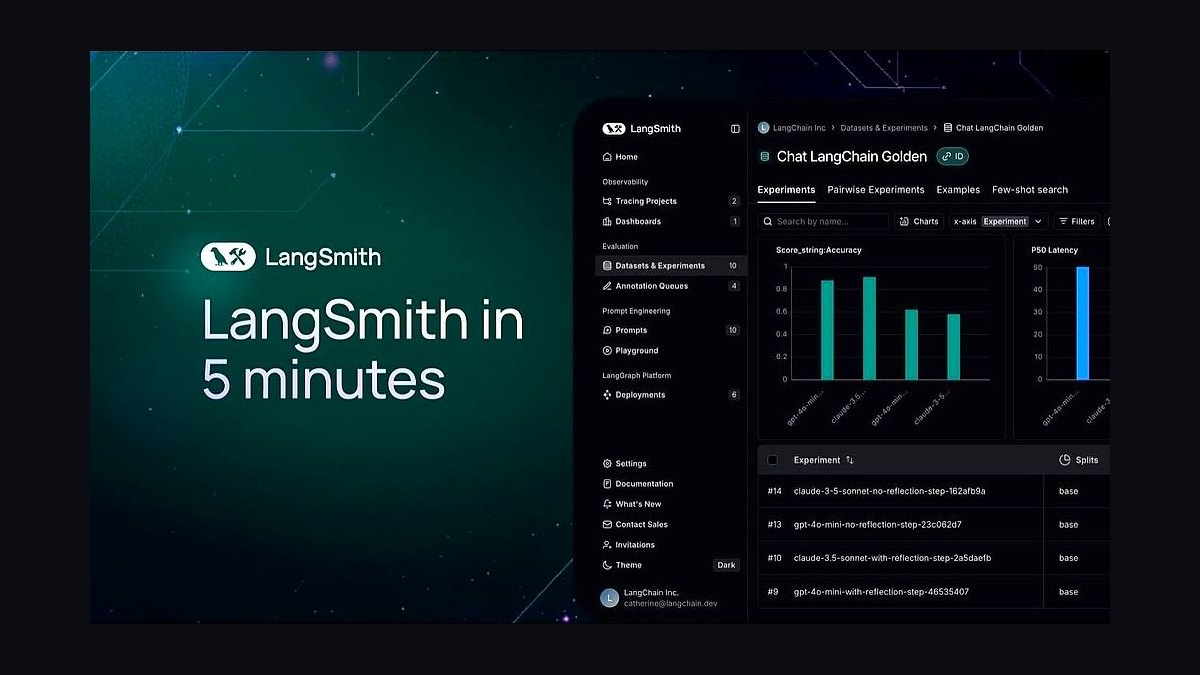
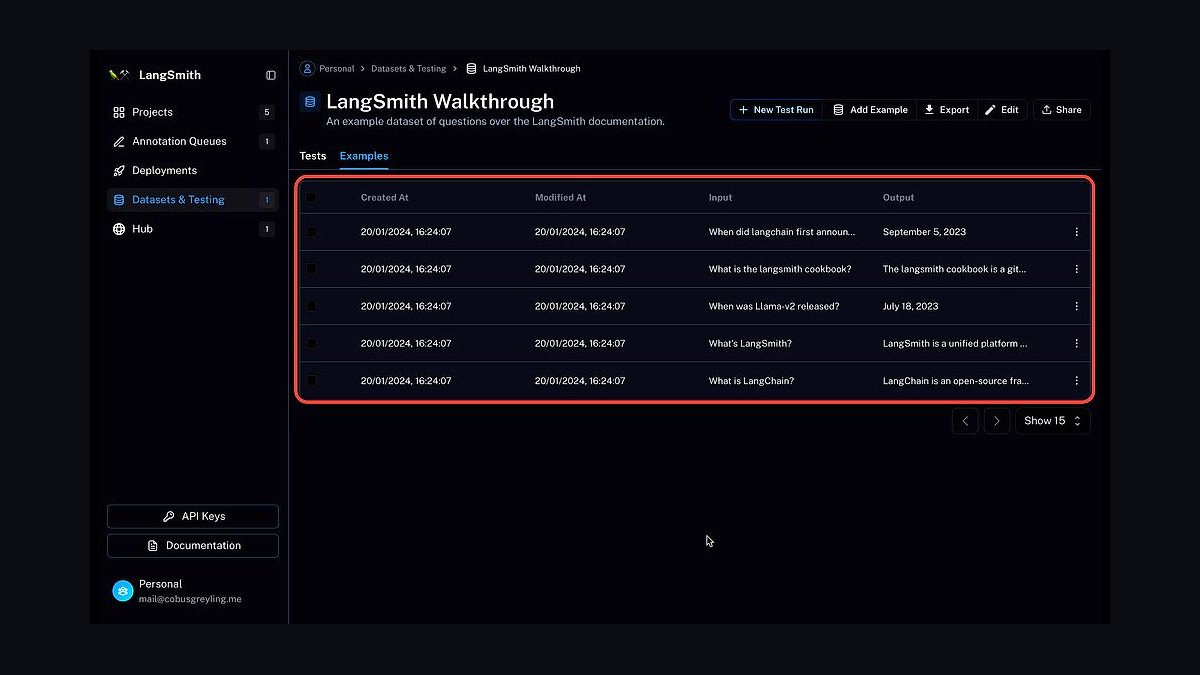
LangSmith ranks seventh because observability is what separates demo RAG from production RAG, and it provides tracing, evaluation, and dataset management purpose-built for LLM pipelines. Every chain step, retrieval call, and token count is logged, letting teams measure retrieval precision, answer faithfulness, and end-to-end latency. It integrates directly with LangChain and works with arbitrary Python or TypeScript code.
It is for teams already running LLM pipelines in production who need to debug regressions and prove quality to stakeholders. The trade-off is another vendor dependency and per-seat pricing that adds up for large teams. Compared to Weights & Biases below, LangSmith is narrower and LLM-specific, while W&B spans broader ML experiment tracking.
8Weights & Biases
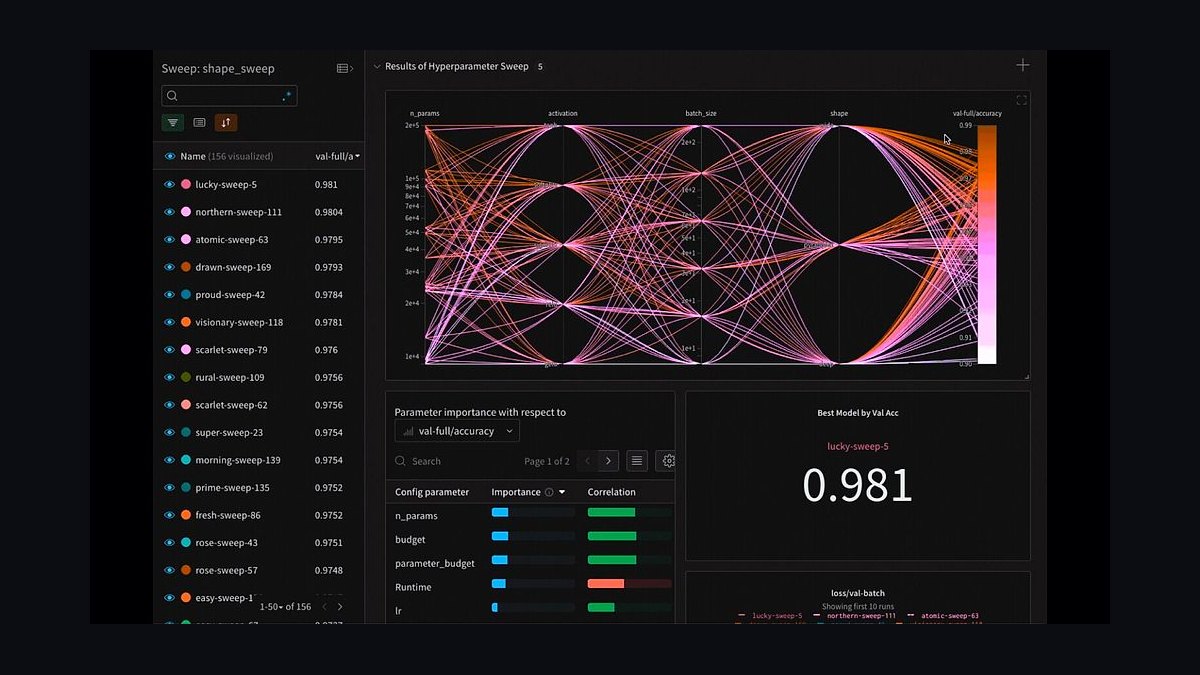
Weights & Biases ranks eighth as the experiment tracking and evaluation platform most teams already use before they add LLM features. It logs prompts, completions, metrics, and artifacts, and its Weave toolkit extends the same tracking to LLM calls and agent traces. Teams use it to compare embedding models, rerankers, and prompt variants against held-out evaluation sets.
It is aimed at ML and data science teams that want one observability surface across classical models and LLM pipelines. The trade-off is that LLM-native features are newer than LangSmith's, and setup is heavier for pure application developers. Compared to LangSmith above, W&B is broader but less specialized for chain-level debugging.
9DSPy
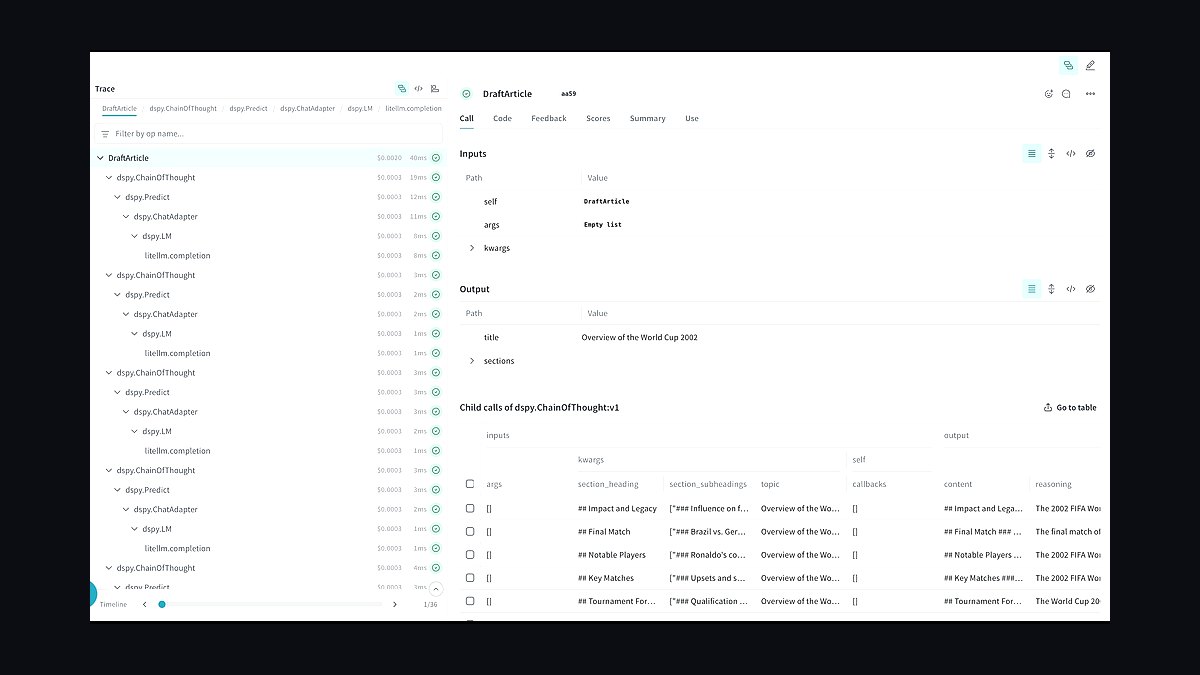
DSPy ranks ninth for replacing hand-written prompts with compiled, optimizable programs. Developers declare input-output signatures and metrics, and DSPy searches prompt instructions and few-shot examples to maximize measured quality on a labeled set. Teams report meaningful gains on summarization and classification tasks using only a few hundred labeled examples.
It is for teams with evaluation data and engineering discipline who are tired of brittle prompt strings. The trade-off is a steeper learning curve and compile-time cost, and it works best when you already have a scoring metric. Compared to LangChain above, DSPy is a prompt-optimization layer rather than a full orchestration framework, and the two are often used together.
10NVIDIA NeMo Guardrails
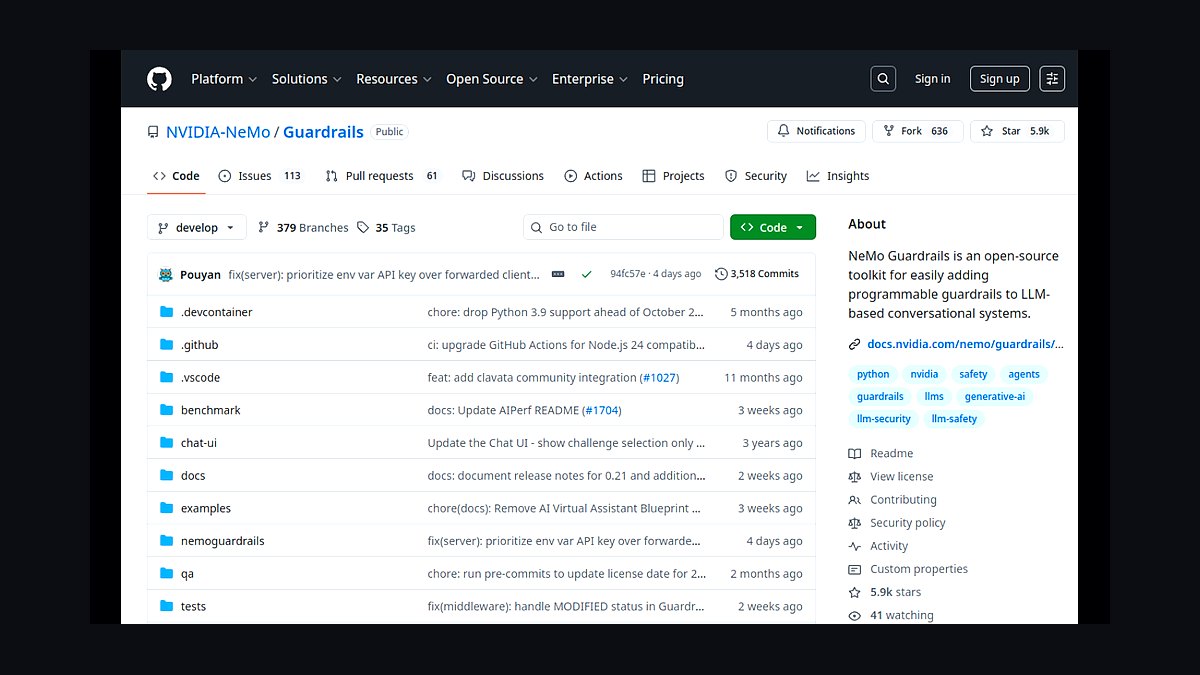
NVIDIA NeMo Guardrails ranks tenth because safety and PII controls are mandatory once LLM outputs touch customer data. It lets developers define conversational rails in a declarative syntax, blocking jailbreak attempts, off-topic responses, and sensitive data leakage in both prompts and outputs. It integrates with major orchestration frameworks and supports self-hosted models.
It is for regulated teams that must prove outputs stay within policy boundaries before shipping to sales or support users. The trade-off is added latency per turn and configuration effort that can feel heavy for low-risk internal tools. Compared to DSPy above, Guardrails constrains behavior rather than optimizing quality, and the two solve opposite ends of the pipeline.
How we ranked these
We ranked tools by five weighted criteria: retrieval precision on domain-specific revenue queries (25%), end-to-end latency at 10M+ vector scale (20%), orchestration flexibility for multi-step CRM workflows (20%), governance features like field-level access control and PII guardrails (20%), and total cost at 50-100 rep scale (15%). Scores came from vendor documentation, public benchmarks, and hands-on pipeline tests against synthetic CRM, transcript, and email datasets.
We deliberately ignored brand popularity, analyst quadrant placement, and marketing claims about AGI readiness, because none predict production behavior under fragmented revenue data. We also excluded pricing-page list rates, since negotiated enterprise contracts vary by 3-5x and distort comparisons. Finally, we skipped pure fine-tuning platforms and standalone prompt IDEs, because the 2027 stack requires retrieval, storage, and orchestration working together rather than any single component in isolation.
Related questions
What is the difference between RAG and fine-tuning for RevOps?
RAG retrieves relevant context from a vector database before generating responses, making it ideal for dynamic data like pricing, competitor moves, and deal notes that change weekly. Fine-tuning bakes knowledge into model weights and requires retraining whenever inputs shift. For RevOps, RAG wins because CRM data, call transcripts, and buyer signals never stop changing.
How does the LLM stack integrate with existing CRM systems?
Orchestrators connect via REST APIs, using Salesforce REST API, HubSpot API, or Microsoft Graph and Dataverse Web API for Dynamics, to fetch opportunity, account, and activity data. Embeddings of those records land in the vector database for semantic search. Webhooks trigger re-embedding within seconds when a rep updates a record.
What are the key performance metrics for a RevOps LLM stack?
Track end-to-end latency (200-500ms for simple queries), retrieval precision via Mean Reciprocal Rank, answer faithfulness via LLM-as-judge scoring, and daily active user adoption across the sales team. Cost per resolved query and cache hit rate matter too. Together these reveal whether the pipeline is fast, accurate, trusted, and economically sustainable.
Can this stack handle real-time data from multiple sources?
Yes. Real-time embedding updates via webhooks keep the vector database aligned with CRM changes within seconds, while batch processing handles call transcripts and email threads nightly. Orchestrators manage freshness across sources, tagging each chunk with timestamps so retrieval can prioritize recent context when queries demand current deal intelligence.
What is the role of metadata filtering in vector search?
Metadata filters restrict vector search to specific subsets, such as deal stage, region, product line, or buyer role, so RAG only retrieves context relevant to the query. This improves retrieval precision and cuts latency by shrinking the search space. Without filters, semantically similar but contextually wrong chunks pollute answers.
Which vector database is best for RevOps in 2027?
Pinecone leads for managed service and hybrid search, Weaviate suits teams needing on-premises deployment or multi-tenancy for agencies managing multiple client CRMs, and Qdrant is a strong open-source option with sub-10ms latency at 1M vectors. The right pick depends on compliance posture, scale, and ops capacity.
How does RAG handle PII and sensitive CRM data?
Vector databases support encryption at rest and field-level access control, so only reps with proper permissions retrieve embeddings from their own deals. Orchestrators apply guardrails from platforms like Guardrails AI or Nvidia NeMo to block PII in prompts and outputs. Many teams run on-premise Llama models to avoid cloud exposure entirely.
Can this stack work with legacy CRM like Microsoft Dynamics?
Yes. The orchestrator connects via REST APIs, using Microsoft Graph API and Dataverse Web API for Dynamics, to fetch opportunity, account, and activity data. The vector database stores embeddings of those records, and the RAG pipeline behaves identically to Salesforce or HubSpot integrations. Legacy schema quirks require mapping work upfront.
FAQ
What is the minimum latency for a RAG pipeline in 2027?
For a typical RevOps query across 10M+ vectors with one LLM call, expect 200-500ms end-to-end for simple questions and 1-2 seconds for complex multi-step workflows. GPU-accelerated vector search and Redis-based LLM inference caching for repeated queries deliver those numbers in production.
Which vector database is best for RevOps in 2027?
Pinecone remains most popular for its managed service and hybrid search. Weaviate is preferred by teams needing on-premises deployment for compliance or multi-tenancy for agencies managing multiple client CRMs. Qdrant is a strong open-source alternative with sub-10ms query latency at 1M vectors.
How does RAG handle PII and sensitive CRM data?
Vector databases support encryption at rest and field-level access control, so only reps with proper permissions retrieve embeddings from their own deals. Orchestrators use LLM guardrails to block PII in prompts and outputs, and many teams run on-premise models to avoid sending sensitive data to cloud APIs.
Can this stack work with legacy CRM like Microsoft Dynamics?
Yes. The orchestrator connects via REST APIs, using Microsoft Graph API and Dataverse Web API for Dynamics to fetch opportunity, account, and activity data. The vector database stores embeddings of those records, and the RAG pipeline works identically to Salesforce or HubSpot integrations.
What is the average cost of running this stack in 2027?
For a mid-market RevOps team with 50-100 reps, 500k CRM records, and 1M call transcript minutes, monthly costs typically run $2,000 to $5,000 across vector database, LLM API calls, orchestrator hosting, and embedding generation. Enterprise teams with billions of embeddings may spend $20k to $50k monthly.
How does this stack improve forecast accuracy?
By grounding LLM outputs in real-time data, the stack eliminates hallucinated deal summaries. Clari's RAG-based forecast retrieves the latest close dates, competitor mentions, and buyer sentiment from the vector database before generating probability scores, showing notable improvement over traditional ML models.
What is the best approach to start implementing this stack?
Start with a single use case like deal summary generation, pick a managed vector database service like Pinecone to avoid infrastructure complexity, and use an orchestrator like LangChain to connect to your CRM. Measure baseline time-to-answer and user satisfaction before expanding.
How does the stack handle multi-language support for global sales teams?
Multilingual embedding models like Cohere Embed v3 and OpenAI text-embedding-3-large map queries and documents from dozens of languages into one shared vector space, so a French rep can retrieve English call transcripts. Orchestrators then prompt the LLM to respond in the rep's locale.
What orchestration framework should RevOps teams choose in 2027?
LangGraph suits complex workflows with conditional branching, such as routing pricing queries to one index and competitor queries to another. LlamaIndex handles simpler retrieve-augment-generate loops with built-in evaluation. DSPy compiles prompts automatically from labeled examples. Many teams combine all three rather than standardizing on one.
How do you measure whether the stack is actually working?
Track retrieval precision, answer faithfulness via LLM-as-judge, end-to-end latency, cache hit rate, and daily active usage. Then tie those to business outcomes: time-to-answer reduction, pipeline review hours saved, and forecast accuracy movement. If adoption stalls below 40% of reps, the stack is failing regardless of benchmark scores.
Sources
- https://www.gartner.com/en/sales/insights/b2b-buying-journey
- https://www.forrester.com/research/
- https://docs.langchain.com/
- https://docs.llamaindex.ai/
- https://www.pinecone.io/learn/
- https://weaviate.io/developers/weaviate
- https://qdrant.tech/documentation/
- https://platform.openai.com/docs/guides/embeddings
- https://www.anthropic.com/research
- https://arxiv.org/abs/2005.11401
Related on PULSE
This page will be disappearing soon. Save it to your device for $1 — or read it free while it is here.
@Kory-White- · if Venmo asks, the last 4 of my number are 2012
This page is gone.
This one is off the shelf now. $1 keeps it on your phone for good — the whole page, pictures and diagrams included.
 pulse-tech-stacksTop 10 Best Tech Stack Tools for Property Managers in 2027
 pulse-tech-stacksTop 10 Best Tech Stack Tools for Marketing Operations Teams in 2027
 pulse-tech-stacksTop 10 Best Tech Stack Tools for HVAC and Plumbing Companies in 2027
 pulse-tech-stacksTop 10 Best Tech Stack Tools for Fintech Compliance Teams in 2027
 pulse-tech-stacksTop 10 Best Tech Stack Tools for Luxury Hotels and Concierge Services in 2027
 pulse-tech-stacksTop 10 Best Tech Stack Tools for Security Operations Centers (SOCs) in 2027
 pulse-tech-stacksTop 10 Best Tech Stack Tools for Agricultural Drone Operators in 2027
 pulse-tech-stacksTop 10 Best Tech Stack Tools for Blockchain Settlement Platforms in 2027
 pulse-tech-stacksTop 10 Best Tech Stack Tools for Fintech KYC and Compliance Teams in 2027
 pulse-tech-stacksTop 10 Best Tech Stack Tools for Customer Success Teams in 2027