


What is the best tech stack for a specialty coffee shop chain in 2027 compared to a standalone cafe in 2027?
Quality
Certified
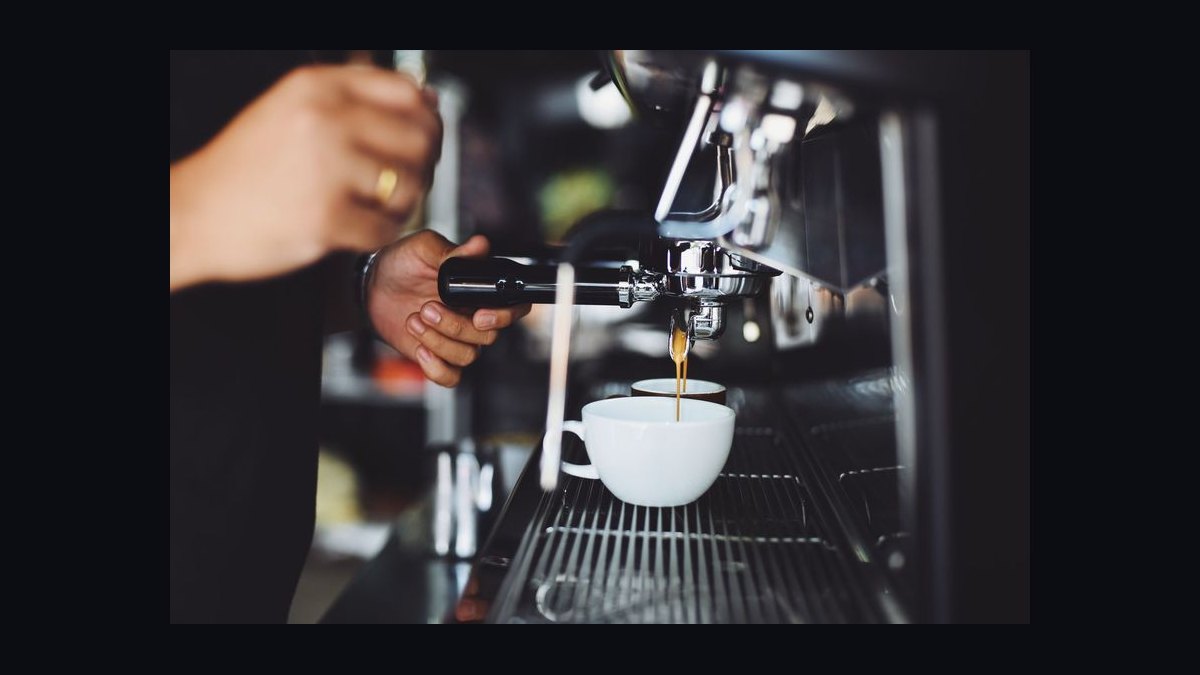
A specialty coffee shop chain in 2027 needs a multi-site platform: cloud POS with central menu and pricing control, cross-location inventory and recipe costing, unified loyalty, and integrated labor scheduling. A standalone cafe needs one modern tablet POS, basic counts, simple loyalty, and accounting sync. Chains buy consolidation and visibility; standalones buy simplicity and speed.
What a coffee tech stack actually is, and why the chain-versus-standalone split matters
Strip away vendor marketing and a coffee shop's technology stack is six functional layers stacked on each other. Point of sale is the transaction engine at the counter. Payment processing sits underneath it and is often bundled with it. Inventory and recipe management tracks what you bought, what you used, and what walked out the door. Ordering and fulfillment covers mobile app, kiosk, drive-thru, and third-party delivery. Customer data and loyalty remembers who your regulars are. Back office — labor scheduling, payroll, accounting, reporting — is where the money actually gets counted.
Every cafe runs all six layers. The question is never whether you have them. The question is whether each layer is a product you bought or a habit you perform. A standalone cafe running a clipboard for inventory and a spreadsheet for the schedule still has an inventory layer and a labor layer. They are just staffed by the owner's memory at 5:40 in the morning.
The reason a specialty chain and a standalone cafe end up with genuinely different stacks — not the same stack in different sizes — is that the chain has problems the standalone does not have at all. A standalone owner knows the espresso hopper is low because they can see it. A five-store chain cannot see any hopper. That owner needs a system that reports par levels per site, flags the store burning twice the milk per transaction as its neighbor, and lets them push a price change to all five registers at once instead of driving around on a Tuesday. The chain is buying visibility and control across distance. The standalone is buying speed at the counter and fewer hours doing paperwork after close.

There is a second structural difference that matters more in specialty than in commodity coffee: the supply chain. A specialty operator is often buying green coffee by the bag from a specific importer or farm relationship, roasting it themselves or through a partner roaster, and tracking lots, roast dates, and freshness windows. That is a manufacturing workflow bolted onto a retail business. Once you roast for more than one location — or you wholesale to other cafes — you need production tracking, lot traceability, and a wholesale ordering channel. None of that exists in a standard cafe POS. It is a different category of software entirely, and it is the single largest structural difference between a specialty chain stack and a standalone cafe stack.
The third difference is people. One cafe with eight baristas can be scheduled in a group chat. Five cafes with fifty baristas across shifting availability, minors with hour restrictions in some jurisdictions, tip pooling rules, and multi-store shift coverage cannot. Labor is typically the single largest controllable expense line in a cafe — often roughly a quarter to a third of revenue, with cost of goods sold in a similar band — so any tool that shaves a percentage point off labor while keeping service speed intact pays for itself many times over. That math justifies dedicated scheduling and labor-forecasting software at chain scale and almost never justifies it at one location.
Compared side by side, the honest summary is this: the standalone cafe's stack should be boring, cheap, and nearly invisible. The chain's stack should be opinionated about the middle layers — inventory, labor, and customer data — because those are the layers where a chain either compounds its advantage or quietly bleeds margin across every store at once.
A useful way to hold the distinction: the standalone is optimizing for the next eight hours of service, while the chain is optimizing for the next eight quarters of comparable data. Those are different products, sold by different vendors, priced on different models, and evaluated against different scorecards. Buying the chain product for a standalone store produces configuration debt. Buying the standalone product for a chain produces reporting blindness. Neither mistake shows up on day one; both show up around month four.
The step-by-step process for choosing and rolling out the stack

The sequence below works for both cases; the chain simply runs more of it, and runs it store by store.
Step one — write down the transaction shape before looking at a single vendor. Count your average daily transactions, your peak fifteen-minute volume, your percentage of mobile and pre-orders, whether you have a drive-thru, whether you serve food that needs a kitchen ticket, and whether you sell retail bags and brew gear. A cafe doing 250 tickets a day with a two-person bar and no food has a completely different requirement than one doing 700 with a drive-thru and a full kitchen. Vendors will sell you the same system for both. Do not let them.
Step two — pick the POS last, not first. This is the counterintuitive one. Most operators start by shopping POS because it is the visible piece. The POS is downstream of two decisions that constrain it far more: your payment processing economics and your integration requirements. Decide first whether you want processing bundled with your POS (simpler, one throat to choke, usually a blended rate) or separate (more negotiating leverage on rate, more integration work). Then list the systems the POS must talk to — accounting, scheduling, inventory, loyalty, online ordering, roasting production if you have it. Only then shortlist POS platforms that clear both bars.

Step three — model the payment cost, not the software cost. Card processing dwarfs software in almost every cafe. On a shop doing 40,000 dollars a month in card volume, a difference of a quarter of a percentage point in effective rate is roughly 100 dollars a month — which is often more than the POS subscription itself. Ask every vendor for the effective rate on your actual mix: high volume of small tickets under six dollars gets punished by per-transaction fixed fees far more than a restaurant with 60 dollar checks. A 4.75 dollar latte paying a fixed per-transaction component of 10 to 15 cents is losing two to three percent to that component alone, before the percentage rate.
Step four — pilot in one store for a full cycle. For a chain, this is non-negotiable. Run the new system in your highest-volume store, not your easiest one, for at least a full month covering a month-end close, a payroll run, an inventory count, and a real rush. Easy stores hide failure modes.
Step five — migrate data deliberately. Menu and modifier structure, loyalty balances, gift card liability, customer records, and historical sales. Gift card balances are a legal liability and the most common thing botched in a POS migration. Get an export in writing before you sign anything, and confirm the new vendor can import it.
Step six — train on the exception, not the happy path. Anyone can ring in a latte. Train on refunds, comps, split tips, voids after payment, a card reader that will not connect during a rush, and the offline mode behavior. Know before go-live exactly what happens when the internet drops: does the register keep taking cards offline, queue them, and settle later, or does it stop entirely? For a cafe on a single business cable line, that answer determines whether an outage costs you 40 minutes or a whole morning.

Step seven — instrument and review weekly for the first quarter. Speed of service, void rate, discount rate, waste, and labor as a percentage of sales, per store. If nobody looks at the reports, you did not buy a system — you bought a cash register with a subscription.
Step eight — stage the chain rollout, one wave at a time. Roughly one store per week or two, with a stabilization period before the next wave. Rolling out all locations on the same weekend is how chains end up with five simultaneously broken stores and no working reference site. Keep the pilot store as your internal help desk and your proof that the configuration works before you clone it.
Costs, timelines, and typical ranges
Treat every number below as a planning band, not a quote. Pricing in this category changes constantly, varies by region, and is heavily negotiated at multi-site volume. Get current quotes.
Standalone cafe. The realistic shape is one POS subscription in the low tens of dollars per month per register — sometimes free at the entry tier if you accept the bundled processing rate — plus hardware. Hardware for a single-register cafe typically means a terminal or tablet, a card reader, a cash drawer, and a receipt printer, which lands in the several hundred to low four figures range depending on whether you buy outright or finance through the vendor. Add an accounting subscription in the tens of dollars a month, and possibly a loyalty add-on. Many standalone operators reasonably run a total software spend under a couple hundred dollars a month and do inventory in a spreadsheet. That is not a failure of sophistication; it is correct sizing.
Specialty chain. Costs stop being per-register and start being per-location plus platform fees. Expect a POS subscription per location, an inventory and recipe-costing platform priced per location, a scheduling and labor platform priced per location or per employee, and possibly a separate loyalty or customer-data product. Multi-location operators commonly land in the several hundred to low four figures per month per location range across the full stack, before payments. The step change usually happens between roughly three and six locations, when the owner can no longer personally cover every store weekly and the cost of not knowing exceeds the cost of the software.

The payments line dominates. Effective card rates for card-present retail generally sit in the low-to-mid two percent range plus a fixed per-transaction component, though the true number depends on your card mix, ticket size, and pricing model. For a cafe, the fixed component is the killer because tickets are small. Run the arithmetic on your own average ticket rather than trusting a headline rate. At chain scale, processing volume is genuine leverage — a five-store operator has meaningfully more negotiating room than a single shop, and a tenth of a percent across a few million dollars in annual volume is real money.
Timelines. A standalone cafe can realistically switch POS in one to three weeks: a few days of menu building, a weekend of hardware setup, and a soft go-live on a slow morning. A chain should plan three to six months end to end — a month of requirements and demos, a month of pilot in one store, then a staged rollout of roughly one store per week or two, with a stabilization period before the next wave.
Hidden costs to budget for. Menu and modifier build-out is real labor — a specialty menu with milk alternatives, syrups, temperatures, and sizes explodes combinatorially and takes longer than anyone estimates. Add network hardening: a business-grade connection with a cellular failover for the registers is cheap insurance. Add hardware spares — one dead card reader on a Saturday is a very expensive 30 dollars saved. Add training hours at real wage rates across every barista, and re-training as turnover cycles through, which in food service is high.
A worked comparison. A standalone doing 30,000 dollars a month in card volume at an effective 2.6 percent pays roughly 780 dollars monthly in processing and maybe 150 dollars in software — payments are five times the software line. A five-store chain doing 150,000 dollars a month at a negotiated 2.3 percent pays roughly 3,450 dollars in processing and perhaps 1,500 to 2,500 dollars in software across all locations. The chain's software line is bigger in absolute terms, but as a share of revenue it is still the smaller lever. Negotiate payments first, software second, and never in the reverse order.
Where teams get it wrong

Buying the enterprise platform at two locations. The most common expensive mistake. A two-store operator signs a multi-year contract for a platform designed for fifty stores, pays for modules nobody opens, and spends a year fighting configuration complexity instead of pulling shots. Buy for the store count you will have in eighteen months, not the one on your vision board.
Buying nothing until store five. The opposite error, and just as costly. The operator who runs five stores on five disconnected registers and a shared spreadsheet has no consolidated view, cannot compare store performance on a common basis, and discovers a theft or waste problem months late. The transition should be planned before it becomes urgent.
Ignoring the specialty-specific supply chain. A specialty operator who buys a general restaurant stack and then discovers it cannot track green coffee lots, roast batches, roast dates, or wholesale orders ends up running a parallel spreadsheet forever. If roasting is part of the business — even a small in-house roaster — that requirement belongs in the shortlist criteria from day one, not as a later bolt-on.
Treating loyalty as a discount program. A punch card gives away free coffee. A customer data platform tells you which regulars have stopped coming, what your top decile spends, and whether the new store is stealing traffic from the old one or growing the market. If your loyalty tool cannot answer the second set of questions, it is a coupon system with an app.
Letting each store customize the menu. For a chain, this quietly destroys reporting. If store three calls it "Lg Oat Latte" and store one calls it "Oat Latte L", you cannot compare anything. Central menu control exists precisely to prevent this, and undermining it is how chains lose their most valuable asset — comparable data across sites.

Underestimating offline mode and network fragility. Cafes are frequently in old buildings with marginal connectivity. Test what actually happens when the connection drops, at the counter, before go-live.
Skipping the integration test between POS and payroll. Tips, especially pooled tips across shifts and locations, are where cafe payroll goes wrong. Confirm the tip data actually flows and reconciles before the first payroll run, not after.
Chasing every ordering channel at once. Mobile app, kiosk, drive-thru, and multiple delivery marketplaces all at once will break your bar. Sequence them, and measure ticket times after each addition. A drink ordered on an app that sits on the counter for eleven minutes is worse for the brand than no app at all.
Letting the vendor own your data. If you cannot export sales history, customer records, and loyalty balances in a usable format on demand, you do not own your business data — you rent access to it. Read the export clause before the pricing page.
Decision framework: when to choose what
The clean way to think about this is by counting decision points rather than store count alone. Ask three questions: Can the owner physically observe every store weekly? Is anything being produced — roasted, baked, wholesaled — rather than just sold? Do customers cross between locations?
If all three answers are no, you are a standalone in every meaningful sense, even if you technically have two units next door to each other, and you should stay on the simple lane. One modern cloud POS with bundled payments, a spreadsheet or lightweight inventory tool, an accounting sync, and a simple loyalty program. Resist everything else. Your competitive advantage is coffee quality and the person behind the bar, and every hour spent configuring software is an hour not spent on either.

If any of the three answers is yes, you have crossed into platform territory. Prioritize in this order: multi-site reporting and central menu control first, because without a common data spine nothing else compares; inventory and recipe costing second, because that is where margin silently leaks; labor scheduling third, because it is the largest controllable expense; loyalty and customer data fourth, because it compounds slowly but compounds; and production or wholesale tracking whenever roasting enters the picture, which for a specialty operator is often earlier than expected.
A useful adjacent comparison: this same logic governs bakeries, juice bars, and fast-casual concepts, and the inflection point is nearly identical. It is not the store count that changes the stack — it is the moment the owner stops being the sensor network. Upstream, it also changes what you should be negotiating: at one store you negotiate nothing and take the published rate; at five you negotiate processing; at fifteen you negotiate the platform contract itself.
One more practical rule: prefer fewer systems that integrate natively over best-in-class components that require middleware. Every integration is a thing that breaks on a Saturday morning. A slightly weaker inventory module that ships inside your POS platform and shares one customer record is frequently a better operational outcome than a superior standalone product connected by a fragile sync.
For the specialty chain specifically, add a fourth question to the framework: does the business roast, or does it plan to within twenty-four months? A yes there pulls production tracking, lot traceability, and a wholesale ordering channel into scope immediately, and those requirements should shape the POS shortlist rather than arriving as a bolt-on after the contract is signed. A standalone that buys roasted coffee from a partner roaster can defer that entire category indefinitely.
Related questions
Should a two-location cafe run one POS account or two?
One account with two locations configured inside it, almost always. Separate accounts destroy consolidated reporting and force duplicate menu maintenance immediately. Configure locations properly from the start — retrofitting a merge later is painful and often means rebuilding menus.
Do I need inventory software or is a spreadsheet fine?
A spreadsheet is genuinely fine for one location with a disciplined weekly count. It stops being fine when you cannot personally verify counts, when recipe costing across many modifiers matters, or when you are tracking green coffee lots and roast dates.
Is bundled payment processing worse than a separate processor?
Not automatically. Bundled is simpler and often competitive at low volume. Separate processing gains real leverage as volume grows, roughly once you are pushing meaningful annual card volume. Always compare effective rate on your actual ticket mix, not headline rates.
How much should software cost as a percentage of revenue?
There is no universal benchmark, and be skeptical of anyone quoting one. Practically, if your total software spend meaningfully exceeds a low single-digit percentage of revenue, scrutinize which tools are actually being used weekly.
What breaks first when a cafe chain grows fast?
Usually inventory accuracy and labor scheduling, in that order. Both degrade quietly. Sales reporting looks fine while cost of goods and labor percentages drift, and the problem surfaces in the monthly close rather than at the counter.
FAQ
What is the single most important system in a cafe stack?
The POS, because everything else reads from it. It captures every transaction, feeds accounting, feeds labor reporting, and holds the customer record. A weak POS makes every downstream system weaker. That is exactly why you should shortlist it against your integration requirements rather than buying it on the demo experience alone.

Can a standalone cafe skip loyalty entirely?
Yes, and many excellent ones do. A neighborhood cafe where the barista knows names has a loyalty system that no app matches. Loyalty software earns its keep when you have more customers than you can remember, or when you need data to decide where to open next.
When does roasting production software become necessary?
Roughly when you are roasting for more than your own single counter — a second cafe, wholesale accounts, or online retail. At that point you need lot tracking, roast batch records, roast dates for freshness, and an ordering channel for wholesale customers. Before that, a well-kept log works.
How do I compare vendors fairly?
Build one scenario and make every vendor price it: your exact store count, register count, average ticket, monthly card volume, and required integrations. Ask for the effective payment rate on that volume, the total monthly subscription including every module you need, and the contract length. Ranked side by side, the differences get obvious fast.
What should I do about offline mode?
Test it deliberately before go-live. Unplug the network during a quiet hour and try to complete a card sale, a refund, and a loyalty lookup. Know exactly which of those work and which fail, tell your staff, and write the fallback procedure on a card taped near the register.
Is it worth switching systems mid-growth?
Switching is cheapest when you are smallest, and gets more expensive with every location and every year of history. If you know your current system will not carry you to your next few stores, switch now rather than after opening them. Migrating three stores is hard; migrating eight is a project.
Sources
- https://sca.coffee/ — Specialty Coffee Association
- https://www.scanews.coffee/ — Specialty Coffee Association news and industry reporting
- https://www.dailycoffeenews.com/ — Daily Coffee News, specialty coffee trade coverage
- https://www.nra.org/ — National Restaurant Association industry research
- https://www.bls.gov/oes/current/oes351011.htm — Bureau of Labor Statistics wage data for food and beverage serving workers
- https://www.sba.gov/business-guide — U.S. Small Business Administration business planning guidance
- https://www.federalreserve.gov/paymentsystems.htm — Federal Reserve payment systems research
- https://www.nist.gov/cyberframework — NIST Cybersecurity Framework, relevant to payment and POS security posture
Related on PULSE
- Best POS system for a small retail business
- How to calculate labor cost percentage in a restaurant
- Inventory management for multi-location food businesses
- Loyalty program ROI for small business
- How to negotiate credit card processing rates
- Multi-location reporting for franchise operators
This page will be disappearing soon. Save it to your device for $1 — or read it free while it is here.
@Kory-White- · if Venmo asks, the last 4 of my number are 2012
This page is gone.
This one is off the shelf now. $1 keeps it on your phone for good — the whole page, pictures and diagrams included.
 pulse-tech-stacksWhat is the best tech stack for an art gallery in 2027?
 pulse-tech-stacksWhat is the best tech stack for a community bank in 2027?
 pulse-tech-stacksWhat is the best tech stack for a courier or last-mile delivery company in 2027?
 pulse-tech-stacksWhat is the best tech stack for a glass and glazing contractor in 2027?
 pulse-tech-stacksWhat is the best tech stack for a financial advisory or RIA wealth management firm in 2027?
 pulse-tech-stacksWhat is the best tech stack for a clinical research site in 2027?
 pulse-tech-stacksWhat is the best tech stack for a marina operator in 2027?
 pulse-tech-stacksWhat is the recommended Fraud Detection and AML Software vendor sales and operations tech stack in 2027?
 pulse-tech-stacksWhat is the best tech stack for an accounting or CPA firm in 2027?
 pulse-tech-stacksWhat is the complete software stack for a self storage facility in 2027?