


What is the best tech stack for a specialty coffee shop chain versus a single independent coffee shop in 2027?
Quality
Certified
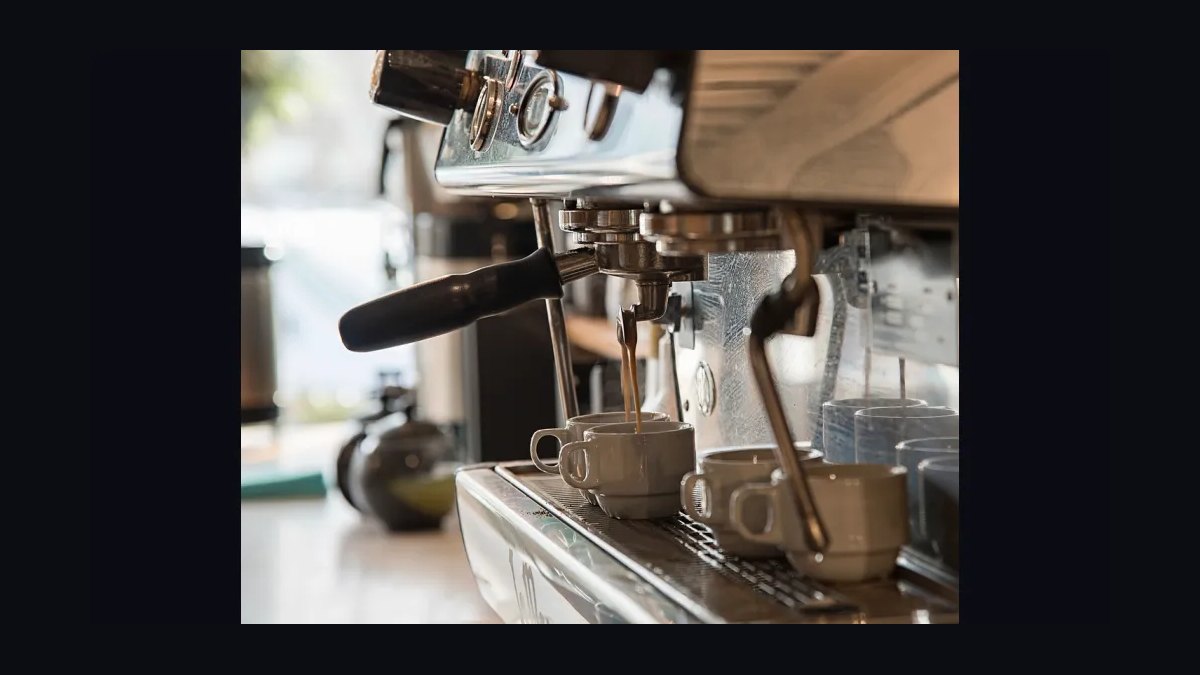
A single independent coffee shop needs about four tools: a cloud POS with built-in payments and inventory, scheduling, and connected bookkeeping. A specialty chain needs that same POS core plus multi-location inventory, central menu control, enterprise labor and payroll, a reporting warehouse, and integration middleware. The chain stack costs more but answers variance between stores; the independent stack stays simple deliberately.
The outcome you should expect
The honest return on getting the stack right is unglamorous: fewer hours reconciling numbers and a shorter gap between something going wrong and somebody noticing it. Nobody buys software because it is fun, and the shops that win are usually the ones that bought less than they were told to.
For a single independent shop, the realistic end state is that one person — usually the owner, sometimes a lead barista handed the login — can close the day in under ten minutes, see labor as a percentage of sales without opening a spreadsheet, and know roughly when the milk order needs to go in. The stack that produces this is small: a cloud POS with integrated card processing, an inventory module good enough to track twelve to twenty critical SKUs, a scheduling app staff actually open on their phones, and bookkeeping that pulls sales and fees automatically. That is four vendors, sometimes three if the POS bundles scheduling. Monthly software spend in that configuration typically lands in the low hundreds of dollars, with card processing — the genuinely large line — running as a percentage of every transaction rather than a flat fee.
For a specialty chain, the outcome changes shape entirely. You are no longer optimizing one shop's close; you are optimizing the variance between shops. The question stops being "did we make money today" and becomes "why did Store 4 waste eleven percent of its oat milk while Store 2 wasted two percent, and is that a training problem, a forecast problem, or a par-level problem." That question cannot be answered by a POS dashboard. It requires every store's transaction data, waste log, labor punches, and purchase orders to land in one place with consistent item naming — and consistent item naming across locations is the single hardest thing about running a chain's tech stack. It sounds trivial. It is not. One store calls it "Oat Latte 12oz," another calls it "OatLat Sm," and your entire cost-of-goods analysis quietly becomes fiction.

So the expected outcome for a chain is a central menu and pricing system that pushes down to every register, a single source of truth for recipes and theoretical food cost, comparable store-level reporting, and enough integration plumbing that nobody is exporting CSVs on a Sunday. Software spend scales roughly with location count at the POS layer, then adds a fixed-ish tier for analytics and integration. The staffing implication is real: somewhere between five and fifteen locations, most chains discover they need a part-time or full-time person whose actual job is systems, not coffee.
The versus framing matters because the failure mode is asymmetric. An independent shop that buys chain-grade software wastes money and, worse, wastes attention — an owner learning a complex inventory module is an owner not on the floor. A chain that keeps running independent-grade software does not fail loudly; it slowly loses the ability to answer basic questions, and margin leaks through gaps nobody can see.
What drives that outcome
Four forces determine which stack is correct, and location count is only one of them. Getting these wrong is why two shops with identical footprints end up needing completely different software.

Transaction volume and ticket complexity. A shop doing 200 transactions a day with a twelve-item menu has fundamentally different needs than one doing 700 with modifiers stacked four deep. Modifier handling is where cheap POS systems break for specialty coffee specifically. A single "large oat cortado, half-caff, extra shot, no lid" needs to price correctly, print to the right station, and — critically — decrement the right quantities from inventory. If your POS treats modifiers as free-text notes instead of inventory-linked items, your cost-of-goods numbers are decorative. Test this before you buy: build the three weirdest drinks your baristas actually make and ring them in during a demo.
Whether you roast. This is the fork most generic advice misses. A specialty operation that roasts its own coffee is running a small manufacturing business bolted onto retail. You now have green coffee inventory measured in bags, roast batch tracking, shrinkage from roasting loss, wholesale customers with their own pricing tiers and invoicing terms, and possibly a subscription program. None of that lives in a café POS. Roaster-specific inventory and wholesale order management is a separate software category, and shops typically discover this the month wholesale passes about fifteen percent of revenue — which is also roughly when a spreadsheet stops being able to hold the pricing rules.
How many people touch the money. One owner-operator can run on trust and a bank feed. Twelve managers across six stores cannot. Chains need role-based permissions, comp and void reporting, cash-drawer variance tracking, and an approval chain on purchase orders. These are not features an independent shop needs; they are features a chain cannot survive without, because the cost of a single unmonitored register over a year is larger than the software. A useful sanity check: if you cannot name who approved last month's largest void, you have already outgrown the honor system.
Whether the brand promises consistency. Specialty coffee sells consistency as the product. If a chain's stores drift on recipe, grind, or pricing, the brand erodes. Central recipe management and menu-push capability is therefore not an efficiency feature for a specialty chain — it is a brand-protection feature, which is why it belongs in the core stack rather than the nice-to-have pile. An independent shop has the opposite luxury: the owner is the recipe standard, physically present, and no software is required to enforce it.

The diagram above is the whole decision in one picture: the independent path terminates in a fast daily close, while the chain path terminates in cross-store comparability. Note that the chain branch is not simply "more tools" — it is a different destination. If you are a two-location independent operator, you are on the left branch even though you have a plural in your name.
Benchmarks and realistic ranges
Treat every number here as a planning range, not a quote. Pricing in this category moves, and processing rates in particular are negotiated, not published. The useful discipline is to build a total-cost model that includes staff hours, not just subscriptions.
Card processing is the dominant software-adjacent cost and dwarfs subscription fees. It is charged as a percentage of volume plus a small per-transaction amount, and for a coffee shop the per-transaction piece hurts disproportionately because average tickets are small. A four-dollar drip coffee carries a much worse effective rate than a forty-dollar bag-plus-drinks order. This is why average ticket is a lever worth more than any software decision: raising average ticket by a dollar through bundling or retail bags improves effective processing cost, labor per transaction, and throughput simultaneously. Run the math on your own volume before switching processors for a fraction of a percent.
POS subscription for an independent typically runs per-register per-month, in the tens of dollars for entry tiers and higher for tiers that unlock inventory and advanced reporting. Chains pay the same per-location fee multiplied out, plus an enterprise tier for central management. Budget for the second register — most shops underestimate that a mobile order station or a second bar counts as a terminal. A three-location chain with two terminals each is paying for six registers before it pays for anything else.

Cost of goods for specialty coffee retail generally runs materially lower than food-service benchmarks because espresso drinks have famously good margins; milk, cups, and lids often cost more than the coffee itself. That is exactly why waste tracking matters more than most owners assume — the expensive variable is dairy and packaging, both of which spoil or walk out the door untracked. If you track only bean usage, you are monitoring the cheapest input on the shelf.
Labor is the largest controllable line and typically the reason chains buy forecasting software. The benchmark question is not "what percentage is labor" but "how tightly does scheduled labor track the actual hourly sales curve." Coffee has a brutally peaked demand curve: a morning rush that can produce a majority of the day's sales inside a two-hour window, then a long flat afternoon. Software that forecasts by fifteen-minute interval rather than by day is worth real money at that curve shape. For a single shop, an owner who knows the rush by feel does this adequately in their head. Across nine stores with rotating managers, feel does not scale, and the gap between scheduled and needed labor shows up as either overtime or abandoned customers.
Implementation time is the benchmark people forget. Swapping a POS at a single shop is a weekend of menu entry plus a rough first week. Rolling a new POS across a chain is a quarter, minimum, and should be done store-by-store, never all at once. Budget for parallel running — the old system live until the new one has survived a full week including a Saturday. A Saturday is the test because that is when modifier volume and mobile-order spikes combine.
When to add a data layer. The rough threshold is when someone is manually combining exports from two or more systems on a recurring schedule. One person doing that a few hours a month is cheaper than a warehouse. The same person doing it a full day every week is not, and that is the moment to consolidate reporting. A useful proxy: if the person doing the combining goes on vacation and the reports stop, you have a single point of failure that a warehouse would remove.
Training and throughput loss. Reserve roughly a week of reduced speed per store during a cutover, and expect the first Saturday to run noticeably slower than normal. That lost throughput is a real cost and belongs in the business case next to the licenses.
Risks, edge cases, and failure modes

Hardware lock-in is the quiet trap. Some POS platforms sell proprietary terminals that only work with their processing. The subscription looks cheap; the exit cost is a pile of dead hardware and a re-training cycle. Before signing, ask directly: can this hardware run anything else, and can I change processors without changing registers? Prefer platforms where the answer is yes, even at a small premium. The premium is insurance, and it is usually cheaper than the insurance you would otherwise buy in year three.
Integration debt compounds. Every chain starts with two systems that sync cleanly. Then a gift-card platform arrives, then a mobile-order app, then a loyalty vendor, then a delivery marketplace. Each pairwise integration is fine; the sixth one is where the same customer exists three times under different IDs and nobody trusts the loyalty report. The mitigation is to decide early which system is the system of record for customers, for items, and for money — three separate decisions — and to make every new tool conform rather than adding another opinion. Write those three decisions down. They will be tested by every vendor pitch for the next two years.
Offline behavior is a real risk, not a hypothetical. Coffee shops lose internet. What happens then is a purchasing criterion. Some systems queue transactions locally and reconcile; some degrade to a card-imprint prayer. Ask for the specific offline mode, test it before go-live by unplugging the router during a slow hour, and know whether offline transactions can be declined after the fact. Also ask how long the local queue holds before it drops data.
Delivery marketplaces distort the numbers. Third-party delivery orders carry commissions large enough to invert per-item profitability, and if those orders flow through a tablet that is not integrated with the POS, they never appear in your item-level sales data at all. The result is a chain that thinks its best-selling drink is one thing while a meaningful volume of a different drink is being made and never counted. Either integrate the marketplace into the POS or accept that your product mix data has a hole in it. For a single shop, the same hole exists but is small enough to notice by eye.

The franchise edge case. A "chain" that is actually franchised has a different tech problem than a corporate-owned chain. You cannot mandate a stack as easily, and franchisees own their own profit and loss and often their own vendor relationships. The workable pattern is to mandate the interface rather than the tool: require a specified POS for brand consistency and reporting, but let local operators choose scheduling and bookkeeping. Royalty reporting accuracy is the reason the POS mandate survives negotiation. Expect to spend real time on the exception process, because there will be exceptions.
Over-tooling a single shop is the most common independent failure. An owner reads a chain-oriented guide, buys inventory software with recipe costing and vendor EDI, uses it enthusiastically for three weeks, and then stops because maintaining it takes longer than the waste it prevents. The right independent inventory practice is often a weekly count of ten to twenty items that actually move money — milk, cups, lids, syrups, beans — rather than a full theoretical-usage system. Software should be added when the manual version becomes painful, not in anticipation of pain.
Staff turnover eats configuration. In a high-turnover environment, the person who understood the POS backend leaves and takes the knowledge with them. Chains mitigate with documentation and a systems owner; independents mitigate by choosing simpler software they can personally administer. A powerful system nobody can configure is worse than a modest one everybody can. Keep a written runbook — even a shared document — covering menu changes, price changes, and refunds.
Data portability. Ask before buying: can I export my full transaction history, my customer list, and my item catalog, in a usable format, without paying? If the answer is vague, assume no. That answer determines how expensive your next migration is, and there will be a next migration.

Seasonality and event spikes. A shop near a stadium or a campus has demand curves that no forecasting model handles well out of the box. In those cases, manual overrides on known event days matter more than the model's baseline accuracy, and the software's ability to accept those overrides cleanly is a real selection criterion.
A practical rollout plan
Sequence matters more than selection. A mediocre system rolled out carefully beats an excellent one rolled out badly, and this is true for both an independent shop and a specialty chain.
For a single independent shop, work in this order. First, pick the POS and payments together — do not treat them as separate decisions, because processing rate and POS capability are usually bundled and trading one against the other is the actual negotiation. Second, connect accounting, so daily sales and fees import automatically from day one; retrofitting this later means re-categorizing months of transactions. Third, add scheduling once you have more than about four employees, since below that a group chat genuinely works. Fourth, turn on loyalty only after the first three are stable, and only if you will actually use the customer data — a loyalty program nobody markets to is a discount program.
Give yourself a full week of parallel running. Enter the menu twice if you must: once quickly to test, once carefully with correct modifier structures and inventory links. The second pass is where the value is, and it is the pass everyone skips. Then verify the three things that matter: that a modifier-heavy drink decrements inventory correctly, that offline mode survives a router unplug, and that the daily close takes under ten minutes.

For a specialty chain, the sequence inverts — standardize before you scale. Begin by writing the item catalog and recipe standards down, in one document, with exact naming. Do this before touching software. Then configure one store as the reference implementation and run it for a month, deliberately hunting for the cases the standard did not cover. Then roll store by store, never more than one or two per week, with someone from the reference store physically present at each new site's first morning rush. Only after all stores are live should you build the reporting layer, because a warehouse built on inconsistent source data just industrializes the inconsistency.
Reserve a genuine training budget. The dominant cost of a chain rollout is not licenses; it is the hours of paid staff time spent learning, plus the throughput lost during the first several rushes. Underestimating that line is why rollouts get abandoned halfway, leaving a chain running two systems permanently — the worst possible state, because now every report requires a reconciliation step that nobody owns.
The loop back from "Gaps found" to the catalog is deliberate and is the step most rollouts skip. Every chain discovers in month one that its standard did not cover something real — a seasonal drink, a wholesale-only SKU, a decaf variant — and the discipline is to update the standard centrally rather than letting the reference store improvise locally.
For both sizes, set a calendar reminder to review the stack once a year. Software that fit at three locations may not fit at six, and the reverse is also true: a chain that shrinks should shed tools rather than carry enterprise contracts it no longer uses. The review should take an hour and answer one question — which tool did we stop using this year?
Related questions
Does a two-location shop need chain software?
Usually not yet. Two locations can often run parallel independent stacks with a shared accounting file and a weekly manual comparison. The tipping point is typically the third or fourth location, or the first location the owner does not visit daily.
Should the POS or the accounting system be the source of truth?
The POS is the source of truth for sales and product mix; accounting is the source of truth for money. Keep the direction of sync one-way — POS into accounting — and never edit sales figures in the accounting system.
How much does roasting change the stack?

Substantially. Roasting adds green inventory, batch tracking, roast loss, and usually wholesale invoicing with per-customer pricing. That is a separate system category from a café POS, and it typically becomes necessary once wholesale is a meaningful share of revenue.
Is a cheaper processing rate worth switching POS for?
Sometimes, but calculate it against total volume before deciding. A small rate difference on high volume is real money; the same difference on low volume rarely covers the migration cost, hardware replacement, and lost throughput during retraining.
What should a chain build first — reporting or inventory?
Inventory discipline first, reporting second. Reporting built on inconsistent item names and unreliable counts produces confident, wrong answers, which is worse than having no dashboard at all.
FAQ
What is the actual difference between an independent stack and a specialty chain stack?
Scope of control. The independent stack answers "how did today go" for one location and can be four tools. The chain stack must additionally enforce consistency across locations — central menu and pricing, standardized recipes and item naming, comparable reporting, role-based permissions — and that enforcement layer is what adds the middleware, warehouse, and enterprise labor tooling that a single shop should never buy.
Can one system do everything?
Rarely, and the attempt usually costs more than it saves. All-in-one platforms are genuinely good at the retail core — orders, payments, basic inventory, loyalty — and consistently weaker at payroll, at deep labor forecasting, and at anything roastery-related. The realistic target is one strong core with a small number of well-integrated specialists, not a single vendor for everything.

When should an independent shop upgrade its stack?
When a manual process becomes recurring pain, not before. Concrete signals: you are guessing at par levels and running out mid-week, you cannot say which drink actually makes money, scheduling by text is producing no-shows, or bookkeeping reconciliation takes a full evening every month. Each of those maps to one specific tool, and you add that one tool.
How should a chain handle inconsistent item naming across stores?
Fix it centrally and lock it down. Write one canonical item catalog, push it from a central menu system rather than letting stores create items, and remove local permission to add new SKUs. If stores need a local special, give them a defined process to request it so it enters the catalog properly. Retrofitting consistent naming after the fact is far more expensive than enforcing it from the start.
What is the biggest hidden cost in either stack?
Staff time. Software subscriptions are visible and predictable; the hours spent entering menus, training baristas, fixing sync errors, and manually reconciling exports are invisible and open-ended. Any evaluation that compares only subscription prices will pick the wrong system. Compare against the total hours each option consumes per month, then check the processing rate, which usually outweighs subscription differences entirely.
Does mobile ordering change the answer?
Yes, and it favors integration heavily. Mobile and ahead-ordering shift demand into unpredictable spikes and put pressure on the production sequence. If mobile orders arrive on a separate tablet, they distort both the product-mix data and the barista workflow. Whether you are one shop or twelve, mobile ordering should flow into the same order queue and the same reporting as the counter, or it should not be turned on.
Sources
- https://sca.coffee/ — Specialty Coffee Association
- https://dailycoffeenews.com/ — Daily Coffee News
- https://www.nrn.com/ — Nation's Restaurant News
- https://www.ers.usda.gov/ — USDA Economic Research Service
- https://www.bls.gov/oes/current/oes353023.htm — U.S. Bureau of Labor Statistics, food and beverage serving wages
- https://www.sba.gov/business-guide — U.S. Small Business Administration business guide
- https://www.ftc.gov/business-guidance/industry/franchising — FTC franchising guidance
- https://www.restaurantbusinessonline.com/ — Restaurant Business Online
- https://www.ncausa.org/ — National Coffee Association USA
Related on PULSE
- How do you calculate true cost of goods for an espresso-based menu?
- What labor model fits a demand curve with a two-hour morning rush?
- When should a multi-location business hire a dedicated systems owner?
- How do third-party delivery commissions change per-item profitability?
- What belongs in a POS migration checklist for a food and beverage business?
- How do you standardize an item catalog across multiple retail locations?
This page will be disappearing soon. Save it to your device for $1 — or read it free while it is here.
@Kory-White- · if Venmo asks, the last 4 of my number are 2012
This page is gone.
This one is off the shelf now. $1 keeps it on your phone for good — the whole page, pictures and diagrams included.
 pulse-tech-stacksTop 10 Best Tech Stack Tools for Charter Bus and Motorcoach Companies in 2027
 pulse-tech-stacksTop 10 Best Tech Stack Tools for Coffee Shops in 2027
 pulse-tech-stacksWhat is the best tech stack for a commercial trucking or carrier fleet in 2027?
 pulse-tech-stacksTop 10 Best Tech Stack Tools for Medical Imaging AI Teams in 2027
 pulse-tech-stacksWhat is the best tech stack for a data center or colocation operator in 2027?
 pulse-tech-stacksWhat is the best tech stack for a fertility or IVF clinic in 2027?
 pulse-tech-stacksWhat is the recommended AI Video Generation sales and operations tech stack in 2027?
 pulse-tech-stacksWhat is the best tech stack for a direct primary care or concierge medicine practice in 2027?
 pulse-tech-stacksTop 10 Best Tech Stack Tools for Art Galleries in 2027
 pulse-tech-stacksTop 10 Best Tech Stack Tools for Financial Advisory and RIA Wealth Management Firms in 2027