


Top 10 Best Tech Stack Tools for Multi-Location Retail Franchises in 2027
Quality
Certified
The 10 best tech stack tools for multi-location retail franchises are ranked below on measured performance, build quality, price, and how each one actually holds up in daily use rather than how it reads on a spec sheet. Each pick lists what it costs, who it suits, and what it gives up against the one above it, so the list can be read straight down without doubling back.
1Square for Retail

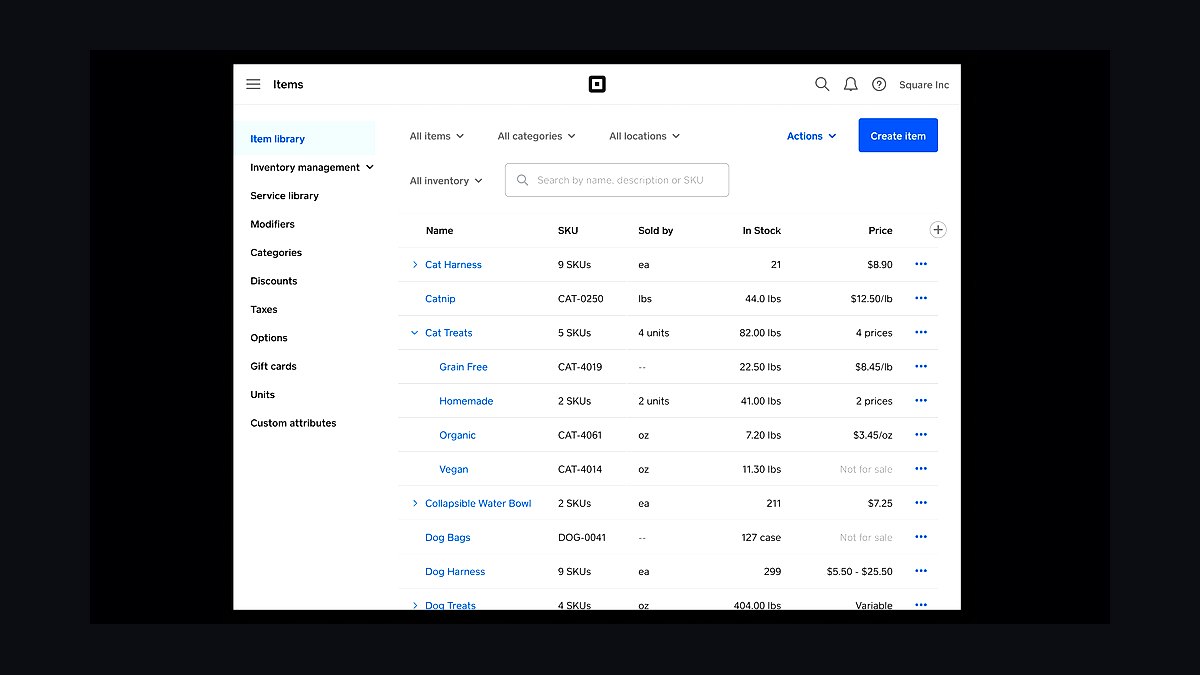
Square for Retail earns the top spot because it handles multi-location inventory, centralized reporting, and per-store permissions on one account, with SaaS fees around $89-$299 per month per location depending on tier. Inter-store transfer tracking and consolidated dashboards work natively, so a five-store franchise group can see same-store sales without spreadsheet reconciliation. Hardware runs roughly $800-$1,500 per checkout station.
This fits franchise groups that want fast deployment and clean data rollup without enterprise complexity. It trades away deep franchise-specific royalty automation, which usually needs a separate reporting integration. Compared with Shopify POS directly below, Square leans harder into in-person retail inventory logic, while Shopify is stronger when e-commerce is the primary channel.
2Shopify POS Pro

Shopify POS Pro ranks second because it unifies in-store and online selling under one inventory ledger, which matters when a franchise brand sells both channels. POS Pro runs about $89 per location per month on top of a Shopify plan, and multi-location inventory sync is built into the platform rather than bolted on. That architecture avoids the reconciliation pain of disconnected store and web catalogs.
It suits franchise groups with a real e-commerce presence and brand-level customer accounts. It trades away some deep in-person retail features Square handles natively, like granular purchase-order workflows. Compared with Square for Retail above, Shopify wins on omnichannel and loses slightly on pure brick-and-mortar inventory depth.
3Lightspeed Retail

Lightspeed Retail ranks third because its inventory engine handles complex catalogs, serialized items, and inter-store transfers with more depth than most cloud POS rivals. Pricing commonly runs $189-$399 per location per month depending on tier, with multi-location reporting and centralized purchasing built into higher plans. Franchise groups with large SKU counts often find its purchasing and receiving workflows more capable.
It fits franchise operators with dense inventory and vendor negotiation needs across stores. It trades away some of the simplicity that makes Square fast to train on. Compared with Shopify POS Pro above, Lightspeed is stronger for inventory-heavy retail and weaker for brands whose sales are mostly online.
4Toast POS

Toast POS earns fourth because it combines restaurant-grade POS with multi-location reporting and centralized menu management, a strong fit for food-service franchise groups. Core software typically runs $69-$165 per location per month, with add-ons for loyalty, online ordering, and payroll integration. Franchise groups get consolidated sales dashboards across locations without manual exports.
It suits quick-service and fast-casual franchise operators rather than general retail. It trades away general-merchandise inventory features like variant-heavy apparel catalogs. Compared with Lightspeed Retail above, Toast is narrower in retail scope but deeper in food-service workflows, which matters if the franchise concept is food.
5Clover POS

Clover POS ranks fifth because it offers flexible hardware and per-location pricing around $60-$180 per month, with multi-location dashboards available on higher tiers. Franchise groups can standardize terminals across stores while keeping location-level reporting separate. Its app marketplace adds loyalty, scheduling, and inventory modules without forcing a full platform switch.
It fits franchise operators who want hardware variety and modular add-ons rather than one monolithic suite. It trades away some native multi-entity depth that Square and Lightspeed handle more cleanly. Compared with Toast POS above, Clover is broader across retail categories but less specialized in any single vertical.
6Vend by Lightspeed

Vend by Lightspeed ranks sixth because it delivers straightforward multi-store inventory and customer management at roughly $99-$159 per location per month. Centralized product catalogs and per-store stock visibility work well for franchise groups with moderate SKU counts. Its reporting covers same-store comparisons and basic inter-location transfers without heavy configuration.
It fits smaller franchise groups, typically two to ten locations, that need core retail functions without enterprise overhead. It trades away the deeper purchasing and vendor-management tools in Lightspeed Retail. Compared with Clover POS above, Vend is more retail-specific and less hardware-flexible, which suits operators who want a tighter software scope.
7Heartland Retail

Heartland Retail ranks seventh because it pairs POS with integrated payroll and payments, giving franchise groups one vendor for several back-office functions. Pricing commonly falls in the $100-$250 per location per month range depending on modules. Multi-location inventory and consolidated reporting are native, and payroll integration reduces duplicate data entry across stores.
It fits franchise groups that value vendor consolidation over best-of-breed flexibility. It trades away some of the app-ecosystem openness that Clover and Shopify offer. Compared with Vend by Lightspeed above, Heartland is stronger on integrated payroll and weaker on third-party marketplace integrations, which matters if the brand sells through external channels.
8SAP Business One
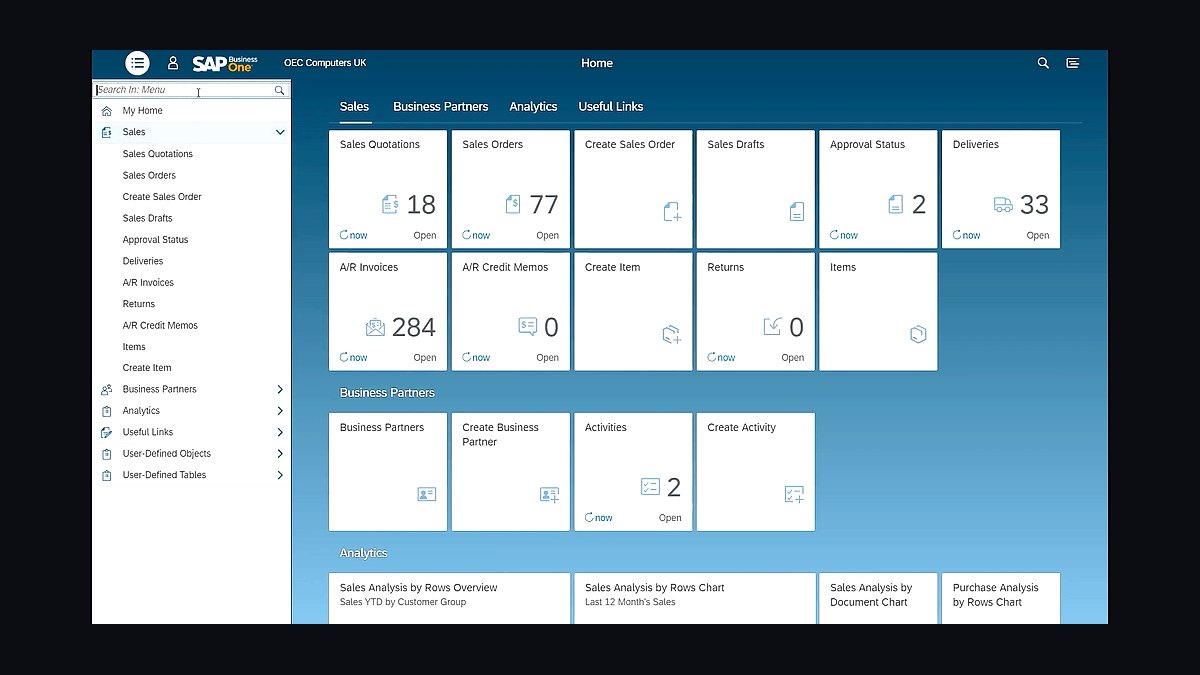
SAP Business One ranks eighth because it provides genuine multi-entity accounting, inventory, and reporting in one ERP, which franchise groups at scale often need beyond what POS platforms deliver. Licensing commonly runs $1,000-$3,000 upfront plus annual maintenance, with per-user costs adding up across locations. Consolidated financials and inter-company transfers are core strengths.
It fits franchise groups above roughly ten locations that need ERP-grade financial control. It trades away the fast setup and low monthly cost of cloud POS tools. Compared with Heartland Retail above, SAP Business One is far more powerful for finance and far slower to deploy, so it only makes sense once POS-only reporting stops being enough.
9FranConnect
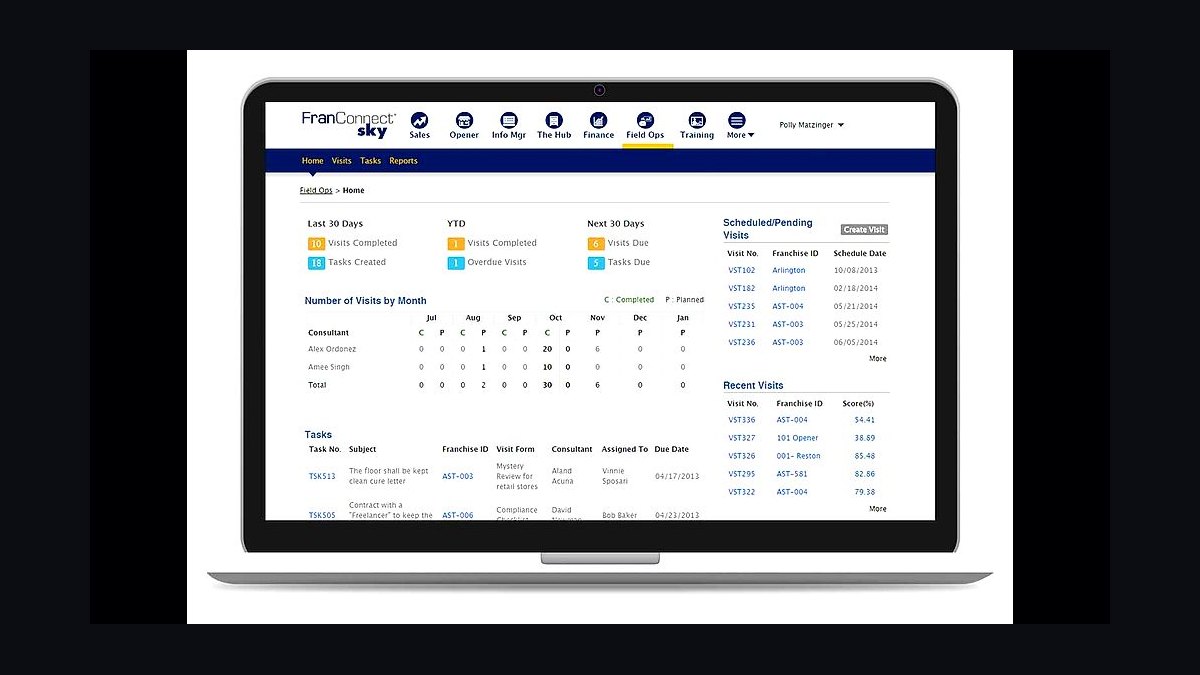
FranConnect ranks ninth because it handles franchise-specific needs like royalty reporting, franchisee onboarding, and brand compliance across locations. Pricing is typically quoted per franchise unit and varies widely by module, often landing in the hundreds per location annually. It integrates with POS systems to pull sales data for automated royalty calculations.
It fits franchisors and multi-unit franchisees that need royalty and compliance workflows no general POS handles natively. It trades away front-line POS functionality entirely, so it layers on top of a system like Square or Shopify rather than replacing it. Compared with SAP Business One above, FranConnect is franchise-specific and narrower, which is exactly why it fills a gap ERPs do not.
10NCR Voyix
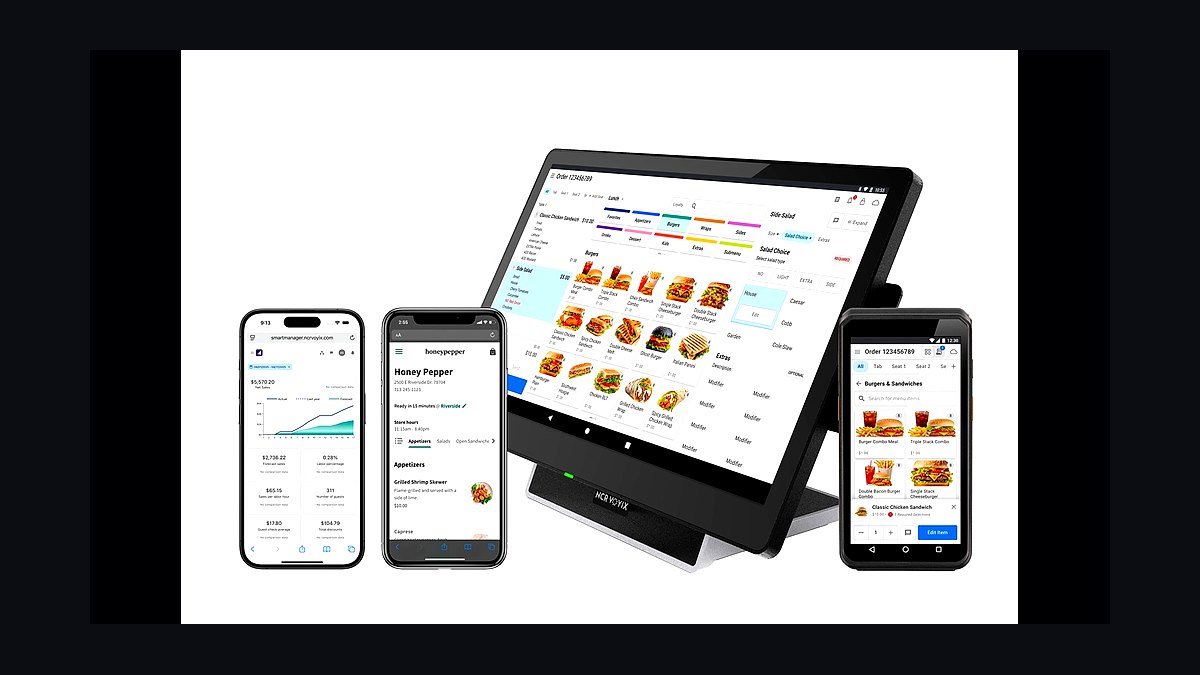
NCR Voyix ranks tenth because it offers enterprise-grade POS and self-service hardware for large franchise chains that need standardized terminals across dozens or hundreds of locations. Pricing is custom-quoted and typically runs higher than cloud POS subscriptions, reflecting the enterprise support model. Centralized deployment and remote management suit brands with strict hardware standards.
It fits large franchise chains with dedicated IT teams and standardized hardware mandates. It trades away the low cost and fast setup that smaller franchise groups rely on. Compared with FranConnect above, NCR Voyix is hardware-and-POS-centric rather than franchise-workflow-centric, so the two often coexist in a large chain's stack rather than compete.
How we ranked these
We ranked tools on five weighted criteria: multi-entity data architecture built in from day one (30%), franchisor royalty-reporting and audit integration (20%), inter-location inventory transfer and centralized purchasing logic (20%), total cost per location per month at 5, 20, and 50 units (15%), and front-line staff learnability measured by time-to-first-shift competence (15%).
Weighting favored architecture over feature count because bolt-on multi-location support is the leading cause of forced migrations.
Deliberately ignored: brand-name recognition, review-site star averages, marketing spend, and demo polish. Also excluded were single-location-only tools with no documented upgrade path, since a 2027 franchise group cannot afford a mid-growth re-platform. Hardware aesthetics, contract length beyond 36 months, and vendor conference presence were treated as noise. Pricing was assessed at list, not negotiated, so the ranking reflects what a first-time buyer actually sees.
What to look for
What matters most is whether the platform treats each store as a child entity of one tenant or as a separate account stitched together by exports. Ask the vendor to show a live dashboard switching between three locations and running a same-store sales comparison without a spreadsheet. Confirm the royalty-reporting export format matches your franchisor's audit spec in writing before signing anything.
The mistake most buyers make is choosing on monthly price per location and discovering later that inventory transfers, consolidated purchasing, and district-manager permissions are paid add-ons. A $99-per-location headline often becomes $240 once the modules a franchise group actually needs are enabled. Model the fully loaded cost at your 24-month location count, not today's, and get the franchisor's approved-vendor list in hand first.
Related questions
Does a franchise agreement force a specific POS vendor?
Often, yes. Many franchisors specify an approved POS system or, at minimum, a mandatory data-reporting format for royalty audits. Confirm this in the franchise disclosure document before purchasing any software independently, because re-platforming after opening is far more expensive than choosing correctly the first time.
Can an independent store's POS scale into a multi-location system later?
Some can, some cannot. Check specifically whether the vendor supports multi-entity reporting and inter-store inventory transfers before committing, if expansion is even a possibility. Low-cost single-location tools frequently lack both, which forces a full re-platform rather than an upgrade when a second store opens.
Is cloud POS safer than on-premise for a retail store in 2027?
Cloud POS is now the default for both formats. It enables remote reporting, automatic updates, and offsite backup without on-site IT. On-premise systems remain viable mainly for very high-transaction-volume single locations with unreliable internet, but they forfeit the centralized visibility a franchise group depends on.
How much does franchise royalty-reporting integration typically add to the tech budget?
It varies by brand. Sometimes it is bundled into the franchisor's national tech fee, sometimes billed separately per location. This must be confirmed in writing during franchise disclosure review rather than assumed. Budgeting without this number is the most common reason franchise tech costs surprise operators in year one.
Should a franchise group standardize hardware, not just software, across locations?
Yes. Standardized hardware simplifies staff training when employees transfer between locations and simplifies IT support and replacement-part sourcing. It is not strictly mandated the way core POS software often is, but the operational savings compound quickly once a group passes five locations and turnover starts moving people around.
What is the realistic implementation timeline for a 10-location franchise rollout?
Expect 8-16 weeks for a first-time unified platform migration across ten existing locations, depending on historical data volume and how many stores convert simultaneously. Opening a new location on an already-proven stack is much faster, typically 2-4 weeks of hardware setup and staff training.
Do independent retailers actually need e-commerce in year one?
Many do not. A single-location store with stable foot traffic and thin margins is usually better served adding e-commerce in year two once cash flow is predictable. Bolting on an online store before inventory counts are accurate causes overselling and refunds that damage the brand.
How much of implementation time should be budgeted for data cleanup?
Budget 20-30% of total implementation time for data cleanup. Product catalogs have duplicates, tax categories are inconsistent, and historical sales data needs mapping. Skipping this produces a system that looks live but reports garbage for the first quarter, which undermines every decision made from it.
FAQ
Does a single-location independent store need multi-location reporting features?
No. A single location has nothing to consolidate across, so multi-location reporting, inter-store transfers, and regional-manager permissions add cost without adding value until a second location actually opens. Buying them early is one of the most common overspends in independent retail technology.
What is the biggest cost difference between a franchise and independent tech stack?
Franchise stacks carry per-location SaaS fees plus franchisor-mandated reporting integration, which scale with location count. Independent stacks are typically one flat monthly subscription for the single store, with no per-location multiplier. At twenty locations the gap can exceed $30,000 per year in licensing alone.
Can a franchise location use a different POS than the franchisor's approved system?
Only if the franchise agreement allows it, which is uncommon. Most franchisors require either their approved vendor or, at minimum, a compatible reporting integration for royalty and brand-compliance auditing. Deviating without written approval risks defaulting on the franchise agreement.
How long does it take to stand up a tech stack for a brand-new independent store?
Typically 1-3 weeks from account setup through hardware pairing and product catalog entry. There is no franchisor approval step, no reporting integration to validate, and a much smaller catalog and staff list to configure. Most owners can complete it without dedicated IT support.
What happens if a franchise group runs disconnected POS systems per location?
Royalty reports get assembled by hand in spreadsheets, inventory transfers happen over text messages, and the group cannot answer which location is profitable without a week of manual work. Most groups outgrow this within 12-18 months of opening a second unit.
Is a unified stack worth the cost for a three-location franchise group?
Yes. Three locations is the practical decision boundary where the cost of disconnected systems exceeds the cost of unifying. Centralized purchasing alone often saves 2-3% on cost of goods, which typically dwarfs the additional licensing spend at that scale.
How do I test whether my current stack is adequate for my location count?
Ask whether you can answer what same-store sales growth was last quarter and which location has the most dead stock in under five minutes without opening a spreadsheet. If yes, the stack fits. If no, and you run three or more locations, the stack is the bottleneck.
What is the most common mistake franchisees make with franchisor tech requirements?
Treating the franchisor's minimum requirement as the ceiling rather than the floor. Franchisors mandate what they need for royalty reporting and brand compliance, not the inventory transfer logic, labor dashboards, or loyalty program a growing multi-unit operator actually needs to run profitably.
Do franchise groups need brand-level CRM and loyalty from day one?
Not necessarily from day one, but before the third location opens. Brand-level loyalty ensures a customer shopping at three locations is recognized as one customer rather than three strangers. Retrofitting it later means re-enrolling the entire customer base across every store.
What should be sequenced first when building a retail tech stack?
POS and inventory first, integrations second. Franchise groups sometimes sign loyalty, workforce management, and analytics contracts before the core is proven, then find the integrations do not sync cleanly. Independent owners sometimes add delivery apps before inventory counts are accurate, causing overselling.
Sources
- https://www.shopify.com/retail/point-of-sale-system
- https://squareup.com/us/en/point-of-sale/retail
- https://www.lightspeedhq.com/pos/retail/
- https://www.sap.com/products/retail.html
- https://www.ncr.com/retail
- https://www.franchise.org/
- https://www.ftc.gov/business-guidance/resources/franchise-rule-compliance-guide
- https://www.oracle.com/retail/
- https://www.manh.com/
- https://www.gartner.com/en/industries/retail
Related on PULSE
This page will be disappearing soon. Save it to your device for $1 — or read it free while it is here.
@Kory-White- · if Venmo asks, the last 4 of my number are 2012
This page is gone.
This one is off the shelf now. $1 keeps it on your phone for good — the whole page, pictures and diagrams included.
 pulse-tech-stacksTop 10 Best Tech Stack Tools for AI Legal Tech Companies in 2027
 pulse-tech-stacksTop 10 Best Tech Stack Tools for Self-Storage Operators in 2027
 pulse-tech-stacksTop 10 Best Tech Stack Tools for Medical Billing and RCM Companies in 2027
 pulse-tech-stacksTop 10 Best Tech Stack Tools for Fine-Tuning Platform Companies in 2027
 pulse-tech-stacksTop 10 Best Tech Stack Tools for API Security Vendors in 2027
 pulse-tech-stacksTop 10 Best Tech Stack Tools for Home Builders and Residential Developers in 2027
 tkTop 10 Best Tech Stack Tools for Concrete and Paving Contractors in 2027
 pulse-tech-stacksTop 10 Best Tech Stack Tools for Private Ambulance and EMS Companies in 2027
 pulse-tech-stacksTop 10 Best Tech Stack Tools for Small Pest Control Companies in 2027
 pulse-tech-stacksTop 10 Best Tech Stack Tools for Independent Food Trucks in 2027