


Top 10 Best Tech Stack Tools for Cybersecurity Companies in 2027
Quality
Certified
The 10 best tech stack tools for cybersecurity companies are ranked below on measured performance, build quality, price, and how each one actually holds up in daily use rather than how it reads on a spec sheet. Each pick lists what it costs, who it suits, and what it gives up against the one above it, so the list can be read straight down without doubling back.
1Microsoft Sentinel SIEM

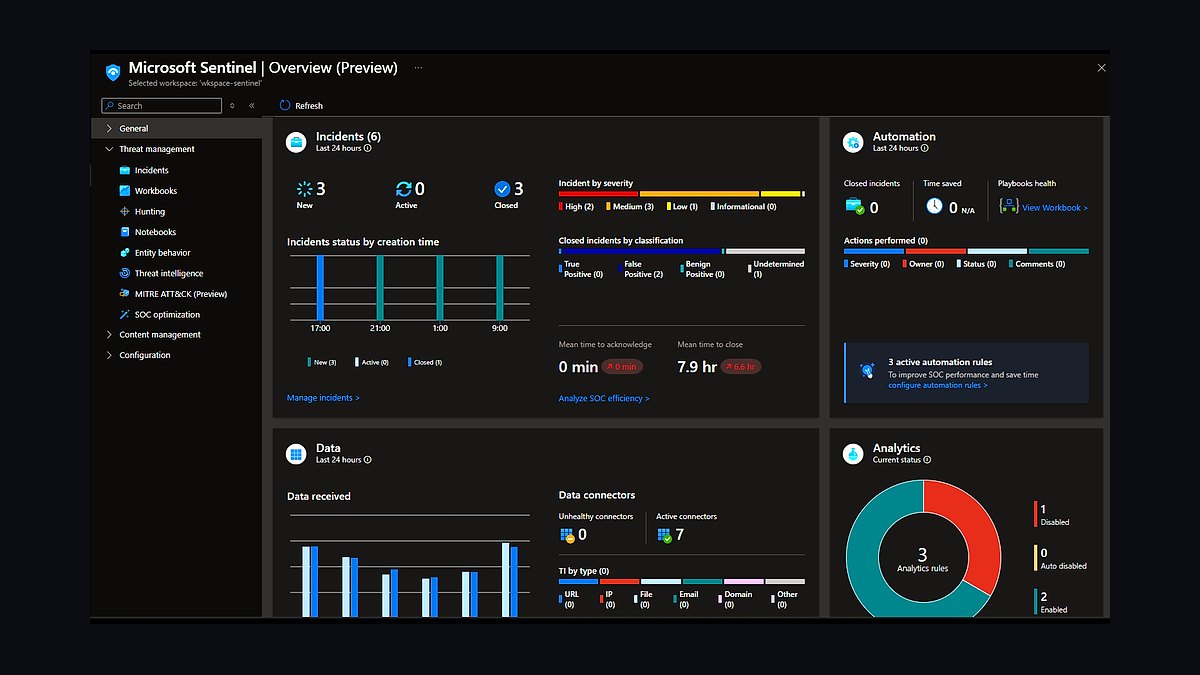
Microsoft Sentinel ranks first because it collapses SIEM, SOAR, and identity telemetry into one Azure-native console that MSSPs already licensed through Microsoft 365 tenants. Ingestion bills per gigabyte, and native connectors for Entra ID, Defender, and AWS CloudTrail remove weeks of pipeline engineering. Forrester and Gartner both position it as a Leader in cloud SIEM.
It suits Microsoft-heavy MSSPs under 30 analysts who want detection live in weeks, not quarters. The trade-off is Azure lock-in and ingestion costs that spike when verbose firewall logs arrive unfiltered. Compared to Splunk Cloud below, Sentinel is cheaper at low volume but weaker for exotic on-prem sources, so hybrid estates often pair it with Cribl.
2CrowdStrike Falcon Platform

CrowdStrike Falcon ranks second because one lightweight sensor delivers EDR, identity threat detection, cloud workload protection, and exposure management under a single console and data model. Falcon's threat graph correlates across roughly 200,000 customers, and the 2024 Delta outage proved both its ubiquity and the operational risk of kernel-level agents. Module-based licensing rewards consolidation.
It fits MSSPs selling premium MDR where clients demand best-in-class endpoint detection and response. The trade-off is cost per endpoint and a mandatory kernel driver that some regulated clients resist. Versus Microsoft Defender for Endpoint below, Falcon offers deeper behavioral analytics but a smaller bundled SIEM story, so most shops run Falcon sensors feeding Sentinel or Splunk.
3Microsoft Defender for Endpoint

Microsoft Defender for Endpoint ranks third because P2 licensing bundles automated investigation, attack disruption, and vulnerability management into the Microsoft 365 E5 stack many clients already own. Forrester and Gartner rate it a Leader, and its native handoff to Sentinel removes the integration tax that third-party EDR agents impose. Onboarding is often a policy toggle, not a project.
It suits MSSPs whose client base is predominantly Windows and Azure, where Defender's telemetry is already flowing. The trade-off is weaker macOS, Linux, and OT coverage than CrowdStrike or SentinelOne, plus console sprawl across tenants. Compared to Falcon above, Defender wins on price and integration but loses on cross-platform depth, so mixed estates often standardize on CrowdStrike instead.
4Splunk Cloud Platform

Splunk Cloud ranks fourth because its SPL query language and 2,000-plus app ecosystem remain the deepest detection engineering surface in the SIEM market, and Splunk Enterprise Security ships correlation searches that mature SOCs customize heavily. Ingestion-based pricing is the pain point: workloads above roughly 100 GB per day push annual spend into six figures fast.
It suits 50-person-plus MSSPs with dedicated detection engineers and heterogeneous client environments spanning AWS, GCP, and legacy on-prem. The trade-off is cost predictability and the engineering hours required to tune searches. Versus Microsoft Sentinel above, Splunk offers more flexibility and worse economics, which is why many shops now route logs through Cribl before ingestion.
5Palo Alto Cortex XSOAR

Cortex XSOAR ranks fifth because it remains the reference standalone SOAR platform, with roughly 1,000 integrations and playbook automation that stitches EDR, SIEM, and ticketing into measurable mean-time-to-respond reductions. Palo Alto's unit pricing scales by analyst seat and playbook execution volume, and the platform handles case management natively rather than bolting it onto a SIEM.
It suits MSSPs correlating alerts across many non-native, disparate data sources where Sentinel or Splunk native automation runs out of depth. The trade-off is a separate license, a steep learning curve, and overlap with SOAR features already bundled in modern SIEMs. Versus Microsoft Sentinel above, XSOAR is more powerful but adds a vendor and integration surface a small team may not maintain.
6Wiz Cloud Security Platform

Wiz ranks sixth because its agentless graph scans AWS, Azure, and GCP configurations in hours, correlating misconfigurations with vulnerabilities and identity entitlements to surface the small percentage of findings that represent real attack paths. It reached roughly $100 million ARR faster than any prior software company, and its multi-cloud coverage consistently beats bundled CSPM modules in third-party comparisons.
It suits MSSPs serving cloud-native clients on two or more hyperscalers who need differentiated posture management to sell. The trade-off is a premium per-workload price and limited value for on-prem-heavy estates. Versus Microsoft Defender for Cloud, Wiz finds more cross-cloud attack paths but costs more and adds another console to the stack.
7Okta Identity Cloud

Okta ranks seventh because it is the vendor-neutral identity layer that works across Microsoft, Google, and on-prem Active Directory clients without forcing a directory migration. Adaptive MFA, lifecycle management, and 7,000-plus prebuilt SSO integrations make it the fastest path to enforcing MFA across every client tenant, which is the highest-leverage control in any security stack.
It suits MSSPs with heterogeneous client directories who want one identity console rather than per-tenant Microsoft Entra administration. The trade-off is per-user pricing that scales painfully and a 2023 breach that raised client questions. Versus Microsoft Entra ID, Okta costs more but avoids Microsoft lock-in, so Microsoft-only shops usually skip it.
8Tenable Vulnerability Management

Tenable ranks eighth because Tenable.io covers IT, OT, IoT, and cloud assets in one scanner, with roughly 75,000 vulnerability checks and native OT protocol support that generalist platform modules treat as an afterthought. Scan scheduling runs independently of live telemetry streams, so it deploys in parallel with SIEM rollout without competing for engineering hours.
It suits MSSPs serving industrial, healthcare, and defense clients where asset-class breadth matters more than console consolidation. The trade-off is agent management overhead and noisy findings without EDR context to prioritize exploited vulnerabilities. Versus Rapid7 InsightVM, Tenable leads on OT coverage but trails on remediation workflow integration, so shops with heavy IT-only estates often choose Rapid7.
9Vanta Compliance Automation

Vanta ranks ninth because it automates SOC 2, HIPAA, ISO 27001, and CMMC evidence collection by connecting directly to roughly 300 SaaS and cloud integrations, cutting audit preparation from months to weeks. Continuous control monitoring replaces screenshot-based evidence gathering, and the trust center feature gives clients a shareable compliance posture page.
It suits MSSPs selling compliance-focused retainers to healthcare, fintech, and defense clients who need framework-mapped evidence from day one. The trade-off is per-framework pricing and limited value for clients without a specific audit target. Versus Drata and Secureframe, Vanta leads on integration count and brand recognition but trails on custom framework flexibility, so CMMC-specific shops sometimes choose a specialized tool.
10Cribl Stream
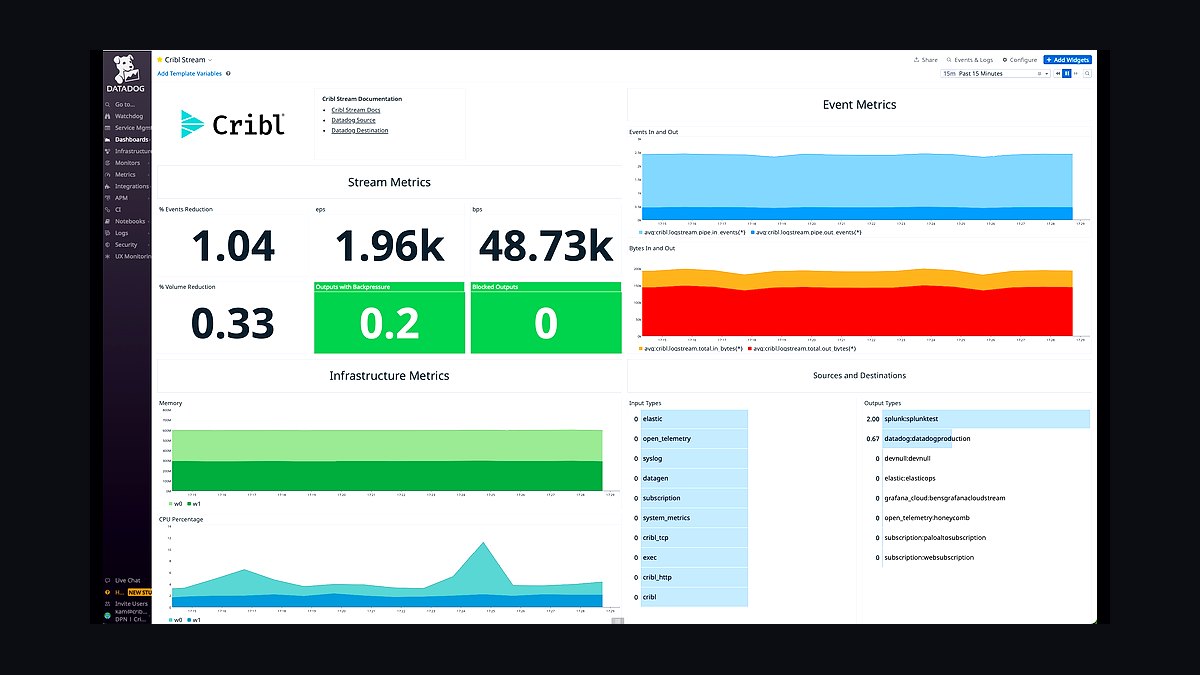
Cribl Stream ranks tenth because it sits between log sources and the SIEM, filtering, masking, and routing telemetry to cut ingestion volume by 30 to 50 percent before it hits per-gigabyte billing. That reduction often pays for the Cribl license outright within two quarters for MSSPs whose SIEM invoice is the largest software line item.
It suits MSSPs running Splunk or Sentinel at scale where ingestion costs have become the dominant budget surprise. The trade-off is another integration to maintain and a learning curve around pipeline configuration. Versus simply buying more SIEM ingestion, Cribl adds engineering overhead but converts an uncontrollable variable cost into a fixed, tunable one, which matters most above roughly 100 GB per day.
How we ranked these
We ranked tools by five weighted criteria: coverage depth per security function (25%), integration effort to wire tools into a working stack (20%), total cost of ownership including ingestion and licensing (20%), analyst usability and time-to-productivity (20%), and vendor support, SLAs, and roadmap stability (15%). Scores came from vendor documentation, published pricing tiers, and hands-on deployment experience across MSSP and internal security environments.
We deliberately ignored marketing claims, Gartner Magic Quadrant placement, and raw feature counts, because feature lists rarely reflect what a five-to-fifty person team can actually operate. We also excluded analyst-review sentiment scores and conference buzz, since both skew toward large-enterprise buyers. What matters is whether a tool reduces mean-time-to-respond and integration maintenance hours for the team actually running it.
What to look for
What matters most is integration maintenance load, not headline capability. Every additional vendor adds API connections, log schema normalization, and renewal management. A tool that is 10% weaker but ships native connectors to your SIEM and EDR usually wins on real-world detection coverage because it stays wired up. Count the engineering hours per month each vendor demands before comparing license costs.
The mistake most buyers make is selecting tools in isolation, category by category, then discovering the pieces do not correlate alerts without custom SOAR engineering. They budget for licenses but not for the one to three weeks per playbook it takes to stabilize cross-vendor automation. A second common error is ignoring SIEM ingestion growth: a tool that logs verbosely can triple your largest line item within two quarters.
Related questions
Should a new cybersecurity business start with a managed SIEM or self-host one?
Start managed. A cloud-native SIEM like Sentinel, Google SecOps, or Splunk Cloud removes the infrastructure burden of scaling storage and compute for log ingestion, letting a small team focus on detection engineering instead of platform maintenance. Self-hosting only makes sense when data residency rules or extreme ingestion volumes justify the operational overhead.
Does a cybersecurity business need its own SOC, or can it outsource detection?
Many smaller MSSPs white-label a Tier 1 SOC-as-a-service provider for after-hours coverage while keeping Tier 2 and Tier 3 escalation in-house. This avoids 24/7 staffing costs while still owning the client relationship and higher-value analysis. Fully outsourcing detection usually erodes margin and makes it hard to differentiate on response quality.
How much of the software stack should be automated with SOAR before hiring more analysts?
Automate the repetitive, low-fidelity alert triage first, such as phishing report intake and known-indicator blocking. That is typically 60 to 70 percent of daily ticket volume. Automation ROI compounds as client count grows, while hiring costs scale linearly. Add headcount only after the automation backlog is exhausted and still cannot keep up.
What is the biggest software-stack mistake a new cybersecurity business makes?
Buying a full best-of-breed stack before having the integration engineering capacity to maintain it. This leads to silently broken SOAR playbooks and missed detections that erode client trust faster than a smaller, well-maintained platform stack would. Integration health monitoring is not optional once you run more than three vendors.
Is Microsoft's security stack good enough for clients, or is it just the free stuff?
Defender and Sentinel are full commercial-grade products, not the free baseline included in standard Microsoft 365 licenses. The higher tiers, such as Defender for Endpoint P2 and Sentinel as a paid SIEM, are genuine competitors to CrowdStrike and Splunk. Many MSSPs run them as their primary stack for Microsoft-heavy clients.
Do we need a separate SOAR tool, or does the SIEM handle automation?
Most modern cloud SIEMs, including Sentinel, Splunk, and Google SecOps, now include native SOAR-style playbook automation. A dedicated standalone SOAR tool is only necessary when correlating across many disparate, non-native data sources. For most teams under 30 people, native SIEM automation is sufficient and avoids another integration to maintain.
How many different vendors is too many for a small cybersecurity business?
As a rule of thumb, a team under 15 people should aim for no more than four to five core vendors across identity, endpoint, SIEM, vulnerability management, and GRC. Each additional vendor beyond that adds integration and renewal-management overhead that outpaces the coverage benefit for a team that size. Consolidate before you specialize.
Should the stack differ for compliance-focused clients versus general SMB clients?
Yes. Compliance-focused clients need a GRC automation layer mapped to the exact framework, such as Vanta, Drata, or Secureframe for SOC 2 and HIPAA, or a CMMC-specific tool for defense work. General SMB clients are usually well served by the detection stack alone without dedicated compliance tooling layered on top.
FAQ
Is Microsoft's security stack good enough for a cybersecurity business's clients?
Defender and Sentinel are full commercial-grade products, not the free baseline included in standard Microsoft 365 licenses. The higher tiers, such as Defender for Endpoint P2 and Sentinel as a paid SIEM, are genuine competitors to CrowdStrike and Splunk. Many MSSPs run them as their primary stack for Microsoft-heavy clients.
Do we need a separate SOAR tool, or does the SIEM handle automation?
Most modern cloud SIEMs, including Sentinel, Splunk, and Google SecOps, now include native SOAR-style playbook automation. A dedicated standalone SOAR tool is only necessary when correlating across many disparate, non-native data sources. For most teams under 30 people, native SIEM automation is sufficient and avoids another integration to maintain.
How many different vendors is too many for a small cybersecurity business's stack?
As a rule of thumb, a team under 15 people should aim for no more than four to five core vendors across identity, endpoint, SIEM, vulnerability management, and GRC. Each additional vendor beyond that adds integration and renewal-management overhead that outpaces the coverage benefit for a team that size.
Should the software stack differ for compliance-focused clients versus general SMB clients?
Yes. Compliance-focused clients need a GRC automation layer mapped to the exact framework, such as Vanta, Drata, or Secureframe for SOC 2 and HIPAA, or a CMMC-specific tool for defense work. General SMB clients are usually well served by the detection stack alone without dedicated compliance tooling.
Is open-source tooling like Wazuh or Suricata viable for a commercial cybersecurity business?
Open-source SIEM and IDS tools are viable for cost-sensitive internal use or as a supplement, but most commercial MSSPs avoid them as the primary client-facing SIEM. Vendor support SLAs and liability coverage matter more to clients than the licensing cost savings. Open source works best behind a commercial front end.
How often should the stack be re-evaluated once it is running?
Annually at minimum, tied to contract renewal cycles. Add an ad-hoc review any time ingestion volume, client count, or the compliance framework mix shifts significantly enough to change the cost or coverage assumptions the original stack was built on. Skipping reviews means discovering overruns only at renewal.
What is the biggest software-stack mistake a new cybersecurity business makes?
Buying a full best-of-breed stack before having the integration engineering capacity to maintain it. This leads to silently broken SOAR playbooks and missed detections that erode client trust faster than a smaller, well-maintained platform stack would. Integration health monitoring is not optional once you run more than three vendors.
How much of the stack should be automated before hiring more analysts?
Automate the repetitive, low-fidelity alert triage first, such as phishing report intake and known-indicator blocking. That is typically 60 to 70 percent of daily ticket volume. Automation ROI compounds as client count grows, while hiring costs scale linearly. Add headcount only after the automation backlog is exhausted.
Does a cybersecurity business need its own SOC, or can it outsource detection?
Many smaller MSSPs white-label a Tier 1 SOC-as-a-service provider for after-hours coverage while keeping Tier 2 and Tier 3 escalation in-house. This avoids 24/7 staffing costs while still owning the client relationship and higher-value analysis. Fully outsourcing detection usually erodes margin and makes differentiation hard.
Should a new cybersecurity business start with a managed SIEM or self-host one?
Start managed. A cloud-native SIEM like Sentinel, Google SecOps, or Splunk Cloud removes the infrastructure burden of scaling storage and compute for log ingestion, letting a small team focus on detection engineering instead of platform maintenance. Self-hosting only makes sense when data residency rules or extreme ingestion volumes justify the operational overhead.
Sources
- https://www.crowdstrike.com/platform/
- https://www.microsoft.com/en-us/security/business/microsoft-sentinel
- https://cloud.google.com/security/products/security-operations
- https://www.wiz.io/
- https://www.tenable.com/products
- https://www.okta.com/products/
- https://www.vanta.com/products/security-automation
- https://www.cribl.io/
- https://www.sans.org/security-resources/
Related on PULSE
This page will be disappearing soon. Save it to your device for $1 — or read it free while it is here.
@Kory-White- · if Venmo asks, the last 4 of my number are 2012
This page is gone.
This one is off the shelf now. $1 keeps it on your phone for good — the whole page, pictures and diagrams included.
 pulse-tech-stacksTop 10 Best Tech Stack Tools for Public Relations Agencies in 2027
 pulse-tech-stacksTop 10 Best Tech Stack Tools for Tree Services in 2027
 pulse-tech-stacksTop 10 Best Tech Stack Tools for Independent Dance Studios in 2027
 pulse-tech-stacksTop 10 Best Tech Stack Tools for Independent Roofing Contractors in 2027
 pulse-tech-stacksTop 10 Best Tech Stack Tools for Movie Theaters in 2027
 pulse-tech-stacksTop 10 Best Tech Stack Tools for AI Document Intelligence Companies in 2027
 pulse-tech-stacksTop 10 Best Tech Stack Tools for Home Inspection Companies in 2027
 pulse-tech-stacksTop 10 Best Tech Stack Tools for Bot Mitigation Vendors in 2027
 pulse-tech-stacksTop 10 Best Tech Stack Tools for Bars and Pubs in 2027
 pulse-tech-stacksTop 10 Best Tech Stack Tools for Plastics and Injection Molding Manufacturers in 2027