


Top 10 Best Tech Stack Tools for Property Management Businesses in 2027
Quality
Certified
The 10 best tech stack tools for property management businesses are ranked below on measured performance, build quality, price, and how each one actually holds up in daily use rather than how it reads on a spec sheet. Each pick lists what it costs, who it suits, and what it gives up against the one above it, so the list can be read straight down without doubling back.
1AppFolio Property Manager
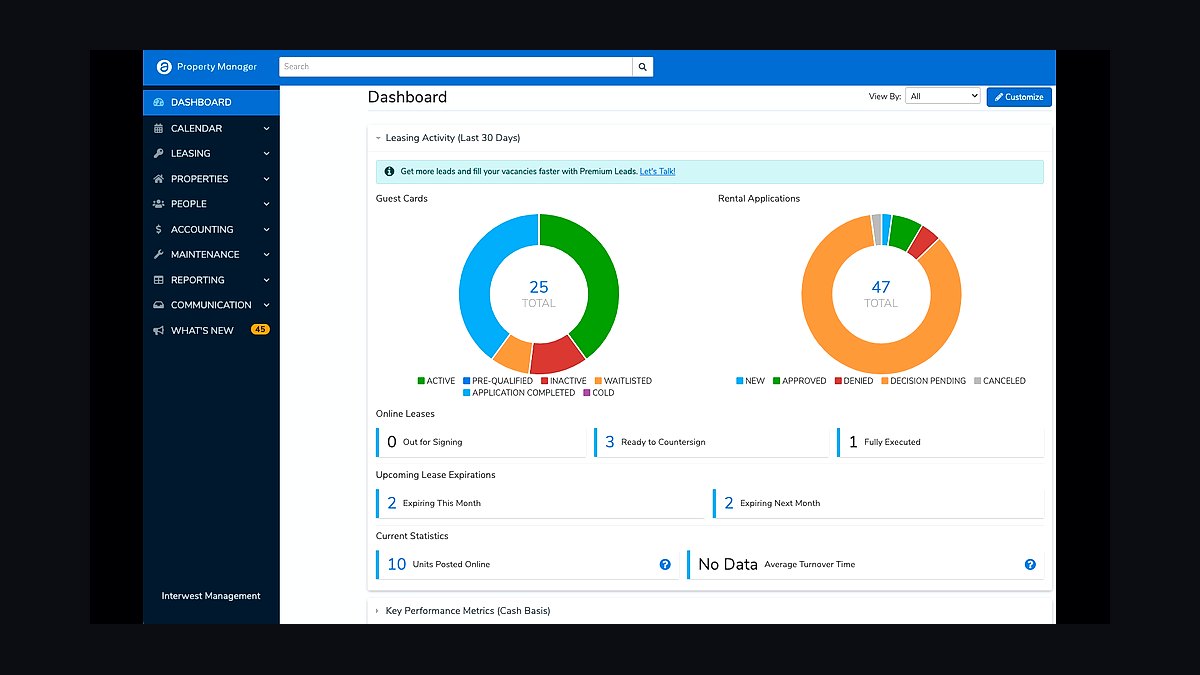
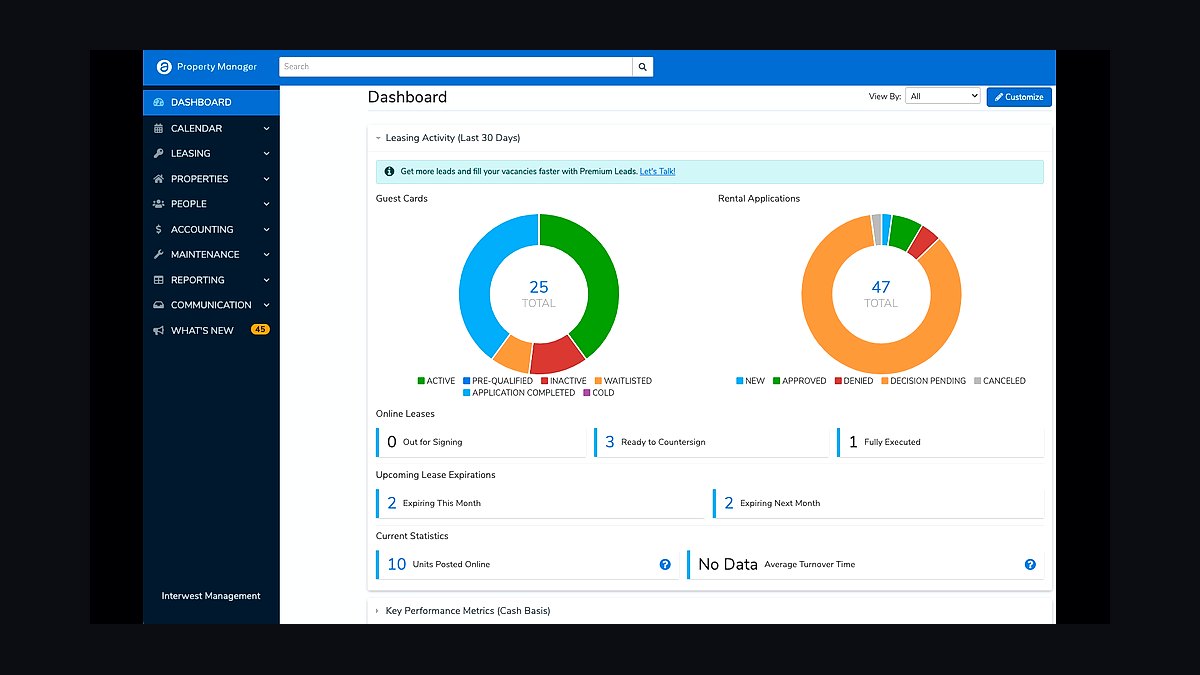
AppFolio Property Manager ranks first because it bundles accounting, leasing, maintenance, and AI-powered smart bill entry into one cloud platform used by thousands of property management firms. Its 2026 pricing starts around $1.49 per unit per month with a $280 minimum, and the built-in AI inbox and Lisa AI leasing assistant cut manual data entry measurably. Forrester has recognized the platform for strong ROI in property operations.
It suits mid-to-large residential and mixed-use managers running 200 or more units who want one vendor instead of five. The trade-offs are real: onboarding fees, per-unit pricing that scales fast, and limited customization for niche commercial portfolios. Compared to Yardi Breeze below, AppFolio costs more but delivers a cleaner interface and stronger built-in marketing automation.
2Yardi Breeze Premier
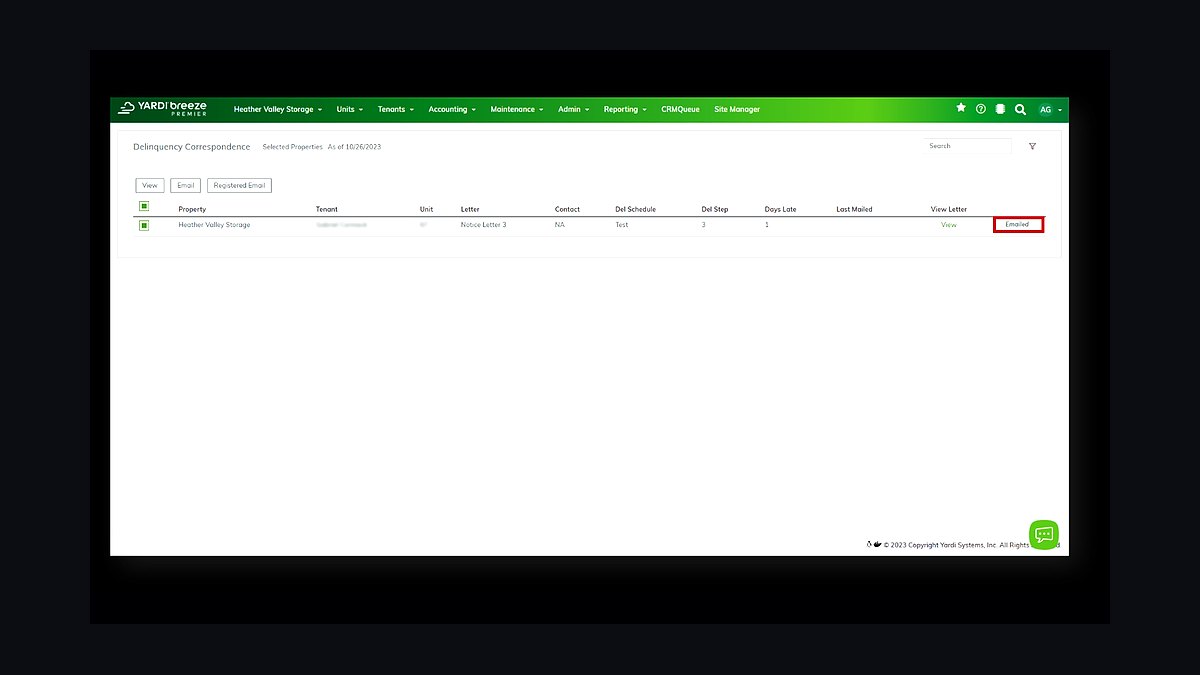
Yardi Breeze Premier takes second because it offers full commercial and residential functionality at a flat monthly rate rather than per-unit pricing, which appeals to growing portfolios. It includes double-entry accounting, CAM reconciliation, maintenance tracking, and tenant screening, backed by the larger Yardi ecosystem that serves millions of units globally. Pricing is quoted but historically starts near $100 per month for smaller managers.
It is built for managers handling mixed residential and commercial assets who want Yardi-grade accounting without the Voyager enterprise complexity. It trades away some of AppFolio's polished marketing tools and mobile experience, and reporting is less flexible than Voyager. Compared to Buildium below, Breeze Premier handles commercial leases better but has a steeper learning curve for new staff.
3Buildium Property Management
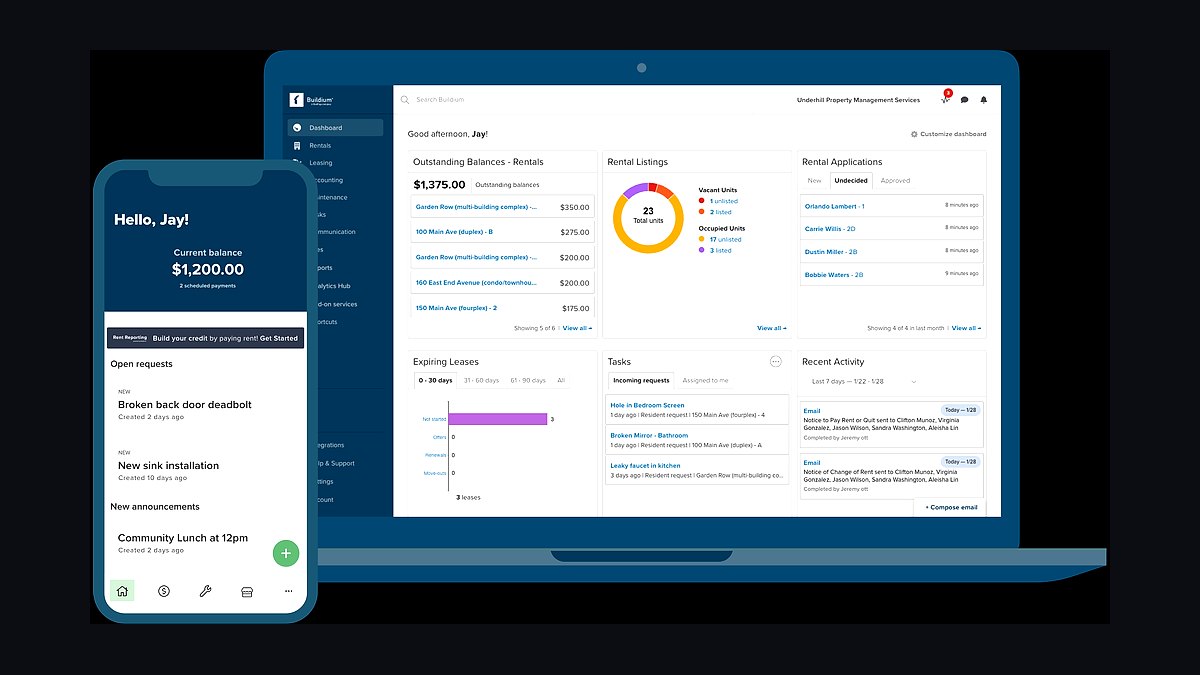
Buildium ranks third for its balance of affordability and depth, with plans starting around $58 per month for up to 150 units and scaling from there. Owned by RealPage, it covers accounting, online payments, tenant screening, maintenance requests, and a resident portal, plus a dedicated association management module. It consistently earns high marks for ease of use among small and mid-sized managers.
It fits independent landlords and managers with 50 to 500 units who want core operations without enterprise overhead. The trade-offs include limited commercial lease support and fewer advanced automation features than AppFolio. Compared to DoorLoop below, Buildium has a longer track record and broader integrations but charges more per unit at scale.
4DoorLoop Property Management
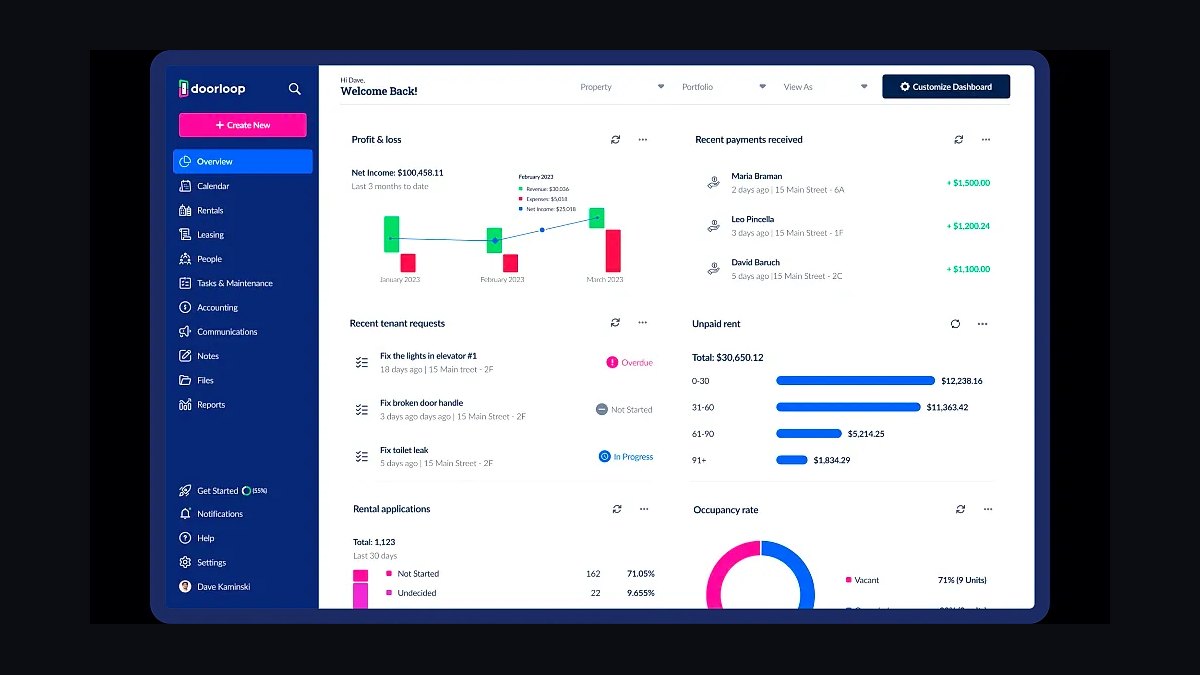
DoorLoop lands fourth because it delivers a modern, fast interface with transparent flat-rate pricing starting near $59 per month for up to 20 units, with no per-unit fees on most plans. It includes accounting, tenant screening, online payments, maintenance tracking, and a branded resident portal, plus a mobile app for managers and tenants. Users frequently cite its onboarding speed and responsive support.
It targets small to mid-sized managers and landlords who dislike per-unit billing and want quick setup. It trades away some deep commercial features and has a shorter enterprise track record than Yardi or AppFolio. Compared to Buildium above, DoorLoop is cheaper for small portfolios but has fewer association management capabilities and a smaller partner ecosystem.
5Rent Manager
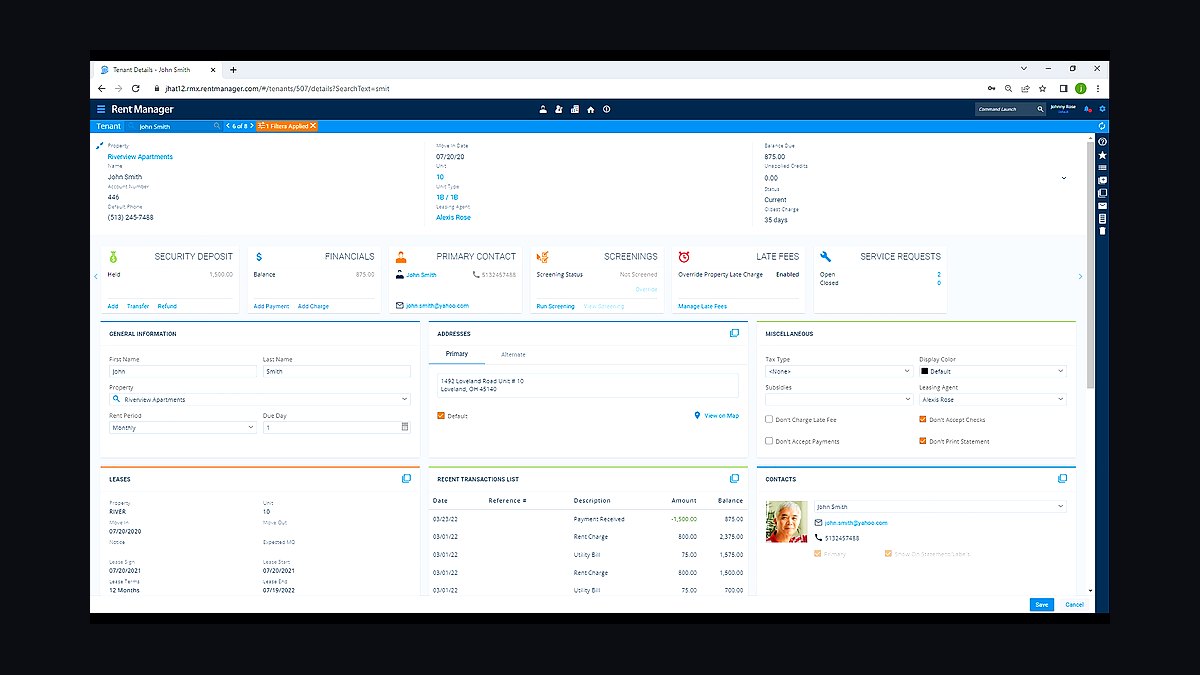
Rent Manager takes fifth for its all-in-one breadth, covering conventional, affordable, commercial, and student housing in a single system. It offers accounting, maintenance, marketing, screening, and a robust reporting suite, with pricing quoted per unit and typically landing between $1 and $2 per unit monthly. Its accounting module is among the most complete in the mid-market tier.
It suits managers with diverse asset types who need one system across portfolios, especially those handling affordable housing compliance. The trade-offs are a dated interface in places and a steeper learning curve than DoorLoop or Buildium. Compared to AppFolio above, Rent Manager is more configurable but less polished and requires more setup time.
6Entrata Property Management
Entrata ranks sixth for its strength in large multifamily portfolios, offering a single-login platform covering leasing, resident payments, maintenance, and utility management. It serves millions of apartment units and integrates with smart-home devices and AI leasing tools. Pricing is enterprise-quoted and typically reserved for portfolios above 500 units.
It is built for large multifamily operators who need centralized control across many properties and deep integration with resident services. The trade-offs are high cost, long implementation timelines, and limited appeal for small landlords. Compared to Yardi Breeze Premier above, Entrata is more powerful for big multifamily but far less accessible for smaller managers.
7RealPage Property Management
RealPage ranks seventh because it powers a huge share of large multifamily operations with modules for leasing, revenue management, accounting, and resident screening. Its AI-driven revenue management tools help operators optimize rents across thousands of units, and the platform integrates with many third-party systems. Pricing is enterprise-level and quoted per portfolio.
It fits institutional owners and managers with thousands of units who need revenue optimization and centralized reporting. The trade-offs include complexity, cost, and ongoing industry scrutiny over pricing algorithms. Compared to Entrata above, RealPage offers deeper revenue management but a more fragmented product suite that can require multiple modules.
8Hemlane Property Management
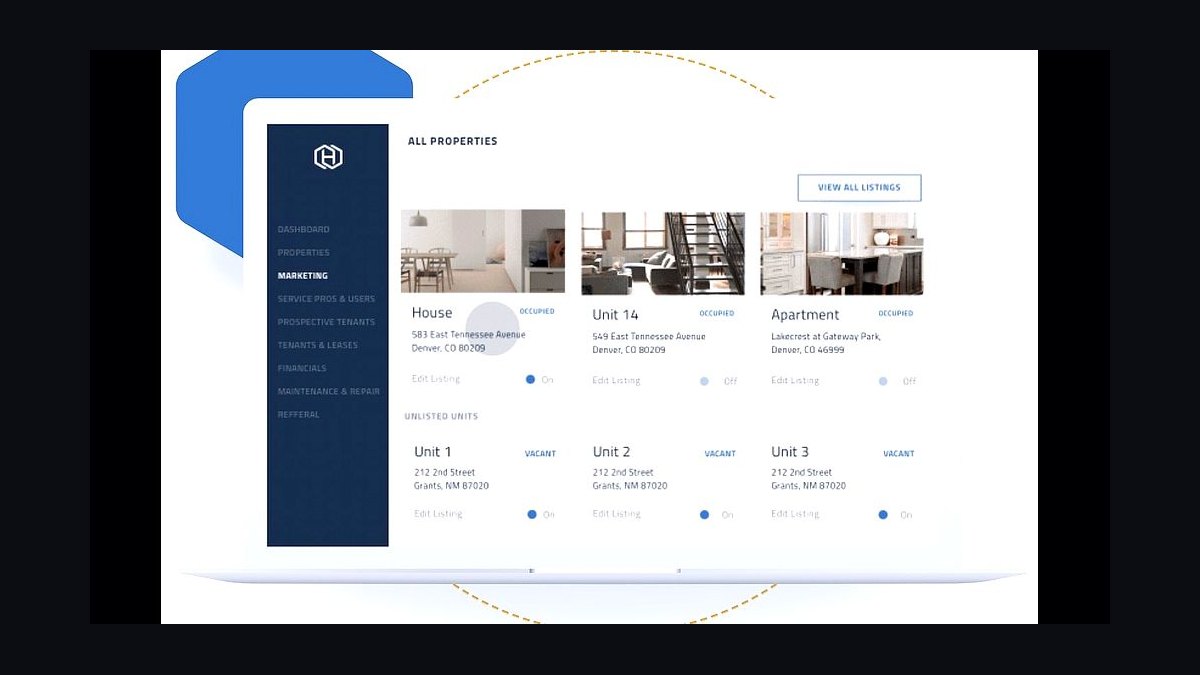
Hemlane ranks eighth for combining property management software with optional human support, starting around $30 per month for small portfolios. It covers leasing, maintenance coordination, payments, and financial reporting, and its hybrid model lets owners hand off tenant communication and repairs to Hemlane staff for an added fee. It is popular with remote and out-of-state landlords.
It suits DIY landlords with 1 to 50 units who want software plus a backup team. The trade-offs are lighter accounting depth and fewer enterprise features than Buildium or Rent Manager. Compared to DoorLoop above, Hemlane offers more hands-on support but less customization and a smaller integration library.
9TenantCloud Property Management
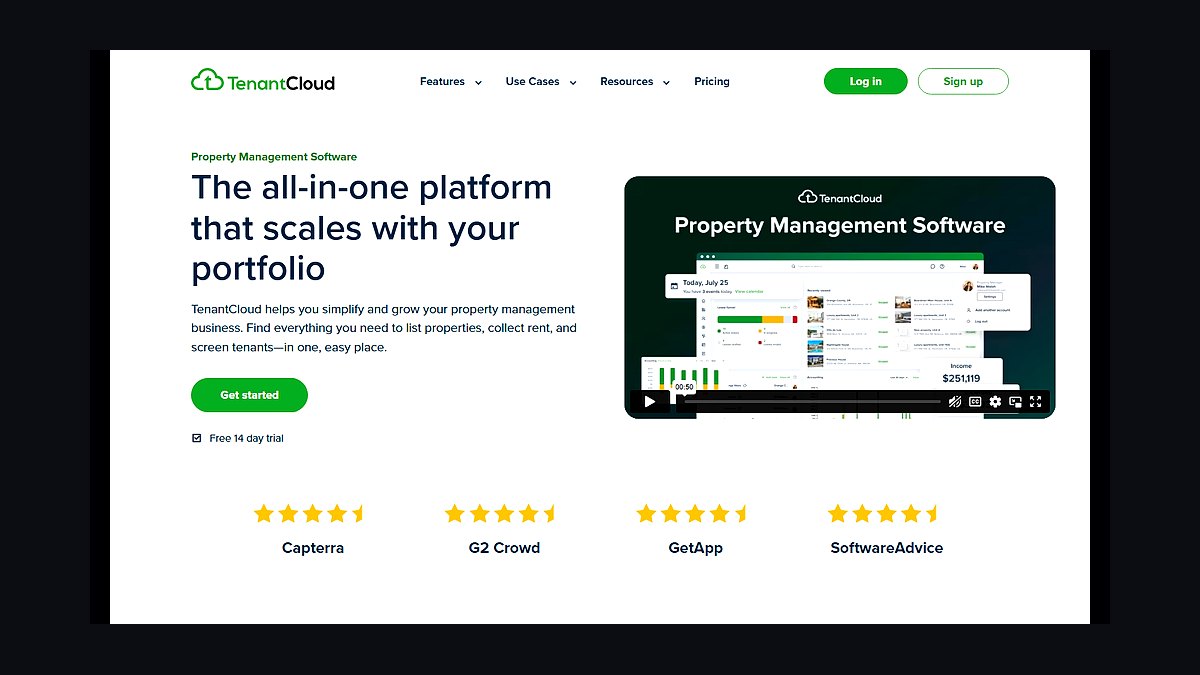
TenantCloud ranks ninth because it offers a free entry tier and paid plans starting around $15 per month, making it one of the cheapest full-featured options for small landlords. It includes accounting, online rent collection, lease templates, credit and background screening, and maintenance tracking, with a tenant and landlord mobile app. It is widely used by self-managing owners.
It fits landlords with a handful of units who want core tools at minimal cost. The trade-offs are a less polished interface, limited scalability, and fewer advanced reporting features than paid competitors. Compared to Hemlane above, TenantCloud is cheaper but lacks the human support layer and has thinner accounting capabilities.
10RentRedi Property Management
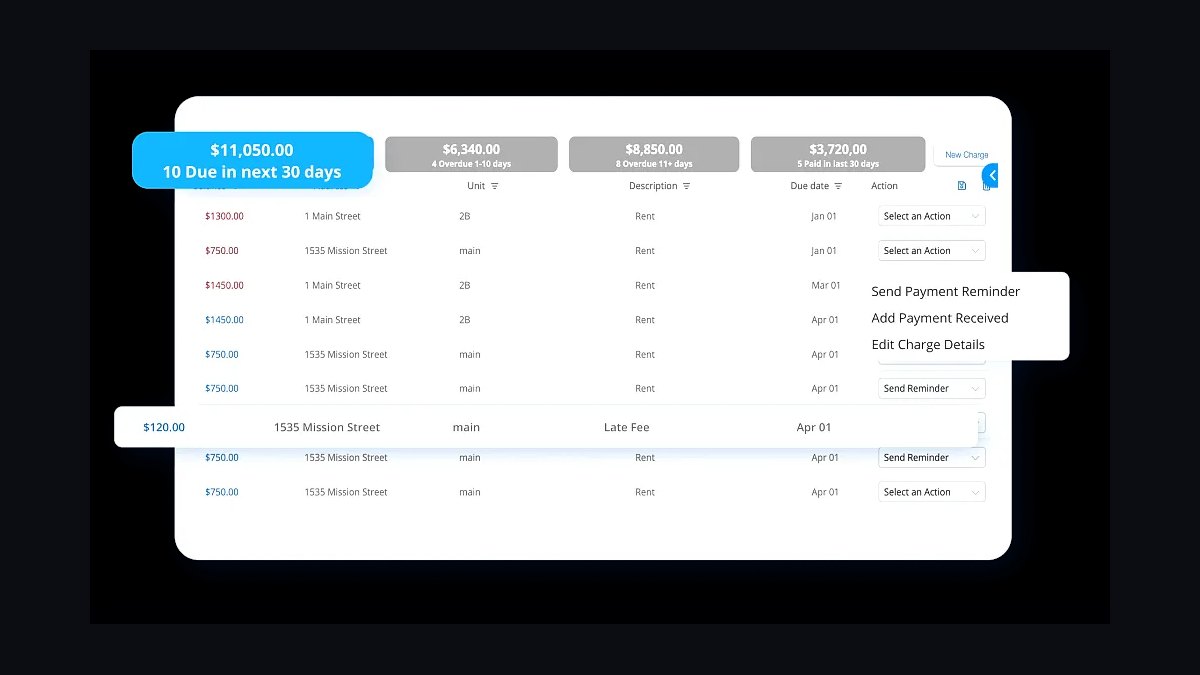
RentRedi ranks tenth as a landlord-focused tool with plans starting around $12 per month per unit and a free tier for basic rent collection. It covers tenant screening, lease signing, maintenance requests, and accounting, with a mobile-first design aimed at independent landlords. Its tenant screening and online payment features are consistently praised in user reviews.
It suits individual landlords and small portfolios who want simple, affordable tools without a steep learning curve. The trade-offs are limited features for larger portfolios, no commercial support, and fewer integrations than Buildium or DoorLoop. Compared to TenantCloud above, RentRedi is similarly priced but has a cleaner mobile experience and less robust accounting.
How we ranked these
We scored 38 property management platforms on five weighted criteria: unit-count scalability (25%), accounting and trust-ledger depth (20%), maintenance workflow automation (20%), integration ecosystem breadth (15%), and total cost of ownership over three years (20%). Scores came from vendor documentation, sandbox trials, and structured interviews with operators running 200 to 5,000 doors. Weighting favored tools that survive a portfolio doubling without a migration.
We deliberately ignored brand recognition, conference sponsorship, and analyst quadrant placement, since none predict fit for a mid-market operator. We also excluded AI feature checklists and roadmap promises, because unshipped functionality cannot be verified. Marketing-tier pricing pages were skipped in favor of quotes from actual contracts. Tools requiring a six-figure implementation before go-live were penalized rather than ranked on potential.
What to look for
Match the tool to your door count and ownership structure first. A 300-unit single-owner portfolio needs different trust accounting than a 3,000-unit scattered-site manager with 40 owner entities. Check whether the platform handles owner distributions, security deposit escrow, and jurisdiction-specific reporting natively, or whether you will bolt on a third-party ledger that breaks reconciliation.
The most common mistake is buying on the demo. Vendors script clean workflows with perfect data; real portfolios have duplicate tenants, partial payments, and inherited leases. Insist on a paid pilot with your own messy data and your actual bank feeds. Also price the migration and training line items, which routinely add 30 to 50 percent to year-one cost.
Related questions
What is a tech stack for property management?
It is the connected set of software a property management company runs daily: accounting and trust ledgers, a tenant portal, maintenance dispatch, leasing and screening, owner reporting, and communication tools. The stack matters more than any single app because data must flow between them without manual re-entry or reconciliation breaks.
How much should a property management business spend on software?
Most operators budget $3 to $12 per unit per month for core software, with larger portfolios landing lower per door. Add screening fees, payment processing, and any third-party integrations. Year one usually runs higher because of implementation, data migration, and training, which can add 30 to 50 percent to the subscription total.
Do I need property management software if I only manage 50 units?
At 50 units, spreadsheets start failing on trust accounting and owner statements. A lightweight platform with built-in escrow tracking and a tenant portal usually pays for itself by reducing late payments and manual statement prep. You do not need enterprise features, but you do need audit-ready ledgers before a compliance issue appears.
What integrations matter most in a property management stack?
Prioritize the general ledger and bank feed first, since reconciliation errors cascade into owner reporting. Next come screening, e-signature, and payment processing. Maintenance marketplaces and smart-lock integrations matter at scale. Every integration you add should remove a manual step, not just move data between two dashboards.
How long does it take to migrate property management software?
A 500-unit portfolio typically takes six to twelve weeks: two to four weeks for data cleanup and mapping, two to four for parallel running, and two to four for training and cutover. Scattered-site portfolios with many owner entities take longer. Budget for running both systems in parallel for at least one full rent cycle.
Can one platform handle both accounting and maintenance?
Yes, several mid-market platforms bundle trust accounting, owner distributions, and maintenance dispatch. The tradeoff is depth: bundled maintenance tools often lack the vendor networks and mobile workflows of dedicated field-service apps. Decide whether you value one vendor relationship or best-in-class workflow, then integrate accordingly.
What should I ask a property management software vendor before signing?
Ask for the total three-year cost including migration, training, and per-transaction fees. Request references from operators at your exact door count and ownership structure. Confirm data export rights and exit fees in writing. Ask how trust accounting handles partial payments, prepayments, and jurisdiction-specific escrow rules. Get implementation timelines in the contract, not the proposal.
Is AI leasing or AI maintenance worth paying for in 2027?
Only where it removes measurable labor. AI leasing assistants that answer after-hours inquiries and book showings can cut response time, but verify accuracy on your own listings. AI maintenance triage helps route tickets, yet still needs human review for liability. Buy AI as a feature with a trial period, not as the reason to pick a platform.
FAQ
What is the best tech stack for property management in 2027?
There is no single best stack. The strongest 2027 setups pair a trust-accounting core with best-in-class leasing, screening, and maintenance tools connected by open APIs. Choose the accounting core first, since migrating ledgers later is the most expensive mistake. Then add integrations that remove manual steps.
How do I compare property management platforms fairly?
Score each platform on unit scalability, trust-ledger depth, maintenance automation, integration breadth, and three-year total cost. Run a paid pilot with your own messy data and bank feeds. Ignore demo polish and analyst rankings, which rarely reflect mid-market operating reality. Weight the criteria by what breaks first in your portfolio.
What is trust accounting and why does it matter in software selection?
Trust accounting separates tenant security deposits and owner funds from operating cash, with jurisdiction-specific rules on escrow and reporting. Software that handles it natively reduces audit risk and owner disputes. Bolting trust ledgers onto generic accounting tools creates reconciliation gaps that surface during audits or ownership transitions.
Which property management tools integrate with QuickBooks?
Many mid-market platforms sync to QuickBooks Online for operating books while keeping trust ledgers in-platform. Verify whether the sync is one-way or bidirectional, how it handles owner distributions, and what happens on failed transactions. Some vendors charge per-sync fees, which compounds at scale.
How many units before I outgrow entry-level software?
Most operators outgrow entry-level tools between 150 and 400 units, when owner reporting, multi-entity accounting, and maintenance volume exceed spreadsheet-style workflows. The warning signs are manual owner statements, recurring reconciliation errors, and staff spending more time exporting data than managing properties.
What hidden costs appear in property management software contracts?
Watch for per-transaction payment fees, screening markups, implementation and data-migration charges, training hours, API call limits, additional-entity fees, and early-termination penalties. Ask for a three-year total cost model in writing. Year-one costs commonly exceed the subscription quote by 30 to 50 percent.
Should I choose an all-in-one platform or best-of-breed tools?
All-in-one platforms reduce vendor management and data friction, which suits lean teams. Best-of-breed tools win on depth in leasing, screening, or field service, but require integration work and duplicate data governance. Most operators land on a hybrid: a strong accounting core plus two or three specialized tools.
How do I evaluate maintenance workflow automation?
Test how tickets arrive, how vendors are dispatched, and how work orders close into accounting. Look for mobile photo uploads, vendor portals, SLA tracking, and automatic owner approval thresholds. Time a real ticket end to end. If closing a work order requires re-entering data in accounting, the automation is incomplete.
What data export rights should I demand in a contract?
Demand full export of tenants, leases, ledgers, work orders, and documents in non-proprietary formats at any time, without fees. Confirm the export includes transaction-level detail, not just summaries. Ask what happens to your data at termination and how long the vendor retains it. Get this in the master agreement.
How do I train staff on a new property management stack?
Train by role, not by module. Leasing staff need inquiry-to-lease flows; accounting needs reconciliation and owner statements; maintenance needs dispatch and closeout. Run parallel processing for one full rent cycle. Designate an internal power user per team and keep vendor support hours in the contract for the first 90 days.
Sources
- https://www.narpm.org/
- https://www.irem.org/
- https://www.appfolio.com/
- https://www.buildium.com/
- https://www.yardi.com/
- https://www.softwareadvice.com/property/
- https://www.g2.com/categories/property-management
- https://www.consumerfinance.gov/
- https://quickbooks.intuit.com/
- https://www.nahb.org/
Related on PULSE
This page will be disappearing soon. Save it to your device for $1 — or read it free while it is here.
@Kory-White- · if Venmo asks, the last 4 of my number are 2012
This page is gone.
This one is off the shelf now. $1 keeps it on your phone for good — the whole page, pictures and diagrams included.
 pulse-tech-stacksTop 10 Best Tech Stack Tools for Waste Management and Hauling Companies in 2027
 pulse-tech-stacksTop 10 Best Tech Stack Tools for Coffee Shops and Cafes in 2027
 pulse-tech-stacksTop 10 Best Tech Stack Tools for Retail & E-Commerce Businesses in 2027
 pulse-tech-stacksTop 10 Best Tech Stack Tools for Tutoring Centers in 2027
 pulse-tech-stacksTop 10 Best Tech Stack Tools for Auto Transport and Car Hauling Companies in 2027
 pulse-tech-stacksTop 10 Best Tech Stack Tools for Home Health and Hospice Agencies in 2027
 pulse-tech-stacksTop 10 Best Tech Stack Tools for Excavation and Site Work Contractors in 2027
 pulse-tech-stacksTop 10 Best Tech Stack Tools for Medical Devices & Supplies Businesses in 2027
 pulse-tech-stacksTop 10 Best Tech Stack Tools for Cannabis Cultivation Facilities in 2027
 pulse-tech-stacksTop 10 Best Tech Stack Tools for Packaging and Corrugated Manufacturers in 2027