

Best Cellular and Wireless Carrier in Maine in 2027
 Curated byKory White · Fractional CRO · Maryland
Quality
Certified

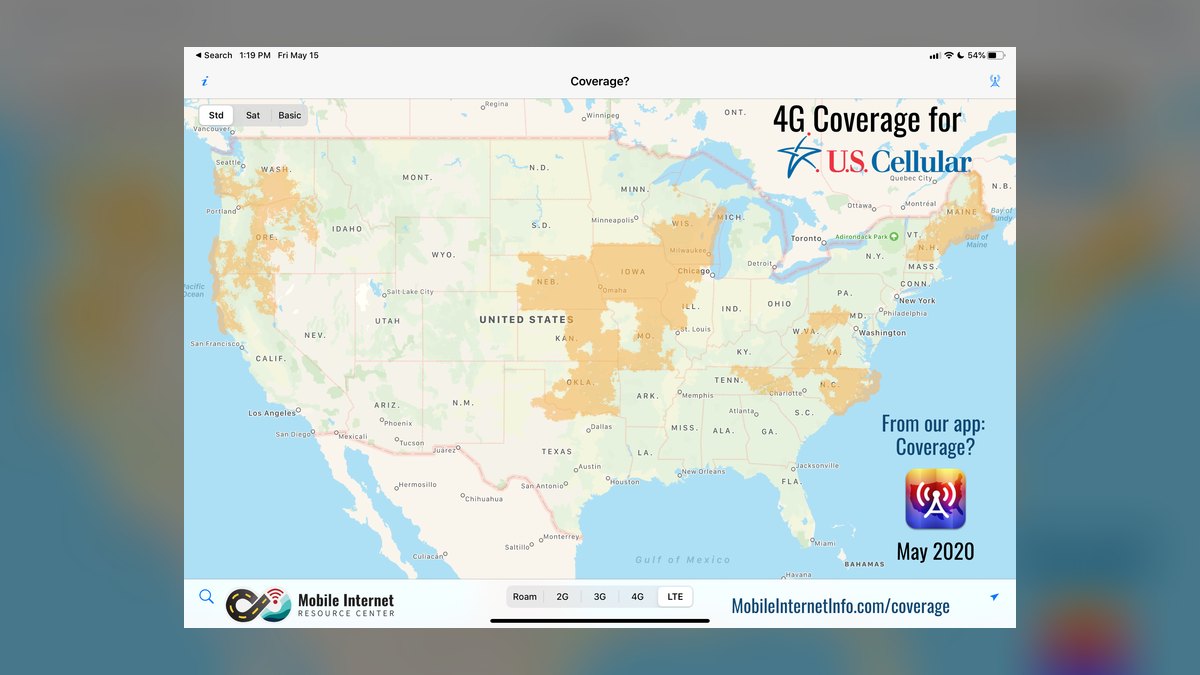
For 2027, UScellular is the best overall cellular and wireless carrier in Maine, because its native tower footprint reaches rural and coastal towns the national networks only roam into. T-Mobile is the runner-up for Portland, Bangor, and the I-95 corridor, where mid-band 5G delivers the fastest speeds and the strongest international benefits.
The outcome you should expect
Picking a carrier in Maine is not the same exercise as picking one in Houston or Phoenix. Maine is roughly 35,000 square miles with about 1.4 million people, and the population is concentrated in a narrow southern wedge that runs from Kittery through Portland up to Bangor. Everything north and east of that wedge — Aroostook County, the Katahdin region, Washington County, the western mountains — is low-density, heavily forested, and expensive to cover with towers. That single geographic fact determines almost every practical outcome you will experience.
So the realistic outcome of switching to UScellular in Maine is this: you trade peak speed for the absence of dead zones. In the Portland metro you will notice that your phone reports 5G but the throughput sits in the double digits rather than the triple digits. Ninety miles north, in a town where a national carrier's map shows a pale roaming tint, you will still have usable data and a call that completes. If your week involves driving Route 11, Route 1 above Ellsworth, or any of the logging roads that thread the North Woods, that trade is overwhelmingly worth making.
The outcome of choosing T-Mobile is the mirror image. Along the I-95 spine and inside the built-up parts of Portland, Lewiston, Augusta, and Bangor, you get mid-band 5G that feels like fixed broadband — file uploads that used to require waiting until you got home now finish in the parking lot. The moment you leave that spine, you fall back to roaming arrangements, and roaming data allowances are small and slow by design. A carrier that throttles roaming data to a trickle after a couple hundred megabytes is functionally a voice-and-text carrier once you cross into Washington County.

Expect the decision to be ZIP-code-specific rather than statewide. Two households eleven miles apart in the same county can have opposite correct answers, because a ridge line sits between them and the nearest tower. Nobody's marketing map resolves at that granularity. The honest outcome to expect is that you will pick a primary carrier based on where you spend most of your hours, and — if your work depends on connectivity — you will keep a cheap second line on a different network as insurance. That second-line pattern is common enough in Maine among contractors, guides, marine trades, and real estate agents that it should be treated as a normal cost of doing business, not a paranoid extra.
One more outcome worth setting expectations on: seasonality. Maine's population swells in summer along the coast and around the lakes. Towers sized for a town of 1,200 residents serve 6,000 people in July. Your August experience in Bar Harbor, Boothbay, or Old Orchard Beach will be materially worse than your February experience at the same address, on any carrier. That is congestion, not coverage, and no coverage map will warn you about it.
What drives that outcome
Three variables drive nearly all of the difference between carriers in Maine: who owns the tower you connect to, what spectrum band that tower is broadcasting, and how many other people are attached to it at that moment.
Tower ownership is the first and biggest. A carrier that owns the site can put its full spectrum portfolio on it, prioritize its own subscribers, and engineer for the local terrain. A carrier that roams onto someone else's site is a guest — the host decides how much bandwidth guests get, and the answer is usually "a little, slowly." This is why the same phone can show four bars and still be unusable: bars measure signal strength to a tower, not your permission to use that tower's capacity. Roaming agreements also typically cap monthly roaming data at a low ceiling, after which speeds drop to something closer to dial-up. UScellular's advantage in Maine is not magic radio engineering; it is that it built and owns sites in places the national carriers did not consider worth the capital.
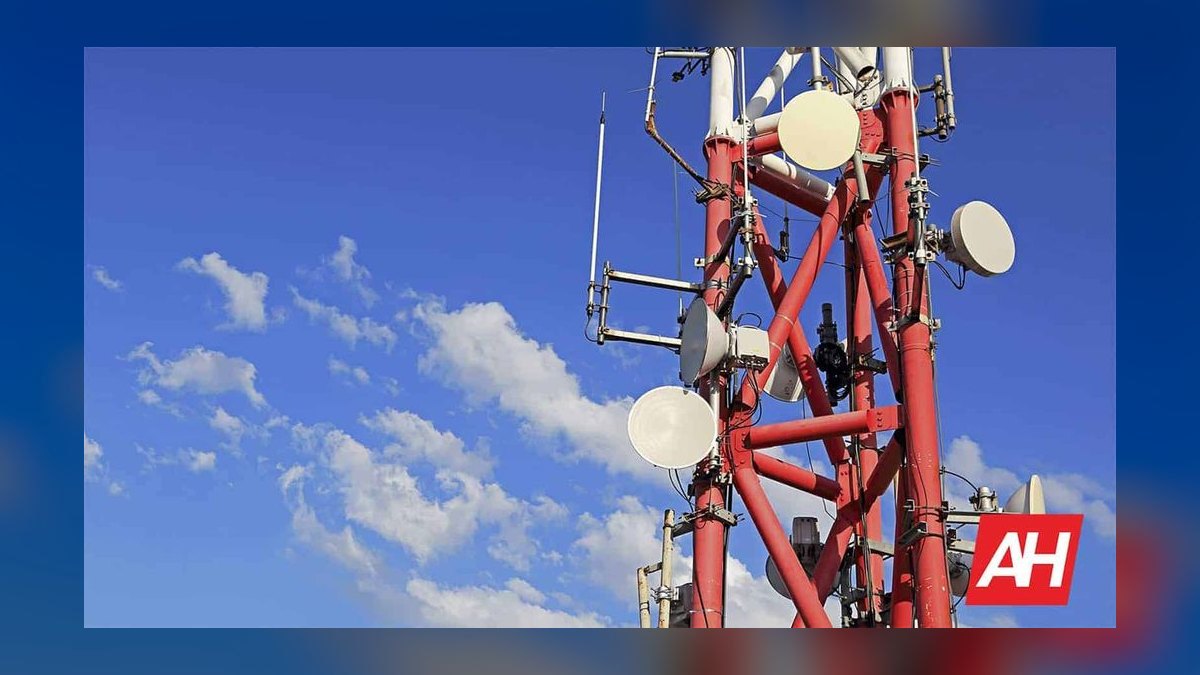
Spectrum band is the second variable, and it is where marketing gets slippery. Low-band spectrum travels a long way and penetrates buildings and tree cover well, but carries modest throughput. Mid-band is the sweet spot — good range, high capacity — and is the reason T-Mobile's urban Maine performance is strong. Millimeter-wave carries enormous throughput but travels a block or two and is stopped by walls, leaves, and rain; in Maine it exists in a handful of downtown blocks and is irrelevant to almost every real use case. When your phone displays a 5G icon, it may be riding low-band 5G that performs about like good LTE. The icon tells you the protocol, not the experience.
Congestion is the third. A tower is a shared resource. In Maine that matters twice over: once in the summer tourist surge, and once in mill towns and service hubs where a single macro site covers the whole downtown. It also matters for anyone on a prepaid or MVNO plan, because MVNO traffic is deprioritized behind the host network's own postpaid customers whenever a site gets busy. Deprioritization is invisible when the network is quiet — an MVNO in rural Maine at 9 a.m. on a Tuesday performs identically to the host carrier — and brutal when it is not.
Two secondary drivers deserve mention because they change the calculus for specific groups. The first is priority service for public safety. Dedicated first-responder networks ride on a national carrier's infrastructure but grant elevated priority and, when needed, preemption — meaning the responder's session stays alive while ordinary traffic yields. For Maine fire, EMS, and law enforcement operating in the same rural terrain that frustrates everyone else, that priority layer usually outweighs raw coverage percentages. The second is fixed wireless access. Where a carrier has spare mid-band capacity, it will sell home internet over the same tower. In Maine that is a genuine option in the population centers and a non-option in exactly the places where wired broadband is also missing — the capacity has to come from somewhere, and rural sites do not have it to spare.

Terrain deserves its own note. Maine's coverage problem is not merely distance; it is topography and biomass. The western mountains create radio shadows, and the state's dense conifer canopy attenuates higher-frequency signals year-round in a way that deciduous cover does not. This is why a carrier's low-band layer often outperforms its own mid-band layer once you are off the highway, and why coverage that tests fine in April can degrade slightly in full leaf-out. It is also why elevation matters more than mileage: a camp on a hillside may have a solid signal while a camp two miles away at lake level has none.
Benchmarks and realistic ranges
Treat every number below as a range you should verify at your own address, not a guarantee. Wireless performance is a distribution, not a value.
Urban mid-band 5G (Portland, and the denser parts of Bangor, Lewiston, Augusta). On a carrier with a well-built mid-band layer, expect download speeds in the low-to-mid hundreds of megabits during off-peak hours, sagging toward the low hundreds during busy periods. Uploads on mid-band 5G typically land in the tens of megabits — meaningfully better than LTE uploads, which is what matters for video calls, cloud backup, and sending large files from the field. Latency generally sits in the 20–40 millisecond range, low enough for video conferencing and most remote-desktop work.
Suburban and highway LTE / low-band 5G. Along the I-95 corridor between the cities and in the ring towns around them, plan on tens of megabits down and single-digit to low-tens up. That is comfortably enough for streaming, navigation, email, and a hotspot supporting one or two laptops. It is not enough to run a household of simultaneous 4K streams.

Rural native coverage. In a town served by a carrier's own tower but without a mid-band build, the honest expectation is roughly 10–40 Mbps down with occasionally higher bursts, and latency that climbs into the 40–80 millisecond range. This is the band of performance that covers most of Maine's interior on the carrier with the deepest rural footprint, and it is entirely workable for business use — email, CRM, cloud documents, voice and video calls, card processing.
Rural roaming. Once you are a guest on someone else's tower, expect throughput measured in single-digit megabits at best, a monthly roaming data allowance in the low hundreds of megabytes, and speeds that collapse to a crawl after that allowance is spent. Voice and text usually keep working. Treat roaming as an emergency fallback, never as a plan.
Pricing ranges. In 2027 the practical market bands look like this. A single postpaid unlimited line from a major carrier lands roughly in the mid-$50s to mid-$60s per month with autopay, before taxes and fees, and before any device financing. Prepaid and MVNO unlimited lines cluster in the $25–$45 range, with the cheapest tiers usually bought as an annual prepayment. Multi-line family pricing drops the per-line cost substantially — a four- or five-line plan often lands in the $25–$35-per-line neighborhood. Fixed wireless home internet from a carrier typically runs in the $40–$60 range with equipment included.

Data allowances. "Unlimited" almost always means unlimited at some speed, with a premium-data threshold — commonly in the 50GB range on mainstream plans — after which you are deprioritized during congestion. Hotspot allowances are a separate, smaller bucket, frequently 15–50GB at full speed and then throttled to a few megabits. If your job is running a hotspot for a laptop all day from a truck, read the hotspot line, not the headline.
Adjacent benchmarks worth knowing. Satellite direct-to-cell messaging has become a real backstop for exactly Maine's problem — off-grid text messaging where no terrestrial tower reaches. It is a safety feature, not a data plan: think short messages and emergency contact, measured in kilobits, not a substitute for coverage. Meanwhile, Wi-Fi calling has quietly become the most reliable "coverage" solution in rural Maine homes and camps that have any wired or satellite broadband, because it bypasses the radio problem entirely. A carrier with mediocre coverage at your house but solid Wi-Fi calling support may outperform a carrier with better paper coverage.
How to benchmark your own address. Run speed tests at three different times — a weekday morning, a weekday evening, and a weekend afternoon in the busiest season — from the specific rooms and job sites you care about. Record the numbers. Every major carrier offers a trial or a short-return window on prepaid SIMs and eSIMs, and an eSIM makes this test nearly frictionless on modern phones: you can carry two networks on one device for a month and let the data decide. That single month of testing is worth more than every coverage map and third-party ranking combined, including this one.
Risks, edge cases, and failure modes
The coverage map is a model, not a measurement. Carrier maps are generated from propagation modeling, not from someone standing in your driveway. They are directionally useful and locally unreliable. The failure mode is signing a two- or three-year device financing agreement based on a map, then discovering the signal dies at your kitchen table. Mitigation: test with a prepaid SIM before you move any line or finance any hardware.
Device financing is the real lock-in. Contracts largely disappeared; installment plans replaced them. If you take a heavily subsidized phone, the discount is usually applied as monthly bill credits that vanish the moment you leave, leaving the remaining device balance due immediately. The practical effect is a 24- to 36-month commitment. If you are unsure about coverage, bring your own device or buy the phone outright for the first year.
MVNO deprioritization is invisible until it isn't. A budget line riding a major network performs identically to the host on an empty tower and dramatically worse on a full one. The failure mode is predictable and seasonal: the MVNO that was perfect all winter becomes unusable in July when the coastal towns fill up, or during any local event that packs a single sector. If your connectivity is load-bearing for income, do not put your primary line on an MVNO.
Roaming caps bite hardest exactly when you need data. Roaming allowances are consumed quietly by background app refresh, photo sync, and OS updates. By the time you actually need to pull up a map or send an invoice from a remote job site, the allowance may already be gone. Mitigation: turn off background data sync and automatic photo upload before heading into roaming territory, and download offline maps in advance.

Power outages take towers with them. Maine gets ice storms and nor'easters, and rural cell sites have limited battery backup — typically hours, not days — with generator coverage varying site by site. A multi-day outage can silence a tower even though your phone is fully charged. Mitigation for anyone whose safety depends on it: a satellite messenger, a landline where one still exists, or a carrier whose nearest site is in a hardened location. This is also the strongest argument for a second line on a different network — the two carriers rarely lose the same tower.
Building materials fight you. Metal roofs, foil-backed insulation, and low-emissivity window coatings are common in Maine construction and are excellent at blocking radio signals. A house with a strong outdoor signal can be a dead zone inside. Fixes in order of cost: enable Wi-Fi calling first (free, and usually solves it), then consider a carrier-approved signal booster with an outdoor antenna. Note that boosters amplify an existing outdoor signal — they cannot create one where none exists.
Number porting and business lines. Porting a number can fail or stall if the account details do not match exactly, and a stalled port on a business line means missed calls. Do not cancel the old service before the port completes. For businesses, consider moving the main published number to a cloud phone system so the number lives independently of any carrier, and the mobile line becomes an interchangeable endpoint. That decoupling turns a future carrier switch from a risky migration into a routine change.
Third-party rankings age badly. Network build-outs, spectrum deployments, and pricing all shift within a single year, and Maine's rural sites change slowly but its urban capacity changes quickly. Any ranking, including this one, should be treated as a starting hypothesis to test, not a conclusion to act on blindly. Check the carrier's own current map for your exact ZIP code, and check it for every address you regularly visit — home, work, and the camp.

Edge case: the seasonal resident. If you are in Maine four months a year, the calculus changes entirely. Annual prepaid plans and short-term prepaid lines exist precisely for this, and paying a full-price postpaid line year-round for seasonal use is money thrown away. Similarly, if your primary residence is elsewhere and your Maine time is coastal, the runner-up carrier's coverage may be entirely sufficient and cheaper.
Edge case: fleets and field teams. For a Maine business running trucks statewide — HVAC, electrical, marine services, forestry, home health — carrier choice compounds. Every failed dispatch, unsigned mobile work order, or card payment that will not process is real revenue leakage, and it clusters in exactly the low-coverage regions. Field teams generally do better with the deepest-coverage carrier plus offline-capable apps than with the fastest carrier plus cloud-only tooling. Choose the software to tolerate the network, not the other way around.
A practical rollout plan
Whether you are switching one personal line or moving a twenty-truck field team, the sequence is the same. Do not switch and hope; run a short, cheap test first.
Week one: map your actual footprint. Write down every location where connectivity matters — home, office, the three or four job sites or towns you visit weekly, the camp, the commute route. This list, not a state map, is what you are optimizing for. If you are doing this for a business, pull the addresses from your dispatch or CRM history rather than from memory; the real distribution of where your people go is usually not what management assumes.
Week two: buy test lines. Get prepaid or eSIM lines on your top two candidate carriers. Modern phones let you run both simultaneously. Cost is small and the lines are disposable. Do not port anything yet.
Weeks three and four: measure. At each location on your list, record signal strength, run a speed test, and — most importantly — place an actual call and hold it for two minutes. Note whether the phone reports 5G or LTE. Do this at a busy hour at least once per location. A spreadsheet with location, time, download, upload, and call quality is enough. For a field team, have three or four drivers run the same test on their normal routes; you will learn more in two weeks of real routes than in any amount of map-reading.
Week five: decide with a bias toward the floor, not the ceiling. The right metric is not your best speed; it is your worst usable location. Rank the carriers by how many of your locations were fully workable, and only use peak speed as a tiebreaker. If one carrier covers every location adequately and another covers most locations brilliantly and two locations not at all, pick the first — unless those two locations genuinely do not matter.
Week six: port carefully. Keep the old line active until the new number is live and verified. Port the least critical line first as a rehearsal. Enable Wi-Fi calling on every device on day one; it is the single highest-return setting in a state like Maine. Configure voicemail and any business-critical apps before you decommission the old line.
Ongoing: review annually and keep a fallback. Set a calendar reminder to re-check pricing and coverage once a year — promotional pricing expires, and new towers do get built. Keep one cheap line on a different network for anyone whose work depends on being reachable.
For a business rollout, add two steps. First, pilot with a single crew for a full billing cycle before moving everyone — you will surface expense-reporting, MDM enrollment, and device-management friction that a personal test never reveals. Second, negotiate. Business accounts with more than a handful of lines have real pricing leverage, and carriers competing for a Maine multi-line account will discount, waive activation fees, or add lines free. Get quotes from at least two carriers in writing and let them know they are competing.
Related questions
Does a booster fix bad coverage at a Maine camp?
Only partially. A booster amplifies a weak outdoor signal — it cannot manufacture one. If you can get a bar or two outside with the antenna mounted high, a booster usually delivers usable indoor service. If the outdoor signal is genuinely zero, you need Wi-Fi calling over satellite or wired internet instead.
Is carrier home internet a real substitute for cable in Maine?
In the population centers where a carrier has spare mid-band capacity, yes — it is a legitimate option at competitive pricing. In rural Maine, where you most want an alternative, the capacity generally is not there. Check availability by exact address; it is sold sector by sector.
Should I keep two lines on different networks?
If your income depends on being reachable, yes. A cheap prepaid second line on a different network costs little and covers the two most common failure modes: a tower down in a storm and a dead zone at one specific site. For casual users it is unnecessary overhead.
How much does summer tourism actually affect service?
Enough to change your carrier choice in coastal and lake towns. Sites engineered for the off-season population get saturated in July and August, and MVNO and prepaid customers feel it first because they are deprioritized. Test in season, not in March.
Does the same ranking hold for a business with statewide trucks?
Mostly, but the weighting shifts. Fleet operations should optimize almost entirely for worst-case coverage and offline-capable apps rather than peak speed, and should negotiate multi-line business pricing rather than accepting consumer rates.
FAQ
Which carrier has the best rural coverage in Maine?
The carrier with the most native towers in the state's interior and Down East regions — UScellular — consistently offers the deepest rural reach, because coverage there depends on owning sites rather than roaming onto someone else's. The national carriers vary considerably by region within rural Maine, so always confirm against your exact ZIP code and the specific roads you drive.
Is T-Mobile good in rural Maine?
Its performance in Maine's cities and along the I-95 corridor is excellent, with mid-band 5G delivering the fastest real-world speeds in the state. Away from that corridor it depends more heavily on roaming, and roaming data allowances are small and slow once exhausted. If you spend most of your time in the populated south and along the highway, it is a strong choice; if you regularly work in the North Woods or Down East, it is not.
What is the cheapest way to get unlimited data in Maine?
Prepaid and MVNO plans, particularly ones purchased as an annual prepayment, are the least expensive route and typically land well under mainstream postpaid pricing. The trade-off is deprioritization during congestion and limited or chat-only customer support. That is a reasonable trade for a light or secondary line and a poor one for a primary business line.
Does 5G actually matter for most Maine users?
Less than the marketing suggests. Low-band 5G performs roughly like solid LTE, and millimeter-wave exists on only a handful of downtown blocks. Mid-band 5G is the version that genuinely changes your experience, and it is concentrated in the population centers. Outside those areas, reliable LTE beats a 5G icon riding a weak signal every time.
How do I test a wireless carrier before switching?
Buy a prepaid line or activate an eSIM on the candidate network and run it alongside your current line for two to four weeks. Test at every location that matters to you, including at a peak-congestion hour, and place real calls rather than only running speed tests. Do not port your number or finance a device until the test passes.
What should a Maine business prioritize when choosing a cellular carrier?
Worst-case coverage across the actual service territory, followed by multi-line pricing and support quality. Pull the real address distribution from dispatch history rather than guessing, pilot with one crew for a full billing cycle, choose field software that works offline, and get competing written quotes — multi-line accounts have meaningful negotiating leverage.
Sources
- FCC National Broadband Map
- FCC Wireless Competition and Mobile Deployment Reports
- Maine Connectivity Authority
- UScellular Coverage Map
- T-Mobile Coverage Map
- Verizon Coverage Map
- AT&T Coverage Map
- FirstNet (public safety network)
- U.S. Census Bureau QuickFacts: Maine
- FCC Signal Booster Rules for Consumers
Related on PULSE
This page will be disappearing soon. Save it to your device for $1 — or read it free while it is here.
@Kory-White- · if Venmo asks, the last 4 of my number are 2012
This page is gone.
This one is off the shelf now. $1 keeps it on your phone for good — the whole page, pictures and diagrams included.
 telcoHow do I fix bad cell signal at home in 2027?
 telcoHow do I set up an eSIM in 2027?
 telcoIs Visible worth it in 2027?
 telcoHow do I unlock my phone to switch carriers in 2027?
 telcoStraight Talk vs Total Wireless: which is better in 2027?
 telcoWhat is the catch with cheap MVNO carriers in 2027?
 telcoShould I finance a new phone or buy it outright in 2027?
 telcoBest Cellular and Wireless Carrier in Florida in 2027
 telcoBest Cell Phone Plans for International Travel in 2027
 telcoBest Cellular and Wireless Carrier in Austin in 2027