

Best Cellular and Wireless Carrier in Salt Lake City in 2027
 Curated byKory White · Fractional CRO · Maryland
Quality
Certified

T-Mobile leads on valley-floor 5G speed in Salt Lake City, with crowdsourced early-2027 median download speeds near 312 Mbps. Verizon holds an advantage in the canyons (Big Cottonwood, Little Cottonwood, Emigration) where low-band propagation matters more than raw speed. AT&T serves priority users and business customers. For the best low-cost unlimited option on a strong network, Visible (on Verizon's network) offers unlimited data starting around $25/month. The right choice depends primarily on where you spend your time: valley floor favors T-Mobile, mountain corridors favor Verizon.
The outcome you should expect from a carrier switch in Salt Lake City
Switching carriers in the Salt Lake Valley produces predictable results once you know your primary usage locations. The valley floor — downtown ZIPs like 84101 and 84111, Sugar House (84105), Murray (84107), West Valley City (84119), Sandy (84092), and Draper (84020) — all share similar characteristics: strong signal, high capacity, and the practical bottleneck is your plan's deprioritization tier rather than raw coverage. If your life is 90% valley floor, moving from a slower network to T-Mobile's mid-band footprint typically yields a jump from roughly 150 Mbps median down to roughly 300 Mbps median. Both numbers stream 4K, handle video calls, and load maps instantly. The real difference appears in crowded environments.
The second critical outcome involves canyon performance. Big Cottonwood Canyon, Little Cottonwood Canyon, Emigration Canyon, Millcreek Canyon, and the I-80 stretch toward Park City present terrain problems. Signal depends on low-band propagation and tower siting against steep rock walls. Verizon's low-band 5G Nationwide layer historically holds better through canyon drives than T-Mobile's footprint at the deepest points. If you ski frequently, that single variable outweighs every speed test result.
Expect your bill to differ from advertised prices. Postpaid unlimited plans in this market cluster in the $50–$90 per line range before multi-line discounts. Taxes and regulatory fees in Utah typically add several dollars per line per month on top of advertised prices unless the carrier explicitly quotes taxes-included. Prepaid and MVNO options — Visible, Mint, Cricket, US Mobile — cluster in the $15–$40 range and usually quote all-in pricing. A family of three moving from postpaid premium lines to an MVNO on the same underlying network commonly cuts the wireless bill by half or more, with the trade-off being priority data during congestion and in-store support.
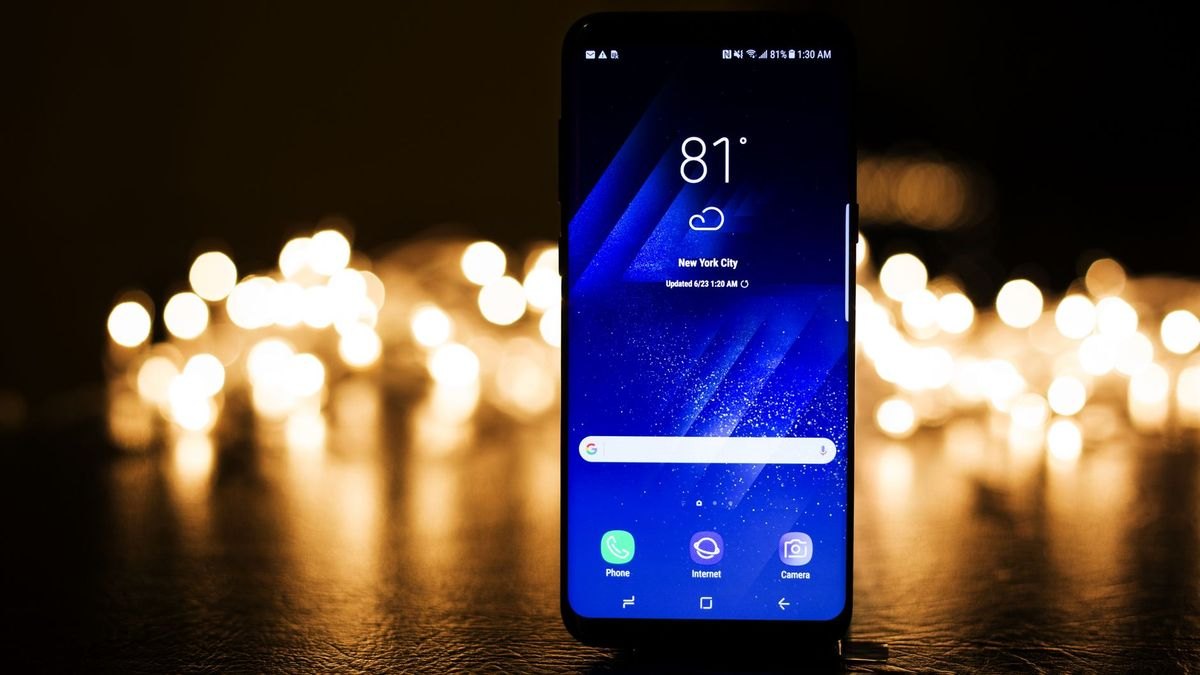
Expect a two-to-four-week settling period. Number porting is usually same-day, but eSIM provisioning, voicemail transfer, RCS re-registration, and Wi-Fi calling setup take a few days to stabilize. Judge a carrier after running it through a workday downtown, a weekend in the canyons, and one crowded event.
What drives the outcome: spectrum, terrain, and congestion
Three variables explain nearly every Salt Lake City coverage complaint.
Spectrum band. Low-band spectrum (roughly 600–900 MHz) travels far and penetrates buildings and terrain well, but carries less capacity — this keeps calls alive in canyons. Mid-band (roughly 2.5–3.7 GHz) produces the 200–400 Mbps speeds seen in tests; it covers a useful radius but degrades faster through walls and around rock. Millimeter wave is deployed in tiny pockets — stadiums, airport concourses, a few downtown blocks — and is irrelevant 99% of the time. A carrier leading on mid-band leads on valley-floor speed. A carrier with deep low-band leads on canyon reliability.
Terrain and tower geometry. Salt Lake City sits in a bowl with the Wasatch Range rising abruptly on the east side. Radio doesn't bend around granite. Coverage in Big Cottonwood or Little Cottonwood depends on whether a carrier has sited equipment up the canyon or relies on spill from valley-floor towers. This explains why a carrier can be excellent in Cottonwood Heights at the canyon mouth and useless three miles up the road.

Congestion and priority tier. Every unlimited plan has a soft threshold — commonly 30–50 GB per line on premium postpaid plans — after which traffic is deprioritized behind other users when a tower is busy. MVNO traffic is typically deprioritized structurally. On an empty tower, deprioritization is invisible. On a packed tower — Sundance week in Park City, a sold-out arena downtown, the airport at holiday peaks, a powder day at a canyon trailhead — it defines the experience.
Benchmarks and realistic ranges for Salt Lake City
Treat every published number as a snapshot from crowdsourced testing rather than a guarantee for your address.
Valley-floor 5G median download. The leading mid-band network in Salt Lake City tests in the roughly 250–350 Mbps range, with T-Mobile reported near 312 Mbps in early-2027 crowdsourced data. Verizon and AT&T cluster in the roughly 140–200 Mbps range, with reported medians near 158 Mbps and 145 Mbps respectively. MVNOs riding those networks land within a few percent of their host in uncongested conditions: Visible tested near 140 Mbps on Verizon's network. The leader is roughly 2x the field on the valley floor, and everyone is fast enough for ordinary use.
Upload and latency. Expect single-digit to low-double-digit Mbps upload on low-band, and 15–50 Mbps on healthy mid-band. Latency on 5G in this market generally sits in the 20–50 ms range, fine for calls and acceptable for most gaming.

Route coverage. On the SLC-to-Park City drive along I-80 through Parley's Canyon, reported 5G route coverage runs about 95% for Verizon versus about 88% for T-Mobile based on published coverage-map data. The 7-point gap feels large because gaps land in the same few dead spots every trip.
Postpaid pricing. Single-line premium unlimited plans: T-Mobile Go5G Next at roughly $85, Verizon Unlimited Ultimate at roughly $90, AT&T Unlimited Premium PL at roughly $85. Three-line family pricing lands near $150 on T-Mobile Go5G Plus and AT&T Unlimited Extra, near $180 on Verizon Unlimited Plus — roughly $50–$60 per line at three lines. Premium data allotments before deprioritization cluster at 30–50 GB per line, hotspot at 15–50 GB.
Prepaid and MVNO pricing. Visible: $25/month for base unlimited, $35 for Visible+ (adds ~50 GB premium data). Mint: $15 for 5 GB, $20 for 15 GB, $25 for 20 GB, unlimited around $30/month on 12-month commitment, stepping to $25–$40 after intro. Cricket Unlimited Max: ~$60 single-line, $110 for three lines. US Mobile: starts near $10 for 2 GB, $25 for 20 GB, $30–$35 for unlimited depending on host network. Spectrum Mobile and Xfinity Mobile: ~$30 per line unlimited when bundled with home internet, $40–$50 for higher tiers.
The math that matters. Three premium postpaid lines at $150–$180/month is $1,800–$2,160/year. The same three lines on a $25–$35 MVNO are $900–$1,260/year. The delta is $600–$1,200 annually, buying congestion priority, retail support, and device financing eligibility.
Risks, edge cases, and failure modes
The canyon failure mode. The most common regret is choosing on speed tests and discovering the network doesn't hold in Little Cottonwood or on backcountry trailheads. Mitigation: download offline maps before any canyon trip regardless of carrier. If you spend serious time in the mountains, choose a Verizon-based option or carry a satellite messaging device. Modern flagship phones with satellite SOS cover emergencies but not "text my group I'm running late."

MVNO congestion failure mode. Deprioritization is invisible until it isn't. Predictable pain points: Sundance week in Park City, the airport during holiday peaks, arena events downtown, canyon trailhead parking on powder mornings. If your work depends on connectivity at those moments, a $25 plan is a false economy.
Bundled-carrier lock-in. Spectrum Mobile and Xfinity Mobile only price well while keeping the matching home internet subscription. Availability varies across the valley — Xfinity covers Cottonwood Heights and Holladay; Spectrum's fiber footprint includes parts of the Avenues and East Bench. The failure mode is buying the wireless deal, then losing it when you move or switch ISPs.
Device compatibility edge cases. Google Fi's full feature set is designed around Pixel and select Samsung devices; iPhones work but don't get complete network-switching behavior. Any MVNO switch requires an unlocked device — carrier-financed phones are typically locked until financing is paid or a minimum service period elapses (commonly six months to a year). Check IMEI compatibility and VoLTE/Wi-Fi-calling support before porting.
Support model risk. Visible, Mint, and US Mobile are chat-and-app-only with no Salt Lake City retail presence. This is fine until a porting failure, fraud hold, or SIM swap problem occurs — resolution takes days rather than a walk to a store. Cricket maintains physical retail in the valley, including on State Street.

Throttling fine print. Video resolution caps are common on cheaper tiers — 480p caps and 5 Mbps hotspot throttles are typical. Read the specific tier's fine print rather than the plan family's marketing.
Porting mistakes. Never cancel the old line before the port completes — cancellation releases the number and the port fails. Keep the old account active until the new SIM passes calls and texts. Verify SMS-based two-factor authentication still works before considering the migration done.
Coverage-map optimism. Every carrier's map is modeled, not measured, and optimistic at the edges. Use them to rule options out, not to rule them in. The only test that counts is your own device at your own address, workplace, and weekend route.
A practical rollout plan for switching
Treat a carrier change like a small migration project rather than an impulse purchase. This sequence takes about three weeks.
Week one — measure before you move. Write down the five places you need service: home, work, school/daycare, commute route, weekend destination. Run a speed test at each on your current carrier at a busy hour, noting both download speed and whether calls hold. This is your baseline. Then pull each candidate carrier's coverage map for those exact addresses and ZIPs — 84101, 84111, 84105, 84107, 84119, 84092, 84020 all behave differently enough to matter, and canyon addresses behave very differently.

Week two — test with an eSIM before you port. Nearly every carrier and MVNO supports eSIM, and most offer a trial or month-to-month first month. Add the candidate as a second line on your existing phone, keeping your current number active on the primary line. Run the same five-location test with the new line as data. Do it on a weekday and weekend. If you ski, do a canyon day. This step costs one month of a cheap plan and is the highest-value action in this process.
Week three — port and verify. Port only after the trial passes. Collect your account number and transfer PIN from the old carrier first; both are required and both cause stalled ports. Keep the old line alive until the new one passes calls, texts, and MMS group threads. After porting, verify in order: outbound and inbound calls, SMS and MMS, Wi-Fi calling, visual voicemail, RCS re-registration, hotspot, SMS-based 2FA logins. Re-run the five-location speed test and compare against week-one baseline.
For households and small teams. If moving more than two lines, stage it. Port one line first, live with it for a week, then move the rest. A staged migration converts a household-wide outage into a single-person inconvenience. For a business, port the least connectivity-critical line first and field/sales lines last.
Ongoing. Re-evaluate annually, not monthly. Networks shift meaningfully year over year as mid-band buildout continues and promotional pricing resets. But churning carriers every few months costs more in porting friction and device-financing complications than marginal savings are worth.
FAQ
Which carrier has the fastest 5G in Salt Lake City?
T-Mobile leads on valley-floor 5G speed, with crowdsourced early-2027 medians around 312 Mbps versus roughly 158 Mbps for Verizon and 145 Mbps for AT&T. The lead comes from aggressive mid-band deployment across the metro. All three are fast enough for streaming, navigation, and video calls in ordinary use.
What is the cheapest unlimited plan on a good network?
Visible runs about $25/month for unlimited data on Verizon's network, with Visible+ near $35 adding roughly 50 GB of premium data. Mint starts around $15/month for 5 GB on T-Mobile's network with an unlimited tier near $30. Both are app-only with no local retail support.
Do I need a premium postpaid plan, or is an MVNO enough?
If you rarely spend time in crowded venues and don't need in-store support or device financing, an MVNO on the same network delivers effectively identical everyday performance for half the price or less. If you work events, travel through peak-hour airports, or need guaranteed priority, premium postpaid earns its cost.
How do cable-bundled wireless plans compare?
Spectrum Mobile and Xfinity Mobile both ride Verizon's network at roughly $30 per line for unlimited when bundled with their home internet, with higher tiers near $40–$50 adding hotspot and premium data. The catch is the bundle requirement — price them at the standalone rate before committing, since ISP availability varies across the valley.
What should I check before porting my number?
Get your account number and transfer PIN from the current carrier, confirm the new device is unlocked and band-compatible, and never cancel the old line before the port completes. After porting, verify calls, MMS group threads, Wi-Fi calling, voicemail, hotspot, and any SMS-based two-factor logins.
Is it worth switching just for speed?
Rarely, if you're already above roughly 100 Mbps median. The differences that actually change daily experience are coverage at your specific addresses and priority during congestion. Switch for a dead spot you can't live with or a bill you can't justify — not for a speed-test number.
Does T-Mobile or Verizon work better at the ski resorts?
Verizon generally holds better in the deep canyons approaching Alta, Snowbird, and Solitude, thanks to stronger low-band propagation against steep terrain. T-Mobile is competitive at resort base areas and dominant on the valley floor. If the mountain is your main use case, Verizon or a Verizon-based MVNO is the safer pick.
Is an MVNO really the same coverage as the host network?
Coverage footprint is identical — same towers, same bands. What differs is priority during congestion. MVNO traffic is deprioritized when a tower is busy, so speeds match the host in normal conditions and fall behind at crowded venues, the airport at peak, and event days.
How much do taxes and fees add in Utah?
Advertised postpaid prices typically exclude taxes and regulatory surcharges, which commonly add a few dollars per line per month. Most prepaid and MVNO plans quote taxes-included pricing. Always compare all-in totals, not headline rates.
Can I keep my phone when I switch carriers?
Usually yes, if the device is unlocked and supports the new network's bands and VoLTE. Carrier-financed phones stay locked until financing is paid or a minimum service period passes. Check IMEI compatibility on the carrier's site before starting a port.
Which carrier is best for a small business in Salt Lake City?
AT&T's priority network access matters most for first responders and field crews working large events. For general small business, the calculus is the same as consumer: pick the network your team's territory requires, then choose the plan tier by how often they work in crowds.
Sources
- Ookla Speedtest United States market reports
- FCC National Broadband Map — mobile coverage
- T-Mobile coverage map
- Verizon coverage map
- AT&T wireless coverage map
- Visible plans and pricing
- Mint Mobile plans
- Google Fi coverage
- Cricket Wireless coverage map
- FCC consumer guide: wireless number portability
Related on PULSE
This page will be disappearing soon. Save it to your device for $1 — or read it free while it is here.
@Kory-White- · if Venmo asks, the last 4 of my number are 2012
This page is gone.
This one is off the shelf now. $1 keeps it on your phone for good — the whole page, pictures and diagrams included.
 telcoIs a prepaid carrier as good as Verizon, AT&T, or T-Mobile in 2027?
 telcoBest Cell Phone Plans for International Travel in 2027
 telcoHow do I set up an eSIM in 2027?
 telcoBest Cellular and Wireless Carrier in Florida in 2027
 telcoHow do I get the best Black Friday cell phone deal in 2027?
 telcoBest Cellular and Wireless Carrier in Los Angeles in 2027
 telcoHow do I add a tablet to my cell phone plan in 2027?
 telcoBest 5G Home Internet Providers in 2027
 telcoShould I get a contract or no-contract phone plan in 2027?
 telcoWhat is the catch with cheap MVNO carriers in 2027?